Lotus silk sounds fancy. The farm makes it practical. You’ll see how a near-vanishing Khmer craft turns lotus stems into real materials, then you’ll make three small keepsakes yourself. I like that this isn’t a quick show-and-tell; it’s built around the hands-on craft process and a real boat ride through the lotus fields. One thing to watch: while the tour is listed around 2.5 hours, expect more like 4 hours from pickup to drop-off.
I also like the value here: for $40, you’re not just paying for a ticket. You get a bilingual guide, round-trip shuttle from Biolab Café, the tea ceremony, a fresh lotus bouquet, and the materials/steps for what you make. The main consideration is fit: if you expected a relaxed photo walk, this is more structured and can feel a bit time-pressured near the end.
In This Review
- Quick highlights from the Lotus Silk Farm experience
- Lotus silk in Siem Reap: why this craft is worth your time
- Your day plan: production tour, boat time, and workshops
- Production tour (about 30 minutes)
- Boat journey through the lotus fields (about 30 minutes)
- Artisan workshops (about 1 hour)
- Tea ceremony (about 15 minutes)
- The craft you make: stem paper, lotus yarn, and a seed bracelet
- Lotus stem paper: turning stems into something you can hold
- Fiber yarn: learning the rare part
- Seed bracelet: small, clever, and symbolic
- What you take home
- The boat ride through lotus fields: the calm part of the day
- Tea garden stop and boutique browsing (what’s actually included)
- Price and value in Siem Reap: what $40 buys (and why it’s not just a ticket)
- Logistics that matter: shuttle times, meeting point, and timing reality
- Expectation check: duration
- Who should book Lotus Silk Farm, and who might skip it
- Should you book this lotus silk tour?
- FAQ
- Is lotus silk farm in Siem Reap worth it?
- How long does the tour take?
- Where do I meet for the shuttle?
- What time does the shuttle leave?
- What’s included in the price?
- What do I make during the workshops?
- Do I get to go on a boat?
- Is the tour guide English or French?
- Can I cancel for a full refund?
Quick highlights from the Lotus Silk Farm experience
- 100% lotus circular economy: stems, seeds, and flowers all get used
- Boat ride on the lotus fields plus a fresh lotus bouquet
- Make three heirloom-style items: stem paper, lotus fiber yarn, and a seed bracelet
- A tea ceremony in the green garden with homemade biscuits
- Small group size: up to 30 people
- Shuttle from Biolab Café at set times (no private hotel pickup)
Lotus silk in Siem Reap: why this craft is worth your time
Lotus silk comes from lotus plants, but not in the way people usually imagine silk. The process turns lotus fibers into thread-like material, then artisans weave it into cloth and other products. The craft is described as a 1,000-year-old Khmer technique that nearly disappeared, and this farm positions itself as one of the last places still protecting the method.
What I like about this story (and why it matters) is that it connects art, economics, and sustainability. The farm’s whole approach is built around making sure the lotus plant doesn’t get wasted. They describe it as zero-waste, using the plant completely: fibers for textiles, seeds for jewelry, stems for paper, and flowers for tea.
The lotus also carries major meaning in Buddhism. On the farm, that symbolism isn’t just decoration—it’s part of the way they explain the flower and the activities around it. If you’ve ever toured Angkor and felt the spirituality everywhere, this is a chance to see how the lotus fits into that same cultural frame.
And yes, the farm claims connections to high-end fashion supply chains, with lotus fiber exported to international luxury houses. Even if you don’t care about fashion, it helps you understand why the craft has real value—and why preserving it isn’t just a feel-good project.
Your day plan: production tour, boat time, and workshops
The experience runs as a smooth, pre-set sequence, which is good if you want less planning stress. The published duration is about 2 hours 30 minutes, but the most important practical note is timing: from pickup to drop-off, plan on around 4 hours.
Here’s the flow as it’s designed:
Production tour (about 30 minutes)
You start with the core process: how artisans extract usable fibers from lotus stems. This is where you learn what lotus silk really means—how the material becomes workable thread. They also explain their circular approach: 100% utilization of the plant, so nothing gets tossed.
This stop is valuable because it gives context for everything you do later. Without it, your craft items would just feel like souvenirs. With it, your paper, yarn, and bracelet start to make sense as part of a larger chain.
Boat journey through the lotus fields (about 30 minutes)
Next comes the fun part: a wooden boat ride through the lotus areas. You’ll see the plants up close and learn about the flower’s sacred symbolism. They also include a flower-folding moment on the water, plus you receive a fresh lotus bouquet.
Even if you’ve taken boats in Cambodia before, this one’s tied to the craft story rather than being a generic ride.
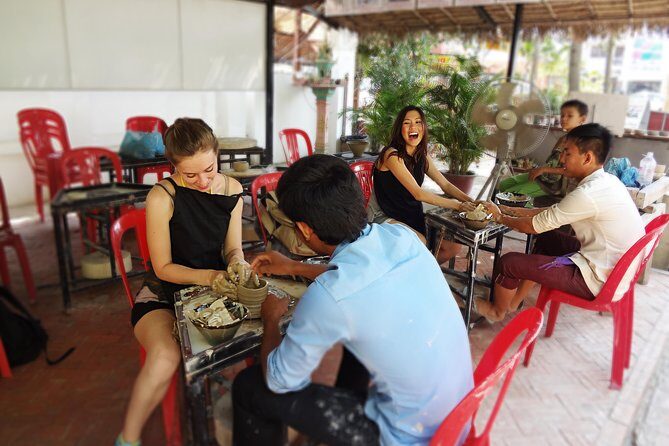
Artisan workshops (about 1 hour)
Then you get to make things. This section is not just watching. You actually create three items:
- Lotus stem paper
- Fiber yarn (spinning lotus fiber using traditional methods)
- Seed bracelet with seeds and beads
These are small, manageable projects, but they’re still real making, not just stamping a postcard.
Tea ceremony (about 15 minutes)
You finish with a lotus tea moment served with homemade biscuits. It’s a short reset after hands-on work, and it also reinforces the farm’s “use everything” message, since tea comes from the flowers.
The craft you make: stem paper, lotus yarn, and a seed bracelet
This is the heart of the experience. The farm doesn’t sell you a vague promise of learning. It gives you three finished pieces to take home, and that changes how you remember the day.
Lotus stem paper: turning stems into something you can hold
Lotus stem paper is one of the more surprising items. You begin with stems and end with a handmade paper product. This is where you see the “circular economy” claim in action. Paper usually feels like a separate industry from textiles, but here it’s the same plant feeding different crafts.
If you like crafts that feel tactile and slightly old-school, this part hits the sweet spot.
Fiber yarn: learning the rare part
Lotus silk lives or dies on the fiber stage. That’s why the yarn workshop matters. You learn how to spin the lotus fiber using traditional technique, not modern shortcuts. Even if your first attempt looks a bit uneven, you’ll understand the skill behind the final textiles.
This is a good stop for people who care less about making perfect items and more about understanding why the process is difficult—and therefore why it’s worth protecting.
Seed bracelet: small, clever, and symbolic
The bracelet is made from seeds and beads. It’s easy to wear, easy to remember, and it directly connects to the farm’s plant-utilization model. You’re seeing how one lotus plant can become both cloth-related material and jewelry-related material.
A nice bonus here: seed jewelry often has a natural look that doesn’t feel like mass production.
What you take home
You take home what you create: the paper, yarn item, and bracelet. That’s part of the value math. At $40, you’re not just buying entry to a farm—you’re leaving with handmade products from a nearly lost technique.
The boat ride through lotus fields: the calm part of the day
The boat segment is built around two things: scenery and explanation.
You’re on a wooden boat for about 30 minutes, moving through lotus fields. The tour includes learning about the lotus’s Buddhist significance. You also get a flower-folding moment while you’re out there, and the farm gives you a fresh lotus bouquet.
If your ideal Cambodia day is seeing something beautiful without the hard sales vibe, this section tends to work. It’s also a good “break” between the fiber work and the seed bracelet making, so you don’t feel constantly busy.
One practical thought: the whole experience is fairly structured. If you want a long, slow, do-nothing boat drift where you can just float and take photos, you might feel the day runs on schedule.
Tea garden stop and boutique browsing (what’s actually included)
After the workshops, you sit down for tea with homemade biscuits. The tea is lotus-based, and the short ceremony also serves as a cue that the plant’s story is finished for the day.
Before or after this, there’s a cultural boutique component where you can browse lotus silk textiles, jewelry, and artisan creations. Purchases from the boutique aren’t included, but browsing is part of the experience flow.
If you love Cambodian handicrafts, it’s a chance to see products made from the craft you just learned—not just photos or claims.
Price and value in Siem Reap: what $40 buys (and why it’s not just a ticket)
At $40 per person, this tour is priced like an activity with extras. The included package matters: you get an expert bilingual guide, round-trip shuttle from downtown Siem Reap (meeting at Biolab Café), the tea ceremony, the fresh lotus bouquet, and all fees and taxes.
That’s why it often feels better value than a simple entrance ticket. You’re paying for:
- guided interpretation (bilingual option)
- transport (shuttle, not private hotel pickup)
- included refreshments
- and the materials/effort for three make-and-take items
A fair way to think about the cost is this: you’re paying for the “learning + making” portion, not only the scenery.
Logistics that matter: shuttle times, meeting point, and timing reality
You meet at Biolab Café near Wat Bo Village in Siem Reap, and the tour ends back at the same meeting point. The shuttle is a grey van, and you should arrive about 5 minutes early.
Departures are listed at 8:30 AM, 10:00 AM, 12:00 PM, and 2:00 PM. Because it’s a scheduled shuttle, the easiest plan is to build your morning around one of these start times and not rush from somewhere else right before.
Also note the cap: the group is limited to 30 travelers, which usually means less chaos than bigger mass tours.
Expectation check: duration
This is the part I’d underline in your planning notes. The tour is listed at about 2.5 hours, but the practical window from pickup to drop-off can stretch to over 4 hours. Build in that buffer so the day stays enjoyable instead of stressful.
Who should book Lotus Silk Farm, and who might skip it
This experience is a strong match if you:
- want a hands-on craft day instead of just sightseeing
- enjoy learning how traditional Cambodian methods work
- like sustainability stories that are actually practical (stems/seed/flower all used)
- want something different from the usual Angkor-only rhythm
It may not be the best fit if you:
- want a super-relaxed, slow-paced tour with lots of free roaming
- prefer private hotel pickup and flexible timing (this uses a set shuttle)
- are hoping for a long, lingering boat experience without structure
Should you book this lotus silk tour?
I’d book it if you want a meaningful craft experience that you can remember with real objects in your hands. The strongest reason is the combo: boat ride + craft making built around the lotus plant, plus tea and a bouquet. For $40, the included shuttle and the three make-and-take pieces make it feel like good value.
If you’re tight on time, give yourself the buffer for the longer day-from-pickup-to-drop-off timing. And before you go, double-check what’s included in your specific booking so you don’t end up with a mismatch between what you thought you’d do and the program that runs that day.
FAQ
Is lotus silk farm in Siem Reap worth it?
If you like hands-on cultural activities, yes. You learn how lotus fibers are made, go on a boat through the lotus fields, and create three items (paper, fiber yarn, and a seed bracelet), plus you get tea and a fresh lotus bouquet.
How long does the tour take?
The tour is listed at about 2 hours 30 minutes. In practice, plan for more than that from pickup to drop-off, closer to about 4 hours.
Where do I meet for the shuttle?
Meet at Biolab Café near Wat Bo Village in Siem Reap. The shuttle returns you to the same meeting point.
What time does the shuttle leave?
Departures are listed at 8:30 AM, 10:00 AM, 12:00 PM, and 2:00 PM. Arrive about 5 minutes early for the grey van.
What’s included in the price?
The tour includes a bilingual guide (English/French available), air-conditioned round-trip shuttle, coffee and/or tea, tea with homemade biscuits, a fresh lotus bouquet, and all fees and taxes.
What do I make during the workshops?
You create three pieces using the farm’s traditional techniques: lotus stem paper, fiber yarn, and a seed bracelet.
Do I get to go on a boat?
Yes. The experience includes a boat journey through the lotus fields.
Is the tour guide English or French?
The guide is described as bilingual with English and French available.
Can I cancel for a full refund?
Yes. You can cancel up to 24 hours in advance of the experience start time for a full refund.