REVIEW · CAMBODIA
Angkor Wat: Sunrise: Ta Prohm and Bayon Temple Tour
Book on GetYourGuide →Operated by Tourme ANGKOR · Bookable on GetYourGuide
Sunrise at Angkor Wat is worth the alarm. This guided 8-hour tour gets you there early, then moves you through Angkor Wat and on to the jungle feel of Ta Prohm before the middle of the day crowds take over.
I love two things in particular: the sunrise setup that helps you get a great viewing position, and the small comforts that keep the long morning manageable—an air-conditioned van, bottled water, and cool towels at the stops.
One consideration: the $16 tour price is only part of the cost. You still need to pay the $37 temple entrance fee separately for access to the day’s temples, and you’ll be out before dawn.
In This Review
- Key things that make this Angkor sunrise tour work
- Before dawn at Angkor Wat: what the sunrise timing really changes
- Getting into Angkor Wat from the eastern side: why darkness can be a plus
- Angkor Wat’s bas-reliefs and upper terraces: the 2-hour interior you’ll appreciate later
- Breakfast outside Angkor Wat and the Srah Srang reset
- Ta Prohm’s jungle feel: how to enjoy the “trees taking over” look
- Angkor Thom and Bayon: the faces, the terraces, and the Southern Gate details
- Price and logistics: where your $16 really fits in
- Comfort checklist: what to pack for an 8-hour sunrise-to-bayon day
- Who this tour is perfect for (and who should pick something else)
- Should you book this Angkor Wat sunrise to Ta Prohm and Bayon tour?
- FAQ
- How long is the tour, and when does it end?
- What does the $16 price include, and what costs extra?
- How much is the temple entrance fee?
- Is breakfast included?
- What should I bring and what dress code rules apply?
- Is this tour suitable for children or wheelchair users?
- Can I cancel and get a refund?
Key things that make this Angkor sunrise tour work
- Pre-dawn sunrise planning to get you to the Angkor Wat viewing area with enough time to settle and take photos
- Early entry from a less-crowded side so Angkor Wat feels quieter and more dramatic in the dark
- Two focused hours inside Angkor Wat for corridors, central areas, and upper terraces—time you actually need for the stories behind the carvings
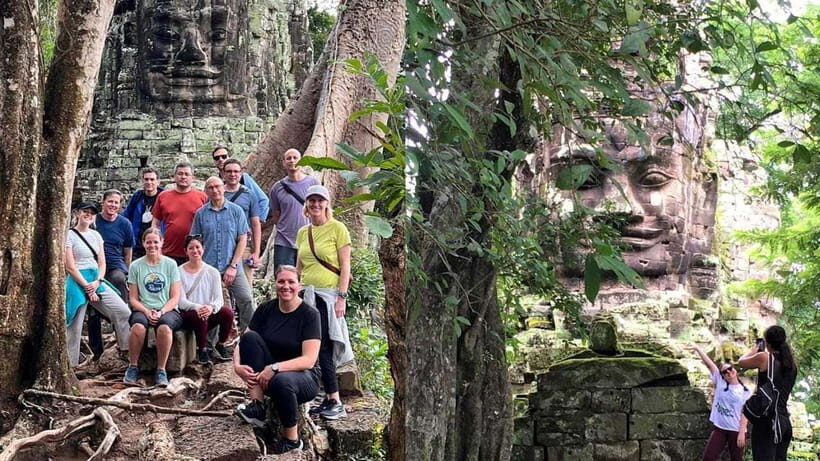
- Ta Prohm’s jungle look with its famous tree roots and the feeling of a temple reclaimed by nature
- Angkor Thom + Bayon’s faces plus the Southern Gate details that you’d easily miss if you’re rushing on your own
- Comfort details built in: water, cool towels, and an air-conditioned vehicle during the hottest parts of the day
Before dawn at Angkor Wat: what the sunrise timing really changes
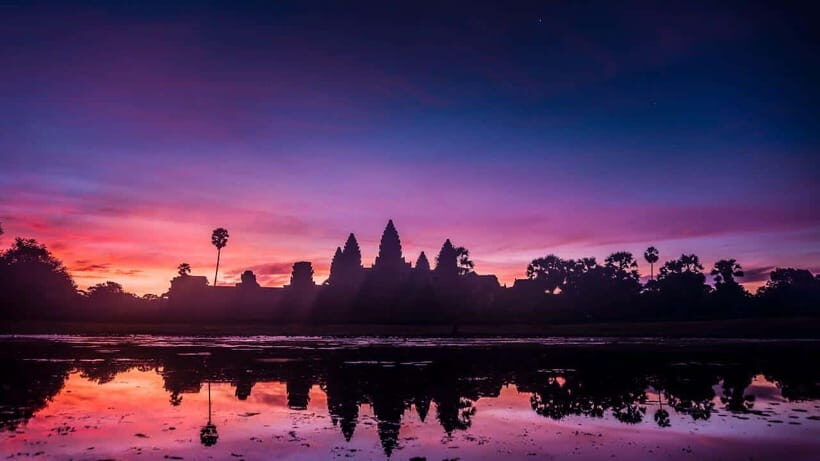
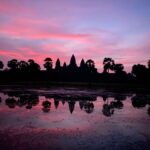
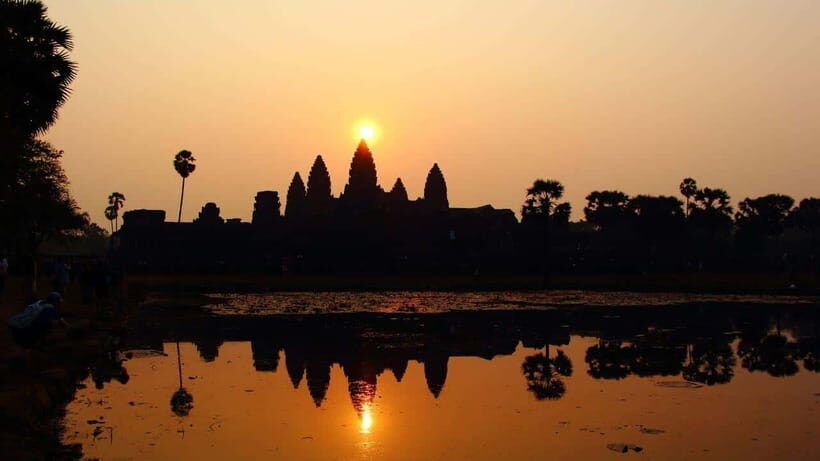
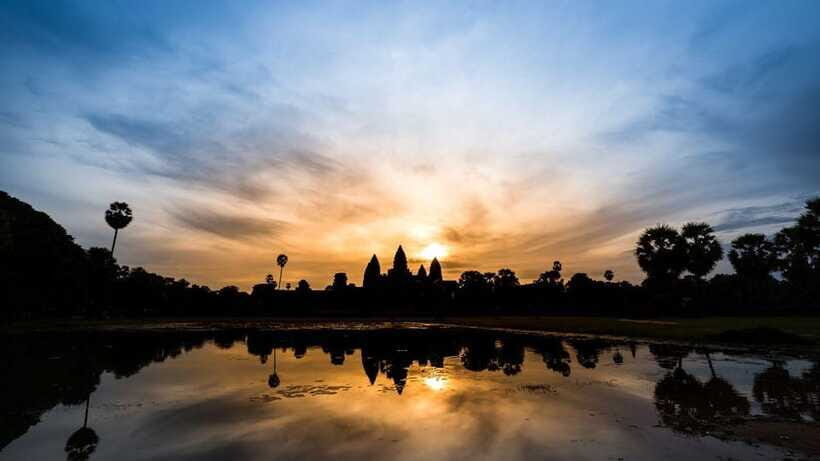
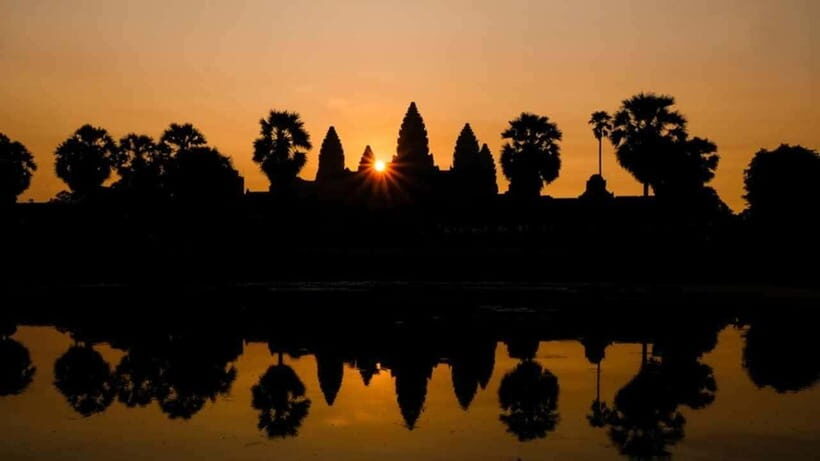
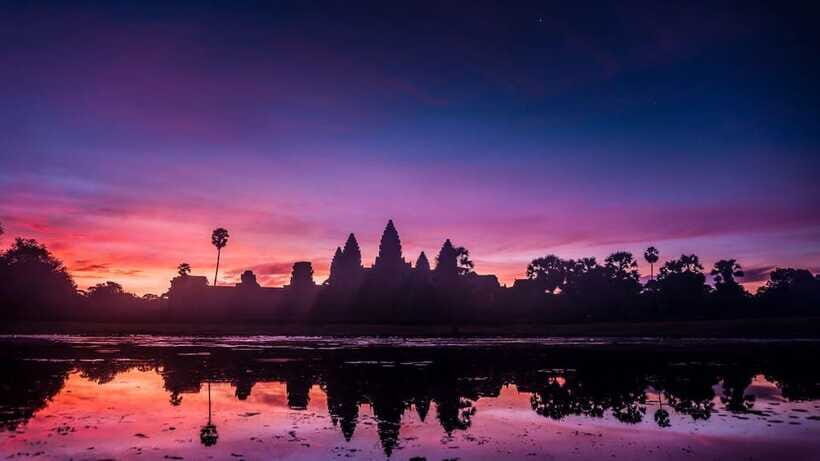
Angkor Wat at sunrise isn’t just pretty. It’s a mood shift. Starting pre-dawn means you arrive while the temple is still cool, the light is soft, and the place feels half-awake instead of fully busy. That difference matters when you’re trying to take photos and also just feel the scale of the complex.
This tour also pays attention to the practical side of sunrise. You’re picked up from Krong Siem Reap and taken in an air-conditioned vehicle, then guided to the best spot to watch the first light hit the temple. You’ll want to be patient for the start, but the payoff is that you’re not scrambling at the last minute when the good moments start.
A few more Cambodia tours and experiences worth a look
Getting into Angkor Wat from the eastern side: why darkness can be a plus
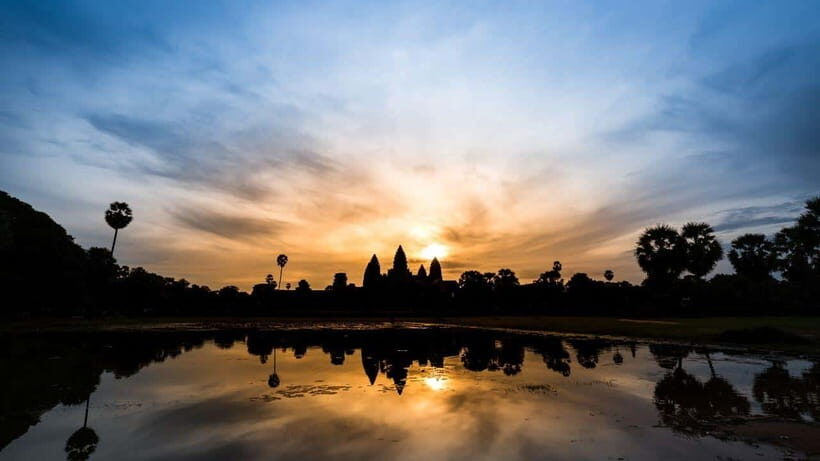
One of the smartest parts of this plan is the way it gets you into Angkor Wat early, starting from the eastern side. Entering before the main daylight crowds can turn “temple sightseeing” into something more like walking into a scene from a movie—still meaningful, just quieter and more atmospheric.
You’ll creep along ancient corridors in low light and then gradually watch the details show up: stonework, structural rhythm, and the carved stories that Angkor is famous for. The tour includes time for a slower pace, not just a fast loop. That’s important because Angkor Wat can feel overwhelming if you only see it for photos.
And yes, the tour nudges you to bring a torch (or headlamp). It’s not about fear—it’s about staying steady when it’s dark and you’re moving through large stone spaces.
Angkor Wat’s bas-reliefs and upper terraces: the 2-hour interior you’ll appreciate later
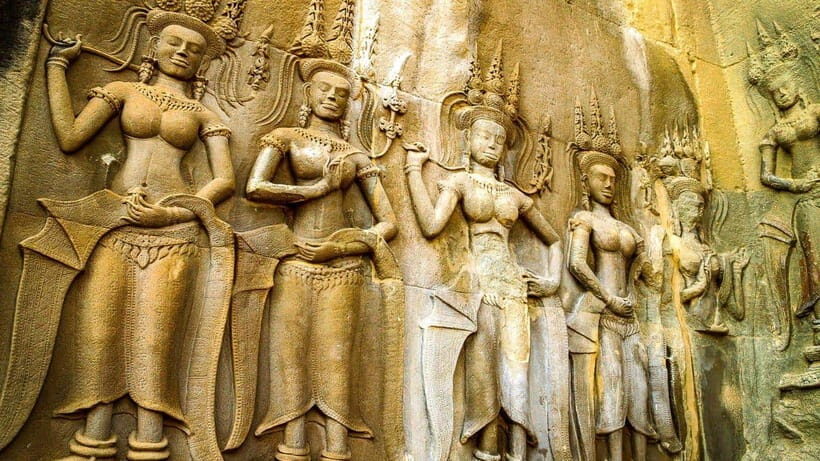
Inside Angkor Wat, the tour gives you about two hours—and that time block is the difference between feeling informed and just checking boxes. Your English-speaking guide is there to interpret the carvings and explain what you’re seeing, including stories connected to the height of the Khmer empire.
A few details that make this portion special:
- You’ll spend time along corridors where the relief carvings run long and continuous, so you get a sense of how organized the storytelling is.
- You’ll move through central chambers and up to upper terraces, which matters because you start to understand the temple’s layout and how space was designed for processions and sightlines.
- You’ll get a chance to pause by one of the ancient library pools and soak up the dawn atmosphere, instead of treating it like a quick stop.
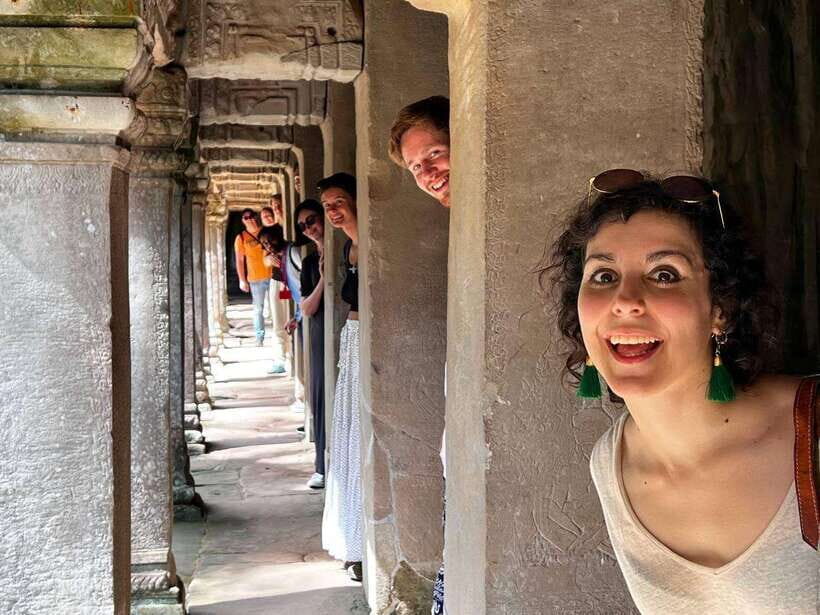
Also, some guides keep the day lighter with humor to break up the history lessons. If your guide jokes about staying together (and uses a food reference or two to make a point), that’s not random—it helps the group stay aligned when you’re in a big complex with lots of turn-offs.
Breakfast outside Angkor Wat and the Srah Srang reset
After you finish the Angkor Wat section, the tour includes a break time and a stop at Srah Srang. This is where you catch your breath, use the time for breakfast, and let the morning energy level catch up with your body.
Breakfast is not included, but you do get a window of time (and it’s positioned right after Angkor Wat). That timing is smart. You’ve already seen the headliner, so you can eat without rushing straight into another major walking block.
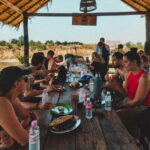
If you want an easy option, bring something simple like a boxed breakfast from your hotel. It’s mentioned as a practical approach by some visitors, and it saves you from hunting around when you’re trying to decompress. Just remember you’ll still want cash if you’re buying food on-site.
Ta Prohm’s jungle feel: how to enjoy the “trees taking over” look
After Angkor Wat, you head to Ta Prohm, one of the most atmospheric temples in the Angkor region. This is the part of the day where the story shifts from polished and formal to cracked stone and roots.
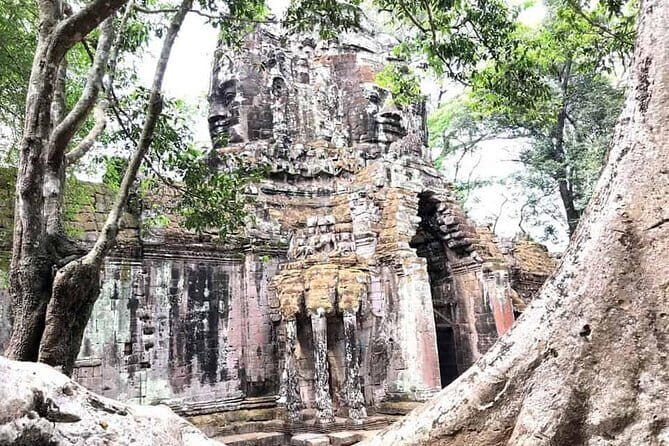
Ta Prohm was once home to 2,740 monks, and today it still looks close to how French explorer Henri Mouhot described it after his early “rediscovery” in the 1850s. That historical contrast is part of what makes Ta Prohm hit so hard. You’re not just looking at ruins—you’re seeing a place that has stayed visually consistent enough over time to feel hauntingly familiar.
The tour keeps the pace manageable here, with about an hour to walk and explore. I like Ta Prohm best when you slow down and let the temple’s shapes do the work—arches, stone faces hidden by vegetation, and the way the light filters through the roots. It’s also one of the best places to photograph without needing a perfect “angle,” because the atmosphere is already textured.




Angkor Thom and Bayon: the faces, the terraces, and the Southern Gate details
Next comes Angkor Thom, the fortified city that gives you the feeling of a whole capital, not just a single temple complex. You’ll pass by major stopping points along the way, including the Terrace of the Leper King and the Terrace of Elephants. These terraces are more than roadside highlights. They’re carved storytelling that sets the stage for what Bayon looks like up close—dense, symbolic, and very intentional.
Then you reach Bayon Temple, built in the 12th century. Bayon’s signature is the central towers covered in more than 200 enormous faces. The faces aren’t just decoration; they turn the temple into a kind of watchful space where you feel surrounded. It’s also the kind of detail that’s hard to appreciate if you’re speed-walking for photos.
From Bayon, the tour continues to the southern gate (Tonle Om Gate), where you’ll see the fortified entry with flanking stone figures—54 on each side, with gods to the left and demons to the right. That left/right symbolism is the kind of detail your guide can clarify quickly, and it’s exactly the stuff you’d miss if you’re only scanning for the biggest photo moment.
The final stretch includes some peaceful time at the Angkor Archaeological Park before returning to your hotel. That part matters more than you’d think. You’ve already done a lot of walking and standing. A calmer close helps you process what you saw instead of feeling like you just rushed from one temple to the next.
Price and logistics: where your $16 really fits in
Let’s talk straight numbers. The tour itself is priced at $16 per person, but you’ll pay the temple entrance fee separately: $37, which covers the temples for the day. Breakfast is also extra.
So is it good value? For me, it comes down to what you’re buying:
- English-speaking guide time covering sunrise, corridors, and the major sites
- Transport comfort via an air-conditioned vehicle and hotel pickup/drop-off
- Practical sunrise access so you’re not figuring out timing at 3–4 a.m. on your own
- “Skip the ticket line” for the day’s entries
- Small comfort extras like bottled water and cool towels
If you’re planning to do Angkor Wat, Ta Prohm, Angkor Thom, and Bayon in one morning, this structure saves you from stitching together multiple decisions and multiple ticket moments yourself. And because the tour ends between 12:30 and 1:30, you keep the rest of your day free—either to rest, eat, or choose another site.
Comfort checklist: what to pack for an 8-hour sunrise-to-bayon day
This tour is physical in the normal Angkor way: you’ll walk, stand, and move through temple stone paths. To make it easier, bring:
- Comfortable shoes (no fashion-only choices)
- Camera (you’ll want it early, and again at Ta Prohm and Bayon)
- Biodegradable sunscreen
- Cash (useful for breakfast since it’s not included, and for the entrance fee situation if needed)
- A torch/headlamp is recommended for the early start
Dress code is simple but strict. Casual is fine, but inside temples shoulders and knees must be covered. Shorts aren’t allowed. That rule isn’t about being picky; it’s about getting you through temple spaces without delays.
One more practical point: this isn’t listed as suitable for wheelchair users, and it’s not suitable for children under 8. If that’s your situation, it’s worth looking at a different Angkor format that better matches mobility and pace.
Who this tour is perfect for (and who should pick something else)
I think this tour fits you best if you want:
- A sunrise experience at Angkor Wat without the stress of planning in the dark
- A guided explanation that helps the carvings and symbolism make sense while you’re there
- One efficient morning route that hits Ta Prohm and the big “faces” moment at Bayon
- Comfort support, not just a long walking day
You might choose another option if you’re looking for a super flexible, slow, pick-your-own-pace day. This is a structured circuit, designed around the order of temples and the timing of sunrise, so it’s not a wander-at-will plan.
Also, if sunrise skies are cloudy, you can’t force the weather. I’d treat sunrise as “worth it” even when conditions aren’t perfect, but be realistic: light changes fast, and the morning depends on what the sky does.
Should you book this Angkor Wat sunrise to Ta Prohm and Bayon tour?
Yes, I’d book it if you’re trying to do the Angkor highlights efficiently and you want a guide to connect the dots between stone carvings, temple design, and the Khmer empire story. The mix of pre-dawn sunrise, a meaningful 2-hour Angkor Wat interior, and the big wow moments at Ta Prohm and Bayon is exactly the kind of day that feels complete without eating your whole schedule.
Do it with one budget reality in mind: the $16 price doesn’t include the $37 entrance fee, and breakfast is on you. Plan for covered clothing, bring a torch, and wear shoes you can walk in for hours.
If that sounds like your kind of day, you’ll probably leave with that rare Angkor feeling: not just photos, but understanding.
FAQ
How long is the tour, and when does it end?
The tour lasts 8 hours and ends between 12.30 and 1.30 pm.
What does the $16 price include, and what costs extra?
The tour includes the sunrise and guided visits to Angkor Wat, Ta Prohm, Angkor Thom, and Bayon, plus an English-speaking tour guide, bottled water, cool towels, air-conditioned transport, and hotel pickup/drop-off. The temple entrance fee is not included.
How much is the temple entrance fee?
The temple entrance fee is US$37.00, and it covers all temples in one day.
Is breakfast included?
No. Breakfast is not included, though there is a break time with breakfast available at a local restaurant.
What should I bring and what dress code rules apply?
Bring comfortable shoes, a camera, biodegradable sunscreen, cash, and it’s recommended to bring a torch for the early morning start. Inside temples, shoulders and knees must be covered, and shorts are not allowed.
Is this tour suitable for children or wheelchair users?
No. It’s listed as not suitable for children under 8 and wheelchair users.
Can I cancel and get a refund?
Yes. There is free cancellation up to 24 hours in advance for a full refund.