REVIEW · CAMBODIA
Private Angkor Sunrise, Guide Breakfast and Tuktuk included
Book on GetYourGuide →Operated by Angkor Local Guide · Bookable on GetYourGuide
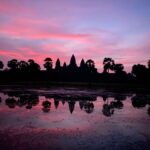
Angkor Wat looks different when you enter in the dark. This private Angkor Sunrise tour gets you moving well before the crowds, then stacks on major temples in a smart, do-able day. I love the reflective sunrise experience from a less-busy approach, and I also like how the whole thing is run with a private guide plus a tuk tuk that keeps things flexible.
You’ll get clear storytelling along the way—history, art, and how people live today—so the monuments don’t feel like just carved stone. I especially like the mix of moods: Ta Prohm with its atmospheric feel, then the big drama of Bayon and Angkor Thom as you walk through the Khmer Empire’s former capital.
One consideration: the big site costs extra once you’re there. The temple pass is not included ($37 per person), and because it’s an early start, you’ll want to be ready for a long morning with sun, heat, and insects.
In This Review
- Key points to know before you go
- Why This Private Angkor Sunrise Works (Even If You’re Short on Time)
- The 4:40AM Start: Angkor Wat Before Sunrise Light
- Angkor Wat Corridors, Bas-Reliefs, and the Meaning Behind the Stone
- Breakfast on the Road: Fueling the Morning Without Slowing You Down
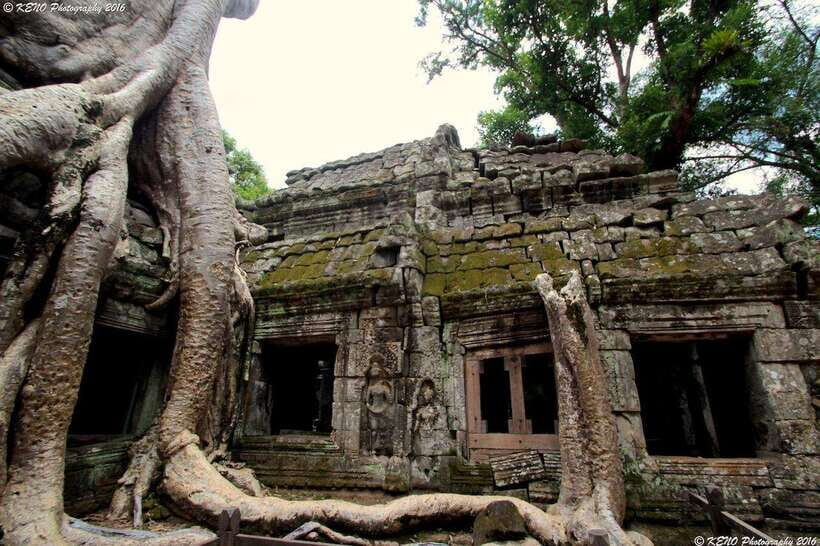
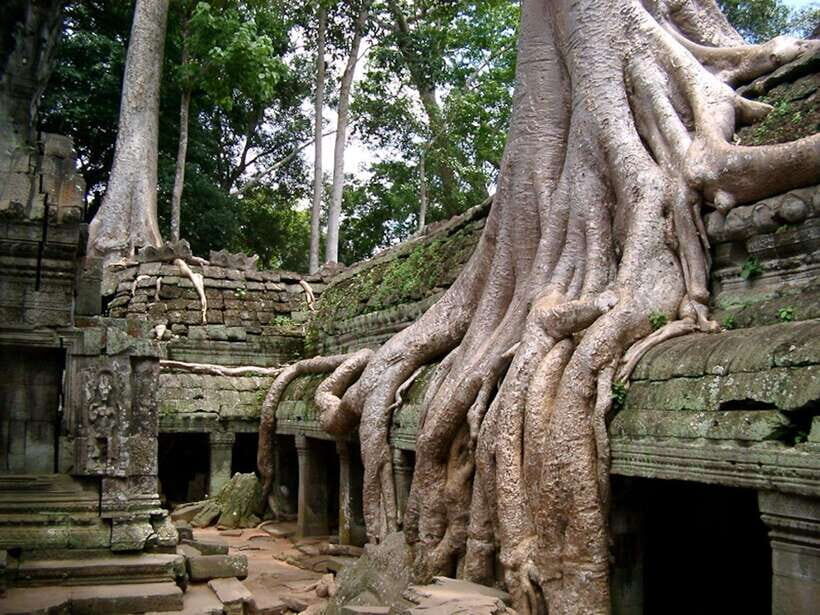
- Ta Prohm: The Temple That Feels Like a Place, Not a Postcard
- Elephant Terrace (350m) and Bayon: Switching From Roots to Power
- South Gate and the End of the Temple Circuit Back to Siem Reap
- Price and Temple Pass Math: Is $24 a Good Deal?
- What to Bring (and What Will Make the Day Easier)
- Should You Book This Private Angkor Wat Sunrise Tour?
- FAQ
- What time does the tour start?
- How long is the tour?
- What’s included besides the guide?
- Is breakfast included?
- What temples are visited?
- Do I need to buy a temple pass?
- What should I bring?
- Are tips included in the price?
- Where do I meet the guide?
- Is the tour suitable for wheelchair users and pets?
Key points to know before you go
- Pre-dawn start at 4:40AM so you can enter Angkor Wat before first light
- Private tuk tuk transport with a driver ready at multiple stops
- Eastern side temple entry for a quieter sunrise feel and corridor walking in the dark
- Ta Prohm + 2,740 monks in the story (the guide ties the temple to its past)
- Elephant Terrace (350m long) plus Bayon and Angkor Thom in one packed day
- Breakfast on the route (in practice, it can include Cambodian options)
Why This Private Angkor Sunrise Works (Even If You’re Short on Time)
If you only have a little time in Siem Reap, this kind of tour can be a lifesaver. You’re not spending your day guessing routes, waiting for buses, or trying to manage tuk tuks with no plan. Instead, you get picked up and moved temple to temple, with a guide who focuses on what matters so you can see the highlights without feeling rushed in the worst way.
The standout value here is the combination: early sunrise access plus a private guide who explains what you’re actually looking at. In a place like Angkor, that difference is huge. Stone carvings and temple layouts can look confusing fast, and a good guide helps you connect the visual details to the big picture—religion, power, kingship, and everyday life across centuries.
The tour is built as a full day too, which is great if you want momentum. But it also means you’ll need to treat it like a real outing: water, shade breaks when possible, and a camera ready for long stretches of walking.
You can also read our reviews of more tours and experiences in Cambodia.

The 4:40AM Start: Angkor Wat Before Sunrise Light
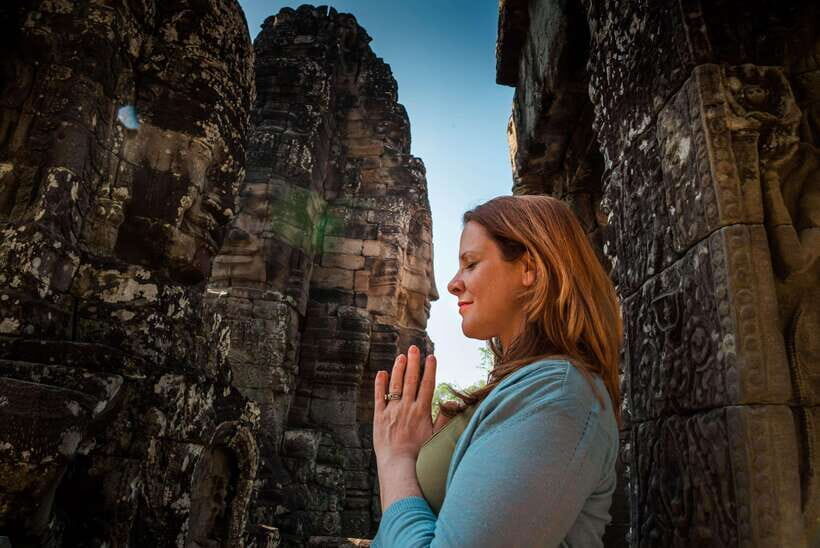
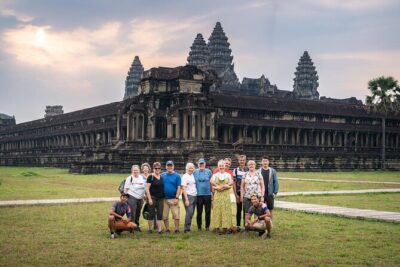
You begin around 4:40AM, when it’s still dark enough that your first steps into Angkor Wat feel almost cinematic. The approach you take matters. This tour enters from a less-used eastern side, which means you get that special sense of arriving before the main wave of people.
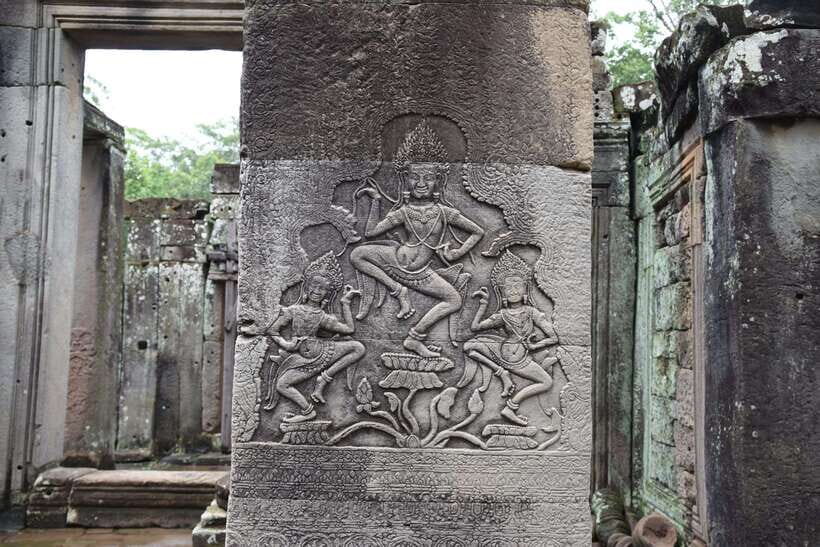
As you enter in darkness, you walk along hoary cloistered corridors and get closer to the area famous for a long stretch of bas-relief carvings—described as the longest stretch in the world. Even if you can’t read every panel, you’ll notice patterns: repetition, storytelling scenes, and the way the carvings guide your eye through temple space.
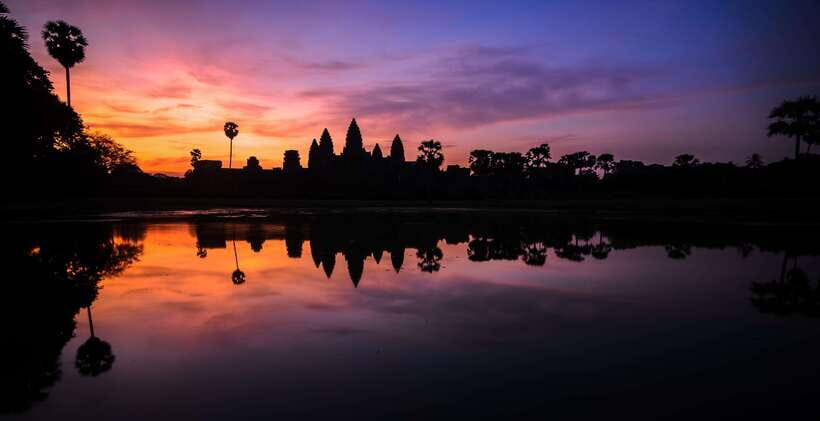
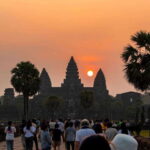
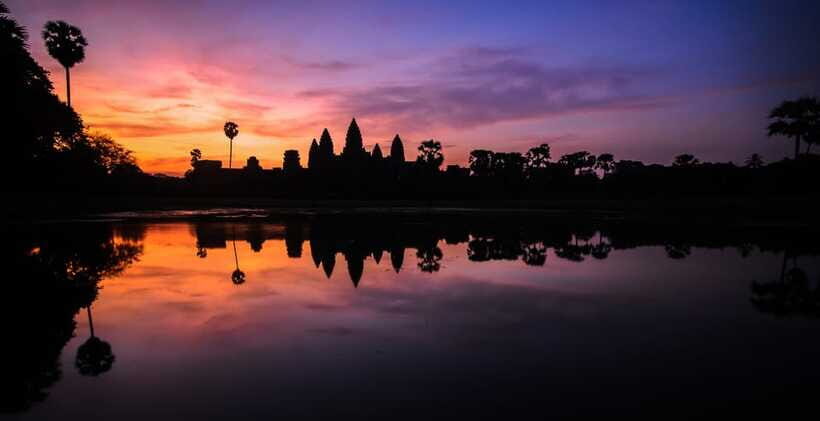
Then comes the sunrise moment—built around the idea of a reflective Angkor Wat sunrise. The timing is the whole game here. The earlier you’re inside, the more likely you’ll catch that “light hits stone” transformation without feeling like you’ve arrived late and are squeezed into the back of someone else’s photo.
Two small practical notes I’d take seriously:
- Wear shoes you can move in quietly. Some of the early walking feels like a steady climb and corridor shuffle.
- Keep your camera hands free early, because once the light starts working, you’ll want quick shots without fumbling.
Angkor Wat Corridors, Bas-Reliefs, and the Meaning Behind the Stone
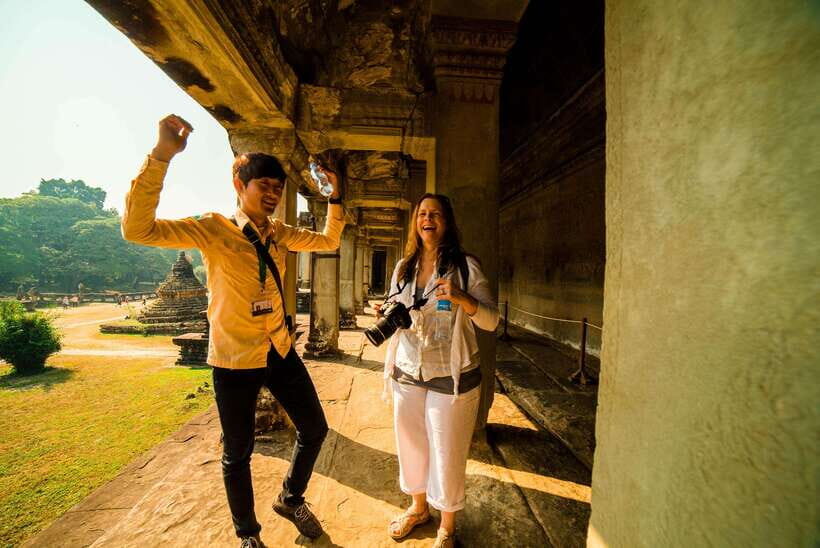
One reason I like a good sunrise guide is that you don’t just watch the sun—you learn how to look. With this tour, you’re encouraged to move through the temple’s key areas in sequence, not randomly. That matters for Angkor Wat, where symmetry, viewpoints, and carved storytelling all connect.
The bas-relief corridor experience is a big part of the feeling. A “long stretch” of carvings sounds like a trivia bullet, but on-site it becomes a pacing tool: you keep walking, then pause, then look again, and suddenly the temple’s design is doing the storytelling. Your guide’s job is to point out what you should notice first—figures, scenes, and the rhythm of the panels—so the whole thing doesn’t become visual noise.
Also, sunrise lighting changes what you can see. In the early dark-to-light transition, textures pop and shadows define carvings. That’s the kind of visual clarity you don’t always get later in the morning when the sun is higher and everything flattens a bit.
If you’re someone who normally skips explanations because you assume you’ll “figure it out later,” this is exactly where it helps. Even with a short day schedule, a guide can give you the story beats so you remember the temple by more than just photos.
Breakfast on the Road: Fueling the Morning Without Slowing You Down
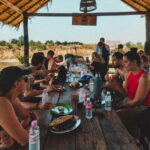
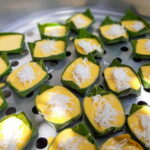
You’ll have breakfast early, during the run between hotel pickup and the main temple time. In one example from a past booking, the breakfast included Cambodian options on the road, and there was even a grilled frog dish available if requested—nothing mandatory, but an example of how local food can show up on this kind of tour.
That flexibility is practical. The biggest challenge with sunrise tours is not just waking up—it’s not knowing whether you’ll have energy for the walking. A breakfast stop helps you avoid the common problem: you arrive hungry, then you’re too focused on food and dehydration to enjoy the temples.
If you’re cautious about food choices, you’re not trapped into anything. I’d treat it like a buffet-style decision: try something local if you’re curious, skip it if you’d rather keep your stomach calm for the day ahead.
Also, the tour includes cool water. I still recommend you keep an eye on yourself—Angkor can be warm even early, and you’ll be moving.
Ta Prohm: The Temple That Feels Like a Place, Not a Postcard
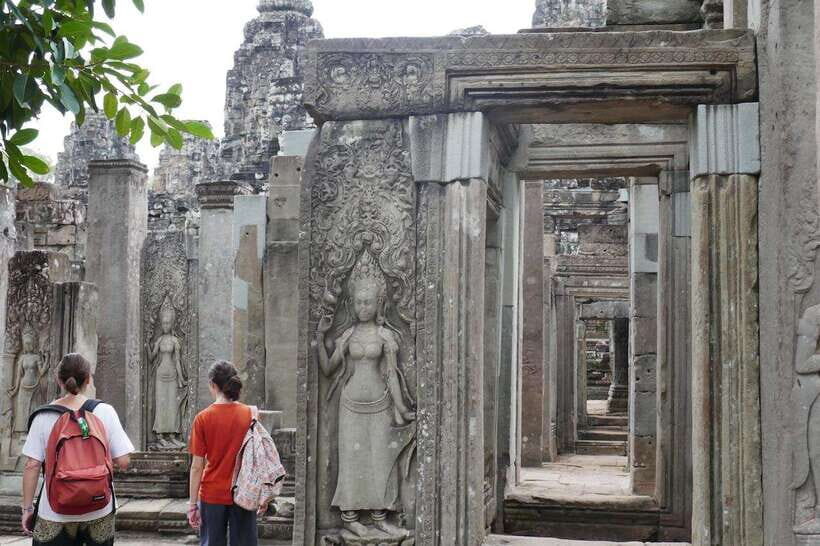
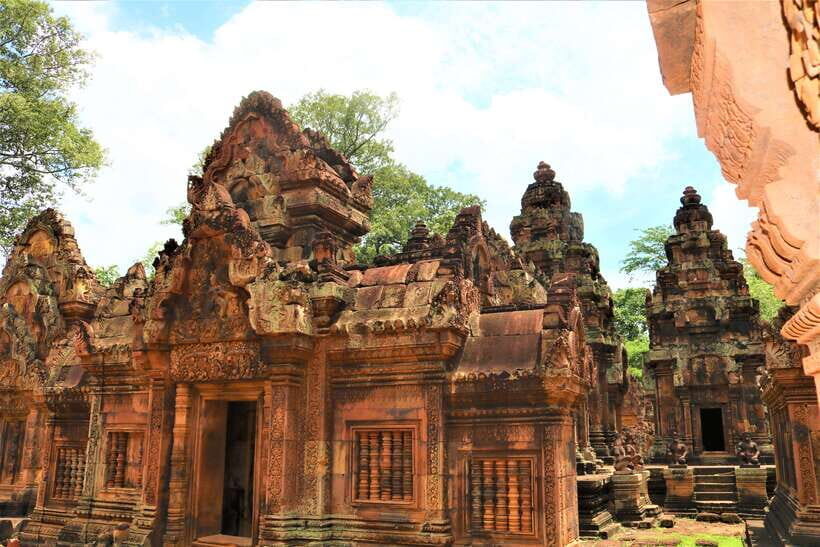
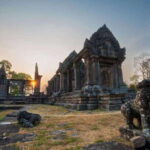
By late morning, you’ll shift to Ta Prohm, one of the most atmospheric temples in the area. This is the stop where Angkor can feel less like a museum and more like a scene left mid-story. The tour includes time exploring the maze-like interior, and the guide connects what you see to what Ta Prohm used to be.
One of the most specific details you’ll hear is that Ta Prohm was once home to 2,740 monks. That number matters because it turns your attention from only the dramatic scenery to the reality of daily life—people living, studying, moving through spaces that now feel half-swallowed by roots.
You’ll also get the story of Henri Mouhot’s rediscovery in the early 1850s, and why the site looks much like it did back then. On a practical level, what this gives you is context for the temple’s current “ruin” look. It’s not just decay; it’s the result of time meeting architecture, and then modern attention doing its part.
Pros and potential drawbacks:
- The pros: this is where you slow down naturally. The paths feel less linear, so you end up looking longer.
- The possible drawback: it’s easy to get tangled in your own sense of wonder and lose time. A private guide helps you keep the exploration meaningful rather than aimless.
You can also read our reviews of more private tours in Cambodia
Elephant Terrace (350m) and Bayon: Switching From Roots to Power
After Ta Prohm, the day moves into ceremonial and political centerpieces. You’ll visit the Elephant Terrace, a 350m-long structure used as a giant reviewing stand for public ceremonies. The tour also frames it as a base for the king’s grand audience hall, so you’re not just walking a long wall—you’re standing where rulers once did their big public moments.
This is one of those temples where a guide’s interpretation helps you “read” the space. The terrace length creates a gradual sense of scale. As you walk, you can feel how the architecture would have supported gatherings, processions, and speeches—things that weren’t quiet or subtle.
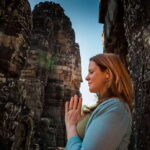
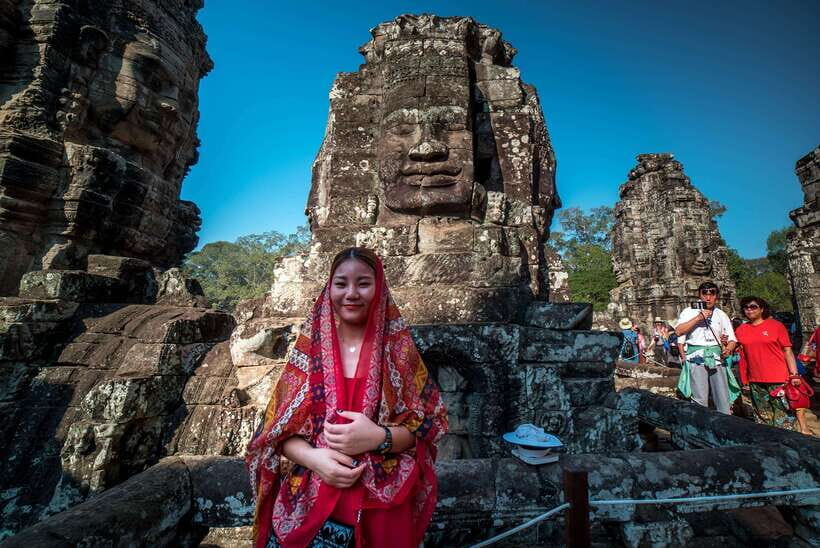
Then you move to Bayon Temple in Angkor Thom. This area is described as the majestic capital that served as the Khmer Empire’s glistening center of power. The biggest highlight here is the moment of standing in front of the site’s grand presence, then venturing inside the city.
In practice, Bayon rewards attention to faces and angles. Early in the day it can feel overwhelming, but with a guide you’ll get a better sense of how the temple’s layout and imagery work together. If you like history that connects to art design, Bayon is a strong finish before you head to the south gate.
South Gate and the End of the Temple Circuit Back to Siem Reap
The tour wraps with the south gate of Angkor Thom, which is noted as the best preserved and is approached from outside via a causeway that extends about fifty meters across a moat. Walking that causeway feels like a ceremonial exit. It’s also a practical moment: you’re near the end, so it’s a chance to re-check your photos and take a final look at how the city’s edges feel.
By midday and early afternoon, the day can start to catch up with you. Heat, tired legs, and the mental effort of constant looking all pile on. That’s why the private transport matters here. When you’re finished, you can return to your hotel after a long but fulfilling day—exactly what you want when you’re spending your limited days on your feet.
If you plan anything later that evening, keep it light. Your brain will be full of carvings and faces, and your body will want downtime.
Price and Temple Pass Math: Is $24 a Good Deal?
The tour price is $24 per person for the guided private experience with tuk tuk transport. Then there’s the extra you must plan for: the temple pass is $37 per person, not included.
So your likely total before tips is around $61 per person, plus whatever you choose for gratuities. Is that fair? In my view, it can be—because you’re paying for a private guide, private driver, and a transport plan that helps you see multiple major sites in one day with minimal friction.
Also, this is not just a “watch the sunrise and leave” setup. You get:
- early Angkor Wat time in the dark
- Ta Prohm exploration
- Elephant Terrace
- Bayon and Angkor Thom
- south gate walk-through
If you try to copy that alone (tuk tuk hopping, timing, entrance management), the costs and stress can add up quickly. If you’re traveling with someone who would rather not negotiate every detail, private value becomes even clearer.
One more balanced note: guide quality depends on the specific person you get. One past booking described a guide with very poor English and a strong alcohol smell. I can’t verify that experience, but it’s a reminder to trust your comfort level. If something feels off, say something early so the day doesn’t turn frustrating.
What to Bring (and What Will Make the Day Easier)
Angkor sunrise is beautiful, but it’s still real travel: heat, insects, dust, and lots of steps. Based on what the tour asks you to bring, here’s what you shouldn’t skip:
- Sunglasses and a hat for the sun shift later in the morning
- Camera (you’ll want it ready by sunrise timing)
- Insect repellent because outdoor time adds up
- Cash for things that are not included (like the temple pass, plus tips)
The tour also includes cool water, but I still like the mindset that you’ll want to sip often. Carrying a little extra water beyond what’s provided can be smart, if you prefer control.
Two other practical constraints:
- Pets are not allowed.
- The tour is not suitable for wheelchair users.
If you’re the type who hates surprises, also note the meetup: you’ll be picked up from your hotel and should wait in the lobby about ten minutes before pickup time.
Should You Book This Private Angkor Wat Sunrise Tour?
Book it if you want an efficient, meaningful day that starts with sunrise and continues through the biggest Angkor highlights without you micromanaging logistics. It’s especially a good fit for:
- short stays in Siem Reap
- couples or friends who want a private pace
- history-and-art lovers who benefit from a guide’s explanations
- anyone who hates the feeling of missing the sunrise timing
Skip or reconsider if you’re very sensitive to guide language quality, smell, or communication. Since this is private, it’s still worth asking what language support you’ll get and whether the guide can clearly explain what you’re seeing. And if you dislike early mornings, you’ll feel the 4:40AM start.
My final take: for the money, the value is strongest when you care about having context while you walk—sunrise in the dark at Angkor Wat, then Ta Prohm’s story, then the scale of Angkor Thom.
FAQ
What time does the tour start?
It begins around 4:40AM with a pre-dawn departure.
How long is the tour?
The duration is 7 hours.
What’s included besides the guide?
You get a local English-speaking guide, transportation by tuk tuk with a professional driver, cool water, and round trip pickup.
Is breakfast included?
Breakfast is part of the experience on the morning drive. Lunch is not included.
What temples are visited?
You’ll see Angkor Wat at sunrise, Ta Prohm, the Elephant Terrace, Bayon Temple in Angkor Thom, and the south gate of Angkor Thom.
Do I need to buy a temple pass?
Yes. The temple pass is $37 per person and is not included.
What should I bring?
Bring sunglasses, a hat, a camera, insect repellent, and cash.
Are tips included in the price?
No. Tips are not included.
Where do I meet the guide?
Pickup is included. Wait in your hotel lobby about 10 minutes before your scheduled pickup time.
Is the tour suitable for wheelchair users and pets?
Wheelchair users are not suitable for this tour, and pets are not allowed.
If you’d like, tell me your travel dates and whether you prefer sunrise photos over more time exploring inside temples—I can suggest the best way to manage your day for the pace you want.