REVIEW · SIEM REAP
Siem Reap: Banteay Srei and Grand Circuit Heritage Tour
Book on GetYourGuide →Operated by Journey Cambodia · Bookable on GetYourGuide
Angkor has more variety than you expect. I love how this small-group circuit takes you beyond the busiest lanes, and I love the Banteay Srei carvings that many first-timers miss. One thing to plan for: you’ll still pay temple entrance fees on top of the tour price.
The best part is the human touch. With an English guide (I’ve seen Pal, Bun, Sak, and others running this route), you get clearer explanations and better photo guidance, plus the van stays comfortable with cold towels and bottled water after each stop.
This is a full day in the sun, so pack for heat. Also note shorts aren’t allowed, and the tour isn’t a fit for kids under 8 or anyone using a wheelchair.
In This Review
- Key highlights to look for
- Angkor outside the big-name rush: why this circuit works
- Pickup around 8:00 and how the 9-hour pace feels
- Preah Khan: tree roots, crumbling stone, and Jayavaraman VII’s message
- Neak Pean and Jayatataka Baray: the calm, circular break you need
- Lunch at a local restaurant: a real break, not just a pit stop
- Banteay Srei: why the best carvings are also the hardest to rush
- Pre Rup at sunset: temple mountain views and the Rajendravarman detail
- Guide style and comfort: why small groups matter at Angkor
- Price and what you’ll pay at the gates ($18 plus the Angkor Pass fee)
- Who should book this Siem Reap heritage day (and who should skip it)
- Should you book this Banteay Srei and Grand Circuit tour?
- FAQ
- What’s the duration of this Siem Reap tour?
- How much does the tour cost?
- Are temple entrance fees included?
- What time does the tour start?
- Is lunch included?
- Is the tour fully guided?
- What’s included for comfort during the day?
- What should I bring?
- Is this tour suitable for children or wheelchair users?
- (Optional) Is there a final sunset viewpoint?
Key highlights to look for
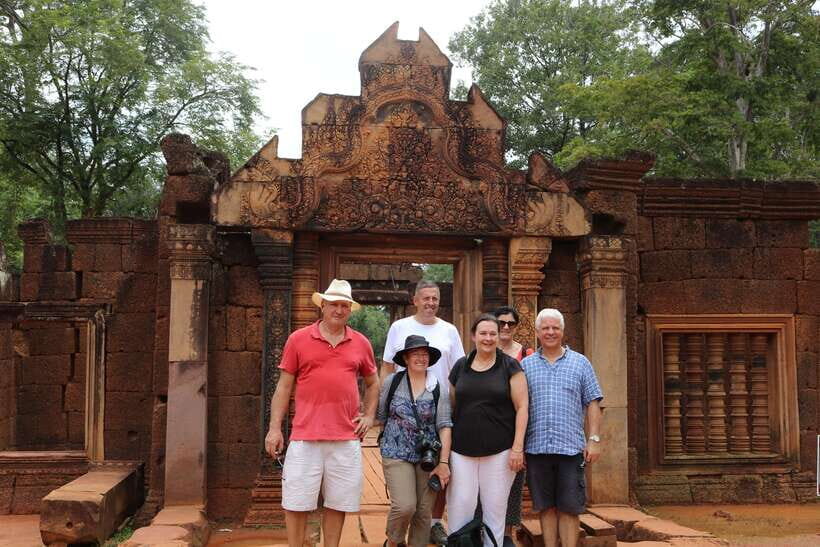
- Banteay Srei’s sandstone carvings: often described as among Cambodia’s finest, and it reopened to visitors after the Khmer Rouge left the area in the late 1990s
- Pre Rup for sunset views: a temple mountain tied to Rajendravarman (dedicated 961 or early 962), with an atmospheric last stop
- Preah Khan’s “roots + ruins” feel: a huge temple complex commissioned by Jayavaraman VII for his father, with World Monument Fund restoration in places
- Neak Pean inside Jayatataka Baray: an artificial island with a Buddhist temple on a circular island that adds variety to the day
- Small groups: typically around 6–7 people, so you get time for questions and photos
- Comfort built into the schedule: air-conditioned transport, cool towels, and bottled water to handle the Khmer heat
Angkor outside the big-name rush: why this circuit works
If you’re choosing between one “big” Angkor day and a second day that feels calmer, this tour makes sense fast. You’re not doing the main highlights only. You’re chasing the outside sites—places with different vibes and less crowd pressure.
What I like most is the balance between spectacle and detail. Preah Khan gives you that dramatic, half-ruined atmosphere. Banteay Srei, by contrast, is about craft—small scale, sharp lines, and carvings that reward slow looking. And then Pre Rup closes the loop with a view-focused finale.
The route also gives you a religious contrast that’s easier to understand in a day than if you try to DIY everything. You’ll see Hindu and Buddhist spaces in the same overall circuit. That makes the iconography and architecture feel less random.
You can also read our reviews of more historical tours in Siem Reap
Pickup around 8:00 and how the 9-hour pace feels
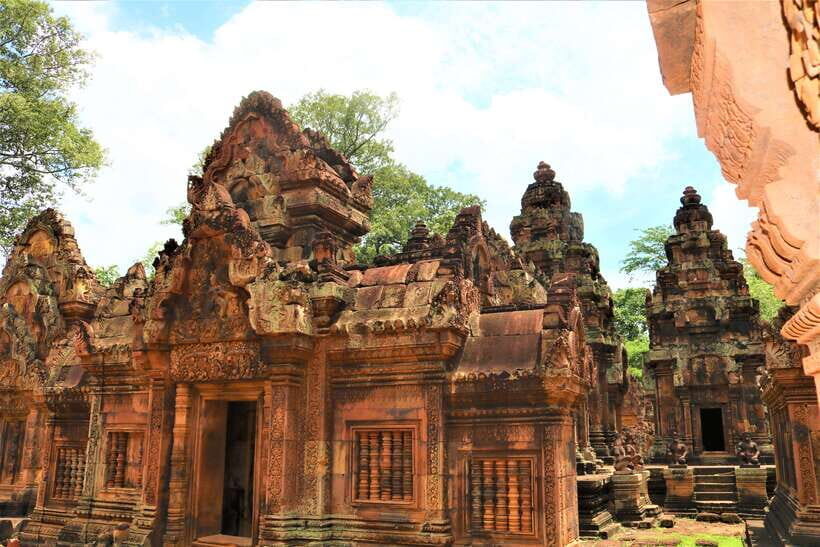
This is a true day trip: about 9 hours, starting in the morning from Siem Reap hotel pickup. You’ll typically depart close to 8:00 am, then move site to site with travel breaks between temples.
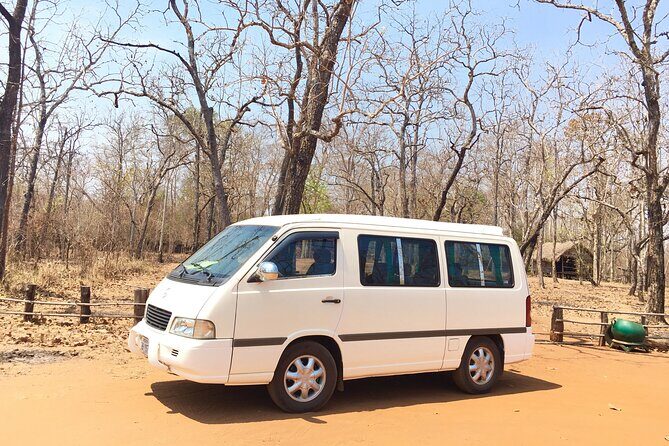
The pacing is structured for two things: seeing properly and staying comfortable. Each temple stop includes time to walk and look, not just a quick photo scramble. Between stops, the air-conditioned van helps, and the team provides bottled water and a cool towel right when you get back.
One practical note: temples mean uneven ground and longer walks than you might expect from the word “heritage.” Wear outdoor shoes. You’re not likely to finish the day feeling fresh, but you should finish it feeling satisfied—because you won’t feel rushed at the important moments.
Preah Khan: tree roots, crumbling stone, and Jayavaraman VII’s message
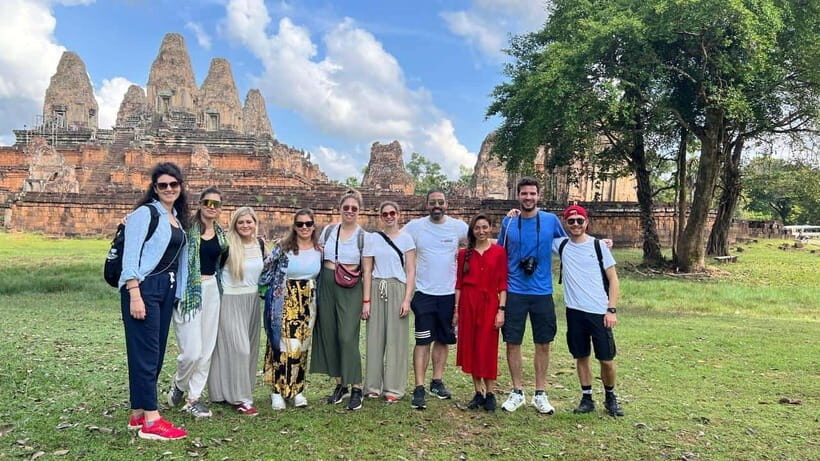
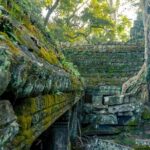
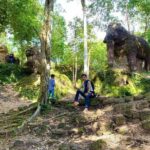
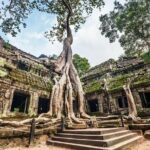
Preah Khan is the kind of place where the ruins feel alive. The temple is described as atmospheric—part crumbling stone, part tree roots working into the structure like the jungle is reclaiming it. It’s impressive without needing perfect reconstruction.
This is also the temple stop where the background matters. Preah Khan was commissioned by Jayavaraman VII, in honor of his father. When your guide explains that connection, the temple stops feeling like a random “must-see” and starts feeling like a deliberate message in stone.
You’ll get both a guided visit and time to walk. Photo stops are included, and you’ll usually have enough room to step back and take in the whole scale instead of just shooting details at arm’s length. In some places, restoration work is already visible thanks to efforts by the World Monument Fund, so you can see what’s been stabilized and what still looks raw.
If you’re the kind of person who likes to understand what you’re looking at, this stop is usually where the guide’s skill shows. Guides often use past images and reference photos on a tablet to help you spot carvings and layout more clearly.
Neak Pean and Jayatataka Baray: the calm, circular break you need
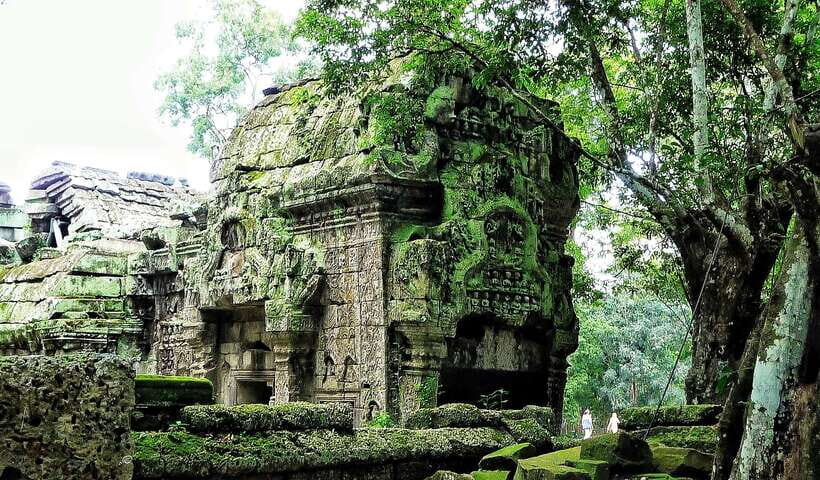
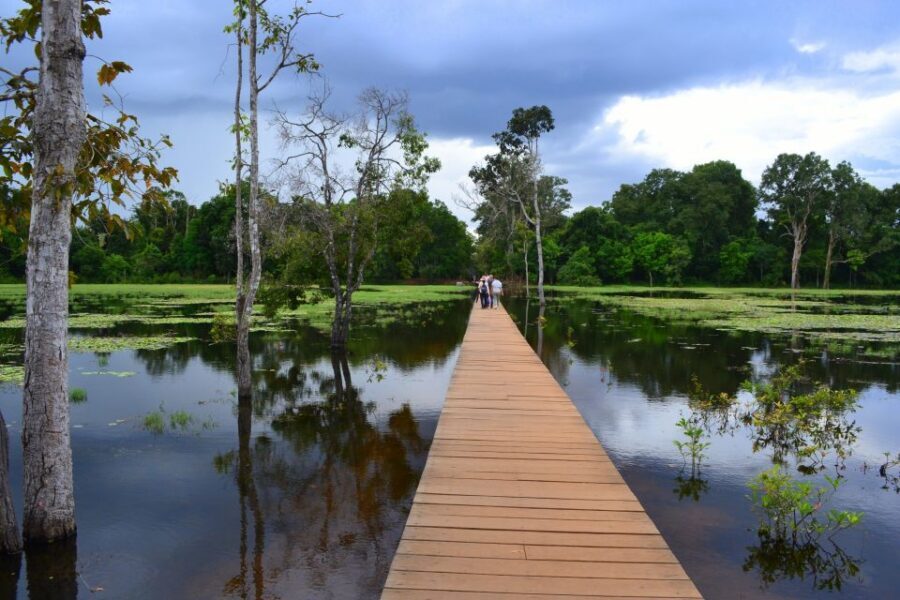
After the dramatic ruins of Preah Khan, Neak Pean works like a palate cleanser. It’s an artificial island setting, with a Buddhist temple on a circular island inside Jayatataka Baray.
Even if you’re not a religion-and-symbols person, Neak Pean helps your day make sense. Instead of marching from one huge complex to the next, you get a different mood: quieter, more reflective, and visually distinct. The setting also makes your guide’s explanations easier to follow because you’re not fighting sensory overload.
Expect a photo stop plus guided time and a walk. The walk won’t be the longest part of the day, but it helps you see the symmetry and why the layout stands out. It’s the kind of stop that makes the circuit feel intentional.
One practical consideration: this is still outdoors. Bring sun protection seriously—hat and sunglasses are not optional if you want to enjoy the details instead of constantly wiping sweat.
Lunch at a local restaurant: a real break, not just a pit stop
Lunch is included at a local restaurant, with time allotted (about an hour). The menu setup allows for coffee, tea, and beer, which is handy if you want a cold drink after morning walking.
This isn’t a “grab-and-go” stop. The tour schedule gives you enough time to eat properly and reset before the harder carving focus at Banteay Srei later.
If you’re used to temple days that feel like a marathon of stone, I’d treat this as your recovery window. Eat enough, drink some water, and don’t stack caffeine on top of heat without also hydrating.
Banteay Srei: why the best carvings are also the hardest to rush
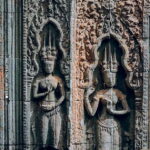
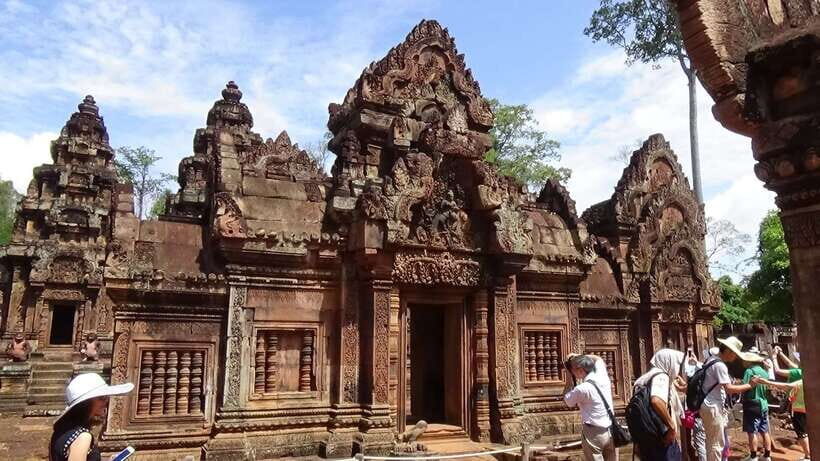
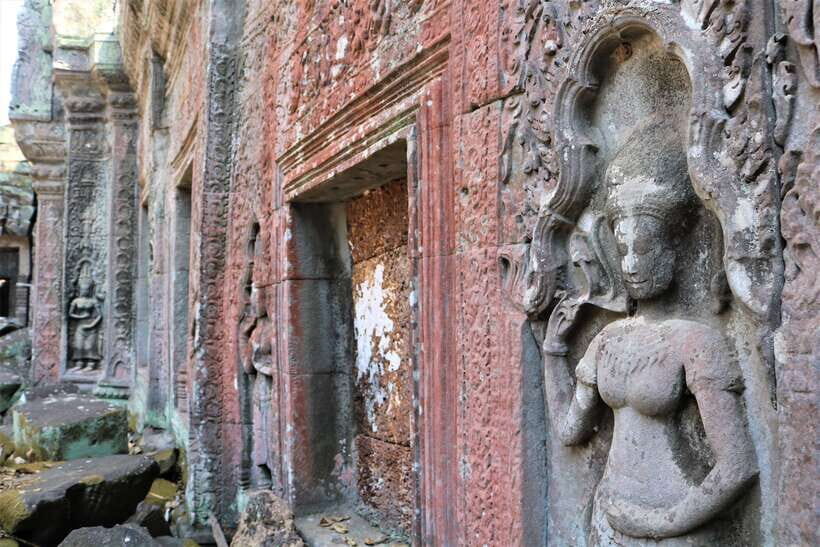
Banteay Srei is the star of this day for good reason. It’s a smaller sandstone temple, but the reliefs are often described as the finest and most skillfully crafted in Cambodia.
This matters because Banteay Srei isn’t about size. It’s about precision. The carvings reward attention: you’ll want time to get close enough to see texture, then step back to understand the composition. That’s why the guided visit and walk time are such a big deal here.
There’s also an important historical angle. Banteay Srei became accessible to visitors only after the late 1990s, when the Khmer Rouge left the area. That adds weight to the experience. You’re seeing work that survived a brutal modern chapter—and now you’re seeing it in a restored, visitable context.
In many of the guides’ styles I’ve seen for this kind of tour, they’ll also help you find good viewpoints for photos. Some guides even help take pictures so you’re not stuck photographing your own feet while everyone else gets the shot.
If I were picking just one temple to slow down for on this day, it would be this one.
Pre Rup at sunset: temple mountain views and the Rajendravarman detail
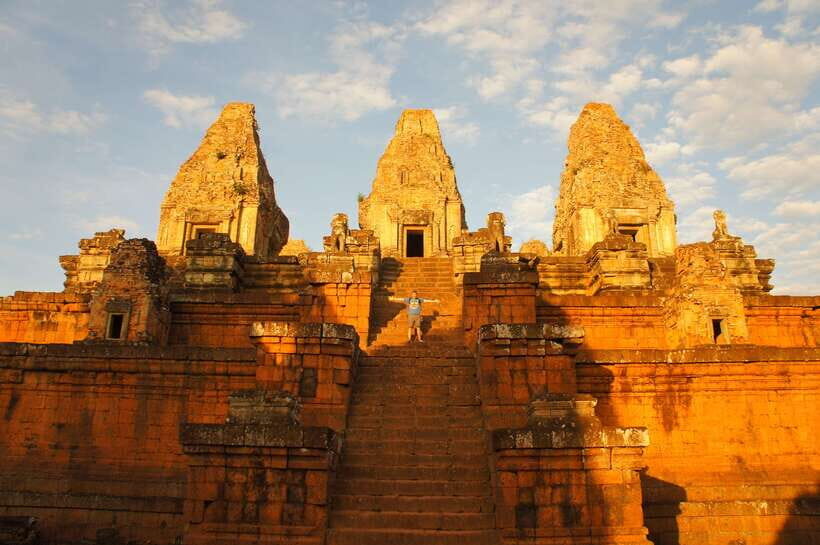
Pre Rup is your sunset finale, and the setting is the point. The temple is described as a temple mountain built with brick, laterite, and sandstone, associated with Khmer king Rajendravarman and dedicated in 961 or early 962.
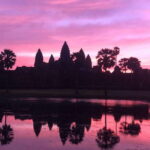
For sunset, you’re not just waiting for the light—you’re experiencing the architecture as the sky changes. The tour includes photo time plus a guided visit and a sunset-focused stop (around 1.5 hours). That length is good. It gives you time to watch the light shift and still get explanations without racing the clock.
Pre Rup also helps balance the day intellectually. If earlier stops gave you story through scale and ruins, Pre Rup gives you story through sacred geometry and site design. When you understand why it was built, the view feels more meaningful than scenery.
Weather can affect how long you stay at the last stop. If conditions turn, the tour can sometimes adjust the final sunset moment so you don’t get stuck in the worst of it. Either way, you still finish with a proper sense of closure.
Guide style and comfort: why small groups matter at Angkor
This tour’s biggest practical advantage is how it’s run. You’re in a small group—often around 6–7 people—so you’re not lost in a busload. That changes how the day feels. Questions get answered. You’re not forced into a one-speed shuffle.
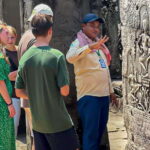
Guides are a key part of the value. In the groups I’ve seen represented here, guides like Pal and Bun are repeatedly praised for careful explanations and for taking time with photos. Some guides use tablets with images or reference visuals to help connect what you’re seeing to what it used to look like.
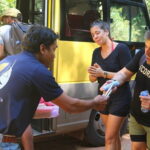
The driver support is also part of the comfort package. Cold water and cool towels show up repeatedly, timed to when you return to the van after each site. If you’ve ever done Angkor in warm months, you know this is not “nice to have.” It’s the difference between enjoying the carvings and just surviving the heat.
Add air-conditioning in the transport, and the day stops feeling like pure endurance.
Price and what you’ll pay at the gates ($18 plus the Angkor Pass fee)
The tour price is listed as $18 per person, and that’s for a long guided day: pickup/drop-off, air-conditioned transport, bottled water and cool towels, and lunch time. In plain terms, you’re paying for organization and human help—plus time at sites that most people would struggle to sequence well on their own.
The catch is temple access. Temple entrance fees are not included, listed as $37 per person for a 1-day pass. So your realistic total is closer to $55 before any personal extras, assuming you need the full day pass.
Is it still good value? For this specific circuit, yes—because the tour covers multiple outside sites plus a sunset stop, and it does it in a small group with repeated cooling breaks. If you’re already planning to buy the pass anyway for other Angkor days, this becomes a smart use of that ticket time.
Who should book this Siem Reap heritage day (and who should skip it)
This tour fits best if you:
- want Angkor temples beyond the most crowded names
- care about carving detail, not just big silhouettes
- like asking questions and getting straight explanations in English
- want a calmer second day without losing quality time
It’s not a fit if you:
- need wheelchair access (it’s not suitable)
- are traveling with children under 8
- prefer to wear shorts to keep cool (shorts aren’t allowed)
If you’re traveling solo, this small-group format can still feel comfortable because you’ll have time to talk with the guide and not just stand at the edge of a crowd.
Should you book this Banteay Srei and Grand Circuit tour?
If you have more than one day in the Angkor region, I think this is an easy yes. The value is in variety: Preah Khan’s ruined atmosphere, Neak Pean’s island calm, Banteay Srei’s carving focus, and Pre Rup’s sunset finale.
It’s also a good choice if you already did the big-ticket temples and now want something that feels more local and less packed. The small-group format and the repeated comfort breaks make the day manageable.
My one decision rule: if you’re allergic to heat and long walks, you might find the full-day schedule tiring. But if you pack sun protection and stay hydrated, this is the kind of temple day that makes Angkor feel bigger than the famous postcards.
FAQ
What’s the duration of this Siem Reap tour?
It runs for about 9 hours.
How much does the tour cost?
The listed price is $18 per person.
Are temple entrance fees included?
No. Temple entrance fees are not included and are listed as $37 per person for a 1-day pass.
What time does the tour start?
You’ll depart from your hotel around 8:00 am. The exact pickup time depends on where your hotel is located.
Is lunch included?
Yes. Lunch is included at a local restaurant, along with coffee, tea, and beer.
Is the tour fully guided?
Yes. An English-speaking tour guide is included, and guided tours are part of each temple stop.
What’s included for comfort during the day?
You’ll ride in an air-conditioned vehicle and you’ll get complimentary bottled water and a cool towel.
What should I bring?
Bring sunglasses, a sun hat, insect repellent, and outdoor clothing.
Is this tour suitable for children or wheelchair users?
It’s not suitable for children under 8, and it’s not suitable for wheelchair users.
(Optional) Is there a final sunset viewpoint?
Yes. The tour includes sweeping sunset views from Pre Rup, as part of the last stop.