REVIEW · SIEM REAP
Grand Circuit with Banteay Srei and Banteay Samre Tour
Book on Viator →Operated by Angkor Doors · Bookable on Viator
Pink stone and quiet ruins beat the crowds. This Grand Circuit tour pairs Banteay Srei’s intricate pink sandstone carvings with several calmer temple stops across the day, and I like that the stops feel curated for variety instead of just repeating the same big names. One thing to plan around: temple admission isn’t included, so you’ll still need an Angkor Pass.
The logistics are also visitor-friendly. You get an English-speaking guide, AC transport, and bottled water, plus a guide can help you get your Angkor Pass if you do not already have one. The potential drawback is simple: it’s a long 8 to 9 hour day, so you’ll want good shoes and a realistic expectation that there will be some walking and stairs.
In This Review
- Key Things You’ll Notice on This Grand Circuit Tour
- What This Tour Does Differently on the Grand Circuit
- Morning: Preah Khan, Ta Som, Neak Pean, East Mebon (and nearby stops)
- Afternoon: Banteay Srei, Banteay Samre, Pre Rup
- Banteay Srei (the women’s temple, pink sandstone, fine carving)
- Banteay Samre
- Pre Rup (Shiva temple, late 10th century)
- Angkor Pass and Dress Code: the two things that can make or break the day
- Price and value: what $59 really includes
- Timing, lunch, and how to avoid a cranky ending
- The guide experience: how English explanations change what you see
- Photo and comfort tips for Banteay Srei and the rest
- Should you book this Grand Circuit tour?
- FAQ
- How long is the Grand Circuit tour?
- What is the price per person?
- Is transportation included?
- Is the Angkor Pass included in the price?
- Can the tour help me buy the Angkor Pass?
- What about lunch?
- Does the tour provide bottled water?
- What temples are included on this itinerary?
- What is the dress code for the temples?
- Is this tour private?
- Can I cancel for a full refund?
Key Things You’ll Notice on This Grand Circuit Tour
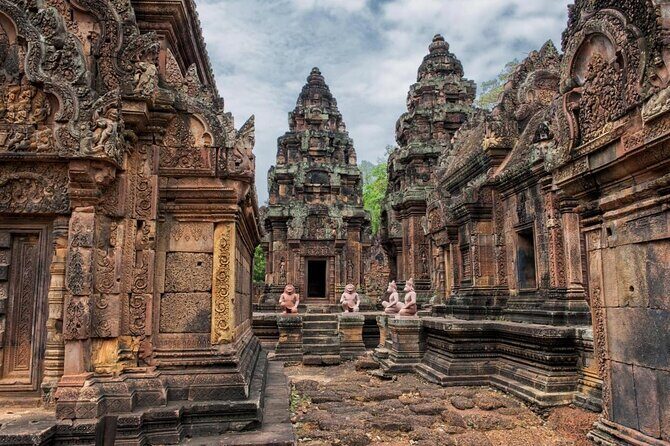
- Banteay Srei focus: pink sandstone and fine carvings that look different from the larger Angkor-era stone temples
- A balanced mix of temple styles: Hindu and Buddhist sites across the circuit, not just one era or religion
- Photo-friendly variety: quieter compounds plus iconic layouts like the causeways and water features
- English-speaking guidance: you’ll have someone to explain what you’re seeing, and why it mattered
- Angkor Pass help: you can still sort tickets before you start, if needed
- Long, full-day pacing: plan for an all-day outing with lunch on your own
What This Tour Does Differently on the Grand Circuit
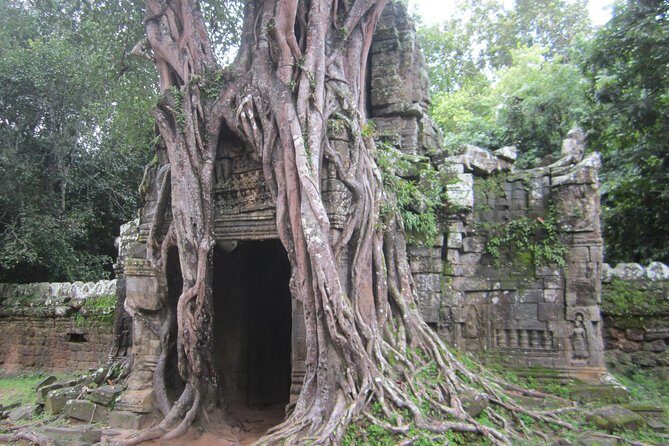
This is the kind of day trip that makes sense after you’ve seen the main highlights already. You still get major temples like Preah Khan, but you also get stops that many first-timers skip because they assume everything important is concentrated in one tight cluster.
What I like for your planning: the itinerary is built around contrast. You’ll move from larger, more complex sites to smaller, quieter temple areas. You’ll also shift between Hindu and Buddhist themes, so the spiritual art and architecture don’t all blur together.
The pacing is the trade-off. Eight to nine hours is enough time to feel like you experienced Angkor properly, but not enough to slow down for people who want a long, unbroken wander at every single stop. If you hate rushed photo stops, you’ll still find time to enjoy the details, but you’ll need to accept that the day runs on a schedule.
You can also read our reviews of more tours and experiences in Siem Reap.
Morning: Preah Khan, Ta Som, Neak Pean, East Mebon (and nearby stops)
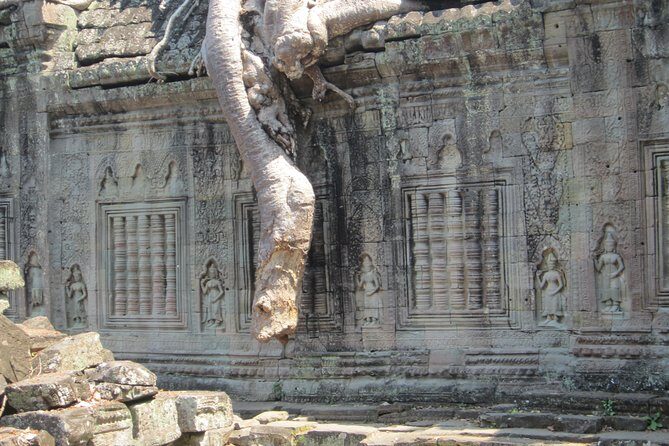
Morning starts with Preah Khan, a 12th-century temple linked to King Jayavarman VII. Even if you have seen Angkor Thom before, this one feels different. The site’s layout and scale help you understand how temples served as more than worship spaces. They were also centers tied to administration and daily life.
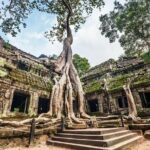
From there, the route turns toward Ta Som. This is another Jayavarman VII era temple, and the appeal is its mood. It tends to feel more intimate, with strong “temple meets nature” visuals—great for photos when the light is good.
Next is Neak Pean, whose name translates to Entwined Serpents. It’s a Buddhist temple built on a man-made island. The water setting gives it a calm feel compared with the more rugged stone compounds. It’s also a relief stop in the day: you get a clear focal point without having to climb forever.
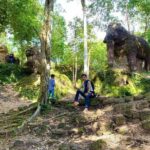
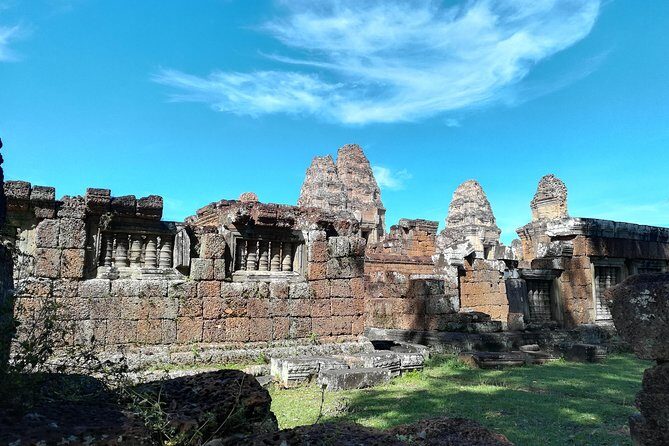
Then you head to East Mebon, known as an early Khmer architecture example from the 10th century. This stop is shorter, but it can be memorable because the site gives you a strong feel for how earlier temple forms evolved. One review detail that stood out: East Mebon’s area includes elephant-related details, which makes it more playful than you’d expect on a serious circuit.
One consideration for the morning: these sites are all part of the same day, so the energy needs to be steady. If you show up already tired from sunrise planning, the time can feel tight. Pack water, wear comfortable clothes, and save your biggest photo session for Banteay Srei later.
Afternoon: Banteay Srei, Banteay Samre, Pre Rup
Afternoon is where the tour turns into a real art-and-detail show.
Banteay Srei (the women’s temple, pink sandstone, fine carving)
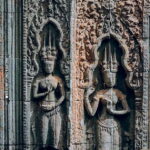
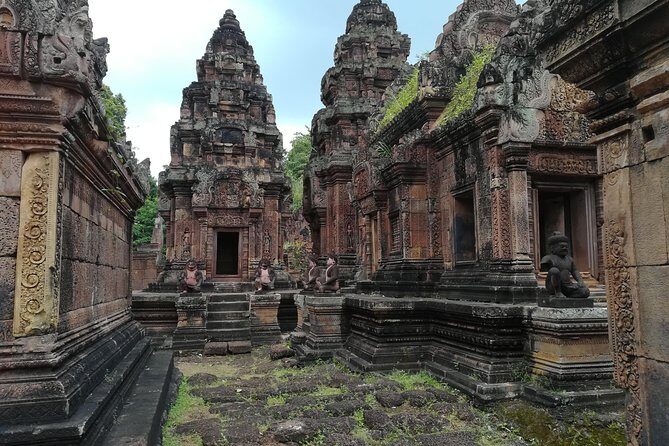
Banteay Srei is widely known as the Citadel of the Women. It’s a Khmer Empire-era temple famous for its fine carving. You’re looking at Hindu main gods in stone, and the “pink” sandstone is part of what makes the carvings so striking.
This is the stop that helps your whole day feel worth it. At the big temples, your eyes often jump from structure to structure. Here, you can slow down enough to spot patterns, figures, and the kind of sculptural work that takes real time to create. For me, this is where the guide explanations matter most—because someone pointing out what you’re looking at makes the carvings feel more legible, not just pretty.
Banteay Samre
After Banteay Srei, you’ll stop at Banteay Samre. This keeps you in the Khmer temple rhythm while giving your brain a new set of shapes and story details. It’s a good follow-up because it doesn’t repeat the same exact vibe as Banteay Srei.
The main practical point: Banteay Srei can pull a lot of attention, so you’ll want to pace yourself. If you spend too long hunting every carving at the first pink-stone stop, you’ll feel rushed later. Even with time pressure, Banteay Samre still works best when you treat it as a “read the shapes” stop rather than a speed photo run.
Pre Rup (Shiva temple, late 10th century)
Finally, you reach Pre Rup, a Hindu temple built in the late 10th century dedicated to Lord Shiva. Pre Rup is the kind of site that works well at this stage of the day because the structure helps you orient quickly. You get strong temple massing and clear views out over the compound areas.
If you’re the type who likes a final “anchor point” to end on, Pre Rup does that. It’s not the longest stop, but it gives a satisfying conclusion to the Hindu portion of the circuit.
Angkor Pass and Dress Code: the two things that can make or break the day
This tour’s temple admission is not included, so you’ll need an Angkor Pass. The pass is listed as a one-day option at $37. If you haven’t gotten it yet, the tour includes help to purchase it on the way.
A second essential: temple dress code. You must cover your thighs and shoulders when entering temple complexes. If you show up without the right clothing, you may be refused entry. That rule is not optional, and it can ruin your schedule if you have to scramble to solve it in the area.
My practical advice:
- Bring a light layer that covers shoulders.
- Consider a wrap or sarong-style cover for your legs.
- Wear shoes you can handle on uneven stone and stairs.
This is the part that feels boring at first—until you see how quickly it matters once you’re standing at a gate.
Price and value: what $59 really includes
At $59 per person, this tour looks affordable mainly because it includes the day’s “moving parts.”
What you get:
- An English-speaking tour guide
- AC transportation by car/minivan/minibus
- Bottled drinking water
- A mobile ticket
- Group discounts (if you’re joining a group rate)
What you do not get:
- Entrance fees (the Angkor Pass)
- Lunch and drinks
- Accommodation
Here’s how I’d judge value for you: if you already plan to visit multiple temples in one day, the main costs you would pay anyway are transport and admissions. This tour handles the transport and guides the flow, so you’re not trying to stitch together your own route with a driver and time wasted at ticket lines.
Still, do the math honestly. If you don’t already have an Angkor Pass, your day’s total will be higher once you add it. But the pass is what gives you access across the circuit, so it’s still the correct move if you plan a full temple itinerary.
Timing, lunch, and how to avoid a cranky ending
This is an 8 to 9 hour outing. Morning and afternoon blocks are built around temple entry windows, travel time, and the time people typically need to view and take photos.
Lunch is on your own account. The tour notes you can expect restaurant recommendations, but you still pay for what you eat. That setup can be a good thing: it gives you control over diet and budget. The downside is that you’ll need to choose with care so you don’t end up eating something you do not enjoy after a long morning of walking.
A good day plan:
- Keep your energy steady with water.
- Eat something filling but not overly heavy.
- If you’re heat-sensitive, look for shaded seating during the midday break.
By late afternoon, the combination of sun + stone surfaces can be tiring. If you go in expecting a relaxed strolling day, you might feel disappointed. If you go in expecting a productive sightseeing day, you’ll likely feel happy with what you get.
The guide experience: how English explanations change what you see
One of the highest points here is the guide quality. English-speaking guides are part of the package, and the names that appear in customer feedback include Pheng and Chen. There’s also a mention of Mai as a driver.
You’ll feel it when someone can connect what you’re seeing to what the temple was built for. Even if you’re not a history person, a good guide helps you notice the right details. With Banteay Srei, that’s especially true—fine carvings can look like “lots of figures” unless you know what those figures represent.
The practical goal of the guide isn’t just facts. It’s helping you move efficiently between sites and making sure you do not miss the most meaningful viewpoints inside each temple area.
Photo and comfort tips for Banteay Srei and the rest
If you want the photos to look better than your memory will, you’ll need two things: good angles and less-rushed time.
- Start with Banteay Srei. This is the place where pink stone and carved details reward close viewing.
- Plan for changing light. The circuit shifts between open areas and shaded structures, so your phone camera might need a quick exposure adjustment.
- Expect stairs and uneven ground. Good walking shoes matter more than stylish sandals.
- Bring something to stay covered. The dress code is a real, immediate constraint.
The other comfort tip is mental: switch gears between “overview shots” and “detail shots.” When you treat each temple like two different assignments, you naturally pace yourself without feeling like you’re losing time.
Should you book this Grand Circuit tour?
Book it if:
- You’ve already hit the biggest Angkor names and want a second day that feels more varied.
- You care about Banteay Srei’s carvings and Hindu artwork, not just broad temple outlines.
- You like having an English guide to help you interpret what you’re seeing.
- You want AC transport and a structured route without planning every stop yourself.
Skip it (or adjust expectations) if:
- You want a very relaxed day with minimal walking.
- You already know you’re going to skip dressing properly for temples. The rules are strict, and refusal is possible.
- You hate days where lunch is on your own, even if recommendations are offered.
For most people planning a Siem Reap temple circuit, this is a solid way to see multiple major sites plus quieter, more varied stops—especially because the itinerary includes the kind of detail work you do not get from the biggest monuments alone.
FAQ
How long is the Grand Circuit tour?
The tour runs about 8 to 9 hours.
What is the price per person?
The price is $59.00 per person.
Is transportation included?
Yes. You get transportation in an AC car, minivan, or minibus.
Is the Angkor Pass included in the price?
No. Entrance fees are not included. A one-day Angkor Pass is listed at $37.00 per person.
Can the tour help me buy the Angkor Pass?
Yes. The tour notes that you’ll be taken to buy an Angkor Pass if you haven’t got one.
What about lunch?
Lunch is not included, but the restaurant will be recommended.
Does the tour provide bottled water?
Yes. Bottled drinking water is included.
What temples are included on this itinerary?
The listed stops include Banteay Srei, Banteay Samre, Pre Rup, Preah Khan, Ta Som, Neak Pean, and East Mebon, with Banteay Prei also mentioned in the morning plan.
What is the dress code for the temples?
You must cover your thighs and shoulders when entering temple complexes. If you are not dressed correctly, you may be refused entrance.
Is this tour private?
Yes. It’s described as a private tour/activity, with only your group participating.
Can I cancel for a full refund?
Yes, free cancellation is available. You can cancel up to 24 hours in advance for a full refund.