REVIEW · SIEM REAP
Angkor Temple Tour with Sunset – Small Group
Book on Viator →Operated by Pitt Angkor Tour · Bookable on Viator
Angkor at sunset feels like time travel. This small-group day tour hits Angkor Wat, Bayon, Ta Prohm, and ends at Phnom Bakheng for sunset, with an English-speaking guide to explain what you’re actually looking at. I love how efficient the route is and how the guide turns piles of stone into a clear story. I also love the comfort touches: air-conditioned transport and cool towels during the day. One thing to plan for: the big temple admission isn’t included, so you’ll still need the Angkor Pass on top of the tour price.
You’ll cover a lot of ground in about 10 hours, starting with an early pickup in Siem Reap. If you hate “factory pace” sightseeing, you may feel the schedule is packed—but the stops are long enough to breathe, take photos, and not just run past carvings.
Key highlights (quick reads)
- Angkor Wat + Bayon + Ta Prohm in one day: the core sights without wasting hours on indecision
- Guide-led context: you’re not just looking, you’re learning what matters and why
- Cool towels and air-conditioned vehicle: small comfort that helps in the heat
- Phnom Bakheng for sunset: timing-focused finale with a famous view
- Photo stops built in: South Gate and optional Terrace of the Leper King
In This Review
- What This $20 Tour Really Covers (and What It Doesn’t)
- Pickup at 8:00 and a 10-Hour Rhythm You Can Handle
- Angkor Wat (2 Hours): The Main Stage, Not a Whirlwind
- Bayon (1 Hour): The Temple of Faces
- Angkor Thom (1 Hour) + South Gate Photos (20 Minutes)
- Ta Prohm (1 Hour): The Tomb Raider Temple Effect
- Terrace of the Leper King (20 Minutes, If Time Permits)
- Phnom Bakheng Sunset (2 Hours): The End You Planned For
- Guide-Driven Storytelling: Why This Day Feels Clear
- Value Check: Is This Worth It at $20?
- Who Should Book This Angkor Temple Tour
- Should You Book Angkor Temple Tour with Sunset?
- FAQ
- What time does the tour start?
- Where does the tour begin and end?
- How long is the tour?
- What is included in the tour price?
- Are entrance fees included?
- How much is the Angkor Pass?
- Does the tour include food and drinks?
- Does the tour provide a ticket on your phone?
- Will I have other people in the group?
- Is it refundable if plans change?
What This $20 Tour Really Covers (and What It Doesn’t)
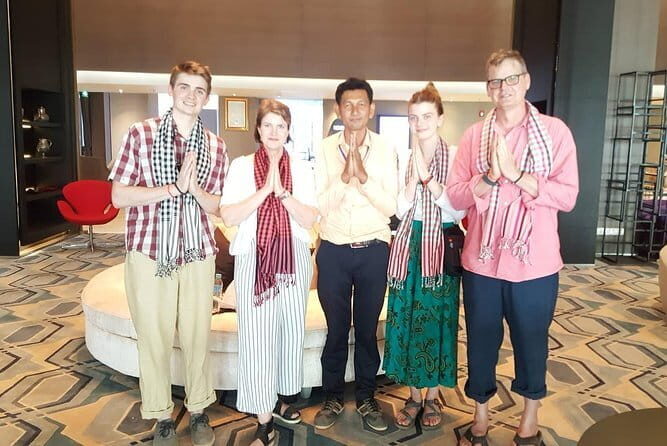
The headline price is just $20 per person, which is unusually low for a full-day guided loop. The trade-off is that the tour price mainly covers the human and logistics parts: hotel pickup in Siem Reap, an air-conditioned vehicle, an English-speaking guide, and a planned route with stops that make sense.
What’s not included is just as important. Temple entry requires the Angkor Pass ($37 per person), and the tour also excludes food and drinks. Gratuities are appreciated for the guide and driver, so you should budget a bit of extra cash if you feel they earn it.
So your realistic “out the door” baseline is more like $57 for guide + transport + the main temple access, plus whatever you eat and drink. In return, you get a day that’s built around the Angkor highlights people come for, not a random sampler.
Pickup at 8:00 and a 10-Hour Rhythm You Can Handle
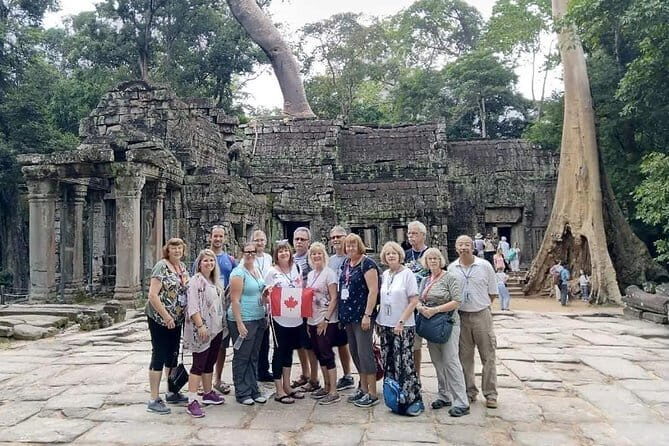
The tour starts with hotel pickup between 7:30 am and 8:00 am, with the activity start time listed as 8:00 am. Duration is roughly 10 hours, and the itinerary moves in a sequence that reduces backtracking.
That matters because Angkor days can feel long fast. When you’re bouncing between sites, you’re also dealing with heat, dirt roads, and the time it takes to get everyone into the temple zones. This tour does the “point A to point B” thing efficiently, so your daylight hours go toward temples and sunset instead of traffic and waiting.
You’ll travel in a private vehicle (the format is listed as private—only your group participates), and you’ll get free cool towels during the day. That cooling detail may sound minor, but by midday it becomes the difference between tolerable and miserable.
You can also read our reviews of more evening experiences in Siem Reap

Angkor Wat (2 Hours): The Main Stage, Not a Whirlwind
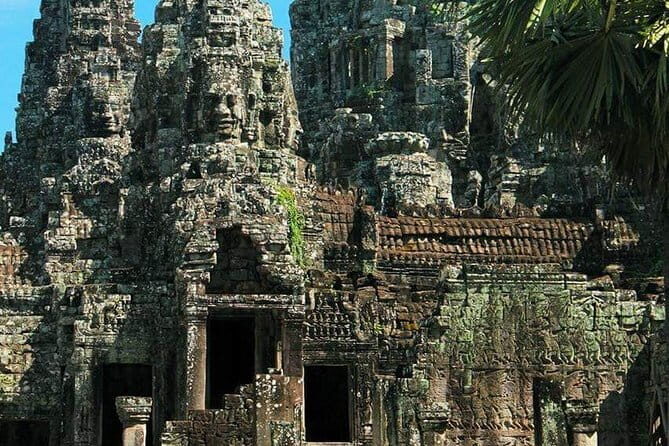
Angkor Wat is the first stop for a reason. It sets the baseline. Before you see the faces and forests of roots later, you need to understand the central concept: this is a massive temple complex built as a sacred city in stone.
You get about 2 hours here, which is a good window. That’s enough time to:
- get your bearings quickly,
- see the most important areas without feeling rushed,
- and read the details your guide points out so they don’t blur together.
A practical thing: Angkor Wat can be busy, and the lighting changes fast through the morning. If you want photos, don’t wait until the last 20 minutes. Use the time earlier when you can still stand comfortably and compose your shots.
Bayon (1 Hour): The Temple of Faces
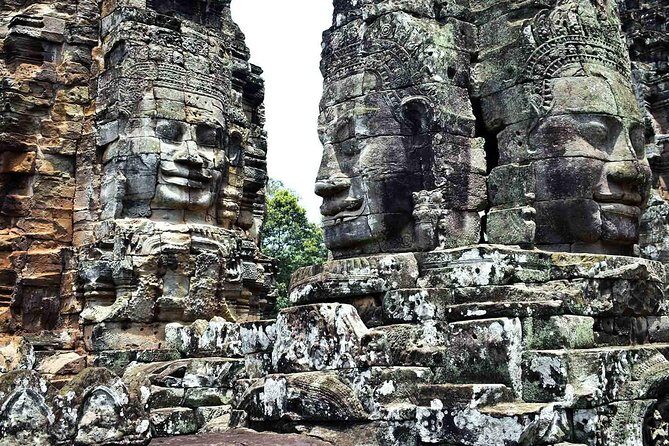
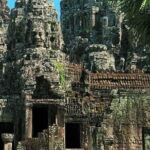
After Angkor Wat, the tour moves to Bayon Temple, with about 1 hour allocated. Bayon is famous for its stone faces associated with Buddhism, tied to the Khmer king Jayavarman VII.
One hour is not a lot, but Bayon is the type of place where time matters less than focus. With a good guide, you can understand what you’re seeing instead of treating it like a wall of repeating faces. If you’re the type who likes symbolism and story, Bayon is a strong match for you.
The drawback: if you’re a slow photographer or you want to linger in every corner, you may feel the time limit. But for most people, the schedule works because the day keeps the energy up.
Angkor Thom (1 Hour) + South Gate Photos (20 Minutes)
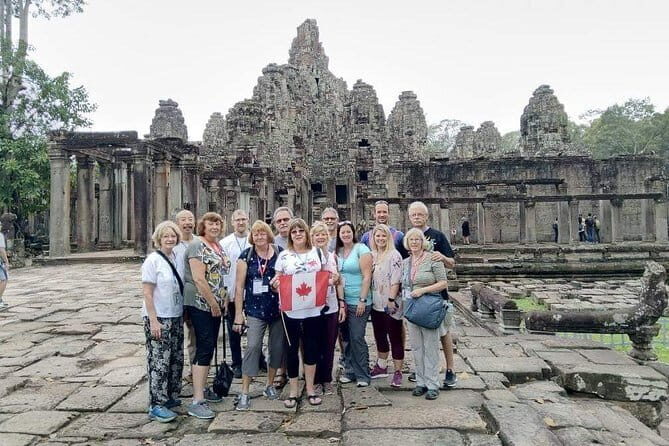
From Bayon you head into Angkor Thom, described as a sprawling complex with around 72 temples over a huge area. That scale can overwhelm you on arrival—one more reason the guide matters.
You get about 1 hour at Angkor Thom, and the plan includes a stop at the South Gate for 20 minutes of photos. That’s smart. The South Gate is a natural “moment” for pictures and orientation. It gives you a view that helps you understand how the temple complex functions as a city layout rather than a single landmark.
If you only visit Angkor Wat, you get one side of Angkor. With Bayon and Angkor Thom, you start seeing how the Khmer world was organized—temple clusters, gateways, and the way the city “holds” the monuments.
If you hate being moved along, keep this in mind: Angkor Thom is spread out. Your route selection will shape what you see, so trust your guide’s path rather than trying to freestyle across the whole site.
Ta Prohm (1 Hour): The Tomb Raider Temple Effect
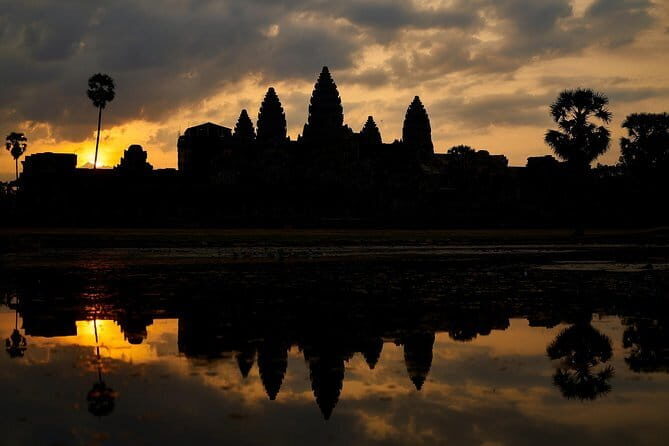
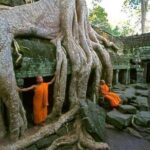
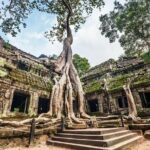
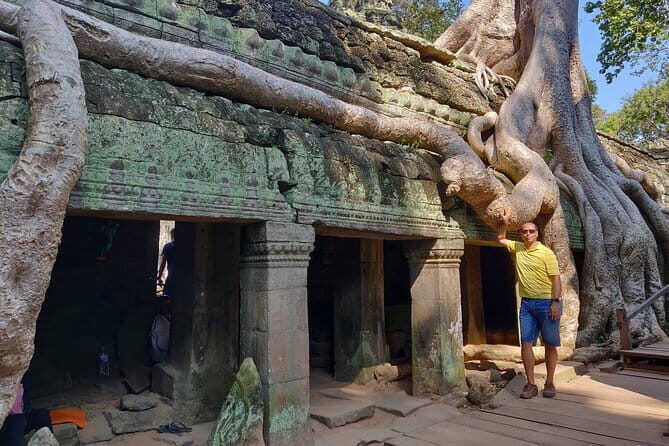
Then comes Ta Prohm, the temple often nicknamed the Angelina Jolie temple because of its famous film connection. The highlight here is the way huge tree roots take over parts of the ruins.
Your time is about 1 hour, which is enough to walk the most striking areas and notice how the trees aren’t just decoration—they’re a living force shaping the scene. This stop tends to be the most “wow” for first-timers, partly because the visuals are so specific and instantly recognizable.
Still, one consideration: Ta Prohm is visually busy. Roots, stone, shadows, and people all mix together. A guide helps you pace your attention, so you don’t just chase the most photogenic angles while missing why the place looks like this.

Terrace of the Leper King (20 Minutes, If Time Permits)
The tour includes a quick stop at the Terrace of the Leper King, listed as 20 minutes if time permitted. That phrasing matters. You’re not guaranteed this stop in the same way you are for the main temples.
When you do get it, it’s a good “bonus layer” to your day because terraces and corridors often show different carvings and architectural details than the large temple stages. It’s the kind of place where short time can still be worthwhile if you focus on the layout and stonework.
If you don’t make it here, you won’t miss the core temples. It’s more like a small add-on rather than the backbone of the day.
Phnom Bakheng Sunset (2 Hours): The End You Planned For
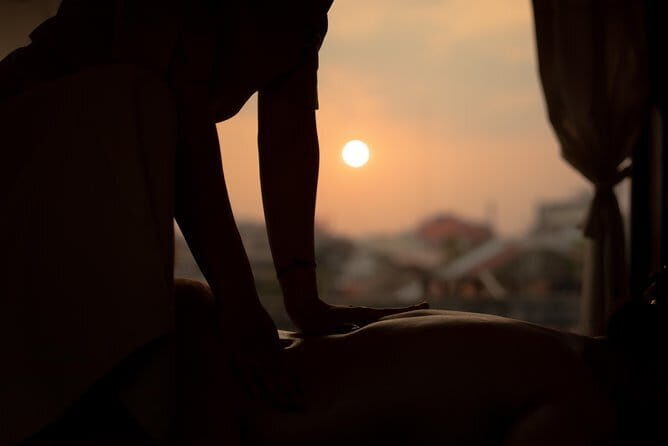
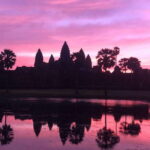
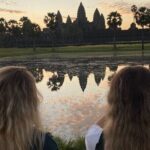
The day finishes at Phnom Bakheng, with about 2 hours allocated. This is one of those famous sunset spots, and the tour is explicit that the sunset is best with good weather.
Here’s the reality check that helps you enjoy it more: sunset destinations can be dramatic, but they’re also weather-dependent. If the sky is hazy, you may not get that crisp “wow” glow. The good news is you still get the atmosphere—temples at golden hour have a different mood, even when the light isn’t perfect.
Two hours gives you breathing space for:
- arriving and settling in,
- watching the sky shift,
- and taking photos before and after peak light.
If you’re thinking about what to wear, go for comfortable shoes. You’re moving around temple areas during daylight, and then you’ll want stable footing for sunset viewing.
Guide-Driven Storytelling: Why This Day Feels Clear
The best feedback from the reviews centers on one thing: the guide explanations. Names that show up include Kong Thy and Sora, and that’s a big deal. Angkor can look like “random ancient structures” if you don’t know what you’re seeing.
A good guide helps you notice patterns:
- what each temple complex represents,
- how Buddhism and earlier temple traditions show up in structure and symbolism,
- and why certain layouts matter more than you’d guess from the ground.
I especially like the practical nature of the guidance you get on a short schedule. You’re not stuck with a lecture. You get enough context to appreciate the sites in real time.
And the comfort side matters too. One review highlights how the cold hand towel was a standout, and another notes cold water. Even if you forget the details, your body remembers: cooling breaks make the long day more manageable.
Value Check: Is This Worth It at $20?
If you’re comparing to bus tours, this one can feel like a bargain because you’re getting a guide and transport, not just a self-guided shuffle. The “value” hinges on how you handle the add-ons.
- If you already plan to buy the Angkor Pass ($37) anyway, the $20 covers the guided route and transport planning.
- If you’re traveling with a friend or two, the small-group feel helps the experience stay personal rather than chaotic.
- If you get decision fatigue easily (common!), having stops timed and sequenced for you is worth real money.
One drawback to consider is that the tour excludes food and drinks, so you’ll need to plan meals. That’s not a deal-breaker, but it does mean you’ll want cash and a bit of a snack plan.
Also, the tour is listed as non-refundable and cannot be changed for any reason. That’s not the kind of thing you want to discover on a tough travel day—so make sure your dates are firm.
Who Should Book This Angkor Temple Tour
This tour is a strong fit if:
- you want the biggest Angkor highlights in one day,
- you like learning the meaning behind the stone,
- and you prefer small-group pacing over large tour chaos.
You might reconsider if:
- you want a slow, open-ended Angkor exploration,
- you get irritated by fixed timing (like one-hour stops),
- or you’re sensitive to heat and walking between spaced-out temple areas.
For many first-timers in Siem Reap, this is a smart “get your bearings fast” strategy—then you can come back later for deeper, slower visits.
Should You Book Angkor Temple Tour with Sunset?
Yes, if you want a guided, efficient day that ends with a sunset plan. The standout strengths are the route concentration (you see the key sites), the guide explanations (Kong Thy and Sora are specifically mentioned), and the cooling comfort (cool towels, plus cold water noted in feedback). Those details make a huge difference when you’re seeing a lot of stone in a hot, busy environment.
Book it if you’re ready for a full schedule and you’re comfortable adding the Angkor Pass. If you go in expecting this to be a casual stroll, you may feel rushed. But if you want a high-value day that turns confusion into clarity, this one makes a lot of sense.
FAQ
What time does the tour start?
Pickup is between 7:30 am and 8:00 am, and the activity start time is listed as 8:00 am.
Where does the tour begin and end?
It starts in Krong Siem Reap, Cambodia and ends back at the meeting point.
How long is the tour?
The duration is listed as approximately 10 hours.
What is included in the tour price?
Included are an English-speaking guide, free cool towels during touring, an air-conditioned vehicle, private transportation, and hotel pickup between 7:30 am and 8:00 am.
Are entrance fees included?
No. Entrance fees are not included, and you’ll need the Angkor Pass, listed as $37.00 per person.
How much is the Angkor Pass?
The Angkor Pass is listed as $37.00 per person.
Does the tour include food and drinks?
No. Food and drinks are not included.
Does the tour provide a ticket on your phone?
Yes. A mobile ticket is mentioned.
Will I have other people in the group?
The tour is described as a small-group package, and it is also listed as a private tour/activity where only your group will participate.
Is it refundable if plans change?
The experience is non-refundable and cannot be changed for any reason.