REVIEW · SIEM REAP
Angkor Temples, Tonle Sap Lake, Floating Village, Scenic Flight
Book on Viator →Operated by Green Era Travel · Bookable on Viator
Angkor looks different from the air. This short Siem Reap scenic flight lets you see Angkor Wat from above and Tonle Sap floating villages in one go, and I like how the route comes in clear choices (20, 30, or up to 60 minutes). I also love the simple setup: hotel pickup, a flight with a licensed pilot, and a view that helps you understand how these sites relate to each other. One thing to consider: the total time is limited, and if weather turns, the pilot can shorten, postpone, or cancel the flight for safety.
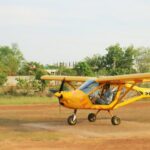
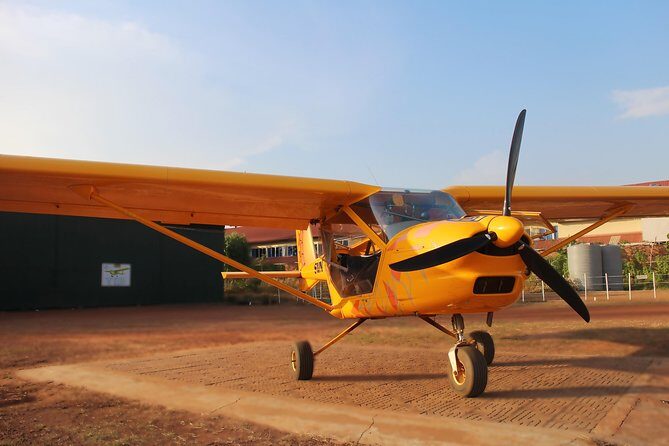
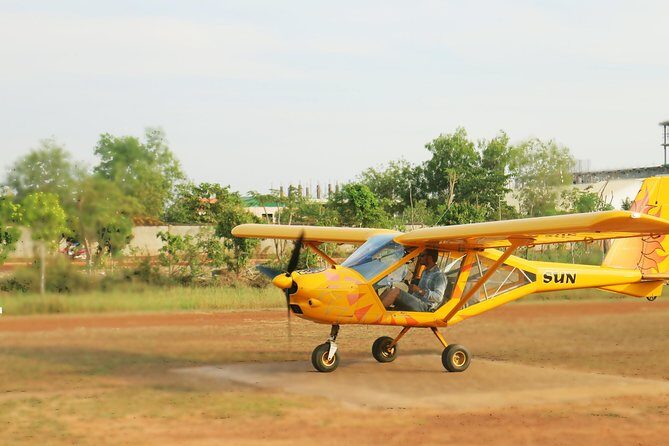
You’ll ride in a light, two-seat airplane where you’re the passenger and the pilot handles the flying. Green Era Travel coordinates the experience, and you get hotel pickup and drop-off plus transport in an air-conditioned vehicle. You also get a mobile ticket, with confirmation sent at booking.
From the air, you’re not just photographing temples. You’re getting an instant map view over jungle edges, temple complexes, and the big watery sprawl of Tonle Sap. Options range from a focused loop over Tonle Sap and villages to longer routes that sweep over Rolous Group and then finish near the northern temples/Angkor Wat. Minimum age is 12, and you’ll need a moderate level of physical fitness to manage the overall experience.
In This Review
- Key highlights you’ll care about
- Angkor From the Air: Why This View Changes Everything
- Your Four Flight Options Over Angkor and Tonle Sap
- What You’ll Spot Over Phnom Krom, Rolous Group, and Angkor Wat
- Tonle Sap from Above: Floating Villages You Can Actually Map
- How the Ultra-Light Flight Works: Safety, Pilot Authority, and Timing
- Price and Logistics: Is $78 Good Value?
- What to Pack and How to Get Better Views
- Who This Scenic Flight Fits Best (and Who Should Skip)
- Should You Book This Scenic Flight?
- FAQ
- How long is the scenic flight?
- What flight options are available?
- Is hotel pickup and drop-off included?
- Is a ticket for Angkor temples included?
- What kind of aircraft will I fly in?
- What is the minimum age for passengers?
- What happens if the weather is bad?
- Do I have to follow pilot instructions?
- Should You Book This Scenic Flight?
Key highlights you’ll care about
- Four flight routes: choose Tonle Sap + villages, Rolous Group, or a longer temples-and-lake combo.
- Pilot-led comfort and control: you fly with a licensed pilot, and crew instructions come first.
- Real aerial orientation: temple clusters and water areas make more sense when seen from above.
- Hotel pickup included: you don’t have to coordinate your own early transfer.
- Two ultra-lights per departure: your group flies in individual seats with pilots on separate planes.
Angkor From the Air: Why This View Changes Everything
Angkor’s biggest challenge on the ground is scale. Even when you’re walking between major ruins, the site can still feel like a pile of highlights—temples here, towers there, then a long return to find the next one. From above, the story snaps into place.
In this flight, you’re given that “map in motion” effect right away. You can trace how temple areas sit against the surrounding terrain, how water and settlement patterns connect around Tonle Sap, and how different temple zones relate to each other across Siem Reap. It’s one reason I like short flights here: they’re not trying to replace a full Angkor day. They’re giving you a fast understanding that makes later sightseeing easier.
Another thing I appreciate is the variety of what you can choose to see. Some options stay focused on the water and villages around the Tonle Sap area. Other options build toward temple highlights like Rolous Group and Angkor Wat. That means you can match the flight to your mood—temple-first, lake-first, or a mix.
A possible drawback is that you don’t control the exact timing of what’s visible. The experience depends on acceptable weather conditions, and if conditions change, the operator can adjust plans for safety. Think of it as a well-run aerial sightseeing window—not a guaranteed set-in-stone photo timeline.
You can also read our reviews of more tours and experiences in Siem Reap.

Your Four Flight Options Over Angkor and Tonle Sap
This isn’t a single one-size-fits-all loop. You pick from four flight options, and that choice affects what you’ll likely see in the air.
Option I: 20 minutes Tonle Sap Lake + Village
This is the best fit if you want the “wow” of water first. You’ll also get Phnom Krom Temple on the hill, which helps you understand how temple viewpoints sit near the lake environment. If you’re someone who finds lakes and settlements more interesting than temple stonework, this route makes sense.
Option II: 20 minutes Rolous Group
If you want a compact temple sweep, this is your choice. The flight goes over Bakong, Lolei, Preah Ko, Prasat Prei Monti, and Hariharalaya. Seeing these from above is helpful because these aren’t just individual buildings—you’re looking at how whole complexes are laid out across the jungle edges.
Option III: 30 minutes Temples Flight
This one adds time so the route can include more variety. You fly over Rolous Group first, then head to the northern temples, finishing with a fly-by of Angkor Wat. If you want your flight to feel like an aerial mini-tour of Angkor’s major zones, this is the option most people gravitate to.
Option IV: 1 hour Temples + Tonle Sap Lake
This is the big sampler. It includes Phnom Krom, two floating villages, Rolous Group, northern temples, and Angkor Wat. Choose this when you’d rather spend more time in the air than on deciding which area to prioritize.
A note on tickets: the info provided says the 30-minute option does not include admission ticket. It doesn’t spell out the ticket situation for every option, so I’d treat any admission requirements as something to confirm at booking.
What You’ll Spot Over Phnom Krom, Rolous Group, and Angkor Wat
From ground level, temple names can blur into each other. From the air, they become landmarks—shapes, clusters, and positions. Even if you don’t know Khmer temple architecture, you can still spot the practical differences between temple zones.
Phnom Krom shows up on the shorter Tonle Sap route, and that hilltop placement matters. You’ll get a better sense of how elevated temple viewpoints sit relative to the lake and settlement zones below.
Rolous Group is spread across several named sites, and the flight route is designed to show you that spread. In your window of time, you’ll likely notice that these temple areas are grouped but not identical in scale or layout. Seeing Bakong, Lolei, Preah Ko, Prasat Prei Monti, and Hariharalaya from above is one of the reasons these specific names are included—this route is about teaching you the geography of Angkor, not just giving you a few temples to tick off.
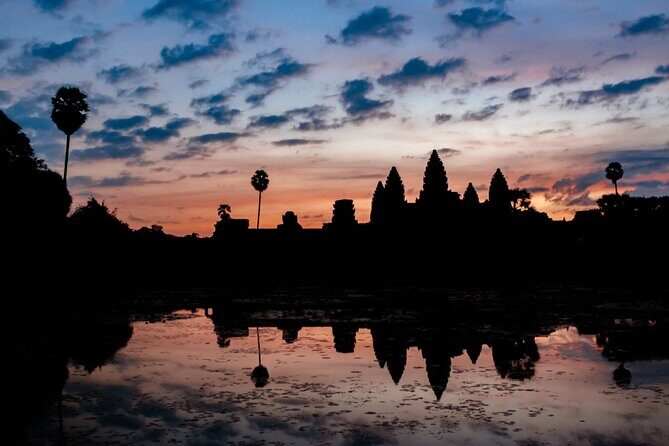
Then there’s Angkor Wat. A fly-by from the air is the kind of view that helps you grasp why people talk about its size. When you see a massive complex laid out in straight lines and symmetry, it stops being a single landmark and starts being a city-like structure. That makes your later ground visit easier because your brain already has a rough aerial sketch in it.
If the plan changes due to weather, it may affect how much you see of the later portions of these routes. So if Angkor Wat is your must-see, I’d consider choosing the longest or the option that explicitly includes it near the end.
Tonle Sap from Above: Floating Villages You Can Actually Map
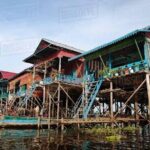
Tonle Sap is huge, and from the water it can feel like an entirely different world than the temple zone. From above, what stands out is not just the floating homes—it’s the patterns: how settlements dot the water, how shorelines and waterways connect, and how the lake’s shape frames daily life.
This flight specifically includes Tonle Sap Lake views and floating villages depending on the option. On the 20-minute Tonle Sap + Village route, you get that focus early, which is nice if you don’t want the flight to feel temple-heavy. On the 1-hour itinerary, Tonle Sap becomes part of a longer sweep so you can compare the lake zone to the temple zones in the same trip.
One practical advantage of seeing the floating villages from above: you can understand their relationship to Phnom Krom and to the broader Angkor region. Instead of thinking of the lake as a separate day’s destination, you can see it as part of the same regional puzzle.
A quick reality check: because this is an aerial experience, you’re not landing in the village. You’re observing from the air, so your enjoyment will be driven by your interest in aerial views and patterns more than by close-up interaction.
How the Ultra-Light Flight Works: Safety, Pilot Authority, and Timing
The flight is private in the sense that only your group participates. At the same time, it’s run with a realistic setup: two ultra-light planes fly per tour, and each has one passenger with a pilot. In other words, you’re not riding in a large group aircraft where you’ll be squeezed in with lots of strangers. You’re in your own seat with a pilot, and another plane handles the other passenger on that departure.
The pilot’s instructions are absolute. The operation instructions say you must obey crew guidance at all times, and the pilot has the authority to refuse anyone who appears unfit to fly or might be a safety risk. That’s normal for aviation, but it’s worth respecting in your planning.
Weather is the other big factor. The operator notes that flights happen only in acceptable weather conditions. If conditions change adversely, they reserve the right to terminate the flight and return. If a postponement or cancellation happens beyond anyone’s control, they refund the flight fees.
Timing is flexible in the sense that you choose the flight length by option. However, you should still build in some patience. Scenic flights can be weather-sensitive, and you’re doing this in the open air.



Price and Logistics: Is $78 Good Value?
At $78, you’re not paying for a full-day Angkor tour with long temple hours. You’re paying for something more specific: a fast aerial “orientation hit” over two major areas—temple complexes and the Tonle Sap lake environment.
So the question isn’t Is it cheap? The question is: does this kind of view fit your travel style? If you love photography, want a unique perspective, or you’re short on time, this price can feel fair because it compresses a lot of sightseeing into a limited window. It also removes some of the common ground-travel frustration of Angkor—traffic, long distances, and the constant problem of figuring out where things are in relation to each other.
If you’re the type who enjoys slow wandering, long guided explanations, and spending hours at each site, you may feel like 20 minutes is too brief. That’s where choosing the 30-minute temples flight or the 1-hour Temples + Tonle Sap option becomes part of the value equation. Spending more time in the air is the most direct way to turn this from a quick taste into a more satisfying experience.
You also get practical support: hotel pickup and drop-off, transport in an air-conditioned vehicle, and a mobile ticket. That matters in Siem Reap, where coordinating with taxis can eat time and energy.
One small financial caution: the information notes admission ticket not included for the 30-minute option. Since no ticket details are provided for the other options here, don’t assume everything is covered. If you plan to combine this with on-the-ground temple time, confirm what you’ll need.
What to Pack and How to Get Better Views
This flight is short, but small choices help a lot.
Wear comfortable clothes and closed-toe shoes. You need a moderate physical fitness level, and you’ll want to feel steady during boarding and any waiting time.
Bring sunglasses and sun protection. Even at short duration, the light can be strong when you’re flying over bright stone and water. If you wear glasses, consider a strap so you don’t worry about them in flight.
For your camera plan: treat this like a “shooting window,” not a long session. Pick a few key shots you really want—one temple-complex overview, one Tonle Sap pattern view, and one shot that includes the contrast between temples and water. The best photos often come from capturing relationship and scale, not just zooming on one tower.
And most importantly: listen to the pilot. The flight rules emphasize that you must follow crew instructions at all times. That’s for safety, but it also affects how well you can move into a comfortable position for viewing.
Who This Scenic Flight Fits Best (and Who Should Skip)
This experience is a strong match if:
- you want a quick, high-impact view of both Angkor and Tonle Sap
- you’re short on time in Siem Reap but still want something different than walking ruins all day
- you like learning by sight—seeing geography and scale makes Angkor click faster
It’s less ideal if:
- you strongly prefer long, on-the-ground temple time
- you’re sensitive to flight discomfort or have limitations that would make you unlikely to meet the moderate physical fitness requirement
- you need guaranteed timing regardless of weather (weather can change plans)
There are also clear age requirements: minimum age is 12. If you’re traveling with kids, keep that in mind and plan around comfort and safety instructions.
If you’re someone building a bigger Cambodia itinerary, the broader Green Era approach can help. In past trips, guides like José and Nak have been noted for clear explanations and warm energy—useful when you’re stacking multiple days and tours.
Should You Book This Scenic Flight?
Book it if you want a fast, genuinely different way to understand Angkor and Tonle Sap. This isn’t just a fun detour; it’s a perspective tool. A short time in the air helps you see how temples and water sit in the same region, and that makes your later sightseeing feel more connected.
Skip it or think twice if your schedule is tight and weather would stress you out, or if you’re expecting a long on-the-ground floating village visit. This experience is about what you see from above—short, focused, and guided by the pilot’s safety decisions.
If you can choose between routes, I’d lean toward the 30-minute temples option if you want Angkor Wat included without committing to an hour, or the 1-hour Temples + Tonle Sap Lake if you want both major worlds in one flight.
FAQ
How long is the scenic flight?
The flight options range from about 20 minutes up to about 1 hour, depending on which route you choose.
What flight options are available?
You can choose between: 20 minutes Tonle Sap Lake + Village, 20 minutes Rolous Group, 30 minutes Temples Flight (Rolous Group plus northern temples and Angkor Wat fly-by), or 1 hour Temples + Tonle Sap Lake (including Phnom Krom, two floating villages, Rolous Group, northern temples, and Angkor Wat).
Is hotel pickup and drop-off included?
Yes. Hotel pickup and drop-off are included, along with transportation in an air-conditioned vehicle.
Is a ticket for Angkor temples included?
The information specifically notes that the 30-minute option has admission ticket not included. For other options, ticket details aren’t spelled out here, so it’s smart to confirm what you’ll need at booking.
What kind of aircraft will I fly in?
You fly in a two-seat ultra-light airplane with a licensed pilot. The tour runs with two planes per departure, with one passenger per plane.
What is the minimum age for passengers?
The minimum age is 12 years.
What happens if the weather is bad?
Flights only happen in acceptable weather conditions. If weather changes adversely, the operator may terminate the flight and return. If a cancellation or postponement happens beyond control, you’ll be refunded the flight fees.
Do I have to follow pilot instructions?
Yes. You must obey specific instructions from the pilot or crew. The pilot has absolute authority and responsibility for the flight and can refuse to fly anyone who appears unfit or a safety risk.
Should You Book This Scenic Flight?
If you want a quick, high-impact view over Angkor Wat and Tonle Sap, this is worth booking—especially if you pick a longer option so you get more time to enjoy the aerial “map” effect. Just go in knowing weather can affect timing, and your experience is all about what you see from above.