REVIEW · SIEM REAP
Siem Reap: Full-Day Angkor Wat Guided Tour with Sunset
Book on GetYourGuide →Operated by Siem Reap Experiences · Bookable on GetYourGuide
Angkor Wat hits fast. This full-day guided circuit turns an all-day ticket into clear temple stories, with stops at Angkor Wat, Angkor Thom, Bayon, and Ta Prohm, then a sunset climb at Phnom Bakheng. I love the English-speaking guides who make the carvings and layout make sense, and I love the small group size that keeps the day from feeling rushed. One drawback to know: it’s a long day with lots of uneven walking and steps, so plan for your feet and the heat.
I also like the practical setup. You’re picked up from Krong Siem Reap, ride in an air-conditioned minibus, and get chilled bottled water plus cool towels during the day, which matters once you’re in the temples’ sun and shade. There are built-in rest and food breaks, so you can keep your energy for the afternoon.
The other key thing: you still need the Angkor temple pass. The tour price covers the guided experience and transport, but not the temple entry ticket, and it’s separate from the tour itself. If your shoulders and knees aren’t covered, you’ll need to adjust before you start walking through the sacred spaces.
In This Review
- Key highlights you’ll feel on this Angkor day
- Full-Day Angkor: What This “Five Temples + Sunset” Day Really Delivers
- Pickup timing and comfortable transport from Siem Reap
- Temple pass rules, dress code, and what you must plan before you go
- Angkor Wat: how to make the southern gates and causeways click
- Angkor Thom and Bayon: smiling faces, stone terraces, and less confusion
- Ta Prohm jungle walk and the lunch break you’ll be thankful for
- Phnom Bakheng sunset: planning for stairs and timing the view
- Guide impact: how English stories turn stones into meaning
- What you’ll pay: $15 for the tour, plus the $37 pass for entry
- Pace, crowds, and practical tips for uneven steps
- Who this Angkor tour suits best (and who should skip it)
- Should you book this Angkor Wat guided sunset tour?
Key highlights you’ll feel on this Angkor day
- Five major temples, one logical route: you see the core Angkor highlights without wasting time.
- Guide-led meaning, not just sightseeing: the carvings, symbols, and layout become readable.
- Jungle mood at Ta Prohm: trees growing into stone create an atmospheric walk.
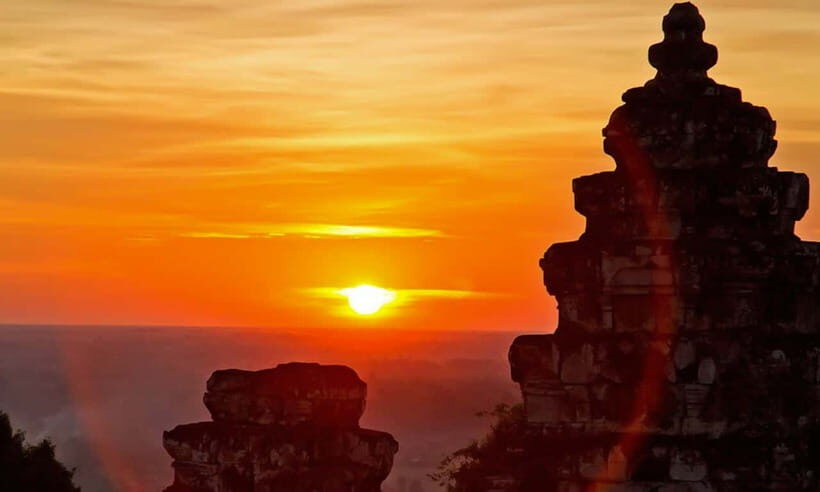
- Phnom Bakheng sunset viewpoint: the day ends with a temple-on-a-mountain perspective.
- Small group atmosphere: under 13 people keeps questions easy and pacing flexible.
- Heat management basics: water, cool towels, and an air-conditioned ride help you stay comfortable.
Full-Day Angkor: What This “Five Temples + Sunset” Day Really Delivers
This is the kind of Angkor day that works because it’s built around understanding, not just checking boxes. Five temples in one run sounds simple until you realize how easy it is to get lost in the sizes, angles, and symbols across the Angkor Archaeological Park. With a guide and a route that links the monuments, you spend less time figuring out where you are and more time noticing what you’re actually looking at.
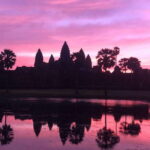
The sunset at Phnom Bakheng is the payoff. After hours of stone and storytelling, you get that final change in light when the sky turns and the temple sits above the site. Even if you’re not a “sunset person,” the climb is worth it for the contrast: daylight carvings down below, then a more dramatic view as evening approaches.
You can also read our reviews of more guided tours in Siem Reap
Pickup timing and comfortable transport from Siem Reap
Your day starts with hotel pickup in Krong Siem Reap, typically between 9:10 am and 9:30 am. You’ll want to be ready in the lobby about 30 minutes before the scheduled pickup time. That buffer matters because the schedule is designed to get you into the first major temple in a workable window, then keep the rest of the day moving.
Transport is on an air-conditioned minibus. That’s not a luxury detail in Cambodia heat—it’s a real comfort factor. You’ll likely return to the vehicle between temple zones, and that short air-conditioned reset helps you stay present instead of counting minutes until the next break.
You’ll also get chilled bottled water and a cool towel. These are small inclusions that add up. When you’re doing temple walks in bright sun, they help you avoid the “I’m fine” lie and then crashing later.
Temple pass rules, dress code, and what you must plan before you go
You need an Angkor Archaeological Park temple pass, and it’s not included in the tour price. The tour info here points to the official website for purchasing online, and you can also buy it with your guide taking you to the ticket office before the day starts.
Plan for the pass cost and the time it takes to get in. The tour is designed to take you to multiple temples on the same day, so without a valid ticket you’ll lose the whole flow.
Dress code is straightforward: cover your knees and shoulders. That means no shorts, short skirts, or sleeveless shirts. I’ve found that temple rules can be stricter than people expect, and you do not want to be improvising a solution after you arrive.
One helpful note: kids under 12 don’t require a temple ticket. If you’re traveling with a child, that can simplify your planning.
Angkor Wat: how to make the southern gates and causeways click

Angkor Wat is the big one, and the guided portion is scheduled for about 2.5 hours. The time matters because Angkor Wat isn’t a single “walk up and look” stop. It’s all about orientation: where you are in the temple plan, how you move through space, and what the carvings and entry points are trying to tell you.
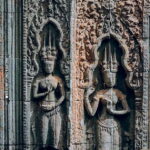
With a guide, you’ll get stories that connect what you see to Khmer rulers and religious ideas. You’ll also hear descriptions that help the temple stop feeling like random stone patterns and start feeling like an intentional design.
A practical thing to keep in mind: there’s no shortcut through the scale. Expect uneven ground and stairs. The good news is you’ll be going with a group and a plan, so you’re not stuck making decisions mid-walk.
If you want one value-added strategy: after you enter and before you rush forward, take a moment to look back at what you’ve passed. Angkor Wat rewards that pause, especially once you understand the temple’s layout.
Angkor Thom and Bayon: smiling faces, stone terraces, and less confusion
After Angkor Wat, you head into the Angkor Thom complex. Here, the schedule is shorter—about 30 minutes for the guided portion of Angkor Thom. That can feel quick until you remember that Angkor Thom is massive. A guide’s job is to help you hit the most meaningful areas without turning your day into a marathon.
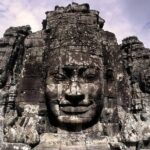
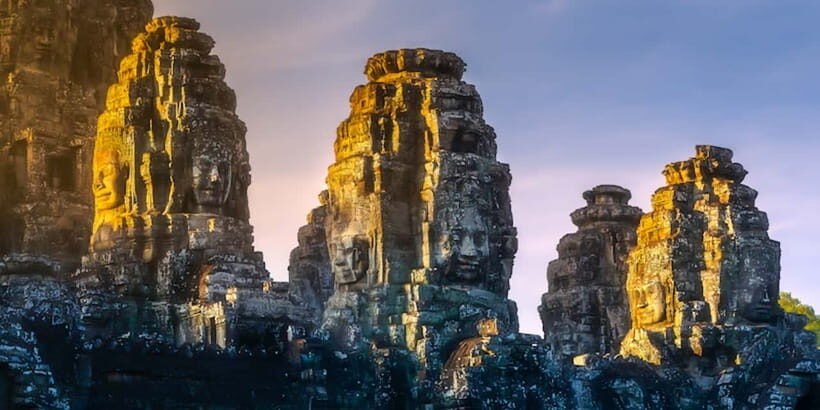
You’ll see the southern gates and the stone figures that greet you there. Then you move toward Bayon Temple, which gets about 1.5 hours of guided time.
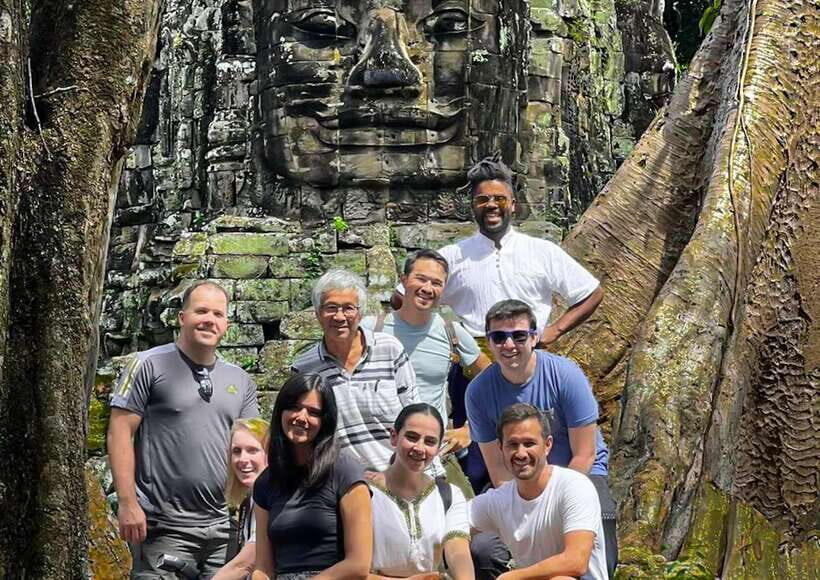
Bayon is famous for its carved faces, and the best way to enjoy it is to understand where to look and what the details are for. A guide helps you notice patterns and placement, not just the famous view from the first angle.
From Bayon, the day also links into key terrace areas—the Terrace of the Leper King and the Terrace of the Elephants. These are stops where it’s easy to see stone and think, okay, that’s old. With context, they become a window into how Angkor combined ceremony, power, and artistry.
You can also read our reviews of more evening experiences in Siem Reap

Ta Prohm jungle walk and the lunch break you’ll be thankful for
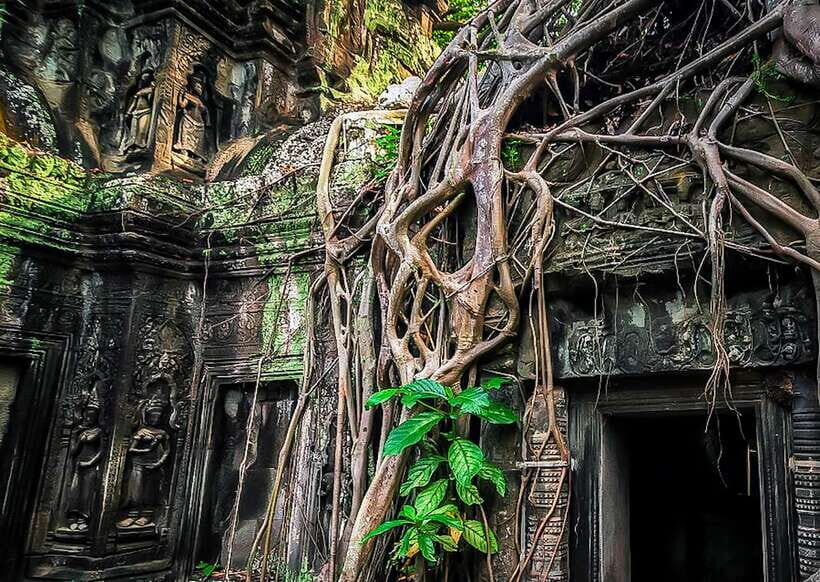
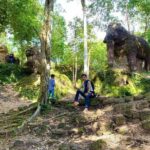
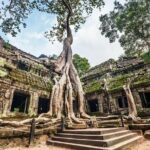
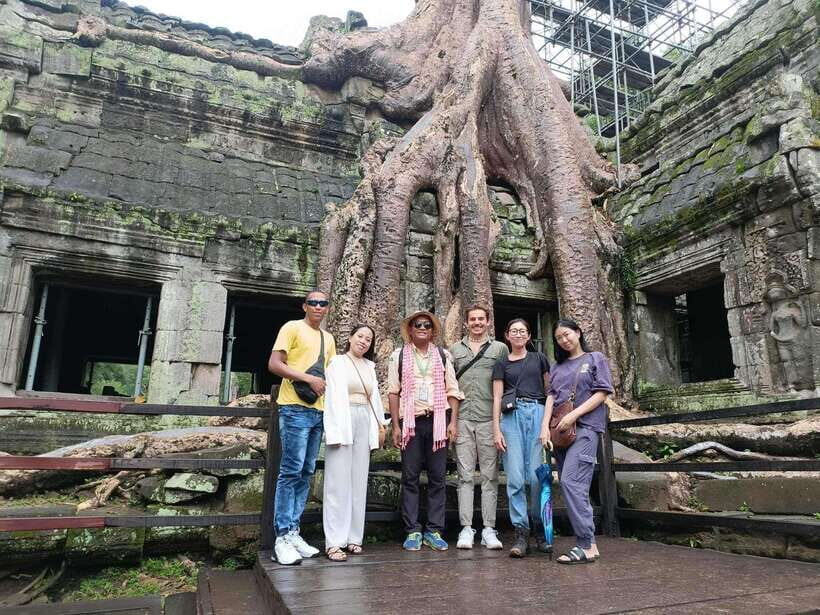
Then comes Ta Prohm, where the mood changes. This is the temple where you get that famous combination of trees growing out of ruins and jungle surroundings. The scheduled break and lunch time is about 1 hour, with the day giving you a breather so you can reset before the deeper Ta Prohm walk.
A guided stroll here makes a big difference because Ta Prohm’s “nature meets stone” look can trick you into wandering randomly. Your guide helps you walk the parts that explain the scene—why certain structures are framed the way they are, and how to read what you’re seeing as you move through the temple.
Ta Prohm time is about 1.5 hours for visit, guided tour, and walking. That’s long enough to do more than pose for photos, but not so long that you lose your attention to humidity and sun.
If you’re traveling with a phone-heavy photo style, bring a charged device. You’ll want it for quick reference, maps in your camera roll, and later to remember what you learned.
Phnom Bakheng sunset: planning for stairs and timing the view
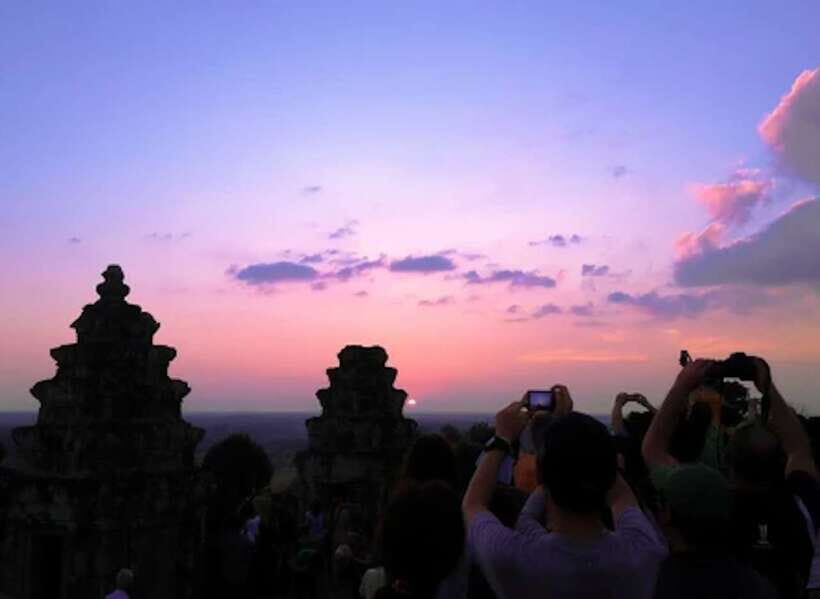
The day ends at Phnom Bakheng Temple East entrance, with about 1.5 hours set aside for sunset viewing. The temple sits on a mountain, so expect a climb and lots of stairs. Even if you’re in decent shape, the uneven steps can be a factor—especially after already walking several temple sites.
This timing is the whole point. Sunset isn’t just a nice moment at the end; it’s a different way to experience Angkor. Daylight makes carvings feel sharp and stone textures easier to identify. Sunset softens the scene and adds drama to the views.
To make this part easier:
- Wear comfortable shoes you can trust on stone steps.
- Hydrate earlier in the day so you’re not playing catch-up at the climb.
- If you’re sensitive to heat, use the cool towel and water breaks earlier rather than waiting.
Guide impact: how English stories turn stones into meaning
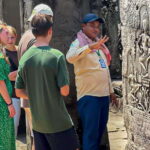
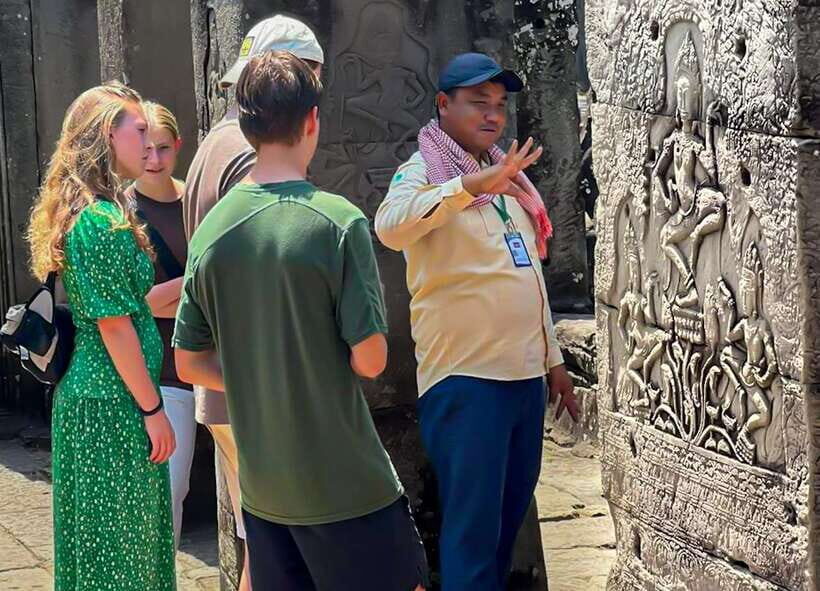
The strongest “wow” factor in this tour isn’t just the temples—it’s the guide. This program is built around an English-speaking guide, and the day works because the guide doesn’t just point. They explain.
In particular, the guides named through guest experiences include Nick, Vone, Ho, Heang, Sayon, and Thom, and the consistent theme is storytelling plus humor. People keep praising the way guides connect Khmer culture, religious significance, and temple design, so you understand what you see instead of only admiring the visuals.
A few practical examples of why a guide matters at Angkor:
- Bayon faces can look identical until someone shows you where to focus and what the carvings imply.
- Terrace areas can feel like decorative details unless you get the context behind why they’re arranged the way they are.
- Ta Prohm’s “jungle takeover” can look random until you learn how the ruins frame the growth.
You’ll also benefit from guide-led pacing. Small-group days give your guide room to slow down where you have questions and speed up when the group needs momentum.
What you’ll pay: $15 for the tour, plus the $37 pass for entry
Here’s the math that matters for value. The tour price is listed at $15 per person, but Angkor Archaeological Park entry isn’t included. The entry ticket noted here is $37 for a 1-day pass.
So you’re really budgeting for two pieces:
1) the guided experience, transport, and comfort extras
2) the official temple entry fee
When I look at that split, the value makes sense because the tour includes hotel pickup and drop-off, air-conditioned transport, an English guide, and on-the-go comfort like chilled water and cool towels. For Angkor specifically, paying for a guide is often the difference between seeing stone and understanding what you’re seeing.
If you already know you’ll spend real time in Angkor’s key temples, this format is cost-effective. You’re paying a low base price for the “how” (route, timing, explanations) while still handling the must-have entry ticket separately.
Pace, crowds, and practical tips for uneven steps
This day is long—about 9 to 10 hours—and it ends with drop-off at your hotel between 6:30 pm and 7:00 pm. That’s not a minor detail. Angkor temples aren’t close together in the normal way city sights are. You’re doing movement, walking, waiting, and stair climbs as the day changes from morning light to midday heat to evening sky.
The itinerary is designed to keep you moving between zones efficiently, while still giving temple time. You’ll also have at least one clear lunch window around Ta Prohm, plus rest breaks during the day.
Crowd pressure is real in Angkor. A guide helps with timing choices and route decisions, and small groups under 13 people generally make it easier to find breathing room than large bus-style crowds.
One more practical detail: the tour info says the “shorts and sleeveless” list is not allowed. Don’t assume you can get away with it because you’re only visiting during daylight. Bring something simple for coverage.
And since the day involves a lot of walking on uneven stone, treat shoe comfort as non-negotiable.
Who this Angkor tour suits best (and who should skip it)
This is a strong pick if you:
- want meaningful guidance rather than a self-guided sprint
- prefer a small group environment
- like a complete day that includes both major temples and a sunset finish
- value comfort basics like air-conditioning, water, and cool towels
It may be less ideal if you:
- have trouble with stairs or long walking days
- rely on very cushioned, easy-to-walk-on surfaces
- are in the age range listed as not suitable: people over 70 are not considered appropriate for this tour, and babies under 1 year are not suitable.
Should you book this Angkor Wat guided sunset tour?
If your goal is to get the most from your time in Angkor without turning the day into confusion and stress, I’d book it. The structure is practical: multiple temple highlights in one run, guided explanations that help you read the site, and a sunset moment that gives the day a clean ending.
Before you click confirm, do two things:
- Make sure you’ve got the temple pass lined up (online or through the ticket office with your guide).
- Plan your outfit for the rules: knees and shoulders covered, comfortable walking shoes packed.
If you want Angkor in “see it, understand it, and feel the atmosphere” mode, this tour format is a smart value. Just go in knowing it’s a full day on your feet—and that part is all on you to prepare.