REVIEW · BATTAMBANG
Battambang Village Bike Tour
Book on GetYourGuide →Operated by Real Cambodia Tour · Bookable on GetYourGuide
There’s a calm rhythm to cycling through Battambang’s villages. This Odambang tour is built around real daily life: you visit homes, learn the names of local plants, and stop at a school while your guide explains how village life (and faith) works in Cambodia. I especially liked chatting with people in their own space and getting a clear picture of what grows here and why it matters.
Two things I like a lot: first, the tour gives you multiple small, human moments—kids shouting hello hello as you pass, neighbors you can talk with, and a traditional house setup for how people sleep, cook, and eat. Second, the ride itself feels like part of the lesson, with shade from trees and lush rice fields during the right season, plus enough breaks that even less confident riders won’t feel rushed.
One consideration: the bike time can feel shorter than you expect. While the overall tour runs about 3 hours, you may be on the bike for around an hour (with frequent explanations), and it’s also not positioned as a sit-in classroom or fully inside-house visit every time.
In This Review
- Key Highlights You’ll Actually Care About
- Price and Value: Does $18 Make Sense Here?
- Meet Your Guide in Odambang, Then Start Riding
- Stop 1: Homes, Hello Moments, and Everyday Village Life
- Stop 2: Traditional House Lessons (How People Sleep, Cook, Eat)
- Stop 3: Crops, Fruit Trees, and Learning Local Plant Names
- Stop 4: The Local School and How Education Works
- Stop 5: Monks, Religion, and Alms Walk Moments
- Countryside Bike Ride: Shade, Rice Fields, and Frequent Breaks
- What’s Included (and What You’ll Need to Bring)
- Included
- Not included
- Bring
- Who This Tour Fits Best (And Who Should Skip It)
- Price, Group Size, and Timing: The Details That Change Your Experience
- A Realistic Take: The Best Moments Are the Human Ones
- Should You Book It?
- FAQ
- How long is the Battambang Village Bike Tour?
- What time does the tour start?
- Is the tour suitable for beginners or inexperienced cyclists?
- What language is the guide?
- What is included in the price?
- Is food included?
- What should I bring?
- Is the tour refundable if I cancel?
Key Highlights You’ll Actually Care About
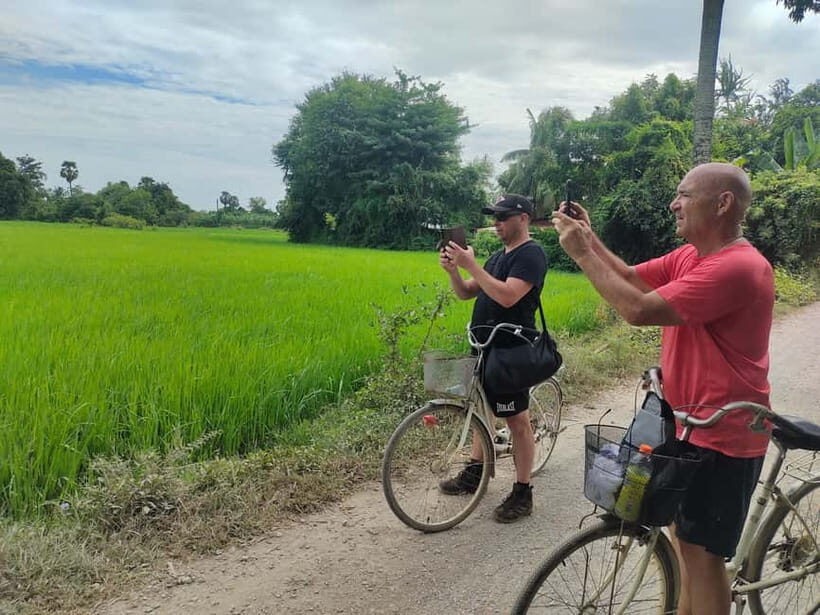
- Odambang village on a bike, with stops designed for conversation, not just photos
- Learning local plant names and seeing crops and fruit trees up close
- Visiting a local school to understand how children study in Cambodia
- Seeing monks and hearing how people move toward monastic life, plus alms moments you might catch
- A shady countryside ride with rice fields in season, paced with breaks
Price and Value: Does $18 Make Sense Here?
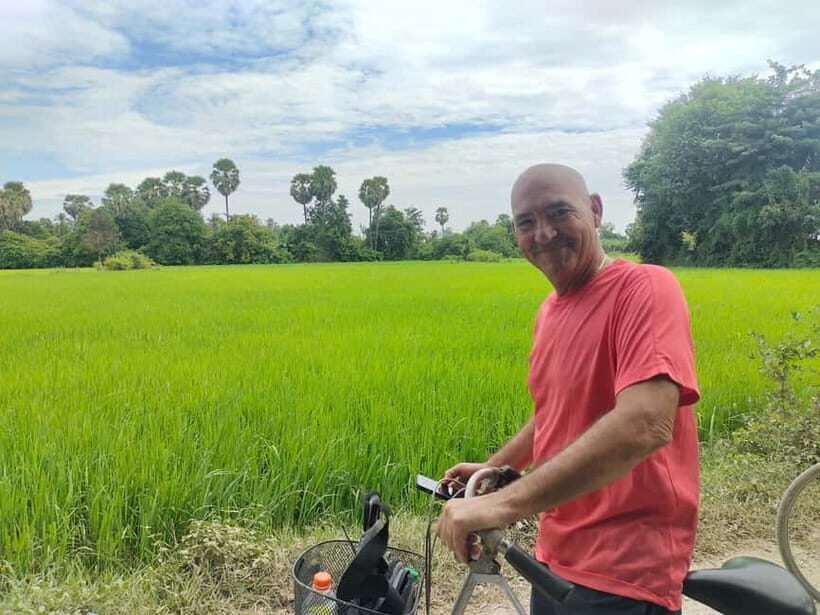
At $18 per person for about 3 hours, this tour sits in the “solid value” lane, mainly because it includes more than a simple ride. You’re getting a local English-speaking guide, a bicycle, water, and several structured stops: village homes, a traditional house, plant/crop learning, a school visit, and a religion/monk segment. For Cambodia, that combination—guided access plus context—is where the value usually shows.
That said, the value depends on your expectations. If you’re hoping for a long, bike-heavy experience with lots of time purely riding, the pace might feel a bit short. If you want insight into day-to-day rural life and don’t mind stopping often, you’ll likely feel it’s worth it.
Also, note what’s not included: food. You’ll want to plan around that, especially if you get hungry after school visits or the countryside stretch.
You can also read our reviews of more cycling tours in Battambang
Meet Your Guide in Odambang, Then Start Riding
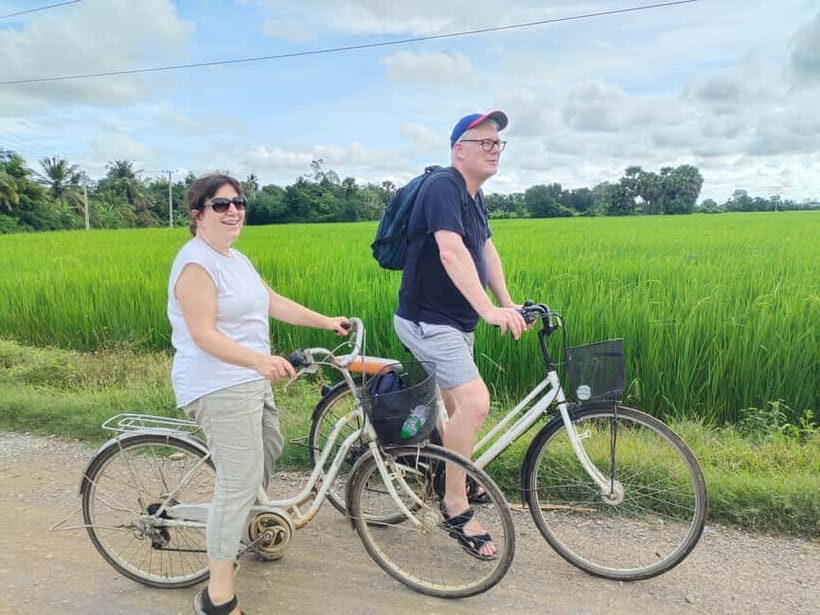
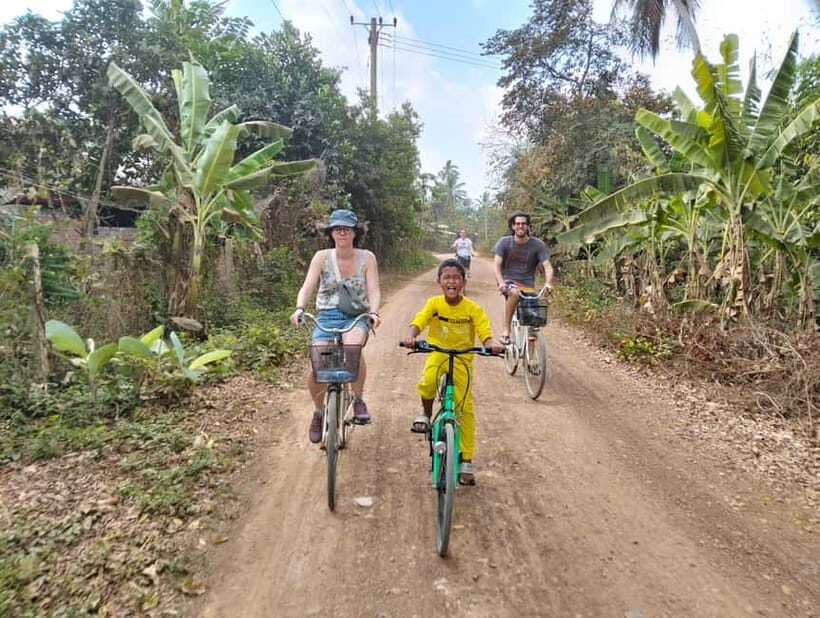
You’ll be picked up at 3pm and taken to begin in Odambang village. The group stays small—up to 10 people—which matters here. In a village setting, it’s easier for your guide to translate and for you to ask questions when you’re not with a large busload.
Your guide is from the area, and that personal connection shows in how the day is explained—life in the village now, and how the village has changed over time. One guide name that comes up is Savet, and he’s described as funny and very clear in English, so you should feel comfortable asking why things are done a certain way rather than just listening.
If you’re nervous about cycling, don’t assume it’ll be intense. One of the strongest pieces of feedback on the experience is that the ride is broken up with explanations, making it workable even for people who aren’t frequent cyclists.
Stop 1: Homes, Hello Moments, and Everyday Village Life
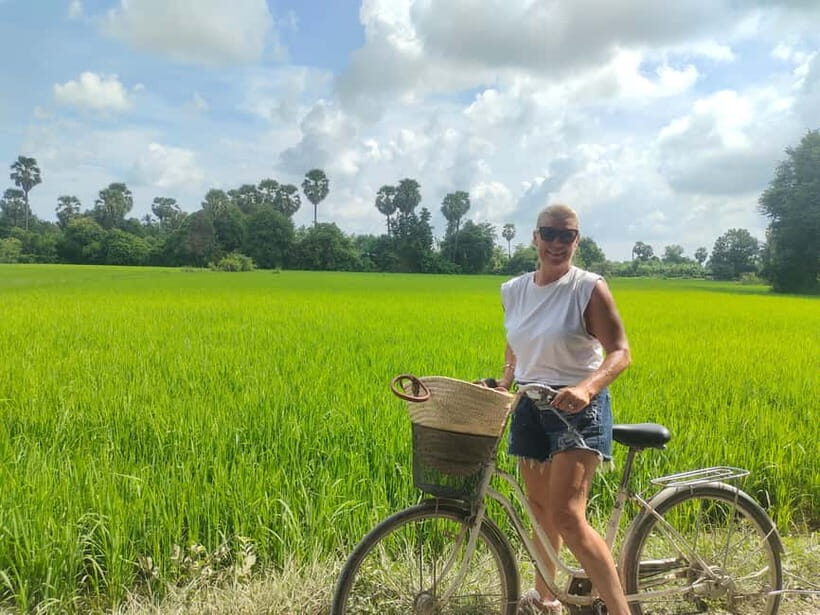
Early in the tour, the focus shifts from “seeing” a village to actually meeting people. You’ll meet locals and you may sit down at homes to chat. This part isn’t just a stop for photos—it’s where your questions get answered and where you learn the small details that don’t appear in guidebooks.
A memorable detail: kids can call out hello hello as you pass. Those moments are easy to miss if you rush or stay silent, so slow down and watch how the village reacts to visitors. Your guide will guide the etiquette and set expectations, so you know what’s appropriate to ask.
Why this is valuable: rural tours often fall into two traps—either they feel like a staged show, or they feel like you’re barely allowed to interact. Here, the intent is interaction: you’re invited to sit, talk, and listen, even if conversations vary depending on the people you meet that day.
Stop 2: Traditional House Lessons (How People Sleep, Cook, Eat)
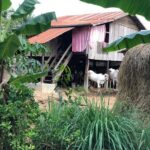
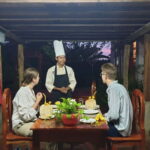
Next comes a traditional house visit. You’ll learn how locals sleep, cook, and eat—practical knowledge, not just a quick “this is the old way” lecture. You might also hear about daily rhythms inside a Cambodian home, which helps you make sense of what you observed while walking past houses earlier.
One thing to keep in mind: the tour can vary on how much you’re allowed to see from the inside. Some feedback notes a desire for an inside look into a house from start to finish, so don’t assume you’ll get a full behind-the-scenes tour every time. Still, you should leave with a clearer understanding of how daily living is arranged and why.
Stop 3: Crops, Fruit Trees, and Learning Local Plant Names
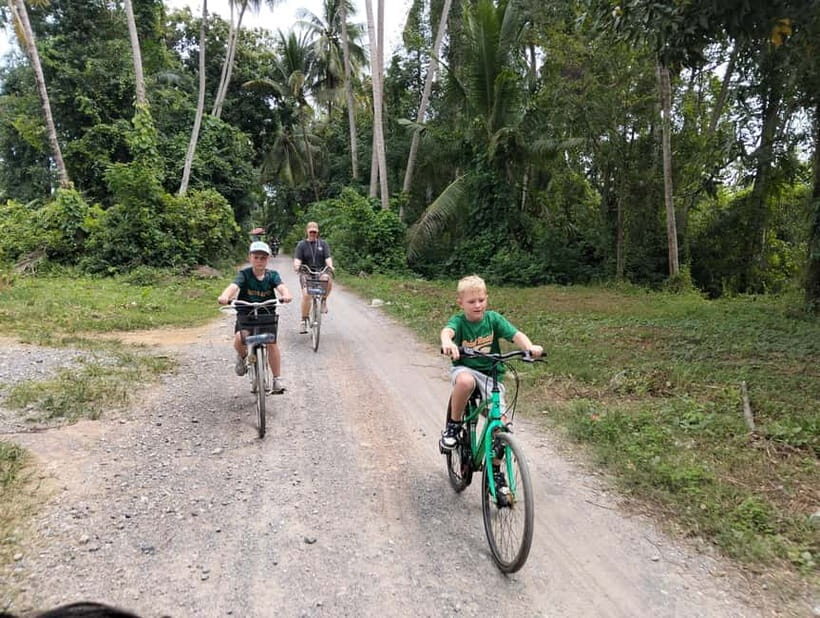
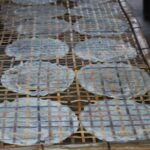
This is where the tour turns into something you can carry home with you. You’ll see different crops and fruit trees and learn their names. For me, this kind of stop works because it changes the ride from “pretty fields” to “a living system.”
Your guide will point out plants and connect them to how the countryside is managed. One reason it sticks is that learning plant names forces you to pay attention. You stop noticing only the visual and start thinking like a gardener or farmer: what grows here, what it’s used for, and how the seasons affect life.
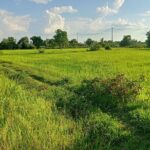
If you’re visiting during the growing season, you’ll also catch the feel of rice farming. The tour includes time among lush rice fields when conditions are right, and you’ll learn basics on how rice is grown.

Stop 4: The Local School and How Education Works
Then you’ll visit a local school. You’ll see children studying and learn about the educational system in Cambodia. This stop grounds the whole day: after plants and homes, you get a clear look at what young people do with their time and how schooling fits into village life.
A fair expectation check: the tour doesn’t promise a full classroom observation or an inside view of every class. Some feedback points out a wish to see a school class more directly. Even so, seeing the school space and hearing how the system works should give you more context than photos alone ever can.
Stop 5: Monks, Religion, and Alms Walk Moments
Religion is part of village life in Cambodia, and you’ll see monks during the tour. You’ll also learn how people become monks and how their day-to-day role interacts with the village. Sometimes you might even see monks walking around to receive alms from villagers.
This segment is one of the most interesting parts because it explains a living tradition. It’s not abstract. You’ll learn how faith shows up in routine behavior—how villagers participate and how monks exist within community rhythms.
If you like culture explained clearly, you’ll probably appreciate the way this tour ties religion to daily village movement rather than treating it as a separate “sights” topic.
Countryside Bike Ride: Shade, Rice Fields, and Frequent Breaks
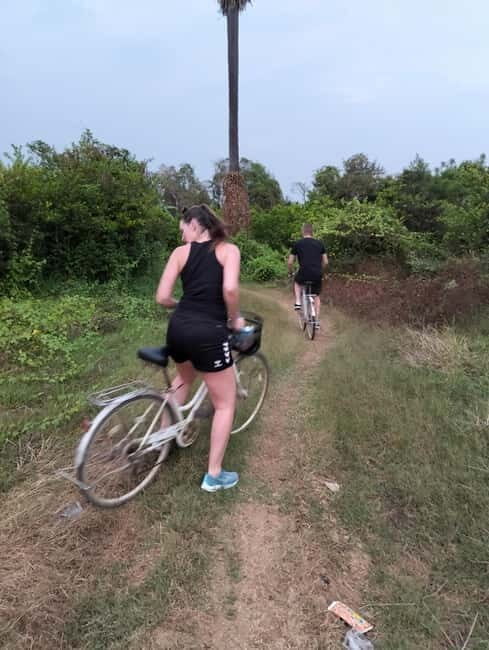
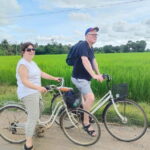
After the village stops, the ride through the countryside becomes more than transport. It’s time to absorb the setting: green areas, shady tree cover, and—during rice season—lush rice fields.
Also, pace matters. One review notes that being on the bikes might total about an hour at most, with frequent breaks and explanations. That setup is ideal for people who want the educational parts to land without feeling worn out.
For inexperienced riders, this tour is generally forgiving. You’re not tackling technical trails; you’re cruising and stopping often. Just be sure you wear comfortable clothes and are ready for a few stretches of uneven or dusty surfaces typical of rural roads.
What’s Included (and What You’ll Need to Bring)
Included
- Local bicycles
- Water
- Guided tour of Odambang village
- Opportunity to interact with local villagers and monks
- Visit to a local school and traditional houses
- Insight into local crops and plants
- Bicycle ride through the countryside
Not included
- Food
- Insurance
Bring
- Camera
- Sunscreen
- Comfortable clothes
I’d add one practical idea: bring a light layer for sun and dust. You’re cycling, you’ll stop often, and the air can get bright even when there’s shade.
Who This Tour Fits Best (And Who Should Skip It)
This tour fits well if you want an authentic look at rural Cambodia without needing a car or complex logistics. It’s a strong match for:
- Couples, friends, and solo travelers who enjoy talking with locals
- Anyone interested in agriculture, school life, and religion as everyday realities
- People who can ride a bike comfortably at a relaxed pace
It’s not a great match if:
- You can’t ride a bike (the tour explicitly isn’t suitable)
- You only want long continuous cycling time
- You expect a full inside visit of a school class or house every single day
Price, Group Size, and Timing: The Details That Change Your Experience
Small group size—up to 10 participants—helps keep the day personal. In this kind of setting, more people means fewer meaningful conversations. It also makes your questions easier for your guide to handle.
Timing is also important. The 3pm pickup means you’re likely spending the afternoon moving through village and school areas and then cycling into countryside conditions. That can be pleasant for photos, but it also means sun can still be strong—so sunscreen is not optional.
And yes, you’ll want to check availability for starting times, since the activity is listed as duration 3 hours with multiple start options.
A Realistic Take: The Best Moments Are the Human Ones
If you’re choosing between “a ride” and “a window into life,” this tour leans hard toward the second. The most rewarding moments are the ones that happen in-between the main stops: the conversation at homes, the plant names you learn on the go, and the monk moments tied to village routine.
If you go in expecting a nonstop bike adventure, you might find the pacing slow. But if you want to return from Battambang with real context—how crops are grown, how schooling fits, how religion is lived—you’ll likely feel satisfied.
Should You Book It?
I think you should book the Battambang Village Bike Tour if you:
- want a small-group, local-led experience in Odambang
- like learning through walking-and-stopping moments, not just riding
- are comfortable cycling and you’re okay with frequent explanations
Skip it if your top priority is hours of uninterrupted biking or if you need guaranteed full inside access to a school classroom or house. The tour is still valuable, but it’s built around interaction and learning—not a “max mileage” day.
If you’re on the fence, consider this: for $18 you’re paying for guided cultural access plus a countryside ride with breaks. That combination is exactly what makes a village tour feel worthwhile in the first place.
FAQ
How long is the Battambang Village Bike Tour?
The tour lasts about 3 hours.
What time does the tour start?
Pickup is included at 3pm. Starting times can vary, so check availability.
Is the tour suitable for beginners or inexperienced cyclists?
It’s generally manageable for inexperienced cyclists because the ride is relatively short and includes frequent breaks with explanations.
What language is the guide?
The tour guide speaks English.
What is included in the price?
The price includes local bicycles, water, a guided tour of Odambang village, visits to a school and traditional houses, insight into local crops and plants, and the opportunity to interact with villagers and monks.
Is food included?
No, food is not included.
What should I bring?
Bring a camera, sunscreen, and comfortable clothes suitable for biking.
Is the tour refundable if I cancel?
Yes, you can cancel up to 24 hours in advance for a full refund.