REVIEW · BATTAMBANG
Battambang City and Country side Full day Tour
Book on Viator →Operated by Cambo Tours · Bookable on Viator
Bats, history, and countryside in one long tuk-tuk day. What I like most is how it stitches together Battambang city (French colonial buildings and a real local market) with working farmland and daily Khmer life. Another big plus is the guide quality: Han’s very good English and hands-on stories make the stops feel personal, not like a checklist. One thing to consider: lunch isn’t included, and the schedule moves, so if you’re picky or snack-happy, you’ll want to plan for food.
This is a 6 to 7 hour tuk-tuk tour starting with a 9:00am pickup and ending back at your accommodation. You get bottled water, entrance fees for the killing cave and bat cave, and a group setup that’s only your party. Bamboo train and some temple fees are extra, so I’d budget for those before you go.
In This Review
- Key highlights at a glance
- Battambang by tuk-tuk: how the morning sets up the day
- City stops: French colonial façades and a real local market
- Wat Samrong Knong: an old temple with a painful past
- Prasat Ek Phnom: older ruins, a big Buddha, and a quick stop
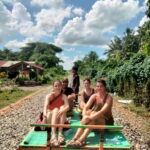
- Bamboo train at Odambang: the classic ride that may not last
- Phnom Sampeau: the climb, the killing cave, and bats on the horizon
- Battambang Bat Caves: millions of bats and the one-time feeling
- Guide-driven value: Han and why the tour feels more human
- Price and what you still need to pay
- Timing, pacing, and how to prepare
- Who this tour suits best (and who should look elsewhere)
- Should you book Battambang City and Countryside?
- FAQ
- What is the price for the Battambang City and Country side full day tour?
- How long is the tour?
- What time does the pickup happen?
- What is included in the tour price?
- What is not included?
- Is the bamboo train ticket included?
- Are the temple stop fees included?
- Do I need good weather?
- Is this a private tour?
Key highlights at a glance
- Battambang city + rural stops in one day without the hassle of arranging multiple rides
- Han and the small details: farming, crops, and local life explained in plain language
- Wat Samrong Knong and Phnom Sampeau: Khmer Rouge-era sites tied to real places
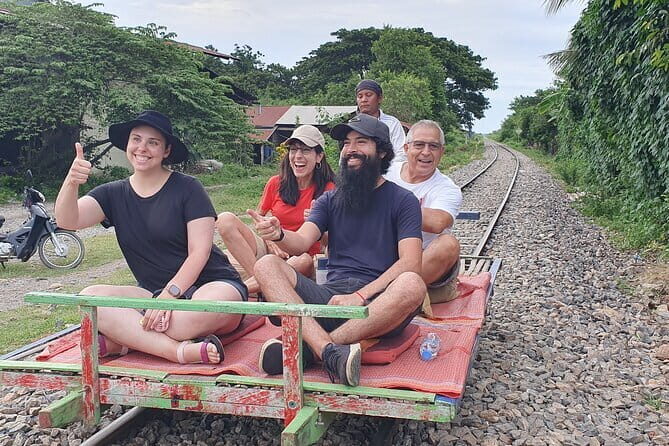
- Odambang bamboo train ride (ticket not included, but it’s the original experience)
- Battambang Bat Caves timing with a dramatic bat flight you’ll remember
Battambang by tuk-tuk: how the morning sets up the day
Battambang is one of those places where the city feels livable, not rushed. This tour starts you off with a city circuit so you understand what you’re looking at before you leave town. You’ll see French colonial buildings up close and get your bearings fast with a stop at the local market.
The market part matters more than it sounds. When you arrive later in the day and you’re already talking about rice, fruit, and everyday routines, the earlier context makes it click. Even better, the tour includes time for you to taste local items, where that’s offered.
This isn’t a slow stroll. You’re riding between stops in a tuk-tuk with a clear rhythm, so you’ll want to wear comfortable shoes and keep your daypack simple.
You can also read our reviews of more city tours in Battambang


City stops: French colonial façades and a real local market
The morning city visit is about orientation and contrast. You’ll tour around Battambang to see those French colonial-era buildings, then shift gears to the real heart of town at the market.
Why I like this approach: it gives you a visual timeline. Colonial architecture shows one layer of Battambang’s past, while the market shows what life looks like right now. You can also ask questions while you’re standing in the middle of the action, not from a distance.
Good to know: the city-market portion doesn’t require paid entry fees. That helps keep the cost predictable before the paid sites later in the day.
Wat Samrong Knong: an old temple with a painful past
At Wat Samrong Knong, you’ll step into an older Buddhist temple built over 300 years ago. The site also has another role in its timeline: it was used as a prison during the Pol Pot regime.
This stop is the tour’s first serious emotional shift. You’re seeing religion and spirituality, but you’re also standing in a place that carried confinement and fear. It’s the kind of stop where a good guide matters, because the meaning isn’t always obvious from architecture alone.
Give yourself a quiet moment here. Take your time reading the context, and don’t rush the viewpoint. This is one of the best places on the route to ask questions, especially if you want to understand how Khmer Rouge history intersects with everyday Cambodian geography.
Prasat Ek Phnom: older ruins, a big Buddha, and a quick stop
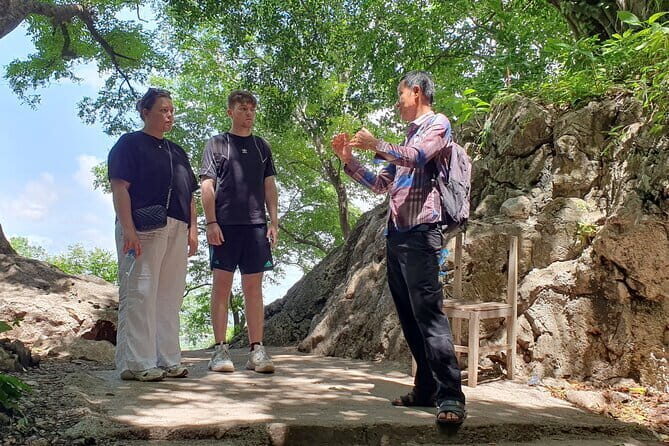
Prasat Ek Phnom is a ruined temple complex and one of the oldest in Battambang. It’s said to date to the early 11th century, and the tour notes it as older than Angkor Wat. You’ll also see a large nearby Buddha statue.
It’s not a long stop, so think of this as a snapshot of the region’s deeper historical layer. If you’re the type who loves reading the details, you might wish you had more time here. But as a mid-route moment, it works well because it breaks the day up before the more physical climbs and the cave sites.
Important for planning: admission for this temple stop is not listed as included, so you should expect to pay separately.
Bamboo train at Odambang: the classic ride that may not last

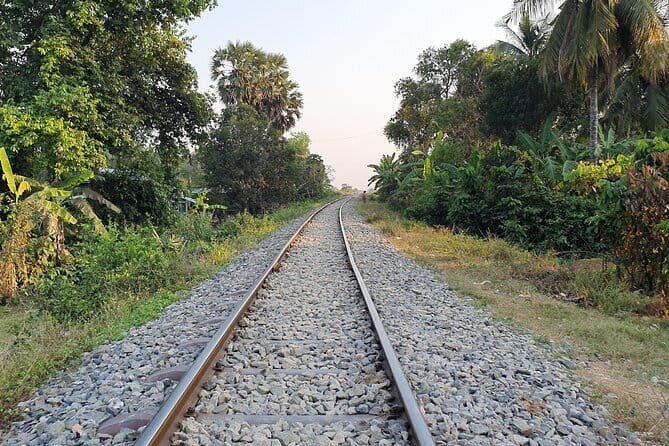
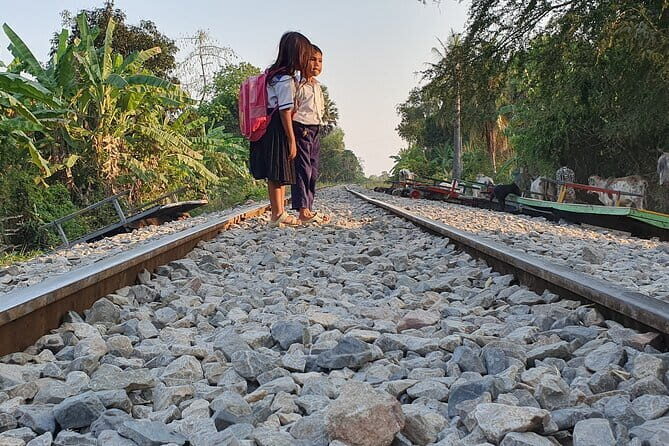
Next you’ll head to Odambang for the bamboo train ride. This is where the tour turns playful, even though the rest of the day includes heavier history.
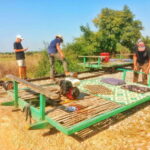
Here’s the practical truth: the bamboo train ticket is not included. The tour also frames this as the original style of ride, and mentions that it may close in the future due to government plans. If you want that classic “how is this even possible?” feeling, don’t treat this as optional.
Why this stop is worth your time: the ride is more than a photo moment. You’re moving through the area on something that locals still associate with daily rhythm and local ingenuity. When your guide times the day well, you also feel the countryside change around you while the ride happens.
Tip for comfort: bring a light layer. Bamboo train seats can feel firm, and any wind on the way back makes it easier to get chilled than you’d expect.
A few more Battambang tours and experiences worth a look






Phnom Sampeau: the climb, the killing cave, and bats on the horizon

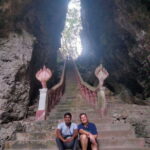
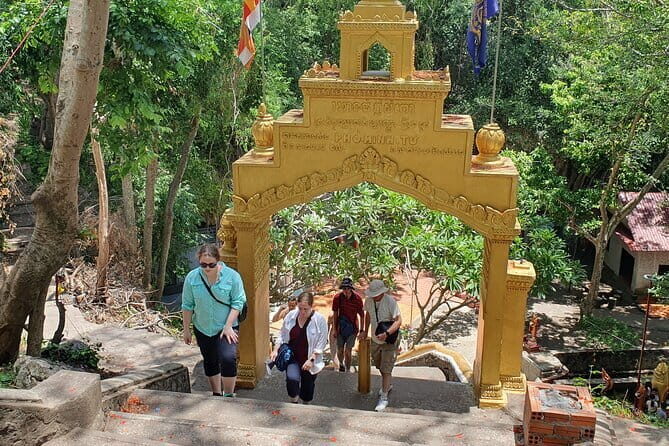
Phnom Sampeau is the big mountain stop in the day plan, and it’s where the tour gets dramatic. You’ll climb up to the area described as the killing cave and bat cave. The tour explains that victims were killed and then pushed into the cave during the Pol Pot regime.
This is one of those sites where you should slow down. The physical climb is part of the experience, but the real focus is the place itself and the story attached to it. Your guide’s job here is to connect what you’re seeing to what happened, in a way that feels respectful rather than sensational.
The payoff is the sense of perspective. From up top, you see why Phnom Sampeau became such a notable focal point. And when you later return for the bat flight, the mountain stops feeling like just scenery.
Admission for the killing cave and bat cave portion is included in the tour price, which saves you from the small add-on costs piling up.
Battambang Bat Caves: millions of bats and the one-time feeling

The final stop is the Battambang Bat Caves. This is the part most people come for, and it lives up to the hype if you’re ready for the timing.
The tour notes that millions of bats fly out and that it can take 30 to 40 minutes for all of them to emerge. The “dragon” description is a common comparison because it feels like one living wave moving across the evening sky.
Two practical pointers make this stop better:
- Arrive ready to stand still. This isn’t a quick viewpoint; it’s a waiting-and-watching moment.
- Keep your eyes forward and let the motion do the work. If you keep checking your phone, you’ll miss how the flight builds.
Admission for this cave stop is also included, so once you’re here, you won’t be juggling extra tickets.
Guide-driven value: Han and why the tour feels more human

For value, the biggest question is usually simple: do you get a real guide or a driver with a map? On this tour, the answers from experience point strongly toward the guide side.
Han is highlighted in the experiences you shared for speaking very good English and knowing a lot about Battambang and Cambodia. He also brings it down to earth with stories about culture, religion, farming, and even flora and fauna. There’s also an example of him adjusting quickly when timing gets tricky, helping get someone to Phnom Sampeau in time to see the bats.
That type of flexibility matters on a day like this because the bat flight is time-sensitive. A good guide can be the difference between seeing the show and arriving after the main emergence.
If you’re the type who likes asking questions, this tour format gives you chances to do it in between rides—market questions, farm questions, history questions—without it turning into a formal lecture.
Price and what you still need to pay
The tour price is $35 per person, with a typical duration of 6 to 7 hours. For what you’re getting, that’s a solid deal if you care about both city context and the caves/bats experience.
Included features that drive value:
- Tuk-tuk driver and local guidance
- Pickup and drop-off
- Entrance fees for the killing cave and bat cave
- Private transportation
- Bottled water
What you should expect to pay separately:
- Lunch (not included)
- Bamboo train ticket (not included)
- Personal expenses and insurance
- Prasat Ek Phnom admission (not included)
Here’s my practical take: the $35 price works best when you’re already planning to pay for the big-ticket items like the bamboo train and one temple admission. If you want everything prepaid, this isn’t the tour for that.
Timing, pacing, and how to prepare
Even though the day is listed as 6 to 7 hours, it doesn’t feel like a lazy half-day. You’ll move through multiple stops with set time windows, including time for cave viewing and the bat flight sequence.
Pack smart:
- Bring water even though the tour includes bottled water. Cave areas and mountain viewpoints can take more time than you expect.
- Wear closed shoes for the climb and uneven surfaces.
- Bring a light layer for the mountain/cave areas.
Also plan food. Since lunch isn’t included, you’ll want to eat before the pickup or budget for a meal during the gaps, depending on timing.
Weather matters, too. The tour requires good weather, and if it can’t run as planned due to conditions, you’ll be offered a different date or a full refund.
Who this tour suits best (and who should look elsewhere)
This tour fits well if you want a classic Battambang mix:
- City architecture and market life in the morning
- Khmer Rouge-era sites explained in context
- The bamboo train experience
- A memorable bat cave spectacle at the end
You might skip or choose something else if you:
- Want a long, slow museum-style day with no history-heavy stops
- Prefer to control every ticket cost in advance
- Have trouble with a mountain climb or standing for the bat flight
If you’re traveling in a group where everyone wants different things—history, culture, and a nature show—this route is a good compromise.
Should you book Battambang City and Countryside?
I’d book it if you want one day that covers a lot of ground without feeling chaotic. The included entrance fees for the killing cave and bat cave reduce surprise costs, and the guide quality you’re likely to get—especially when you end up with someone like Han—turns the day into more than driving from sign to sign.
If your ideal day is only light and breezy, you might find the Pol Pot-related stops emotionally heavy. But if you’re okay with that and you want a real understanding of why these places matter, this tour is a strong, practical pick.
In short: for $35, with pickup, transport, and big cave highlights, it’s a good value day in Battambang—as long as you plan for lunch and the extra bamboo train ticket.
FAQ
What is the price for the Battambang City and Country side full day tour?
The price is $35.00 per person.
How long is the tour?
The tour runs about 6 to 7 hours.
What time does the pickup happen?
Pickup is scheduled for the morning at 9:00am.
What is included in the tour price?
Included are the tuk-tuk driver with local guidance, pickup and drop-off, entrance fees for the killing cave and bat cave, private transportation, and bottled water.
What is not included?
Lunch, the bamboo train ticket, personal expenses, and insurance are not included.
Is the bamboo train ticket included?
No. The bamboo train ticket is listed as not included.
Are the temple stop fees included?
Wat Samrong Knong is included, but Prasat Ek Phnom is listed as not included.
Do I need good weather?
Yes. The experience requires good weather, and if it’s canceled because of poor conditions, you’ll be offered a different date or a full refund.
Is this a private tour?
It’s described as private, meaning only your group participates.