REVIEW · SIEM REAP
Private Tuk Tuk Tour to Angkor Wat and Small Circle with Two Extras
Book on Viator →Operated by Angkor-Travel Tours · Bookable on Viator
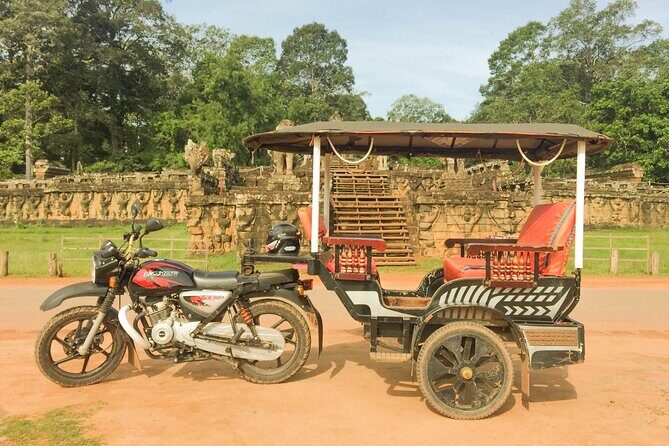
Two sunsets and a quiet memorial make this count. This private tuk tuk route links Angkor Wat at both ends of the day, then spreads out through the Small Circle to temples most big bus schedules rush. I love the early East Gate entry for calmer photos, and I love the private pace that lets you linger when carvings grab your attention.
One drawback: the day is full, so you’ll want good walking shoes and a plan for the emotional stop at Wat Thmey. Also, the Angkor ticket is separate from the tour price, so budget for that up front.
In This Review
- Key things I think you’ll notice fast
- Why this 9–10 hour Angkor Wat tuk tuk loop is a smart use of time
- The 7:00 am start and what it changes (for your photos and your mood)
- Angkor Wat twice: East Gate in the morning, reflections later
- Prasat Kravan, Prasat Bat Chum, and Srah Srang: the calm before the big temples
- Banteay Kdei and Ta Prohm: jungle temples with very different vibes
- Ta Nei: the off-road feeling that makes the day feel personal
- Ta Keo and Spean Thma: steep stairs and clever reuse of earlier stone
- Chau Say Tevoda, Thommanon, and the Victory Gate climb
- Bayon and Angkor Thom South Gate: the big faces, minus the full-day crush
- Wat Thmey (Killing Fields): a brief memorial stop you should treat with care
- Price and value: $15 for the tour, plus the Angkor ticket
- Who this private tuk tuk tour fits best
- Should you book this tour? My straight answer
- FAQ
- How long is the tour?
- What time does the tour start, and where is the pickup?
- Is the Angkor temple ticket included?
- Is lunch included?
- Which major temples are included in the route?
- Is Wat Thmey admission free?
- Is this tour really private?
- What is the cancellation policy?
Key things I think you’ll notice fast
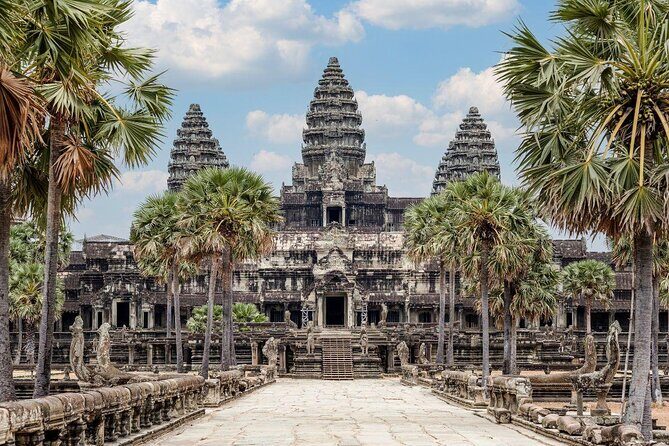
- East Gate morning light plus a later Angkor Wat return for pond reflections
- A true private day (only your group) with transport, driver, and free water
- Smaller temples like Prasat Kravan and Prasat Bat Chum that don’t feel as crowded
- Jungle-temple time at Ta Prohm plus a quieter detour to Ta Nei
- City-gate views at Victory Gate and Angkor Thom South Gate
- A short but serious Wat Thmey (Khmer Rouge memorial) stop to balance the day
Why this 9–10 hour Angkor Wat tuk tuk loop is a smart use of time
Angkor is one of those places where time disappears fast. You can absolutely do it on your own, but you’ll spend energy figuring out routes, re-checking opening times, and backtracking. This tour keeps you moving in a logical arc—early to Angkor Wat, then out through the Small Circle, and back again for the famous late-day look.
The big advantage is the comfort of having your own driver. You’re not sharing a vehicle with strangers or getting swept along by a loud group schedule. You can move at a human pace, stop for photos without feeling rushed, and skip a temple section if your legs are protesting.
That said, this is still an all-day circuit. Even though it’s private, the itinerary hits a lot of sites. If you like to fully explore every corner for hours, you may feel the “see and move” rhythm.
You can also read our reviews of more private tours in Siem Reap
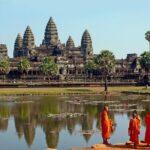
The 7:00 am start and what it changes (for your photos and your mood)
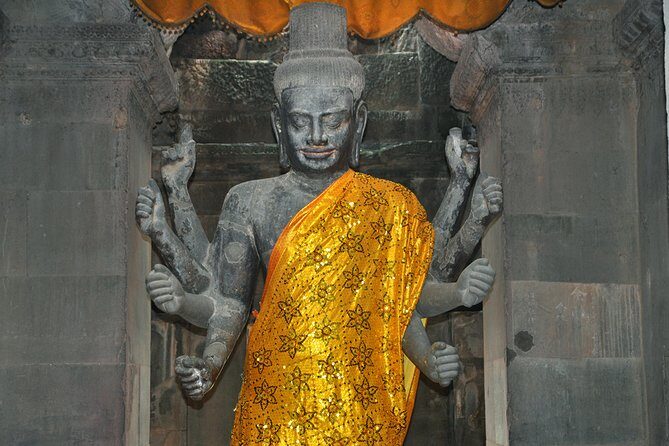
The tour starts at 7:00 am in Siem Reap (pickup is offered, and you’ll finish back at your hotel or another spot in town). That early start is doing real work for you. First, it helps you arrive at Angkor Wat before peak crowds. Second, it keeps the schedule from turning into a sunset scramble.
In the real world, sunrise lighting is not subtle. Morning haze can make the stone look flat, while early sun adds texture to carvings and makes faces in sculpture pop. This matters at Angkor Wat, but it also changes how your eye reads the whole complex—from fine brickwork to weathered sandstone.
The tour also includes bottled water, and in practice, drivers sometimes bring cold water along. Either way, in Cambodia heat, hydration isn’t a luxury—it’s the difference between enjoying the day and just surviving it.
Angkor Wat twice: East Gate in the morning, reflections later
Angkor Wat is the anchor of the whole day, and this tour uses it the way photographers plan it: morning light first, then a return for late-day pond reflections.
Morning at Angkor Wat
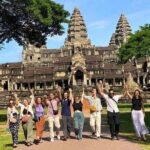
You start from the less frequented East Gate to get Angkor Wat in its best morning light. That’s a clever move because the classic West Gate views are popular, and crowds can change your photo options fast. You’ll still get the well-known West Gate angles later on in the morning route, so you don’t lose the iconic look—just start with the calmer perspective.
If you love details, use this morning block (about 2 hours) to notice the stone. Angkor Wat isn’t one big monument; it’s a stack of design choices. Look for how the reliefs sit on surfaces and how light shifts across steps and edges.
Late afternoon return
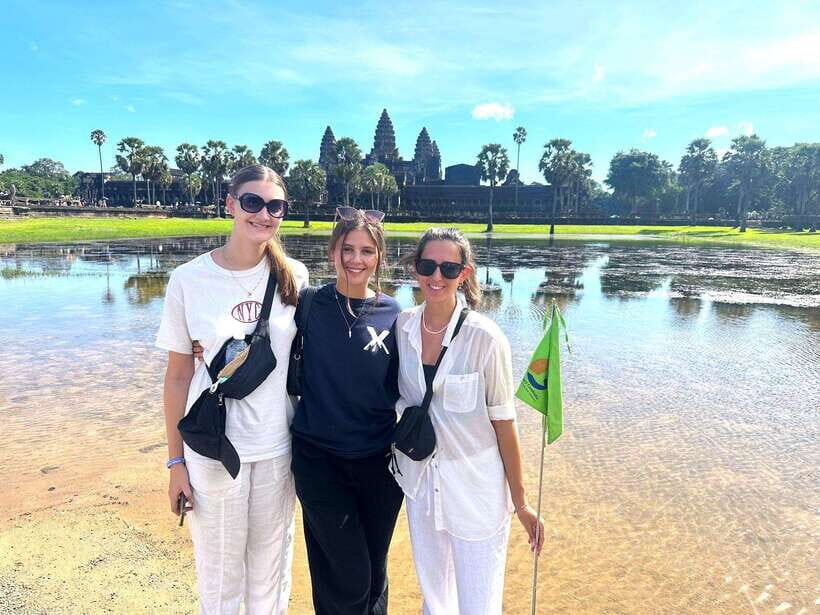
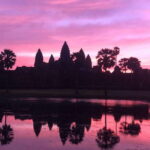
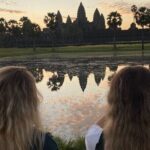
Your second Angkor Wat stop comes in the late afternoon with about 30 minutes, timed for towers mirrored in the temple ponds and moats. If you’ve ever seen an Angkor Wat photo that looks like the scene is doubled, that effect is usually the late-day angle plus still water.
Practical note: 30 minutes feels short, but it’s the right length for most people. You’re not stuck doing the whole complex again. You’re returning for the best “wow” reflections and then moving on.
Prasat Kravan, Prasat Bat Chum, and Srah Srang: the calm before the big temples
Between the headliners, the tour drops you into smaller stops that are easier on crowds and great for focused looking.
Prasat Kravan (about 20 minutes)
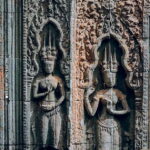
This temple is defined by five towers in a line. What makes it special is the brick carvings, which are described as large in size. That matters because many Angkor details are subtle. If you’re the kind of person who likes to see how different parts of the same civilization used different materials and textures, this is a good one.
Prasat Bat Chum (about 20 minutes)
Bat Chum has three towers on a shared platform, but the real draw is the large inscriptions. The point here is interpretation: the carvings and text help you understand how ideas shifted over time in Angkor, including the influence of Buddhism.
Srah Srang (about 10 minutes)
This is a smaller artificial basin, and the fun part is the terrace with animal sculptures. It’s a short stop, but it’s picturesque in a “pause for a breath” way. If you’re moving between heavier temple complexes, this break helps reset your attention.
A consideration here: these smaller temples can blur together if you rush. Use the included driver knowledge to keep your eyes on what’s unique—towers, brick, inscriptions, animal carvings—rather than treating them like quick photo stops.
Banteay Kdei and Ta Prohm: jungle temples with very different vibes
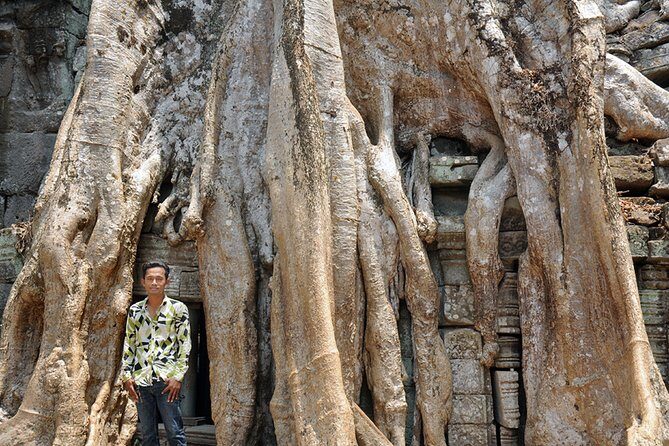
These two stops are where Angkor starts to feel cinematic.
Banteay Kdei (about 45 minutes)
Banteay Kdei is often framed as a quieter sibling to Ta Prohm. It’s described as a smaller sister, but it’s still a large complex, with a more labyrinth-like layout. The good news is you won’t be the only person there trying to get your bearings. The practical trick is to choose a direction and take your time at the intersections rather than sprinting to the next platform.
Ta Prohm (about 1 hour 15 minutes)
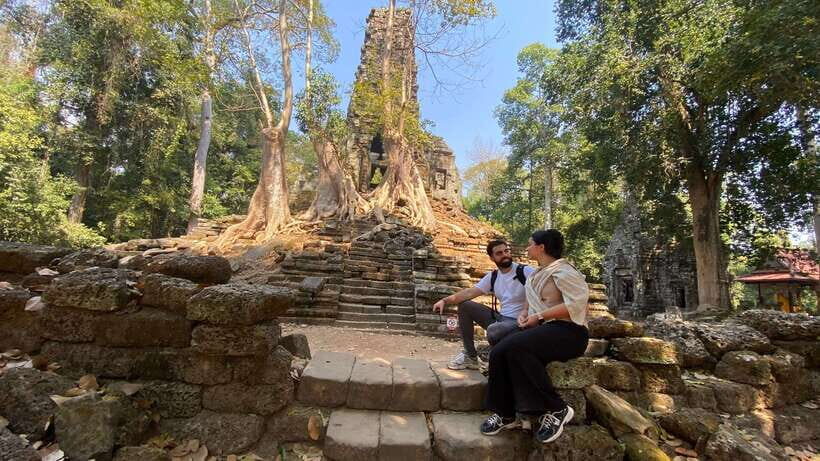
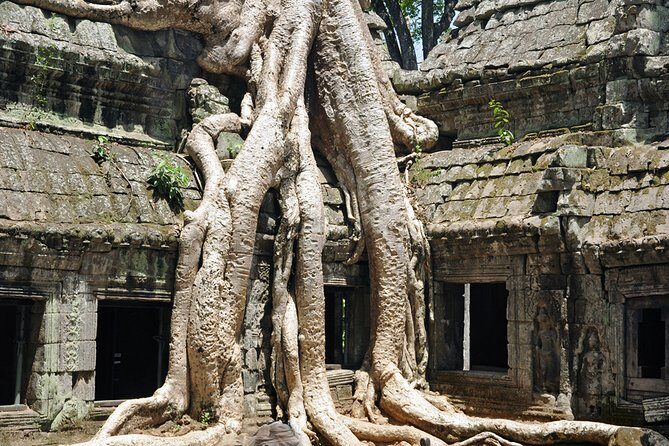
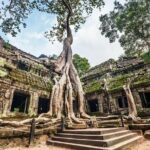
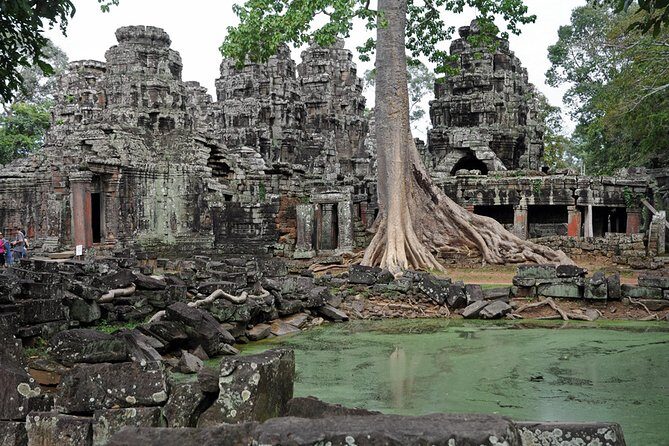
Then you hit the world-famous jungle temple: Ta Prohm, where huge strangle figs wrap around stone. This is the stop that feels most like a movie set, and yes, it’s a great place to try playful photo recreations—posing like you’re in an adventure scene while the vines frame you.
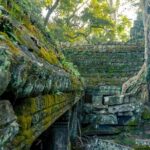
Ta Prohm also rewards a slower look. Spend time on the way the trees and stone interact: gaps where roots push, rough edges where weather has done its work, and the sense that the temple is still in a long conversation with the jungle.
Ta Nei: the off-road feeling that makes the day feel personal
Ta Nei is where this tour starts to feel different from the “do the checklist” versions.
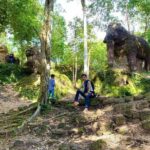
It’s described as hidden in the jungle and reached on gravel roads, which is exactly why most big crowds skip it. The time is about 30 minutes, so it’s not overwhelming. You’re given enough time to walk the ruins and soak up that Indiana Jones vibe people associate with forgotten paths.
The benefit for you: Ta Nei can break the pattern. After big named stops, it gives you a moment of discovery without the stress of getting lost, because your driver is handling the route while you enjoy the walk.
Ta Keo and Spean Thma: steep stairs and clever reuse of earlier stone
This part of the circuit is for structure lovers.
Ta Keo (about 40 minutes)
Ta Keo is a former state temple built like an artificial mountain and a stepped pyramid. The key detail is that the stairs to the upper platforms are extraordinarily steep. If you’re even mildly worried about balance or aching knees, pace yourself. Take breaks. Stop often. The payoff is the feeling of climbing into the geometry of the design.
Spean Thma (about 5 minutes)
Spean Thma is a stone bridge from the late Angkor period. It’s notable for how the construction used carved stones taken from earlier temples. It’s a quick stop, but it gives you a neat lens: Angkor wasn’t static. Materials, meaning, and even building parts moved through time.
If you’re short on attention span, 5 minutes might sound too brief. But the bridge is quick and specific—take a photo, look closely for reused elements, and move on.
Chau Say Tevoda, Thommanon, and the Victory Gate climb
These stops build toward the city-gate views of Angkor Thom.
Chau Say Tevoda (about 20 minutes)
Chau Say Tevoda is a medium-sized temple with an impressive processional route from the east and lots of pediment carvings showing mythological themes. What I like about it as a stop is that it offers story through sculpture. Instead of just seeing shapes, you can look for how scenes are arranged and repeated.
Thommanon (about 15 minutes)
Thommanon is the sister temple to Chau Say Tevoda. It’s from the Angkor Wat period, and the towers are described as having a style similar to Angkor Wat. This contrast matters: you’re seeing related design language but applied in a different setting.
Victory Gate (about 10 minutes)
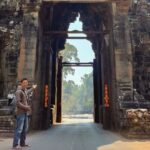
This is one of the best preserved city gates in Angkor Thom. You climb the way up for a view toward the southern giant face. Ten minutes can be tight, but gates are built for quick “arrive and look” energy. If you want the photo, you’ll get it here without spending half a day.
Bayon and Angkor Thom South Gate: the big faces, minus the full-day crush
Angkor Thom is the city center mood. This tour handles it with a practical rhythm: short photo stop for Bayon, then more time at the iconic South Gate.
Bayon photo stop (about 10 minutes)
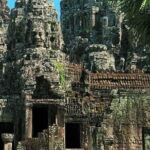
At Bayon, you only stop for a photo on the “Small Tour.” That keeps things efficient. Bayon’s face towers can overwhelm you when you’re trying to take them all in. A quick photo stop is sometimes the smartest way—capture the key image, then focus your longer attention on South Gate.
Angkor Thom South Gate (about 15 minutes)
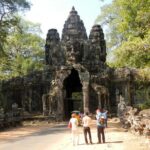
This is where you should slow down. The face tower and the railings with rows of giant statues—depicting demons and gods—are the must-see. The short time works because the most important visual is close and direct. If you’re going to do one gate photo that really feels “I’m here,” this is it.
Wat Thmey (Killing Fields): a brief memorial stop you should treat with care
After hours of stone beauty, Wat Thmey is a sudden shift. It’s a small memorial stupa for victims of the Khmer Rouge, and it includes photo boards with images of some who were killed here. There’s also an open prayer hall.
The stop is short (about 10 minutes) and the entrance is free, but it’s still emotionally heavy. If you’re traveling with kids, you’ll probably want to gauge how much detail you’re comfortable explaining. If you’re on your own, you might find it helps to slow your pace instead of rushing for photos.
Practical tip: bring a moment of silence with you. This is one of those places where respectful quiet feels right and doesn’t slow your schedule.
Price and value: $15 for the tour, plus the Angkor ticket
Let’s talk money clearly.
The tour price is $15 per person, and it includes private transportation, an English-speaking driver, and free bottled water. Lunch is not included. Most importantly, the Angkor ticket is not included: it’s listed as $37 USD per person for a 1-day pass valid for the temples.
So what are you paying for?
- You’re paying for the convenience of a private tuk tuk and a driver managing the route through multiple sites in a single day.
- You’re paying for time you don’t waste figuring out logistics.
- You’re paying for a structured loop that gives you the best photo windows at Angkor Wat.
Where you may want to plan extra
Lunch isn’t built in, and that means you’ll either eat near a stop or pick something up between sites. Also, the tour notes that there may be additional transfers if you choose lunch somewhere other than the typical area around Srah Srang.
Who gets the best value?
This tour is a good match if:
- you want a relaxed private day without the pressure of navigating everything alone,
- you care about seeing Angkor Wat in both morning and late afternoon light,
- you want some lesser-known sites mixed into the bigger names.
Who this private tuk tuk tour fits best
This works especially well for first-time Angkor visitors who want a full experience without feeling like they’re constantly turning in circles. It also suits people who enjoy history explanations tied to what they’re seeing—brick carvings, steep temple stairs, gate views—rather than just collecting photos.
It’s also a solid choice if you like flexibility. Some driver-guide styles in this service tend to let you walk at your own pace while they handle the vehicle timing. You’re likely to meet friendly drivers such as Kim, Sina, or Pin, and guides like Vannak (names shown from past service feedback). That matters because Angkor days are long. A calm, organized guide can make the difference between fatigue and fun.
If you’re the type who wants to do only a few temples with long, in-depth wandering, you may feel like the schedule is brisk. In that case, you’d either need a shorter custom day or a version with fewer stops.
Should you book this tour? My straight answer
Book it if you want a private, efficient loop that hits the key photographic moments at Angkor Wat and still leaves room for quieter temples like Ta Nei and the memorial at Wat Thmey. The combination of early East Gate light, late reflections, and a personal tuk tuk setup is strong value for a single full day.
Skip it if you dislike packed itineraries or if you want hours and hours inside just one or two sites. This tour is built for breadth and balance, not deep study of every stone for an entire day.
FAQ
How long is the tour?
It runs about 9 to 10 hours, depending on timing and how long you spend at each stop.
What time does the tour start, and where is the pickup?
The tour starts at 7:00 am. Pickup is offered, and the meeting start point is in Krong Siem Reap. Drop-off is back at your hotel or another point in the town center.
Is the Angkor temple ticket included?
No. The Angkor ticket is not included. The tour lists a 1-day Angkor Ticket as $37 USD per person, valid for all temples.
Is lunch included?
No, lunch is not included.
Which major temples are included in the route?
The day includes Angkor Wat (morning and late afternoon), Prasat Kravan, Prasat Bat Chum, Srah Srang, Banteay Kdei, Ta Prohm, Ta Nei, Ta Keo, Spean Thma, Chau Say Tevoda, Thommanon, the Victory Gate, Bayon photo stop, Angkor Thom South Gate, and Wat Thmey.
Is Wat Thmey admission free?
Yes. The itinerary lists Wat Thmey admission as free.
Is this tour really private?
Yes. It’s described as a private tour/activity, so only your group participates.
What is the cancellation policy?
Free cancellation is offered. You can cancel up to 24 hours in advance for a full refund.