REVIEW · SIEM REAP
Angkor Wat Private Day Tour from Siem Reap
Book on Viator →Operated by Green Era Travel · Bookable on Viator
Angkor feels personal with a private guide. This day tour strings together the big hitters in the UNESCO Angkor Archaeological Park with an experienced English-speaking guide who helps you make sense of the carvings, motifs, and temple symbolism at a private pace.
What I love most is the way the guide turns scenes you’d otherwise rush past into something you can actually read. You get help spotting the iconography at Angkor Wat and then using that context to understand what you see next.
One consideration: it’s a lot of walking and stairs in heat, and you’ll also need the required Angkor National Park ticket (not included) plus the right clothing (pants or knee-length skirts/dresses).
In This Review
- Key things to know before you go
- Why this private Angkor circuit works
- The 8 AM pickup and the day’s tempo
- Angkor Wat: Vishnu, bas-reliefs, and scale you can feel
- Angkor Thom South Gate: the walls are the point
- Bayon Temple: the faces you can’t unsee
- Terrace of the Elephants and the Leper King Terrace
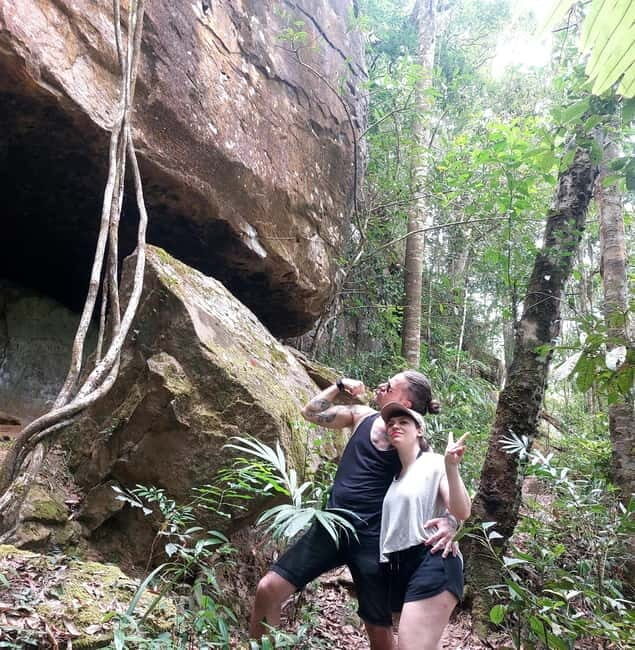
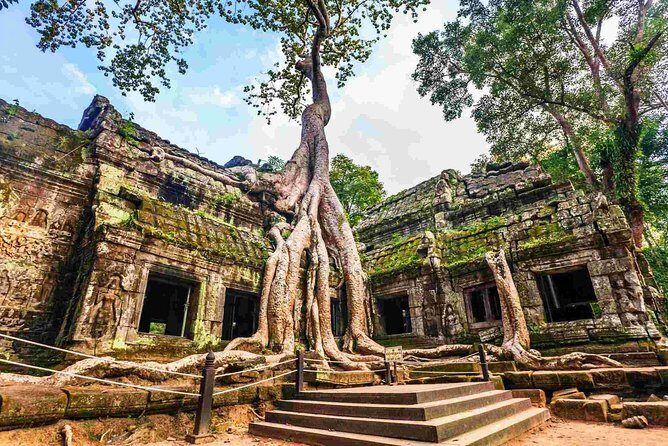
- Ta Prohm: when nature becomes part of the temple
- Getting around: tuk-tuk comfort and less crowd stress
- Price and value: $49 plus the park ticket reality
- What to wear, what to pack, and how to avoid “temple fatigue”
- Who this tour suits best
- Should you book this Angkor Wat private day tour?
- FAQ
- What time does the pickup happen?
- How long is the tour?
- Which temples are included in the itinerary?
- Is the Angkor National Park ticket included in the price?
- What transportation will we use?
- Does the tour include hotel pickup and drop-off?
- What clothing is required?
- Is there free cancellation?
Key things to know before you go
- Private pacing: your group only, so you can pause for photos and questions without being swept along.
- Smart contrast: compare Angkor Wat’s enduring stone with Ta Prohm’s tree-roots takeover.
- Most-famous carvings on site: Angkor Wat’s longest continuous bas-relief is a signature stop.
- Comfort between temples: tuk-tuk or minivan transportation plus cold bottled water during the tour.
- A guided circuit that makes sense: you move from Angkor Wat to Angkor Thom (South Gate, Bayon, terraces) to Ta Prohm.
Why this private Angkor circuit works
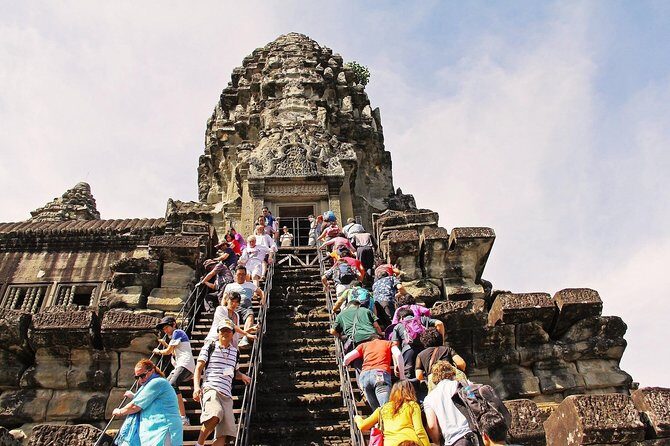
Angkor Wat and the surrounding temples can feel like a blur if you’re just scanning from one photo spot to another. This tour is built around a logical route, so you’re not zig-zagging across the park or guessing what each temple is trying to say.
The real value is the guide. When someone explains what you’re looking at, you spend less time asking, What is this? and more time noticing details: faces, boundary walls, the way scenes repeat, and how Hindu and Buddhist influence shows up in the same stone.
And because it’s a private experience, you’re not stuck with the slowest walker, the loudest group, or the “everyone stand here for a photo” routine. You can move at a pace that fits you, and you can spend extra time where your eyes keep returning.
You can also read our reviews of more private tours in Siem Reap


The 8 AM pickup and the day’s tempo

Your day starts with hotel pickup in Siem Reap at 8:00 AM. From there, you’ll head into the Angkor area and begin your temple run. The itinerary is set for a 6–7 hour experience, which is a practical sweet spot if you’re trying to see key sites without turning the whole day into a marathon.
The stops are spaced in a way that keeps the story flowing:
- Start with Angkor Wat.
- Then shift into the royal city of Angkor Thom.
- Finish with Ta Prohm, where the jungle is part of the visual message.
One subtle benefit of this timing: you’re not arriving at the temples with zero context. By the time you reach Bayon and the terraces, you already know what Khmer builders were doing with layout, symbols, and scale.
If you’re choosing a sunrise version, expect much earlier starts. One guest shared a 4:30 AM sunrise start, and said the early light helped them avoid the heaviest crowds.
Angkor Wat: Vishnu, bas-reliefs, and scale you can feel
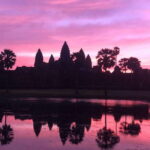
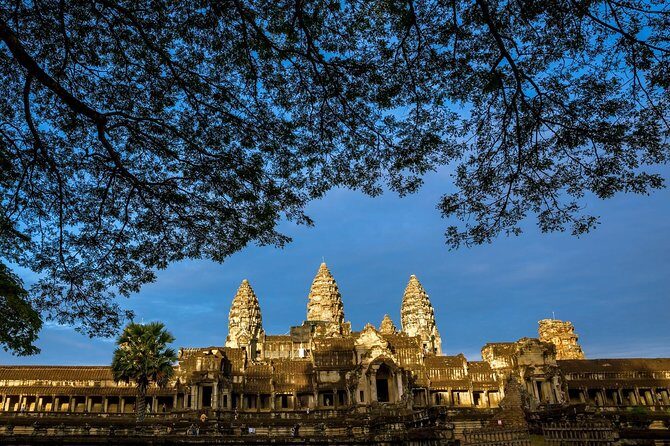
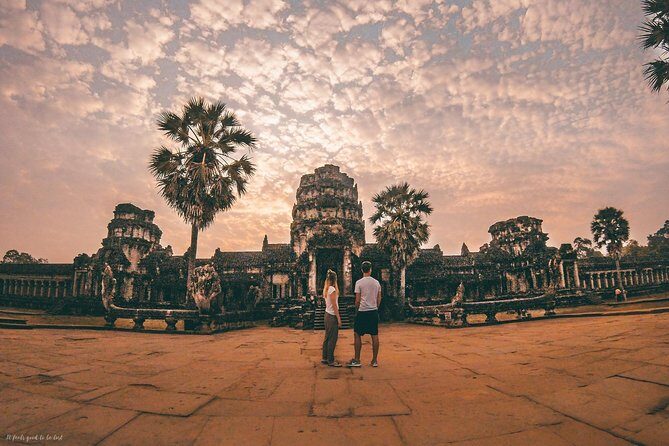
Angkor Wat is the anchor stop, and it’s easy to see why. It was built between 1113 and 1150 AD and originally dedicated to Vishnu. Even if your interests lean more toward architecture than religion, the layout and scale are hard to ignore.
This tour gives you about 2 hours at Angkor Wat. That time matters, because the temple isn’t just one view. It’s a sequence: you enter, you orient yourself to the geometry, and then you start noticing how the bas-reliefs and carvings run continuously along walls and galleries.
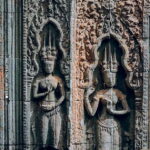
One highlight here is the world-famous longest continuous bas-relief at Angkor Wat. It’s the kind of feature that can look like “lots of carvings” until someone points out what’s actually connected and why it’s arranged that way. With a guide, that long run of scenes becomes a storyline instead of wallpaper.
Watch-outs at Angkor Wat
- You’ll want decent footwear. You’ll be on uneven stone and you may do a lot of steps.
- It can get hot quickly. Build short breaks into your pace. Your guide can help you decide what’s “must-see” vs. “nice if you’re still feeling strong.”
Angkor Thom South Gate: the walls are the point
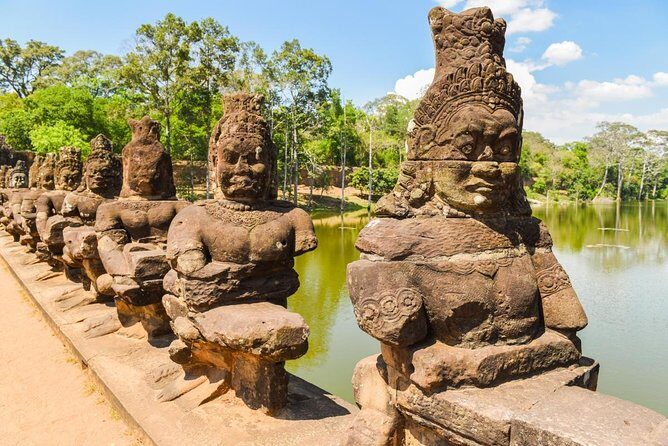
After Angkor Wat, you move into the broader Angkor Thom complex. The first named stop is the Angkor Thom South Gate. The scale is jaw-dropping even before you reach the inner structures: the complex’s walls are described as around 6 meters wide, 8 meters high, and 13 kilometers long.
This portion lasts about 50 minutes, which is about right. The gate is where you understand the idea of the city as a fortress—something enclosed, controlled, and designed to impress visitors and subjects alike.
What a guide adds here is interpretation. The gate isn’t only a doorway; it’s tied to the political and symbolic center of the kingdom. Once you hear the story behind the walls, the rest of the walk feels less random.
Bayon Temple: the faces you can’t unsee
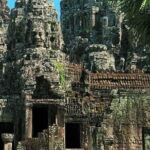
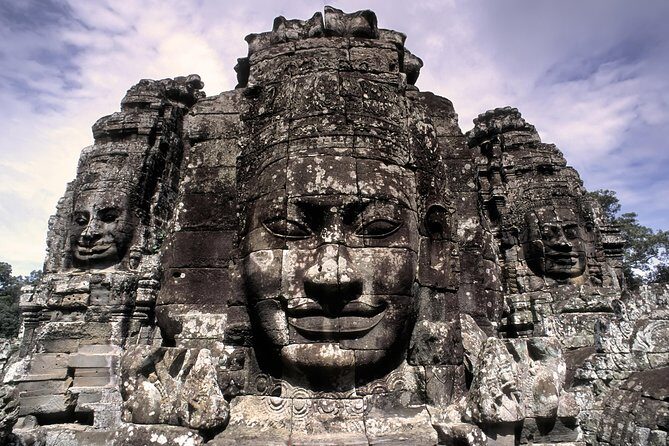
From the South Gate, you head to Bayon Temple, which sits at the center of Angkor Thom. Bayon is famous for its 200 smiling faces and for its “temple mountain” feel right in the middle of the complex.
This stop is about 45 minutes. That gives you time to do more than one viewing angle, which matters a lot here. The faces shift as you move, and different viewpoints make different parts of the temple’s structure look dominant.
If you’re the type who likes to understand what you’re seeing, this is one of the best moments on the tour. The guide’s job is to connect temple features to iconography and motifs, so you’re not just counting heads—you’re learning what the design is communicating.
A recurring theme from excellent guides: they also help with photo timing and angles. Some guests specifically credited guides like Dy and Choud for helping them with picture spots and for clear storytelling that made Bayon click.

Terrace of the Elephants and the Leper King Terrace
Next come the terraces: about 45 minutes total here, with two connected sites in the plan.
1) Terrace of the Elephants
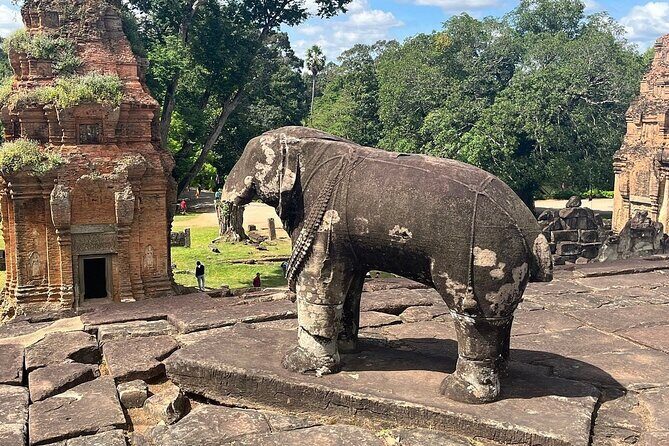
This gets its name from the animal depictions. It’s a great place to slow down because terraces are meant for viewing and procession. You can stand back, look up, and see how the carvings fit into the architectural flow.
2) Terrace of the Leper King (often referred to as the Leper King Terrace)
This features a famous sculpture popularly called the leper king. The terrace setting helps the sculpture make sense in context—less like a random statue and more like a designed piece in a larger ceremonial space.
The practical challenge: terraces are still outdoors, still in sun, and still full of steps and uneven footing. Bring a steady pace mindset. If you’re tired, ask your guide what’s most important to you and prioritize based on energy.
Ta Prohm: when nature becomes part of the temple
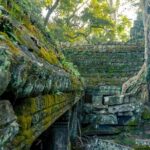
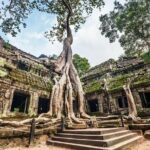
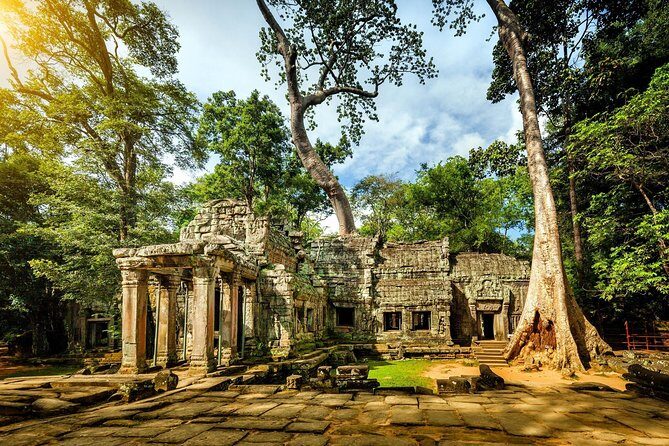
Finally, you reach Ta Prohm, the temple known for ruins taken over by tree roots. This is where the tour’s “contrast” idea becomes real.
You’ll spend about 1 hour here. Ta Prohm is visually intense—roots twist through stone, and you can feel how the landscape and the architecture have been negotiating for centuries. One of the tour’s promised contrasts is exactly right: Angkor Wat’s enduring construction vs. Ta Prohm’s invasive jungle.
This stop can be a favorite if you like atmosphere. It’s also the place where you’ll likely want more time if you’re into photography or you simply pause often. Still, 1 hour is a solid slot because you want to finish while you still have energy for the ride back.
A small but helpful detail: many guests describe guides who keep the day comfortable with cooling touches. While cold bottled water is listed as included, some guests also mentioned cooling towels between stops. Either way, it’s smart to pace yourself in Ta Prohm, because it’s the hottest-feeling stop for a lot of people.
Getting around: tuk-tuk comfort and less crowd stress
Your transport depends on group size:
- 1–2 people: tuk tuk
- 3+ people: minivan
This matters more than it sounds. With a tuk tuk, you’re moving like a local and getting quick hop-to-hops between temple areas. With a minivan, you’re trading some of that “open air charm” for more room and ease.
Guests consistently describe the experience as smooth and comfortable, including helpful cooling breaks. One honeymoon trip praised the tuk tuk and the guide’s Khmer history context. Another family trip emphasized how the guide and driver handled needs calmly, even with an infant.
You also get a debrief on the way back to your accommodation in an air-conditioned private vehicle. That’s a real comfort win. Angkor days are intense on your body and your attention span, and a chance to reflect and ask final questions while you’re cooling down is a nice way to end.
Price and value: $49 plus the park ticket reality
The tour price is $49 per person. That’s the portion you pay for the guide, the private transportation, and the structured route.
But the Angkor National Park ticket is required and is listed as $37 per person, and it’s not included. So your true baseline cost is closer to $86 per person, before food and tips.
Is that still good value? In my view, yes, if you care about:
- seeing the main sites in one pass,
- having someone explain symbols and carving scenes,
- and avoiding the friction of large-group touring.
If you’re traveling as a couple or a small group, private can be a strong deal because you’re essentially paying for time and clarity, not just logistics.
Also, with a private tour, you can ask questions in real time. That’s worth money at Angkor because the temples reward attention. A guide like San, Sammy, Nak, Sorphea, Phee, Phat, Roem, Perth, Sien, or Pot (names pulled from the guide experiences shared) shows up in the reviews as a common reason people felt the day was worth it.
What to wear, what to pack, and how to avoid “temple fatigue”
This isn’t a sit-in-a-bus kind of day. It’s active, with steps and uneven surfaces. The tour data specifically notes moderate physical fitness, and the review stories reinforce that you should plan for walking.
Dress code is strict enough to matter:
- Only pants or knee-length skirts/dresses are permitted
- Bring good walking shoes
- If you’re traveling with kids, they must be accompanied by an adult
A practical pacing tip: don’t treat every stop like a sprint to the “main angle.” Set your own rule: see the key feature first (faces at Bayon, tree roots at Ta Prohm, bas-relief galleries at Angkor Wat), then decide whether to wander.
If you’re overheating, ask your guide to slow down. One review noted guides adjusting pace in the heat, and that kind of adaptation can turn a tiring day into a manageable one.
Who this tour suits best
This private day tour is a strong fit if:
- you want main temples without spending days coordinating transport,
- you like learning what you’re seeing (carvings, motifs, religious context),
- you don’t want to fight crowds for viewpoints,
- and you appreciate a guide who can tailor the day to your questions.
It may be less ideal if you prefer totally independent exploring with zero interpretation. In that case, you might enjoy getting a temple map and doing your own route. But you’ll lose the benefit of linking features across Angkor Wat, Angkor Thom, Bayon, and Ta Prohm into a single story.
Should you book this Angkor Wat private day tour?
Book it if you want an organized, private route through the highlights of Angkor Archaeological Park, and you’d like someone to explain the symbolism and design so the temples land with meaning. The price is fair for the guide + private transport, especially when you value the ability to take your time and ask questions.
Skip it or consider a different format if you’re trying to minimize costs (because the park ticket is required and adds a big chunk), or if you know your group struggles with long outdoor walking and steps in heat.
If you can handle the walking and you’re willing to follow the dress code, this is exactly the kind of day that makes Angkor feel less like a checklist and more like a place you understand.
FAQ
What time does the pickup happen?
Pickup is at 8:00 AM from your hotel in Siem Reap.
How long is the tour?
The duration is about 6 to 7 hours.
Which temples are included in the itinerary?
You’ll visit Angkor Wat, Angkor Thom South Gate, Bayon Temple, Terrace of the Elephants (and the Leper King Terrace), and Ta Prohm.
Is the Angkor National Park ticket included in the price?
No. The Angkor National Park ticket is required and costs 37 US$ per person.
What transportation will we use?
For 1–2 people you’ll use a tuk tuk. For 3 people and up, you’ll use a minivan.
Does the tour include hotel pickup and drop-off?
Yes, hotel pickup and drop-off are included.
What clothing is required?
You need pants or a knee-length skirt/dress. Good walking shoes are also recommended.
Is there free cancellation?
Yes. You can cancel for a full refund up to 24 hours in advance of the experience start time.