REVIEW · SIEM REAP
Angkor Wat Private Tuk-Tuk Tour (sunrise Option) & more
Book on Viator →Operated by Geko Tours / Siem Reap /Cambodia · Bookable on Viator
Sunrise at Angkor feels like a reset. This private tuk-tuk tour is built for the early light and smart timing across the key sites in Angkor Park. You’ll move between temples with door-to-door pickup, then pause for the iconic views at Angkor Wat, Bayon, and Ta Prohm—without being stuck in a long bus line.
What I like most is the practical comfort: unlimited bottled water and cold towels keep you going in the heat. I also appreciate the crowd-beating approach, with routes and picture stops planned around the busiest moments so you can actually enjoy what you came for.
One thing to consider: the experience is only as smooth as the driver assigned to your date. Most trips run punctually and professionally, but there are a couple of outlier reports about lateness and serious attitude issues, so I’d plan to confirm your meeting spot at pickup time and stay flexible if something feels off.
In This Review
- Key Things You’ll Appreciate on This Angkor Private Tuk-Tuk
- A Private Sunrise Tuk-Tuk Day in Siem Reap (and Why It Works)
- Getting There Early: Sunrise Timing and What It Changes
- Angkor Wat at Sunrise: the Big Moment (and the Walk You’ll Actually Do)
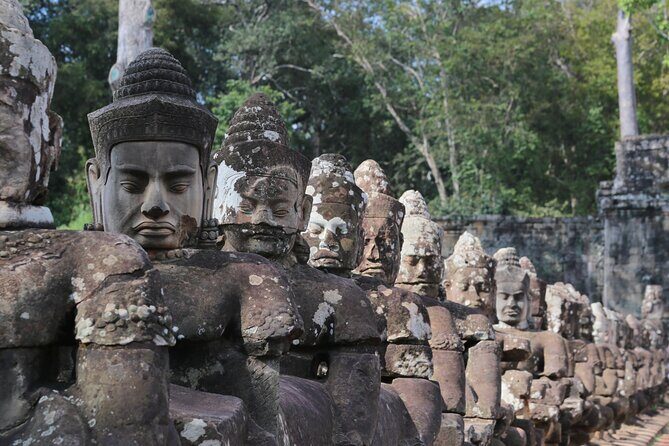
- Bayon Temple: Smiling Faces and Shorter Stress
- Ta Keo: A Temple Built Like a Stone Statement
- Ta Prohm: Where Nature Shows Up for the Party
- Banteay Kdei: A Final Temple Stop That Lets You Slow Down
- How Long It Really Takes: Matching the Itinerary to Your Energy
- Water, Cold Towels, and Rain Ponchos: The Comfort Stuff That Saves the Day
- Price and Value: Why $25.90 per Group Can Make Sense
- Driver vs Temple Guide: What You’re Getting (and What You Might Add)
- Best-Fit Travelers: Who This Sunrise Tuk-Tuk Tour Is Built For
- Should You Book This Private Sunrise Tuk-Tuk Tour?
- FAQ
- How long is the Angkor Wat private tuk-tuk sunrise tour?
- Does the tour include pickup from my hotel?
- Is Angkor Wat admission included in the price?
- What temples are included on the tour?
- Do I get a private vehicle for my group?
- Is there a sunrise option?
- What’s included during the tour?
- Is food included?
Key Things You’ll Appreciate on This Angkor Private Tuk-Tuk
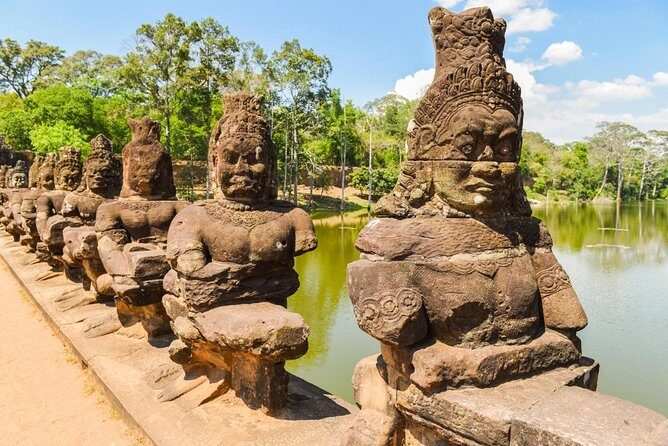
- Sunrise-focused route for that early Angkor Wat silhouette and calmer temple time
- Cold towels + unlimited bottled water for a very hot, very walk-heavy day
- Private door-to-door pickup and drop-off, so you skip the scramble with shared transport
- Flexible pacing and itinerary tweaks if you want more time at one temple or less at another
- Photo-oriented stops where your driver helps you find good viewpoints
- Angkor Wat admission fee not included (listed at $37 per person), so budget ahead
A Private Sunrise Tuk-Tuk Day in Siem Reap (and Why It Works)
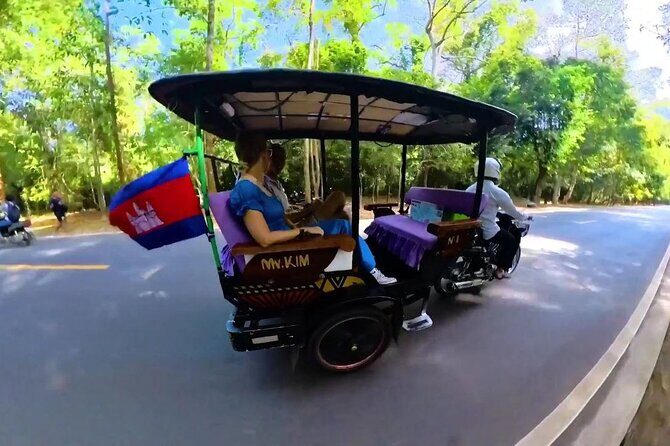
Angkor is spectacular, but it’s also big, hot, and full of tour traffic. The real win of this private setup is how easily you can shape the morning. Instead of being herded through a set circuit, you ride in your own tuk-tuk and adjust your pace as you feel it—slow for sunrise photos, then brisk when you want to “just get there and start looking.”
The tour is designed around a few heavy hitters: Angkor Wat first (sunrise option), then Bayon, Ta Keo, Ta Prohm, and Banteay Kdei. That mix hits both the famous faces and the “wow, nature is reclaiming everything” mood at Ta Prohm. And because you’re with an English-speaking driver who knows the Angkor roads, you’re not wasting time figuring out routes and timing.
You also get small-but-real comfort boosts: cold towels and bottled water are included, plus rain ponchos are available. Those details matter in the Khmer heat, when a “quick walk” can turn into a sweaty endurance test.
You can also read our reviews of more private tours in Siem Reap
Getting There Early: Sunrise Timing and What It Changes
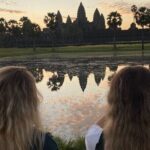
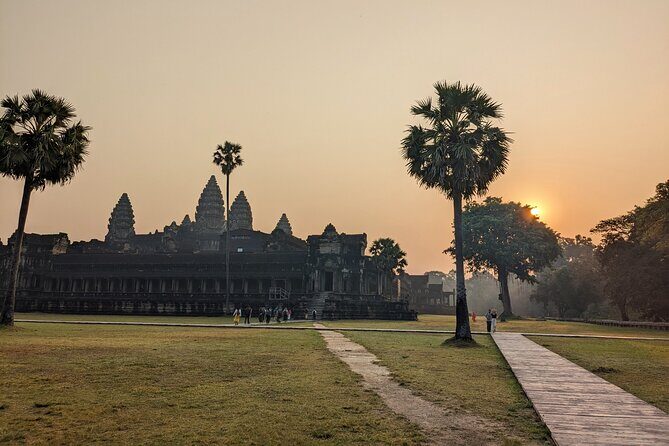
If you care about atmosphere, sunrise is the move. Starting at sunrise changes the whole feel of Angkor Wat: the light is softer, the crowds tend to be calmer earlier in the morning, and the temple looks less like a backdrop and more like a living scene.
Practically, early departure also helps you spread your day. You’ll likely see the most iconic places before the sun climbs and heat gets intense. That’s not just comfort—it also makes it easier to keep momentum and enjoy the details you’d otherwise rush past.
Pickup runs from your hotel in Siem Reap, and the operator’s hours list early access starting at 5:00 AM. If your hotel is outside the most central areas, I’d still plan to be ready for the earliest pickup you’re offered so you’re not stuck waiting outside in the dark.
Angkor Wat at Sunrise: the Big Moment (and the Walk You’ll Actually Do)
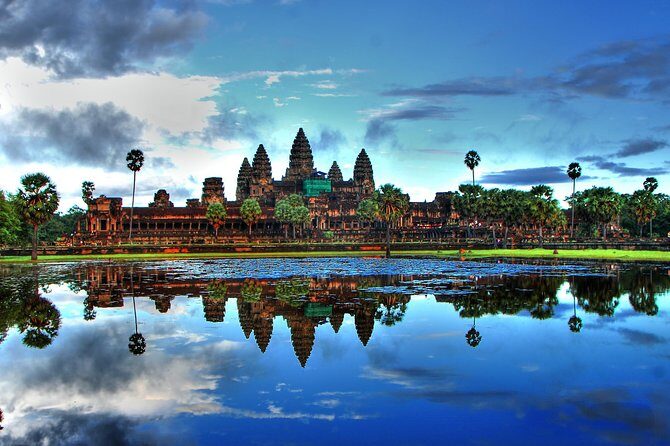
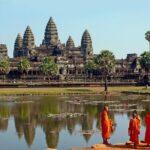
Angkor Wat is the big one. It’s described as the world’s largest religious structure, covering about 400 acres (160 hectares), and it’s considered the high point of Khmer architecture. Even if you’ve seen photos before, the scale lands differently when you’re standing there before most people have even arrived.
On this tour, Angkor Wat is allotted about 3 hours, and you’re not just peeking through the gates. You’ll have time to take in the overall layout, get your sunrise and early-light photos, and move at a pace that makes sense for you. That matters because sunrise at Angkor Wat isn’t simply a five-minute stop—it’s more like entering a maze of courtyards where lighting, shadows, and foot traffic shift quickly.
A helpful detail: your driver team is described as giving tips on best photo angles and shaded shortcuts. Translation: you’re more likely to spend time looking at stone and sky, not baking while wandering for the perfect viewpoint.
Watch-outs: Angkor Wat admission is not included (listed as $37 per person), so make sure you budget for entry before you go. Also, bring water expectations into your plan—this is a long outdoor block of walking in humid air, even if you pace it well.
Bayon Temple: Smiling Faces and Shorter Stress
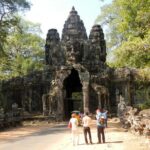
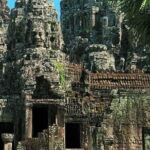
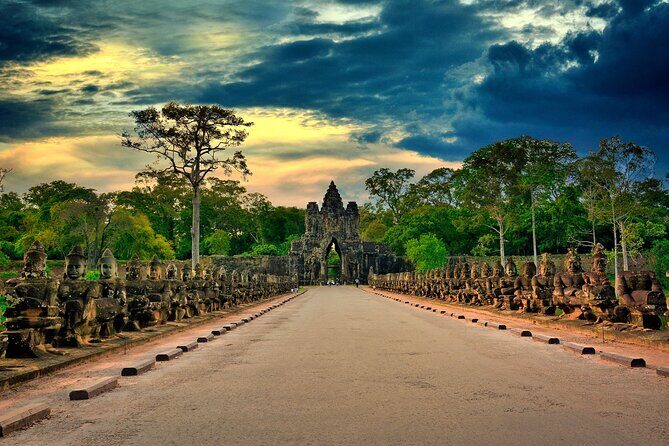
After Angkor Wat, you head to Bayon Temple for about 2 hours. Bayon is famous for its bas-reliefs and its face towers, but what I’d focus on is the story texture. It’s described as the first and only Buddhist temple constructed by the Angkor (Khmer) Empire, and the bas-reliefs depict major events like battles.
On a practical level, Bayon can feel crowded because it’s visually dense. The advantage here is your early start and the route/timing goal of beating heavier visitor waves. You still have to navigate around other people, but you’re not arriving with the full late-morning crowd energy.
Your driver can also help you manage the tempo: when you want to step back for photos, you can, and when you want to keep moving, you don’t get trapped behind a slow group. Some guides also offer basic explanations at key points, but if you want a detailed deep-dive into every bas-relief, you’ll need a dedicated temple guide—more on that later.
Ta Keo: A Temple Built Like a Stone Statement
Ta Keo is allotted about 2 hours and is described as a milestone in Khmer history because it was the first temple built entirely in sandstone. The blocks were cut to a regular size and placed into position, and that engineering approach shows in the temple’s strong, structured look.
This stop is a good change of pace after Bayon. Bayon hits you with faces and storytelling reliefs. Ta Keo is more about form and material—how the stone is shaped, stacked, and layered. If you enjoy architecture and clean lines, you’ll probably feel more time “wandering” in a good way here, not just checking off another famous name.
Drawback to plan for: Ta Keo is still outdoors and still in the same humid sun. Even though your tour includes cold towels and water, you’ll want to wear breathable clothes and plan for some “stand still, cool down, then move again” cycles.
Also, since admission fees are not listed for every temple in the tour info, it’s smart to assume there may be other fees depending on the ticket you use on the day. The one fee clearly stated is Angkor Wat at $37 per person.
A few more Siem Reap tours and experiences worth a look
Ta Prohm: Where Nature Shows Up for the Party
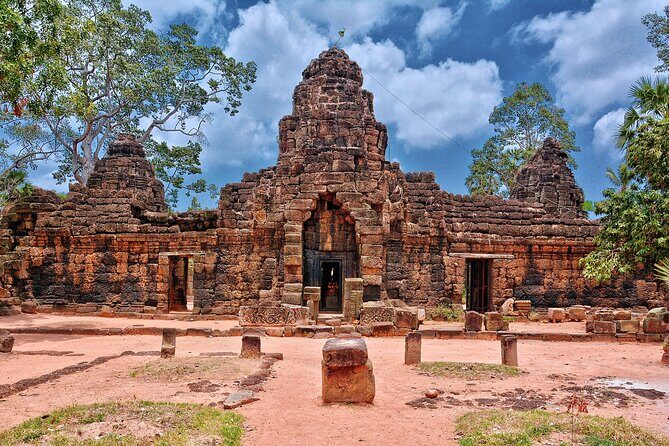
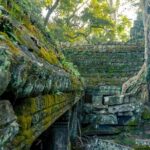
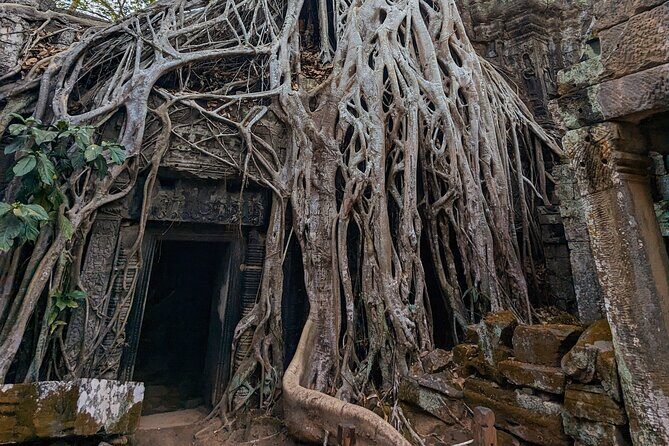
Ta Prohm is your signature “how is this still standing?” stop. It was built starting in 1186 and was originally known as Rajavihara, a monastery dedicated to the mother of Jayavarman VII. The standout is the way nature reclaims the temple—tree roots and thick growth merging with stone.
You’ll spend about 1.5 hours here. That’s a sweet spot because Ta Prohm is a visual feast, but you don’t want to overstay and lose energy. If you’re into photos, this is where you can use your time well: you’ll want a few different angles, plus pauses to let other groups move past.
One practical thing I like about having your own tuk-tuk driver: if you want to linger at a specific corridor or viewpoint, you can. There’s room to take your time without feeling like you’re falling behind a strict group schedule.
Just be ready for the heat and uneven footing. Cold towels and water help, but this is still a walk-through temple ruin—sturdy shoes and a slow pace pay off.
Banteay Kdei: A Final Temple Stop That Lets You Slow Down
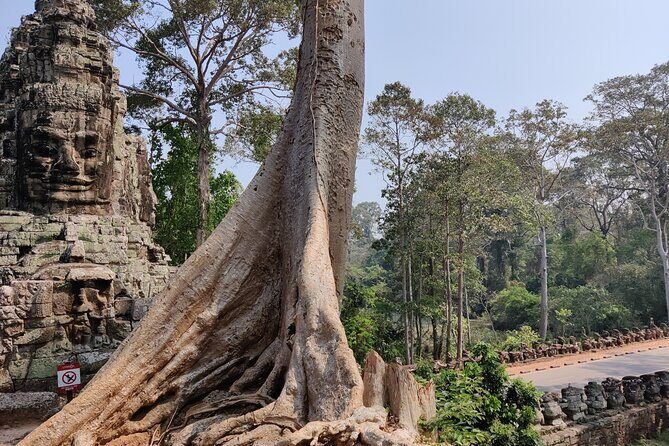
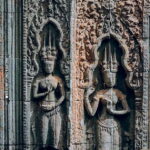
The final stop is Banteay Kdei, about 1 hour. It’s described as highly prized for its Angkorian art and praised for its stone carving and details. The text also mentions the pinkish hue of the stone and connects it to some of the finest carving anywhere, plus it references a start in the 10th century (the details given mention a beginning around 967 CE).
I like this final stop because it tends to feel less like a “run to the next landmark” and more like a place where you can look closely at stonework. After Ta Prohm’s dramatic visuals, Banteay Kdei can be a calmer landing.
If your energy is fading, this is the stop where you can comfortably reduce how much time you spend on the corners and move more deliberately through the main areas. The tour design—moving between big-name sites with short, manageable chunks—helps you keep the day enjoyable even when the afternoon sun starts to feel heavy.
How Long It Really Takes: Matching the Itinerary to Your Energy
The overall duration is listed as about 5 to 10 hours, with the temple times adding up to a full day (Angkor Wat ~3 hours, Bayon ~2, Ta Keo ~2, Ta Prohm ~1.5, Banteay Kdei ~1). In real life, your “hours” depend on your pace, the heat, photo time, and whether you add a temple guide.
Here’s the key idea: this tour gives you structure, but it’s not a rigid stampede. Many drivers are willing to adjust on the go—so if one temple grabs you more, you can usually shift time. If you have kids, this flexibility matters a lot because attention spans are not constant when it’s hot and loud.
Also, plan for the travel time between sites. Angkor spans multiple areas, and the tuk-tuk rides take time. Starting with sunrise means you’ll likely end up with a later finish than you expect if you spend extra time at the first stop.
Water, Cold Towels, and Rain Ponchos: The Comfort Stuff That Saves the Day
You get unlimited bottled water and cold towels during the tour, plus rain ponchos are available. These are the exact types of inclusions that don’t sound glamorous in a listing, but in Angkor they change how your day feels.
I like that the comfort is practical. When you return to the tuk-tuk after a temple section, you’re not just waiting to cool down—you’re actually given something to cool you down. In hot weather, that can mean the difference between “one more temple” and “I’m done.”
And because the tour is outdoors for most of the day, weather can matter quickly. Having ponchos on hand means you’re not stuck deciding whether to cancel your day’s momentum due to a brief downpour.
Pack-wise, I’d still bring your own basics: a hat, sunscreen, and shoes you trust on uneven paths. The included items help, but they don’t replace good planning.
Price and Value: Why $25.90 per Group Can Make Sense
The price is $25.90 per group (up to 4), with hotel pickup/drop-off included. That pricing structure is a big deal if you’re traveling with someone else—your cost per person drops fast compared to per-person tours that don’t include pickup.
What you should budget for separately is admission. The info clearly states Angkor Wat admission is $37 per person, and admission fees are not included. That one number is the biggest variable in your true cost.
So here’s how I’d judge value:
- If you want a private ride with comfort extras and a route designed around timing, this can be a strong deal.
- If you only care about “seeing the temples” but not pacing or comfort, you might find cheaper transport options.
- If you want deep, lecture-style history at every site, you may want to add a dedicated temple guide for at least some time, which affects total cost.
Bottom line: this is best viewed as transport + timing + comfort, with optional history depth added on-site.
Driver vs Temple Guide: What You’re Getting (and What You Might Add)
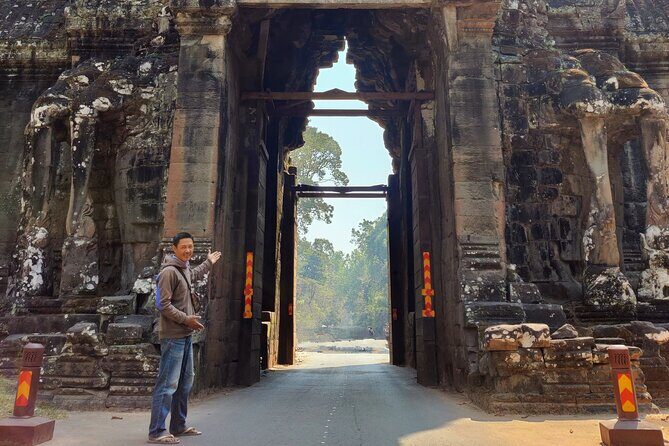
Your driver is described as English speaking and experienced with Angkor roads, but this is not set up as a full, licensed museum-guide experience at every temple. In practice, drivers often share basic context and help with movement and photos. That’s helpful, especially when you don’t want a formal lecture.
If you want detailed Khmer history and explanations of every bas-relief, you’ll likely need a separate temple guide. There’s at least one outlier experience reported where the driver wasn’t positioned as an on-foot guide through some temples, and the group ended up hiring a guide at the first temple to cover the rest of the day.
My advice: if you care about interpretation—symbols, timelines, and stories—ask for a guide early. If you’re more about atmosphere and the visual experience, you can keep it driver-led and just enjoy the ruins at your own pace.
Best-Fit Travelers: Who This Sunrise Tuk-Tuk Tour Is Built For
This tour is a great match if you want the classic Angkor highlights with less stress and more flexibility. It’s also family-friendly: there’s a child seat on request, and the day is paced to allow adjustments.
It’s especially good for:
- Couples who want a romantic sunrise and plenty of photo time
- Friends who want to avoid the shared-tour herd feeling
- Families traveling with kids who need patience built into the schedule
- Travelers who want a private vehicle so you can say yes to detours or extra time when something catches your eye
If you’re looking for a structured, guide-led history tour where every stop includes an in-depth expert walk-through, you might be happier building a hybrid day: private tuk-tuk for transport and timing, plus a temple guide for key sites.
Should You Book This Private Sunrise Tuk-Tuk Tour?
I’d book it if your priority is comfort, timing, and flexibility. The cold towels and water alone make it easier to enjoy the day instead of just surviving it. Add in the sunrise start and the aim to beat the biggest crowds, and you’ve got a formula that helps Angkor feel magical rather than exhausting.
I’d think twice (or at least set expectations carefully) if you’re the type who needs a flawless, guide-on-rails experience at every temple. The tour is driver-led, not guaranteed to be a fully narrated walk at each stop. And while most rides are reported as punctual and professional, there are rare negative outliers—so confirm your pickup details, be ready to adjust if anything feels off, and consider hiring an on-site guide if you want deeper context.
If you want an efficient, less-chaotic way to hit Angkor Wat, Bayon, Ta Prohm, and more—with a private tuk-tuk and real comfort—this is a strong option.
FAQ
How long is the Angkor Wat private tuk-tuk sunrise tour?
The duration is listed as about 5 to 10 hours, depending on timing, pacing, and how long you spend at each temple.
Does the tour include pickup from my hotel?
Yes. Hotel pickup and drop-off are included, and the driver is English speaking.
Is Angkor Wat admission included in the price?
No. Angkor Wat admission is not included, and it’s listed as $37 per person.
What temples are included on the tour?
You’ll visit Angkor Wat, Bayon, Ta Keo, Ta Prohm, and Banteay Kdei.
Do I get a private vehicle for my group?
Yes. It’s private, with only your group participating, up to 4 people.
Is there a sunrise option?
Yes. The tour can start at sunrise for the iconic Angkor Wat silhouette.
What’s included during the tour?
Included items are bottled water, cold towels, local tax, and an experienced English speaking driver.
Is food included?
No. Food and beverages are not included.