REVIEW · SIEM REAP
Angkor Wat highlight Tour From Sunrise -Small Group
Book on Viator →Operated by Angkor Wat Local Guide · Bookable on Viator
Morning light turns Angkor into a different place. I love the 4:30 am start that gets you at Angkor Wat before the day heats up, and I love how an English guide keeps the story clear as you walk through the temples. One drawback to plan for: the official temple pass and your meals cost extra.
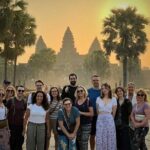
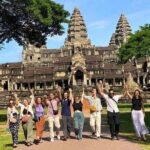
This is built for people who want real focus, not a rushing pile-on. You travel in an air-conditioned vehicle, you get bottled water and cool towels, and the group is kept small (maximum 15), which makes it easier to ask questions and keep a steady pace.
The early schedule is the trade-off. You’re out pre-dawn and you’ll want comfortable shoes and covered shoulders and knees, because the stone paths and temple rules don’t care that you’re sleepy.
In This Review
- Key things I’d watch for before you go
- Sunrise at Angkor Wat: early entry and the morning mood
- Angkor Wat after sunrise: corridors, carvings, and guided meaning
- Angkor Thom South Gate: where the day gains energy
- Bayon Temple: the central towers up close
- Terrace of the Leper King: a standout story stop
- Ta Prohm: jungle roots, cinematic ruins, and lunch on your own
- Comfort and pacing: A/C van, water, towels, and small-group flow
- What you’ll actually pay: the $18 tour price plus the temple pass
- How to dress and pack so you don’t feel miserable
- Who this Angkor sunrise tour fits best
- Should you book this sunrise highlight tour?
- FAQ
- What time does the sunrise tour start?
- How long is the Angkor Wat highlight tour?
- Is hotel pickup included?
- Do I pay anything for temple entry?
- Is lunch or other meals included?
- What’s included in the tour package?
- How big is the group?
- What should I wear to the temples?
- Are children allowed?
- What happens if weather is bad?
- Can I cancel for free?
Key things I’d watch for before you go
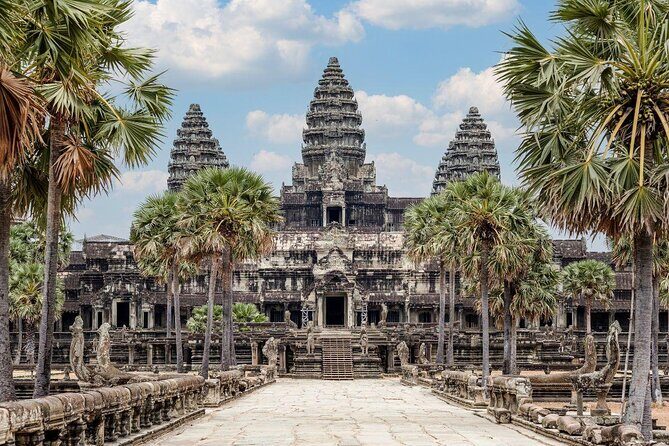
- A true sunrise timing: departure happens before dawn, so you’re not sprinting to a view after sunrise.
- Small-group size (max 15): better flow, easier questions, and fewer bottlenecks in popular spots.
- Comfort perks that matter at Angkor: bottled water and cool towels, plus A/C transport.
- A guide who stays on track: one of the best parts is how smoothly the day runs, even with a full route.
- Temple pass required on the day: budget for the USD 37 temple pass in addition to the tour price.
- Jungle temple time at Ta Prohm: you get a break away from the busiest areas, with lunch on your own after.
Sunrise at Angkor Wat: early entry and the morning mood
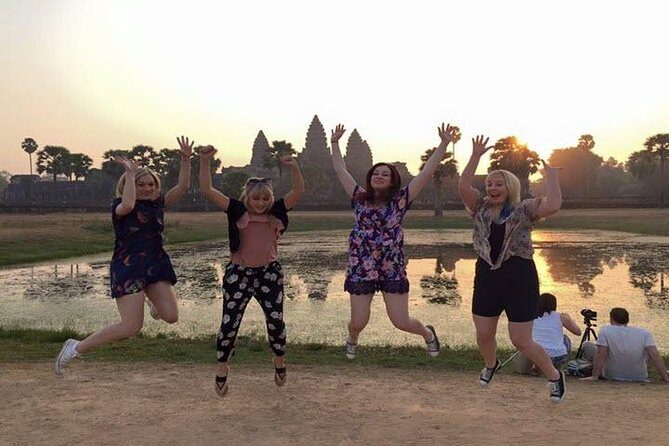
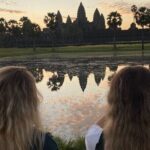
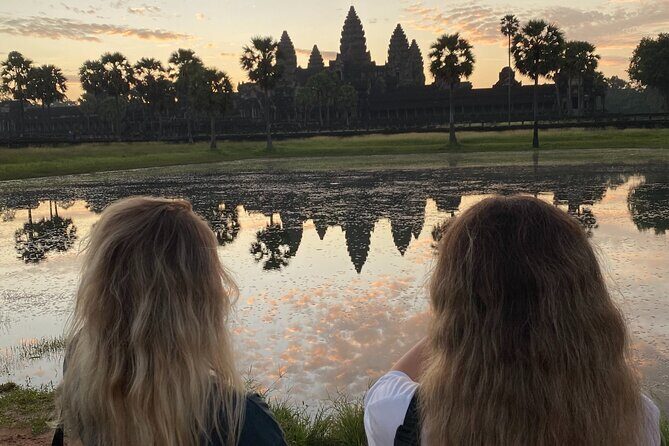
This tour is designed around one big idea: see Angkor Wat in low light, then watch it change. You leave your hotel in the pre-dawn window (around 4:30 to 5:00 am depending on the season), ride to the temple, and arrive with enough time to get positioned for sunrise.
Here’s what makes this timing worth it. In the dark, you’re moving through corridors and chambers with fewer people crowding your path, so the first impressions land differently. Then the sky shifts, and the temple’s stone surfaces start to glow. It’s not just a photo moment; it changes how you read the architecture.
I also like the practical setup for the wait and walk. You’re given bottle of water and a cool towel, which sounds small until you’re doing early morning walking in Cambodia’s humidity. One guide I’d heard about, Tork, was especially good about keeping the group feeling taken care of with regular cold refreshers and an efficient schedule.
A few more Siem Reap tours and experiences worth a look

Angkor Wat after sunrise: corridors, carvings, and guided meaning
After sunrise, the tour continues inside Angkor Wat with guided exploration. Expect to move through multiple areas of the complex, including corridors and chambers. The point isn’t just to look up at the big views; it’s to understand what you’re seeing as you go.
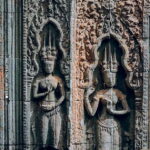
This is where the guide work really matters. A good guide turns stone details into something you can follow—like the meaning of wall carvings and what daily life during the Khmer Empire might have looked like. Even if you don’t know the terminology, you can still connect the dots because the tour approach links the images to the people and beliefs behind them.
One more thing to plan for: you’ll be walking. So even if the early start saves you from some daytime heat, you still want shoes with grip and a sole that handles uneven stone.
Angkor Thom South Gate: where the day gains energy
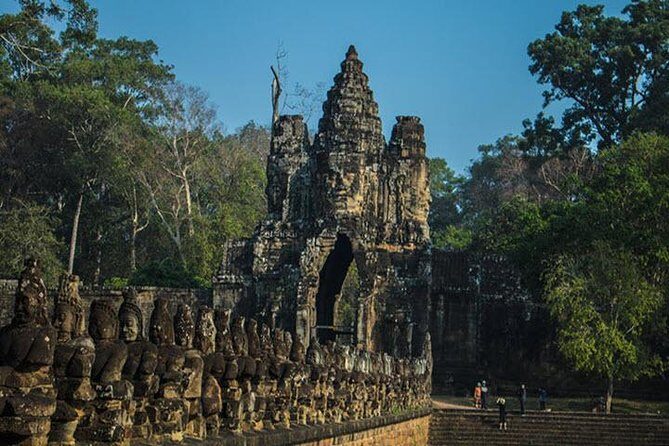
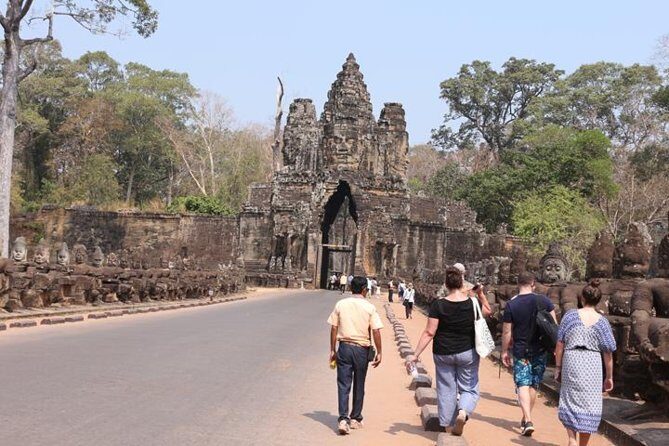
Your next major stop shifts you from Angkor Wat’s calm symmetry to the sturdier, story-heavy vibe of Angkor Thom. You visit the South Gate area, a strong entrance with a row of 54 figures on the sides. These aren’t just decoration; they’re part of the gate’s visual language and the feel of arriving to a royal city.
The time here is shorter than at Angkor Wat, so treat it like your “breather with purpose.” You’re likely to get a quick orientation: what the gate symbolizes, how it fits into Angkor Thom’s layout, and how to pace yourself for Bayon.
A useful mindset: think of this as a reset point. You’ve already done sunrise, so the goal now is to keep momentum without burning energy too fast.
Bayon Temple: the central towers up close
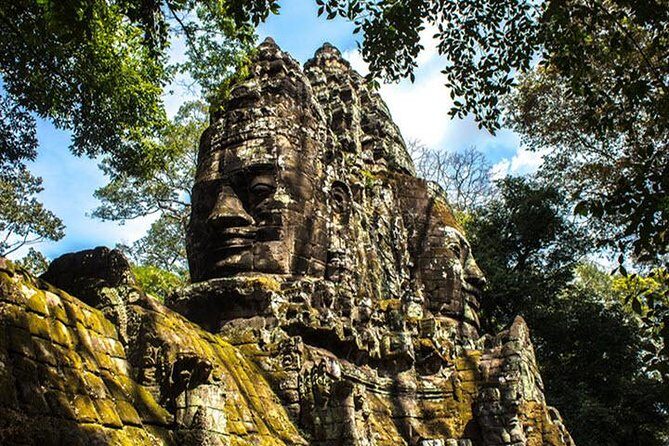
At Bayon Temple, the main event is the central towers with their famous faces. You’ll spend a good chunk of time here (about 3 hours on the route), and that’s the right amount. The faces are the headline, but the layers come from angles, levels, and the way the carvings and corridors feel when you’re standing inside the maze-like layout.
This is also one of the better places for your guide’s explanations to pay off. When someone walks you through the meanings behind the stonework, you tend to notice more: patterns you’d otherwise skip, and how the temple’s layout supports movement and ritual.
Because you’re in a structured group, you’ll also avoid the common mistake of wandering randomly and then realizing you missed the main viewpoints. The small-group size helps here—less waiting, fewer traffic jams on stairs, and quicker regrouping if you fall behind.
Terrace of the Leper King: a standout story stop
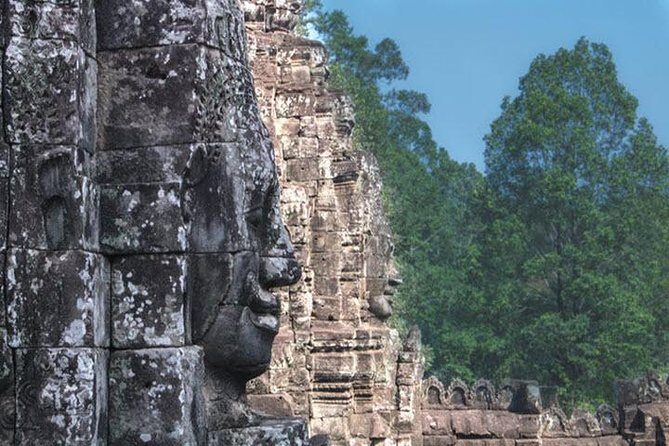
The Terrace of the Leper King is one of the highlights built into this overall route, even if it’s not always treated as a long stop by itself. This is the kind of place where you can feel the atmosphere of Angkor Thom as a living statement of beliefs, power, and ritual—without needing a museum label to understand why it matters.
What helps is that the tour doesn’t just point at stone. It frames the terrace in the context of Cambodian heritage and the themes shown throughout the temple complex. If you’re interested in how Khmer Empire symbolism shows up in everyday imagery, this is where your eyes start to connect details across sites.

Ta Prohm: jungle roots, cinematic ruins, and lunch on your own
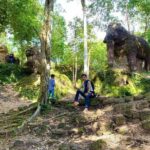
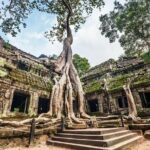
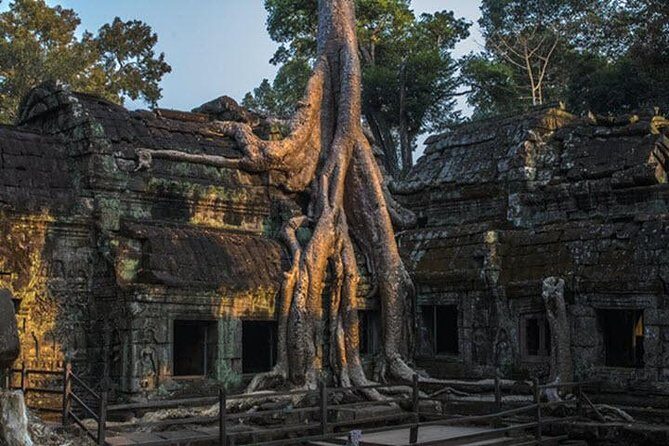
After the morning temple circuit, you head deeper toward Ta Prohm, the jungle-enveloped temple that people often call the most atmospheric in Angkor. This is the part of the day that feels less symmetrical and more dramatic, because the roots and stone work together in a way that looks almost staged.
You’re given about 1.5 hours at Ta Prohm, which is enough time to walk the main sections, spot the most photographed angles, and slow down briefly when the scene hits you. If you’ve ever seen films or games that use ruin-and-jungle visuals, you’ll feel the same kind of cinematic energy here.
One specific bit of context you’ll hear is that Ta Prohm was once home to 2,740 monks. That detail helps shift the view from purely visual to meaningful. You’re not just seeing a cool structure—you’re seeing a temple that lived an active life.
Lunch is on your own at this stage, so plan on using the time to refuel. Keep a little flexibility here. The temple route can run warm and your feet will feel it.
Comfort and pacing: A/C van, water, towels, and small-group flow
The tour runs for about 8 hours total, with a pre-dawn start. That’s a long day, but the pacing is structured: sunrise first, then the Angkor Thom circuit, then Ta Prohm.
A few practical comfort points stand out from the experience details you’ll get:
- Pickup and drop-off from your resort
- Air-conditioned vehicle transport
- Bottled water and cool towels during the tour
In the practical world of Angkor, these are not fluff. Even early morning, the walking adds up. Cold water and towels help you keep moving instead of forcing a mid-day slump.
The maximum group size (15) also changes how the day feels. You’re less likely to be stuck behind huge crowds at each stop. That makes it easier to keep a steady pace and not miss the best angles.
What you’ll actually pay: the $18 tour price plus the temple pass
At $18 per person, this sounds like a bargain—until you factor in the real-world temple pass. The tour details specify that temple entrance fees are not included, and there’s an additional surcharge of USD 37 for the Temple Pass payable on the day of the tour.
So your day likely lands closer to $55 before meals. That still can be good value if you care about doing sunrise right, getting an English guide, and covering Angkor Wat plus key Angkor Thom and Ta Prohm highlights in one go.
Also note what’s not included: meals and drinks are not listed as included. There’s a breakfast break in the schedule, and you may be offered a breakfast box depending on your hotel situation, but you should still plan to pay for food during the later part of the day.
How to dress and pack so you don’t feel miserable
This tour has a straightforward dress rule: cover your knee and shoulder. That means no shorts-only outfits and no tank tops.
You’ll also want:
- Comfortable walking shoes (stone paths can be uneven)
- Light layers you can keep modest
- Something small for sun protection in the morning-to-midday shift
One more tip: start early means you might not have time to make last-minute decisions. If you need a change of clothes, bring it in your bag rather than hoping you’ll find time later.
Who this Angkor sunrise tour fits best
This tour is a strong match if you want:
- A small-group experience instead of a huge bus crowd
- A true sunrise schedule at Angkor Wat
- An English guide who explains what you’re looking at as you go
- A full morning-to-afternoon route that still includes time for a major jungle temple (Ta Prohm)
It may not be the best fit if you:
- Can’t handle early mornings (start time is around 4:30 am)
- Prefer long, slow temple wandering with no tight structure
- Don’t want to budget for the Temple Pass on top of the tour price
Children age 5 and younger aren’t allowed, so it’s mainly aimed at older kids and adults who can do steady walking.
Should you book this sunrise highlight tour?
Book it if sunrise matters to you and you like the idea of having someone else manage the route so you can focus on the experience. The combination of early timing, guided meaning behind the carvings, and the included comfort perks (water and cool towels) adds up to a day that feels organized instead of chaotic.
Skip it if you’re looking for maximum freedom to roam at your own pace, or if you know early pre-dawn starts just aren’t your thing. In that case, you might be happier with a later-day self-guided plan.
If you do book, treat the Temple Pass and lunch as part of the budget, wear the right outfit from the start, and bring shoes you trust. That’s when this tour really pays off.
FAQ
What time does the sunrise tour start?
The start time is listed as 4:30 am, with hotel pickup happening in the pre-dawn window around 4:30 to 5:00 am depending on the season.
How long is the Angkor Wat highlight tour?
The duration is about 8 hours.
Is hotel pickup included?
Yes. Hotel pick-up and drop-off are included, with departure from your own resort.
Do I pay anything for temple entry?
Yes. Temple entrance fees are not included, and there is an additional Temple Pass surcharge of USD 37 payable on the day of the tour.
Is lunch or other meals included?
Meals and drinks are not included. Lunch during the Ta Prohm portion is specifically noted as your own expense.
What’s included in the tour package?
Included features are an English tour guide, air-conditioned vehicle, bottled water, cool towel, and coverage of Angkor Wat sunrise plus Angkor Thom and Ta Prohm.
How big is the group?
The maximum group size is 15 travelers.
What should I wear to the temples?
You need to cover your knee and shoulder.
Are children allowed?
Children 5 years old and younger are not allowed.
What happens if weather is bad?
The tour requires good weather. If it’s canceled due to poor weather, you’ll be offered a different date or a full refund.
Can I cancel for free?
Yes. You can cancel up to 24 hours in advance for a full refund.