REVIEW · SIEM REAP
2-Day Angkor Wat with Temples On Small Circle & Kulen Waterfall
Book on Viator →Operated by Happy Angkor Tour · Bookable on Viator
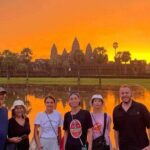
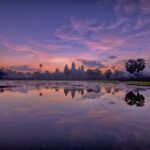
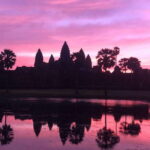
Sunrise over Angkor Wat at 5am sets the tone. This tour is built around early light and a tight Small Circle temple run, with an English guide named Chhay who’s warm, history-minded, and happy to help with photos if you’re traveling solo. The big trade-off is simple: you start very early on both days, and you’ll spend long stretches in the sun while you hop between temple highlights.
You also get a private A/C vehicle with a licensed guide, plus bottled water and wet towels, which matters when you’re doing 2 days of heat and stone stairs. Admissions are extra, but the flow is sensible: you handle the ticket once, then spend your time walking temples instead of figuring logistics out.
In This Review
- Key points to know before you go
- How the Small Circle route saves your energy in Angkor Park
- Day 1: Angkor Wat, Ta Prohm roots, and the Royal Enclosure walk
- Angkor Wat first: the classic start
- Ta Prohm: where the jungle looks like it won
- Ta Nei: the quieter relief stop
- Angkor Thom’s core: Victory Gate to Bayon
- Baphuon, Phimeanakas, and the Royal Enclosure area
- Phnom Bakheng sunset: optional, but worth considering
- Day 2: 5:00am sunrise at Angkor Wat and the drive to Kulen
- After sunrise: breakfast and then onward
- Kulen’s riverbed carvings: the 1000 Lingas
- Big Reclining Buddha and the waterfall stop
- What to watch for at Kulen: Lingas, Buddha, and water
- Banteay Srei, Banteay Samre, and Pre Rup: pink sandstone to brick-and-stone moods
- Banteay Srei (Lady Temple): the pink sandstone star
- Banteay Samre: similar ambition, quieter impact
- Pre Rup: “turn the body” and a funeral-temple vibe
- Price and value: what $181.75 really covers
- Guide quality: Chhay’s history lessons and the photo help that matters
- Timing, tickets, and comfort tips that keep you from feeling rushed
- Who should choose this 2-day Angkor + Kulen combo
- Should you book this tour?
- FAQ
- What time is pickup on Day 1?
- What time is pickup on Day 2 for sunrise?
- Are meals included in the tour price?
- Are Angkor and Kulen admission tickets included?
- What does the tour include besides the guide?
- Is this a private tour or a shared group?
- What major sights are included across the two days?
Key points to know before you go
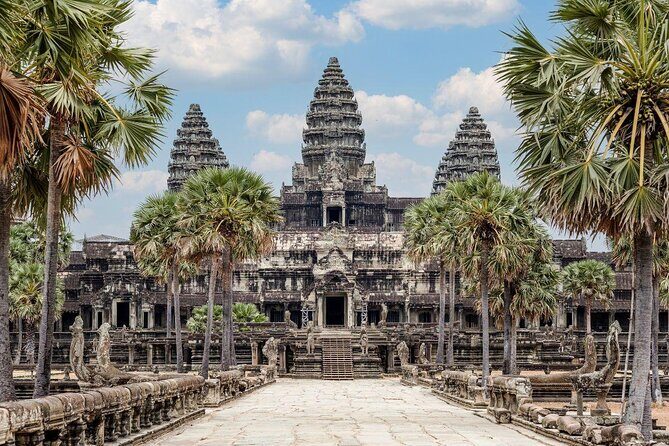
- Two sunrise moments: Angkor Wat early morning both days, plus a Phnom Bakheng sunset option on day 1.
- A focused Small Circle route: Ta Prohm, Bayon, and the Royal Enclosure area, without getting lost in the whole Angkor grid.
- Kulen National Park is not just a detour: you go specifically for the riverbed carvings (1000 Lingas), the Big Reclining Buddha, and a waterfall.
- Guide support shows up in real ways: Chhay’s track record includes being informative and easy about photos.
- Admission fees are separate: plan on paying for the Angkor pass and the Kulen park ticket on top of the tour price.
- Private vehicle means less friction: pickup and drop-off at your hotel keeps your mornings efficient.
How the Small Circle route saves your energy in Angkor Park
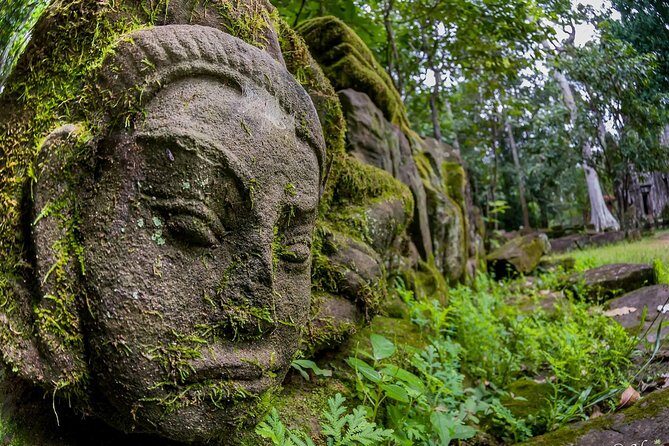
Angkor can eat time fast. This tour focuses on the “must-see” cluster people aim for when they want major sights across Day 1 without spreading themselves across the entire park map.
What I like about the Small Circle approach is the rhythm. You start at the big headline temple, then you move through a sequence that feels like a story: Angkor Wat’s grandeur, Ta Prohm’s jungle mood, Angkor Thom’s carved faces and royal platforms, then up to Phnom Bakheng for sunset views. It’s not just a checklist. The stops connect visually and thematically, so your brain stays engaged instead of switching off between sites.
You should still expect crowds at the best-known pieces, especially around Angkor Wat and Ta Prohm. The upside is that the day is arranged to get you to key places early, and the guide helps you spot what’s worth your camera time.
A few more Siem Reap tours and experiences worth a look

Day 1: Angkor Wat, Ta Prohm roots, and the Royal Enclosure walk
The tour begins with pickup from your hotel at 8:00am, and you’ll stop along the way to buy your Angkor temple pass. That’s a smart move because Angkor tickets are the one thing you don’t want to be juggling mid-day.
Angkor Wat first: the classic start
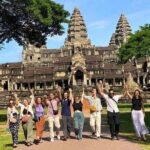
You’ll visit Angkor Wat and get oriented right away. Even if you’ve seen photos before, seeing the scale in person changes things. It’s one of those places where your eyes keep doing extra work: towers, galleries, and stone details all pull your attention in different directions.
Practical note: the ticket for Angkor + All Temples is not included in the tour price, so you’ll plan for that extra cost.
Ta Prohm: where the jungle looks like it won
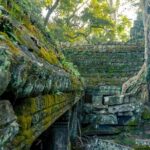
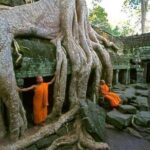
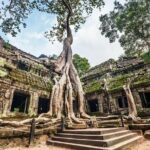
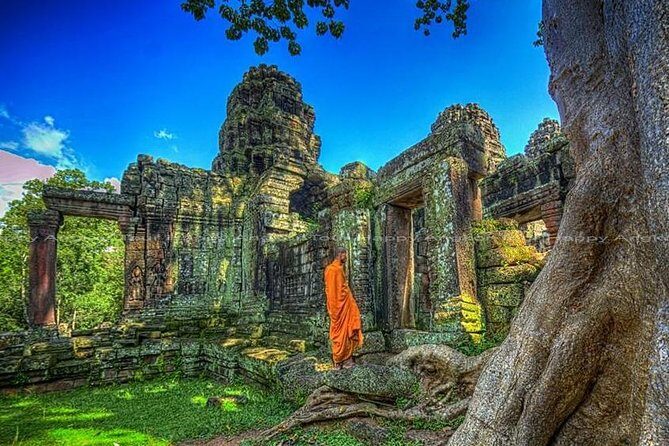
Next comes Ta Prohm, famous for its massive tree roots gripping the stone. The effect is dramatic in a way that feels almost cinematic, and it’s also a very good place to slow down and actually look.
If you enjoy atmosphere over pure symmetry, Ta Prohm is a highlight. If you hate uneven ground and climbing over roots, you’ll want to wear grippy shoes and take your time.
Ta Nei: the quieter relief stop
Then you hit Ta Nei, smaller and less restored, with big trees around it. This is a nice contrast after the intensity of Ta Prohm. You get a calmer, more tucked-away feel, and it helps break up the “big monument” energy so you don’t feel like you’re speed-walking stone.
Angkor Thom’s core: Victory Gate to Bayon
You’ll make a quick stop at the Victory Gate, then move into Bayon Temple inside Angkor Thom. Bayon’s 49 towers with multiple carved faces is one of those sights you understand instantly: no matter where you stand, the faces keep staring back.
A guide helps here because Bayon can blur together if you rush. You’ll want enough time to notice how different angles change the effect.
Baphuon, Phimeanakas, and the Royal Enclosure area
After Bayon, the tour threads through Baphuon, Phimeanakas, and the Royal Enclosure Wall zone.
- Baphuon includes a reclining Buddha built later, so you get layers of Khmer religious life in one stop.
- Phimeanakas is a Hindu pyramid temple tied to the old royal palace area, which makes it feel more political than purely devotional.
- You also visit the Terrace of the Elephants (carvings and historic “viewing” vibes) and the Terrace of the Leper King, another nearby platform with its own carvings and symbolism.
These are shorter stops, but they matter because they fill in what Angkor Wat alone can’t: the royal geography and the lived-in temple world.
Phnom Bakheng sunset: optional, but worth considering
Day 1 ends with Phnom Bakheng for sunset. The climb takes time, and you may be waiting in a line depending on timing and how busy the hill is. The tour notes that you can skip the sunset if you’d rather not wait—so you’re not locked into a long hold just to check a box.
If you do go, treat it like a “slow payoff” moment. Bring water, pace yourself, and aim to arrive without sprinting up the last stretch.
Day 2: 5:00am sunrise at Angkor Wat and the drive to Kulen
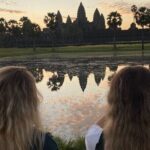
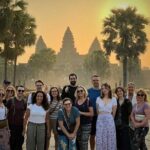
Day 2 starts earlier: pickup at 5:00am for sunrise views at Angkor Wat. That early timing is the point. Sunrise light changes stone color fast, and it also lets you see the complex before it becomes a busy human maze.
After sunrise: breakfast and then onward
The day continues after breakfast with the drive toward Phnom Kulen National Park, more than 60 km from Angkor Park. That distance means you’ll actually feel you’re leaving “temple zone life” behind and entering a more nature + sacred stone area.
Kulen’s riverbed carvings: the 1000 Lingas
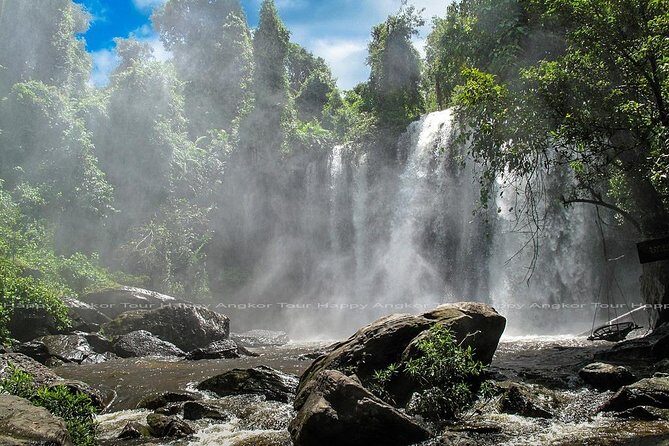
At Kulen, you’ll see carved stones in what’s described as a riverbed covered with Lingas, often called the 1000 Lingas. This isn’t a single statue moment. It’s a whole environment of repeated sacred forms, which makes it feel immersive in a practical way: you can walk and look and keep finding new details as you move along.
Big Reclining Buddha and the waterfall stop
You’ll also visit the Big Reclining Buddha, built from large stone, and then you’ll be around the waterfall area as part of the park experience.
One reality check: temple touring is mostly about steps. Kulen adds uneven ground and weather factors. If it’s rainy or slick, take extra care on surfaces near water.
The total time at Kulen is listed as about 5 hours, which gives you enough time to see the key features without feeling trapped in a rushed loop.
What to watch for at Kulen: Lingas, Buddha, and water
Kulen is the “break from Angkor” portion, and it works best if you shift your expectations. Instead of massive carved city walls and giant courtyards, you’re looking at spiritual stone placed in a natural setting.
Here’s what I think you should pay attention to:
- The Lingas pattern: it’s the repetition that hits. You’ll understand the scale only after you keep looking from one spot to the next.
- The reclining Buddha’s material: the fact it’s built from big stone gives it weight and presence, even when you’re not right in front of it.
- The waterfall moment: it’s a sensory break from all the dry stone and dust, and it gives you a place to rest your legs and reset your brain.
For comfort, dress for motion. You’ll be outside. Wear shoes you don’t mind getting dusty, and plan for shade gaps. The tour provides cool drinking water and wet towels, but that doesn’t replace sun protection.
Banteay Srei, Banteay Samre, and Pre Rup: pink sandstone to brick-and-stone moods
After Kulen and lunch, you return to temple sightseeing with a set of later sites.
Banteay Srei (Lady Temple): the pink sandstone star
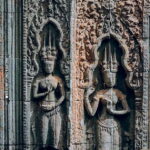
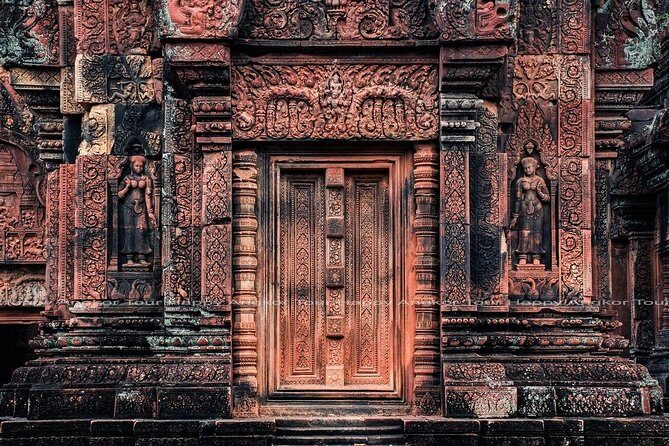
Banteay Srei, often called the Lady Temple, is built from pink sandstone and dates to the half of the 10th century, created by King Rajendravarman II for Hindu trinity gods. This stop is a good one if you like fine detail because pink sandstone tends to highlight carvings and patterns.
If you’re photographing, Banteay Srei is where you’ll want to slow down. The material and carving style reward a careful look, not a sprint.
Banteay Samre: similar ambition, quieter impact
Next is Banteay Samre (12th century). The architecture is noted as less obvious in terms of what it looks like from a distance, but it’s believed to share a model similar to Angkor Wat. That means this stop can feel subtle until you catch the shape language.
Pre Rup: “turn the body” and a funeral-temple vibe
Finally you visit Pre Rup, described as late 10th century and dedicated to Hindu gods. The name meaning is linked to turning the body, and the temple connects to beliefs around funerals taking place at the most distant juncture. It’s one of those stops where context matters, because the site is about a ritual idea as much as an architectural one.
The total day remains long, but the sequence on day 2 keeps variety: sunrise, park nature + sacred stone, then pink sandstone detail and smaller architectural moods.
Price and value: what $181.75 really covers
The tour price is $181.75 per person for about 2 days. That’s for the parts that make your life easier: private A/C vehicle, pickup from your hotel, a licensed English speaking guide, parking fees, road tolls, cool drinking water, and wet towels.
Admissions are listed as extra:
- Angkor pass (Angkor + All Temples): $62.00 per person
- Phnom Kulen National Park: $20.00 per person
- Lunch: depends on menu, listed as about $5.00 per person
So a realistic all-in estimate lands around $263.75 plus lunch (and your exact lunch cost). For many people, that total is worth it because the tour bundles transportation and guide time across two different areas: Angkor Park and Kulen.
If you’re trying to travel ultra-budget, you could do parts on your own. But if you want to spend your energy looking at temples instead of solving routes and timing, the private vehicle + guide day structure is the value you’re buying.
Guide quality: Chhay’s history lessons and the photo help that matters
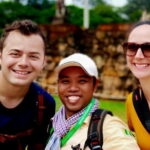
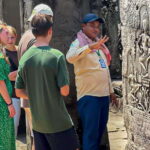
One of the most praised aspects of this experience is the guide experience. The name Chhay comes up for being friendly, informative, and good at the small things that help your day feel smooth.
That photo detail is real-world important. If you’re traveling solo or with a small group, you often spend the day asking strangers for pictures. Having a guide who’s willing to take photos for you means you don’t waste your best moments. It also helps because the guide can position you where the temple effect looks best, not just where the light is convenient.
If you care about understanding what you’re seeing, the licensed English guide format helps you catch the meaning behind the carvings and the layout, not just the location of each temple.
Timing, tickets, and comfort tips that keep you from feeling rushed
Two practical things make or break this kind of 2-day plan: early starts and temple heat.
- Start times are early by design: 8:00am day 1 and 5:00am day 2 for sunrise. You’ll need sleep and a realistic attitude about being awake while it’s still dark outside.
- Admission tickets are a must-budget item: you’ll pay the Angkor pass and the Kulen park ticket separately, so don’t assume the tour price covers entrances.
- Use the “provided help”: bottled water and wet towels are there for a reason. Use them instead of saving them for later.
- Shoes matter: you’re walking temple steps and navigating uneven ground, especially at places like Ta Prohm and around water features at Kulen.
Also, this is described as a private tour/activity, meaning it’s only your group. That tends to translate into less waiting, fewer disruptions, and a smoother pace for bathroom breaks and photo stops.
Who should choose this 2-day Angkor + Kulen combo
This is a great fit if:
- You want the big Angkor highlights plus Kulen National Park without stitching together separate tours.
- You’re the type who likes sunrise and understands that early mornings are part of the Angkor experience.
- You care about explanations as you walk, and you’d like help getting good photos.
It might be less ideal if you hate early starts or if you want a slow, leisurely pace with long cafe breaks. This plan is packed with significant sights and requires steady walking.
Also, the description says most travelers can participate, so it’s not positioned as a niche, extreme adventure. Still, you should expect stairs and outdoor conditions.
Should you book this tour?
I’d book it if you want a structured, high-value 2-day plan that covers both Angkor’s famous stone cities and Kulen’s sacred riverbed, reclining Buddha, and waterfall. The price feels fair because you’re paying for a private vehicle, licensed guide time, and the heavy-lifting of route management on days that start at dawn.
I’d hesitate if sunrise fatigue is a real issue for you, or if you’d rather pick fewer stops and spend more time sitting and soaking in each place. In that case, a slower Angkor-only plan might suit you better.
If your goal is to see the right temples in the right order—plus Kulen—this is one of the more sensible ways to do it in Siem Reap.
FAQ
What time is pickup on Day 1?
Pickup starts at 8:00am from your hotel or guest house.
What time is pickup on Day 2 for sunrise?
Pickup starts at 5:00am on Day 2 so you can see sunrise at Angkor Wat.
Are meals included in the tour price?
Lunch is not included. Meals depend on the menu, and lunch is listed as about USD 5.00 per person.
Are Angkor and Kulen admission tickets included?
No. You’ll pay separately for the Angkor pass (Angkor + All Temples) at USD 62.00 per person, and the Phnom Kulen National Park admission at USD 20.00 per person.
What does the tour include besides the guide?
It includes a private A/C vehicle with driver, an English speaking licensed guide, parking fees and road tolls, cool drinking waters, wet towels, and hotel pickup/drop-off.
Is this a private tour or a shared group?
It’s described as private, so only your group participates.
What major sights are included across the two days?
You’ll see Angkor Wat, Ta Prohm, Ta Nei, Victory Gate, Bayon, Baphuon, Phimeanakas, Terrace of the Elephants, Terrace of the Leper King, and Phnom Bakheng on Day 1. On Day 2 you’ll see Phnom Kulen National Park highlights (including the 1000 Lingas area, the Big Reclining Buddha, and waterfall), plus Banteay Srei, Banteay Samre, and Pre Rup.