REVIEW · SIEM REAP
Angkor Wat Sunset Small Group Tour with Lunch Included
Book on Viator →Operated by Siem Reap Shuttle · Bookable on Viator
Two kinds of magic at Angkor, in one day. This small-group Angkor circuit keeps you moving with hotel pickup and drop-off in an air-conditioned vehicle, so you spend less time figuring out logistics and more time seeing the temples.
I also really like the way the day includes a real break: lunch at Srah Srang (Royal Bath), right after Angkor Wat. The main consideration? Expect a long, hot day with lots of steps, and the Phnom Bakheng sunset viewpoint can mean a steep climb and crowds.
In This Review
- Quick takeaways before you go
- Why the 7:40 Start Time Works for Angkor
- Pickup, AC Comfort, and Mobile Tickets (the stuff that saves time)
- Angkor Wat in Three Hours: What You’ll Actually Do
- Bayon Temple: The Smiling Faces Moment
- Ta Prohm: The Angelina-Jolie Trees and the Weight of Time
- Angkor Thom South Gate and Leper King Terrace: Quick Hits
- Phnom Bakheng Sunset: The Big Views, the Steps, and Crowd Reality
- Lunch at Srah Srang (Royal Bath): Where the Day Gets Breathing Room
- Heat and Footwear: This Day Is a Workout
- Guides Make or Break Angkor: How to Spot a Good One
- Price and Value: How $20 Looks After the Park Pass
- Who Should Book This Sunset Circuit (and who should skip it)
- Should You Book This Angkor Wat Sunset Tour?
- FAQ
- FAQ
- What time does the tour start?
- How long is the Angkor Wat sunset tour?
- How many people are in the group?
- Is lunch included, and where do we eat?
- Do I need to pay the Angkor Park admission fee?
- What should I wear or bring for the temples?
- Can I cancel for a full refund?
Quick takeaways before you go
- Hotel pickup + drop-off in an air-conditioned minibus saves your energy for the ruins
- Up to 10 people per booking keeps the group feel calm enough for photos and questions
- Lunch at Srah Srang (Royal Bath) gives you a peaceful reset after Angkor Wat
- Phnom Bakheng sunset is unforgettable, but the climb and crowd level mean you should pace yourself
- Cold towels and bottled water help, but you’ll still want extra for extreme heat
- Guides like Ra, Chenda, Lok, and Pheap make the sites easier to understand (and fun to photograph)
Why the 7:40 Start Time Works for Angkor
This tour starts early—start time is listed as 7:40 am, with pickup windows reported as roughly 7:40 to 8:10 am. That matters at Angkor because crowds build fast, and the morning is when you’ll get the best mix of photos and calm walking.
You’ll also avoid the common first-day problem in Siem Reap: trying to coordinate tuk-tuks, tickets, and meeting points while your heat tolerance is still low. Here, the whole rhythm is built around a guided route, with an air-conditioned vehicle handling the transfers.
A few more Siem Reap tours and experiences worth a look
Pickup, AC Comfort, and Mobile Tickets (the stuff that saves time)
The biggest practical win is how straightforward the start and end are. You get hotel pickup and drop-off, and the ride is in an air-conditioned vehicle with insurance included. There’s also bottled water and a cold towel provided, which sounds small until you’re walking in full sun and humidity.
You also use a mobile ticket, which is handy when you don’t want to manage paper vouchers. And because the group stays small (your booking info notes a maximum of 10), you’re not stuck in a giant cattle-chute line at every stop.
One small timing note: shared tours can involve a little waiting—pickups across different hotels add friction. Some reviews mention stopping by a tour office and waiting briefly before the day begins, which is normal for multi-stop pickup routes. If you hate waiting, you’ll want to keep that in mind when you compare this option to a private tour.
Angkor Wat in Three Hours: What You’ll Actually Do
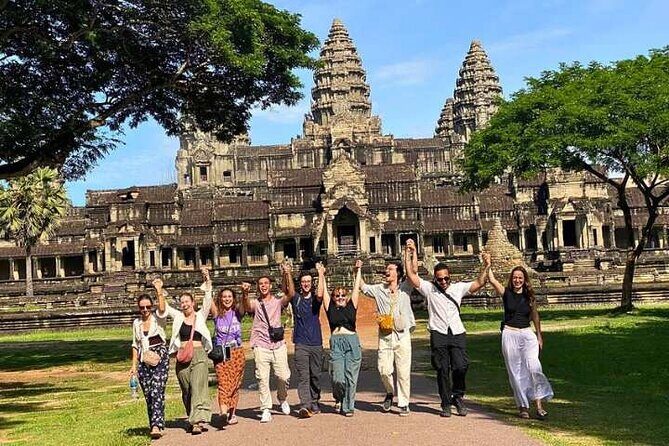
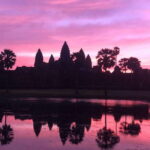
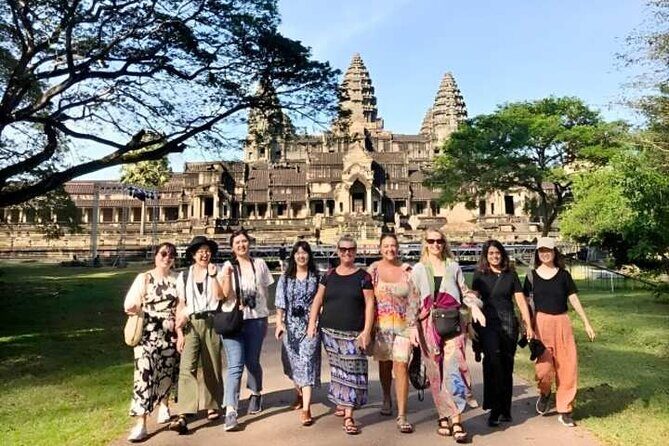
Angkor Wat is the headline, and the schedule gives you about 3 hours here. That’s enough time to see a lot without rushing your brain. The value of a guided format is that you’re not just looking at stone—you’re learning what you’re seeing as you walk.
Here’s what you should plan for at Angkor Wat:
- Time on the main temple areas so you can understand the layout, not just chase angles for photos
- Breaks under shade when you can find it, because the heat hits hard fast
- A guide who can point out details you might miss on your own, especially at the scale Angkor Wat operates on
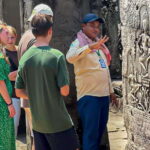
Also, Angkor Wat often feels both huge and confusing the first time you’re inside. A good guide helps you get your bearings fast—what to look for first, what matters most, and what you can safely move past when you’re tired.
Bayon Temple: The Smiling Faces Moment
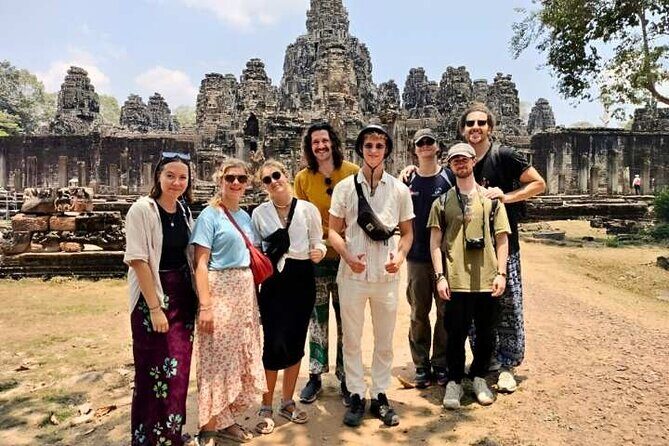
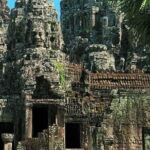
After Angkor Wat, you head to Bayon Temple for about 1 hour. Bayon is where Angkor starts to feel more human—those famous faces on the towers are the kind of thing you recognize instantly, but the meaning and placement can be confusing without context.
With a guide, you’re more likely to notice:
- how the carvings sit across different angles
- why Bayon fits into the bigger Angkor Thom complex story
- what to look for from the spots that give you the best views
This stop is short enough to stay enjoyable, but long enough for you to wander without feeling like you’re being herded.
Ta Prohm: The Angelina-Jolie Trees and the Weight of Time
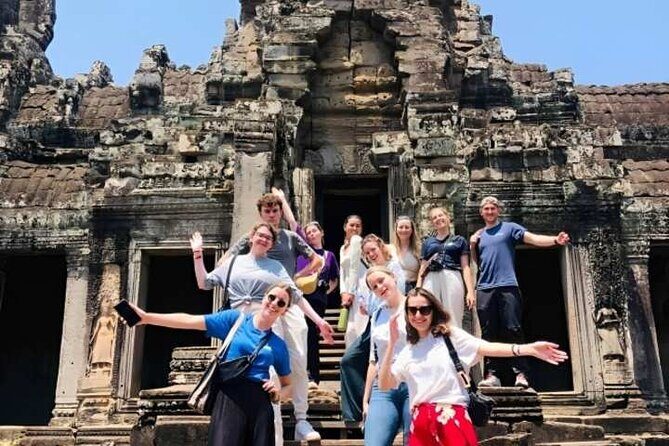
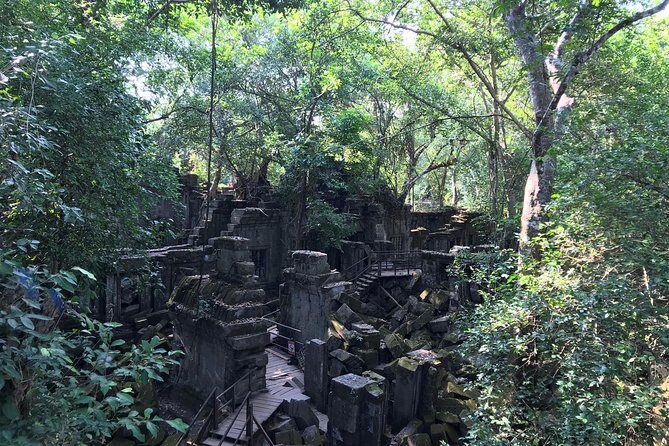
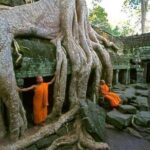
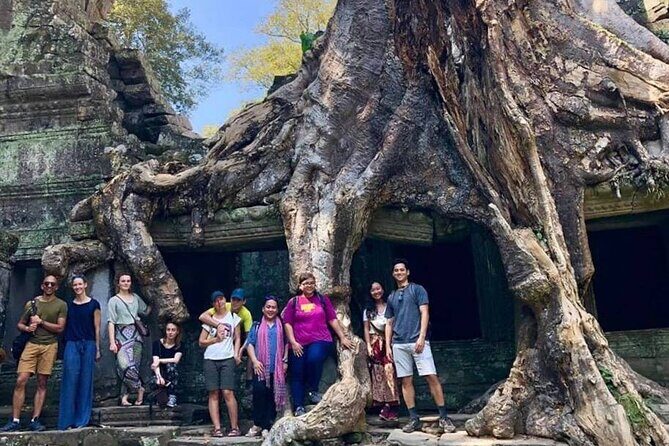
Then you go to Ta Prohm for about 2 hours. This is the temple people come for because the trees’ roots visibly swallow the stones—again and again, you’ll see why it’s become the cultural shorthand for Angkor “under nature.”
You’ll get the chance to slow down here. Reviews and tour descriptions highlight that Ta Prohm is the highlight for many people, largely because the roots make the architecture feel alive. You’ll want to watch your footing: the original stone walkways and stairs can be uneven.
If you’re traveling with a stroller or baby, you’ll want to plan carefully. One review specifically suggests using a baby carrier (not a stroller) because the ground can be rough and there are stairs.
You can also read our reviews of more evening experiences in Siem Reap

Angkor Thom South Gate and Leper King Terrace: Quick Hits
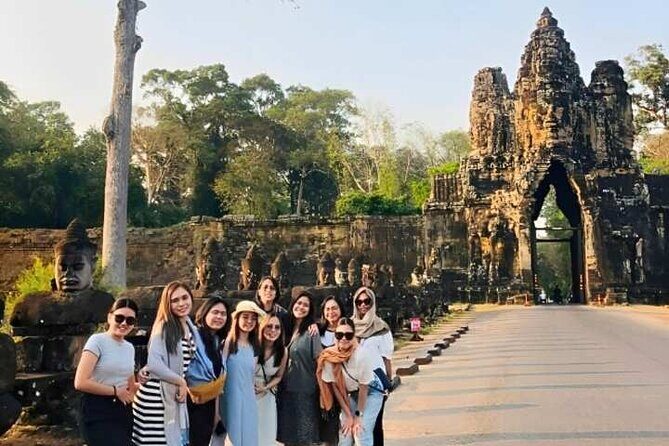
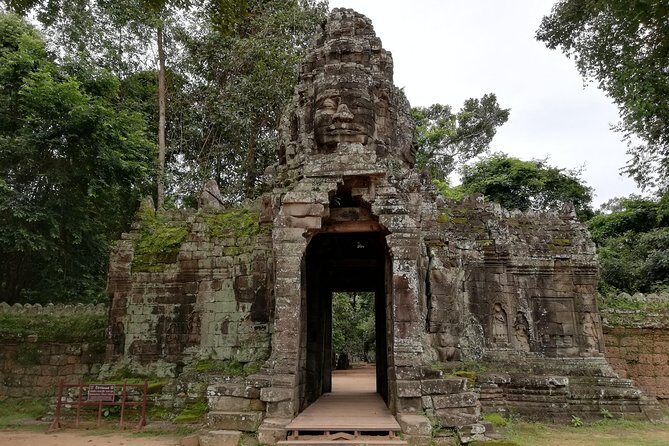
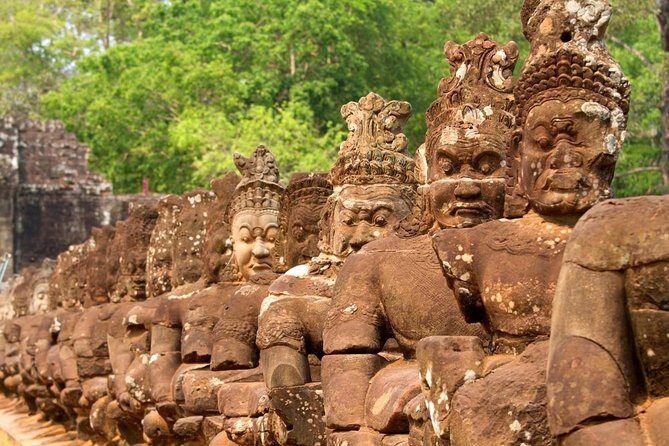
Next up is a photo stop at Angkor Thom South Gate (about 10 minutes). It’s not designed as a deep dive stop, so treat it like what it is: a short window for classic pictures and a reset before the more intense viewpoint portion later.
After that, you may visit Terrace of the Leper King for about 30 minutes, if time permits. This one is worth it when you have the energy, because it’s another piece of the puzzle that makes the larger complex feel connected.
The main drawback here: if you’re someone who wants free time at each location, quick stops can feel a little rushed. This tour keeps a structured pace. That’s great for efficiency, less great if you want to linger.
Phnom Bakheng Sunset: The Big Views, the Steps, and Crowd Reality
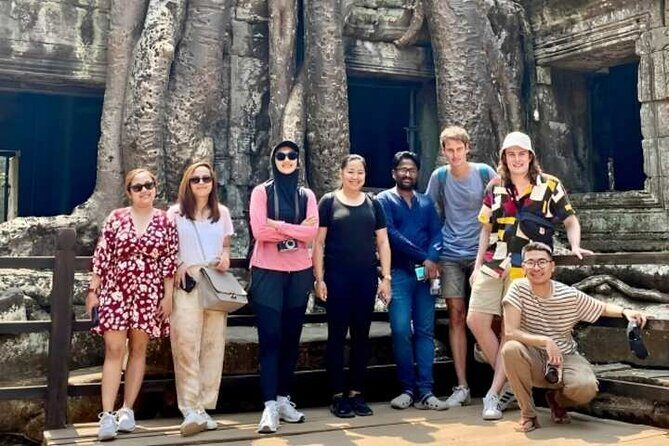
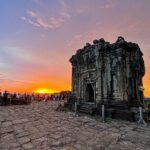
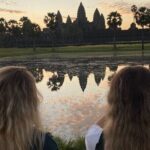
Phnom Bakheng is where the day pivots. The schedule sets aside about 2 hours, and the site is famous for sunset views. In good weather, the payoff can be huge.
But you need to plan for reality:
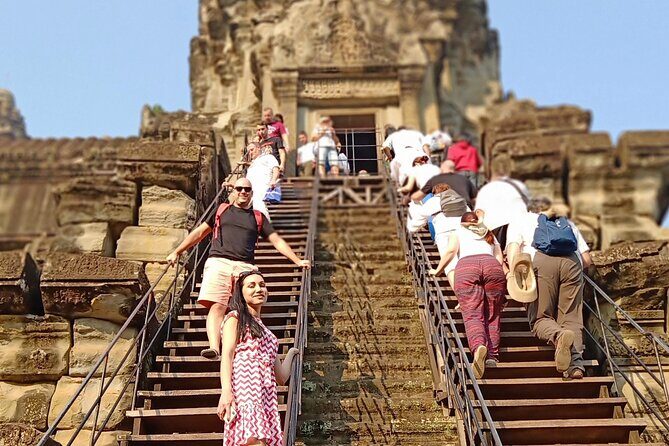
- It can involve a steep hike up and a return down. One review described roughly a 20-minute climb up and a 10-minute descent.
- The viewpoint can be crowded. One reviewer said the crowd made it feel not worth the effort.
- If the sky is cloudy, you might find the sunset less dramatic even if you do the climb.
The good news: at least one review notes the climb for the sunset viewpoint can be optional, especially if the goal is a quick look rather than a full ascent. So you can make your own call once you see the conditions.
My practical advice is simple: treat Phnom Bakheng like the final boss. Go slow, bring water, and don’t assume sunset will always be Instagram-perfect. Even then, the temple-and-horizon view is still a memorable capstone to the day.
Lunch at Srah Srang (Royal Bath): Where the Day Gets Breathing Room
After Angkor Wat, you get a lunch break at Srah Srang (Royal Bath) for about 45 minutes. This is one of the smartest parts of the day, because it gives you a real pause in the middle of constant walking and heat.
Srah Srang is a calm, lakeside setting, and that matters when you’ve been moving through stone corridors and bright open areas. The break also helps you avoid the common mistake—stopping to eat too late and then feeling shaky and tired for the rest of the afternoon.
If you’re picky about meals during travel days: this lunch is included, and it’s positioned right after Angkor Wat so you’re not hunting for food while everyone’s energy drops.
Heat and Footwear: This Day Is a Workout
Angkor isn’t just sightseeing. It’s steps, stairs, sun, and humidity. Several reviews echo the same theme: you should plan like it’s a physical day.
What to prepare:
- Wear comfortable shoes with grip. One review notes doing 20,000+ steps and says good footwear is a must.
- Bring extra hydration. The tour includes bottled water and cold towels, but one review says the promised two bottles don’t feel realistic in very hot weather, and a driver provided additional water anyway.
- Add sun protection. Reviews repeatedly recommend a hat. You’ll also want sunscreen and insect repellent.
- Dress appropriately. The tour lists a smart casual standard: shoulders covered and bottoms that are knee-length or longer.
If you’re wondering about weather: the tour operates in all weather conditions, so you’ll want to dress for sun and heat, and also be ready in case of rain. One review mentioned early December with clear skies and no rain, but still very hot—so don’t trust the calendar to save you.
Guides Make or Break Angkor: How to Spot a Good One
This tour includes a professional English-speaking guide, and the reviews name multiple guides—Ra, Chenda, Lok, King Kong, Pheap, Phyrom, Sinlong, and Perfect among them. What they have in common is that they make the day easier to understand and more fun to move through.
Here’s what you’ll likely benefit from with a strong guide:
- historical explanations that connect the temples you’re actually walking between
- humor and personality that keep the long day from feeling heavy
- photo help, including organizing the group for better shots
- shade breaks during hot stretches, at least with guides who pay attention to comfort
One caution from reviews: some guides can be very enthusiastic about taking individual photos, which can add time and affect pace. If you’re short on time or want a more independent feel, tell your guide what you prefer early in the day.
Price and Value: How $20 Looks After the Park Pass
The tour price is listed as $20.00 per person, which is the kind of number that gets your attention fast. But the Angkor Park admission fee is not included and is listed as $37.00 per person.
So your realistic total isn’t $20—it’s about $57 for the core tour plus park admission, with lunch included. Still, that can be fair value if you compare what you’re getting:
- guided time at multiple major sites
- hotel pickup and drop-off
- air-conditioned transport
- bottled water and cold towels
- lunch at Srah Srang
- a small group size that reduces waiting compared to bigger tours
If you’re already comfortable hiring a driver and navigating temples on your own, you might decide to DIY. But for most people, especially first-timers, the combination of guide context and efficient routing makes the money feel more reasonable.
Who Should Book This Sunset Circuit (and who should skip it)
This tour is a good fit if you:
- want a guided plan across the top Angkor sites without spending hours coordinating
- like the idea of a sunset capstone at Phnom Bakheng
- prefer a small group (up to 10 per booking) over a huge crowd experience
- appreciate lunch included in the middle of the day
It’s less ideal if you:
- hate long days and heavy walking
- want lots of free time at each temple
- dislike structured pacing and quick photo stops
- are very sensitive to heat or stairs
For people who want total control over time—like a market stop or longer stays—private tours are usually the better match. This shared format is designed for efficiency, not custom wandering.
Should You Book This Angkor Wat Sunset Tour?
If your priority is seeing major Angkor highlights in one day with guide support, predictable timing, and a midday lunch break, I think this is a strong option. The small group size, hotel pickup, and the chance to finish with Phnom Bakheng sunset are the big wins.
Just go in with clear expectations: you’re choosing a walking-heavy day, and the sunset part can involve crowds and a steep climb. If you’re fit, patient, and properly packed with water and sun protection, this kind of day often becomes the highlight of a Siem Reap trip.
FAQ
FAQ
What time does the tour start?
The tour start time is listed as 7:40 am, with pickup typically occurring in a window around 7:40–8:10 am.
How long is the Angkor Wat sunset tour?
It runs about 9 to 10 hours (approx.).
How many people are in the group?
The tour is described as a small group limited to around 10 people per booking, while the overview also mentions an intimate group size limited to 12.
Is lunch included, and where do we eat?
Yes. Lunch is included at Srah Srang (Royal Bath), typically after the Angkor Wat visit, with a lunch break of about 45 minutes.
Do I need to pay the Angkor Park admission fee?
Yes. Angkor Park admission is listed as not included, at $37.00 per person.
What should I wear or bring for the temples?
Dress smart casual with shoulders covered and knee-length bottoms. Bring a hat, sun cream, and insect repellent. Also consider sunglasses and lotion, especially in summer heat.
Can I cancel for a full refund?
Yes. Free cancellation is allowed up to 24 hours in advance for a full refund. If you cancel less than 24 hours before the start time, you won’t receive a refund.