Angkor is spread out, so the right pace matters. This Angkor sunset e-bike tour strings together the big sights and the quieter ruins, then ends with sunset from Phnom Bakheng. It is built for people who want movement and viewpoints, without the grind of pedaling between temples.
What I like most is the small-group feel (max 8) and the guide-led route, so you are not guessing or zigzagging on your own. The second big win is the effort-to-reward ratio: you stay active on an electric bike, and you still get time at each major stop instead of rushing through.
One drawback to think about: temple admissions/Angkor passes are not included, so you will need to budget for that separately. Also, because the day runs outdoors and you are riding and climbing for sunset, good weather is important.
In This Review
- Key Points Before You Go
- Why an E-Bike Tour Works So Well for Angkor
- Price and What $75 Buys You in Real Value
- The Day at a Glance: From Angkor Wat to Phnom Bakheng Sunset
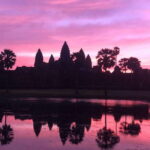
- Stop 1: Angkor Wat and That Morning-Temple Energy
- Stop 2: Ta Prohm Where the Roots Take Over
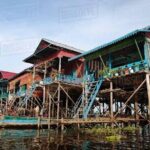
- Stop 3: Lunch at Srah Srang and a Proper Midday Reset
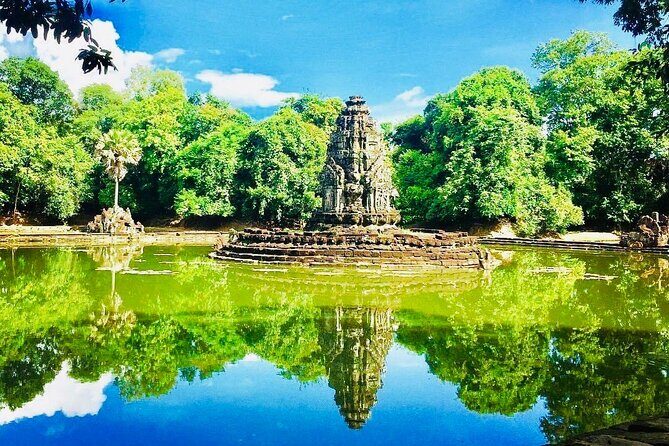
- Stop 4: Ta Nei Temple for the People Who Like Quiet Ruins
- Stop 5: Bayon Temple, Avalokiteshvara Faces, and the Terrace of Elephants
- Stop 6: Phnom Bakheng for Sunset Over the Mountain
- Getting Around Comfortably: Pacing, Country Roads, and Support
- What to Expect When the Temple Pass Isn’t Included
- Weather, Timing, and Why the Sunset Part Needs Flexibility
- Who This Tour Fits Best
- Should You Book Angkor Sunset E-Bike Tour With Lunch?
- FAQ
- How long is the Angkor sunset e-bike tour?
- What time does the tour start?
- Do they pick you up from your hotel?
- What’s included besides the e-bike?
- Are temple admission tickets included?
- How big is the group?
- Is the tour suitable for most people?
- Where does the sunset happen?
- What if the weather is bad?
Key Points Before You Go
- E-bike help keeps the day fun even with lots of temple walking and uneven paths
- Max 8 people means more attention and a smoother pace
- Lunch + fruit + cold water help you avoid the mid-day energy crash
- Guide-led routing keeps you from getting lost on country roads
- Sunset timing at Phnom Bakheng gives you a clear finish point for the day
Why an E-Bike Tour Works So Well for Angkor
Angkor is not one “walkable” monument. It is a big collection of temples over a wide area, and the distances add up fast. A regular bike can feel like a workout you did not plan for, especially if you also want to spend time photographing, climbing steps, and taking in carvings.
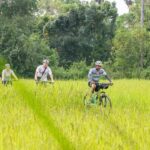
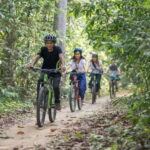
An e-bike changes the whole feel. You still get that “I’m really there” motion and freedom to stop for views, but you are not constantly fighting the terrain. That matters on days like this one, where you are hitting multiple sites across Angkor Wat, Angkor Thom, and the ride-out to Phnom Bakheng.
There is also a practical benefit: when you ride with a guide, you spend less time making decisions and more time enjoying. You are told where to go and when to start riding again. That is how you avoid the usual vacation math of getting delayed, backtracking, and watching your day disappear.
You can also read our reviews of more cycling tours in Siem Reap
Price and What $75 Buys You in Real Value
At $75 per person for a roughly 9-hour day, the value comes from what is included versus what you normally pay separately in Angkor.
Included in the price:
- Hotel pickup and drop-off
- English speaking guide
- Electric bike
- Lunch
- Fruit snacks and cool water
Not included:
- Temple admission/Angkor pass (the tour lists admission tickets as not included, and specifically notes Angkor Wat pass isn’t included)
- Tips
So what are you actually paying for? You are paying for a guided route, transportation, and a full service day (food + water). If you were to piece this together yourself, you would still need a bike, a guide-like solution for routing, and a way to manage the timing that leads into sunset.
Bottom line: $75 feels fair if you plan to do more than one or two temples and you want the convenience of pickup, food, and guidance bundled together.
The Day at a Glance: From Angkor Wat to Phnom Bakheng Sunset
The tour starts in Krong Siem Reap around 9:00 am with pickup from your hotel. Then the day unfolds in a steady sequence:
- Angkor Wat in the morning
- Ta Prohm by late morning, with the iconic roots
- Srah Srang for lunch around midday
- Ta Nei on a smaller, more secluded path
- Bayon plus the Terrace of Elephants in the afternoon
- Phnom Bakheng to finish at sunset, with a couple hours built in
This flow matters because it keeps the hardest visual moments spread out instead of stacking everything into one rush. You get breaks, food, and cooling-down time. And the ending is not vague: you end specifically at Phnom Bakheng with time set aside for sunset viewing.
If you are the kind of person who hates backtracking, this schedule will feel comfortable. You ride forward. You stop. You look. You eat. You ride again.
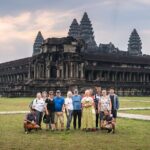
Stop 1: Angkor Wat and That Morning-Temple Energy
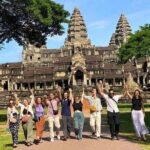
Angkor Wat is the big name, and the tour treats it that way. You spend about 2 hours there, starting after pickup and transfer.
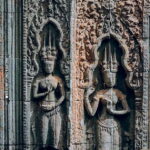
This is where you see the Khmer temple style at its height, including the Khmer art that reached its glory in the 12th century. Even if you have been before, it is the kind of place where you notice new details after you slow down. The best part of the tour setup is time: you are not doing a 20-minute drive-by.
Two practical things to watch:
- You still need your temple pass (admission is not included).
- Expect a lot of walking and step climbing, so use your time wisely when the crowd level changes.
The tour’s structure also helps with light and timing. One guide timing note you might hear about is how Pok aims to get you there early enough to enjoy the morning feel at Angkor Wat. If you care about photos, this approach is a plus.
Stop 2: Ta Prohm Where the Roots Take Over
By late morning, you ride to Ta Prohm for about 1 hour.
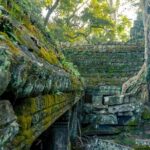
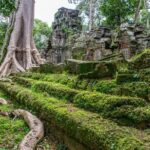
Ta Prohm is famous because it is left largely as discovered, with those massive root trees that wrap around stone. It is also a recognizable pop-culture landmark because scenes from Tomb Raider, starring Angelina Jolie, were filmed here.
What I like about doing Ta Prohm on a bike tour (not a quick bus stop) is pacing. You can walk in and out, look up at the canopy of roots, then step back for wider angles. The bike gets you there without exhausting you, and your time on foot is focused where it matters.
Drawback to consider: you may still find it hot by the time you get there, so you will want to drink what the tour provides and keep water in reach. The tour includes cool water, which is genuinely helpful here.
A few more Siem Reap tours and experiences worth a look

Stop 3: Lunch at Srah Srang and a Proper Midday Reset
After Ta Prohm, there is a pause built into the day: lunch near Srah Srang, listed for about 1 hour at around 12:30.
The value of lunch here is not just that it is included. It is that it is scheduled when your brain usually starts getting foggy from heat and walking. You sit down, eat, and reset before the afternoon temples.
The tour includes lunch, plus fresh fruit. That mix is smart. In Siem Reap, you can easily overdo heavy meals if you do not balance with lighter fruit. Here you get both.
One more practical benefit: the lunch stop acts like a breathing space so you can handle the later riding and more walking without arriving at Bayon and Phnom Bakheng feeling wrecked.
Stop 4: Ta Nei Temple for the People Who Like Quiet Ruins
Next comes Ta Nei Temple for about 1 hour.
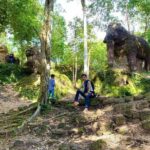
This is described as a ruined temple in the jungle, a place that many visitors can’t see. You go via the trail, which adds a sense of arrival that you simply do not get at the main, parking-lot temples.
What makes Ta Nei worth it is the contrast. After big, famous Angkor sites, this one lets you slow down and enjoy details without the same intensity of crowds. You can focus on the ruin shapes, the overgrowth, and the way stone holds its form when nature moves in.
A consideration: because it is described as being in the jungle and reached by trail, plan for uneven ground. Even with an e-bike, you still do your time on foot here, so wear shoes you feel confident walking in.
Stop 5: Bayon Temple, Avalokiteshvara Faces, and the Terrace of Elephants
In the afternoon, the tour moves to Bayon Temple around 3:00 pm.
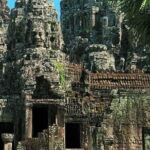
At Bayon, you see the stone faces of Avalokiteshvara. The tour also frames Bayon as the state temple of Mahayana Buddhist King Jayavarman VII. That historical context helps you look at the carvings as more than just decoration. You start noticing the structure as a deliberate design.
The visit continues to the Terrace of Elephants, described as the main terrace where the king sits to observe the training of elephants.
This combo of stops works well because:
- Bayon delivers the visual wow (those faces are hard to ignore).
- The terrace gives you a different angle on how rulers and ceremonies might have played out.
Time on site is about 1 hour, so you are not stuck forever. But it is long enough to walk around and pick a couple good viewing points. If you are the kind of person who hates rushing, the small-group setup helps you avoid the “everyone move, now” feeling.
Stop 6: Phnom Bakheng for Sunset Over the Mountain
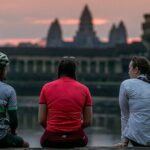
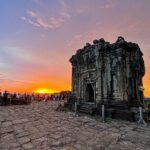
The day finishes at Phnom Bakheng, with about 2 hours dedicated to the sunset.
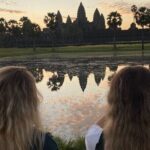
This is the part most people remember. Phnom Bakheng is set up like a viewpoint stop, and you get the chance to watch the sky change over the mountain. Ending here also gives the tour a clear climax, so your brain knows the day is working toward something.
Two practical notes:
- This is outdoors and weather dependent, so bring a bit of flexibility in your expectations.
- You may feel heat and fatigue before the sunset window. That is why the earlier lunch and the included water matter.
Also, because you are going to be around temples at sunset, plan for the mix of light and shadows when you take photos. Indoors you can control your angle; outdoors, you chase the sky’s timing.
Getting Around Comfortably: Pacing, Country Roads, and Support
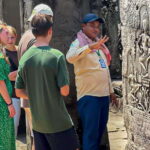
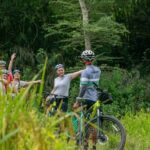
The tour’s biggest “how it feels” advantage is the combination of electric bikes and a guide route. You are not navigating on your own on country roads, which saves time and stress.
You also get frequent support in small but meaningful ways:
- Cool water
- Fruit snacks
- A guide who keeps the group moving without the “stampede” vibe
The e-bike matters on days when you want movement but do not want to arrive at temples sweaty and depleted. If you are not used to cycling, the assist helps you keep going and still enjoy your time looking around.
One more detail from the experience style: the tour emphasizes active touring without getting tired. That is exactly what you want if your goal is to see a lot without turning your vacation into physical punishment.
What to Expect When the Temple Pass Isn’t Included
Here’s the important budgeting point: admission tickets are not included, and the tour specifically says the Angkor Wat tour does not include the Temple Pass.
So, before you go, plan to arrange the pass separately. If you are hoping the tour price covers everything temple-related, it won’t.
Also expect tips as an additional cost since tips are listed as not included. If you like good guiding and clear pacing, budgeting for a tip makes sense.
I recommend you check your pass timing and keep it handy. Temple entrances can be strict, and you do not want to waste precious morning minutes.
Weather, Timing, and Why the Sunset Part Needs Flexibility
The tour notes that it requires good weather. That is not a small detail. When you are aiming for a long outdoor day and a sunset climb/viewpoint, rain or poor conditions can ruin both comfort and visibility.
If the tour is canceled due to poor weather, you are offered a different date or a full refund. In other words, you are not stuck losing your money because the sky decided to be dramatic.
So if you book, treat Phnom Bakheng sunset as a goal, not a guarantee. Then show up with the mindset to handle a change gracefully.
Who This Tour Fits Best
This is a great match if you:
- Want multiple major Angkor sites in one day
- Like the idea of moving between temples but dread the fatigue of regular cycling
- Appreciate structure (guide-led routing) rather than improvising your own route
- Prefer a small group setting with a guide who can answer questions
It is also ideal if you want lunch included, plus water and fruit snacks, so you are not constantly finding food mid-route.
If you are a hardcore cyclist who wants maximum pedal power, you might feel limited by the guided pacing. But for most people, the e-bike approach hits the sweet spot.
Should You Book Angkor Sunset E-Bike Tour With Lunch?
I think you should book if you want a full Angkor day that balances big sights with manageable energy use. The combination of pickup/drop-off, English-speaking guiding, e-bikes, and lunch + fruit + water is real convenience. The small group size helps too.
I would skip (or at least go in with eyes open) if you do not want to handle temple passes separately or if you are not comfortable with the outdoor nature of the day ending at Phnom Bakheng. And if you are the type who needs total independence, you might feel constrained by a fixed route and set timings.
If you like guided direction but still want your day to feel active and visual, this one is a strong choice.
FAQ
How long is the Angkor sunset e-bike tour?
It runs about 9 hours (approx.).
What time does the tour start?
The start time is 9:00 am.
Do they pick you up from your hotel?
Yes. Pickup and drop-off from your hotel are included.
What’s included besides the e-bike?
The tour includes an English-speaking guide, lunch, fresh fruit, and cool water, plus the electric bike itself.
Are temple admission tickets included?
No. Admission tickets are not included, and the tour specifically notes that the Angkor Wat Temple Pass is not included.
How big is the group?
The tour has a maximum of 8 travelers.
Is the tour suitable for most people?
The listing says most travelers can participate.
Where does the sunset happen?
The tour ends at Phnom Bakheng for sunset.
What if the weather is bad?
This experience requires good weather. If it’s canceled due to poor weather, you’ll be offered a different date or a full refund.