REVIEW · SIEM REAP
Journey Through Time: Grand Tours with professional photographers
Book on Viator →Operated by Marvel Angkor Tours · Bookable on Viator
Ancient temples, paced like a photo walk. I love having a private guide who explains what you’re looking at, not just where to stand. I also like that a professional photographer is part of the day, so you get better shots without turning the whole outing into a photoshoot. The main catch: the Angkor Temple Pass isn’t included (and dress code is strict), so plan for that extra cost and wear long pants and covered shoulders.
This is built around the UNESCO Angkor temple complex, but it focuses on the Grand Circuit so you can walk at your own pace instead of being herded by a big group schedule. You still see major names, yet the day feels more relaxed—more “take a breath and look” than “keep moving.”
For the money, the value really comes from the private setup: luxury car/van, hotel transfer included, plus mineral water, tissue, and natural fruits. And the guides put real care into the experience—one English-speaking guide was praised for taking extra attention with an 82-year-old guest, which tells you the service is willing to slow down when needed.
In This Review
- Key highlights you’ll feel right away
- Why the Grand Circuit feels different at Angkor
- Price and value: what $237 really covers
- Pickup that’s designed to reduce stress
- Dress code: the rule that can ruin your photos
- Stop-by-stop on the Grand Circuit: what you’ll see and how to look
- Preah Khan (Royal Sword Temple): a royal center on a big scale
- Neak Pean: a Buddhist island temple with water symbolism
- Ta Som: nature takes over, and the stones become quiet
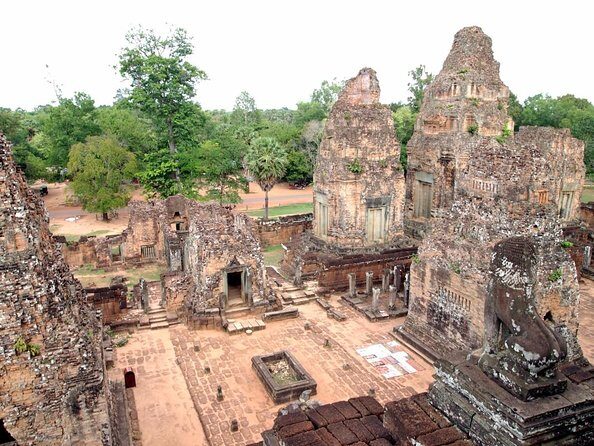
- Pre Rup: the mountain temple built for ritual meaning
- Eastern Mebon: Vishnu, royal parents, and an island now dry
- Banteay Srei: smaller scale, real countryside charm
- Photo and video help without losing the walk
- Who should book this private Grand Circuit day
- Should you book this Grand Circuit with Marvel Angkor Tours?
- FAQ
- Do I need an Angkor Temple Pass for this tour?
- How long is the Grand Circuit tour?
- Is pickup from my hotel included?
- Are tickets included for the temples?
- What temples are included on this route?
- Is this a private tour or a group tour?
- Will I have a guide and a photographer?
- What about food and drinks during the tour?
- What dress code do I need to follow?
- How does pickup work with the driver?
- Is there a cancellation option if plans change?
Key highlights you’ll feel right away
- Private guide with real temple context: You’ll get explanations that make Preah Khan, Ta Som, and Pre Rup easier to read.
- Professional photographer included: Expect help with photos and even video-style moments while you’re exploring.
- Grand Circuit pacing: No large tour-group rush; you can linger, step back, and reframe.
- 6 temple stops in about 5–6 hours: A full day that still feels manageable.
- Humor and Khmer history in the same day: Guides have been noted for a fun, friendly style (and sharp historical facts).
- Know the add-ons before you go: Angkor Temple Pass, strict dress code, and a listed $15 per person sun light fee.
Why the Grand Circuit feels different at Angkor
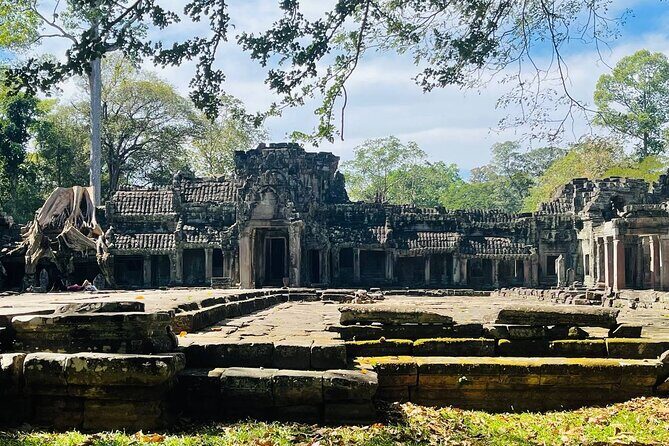
Most Angkor tours work off a “follow the herd” rhythm. This one is set up as a private excursion on the Grand Circuit, so you’re not constantly negotiating where the next group photo starts. That matters at Angkor because the best moments are often the in-between ones: a doorway carved with faces, a fragment of wall catching light, or a path that’s quiet for five minutes.
You’re also walking a route designed to mix temple types—royal complexes, water-centered sites, Hindu mountain temples, and a smaller countryside stop. The result is variety in both scenery and symbolism, without needing to cram everything into a rushed checklist.
And since you have a guide, you’re not left translating everything in your head. A good guide makes you notice what’s important: how a temple’s layout hints at its purpose, and how Khmer kings used religion as power.
You can also read our reviews of more tours and experiences in Siem Reap.
Price and value: what $237 really covers
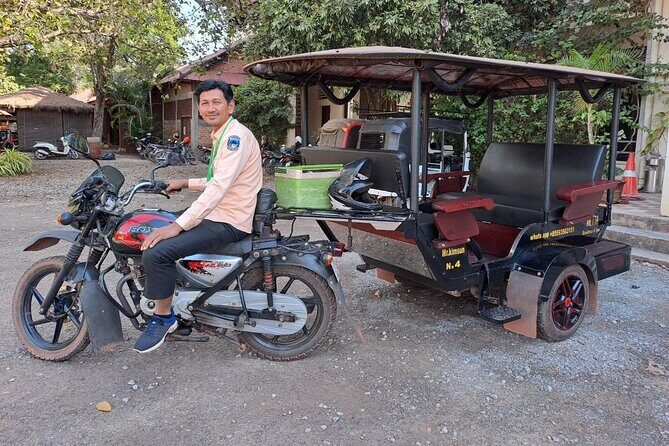
At $237 for a 5 to 6 hour private day, the headline price looks simple. The real value is what’s bundled: a luxury private car/van, a professional English-speaking tour guide, a professional photographer, mineral waters and tissue, and natural fruits during the tour. On top of that, the transport includes a complimentary round-trip hotel transfer.
Then there are the items not included: the 1-Day Angkor Temple Pass (listed at $37 per person), personal expenses, food and drinks, tips, and a listed $15 per person sun light fee. So your total “all-in” cost depends on how you handle those add-ons.
Here’s the practical way to think about it: if you don’t already have an Angkor pass, the pass plus the base tour price pushes you into a higher tier of spending. But you’re buying private transport and professional support for a day that would be harder to organize well on your own.
If you do plan ahead on the pass and dress code, this is one of the ways to get maximum temple time with fewer headaches.
Pickup that’s designed to reduce stress
One thing that usually goes wrong with temple tours is the handoff: finding your driver, confirming the time, or realizing you’re starting in the wrong place. This experience tries to remove that friction with pickup included and an e-ticket you download to your phone for your driver.
You also get a round-trip hotel transfer, so you’re not spending your morning fighting tuk-tuk timing or figuring out where to park. The day begins and ends back near the meeting point in Siem Reap, which makes it easier to line up with whatever you already have planned in the city.
A small detail, but it matters: there’s mineral water and tissue on the tour, plus natural fruits. In hot weather, that’s not “nice to have”—it’s the difference between pushing on with energy or starting to feel drained halfway through.
Dress code: the rule that can ruin your photos
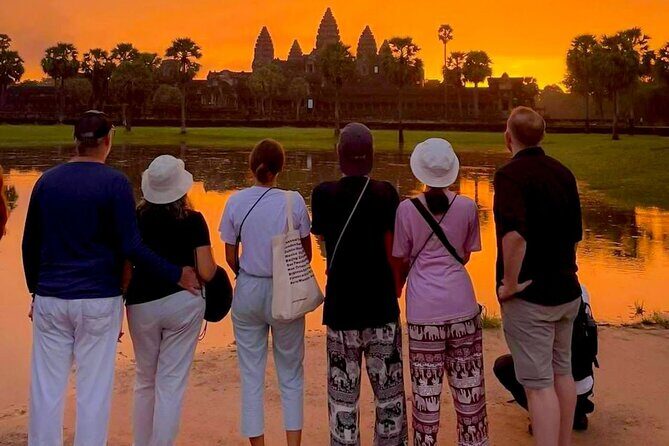
Angkor is casual in a lot of ways, but temple entry is not. A dress code is required: no shorts or sleeveless tops. Knees and shoulders must be covered for both men and women, and you may be refused entry if you don’t comply.
This matters because the day is built around multiple worship sites. If you get turned away once, you waste time and you lose the momentum that makes a private circuit feel relaxed.
Bring a light layer you can actually wear in the heat—long pants or a wrap-style cover. It’s cheaper than buying replacements mid-day.
Stop-by-stop on the Grand Circuit: what you’ll see and how to look
Your route runs through six main stops, with about an hour at each. The order is also helpful: you begin with a massive royal complex vibe, move into water-and-nature symbolism, then shift to “Hindu mountain” and island-temple thinking, and finish with Banteay Srei in the countryside area.
Below is what each stop is, why it’s worth your time, and what to watch for.
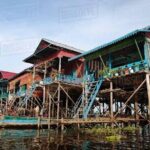
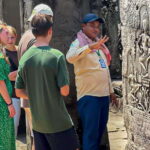
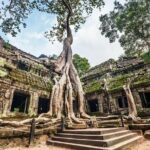
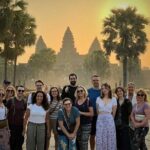
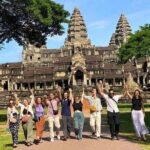
Preah Khan (Royal Sword Temple): a royal center on a big scale
Preah Khan, also called the Royal Sword Temple, is where the day starts strong. Built in the early 12th century by King Jayvarman VII, it was created to honor his father. What makes it special is the scale of what used to operate there: it functioned as a major center with an enormous organization—almost 100,000 officials and servants.
How to look at it: instead of only scanning for “the most famous carvings,” pay attention to how the space feels like a living institution. A site this large makes you understand that Angkor wasn’t only about temples as monuments. It was also administration, worship, and a whole system of daily life wrapped in stone.
This stop also sets you up for better photos later. By the time you reach Ta Som and Neak Pean, you’ll recognize patterns in carvings and layout more quickly.
Neak Pean: a Buddhist island temple with water symbolism
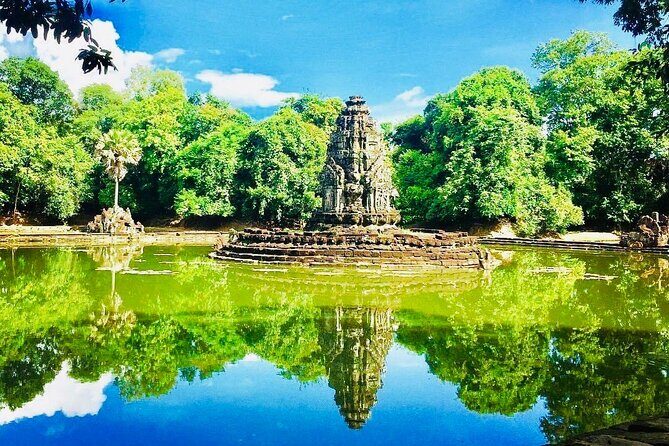
After Preah Khan, you head to Neak Pean nearby. This is an artificial island Buddhist temple constructed by King Jayavarman VII, placed in the center of the Preah Khan Baray (also referenced as Jayatataka).
The “island in water” idea changes the feel of the visit. Even if the water level varies, the structure’s concept is still clear: it’s meant to create a symbolic environment, not just a place to pray.
Practical photo note: because it’s an island concept, you often get better framing by stepping back and letting the whole setting enter the shot. Don’t only crop in close—part of the impact is seeing the temple as the center of its intended world.
Ta Som: nature takes over, and the stones become quiet
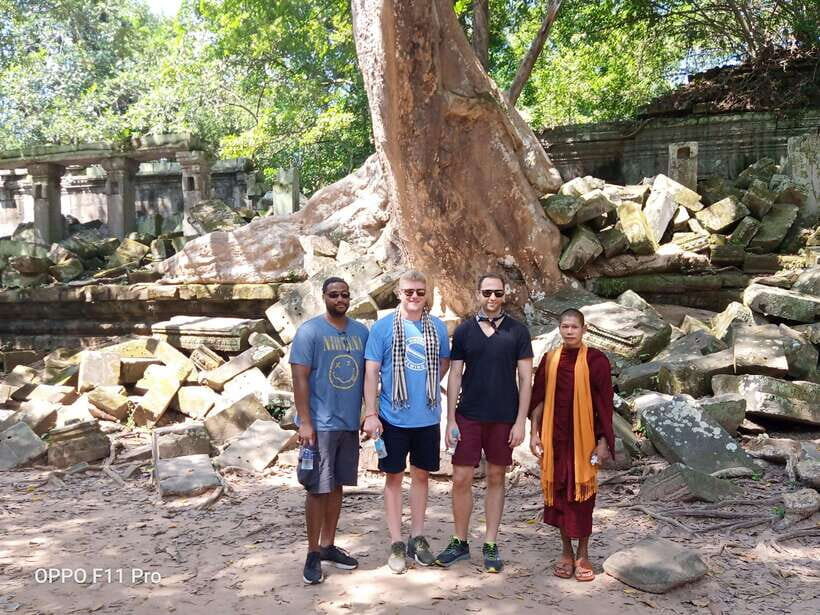
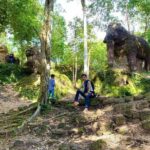
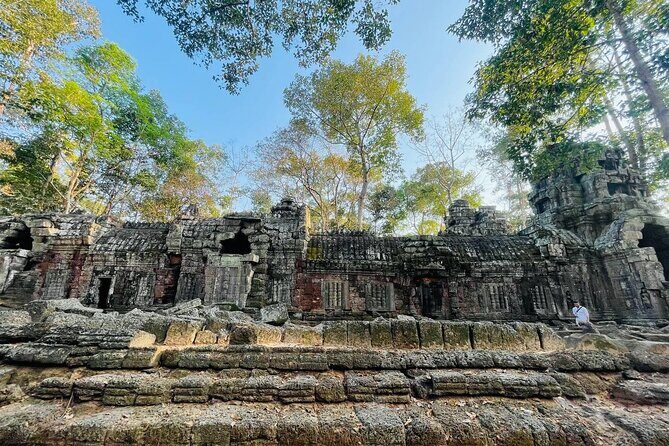
Next comes Ta Som, built at the end of the 12th century by King Jayvarman VII to dedicate to his father. It shares a similar “nature is part of the temple now” mood to Ta Prohm, with areas that are largely unrestored and full of trees and growth.
This stop is for people who don’t want every temple to feel staged. Here, the stones look older because nature is actively writing on them. The result is a more atmospheric walk—less about grand ceremony, more about slow looking.
One drawback to plan for: when a temple is less restored and more overgrown, some details are harder to see cleanly. That’s when your guide’s explanations help, because they can point out what’s there even when it’s partially hidden.
Pre Rup: the mountain temple built for ritual meaning
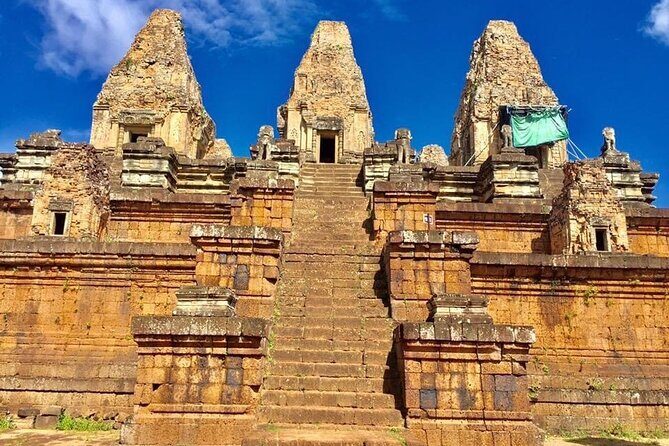
Then you move to Pre Rup, a Hindu mountain temple constructed by Khmer King Rajendravarman in 961 or early 962. The modern Khmer meaning of the temple’s name is turn the body. Cambodians associate funerals with this idea, so the site carries a strong ritual connection.
This stop rewards a different kind of attention. Instead of only looking for faces and carvings, look at the temple as an arrangement for ceremonies and movement—where people would stand, approach, and experience the structure.
If you like temple names to make sense, Pre Rup is one that delivers. The meaning links directly to why the temple was built and how it fits into religious life.
Eastern Mebon: Vishnu, royal parents, and an island now dry
Finally, before your last stop, you’ll visit Eastern Mebon, a 10th century temple built by King Rajendravarman. It was dedicated to the Hindu God Vishu and also honors the king’s parents. The temple used to be an artificial island at the center of what is now the dry East Baray.
Even when the water is gone, the island concept still affects how the temple sits in your view. This is one of the sites that can make you think beyond today’s condition and toward what Angkor looked like when the water system was functioning.
If you’re the type who likes to understand why ruins look the way they do, Eastern Mebon helps. The layout tells you it wasn’t random; it was designed to be part of a wider watery landscape.
Banteay Srei: smaller scale, real countryside charm
Your last stop is Banteay Srei, located about 25 kilometers northeast of the Angkor Archaeological Park. It’s described as smaller than the famous Angkor Wat, but it’s also called the Jewel of Khmer Artistry, which is exactly the kind of temple where fine details matter more than sheer size.
Admission is listed as free for this stop, which is a nice bonus on a day that already includes major ticket costs for other sites. Since it’s outside the busiest Angkor core vibe, it can also feel calmer, like you’re getting a more local Angkor-side experience rather than only the headline locations.
If you want one “close-up detail” stop where carvings and design rhythm matter, this is the one.
Photo and video help without losing the walk
Having a professional photographer in the mix changes how you move through temples. You can concentrate on pacing—stopping at the right angles, stepping into shade, then stepping out again—while the photographer handles the technical side.
In practice, the guides have also been described as taking great pictures and videos while keeping the day fun and comfortable. So if you care about getting real documentation of the day (not just blurry phone shots), this is a strong setup.
My tip for making the most of it: don’t wait until you arrive at the “best spot.” Ask for a quick framing idea right as you enter a doorway or as you crest a path. That way, you get the setting as part of the photo, not only the temple face cropped against bright sky.
Who should book this private Grand Circuit day
This fits best if you want:
- A private pace rather than a group scramble
- Clear explanations from a guide who brings history to life
- Better photos without spending your day arranging poses
- Comfort, since you’ll have luxury transport plus water and fruit
It’s also a good choice if your group needs a little flexibility. One guide was praised for caring for an 82-year-old guest, which suggests they can handle slower movement when it’s needed.
If you’re the type who loves fast self-guided exploring, you might not “need” a guide for every stop. But for most first-timers, the guide and photographer combo is what turns Angkor from a list into a story you can actually follow.
Should you book this Grand Circuit with Marvel Angkor Tours?
If you can work the extra costs (Angkor Temple Pass plus the listed sun light fee) into your budget, I’d say yes—especially because the day is private, it includes round-trip hotel transfer, and it pairs a guide’s explanations with a photographer’s help. That combination is exactly what reduces stress at Angkor and lets you slow down enough to notice details.
If you’re on a tight budget and already feel comfortable navigating the circuit independently, you might choose a cheaper option and hire a guide only for the moments you care most about. But if you want one well-run day that covers the key stops of the Grand Circuit in a sensible 5–6 hour window, this is a practical way to do it.
FAQ
Do I need an Angkor Temple Pass for this tour?
Yes. The Angkor Temple Pass (1-Day Angkor Temple Pass) is not included and is listed at $37 per person.
How long is the Grand Circuit tour?
It runs about 5 to 6 hours.
Is pickup from my hotel included?
Yes. Private transport includes a complimentary round-trip hotel transfer.
Are tickets included for the temples?
Admission tickets are not included for most stops. The tour notes admission ticket not included for several temples and lists Banteay Srei as having free admission.
What temples are included on this route?
The tour includes Preah Khan, Neak Pean, Ta Som, Pre Rup, Eastern Mebon, and Banteay Srei.
Is this a private tour or a group tour?
It’s a private tour. Only your group participates.
Will I have a guide and a photographer?
Yes. A professional English-speaking tour guide and a professional photographer are included.
What about food and drinks during the tour?
Mineral waters, tissue, and natural fruits are included. Food and drinks are not included.
What dress code do I need to follow?
You need to cover knees and shoulders. No shorts or sleeveless tops are allowed, and you may be refused entry if you don’t comply.
How does pickup work with the driver?
You download an e-ticket to your phone for your driver, which is intended to make pickup easier.
Is there a cancellation option if plans change?
Yes. Free cancellation is offered up to 24 hours in advance for a full refund.