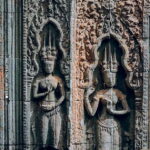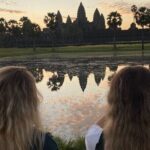
Three temples, one intense dose of Cambodia. This outing strings together Angkor Wat, Bayon, and Ta Prohm, then threads in key moments in Angkor Thom for a short walk into the ancient-city atmosphere. It’s a half-day plan that feels big—because these sites are huge—but it’s paced so you’re not just racing from photo spot to photo spot.
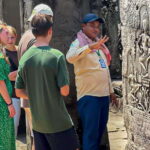
I especially like the way the guide brings the carvings and temple design to life. In my experience, guide Dan was a standout, with great storytelling and a clear grasp of the religions and politics that shaped the temples and the wall carvings. I also love the route logic: you start with the statement-making symmetry of Angkor Wat, then you move to Bayon’s faces, and finally you end at Ta Prohm’s famous tangled roots.
One thing to plan for: the temple entrance fee is not included, so your total cost is higher than the $45 tour price once you add the official tickets.
In This Review
- Key things to know before you go
- The value in covering Angkor Wat, Bayon, and Ta Prohm in one go
- Your half-day timeline: how the day stays paced (and where you’ll feel the walking)
- Angkor Wat: the flag symbol, the scale, and what to look for
- Angkor Thom South Gate: Tonle Oum and the feeling of entering an older world
- Bayon Temple faces: why the carvings land so well when explained
- Baphuon, Elephant Terrace, Terrace of the Leper King, and the Royal Palace areas
- Ta Prohm: tree temple energy and the Tomb Raider effect
- Price and what makes the $45 rate feel fair (or not)
- Comfort rules that save your day at Angkor temples
- Who should book this temple circuit (and who might want a different plan)
- Should you book this Angkor Wat, Bayon, and Ta Prohm experience?
- FAQ
- What temples are included in this experience?
- How long does the tour take?
- Is hotel pickup and drop-off included?
- What’s included in the price?
- What isn’t included?
- Do I need to pay for temple admissions separately?
- What should I wear to enter the temples?
- Is this tour private?
- Can I cancel for a full refund?
- Is there anything I should avoid bringing?
Key things to know before you go
- A half-day that still covers the big three: Angkor Wat, Bayon, and Ta Prohm, plus major Angkor Thom stops.
- Guide-led context, not just stand-and-point: expect explanations tied to Cambodian religion and history.
- Comfort perks built in: air-conditioned car, drinking water, cold towels, and hotel pickup/drop-off.
- Angkor Thom is more than one gate: you’ll pass through the south-gate area and see major royal-city landmarks.
- Dress for temples: plan on covering shoulders and knees.
- Budget for temple admissions: the $45 rate doesn’t include the site fees.
The value in covering Angkor Wat, Bayon, and Ta Prohm in one go
What you’re really buying here is flow. You’ll move through multiple temple zones in a logical order that helps each site make sense. If you’ve ever visited Angkor Wat first and then felt lost later at Bayon or Ta Prohm, this route helps you build the mental map fast.
Angkor Wat is the anchor. It’s massive and iconic, and it’s also more than a postcard. Once you’ve understood why it was built and how it’s laid out, Bayon reads differently. Then Ta Prohm lands as the contrast: the temple reclaimed by trees, with a world-famous look that’s easy to spot even if you’re tired.
And the guide matters more than you might think. These temples have layers—design choices, symbolic meaning, and even political motivations behind the monuments. A good local guide gives you handles to hold onto, so the day doesn’t blur into three blurry compass directions.
You can also read our reviews of more walking tours in Siem Reap

Your half-day timeline: how the day stays paced (and where you’ll feel the walking)
The total experience runs about 5 to 7 hours. That time includes hotel pickup, the temple circuit, guided time inside key areas, and the ride between zones. The itinerary times you’re given are fairly generous for a temple tour, but you still should treat this as a walking day.
Here’s the practical order you can expect:
- Start at Angkor Wat for a longer, guided visit that includes inside viewing.
- Head into Angkor Thom, beginning at the South Gate area, then moving on to Bayon.
- Continue through additional Angkor Thom royal-city highlights (like Baphuon and other named terraces/palace areas).
- Finish at Ta Prohm, where the famous tree-filled setting is the payoff.
- Return to your hotel.
Between sites, you’ll get breaks from the sun thanks to the air-conditioned car, plus cold towels and drinking water. Still, you should wear comfortable shoes and expect a fair amount of uneven ground around temple areas.
Angkor Wat: the flag symbol, the scale, and what to look for
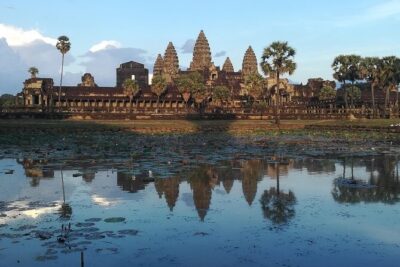
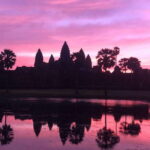
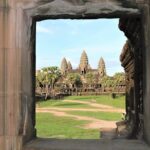
Angkor Wat is the big opening act. It was built from 1113–1150 AD by King Suryavarman II. It’s huge—about 330 metres by 260 metres—with three levels and five main towers. You’ll see it both from the outside and then get time inside.
Here’s how I’d use that guided time to make it click:
- First, look at the overall geometry and the layered feel. The three-level design is part of why the place reads so clean and ceremonial.
- Then shift your attention to the tower arrangement and how the site is meant to be approached.
- During the inside segment, ask yourself what the carvings are doing: telling stories, signaling belief, and reinforcing the site’s meaning.
Angkor Wat isn’t just a monument for history lovers. It’s also a national symbol—so it even appears on Cambodia’s flag, representing the soul of the country. That context makes the site feel less like a museum exhibit and more like a living piece of identity.
Potential drawback to note (not a deal-breaker, just realistic): it’s the kind of place where you can easily spend 30 minutes staring at one corner and miss the bigger view. Going with a guide helps you avoid that trap.
Angkor Thom South Gate: Tonle Oum and the feeling of entering an older world
Next comes the Angkor Thom royal city experience, starting at the South Gate, known as Tonle Oum. This city is laid out with a bold square plan—each side about 3 kilometres—and it has five gates.
You’ll get a short, purposeful stop at the south entrance area, plus time around the entry zone so you can get your bearings. The five gates are:
- South Gate
- Ghost Gate (also called Gate of the Dead)
- Victory Gate
- Dei Chhnang Gate (or North Gate)
- Killing Gate
That list sounds like it belongs in a scary-story book, but it’s helpful. It gives you a map for how people may have interpreted the city’s layout—what kinds of journeys were imagined, and how different entry points carried different meanings.
A short walk into the south-gate area helps you feel like you’re moving into something designed for ceremony, not sightseeing lines.
Bayon Temple faces: why the carvings land so well when explained
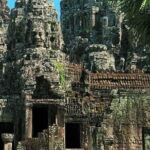
Bayon is famous for one reason you’ll recognize immediately: the face towers. You’ll get about an hour here, with both outside and inside viewing and guided explanation.
A face like this can turn into wallpaper if you’re just ticking off a view. What makes Bayon work is understanding the symbolism and the religious-political context behind why so many faces appear across the temple experience. In my case, the guide’s storytelling style turned those faces from a cool pattern into a message.
If you want to get the most out of the hour:
- Start by scanning the towers first, so your brain remembers scale.
- Then pay attention to carvings and details inside, not just the main faces.
- Use the guide’s history explanations to link the art to the beliefs that shaped the monument.
Bayon is often what people want most from a trip like this. When you have it after Angkor Wat, it also feels like a conversation. You’re moving from “grand architectural statement” into “human presence made monumental.”
You can also read our reviews of more city tours in Siem Reap
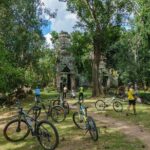




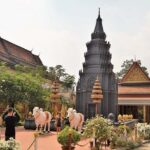
Baphuon, Elephant Terrace, Terrace of the Leper King, and the Royal Palace areas
After Bayon, the day continues through additional Angkor Thom highlights mentioned for this tour. These include:
- Baphuon Temple
- Elephant Terrace
- Terrace of the Leper King
- Royal Palace areas
You won’t spend unlimited time on each stop, but you will get access to the landmarks by name and context. That matters because these are not interchangeable piles of stone. Each place has its own design purpose, and the guide can help you spot why it was built and what it may have communicated.
For example, terraces and palace-related areas feel different from the face-heavy temple moments. They’re often more about viewing platforms, ceremony, and power. If you like architectural storytelling, this part of the day gives you a broader slice of how the royal city worked.
One practical note: these areas can be crowded depending on time of day and traffic patterns. Your guide helps keep you moving at a steady pace so you can see and learn without constantly hitting bottlenecks.
Ta Prohm: tree temple energy and the Tomb Raider effect
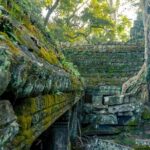
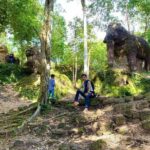
Ta Prohm is the closer. It’s known as the tree temple, and it has a famous look tied to pop culture—often associated with Tomb Raider. But even if you don’t care about the movie connection, the setting is genuinely captivating.
You’ll have about an hour at Ta Prohm with outside and inside viewing plus guided interpretation. The big visual payoff is the way nature interacts with stone structures, creating a scene that feels older than time itself.
Here’s the sweet spot for experiencing Ta Prohm without burning out:
- First, take in the overall scene, then come back to specific stonework details.
- Let the guide explain what you’re seeing rather than trying to figure it all out alone.
- Don’t over-zoom on just one root or one doorway. Spread your attention across the temple’s main elements.
If you’re tired from the morning or your legs are starting to complain, this is still a good ending because Ta Prohm rewards slowing down. It’s the kind of place where you can stand still and feel like you’re part of a scene.
Price and what makes the $45 rate feel fair (or not)
The tour price is listed at $45 per person, and on average it gets booked about 10 days in advance. That matters because popular temple days can fill up, and a local-guide temple circuit is the kind of thing you don’t want to scramble for last minute.
What makes the price feel reasonable is what’s included:
- Air-conditioned car
- Hotel pickup and drop-off
- Drinking water and cold towels
- Local English-speaking guide
- Mobile ticket
- Pickup offered, and it’s set up as a private activity where only your group participates
- Group discounts (so the math can get better with friends or family)
What makes the price incomplete is the temple admission: you’ll need to pay $37 per person separately. So your realistic budget is closer to $82 total for the temples, plus the optional but recommended tipping for the guide and driver.
For me, the value hinges on one question: do you want explanations while you walk? If yes, the included guide time is the whole point. If you’re the type who just wants photos and you’re okay reading on your own, you might feel the added guide cost less necessary. But with these temples, guided context can turn a long stone day into something that actually makes sense.
Comfort rules that save your day at Angkor temples
Cambodia’s temples are welcoming, but they have rules. You’ll want to plan clothing and footwear before you leave your hotel.
Practical tips that matter:
- Cover knees and shoulders when entering temples. This is not a suggestion you can ignore.
- Wear comfortable walking shoes. Stone paths and uneven ground are common.
- The day includes some waiting and walking. You’ll feel it more in Ta Prohm if your footwear is too soft or too slick.
- You’re advised not to bring valuables on the tour. Keep your day bag simple.
Also, bring a light layer even if it’s warm. Air-conditioned cars can feel chilly, and you might be in and out of heat as the day changes.
Who should book this temple circuit (and who might want a different plan)
This tour suits you if you want a well-paced highlight run that still leaves space for guided learning. It’s also a good fit if you enjoy the story behind the stone—the religious and political reasons temples look the way they do.
You’ll probably like it if:
- You’re short on time in Siem Reap and want the big temple hits in one outing.
- You appreciate when a local guide explains the why, not just the where.
- You want a private feel with your own group, not a chaotic mob tour.
You might consider a different option if:
- You’re only interested in one site and want a slower, deeper visit.
- You hate temple crowds and are extremely sensitive to long walks.
Should you book this Angkor Wat, Bayon, and Ta Prohm experience?
I’d book it if you want a strong half-day in the Angkor zone with a guide who can connect the dots. The biggest reason is the combination of three iconic temples with context built into the timing. You get Angkor Wat’s scale and symbolism, Bayon’s face-focused storytelling, and Ta Prohm’s tree-temple magic—without having to plan the route yourself.
If your budget can handle temple admissions, this is a solid way to turn limited time into meaningful sights. If you’re trying to keep costs ultra-low, the $45 rate alone won’t tell the whole story—so do the math up front.
FAQ
What temples are included in this experience?
You’ll visit Angkor Wat, Angkor Thom South Gate, Bayon Temple, and Ta Prohm. Additional Angkor Thom landmarks such as Baphuon Temple, Elephant Terrace, Terrace of the Leper King, and the Royal Palace are also part of the tour description, plus there may be another small temple if you have energy.
How long does the tour take?
The duration is about 5 to 7 hours (approx.).
Is hotel pickup and drop-off included?
Yes. Hotel pickup and drop-off are included, along with an air-conditioned car.
What’s included in the price?
The tour includes a local English-speaking guide, drinking water and cold towels, hotel pickup and drop-off, and the mobile ticket.
What isn’t included?
Temple fees are not included. The listed temple fee is $37.00 per person. Tipping for the guide and driver is recommended, and travel insurance is not included.
Do I need to pay for temple admissions separately?
Yes. Temple fees are not included in the $45 tour price.
What should I wear to enter the temples?
You must cover your knees and shoulders when entering the temples.
Is this tour private?
Yes. It’s described as private, meaning only your group will participate.
Can I cancel for a full refund?
Yes, you can cancel up to 24 hours in advance for a full refund.
Is there anything I should avoid bringing?
You’re advised not to bring valuables with you on the tour.