REVIEW · SIEM REAP
Siem Reap: City Walking Tour
Book on GetYourGuide →Operated by Adventure Travel Co. · Bookable on GetYourGuide
A great first walk starts with one street. This Siem Reap city walking tour strings together the places you’ll pass every day—Royal Residence and gardens, Kandal Village lanes, Wat Preah Prom Rat, the Old Market, and Pub Street—so you leave with real orientation, not just photos.
Two things I really like: the route mixes big sights with everyday streets, and the guide energy matters a lot. Names like Chek, Tee, Ti, and Sai have popped up in past groups for strong English and storytelling that makes Buddhism and local life click fast.
One drawback to consider: it’s only 2 hours, so don’t expect a slow, in-depth museum-style visit. Also, this is mostly walking, and you’ll need comfortable shoes plus the pagoda shoe rules.
In This Review
- Key moments you’ll remember
- Why this $6 Siem Reap walking tour works on day one
- Hitting the Royal Residence and Royal Gardens without the rush
- Kandal Village: colonial back streets meet boutique shopping
- Wat Preah Prom Rat: the reclining Buddha and daily Buddhism
- Psar Chas Old Market: clothing, souvenirs, and real food stops
- Pub Street by day: using the daylight to plan your night
- A little of the central market: shopping with context
- Pace, group size, and what to wear
- Should you book the Siem Reap City Walking Tour?
- FAQ
- How long is the Siem Reap city walking tour?
- Where is the meeting point for the tour?
- How much does the tour cost?
- What is included in the tour price?
- What should I wear or bring?
- Do I need to remove my shoes at any point?
Key moments you’ll remember
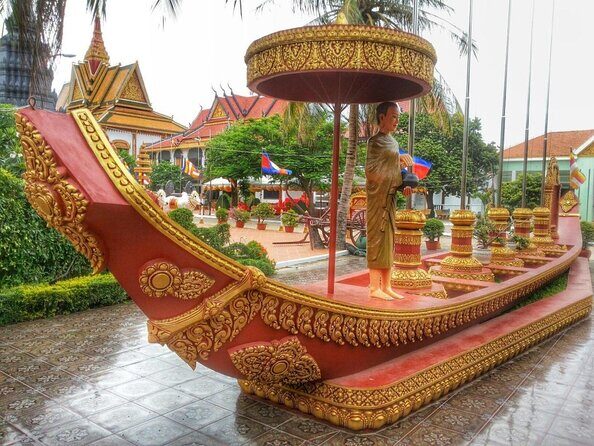
- Royal Gardens and Residence set the tone with calm, palace-level atmosphere.
- Kandal Village adds the modern side of town: boutique storefronts and coffee-houses.
- Wat Preah Prom Rat is the highlight for temple focus, including the large reclining Buddha.
- Psar Chas (Old Market) gives you a practical feel for daily commerce: clothes, souvenirs, produce, and snacks.
- Pub Street by day helps you plan your night better, with local pointers from your guide.
- Central market time helps you shop with context instead of guessing.
Why this $6 Siem Reap walking tour works on day one

Siem Reap can feel like three towns stitched together: temple routes, café streets, and markets. This tour helps you connect those dots quickly, mostly on foot and in a tight 2-hour loop. At about $6 per person, the value isn’t the temples themselves. It’s the “how to read the city” part—the meaning behind what you’re looking at and what to do next.
The price also matters because it lowers the barrier to doing this early. If you do this on your first morning or afternoon, you’ll spend less time asking strangers where everything is and more time choosing what actually fits your interests.
And you get a small group capped at 10, which usually keeps the pace friendly and gives you a chance to ask questions without shouting across a crowd. Just keep your expectations realistic: you’ll see a lot of variety, but you won’t “linger like a local” in every spot.
You can also read our reviews of more walking tours in Siem Reap

Hitting the Royal Residence and Royal Gardens without the rush
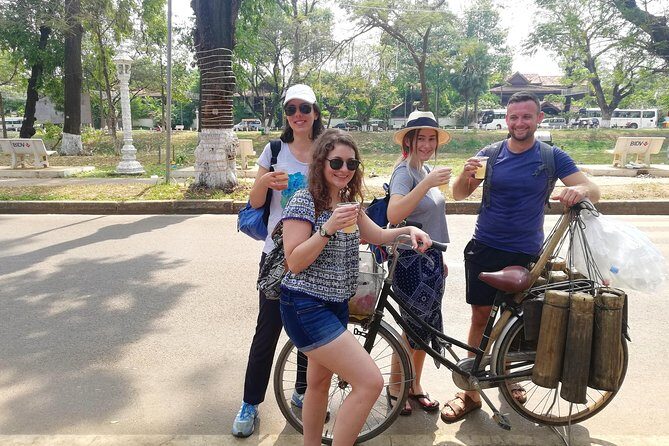
You start in Siem Reap’s inner core with the Royal Residence area and a stroll through the Royal Gardens. Even if you’re not a “palace person,” this first stop is useful because it shows the city’s formal, ceremonial side—how power, tradition, and landscape style used to shape daily life.
Look at the layout and the feel of the space. The gardens are a contrast to the market noise you’ll hit later. It’s also a good place to reset your senses after travel day: shade when you can find it, wide open sight lines, and enough quiet that your guide can explain context.
One practical note: you’re walking through real streets and paths, not a curated indoor site. Wear shoes you can keep comfortable for the whole morning. Your reward is that you’ll later recognize the streets that lead back here, so navigating feels easier when you’re on your own.
Kandal Village: colonial back streets meet boutique shopping
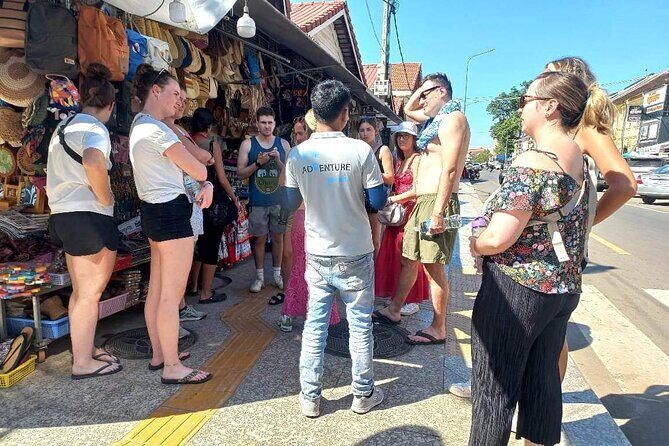
Next comes Kandal Village, where you’ll see the side of Siem Reap that feels more like a modern tourism hub—except it’s layered over older architecture. Expect boutique stores and coffee houses tucked into the area’s historical colonial street patterns.
This is a smart stop because it teaches you how the “tourist Siem Reap” is built. You’ll spot storefront styles, signage, and the flow of foot traffic. Then later, when you’re hunting for a café or gifts, you’ll know where you are and what kind of prices to expect just by the street vibe.
What I’d watch for here is how your guide frames the neighborhood. A good guide helps you separate what’s just trendy from what’s rooted in the city’s structure. Even with quick browsing time, you’ll walk away with a better sense of where to return if you want lighter shopping and a break from temple heat.
Wat Preah Prom Rat: the reclining Buddha and daily Buddhism
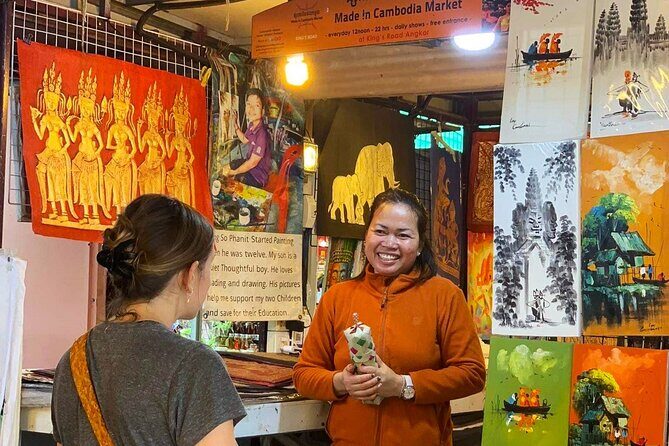
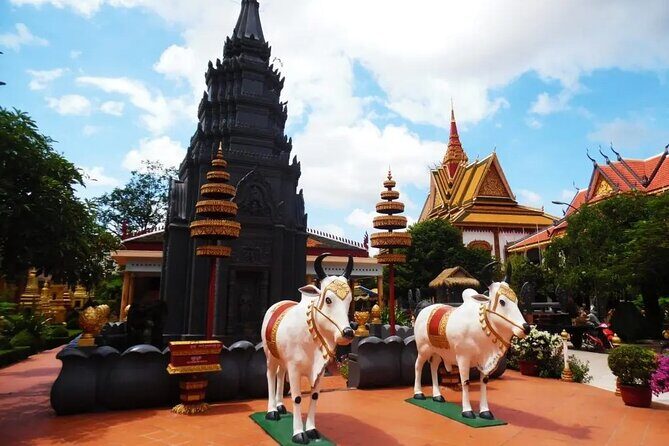
If you only remember one stop, make it Wat Preah Prom Rat. This is described as the city’s largest pagoda, and the big draw is the epic reclining Buddha. More than the photo moment, this temple stop is valuable because it’s where the tour switches from sightseeing to meaning.
Your guide gives you an introduction to how pagodas and Buddhism factor into Cambodian daily life. That matters. Without the quick primer, it’s easy to treat temples as scenery. With it, you start noticing small things you might otherwise miss—patterns of worship, how people move through the space, and what the temple represents beyond tourism.
Important practical detail: you must remove your shoes when entering pagodas. Plan for that by wearing easy slip-off footwear and socks you don’t mind getting dusty. Sun protection also helps here because temples tend to mix covered areas with open viewing spots.
How long should you spend here on your own later? If the reclining Buddha stood out, you’ll probably want a longer return visit. But for a first-time orientation, this stop hits the right balance.
Psar Chas Old Market: clothing, souvenirs, and real food stops
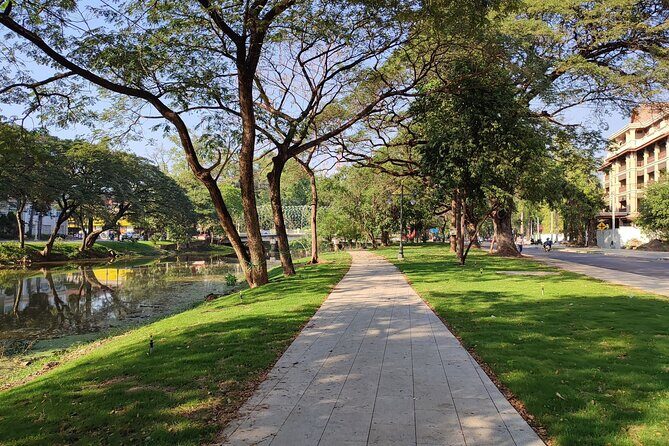
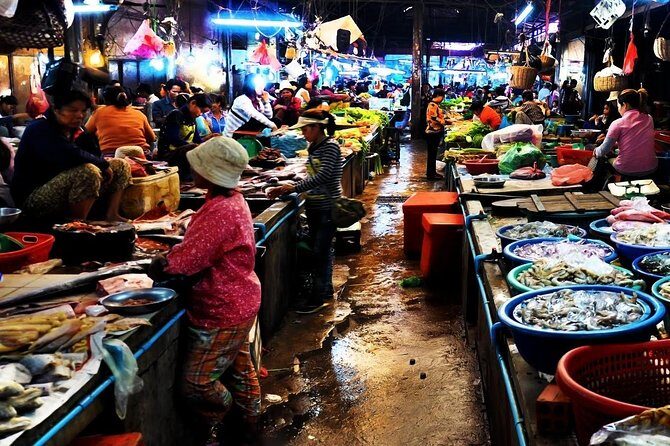
From temples you move into Psar Chas (Old Market), one of the best places to see how Siem Reap lives day-to-day. This market is set up as a hub for almost everything—clothing and souvenirs alongside fresh produce and food stalls.
What makes this stop useful on a walking tour is that it shows the market logic. You can see how products are grouped, where crowds gather, and how merchants organize stalls so shoppers can find what they need fast. That helps you later when you’re shopping independently, because you stop zig-zagging randomly.
You’ll also get a chance to talk with your guide about what to look for. In past experiences, guides often point out everyday ingredients and shopping habits, the kind of details that turn a market from “buy stuff” into “understand what you’re seeing.”
One caution: markets are not quiet. If you’re hoping for a calm, contemplative stroll, you won’t get it here. But if you want to feel the heartbeat of Siem Reap, Psar Chas delivers.
You can also read our reviews of more city tours in Siem Reap





Pub Street by day: using the daylight to plan your night
This tour doesn’t save Pub Street only for nighttime. You’ll see it by day and get local tips for a great night time experience.
Why do that? Because Pub Street is busy and visually loud, especially once darkness hits. By seeing it in daylight first, you learn the basic geography: where people flow, where the loudest stretches are, and what side streets might be easier to navigate later.
Your guide’s job here is less about selling you a nightlife plan and more about giving you practical guidance—how to move through the area, what to watch for, and how to choose an evening that feels fun instead of exhausting.
Then you’ll be able to make a smarter decision later: return for a drink if that’s your vibe, or use what you learned to find something calmer nearby. Even if you never go back to Pub Street, knowing how it sits in the center of town helps you plan the rest of your days.
A little of the central market: shopping with context
After the big landmarks and the main market, the tour includes a small taste of Siem Reap’s central market. Even a brief stop here can be useful because it gives you “shopping context.” You see how the town sells everyday goods, small souvenirs, and gifts in a real street setting—not just in a single souvenir kiosk.
Here’s the value: you’ll learn how to browse. When you understand what each market section is good for, you spend less time bargaining blindly and more time choosing items you’ll actually want later.
If you like crafts, this is also a good moment to ask your guide what’s worth looking for. In previous walks, guides have guided people toward meaningful, locally made gifts, including charity or craft-oriented shopping stops. You might not have time to compare everything, but even a short visit helps you avoid the most common tourist-trap mistakes.
And since the tour is walking-focused, this is a nice chance to buy light and plan transport instead of carrying heavy bags across temple zones.
Pace, group size, and what to wear
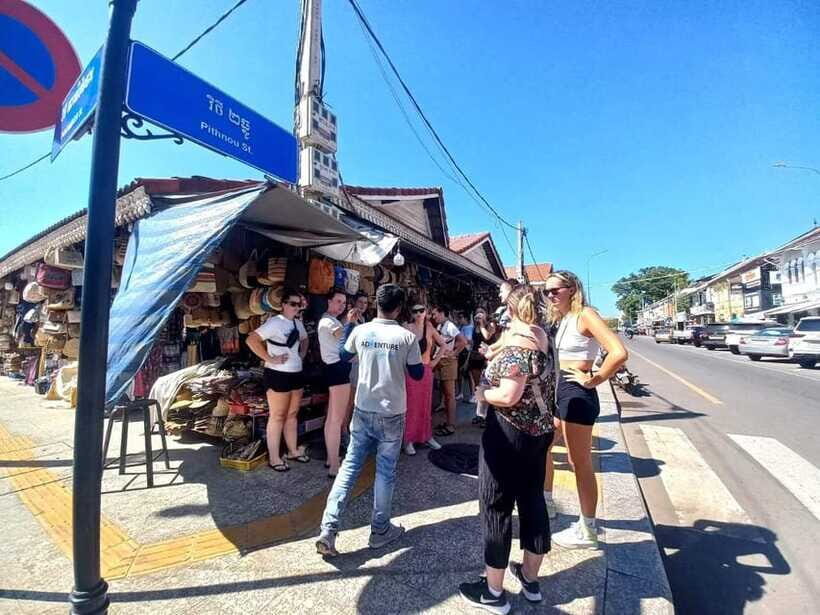
This is a walking tour, and the biggest “comfort variable” is heat and foot fatigue. The good news: many guides keep the walking pace easy and try to use shade when possible. Still, it’s smart to assume you’ll walk enough that your shoes matter.
Wear comfortable shoes you can walk in for the full 2 hours, plus bring sun protection like a hat or sunscreen. The itinerary includes outdoor stretches (gardens, streets, markets), so plan for sun even if you think you’ll be in the shade.
Group size is limited to 10, which generally helps keep the pace from turning into a scramble. If you’re a solo traveler, this is also one of the better ways to meet people because you’ll naturally talk during stops without having to force it.
If you hate shoe-removal rules, this tour may be slightly annoying—but it’s also part of respecting how pagodas work. Treat it as a simple ritual: stop, remove, step in, and keep going.
Should you book the Siem Reap City Walking Tour?
Book it if you want a fast, low-cost orientation that connects the main sights—Royal Gardens, Wat Preah Prom Rat, Psar Chas, and Pub Street—into one easy mental map. It’s especially good for first-timers who want local context and a guide with good English and stories (names like Chek, Tee, Ti, Ty, and Sai have shown up with strong feedback).
Skip it or consider another option if you want a long, deep temple experience or you hate walking in the sun. This is a sampler platter: a well-chosen one, but still only 2 hours.
If you’re planning to do temple-heavy days next, this walk is the best kind of prep. You’ll know where you are, what you just saw, and where to head when you’re ready to explore more.
FAQ
How long is the Siem Reap city walking tour?
The tour lasts 2 hours.
Where is the meeting point for the tour?
Meet outside Damnak Supermarket on the corner of Wat Bo Road and 7 Makara Street (High School Road), about 5 minutes before the start time.
How much does the tour cost?
The price is $6 per person.
What is included in the tour price?
The tour includes a live tour guide.
What should I wear or bring?
Bring comfortable shoes. You should also use sun protection like a hat, sunglasses, and sunscreen.
Do I need to remove my shoes at any point?
Yes. You must remove your shoes when entering pagodas.