Siem Reap changes when you leave the temple map. I really like how this tour gives you real local rhythm in the Psar Chaa market and around the older monastery streets, not just postcard sights, and I also love the mix of monastery life plus hands-on craft viewing that explains how Khmer culture still works day to day. One drawback: it’s a 3 to 4 hour city tour, so if you’re hoping for a full, temple-heavy day like Angkor, you’ll probably want an extra temple plan later.
This is a private guided experience using a tuk tuk, with bottled water and a guide who brings context as you move. The optional add-on at the APOPO Rat Center is a highlight for many people, but it’s an extra ticket cost you need to budget for.
In This Review
- Key things I’d clock before you book
- Getting your bearings at Café Amazon Psa Chas
- Psar Chaa Old Market: daily life in the lanes
- Wat Preah Prom Rath: how monasteries shape everyday routine
- Royal Residence: shrine, bats, and quieter neighborhoods
- Wat Preah Enkosey: a riverside 10th-century temple stop
- APOPO Rat Center: the powerful optional add-on
- Satcha Handicraft Center: watch skills in motion
- Neary Khmer Restaurant: lunch if you start in the morning
- Transport and pacing: tuk tuk makes it feel easy
- Guides that shape the day: English, context, and real answers
- What you’re really paying for: $39 value in plain terms
- Who this tour fits best (and who might skip it)
- Should you book the Siem Reap city-side tour?
- FAQ
- How long is the Siem Reap city hidden gems private guided tour?
- What does the $39 per person price include?
- What isn’t included in the tour price?
- Does the tour include pickup?
- Is this a private tour?
- Are there admissions for the other stops?
- Is lunch included?
- Where does the tour start and end?
- How do mobile tickets and confirmation work?
- What’s the cancellation policy?
Key things I’d clock before you book
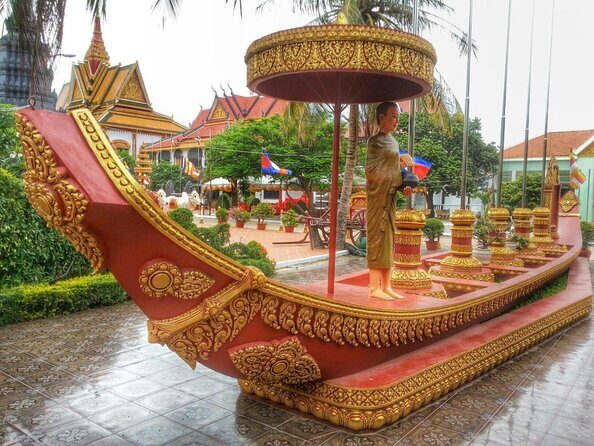
- A guided orientation first: you start with a meet-and-greet and quick city intro at Café Amazon Psa Chas.
- Psar Chaa Old Market time: you get real shopping lanes and daily-life scenes at a local market.
- Monastery visits that explain the why: Wat Preah Prom Rath (14th century) and Wat Preah Enkosey (riverside 10th-century) are framed through rituals and routine.
- Royal Residence stop with the city’s “quiet corners”: shrine time and a park with bats, plus nearby residential atmosphere.
- Craft workshops at Satcha: stone, wood, natural fiber weaving, painting, and silk weaving—watching processes instead of just browsing.
- APOPO Rat Center optional cost: landmine detection work by trained rats is included as a stop, but you’ll pay separately for entry.
Getting your bearings at Café Amazon Psa Chas
Most Siem Reap days start with Angkor photos. This tour starts with orientation, and that matters. You meet your guide at Café Amazon Psa Chas for a quick intro—names, what you’ll see, and what to look for as you walk and ride. It’s the kind of start that helps you stop feeling lost, especially if it’s your first time in town.
Then you move right away into the older parts of the city. That “from the first minutes” pacing is one reason people rate this tour so highly: you’re not killing time waiting for the day to begin. You also have a tuk tuk driver handling transport, so the guide can focus on stories and practical pointers.
Practical tip: wear comfortable shoes. Even with tuk tuk rides, you’ll do several walk-and-pause sections, including inside the market.
You can also read our reviews of more guided tours in Siem Reap

Psar Chaa Old Market: daily life in the lanes
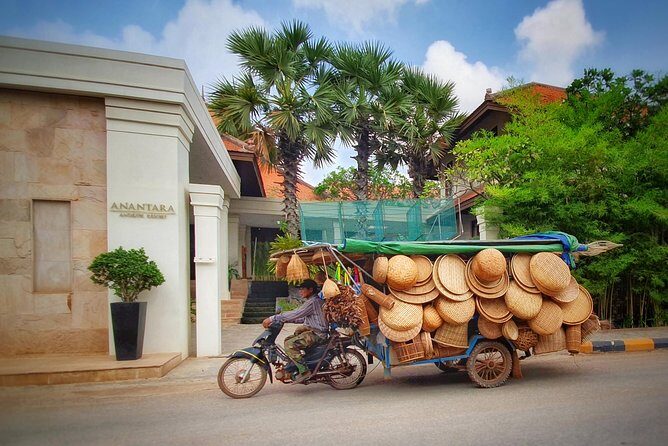
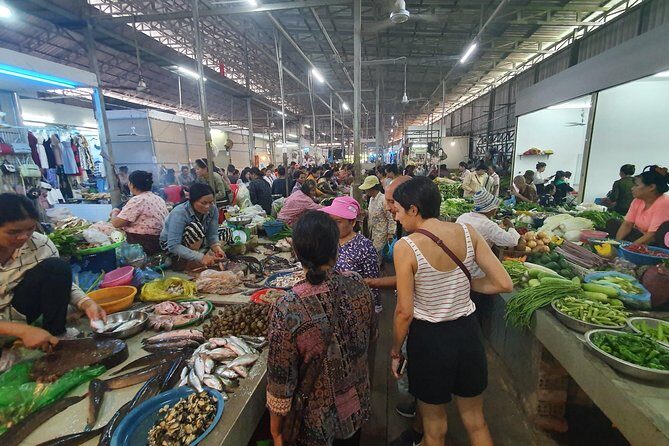
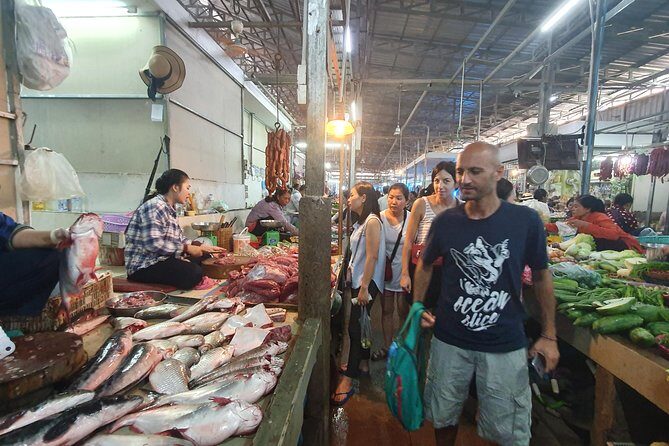
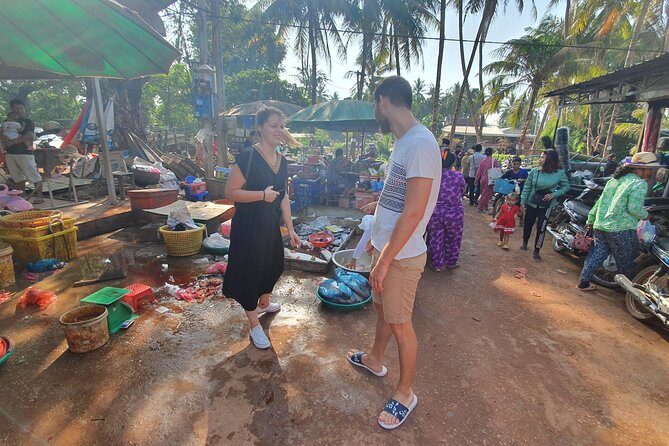
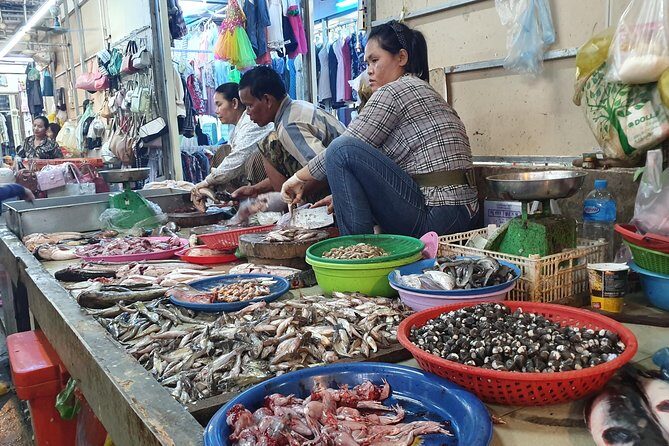
Psar Chaa (the Old Market area) is where the city starts to feel like a living place. You’ll spend around 30 minutes walking and moving through busy market spaces, taking in how locals make a living and how everyday shopping looks different from home. This is not a “look at souvenirs and leave” stop. It’s closer to learning the city’s routine: what gets bought, what people do, and how the market works as a social space.
This is also a good place to notice what you care about. If you love food, you’ll likely enjoy how the market connects to what comes next in the tour—traditional snack time and the idea of street food as part of local culture. If you care about design or materials, it helps prime you for the handicraft center later.
What to consider: markets can be loud and warm. Go with a flexible pace. If you prefer quiet sightseeing, treat the market as a sensory stop, not a “linger forever” one.
Wat Preah Prom Rath: how monasteries shape everyday routine
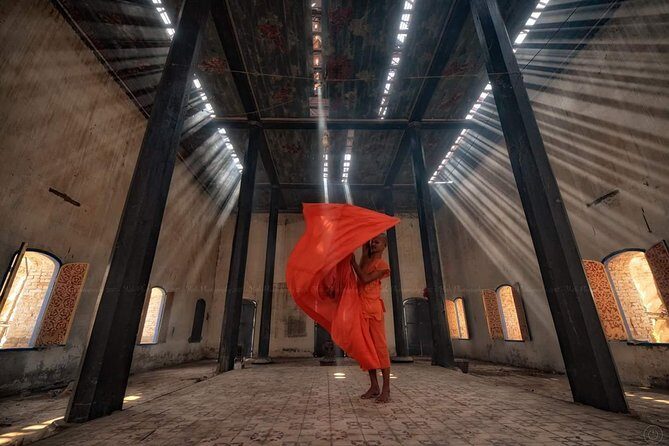
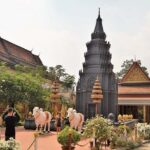
From the market area, you head to Wat Preah Prom Rath, an older monastery dated back to the 14th century. This stop is guided, so you’re not just looking at stone and shade. You learn about monk daily life and the importance of religion and ritual in Cambodian culture.
The value here isn’t that it’s famous worldwide. The value is that you get a way to interpret what you’re seeing. Monasteries can feel “mysterious” if you’re only collecting photos. With a guide explaining routine and ritual, the place reads more clearly.
Practical tip: dress respectfully. Even if the tour stays short (about 30 minutes), you’ll want shoulders and legs covered.
Royal Residence: shrine, bats, and quieter neighborhoods
Next is the Royal Residence area. Expect a mix of local shrine viewing, a park scene known for big bats, and time in quieter residential streets nearby. This is one of the tour’s smartest choices because it shows Siem Reap beyond temple entrances and tourist streets.
The shrine stop gives you context for how religion shows up in daily life, not only at major temples. Then the bats-in-the-park moment is pure city color—something you probably won’t plan on your own, and something that makes the tour feel more like you’re moving through real neighborhoods.
What to consider: the Royal Residence stop is about atmosphere as much as sightseeing. If you want only architectural features and captions, this part might feel more “walk and look” than “big wow.”
Wat Preah Enkosey: a riverside 10th-century temple stop
Wat Preah Enkosey is where the tour leans into age and setting. It’s described as a riverside 10th-century temple building, and the stop runs about 25 minutes. This is a great length: enough time to understand what you’re seeing, but short enough to keep energy for the rest of the afternoon.
If you’re doing this alongside an Angkor plan, this monastery stop works as a bridge. Angkor temples can feel like a museum. A city-based temple visit helps you connect the dots between Khmer spirituality and where people actually live.
Practical tip: riverside areas can mean humidity and shifting light. A small water break from your provided bottled water helps.
You can also read our reviews of more city tours in Siem Reap




APOPO Rat Center: the powerful optional add-on
APOPO Visitor Center is included as a stop in the route time (around 40 minutes), but the entry fee is separate. The tour details list it as $8 per person in one place and $10 per person in another, so you’ll want to confirm the current price right when you book.
Why this stop lands so well: it’s concrete and human-scale. Trained rats detect landmines, which turns a heavy topic into an active demonstration of safety work. It’s also one of those experiences that doesn’t feel like a “tourist performance.” The impact is the point.
Balanced take: this is the most “mission-driven” stop on the itinerary. If you’d rather spend your time on crafts and food, you might find this less exciting. But if you want your Siem Reap day to carry meaning, this is where it does.
Satcha Handicraft Center: watch skills in motion
After temples and market streets, you shift to making things—at Satcha, the Cambodian Handicraft Center. You get about 30 minutes, and the emphasis is on process. You can see workshops in stone carving, wood carving, natural fiber weaving, painting, and silk weaving.
For me, this kind of stop is better than a store-only visit. You’re not just buying something and leaving. You’re seeing the steps and understanding the skill behind the final product—and that changes how you shop for souvenirs. It’s also a nice change of pace after walking.
What to consider: handicraft centers can be sales-forward in some parts of the experience. The tour’s angle is about supporting local craftsmanship, so be ready to talk to artisans and ask what you’re actually looking at. If you prefer no-pressure shopping, just focus on watching and learning, then decide later.
Neary Khmer Restaurant: lunch if you start in the morning

There’s a lunch option depending on your start time. If you begin around 8 or 9am, the tour includes lunch at Neary Khmer Restaurant (about 45 minutes, admission included). If you start later, you’ll likely skip the lunch portion and can handle food on your own.
This is a practical feature for anyone building a day around heat and timing. Siem Reap can wear you down if you keep walking without a break. Lunch in the middle keeps the day from turning into a sprint.
Practical tip: if you have dietary limits, it’s smart to flag them when booking since the lunch choice is specified in the tour plan.
Transport and pacing: tuk tuk makes it feel easy
One of the best parts of a private city tour is control. This one is private, meaning it’s just your group (no mixing with strangers), and the guide can shape the pace around your interests. You’ll also have a tuk tuk driver throughout the route, which helps you cover more stops without spending your whole afternoon in traffic.
This pacing shows up in the way people describe the experience: it feels “relaxing” while still being full of different scenes—market, monastery, royal area, riverside temple, rat center, and crafts.
What to consider: if your idea of sightseeing is long temple walks with lots of free time, this won’t match that style. It’s a compact sampler of city culture.
Guides that shape the day: English, context, and real answers
The guide quality is repeatedly a standout. Names that come up in the feedback include Nak, Lux, Raj, Ran, Sok Win, and Mt Nak. What they share is strong English and a knack for answering questions without turning the tour into a lecture.
I like that because it changes how you move through places. Instead of reading plaques, you’re getting the “why” behind what matters: why monks live a certain way, why rituals shape the feel of a monastery, and how everyday life connects back to heritage sites.
Practical tip: bring questions. Even simple ones—how locals see religion, what people eat on market days, or what to do if you’re short on time—can turn a good tour into a memorable one.
What you’re really paying for: $39 value in plain terms
At $39 per person for 3 to 4 hours, you’re paying for three big things:
- Guiding that connects stops instead of listing them
- Transport via tuk tuk
- A tight city route that includes multiple meaningful cultural stops in one afternoon
Most other stops are listed as admission-free in the tour details. The one ticket you must budget separately is the APOPO Rat Center. So the “true cost” becomes $39 plus the APOPO fee if you choose to go in.
Compared with paying for individual activities one by one, this can feel like good value—especially if you’d otherwise struggle to design a route through neighborhoods and monasteries with proper context.
My advice: if you know you want APOPO and you want craft viewing, this itinerary is a cost-efficient way to combine them without extra planning.
Who this tour fits best (and who might skip it)
This tour is a great fit if you:
- Want a first-time orientation to Siem Reap beyond Angkor
- Care about monastery life, markets, and how Khmer culture looks in everyday places
- Like craft demonstrations where you can see skills in action
- Appreciate mission work at APOPO and want a meaningful stop in the middle of a sightseeing day
It might not be the best fit if you:
- Only want Angkor-style temple time and lots of free roaming
- Prefer a purely scenic, photo-focused day
- Are sensitive to warm, busy market conditions and would rather keep everything quieter
Should you book the Siem Reap city-side tour?
Yes—if you want a smooth, guided way to understand Siem Reap’s city culture in just a few hours. This route gives you more than one kind of scene, and the guide’s explanations seem to be the secret sauce that makes ordinary-seeming streets feel important.
I’d book it especially if you’re pairing it with Angkor later. It helps you place those temple visits in a larger context. And if APOPO is on your list, even better: you get that stop folded into a whole afternoon, not tacked on as a separate mission.
FAQ
How long is the Siem Reap city hidden gems private guided tour?
It runs about 3 to 4 hours.
What does the $39 per person price include?
The tour includes a passionate English-speaking local guide, bottled water, and a tuk tuk driver.
What isn’t included in the tour price?
The admission fee for the APOPO Visitor Center is not included. The tour details list it as $8 per person in one part and $10 per person in another, so check the current price when booking.
Does the tour include pickup?
Yes, pickup is offered.
Is this a private tour?
Yes. It’s private, and only your group participates.
Are there admissions for the other stops?
The stops listed for admission in the itinerary are marked as free, except for the APOPO Visitor Center, which requires a separate ticket.
Is lunch included?
Lunch at Neary Khmer Restaurant is included if the tour starts around 8 or 9am. If you start later, lunch is not indicated as included.
Where does the tour start and end?
It starts in Krong Siem Reap, Cambodia, and ends back at the meeting point.
How do mobile tickets and confirmation work?
You receive confirmation at the time of booking, and the tour uses a mobile ticket.
What’s the cancellation policy?
You can cancel up to 24 hours in advance for a full refund. If you cancel less than 24 hours before the start time, the amount paid is not refunded.