REVIEW · SIEM REAP
2-Day Angkor Sunrise Temple of Angkor -Siem Reap Tour
Book on Viator →Operated by Angkor Guide Travel & Tour · Bookable on Viator
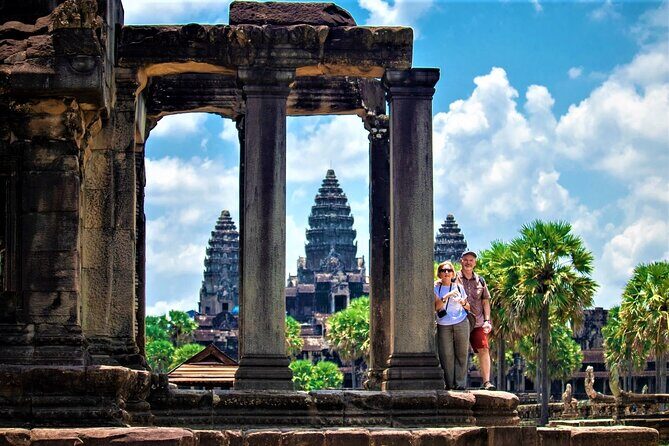
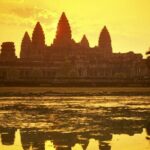
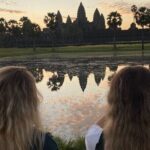
Sunrise at Angkor starts before your alarm. This tour is built around a pre-dawn start from Siem Reap, with a guided entry to Angkor Wat before the main crowds spread out. I like how you get that slow, early-morning feel as you move through corridors lit by first light.
My second favorite part is the temple mix. Instead of only doing the usual highlights, you also spend Day 1 on sites like Preah Khan and Neak Pean, then finish with Banteay Srei, famous for its extremely fine carved relief work. It’s a great way to see Angkor’s range—big royal statements and detailed craft.
One thing to plan for: temple admissions are not included, so you’ll still need to budget for a temple pass (and an optional boat add-on if you choose it). Also, that early departure timing (about 4:10 to 4:30 am depending on season) means you should treat sleep like a travel priority.
In This Review
- Key Highlights I’d Plan Around
- The Big Idea: Why “Sunrise + Deeper Temples” Works
- Day 1: Preah Khan’s Roots, Neak Pean’s Circular Temple, and Banteay Srei’s Precision
- Day 2 Sunrise at Angkor Wat: Entering in the Dark Like You Mean It
- Angkor Thom and the Bayon Faces: Big-City Power, Then Specific Landmarks
- Ta Prohm and the Leper King Terrace: The Names Matter
- Transportation, Timing, and What to Pack for This Schedule
- Price and Value: What You’re Paying For (and What You Still Need to Buy)
- Who This Tour Fits Best in Real Life
- Should You Book This 2-Day Angkor Sunrise Tour?
- FAQ
- Is the Angkor temple pass included?
- What time is the Angkor Wat sunrise departure?
- Is hotel pickup and transportation included?
- Is this tour private or shared?
- Are there options for add-ons?
- Can I cancel and get a refund?
Key Highlights I’d Plan Around
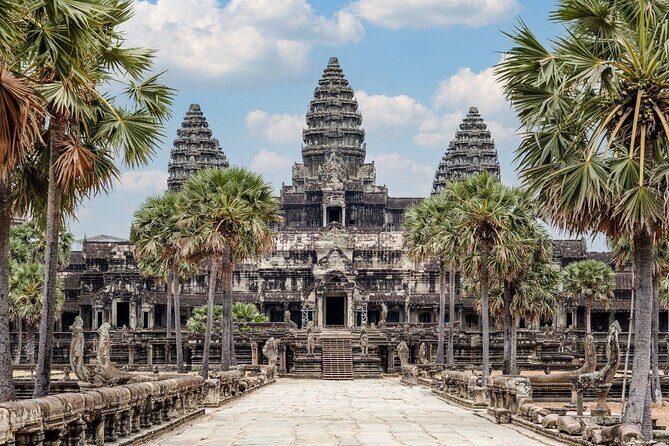
- Pre-dawn arrival at Angkor Wat: you enter early, and you’re guided through some of the temple’s best long-carving corridors.
- Banteay Srei’s standout carvings: a smaller site where the craftsmanship is the whole point.
- Preah Khan’s “stone and roots” mood: ruined structures that feel atmospheric without needing extra hype.
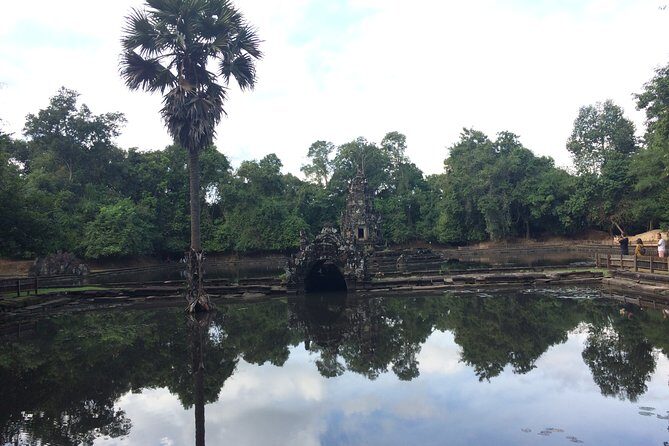
- Neak Pean’s artificial island temple: a circular island setting inside Jayatataka Baray, with a calmer pace.
- Angkor Thom beyond Bayon faces: you also hit the South Gate and royal terraces for context.
- A private setup with English guidance: hotel pickup/drop-off and an English-speaking guide make timing easier.
The Big Idea: Why “Sunrise + Deeper Temples” Works
Angkor can be overwhelming. The grounds are huge, the sights repeat different ways, and the crowds can turn your best moments into photo marathons. This 2-day format is built to solve that by stacking two very different experiences close together: sunrise drama at Angkor Wat, then a day of more spaced-out temple viewing.
On Day 1, you’re moving through temples that feel less like a theme park stop and more like you’re traveling through old landscapes—stone, trees, and water features. On Day 2, you go heavy on the classic icons: Angkor Thom, Bayon, Ta Prohm, and the named terraces that people actually use to place themselves in Angkor’s story.
You’ll also get private transportation with an English-speaking guide. That matters because Angkor isn’t just about what you see—it’s about how you see it. A good guide helps you spot details and understand why certain temples were built where they were.
A few more Siem Reap tours and experiences worth a look

Day 1: Preah Khan’s Roots, Neak Pean’s Circular Temple, and Banteay Srei’s Precision
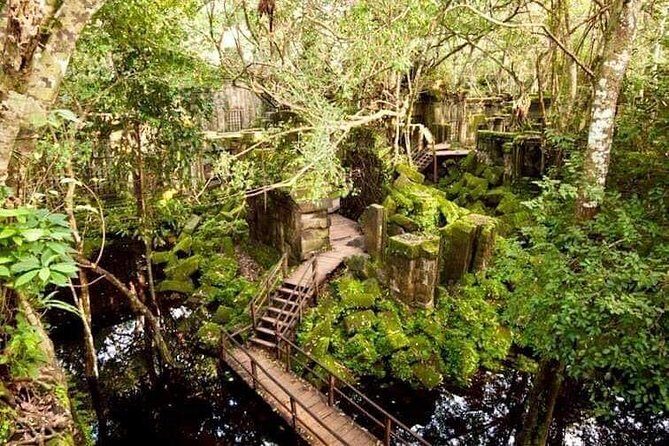
The day starts with Preah Khan, a ruined temple that still feels powerful. It’s not a polished, restored look. You get a more lived-in feel: crumbling stone, tree roots working their way through structures, and an atmosphere that makes the site seem bigger than the buildings themselves. If you like temples where nature and history share the frame, this is a strong start.
Next comes Neak Pean, set on an artificial island with a Buddhist temple in the middle of Jayatataka Baray. This isn’t about scale. It’s about setting—an old water-world concept turned into a temple experience. The circular island makes it easy to re-orient yourself and understand why the Khmer planners cared so much about water and symbolism.
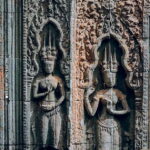
Then you’ll head to Banteay Srei, and this is where craft takes center stage. This smaller sandstone temple is known for relief carvings that are widely regarded as the finest work in Cambodia. Translation: you’ll spend time looking up close, not just walking through quickly. If you’re the type who notices small details—faces, patterns, figures—this stop will reward you.
You finish with Pre Rup, a temple mountain associated with Khmer king Rajendravarman and dedicated in 961 or early 962. It mixes different building materials (brick, laterite, sandstone), which is useful for understanding how Angkor wasn’t one single building style. You end in the late afternoon and return to town. That timing is smart: you get a full day of temple power without a second late-night wake-up.
Practical note: Day 1 is the “look closely” day. Wear shoes you trust and pace yourself. If you rush, you’ll miss what makes Banteay Srei special.
Day 2 Sunrise at Angkor Wat: Entering in the Dark Like You Mean It
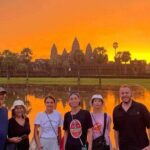
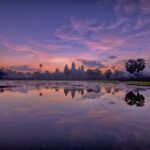
Angkor Wat sunrise tours can feel similar on paper. What makes this one different is that the departure is early—about 4:10 to 4:30 am depending on the season—and the plan includes entry from the eastern side (described as less visited). The idea is that you’re not just watching sunrise from a platform. You’re walking into the temple while it’s still quiet and dark.
That timing helps in two ways. First, you see the temple as a three-dimensional structure, not just a background for selfies. Second, the corridors and bas-relief carvings hit differently when you’re not fighting crowds. You’ll creep through hoary-looking cloistered corridors and get time with the longest stretch of bas-relief carvings in the world—time to look, not just point.
Sunrise itself is the obvious draw, but I also like the practical rhythm. You start early, you get the temple’s best mood, then you move on while energy is still high. Yes, it’s an early wake-up. But the payback is real: the temple doesn’t feel like an overcrowded stop, it feels like a place people designed to be experienced in stages.
Angkor Thom and the Bayon Faces: Big-City Power, Then Specific Landmarks
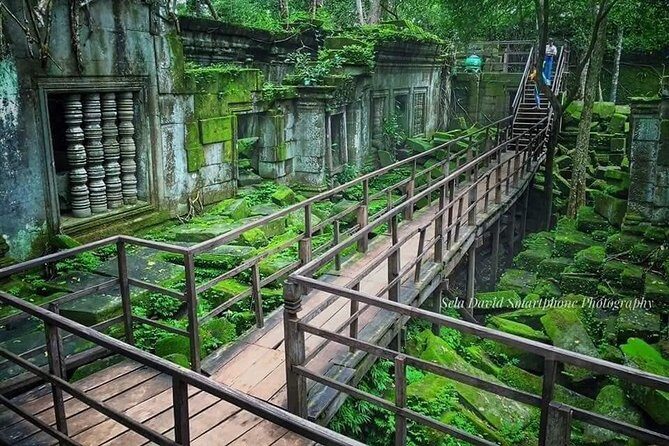
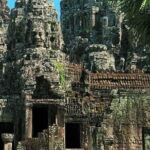
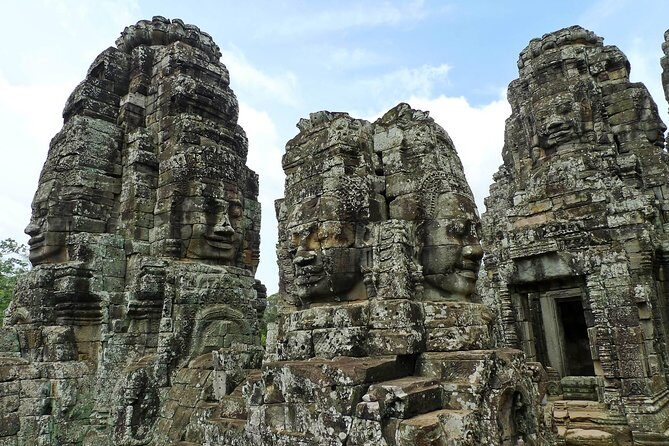
After sunrise, the focus shifts to Angkor Thom, the Khmer Empire’s capital city area. It’s grand on purpose—walls, gates, and central structures that communicate control. You’re guided to Bayon, the highlight for most people, with central towers covered in more than 200 enormous faces.
The key here is your pace. Bayon can become a photo-spot whirlwind if you treat it like a checklist. With a guide, you can slow down and try to understand what you’re actually looking at: repeating faces, placement, and how the towers frame your movement through the space.
You also visit key supporting landmarks, not just the single “must-see” spot. You’ll stop at the Angkor Thom South Gate (a short visit, about 20 minutes). Even that brief stop is useful because it gives you the feeling of arriving into the capital city, not only wandering inside it.
Then you get the Terrace of the Elephants, used by King Jayavarman VII as a platform from which to view his victorious returning army. It’s one of those places that’s more meaningful when you understand what was happening there. The terrace isn’t just a viewpoint—it’s part of the stagecraft of power.
Ta Prohm and the Leper King Terrace: The Names Matter
Next up is Ta Prohm, one of the most recognizable temples around Siem Reap. It’s known by its modern name and was originally called Rajavihara. You’ll visit the temple built in the Bayon style, largely in the late 12th and early 13th centuries. Even if you’ve seen photos, seeing it in person is different because the “stone and trees” effect is bigger in scale than your screen image suggests.
After Ta Prohm, the tour includes Terrace of the Leper King, located in the northwest corner of the Royal Square of Angkor Thom. The name comes from an 8th-century sculpture discovered at the site, even though the terrace is associated with Jayavarman VII and built in the Bayon style. I like this stop because it shows how Angkor’s details can travel through time as nicknames and interpretations. It’s not just about what’s carved—it’s about how we’ve learned to label and remember places.
Time-wise, these are shorter stops than the sunrise window, so you’ll want to be mentally ready to switch modes: from long, slow viewing at Angkor Wat to a more concentrated “see, recognize, understand” rhythm around Angkor Thom.
A few more Siem Reap tours and experiences worth a look
Transportation, Timing, and What to Pack for This Schedule
This is set up as a private tour with air-conditioned vehicle transport and hotel pickup/drop-off. That’s a big advantage in Siem Reap because you avoid the extra hassle of coordinating multiple groups and buses. You also get an English-speaking guide, which helps you get meaning out of each temple instead of just learning names.
Timing matters most on Day 2. A 4:10 to 4:30 am departure means you should plan your night like it’s part of the tour. Eat sensibly, hydrate, and keep your sunrise kit ready the night before. Even if you love sleep, don’t gamble with it.
For packing, I’d keep it simple and useful:
- Comfortable shoes for uneven temple ground
- A hat and water (Angkor heat can be relentless later in the day)
- Sun protection for morning and afternoon walking
- Something to cover shoulders if you prefer it for temple etiquette
If you’re with family—especially older parents or anyone who walks slowly—this kind of private arrangement is often easier to manage because the guide can keep your day realistic.
Price and Value: What You’re Paying For (and What You Still Need to Buy)
At $117 per person for a 2-day experience, the value mostly comes from the logistics. You get English speaking guidance, air-conditioned vehicle transport, private transportation, and free airport pickup/transfer if you share your flight number and arrival time during booking.
What’s not included is equally important. You’ll need to pay admission fees and/or an Angkor temple pass, because those are listed as not included. If you add any optional extras like a floating village boat trip, budget for that too (boat ticket fee is also listed as not included).
So the smart way to think about this price is: you’re paying for time efficiency and guidance, not just ticket access. If you hate wasting mornings sorting out transport or want your day shaped by someone who understands the flow of sites, this setup can be worth it. If you’re an independent planner with a flexible schedule and already know how to navigate tickets and timings, you might compare costs—but you’ll still pay in time.
Who This Tour Fits Best in Real Life
This tour is a good match if you:
- Want sunrise at Angkor Wat without treating it like a chaotic race
- Like structured temple visits where you can learn while you walk
- Prefer a private, English-speaking guide so you’re not lost in the shuffle
- Appreciate a balanced day: “iconic” temples plus more off-main-circuit stops
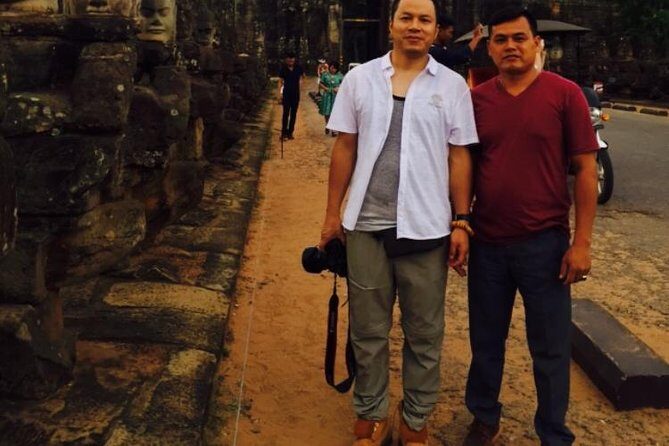
It’s also a practical fit for mixed groups. In particular, one reason people seek out Mr. Lim is patience—especially for family groups with older travelers who don’t walk well. That kind of “keep it calm” service can make Angkor feel doable instead of exhausting.
If you’re only chasing the absolute most famous photo spots and you hate early mornings, you might still enjoy it, but I’d weigh the sunrise wake-up against your travel style.
Should You Book This 2-Day Angkor Sunrise Tour?
I’d book it if you want a smart, guided two-day plan that gives you both sunrise magic and a wider Angkor view than the basic loop. The combination of Angkor Wat at daybreak plus Day 1 stops like Preah Khan, Neak Pean, and Banteay Srei hits different sides of Angkor—mood, craft, and scale.
I wouldn’t book it if you’re trying to travel as cheaply as possible and you’re already confident handling everything around temple admissions and early transport on your own. The admissions and pass are extra, and the Day 2 start time is not for late sleepers.
If you do book, do two things:
1) Put the sunrise alarm on your phone with a backup reminder.
2) Plan your temple-pass budget before you arrive, so Day 1 doesn’t turn into a surprise expense.
If you want Angkor to feel like a journey instead of a rush, this is the kind of plan that makes it happen.
FAQ
Is the Angkor temple pass included?
No. The admission fee and the Angkor temple pass are listed as not included.
What time is the Angkor Wat sunrise departure?
The pre-dawn departure is scheduled for about 4:10 to 4:30 am, depending on the time of year.
Is hotel pickup and transportation included?
Yes. The tour includes hotel pickup/drop-off, airport pick up and transfer (if you share your flight number and arrival time), and private transportation with an air-conditioned vehicle.
Is this tour private or shared?
It’s private. Only your group participates.
Are there options for add-ons?
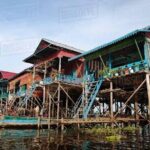
There are optional extras available, including a floating village boat trip. Boat ticket fee is not included.
Can I cancel and get a refund?
Yes, free cancellation is available. You can cancel up to 24 hours in advance for a full refund.