REVIEW · SIEM REAP
Angkor Wat Small-Group Exploration with Expert Guide
Book on Viator →Operated by Green Era Travel · Bookable on Viator
Angkor Wat hits different in real life. This small-group day trip from Siem Reap is built for first-timers: hotel pickup, a guided route through the biggest UNESCO temples, and rides in a tuk-tuk or minivan to keep you moving without frying in the heat. You may even meet guides like Dy, San, or Sophy, depending on the day.
I love two things most: the hotel pickup and drop-off makes the day feel effortless, and the tour stays practical with cold bottled water (and often cold towels) after temple stops. I also like that the guide gives you context as you walk—so the carvings and layouts start making sense fast, not after the fact.
One possible drawback: temple and park admissions are not included, so you’ll want to budget for the Angkor National Park pass (and plan your clothing since long pants or knee-length coverage is required at the sites). If you are hoping for an all-in-one day with no ticket math, this isn’t that.
In This Review
- Key things to know before you go
- Angkor highlights in one long, well-paced day
- Getting there: tuk-tuk vs minivan and heat-saving details
- Angkor Wat: the clearest first stop for understanding the site
- Angkor Thom and Bayon: stone city layout and the faces of Jayavarman VII
- Ta Prohm: state of ruin, state of beauty, and mindful walking
- Tickets and price: what you pay for, what you still need to buy
- What your guide actually adds (and why the small group helps)
- Lunch timing and food expectations inside the park area
- What to wear, how much walking to expect, and who this fits
- Should you book this Angkor Wat small-group tour?
- FAQ
- How long is the Angkor Wat small-group tour?
- Where does the tour start and end?
- How many temples are visited?
- Is the Angkor National Park ticket included in the price?
- Is temple admission included?
- What is included in the tour price?
- What about food during the day?
- Is there a dress code?
- What kind of fitness level do I need?
- Can children join the tour?
- How does free cancellation work?
Key things to know before you go
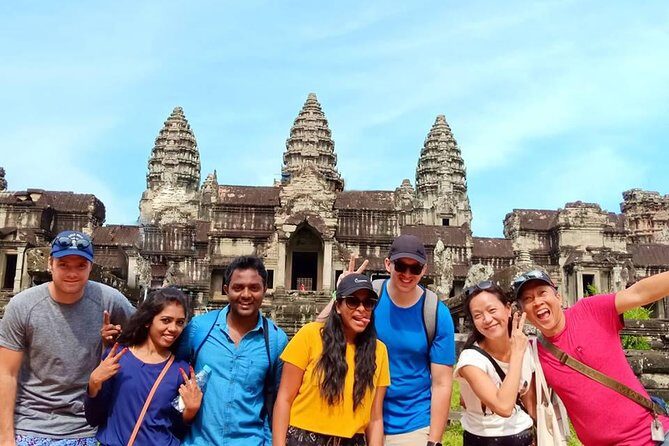
- Small group (max 12): easier questions, fewer bottlenecks, and more guide attention
- Hotel pickup/drop-off included: you skip the hassle of lining up rides and timing
- Tuk-tuk or minivan: 1–2 pax typically ride tuk-tuk; 3 pax and up go in a minivan
- Cold bottled water during the tour: heat management is part of the plan
- Big four temple sights: Angkor Wat, Angkor Thom (city), Bayon, Ta Prohm
- Tickets cost extra: the tour guide experience is included, but park admissions are separate
Angkor highlights in one long, well-paced day
This is a smart way to experience Angkor when you only have a limited window in Siem Reap. You get a route that hits the headline temples most people come for—Angkor Wat, Bayon, and Ta Prohm—plus Angkor Thom, so you see a fuller picture of the Khmer world in less than a full day of your own navigation.
The small-group size is the real upgrade. With a larger crowd, you can end up sprinting from signpost to signpost. Here, the guide can slow down when you want details, and speed up when you just want photos and airflow.
From a value standpoint, $18 per person is the kind of price that feels almost too good—until you read the fine print: the admission to Angkor National Park and the temple tickets are separate. Still, you are not just buying a ride; you are paying for a guide who knows where to stand, what to look for, and how to explain what you are seeing without drowning you in lectures.
You can also read our reviews of more guided tours in Siem Reap
Getting there: tuk-tuk vs minivan and heat-saving details
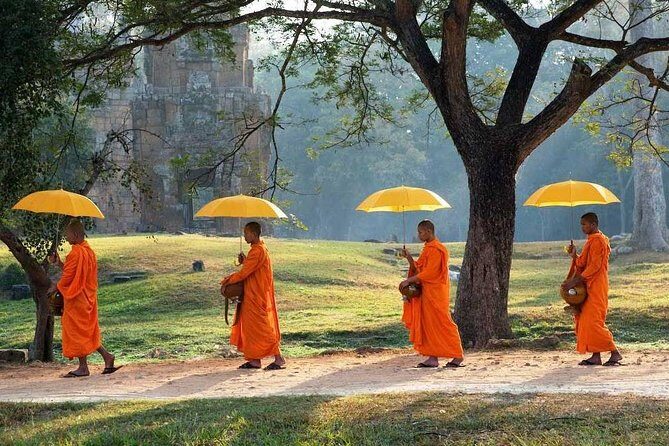
Transport is part of the experience here. If you are traveling as 1–2 people, you’ll likely be in a tuk-tuk. With 3 people or more, you’ll ride in a minivan. Either way, the goal is the same: reduce walking between temple clusters and keep you comfortable while you wait for entry and photo moments.
You also get cold bottled water during the tour. In very hot conditions, that matters more than you’d expect. Several drivers add cold towels after temple stops, which is a small detail that makes a big difference when you are climbing stairs and stepping onto stone that holds heat.
Practical tip: wear breathable clothing under your required coverage. Long pants or a knee-length skirt or dress is required, so plan for heat, not just style.
Angkor Wat: the clearest first stop for understanding the site
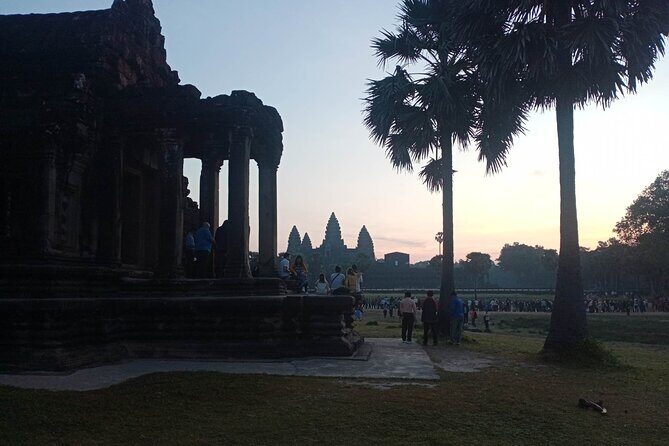
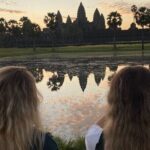
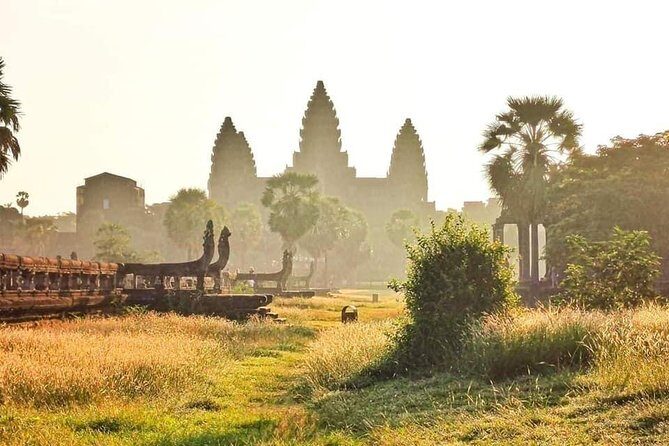
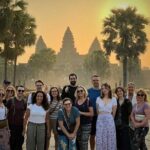
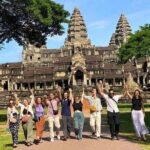
Angkor Wat is the centerpiece, and it makes sense to start there. You get about two hours, which is long enough to do more than just rush to the famous angles. The guide’s role is to help you read the temple as a designed landscape—what faces what, why certain motifs repeat, and how the architecture signals power and belief.
What I like about starting at Angkor Wat is that it gives you a visual baseline. After you’ve seen the scale and the symmetry up close, Bayon and Ta Prohm stop feeling like random ruins and start feeling like connected chapters. Even if you only catch a few big points, you leave with stronger mental maps.
Possible drawback: Angkor Wat involves walking and climbing stairs. If you have mobility limits, tell your guide at the start. Many guides on this route are used to adapting pacing and helping you manage uneven footing and steps.
Angkor Thom and Bayon: stone city layout and the faces of Jayavarman VII
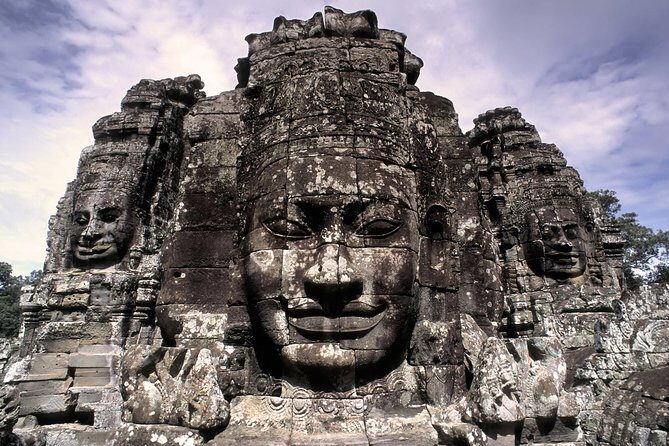
Angkor Thom is the fortified capital-city zone, built in the late 12th century. You get about an hour here, plus time at Bayon. Together, these stops are where the Khmer city planning starts to feel real, not just scenic.
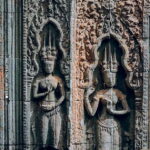
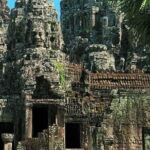
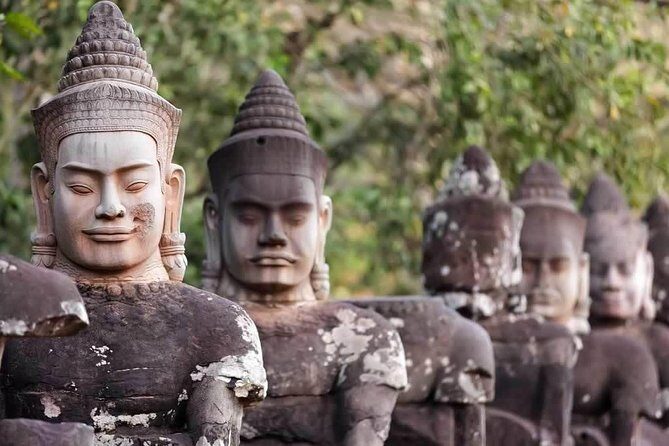
Bayon is famous for its serene stone faces, but the fun comes from learning how the temple fits into Jayavarman VII’s program and how the decoration works. The guide can point out architectural details you might miss—things like where you should stand to see a specific carving pattern or how to spot the narrative elements running through the stone.
This is also where the small-group format pays off again. Bayon is busy, and it can be easy to wait in a crowd just to get a view. With fewer people, you can adjust your position faster and ask questions on the spot.
If you are trying to photograph well, remember that light changes through the day. Angkor Wat tends to be the best place to build your photo comfort level early, then use Bayon and Angkor Thom for angles that feel more intimate.
Ta Prohm: state of ruin, state of beauty, and mindful walking
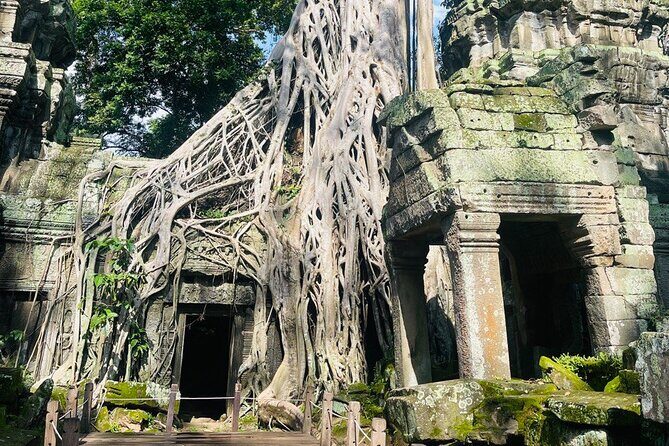
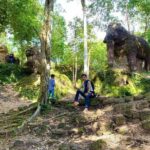
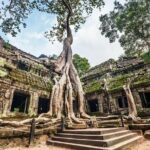
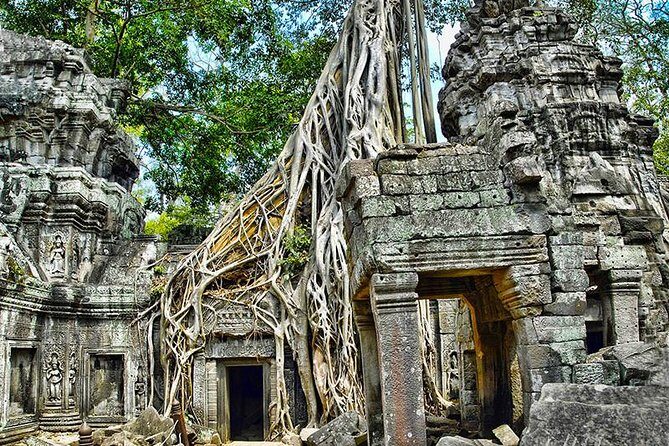
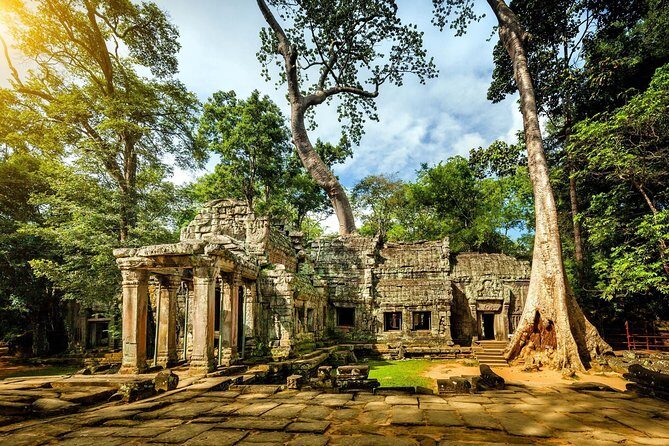
Ta Prohm is the temple most people recognize instantly—trees growing through stone, broken corridors, and that cinematic feeling of time stopped mid-episode. You’ll spend about an hour here. That’s enough time to see the major sights and also wander a bit without feeling trapped in a strict script.
The key here is pacing. Ta Prohm is a place where you will keep looking up, down, and sideways. Uneven ground and steps mean you need steady footing. This tour works best when you treat it like a guided walk rather than a race for landmarks.
One small piece of advice: save your energy for the walking. With a tight day, it’s easy to burn stamina early. Ta Prohm is where you’ll want balance—photos, water breaks, and a little time just staring at how the stones and roots coexist.
Tickets and price: what you pay for, what you still need to buy

Let’s talk money in plain terms. The tour price is $18 per person. But admissions are not included. You will need the 1-Day Angkor National Park ticket, listed at $37 per person.
So the big value equation is this:
- You pay for the guide, transport, and the planned route
- You pay separately for the park admission so you can enter the temples
If you are doing Angkor on your own, you still spend time arranging transport and figuring out where to start. Here, you’re buying efficiency plus interpretation. That often makes the total feel fair, especially for first-timers who want meaning, not just sightseeing.
Also note: mobile ticket is included for the tour, but that does not replace park admission. Think of the mobile ticket as your tour entry confirmation, while the Angkor National Park pass is the separate requirement for the site itself.
What your guide actually adds (and why the small group helps)
A guide is not just a translator on this kind of trip. You are walking through carved stone that can look impressive but random if you do not have a frame for it. The best guides on this route explain the Khmer empire context and point out how symbols, layouts, and construction choices connect across temples.
You’ll also get flexibility in how the day unfolds. Several guides named in customer experiences—like San and Sophy, and drivers paired with them—were praised for staying relaxed and answering questions without turning the day into a classroom. That matters because Angkor is physically demanding. When your guide reads the room and offers water breaks, the experience feels easier.
Want a practical example? Many guides help with photo timing and positioning. People often leave saying their guide took good photos or guided them at standard photo spots and a few better angles.
Lunch timing and food expectations inside the park area
Food is not included. That means you will need to plan for lunch on your own, or follow the tour’s default plan.
Normally, the guide stops at a local restaurant in the national park for lunch during lunch time. The tradeoff is cost: it can be more expensive than restaurants in town, but it is the best option for staying on schedule during a day where heat and travel time matter.
If you prefer to control price and menus, you might like having a bit of cash ready for a quick meal. If you are happy to trade a little money for less friction, the included lunch stop structure can be convenient.
What to wear, how much walking to expect, and who this fits
This tour has a moderate physical fitness level requirement. You should expect lots of walking and stairs, plus uneven terrain at temple sites.
Clothing rule is straightforward: long pants or knee-length skirts/dresses are required for visiting the temples. That is not optional.
If you are older, traveling with family, or you have balance concerns, tell the guide early. Multiple experiences highlight that guides and drivers adapt to the pace and that support can include helping with steep or uneven paths. You should still be realistic about mobility, because the temples are old and not designed for wheelchairs or perfect sidewalks.
Who this is best for:
- First-timers who want the core sites in one day with interpretation
- People who hate being stuck in a huge group
- Anyone who wants hotel pickup and fewer logistics headaches
Who might consider another plan:
- Anyone who hates stair-heavy sites or needs long rests
- People who want an independent, no-guiding style day where they only follow their own pace
Should you book this Angkor Wat small-group tour?
I’d book it if you want a guided, efficient route through Angkor without spending your limited time on planning. The small group size, hotel pickup/drop-off, and the built-in heat comfort (cold bottled water, and often cold towels) make the day feel manageable. The guide adds meaning, not just movement—especially on Angkor Wat, Bayon, and Ta Prohm where details make a huge difference.
Skip it—or plan differently—if you are trying to keep total costs extremely low. Once you add the Angkor National Park ticket, the price picture changes. Also, if you have serious mobility limitations, ask yourself honestly whether stair climbing at Angkor Wat and uneven walking at Ta Prohm will work for you even with guidance and pacing help.
If you fit the middle ground—willing to walk, okay with temple ticket add-ons, and wanting a smarter Angkor day—this tour is a strong choice.
FAQ
How long is the Angkor Wat small-group tour?
It runs about 6 to 7 hours.
Where does the tour start and end?
The tour includes hotel pick-up and drop-off, and it returns you to your hotel or another drop-off point in the Siem Reap city center.
How many temples are visited?
You visit at least three must-see temples: Angkor Wat, Bayon, and Ta Prohm, plus Angkor Thom as part of the route.
Is the Angkor National Park ticket included in the price?
No. The 1-Day Angkor National Park ticket is listed separately at $37 per person.
Is temple admission included?
Temple admissions are not included.
What is included in the tour price?
Hotel pick-up and drop-off, an experienced English-speaking tour guide, transportation (tuk-tuk for 1–2 pax or minivan for 3 pax more), and cold bottled water during the tour.
What about food during the day?
Food and drinks are not included. The guide normally stops at a local restaurant in the national park for lunch during lunch time, which can be more expensive than restaurants in town.
Is there a dress code?
Yes. Long pants or knee-length skirts/dresses are required for visiting the temples.
What kind of fitness level do I need?
You should have a moderate physical fitness level due to walking and stairs at the sites.
Can children join the tour?
Yes, but children must be accompanied by an adult.
How does free cancellation work?
You can cancel for a full refund up to 24 hours in advance of the experience start time. If you cancel less than 24 hours before, the amount you paid will not be refunded.