REVIEW · SIEM REAP
2-Days Private Tour Discovery Angkor Wat , Waterfall and Beng Mealea Temple
Book on Viator →Operated by Siem Reap Experience · Bookable on Viator
Sunrise at Angkor Wat changes your whole mood. This private 2-day tour uses that early light to dodge big crowds, then blends major Angkor temples with a day trip to Phnom Kulen and the more offbeat Beng Mealea.
Two things I really like about this experience are the private pacing (your guide can keep you moving without being stuck in a huge pack) and the comfort touches like the air-conditioned vehicle plus cold water and a cold towel. It’s early, it’s hot, and those small perks matter more than you’d think.
One possible drawback: you’ll still need to budget for temple admissions and meals, since they’re not included. Also, the 4:30 am start means you’ll want to be ready to go, not snooze.
In This Review
- Key points before you go
- A 4:30 am start that actually pays off at Angkor Wat
- Angkor Wat sunrise: Vishnu-era architecture and that first climb
- Bayon Temple’s south gate and the 216 faces of Avalokesvara
- Ta Prohm’s roots and Banteay Kdei’s Jayavarman VII stillness
- Phnom Kulen National Park: waterfalls, the 1000 lingas, and a locals-first day
- Beng Mealea: the lost-temple feeling 70 km from Siem Reap
- Price and value: what $154 covers (and what it doesn’t)
- The guide and driver factor: how it affects the day
- Who should book this private Siem Reap combo?
- A smart add-on: consider an Angkor Wat sunset visit
- Final call: should you book this 2-day private tour?
- FAQ
- What time does the tour start?
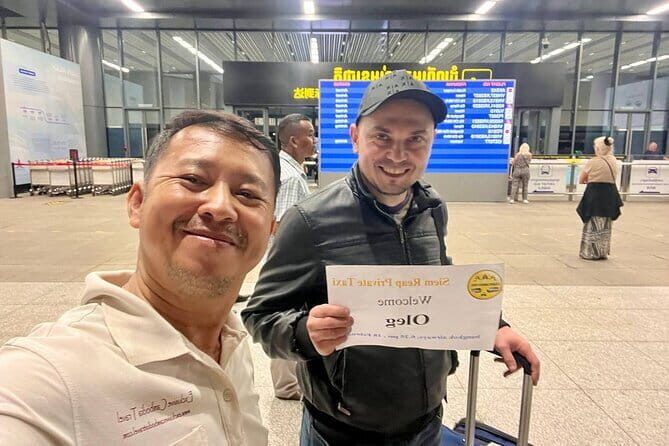
- Is pickup included?
- Are temple tickets included in the price?
- Are meals included?
- How long is the tour?
- What language is the guide?
- Is this a private tour?
- Can I cancel and get a refund?
Key points before you go
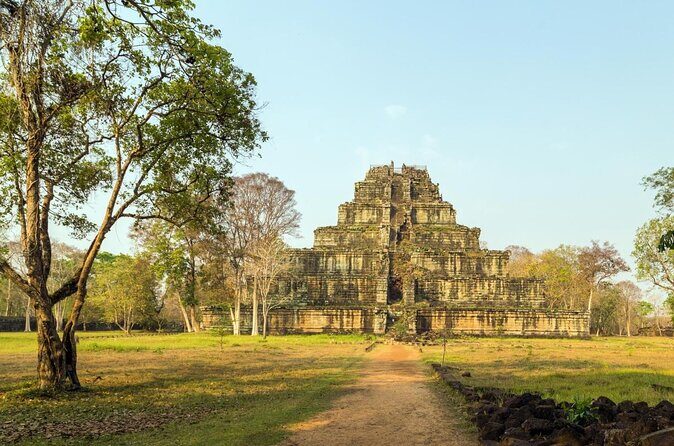
- 4:30 am meeting time sets you up for a calmer Angkor Wat sunrise experience
- Private guiding helps you see the big names without getting swallowed by crowds
- All the major Day 1 temples are covered: Angkor Wat, Bayon, Ta Prohm, and Banteay Kdei
- Phnom Kulen’s waterfall + 1000 linga carvings gives you a very different kind of stop
- Beng Mealea’s secluded ruins feel like exploration, not a quick photo stop
- Comfort extras include cold water, cold towel, and an air-conditioned ride
A 4:30 am start that actually pays off at Angkor Wat
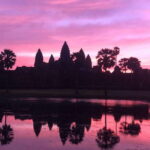
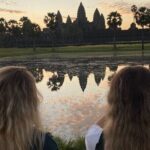
The tour kicks off at 4:30 am, and that’s not a random torture test. Going for sunrise at Angkor Wat is a classic move because you get cooler, more comfortable temperatures and thinner crowds—even when the sky isn’t perfect.
That timing also changes how you experience the temple itself. Instead of fighting foot traffic and waiting for everyone else to finish their photo moment, you’re walking into the site while the light is still doing its best work. It helps you see Angkor Wat, not just snap it.
Bring practical basics: something for early-morning light chill, a hat, and comfortable shoes for uneven stone. The day is long, but the payoff comes early.
You can also read our reviews of more private tours in Siem Reap
Angkor Wat sunrise: Vishnu-era architecture and that first climb
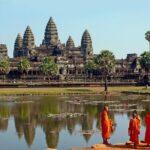
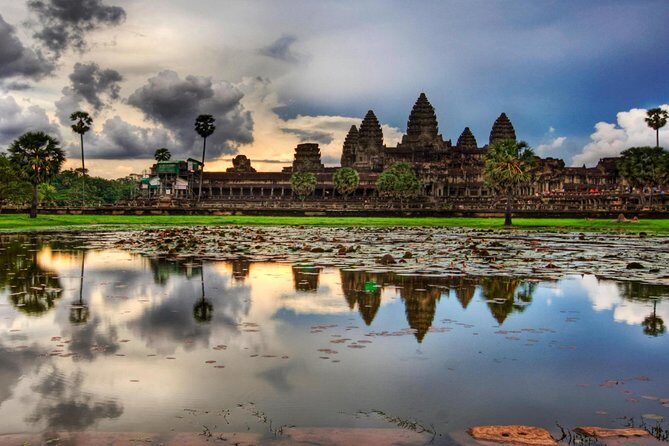
Your first major stop is Angkor Wat, with about 3 hours on site. The temple is the famous UNESCO World Heritage site, built in the early 12th century by Khmer King Suryavarman II, and dedicated to the Hindu god Vishnu—so you’re not just seeing ruins, you’re looking at a monument shaped by religious purpose and royal power.
You’ll climb up at the main entrance and watch the sunrise spread over Angkor Wat and the surrounding temple area. This is one of those experiences where your brain goes quiet for a minute. The scale hits you fast.
A small but important mindset tip: learn enough about local temple etiquette before you arrive. That way you don’t accidentally behave in a way that feels disrespectful to locals who are using these sacred spaces.
Also, temple admissions aren’t included. That’s normal for Angkor tours, but it matters for budgeting.
Bayon Temple’s south gate and the 216 faces of Avalokesvara
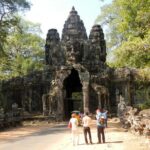
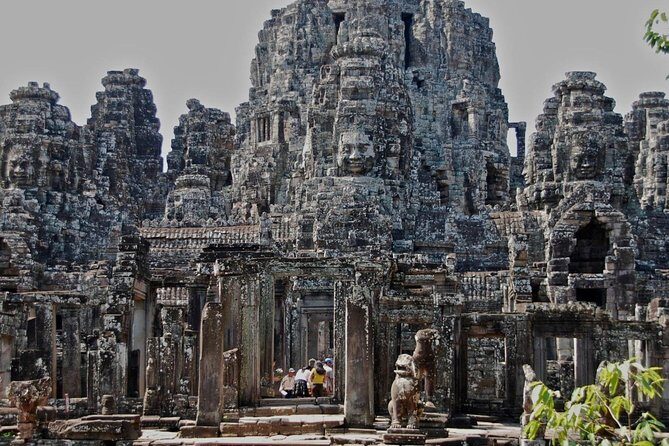
After Angkor Wat, you head to the Bayon Temple area at the South Gate of Angkor Thom. This segment runs about 2 hours.
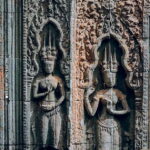
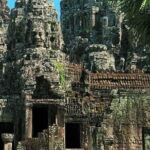
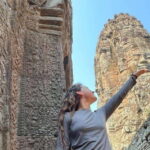
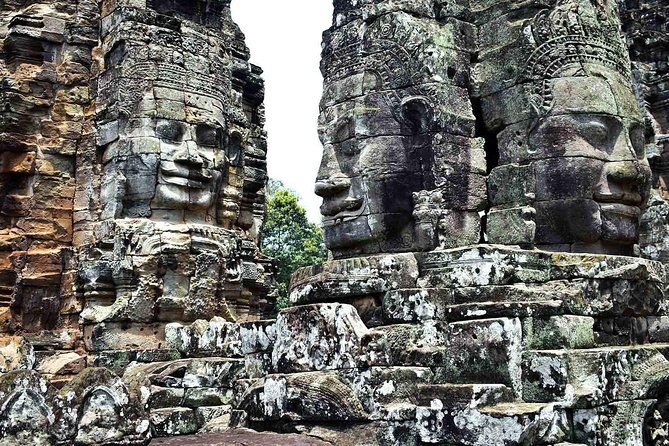
Here’s what makes Bayon special: the Angkor Thom complex originally included 54 towers and 216 faces of Avalokesvara. When you stand among those faces, it’s not just “pretty carvings.” You start noticing patterns—how the expressions and angles make the whole structure feel watchful from every direction.
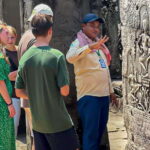
This is also where a private guide is a real advantage. You’re not wandering at random, and you’re less likely to get stuck in the thick of a crowd. Your guide can help you understand what you’re seeing so you don’t just walk through stone.
Again, admissions aren’t included, so plan for that.
Ta Prohm’s roots and Banteay Kdei’s Jayavarman VII stillness
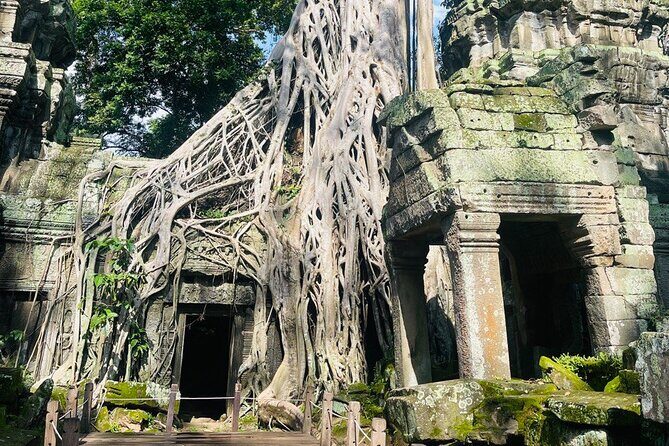
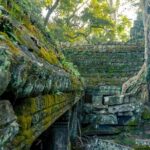
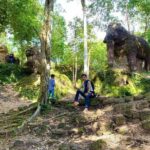
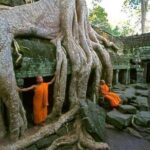
Next up is Ta Prohm, often called the jungle temple or tree temple because the enormous roots of trees are wrapped around the ruins. You’ll have around 2 hours here.
Ta Prohm works because it feels like the forest grew around the temple instead of the other way around. The big roots don’t just look dramatic in pictures; they change how you move. You tend to slow down, look up, then back down at the stone—like you’re following a story written in collapsed architecture.
After that, the tour ends with Banteay Kdei (about 1 hour). This temple was built by King Jayavarman VII in the late 12th century. Compared with Ta Prohm’s chaotic feel, Banteay Kdei is more about texture and structure—an easier stop to mentally reset before the next day’s drive.
One consideration: you’ll be on your feet a lot. Even when each stop is timed well, the walking between spots adds up in the heat.
Phnom Kulen National Park: waterfalls, the 1000 lingas, and a locals-first day
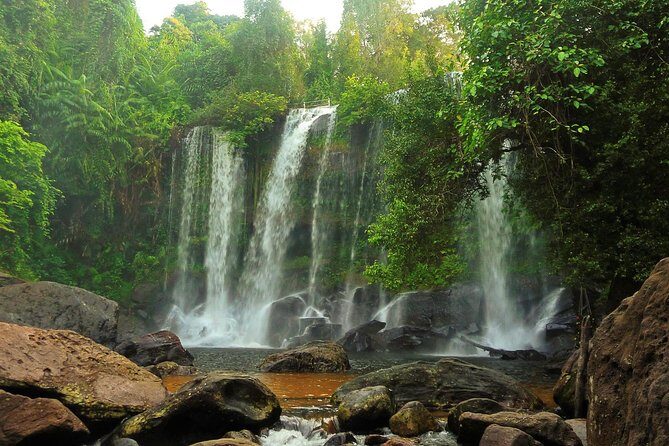
Day two starts with Phnom Kulen National Park, a long 6-hour day out that’s included as a full experience rather than a quick glance. This part of the trip is a big shift from Angkor’s heavy temple focus.
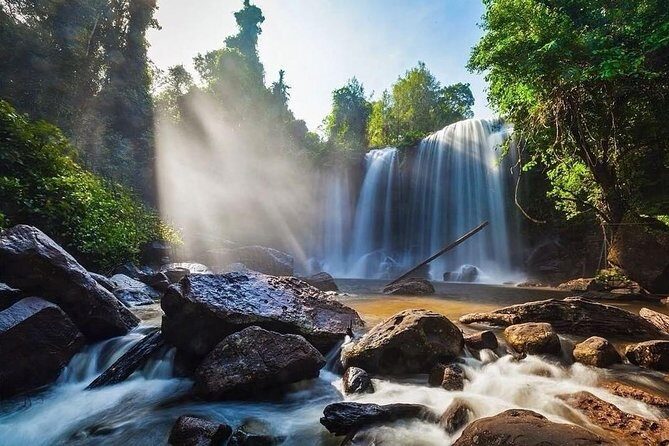
Phnom Kulen is known as Mountain of the Lychees, and it has a local rhythm—described as a playground for locals. The main attraction is the waterfalls at the top of Kulen Mountain, and there’s also the 1000 linga carving area, which adds a powerful spiritual/ritual layer to the scenery.
There’s even mention that it’s a great picnic spot. Since meals aren’t included on the tour, you may want to plan for how you’ll eat during this long stretch—either by bringing your own or arranging your meals separately before you get too far from town.
This day is also a good moment to watch the temperature and your energy level. It’s long, it’s outdoors, and it’s not just “see a temple, take a photo, move on.” It’s more like you’re spending the day with nature and local routines.
A few more Siem Reap tours and experiences worth a look

Beng Mealea: the lost-temple feeling 70 km from Siem Reap
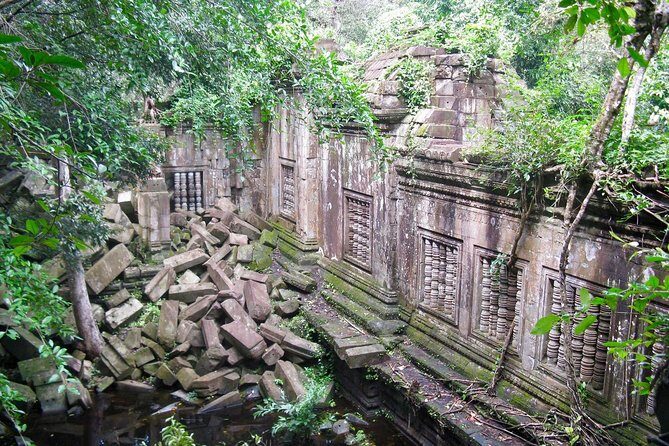
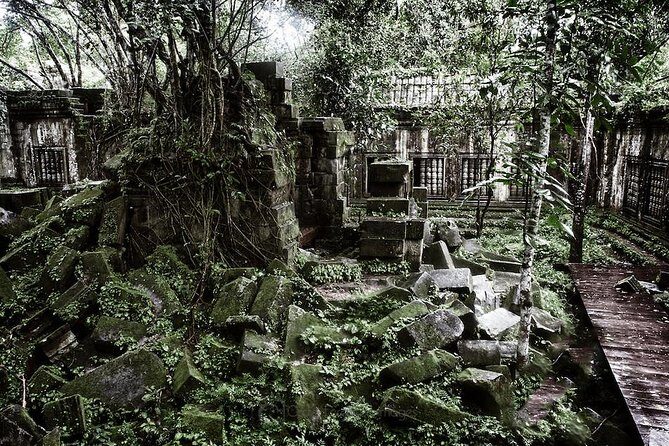
The final major temple stop is Prasat Beng Mealea, about 70 kilometers northeast of Siem Reap. You get around 3 hours here.
Beng Mealea is called the lost temple of Angkor. The whole point is the feeling of seclusion and discovery. The site is described as secluded, which changes the vibe compared to the most famous Angkor spots. You’re not just ticking boxes—you’re slowly piecing together what the place used to be like.
This is the kind of stop that rewards curiosity. If you like wandering and imagining the original paths, you’ll likely enjoy it more than if you want everything explained in a rigid “one-photo-per-stop” rhythm.
Admissions aren’t included here either, so budget for temple tickets ahead of time.
Price and value: what $154 covers (and what it doesn’t)
At $154 for two days, this is priced for a private setup with real logistical value. You’re getting:
- an air-conditioned vehicle
- an English tour guide
- cold water and cold towel
- pickup offered (so you’re not handling every transfer yourself)
- a private experience where only your group participates
- mobile ticket
What’s not included is also important: temple admissions and all meals (no breakfast, lunch, or dinner). That means the true total cost depends on how you handle tickets and food.
So is it good value? For me, the best justification is the combination of (1) a serious early start for sunrise, (2) a private guide helping you avoid big-group slowdowns, and (3) comfort and convenience for the long driving days. If you were doing this on your own with limited planning, you’d likely spend time figuring out timing, routes, and where crowds will pile up.
If you’re the type who wants to see a lot without feeling rushed, this kind of private structure usually feels worth it.
The guide and driver factor: how it affects the day
The names that show up for this experience include Prai(m) and Sen Prourng, with drivers such as Jamesbone. What matters is less the name and more the pattern: groups are hosted by guides described as friendly and attentive, and the duo approach (guide + driver) helps the day feel smooth.
A good guide does two jobs:
- Explains what you’re looking at so the stone has meaning, not just scenery.
- Keeps you moving in a way that doesn’t trap you with big crowds.
That’s especially valuable at Angkor, where everyone is chasing the same photo angles. Even with the right timing, crowd pressure can still happen. Private guiding helps reduce the wasted time.
Who should book this private Siem Reap combo?
This tour is a strong fit if:
- you want sunrise at Angkor Wat and you hate crowd chaos
- you want a private group rather than a big bus where you’re always waiting
- you like a “big temples + nature day” mix instead of only temple hopping
- you have limited time in Siem Reap and you still want both Angkor highlights and a temple outside the main circuit
It may be less ideal if:
- you don’t like early starts and long outdoor hours
- you’re hoping for meals included (you’ll need to plan food yourself)
- you want a stop schedule built around minimal walking
Also, it’s described as something most travelers can participate in, so it’s likely workable for many people. Still, you’ll be on uneven temple ground and in outdoor areas, especially at Phnom Kulen.
A smart add-on: consider an Angkor Wat sunset visit
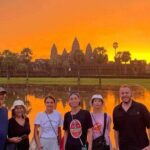
One practical tip that pops up is doing Angkor Wat at sunset too. Sunrise is the main event for smaller crowds, but sunset can give you a different feel—soft light and a slower mood. This matters if you have extra time in Siem Reap and want a second angle on the same place without repeating everything in the same way.
Final call: should you book this 2-day private tour?
I’d book this tour if you want a tight two-day plan that hits the big Angkor names early, then breaks up the temple day with Phnom Kulen’s waterfalls and 1000 linga carvings, finishing with the more secluded exploration vibe of Beng Mealea.
Just go in with two expectations set: temple admissions and meals are on you, and 4:30 am is real. If you can handle that, you’ll likely appreciate the private pacing, the comfort perks, and the way the tour mixes major monuments with a less predictable finale.
If you’d like, tell me your travel month and how many people are in your group, and I can suggest a simple budgeting checklist for tickets and food timing.
FAQ
What time does the tour start?
The meeting start time is 4:30 am.
Is pickup included?
Yes, pickup is offered.
Are temple tickets included in the price?
No. All temple tickets are not included.
Are meals included?
No. Breakfast, lunch, and dinner are not included.
How long is the tour?
The experience is listed as 2 days (approx.).
What language is the guide?
The tour includes an English tour guide.
Is this a private tour?
Yes. It’s a private tour/activity, and only your group will participate.
Can I cancel and get a refund?
Yes. Free cancellation is available, and you can cancel up to 24 hours in advance for a full refund.