REVIEW · KAMPONG PHLUK
Tonle sap, Kompong Phluk (Floating village) Private Tour
Book on GetYourGuide →Operated by Angkor Wat Merge Tour · Bookable on GetYourGuide
Floating villages are the kind of thing photos miss.
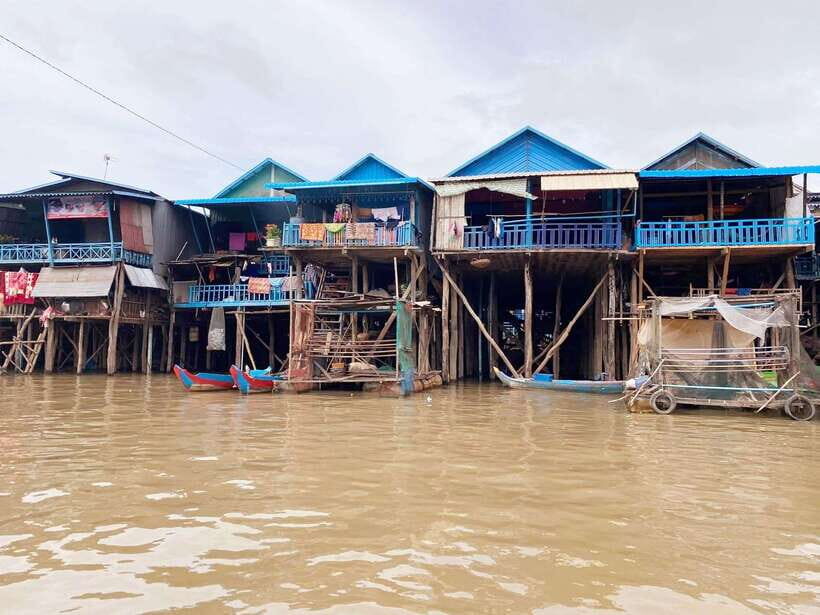
On Tonle Sap, Kompong Phluk shows you lake life up close: stilt houses, mangroves, and the routines that shift with the seasons. I love how this feels human-scale, not like a theme park. You get time to talk with villagers and see how the village works year-round—especially during the wet season when boats replace roads.
Two things I especially liked were the visit to the school and pagoda inside the community, and the ride-and-walk mix that brings the floating forest (mangroves) into focus. There’s also a real chance to watch everyday life from the water rather than just pass by.
One key drawback to consider is water levels. If you’re in the dry season, the lake can be low enough that you may not get the scenery you expected, and extra boat rides can add cost fast.
In This Review
- Quick takeaways before you go
- Why Kompong Phluk feels different from big Siem Reap day trips
- Tonle Sap and the floating village rhythm: dry vs rainy season
- Stilt houses, school, and pagoda: what you’ll actually observe
- Floating forest and mangroves: why the boat ride changes everything
- Sunset on Tonle Sap: how 2:00pm and 3:00pm starts help
- Price and logistics: the real cost of seeing Kompong Phluk
- Getting there from Siem Reap: private, English driver, and where you end up
- Is there really a guide?
- Who should book this Tonle Sap Kompong Phluk private tour
- Should you book the Tonle Sap Kompong Phluk private tour?
- FAQ
- Where is this tour located?
- How long is the Tonle Sap Kompong Phluk private tour?
- What is the price, and is it per person?
- What’s included in the tour price?
- What is not included?
- Do I need to pay for the big boat?
- What can I see during the day?
- When is the best time for sunset?
- What language is the driver?
- What is the cancellation policy?
Quick takeaways before you go
- Season matters on Tonle Sap: dry-season water can limit what you can see
- Village visits are practical: school and pagoda stops help you understand daily life
- Floating forest views: mangroves look and feel different from lake level
- Sunset is a smart target: 2:00pm or 3:00pm starts often give better light
- Budget with the motor boat in mind: the $23 base price doesn’t cover everything
Why Kompong Phluk feels different from big Siem Reap day trips
Kompong Phluk is famous for a reason. It’s not just “pretty scenery”—it’s a working community on Tonle Sap where the water level shapes how people live, learn, and travel. From Siem Reap, this is one of the easier day trips to wrap your head around Cambodia’s water-world reality.
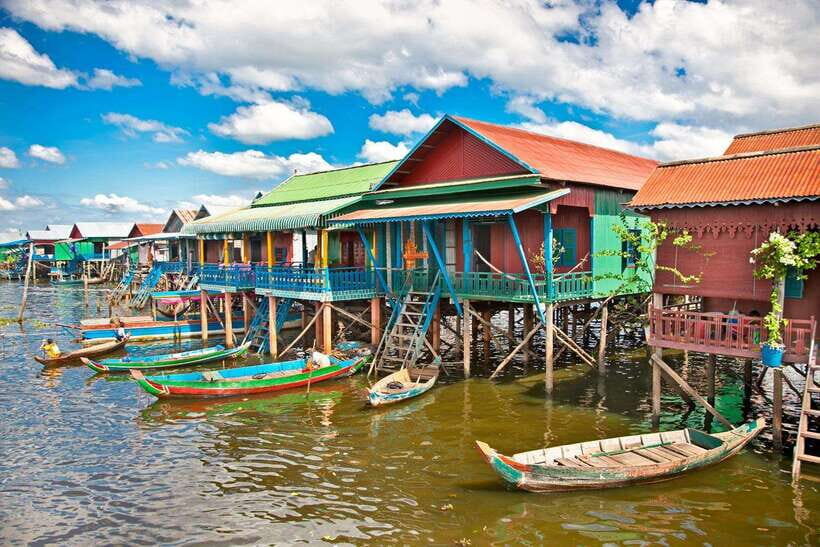
What I like most is the tone of the experience. Instead of moving fast through crowds, you spend time where life is already happening. You’ll see bright stilt houses and understand why “floating village” isn’t a gimmick. It’s a practical adaptation to a lake that changes month by month.
If you’re trying to avoid the most overrun sightseeing loops, this is a better fit. The day has enough structure to be easy, but the setting keeps it grounded.
You can also read our reviews of more private tours in Kampong Phluk

Tonle Sap and the floating village rhythm: dry vs rainy season
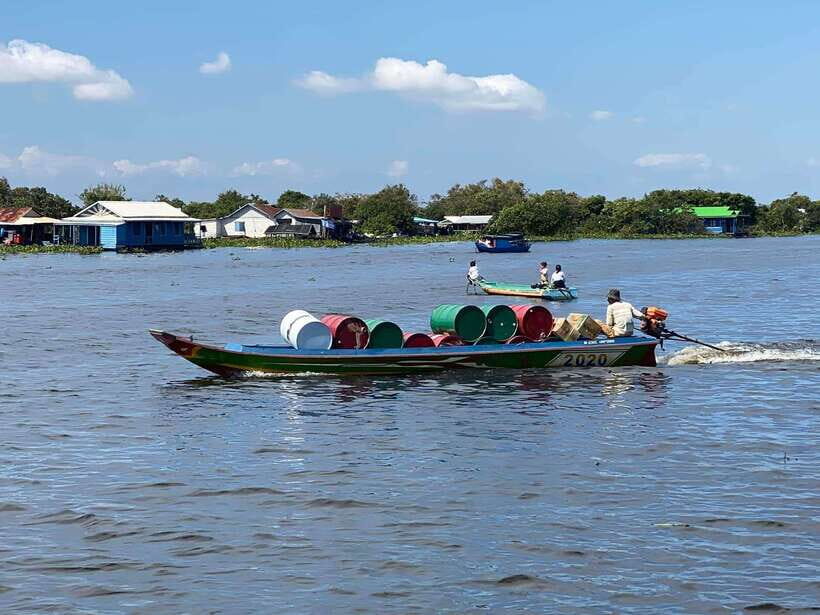
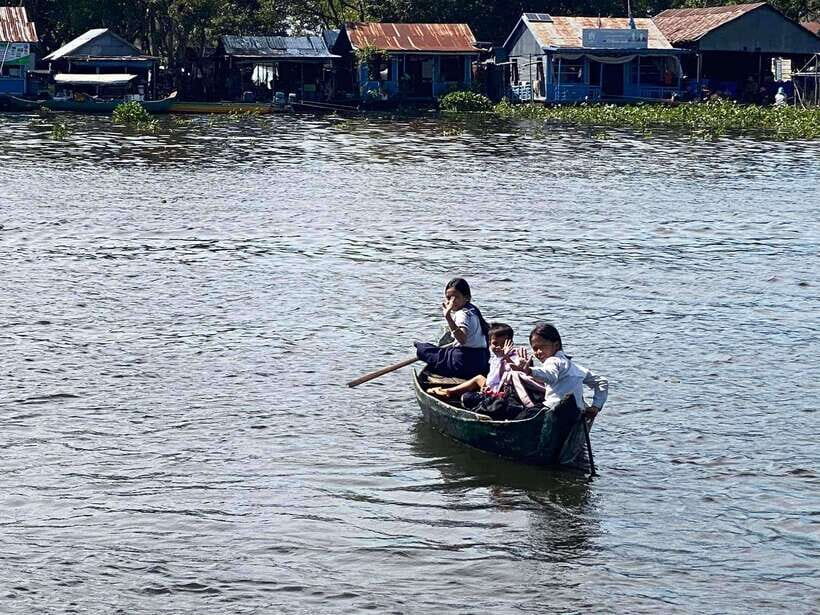
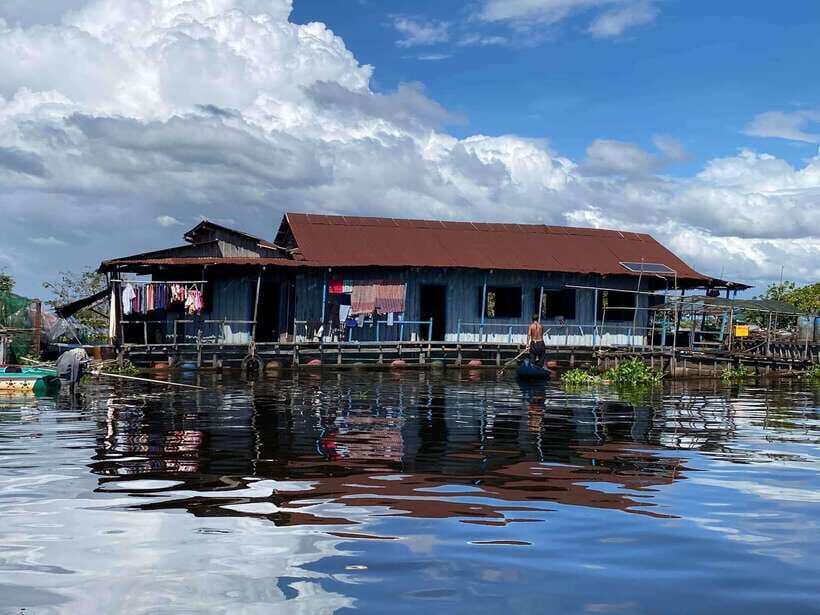
Tonle Sap’s water levels are the whole story. During the wet season, households and daily routes shift—locals use boats to get to work and school when water rises. That means you’re more likely to see the village in its true “float” mode, with more water around the houses and access paths that match the season.
In the dry season, water can drop dramatically. One clear lesson here: if you book during a lower-water period, you need to manage expectations. You might still see the village and mangroves, but the iconic look—how much the structures appear surrounded by open water—can be less dramatic.
My advice: when you’re planning your dates, treat season as part of the decision, not a detail. If your ideal Kompong Phluk day includes lots of water close to the stilt homes, aim for a time when the lake is fuller—or ask ahead about the water conditions and what boat access will look like.
Stilt houses, school, and pagoda: what you’ll actually observe
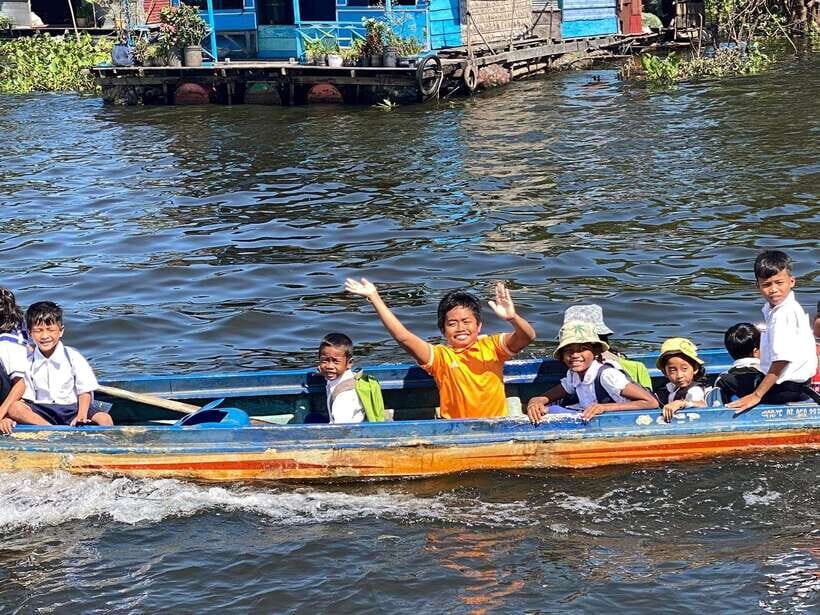
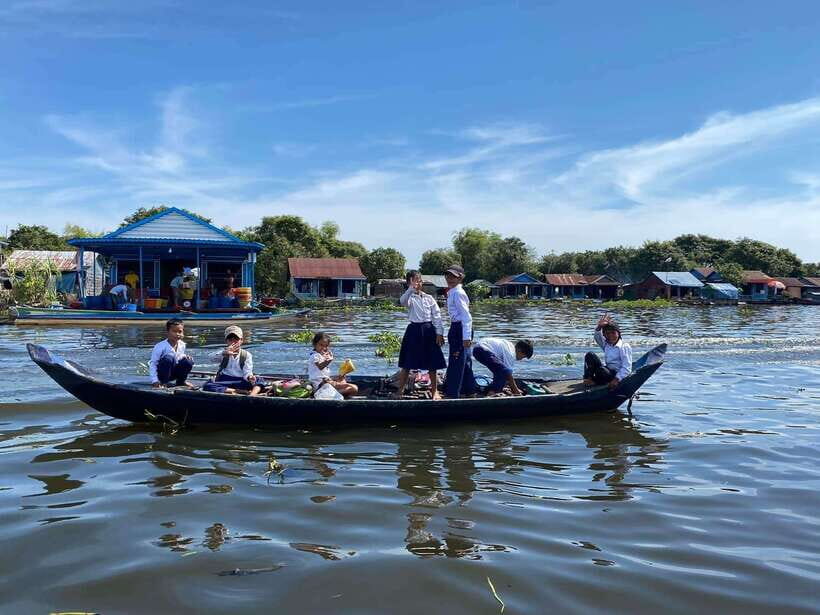
This tour doesn’t just pass by. You visit key parts of village life, including a school and a pagoda. Those stops matter because they connect the scenery to the routines you care about: where children learn, where the community gathers, and how faith shows up in everyday spaces.
Here’s what makes these stops meaningful for you as a visitor:
- The school stop gives you context. You’re not just seeing architecture; you’re seeing education living inside the lake environment.
- The pagoda stop adds cultural grounding. It helps you understand the village as a community with shared traditions, not a postcard set.
You’ll also see how people organize their homes along the lake. Most families live on the shore in brightly colored houses mounted on long poles. During heavy rain, those poles are a built-in solution—high water isn’t a disaster, it’s part of the system.
If you enjoy “slow travel” moments—pausing, looking closely, and learning what daily life looks like—you’ll get more out of this than someone rushing for big-ticket sights.
Floating forest and mangroves: why the boat ride changes everything
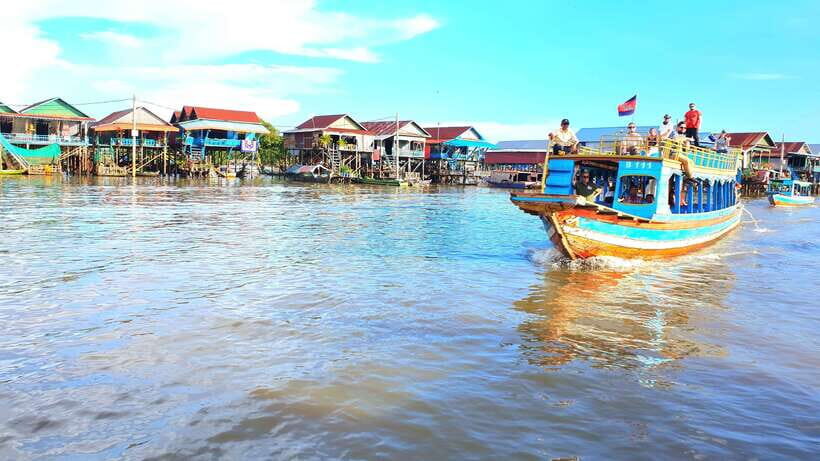
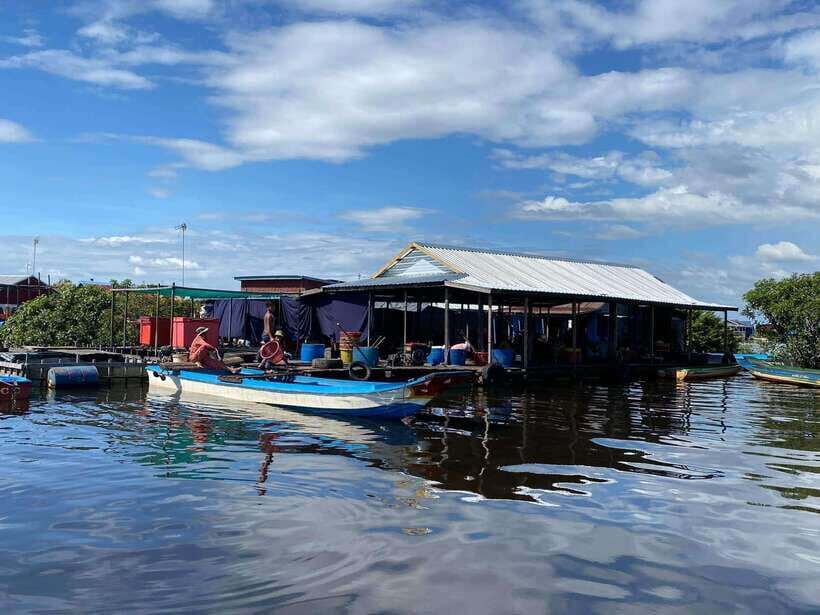
The floating forest at Kompong Phluk is more than a scenic bonus. Mangroves here represent an ecosystem shaped by the lake’s rise and fall. When you approach by water, you get a layered view: lake surface, mangrove roots, and the village edge all at once.
You can expect to spend time moving around the lake area, where the experience shifts depending on the water depth and boat routes. In practical terms, that means:
- your “how far you can go” depends on conditions,
- your boat time is part of what you’re paying for,
- and the scenery you imagined only works if the lake allows it.
This is also where costs can creep in. The base package price is one number, but there’s a separate big boat charge that comes into play for the ride. Some experiences also include optional add-ons for getting closer to mangroves (more on that in the price section).
If your priority is ecosystem views—roots, channels, and the way mangroves sit in the water—plan to treat the boat as central, not optional.
Sunset on Tonle Sap: how 2:00pm and 3:00pm starts help
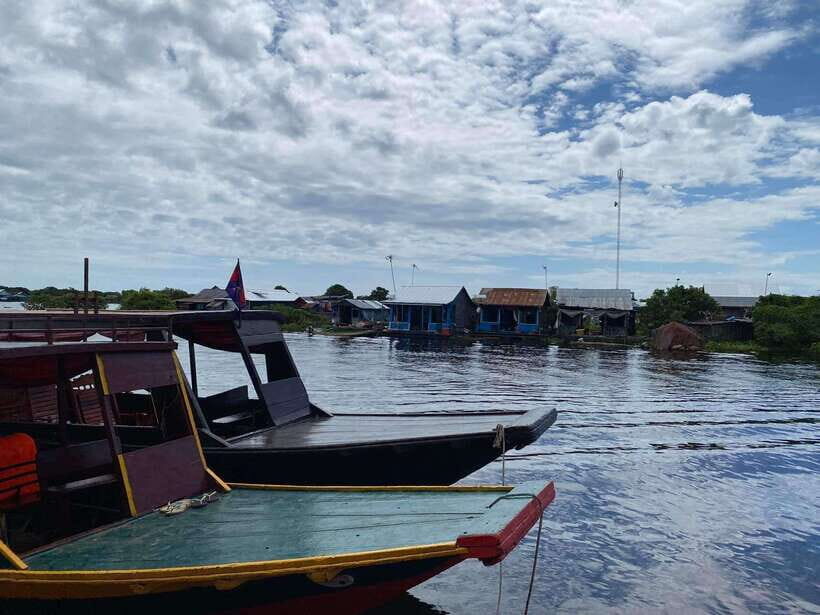
Timing matters on Tonle Sap because light and reflection do half the work for you. If you choose a schedule that starts around 2:00pm or 3:00pm, you have a strong shot at a “wow” sunset on the lake while you’re on the boat.
I really like the idea of catching the day in late afternoon because:
- the light is gentler for photos,
- the water surface turns mirror-like,
- and you’re already warmed up from village visits, so you’re ready to enjoy the slow cruise feel.
One booking experience highlighted a clear day and a memorable sunset moment. That’s exactly the kind of payoff you should aim for—sunlight on water plus the quiet, floating village atmosphere.
If sunsets are your thing, don’t leave the timing to chance. Choose the start time that matches your photography goals.


Price and logistics: the real cost of seeing Kompong Phluk
Let’s talk money plainly. The tour is listed as $23 per group up to 4 for about 5 hours. That base price is fairly low, and it’s great for saving compared with private tours that charge per person for everything.
But here’s the budget catch: major parts of the experience can be not included, especially the boat rides. You should assume the following are likely extra:
- Big boat: $20 per person
- Entrance fee (not included)
- Tour guide (not included)
One cost warning showed up clearly in the feedback I reviewed: the $23 group price may cover transport like hotel-to-pickup and port transfers, while boat fees come on top. Another add-on that appeared in one experience was an optional small-boat style ride into the mangroves, priced separately.
So how do you judge value?
- If you’re a party of up to four, the base cost helps a lot.
- Your true “all-in” day cost depends on whether you’ll take the big boat and whether entrance fees apply.
- If you’re trying to keep costs tight, confirm what you’re paying for at each stage, not just the first number.
Practical move: before you go, ask what the $23 covers and what specifically triggers the $20 big boat fee. That one question can save you from surprise totals.
Getting there from Siem Reap: private, English driver, and where you end up
This is a private group tour with a driver who speaks English. Pickup is included, and the guidance is simple: your Tuk-Tuk driver should be waiting in the lobby about 10 minutes before departure.
That matters because Tonle Sap days run on water schedules. You don’t want to be late at pickup or stuck sorting out timing while everyone waits for your ride.
At the end, you can be dropped back at your hotel. If you prefer a more flexible finish, you can also ask to be dropped at the market or Pub Street area in the city.
That ending choice is underrated. After a 5-hour day out on the lake, it’s nice not to feel locked into a return path that takes you away from your dinner plans.
Is there really a guide?
The tour details say tour guide is not included, but you may still experience a local perspective depending on how you book. In one highlighted case, a local guide named Sopheap was mentioned as helpful, and the experience felt more informed because of that connection.
Here’s what you should do if you want more context while you’re moving around:
- Ask in advance whether a guide will join you, or if it’s primarily driver-led.
- If a guide is available, confirm language match (English) so you don’t end up with lots of silence while you stand among school and pagoda stops.
Even if the day is driver-led, the key sites still give you enough to observe. A guide simply helps you read what you’re seeing faster and with less guesswork.
Who should book this Tonle Sap Kompong Phluk private tour
I’d book this if you fit one (or more) of these boxes:
- You want a day trip that feels real, not just a checklist of sights.
- You like learning through community spaces like a school and pagoda.
- You’re excited by mangroves and water ecosystems, not only temples.
- Your group can work with shared scheduling and prefers a private setup.
You might think twice if:
- You’re traveling in a period where the lake is expected to be low and your main goal is a very “floating” look.
- You hate surprises in pricing and aren’t willing to confirm boat and entrance fees up front.
This tour rewards curiosity. If you treat it like a moving museum stop, you’ll miss the point.
Should you book the Tonle Sap Kompong Phluk private tour?
Yes—with one condition: plan around the lake conditions and boat costs.
If you can align your dates with good water levels, and you’re comfortable paying for the big boat portion, this is a strong choice. The village school and pagoda visits make it more than sightseeing, and the floating forest + boat time are what give the day its “only here” feeling.
If you’re on a tight budget, don’t reject it instantly. Just price it properly. The $23 group rate is attractive, but your all-in day likely depends on per-person boat fees and entrance costs.
My final nudge: ask what you’ll be able to see based on the current water level before you commit—especially in the dry season. That one step protects your time, your photos, and your expectations.
FAQ
Where is this tour located?
It takes place in Siem Reap Province, Cambodia, around Tonle Sap and Kompong Phluk (the floating village).
How long is the Tonle Sap Kompong Phluk private tour?
The duration is 5 hours.
What is the price, and is it per person?
The price is $23 per group up to 4.
What’s included in the tour price?
The tour includes drinking water and pickup.
What is not included?
The tour does not include the big boat ($20 per person), a tour guide, and entrance fees.
Do I need to pay for the big boat?
Yes, the big boat is listed as $20 per person and is not included in the base price.
What can I see during the day?
You can see the floating village (Kompong Phluk), plus a school, a pagoda, and a floating forest area.
When is the best time for sunset?
If your schedule starts around 2:00pm or 3:00pm, you can often see a nice sunset at the lake from the boat.
What language is the driver?
The driver is English-speaking.
What is the cancellation policy?
You can cancel up to 24 hours in advance for a full refund.