REVIEW · SIEM REAP
3-Day tour with with All major Temple, Banteay Srei + Floating Village
Book on Viator →Operated by Hidden Angkor Tour · Bookable on Viator
Three days, one unforgettable Angkor loop. I love the private, luxury-feeling setup with an English-speaking guide who can shape the day to your pace, not just run a script. I also like the basics done right: air-conditioned vehicle plus cool water and a cool wet towel for the long, sun-baked temple hours.
One thing to plan for: the Angkor Archaeological Site entrance pass is not included, so you’ll need to buy it when you arrive at the main gate before you start hopping between sites.
In This Review
- Key highlights that make this 3-day loop work
- Price and passes: what you’re really paying for
- The comfort factor: air-con, cold towels, and better pacing
- Day 1: Bayon faces, elephant terraces, and Ta Prohm’s roots
- Day 2: 5:00 Angkor Wat sunrise and why Banteay Srei deserves the spotlight
- Day 3: Roluos temples, Tonle Sap life at Kompong Phluk, then Siem Reap crafts
- The guide and driver: why the people level up the temples
- Dress code, timing, and the practical stuff that saves your day
- Who this 3-day tour fits best
- Should you book this Angkor and Kompong Phluk 3-day tour?
- FAQ
- Do I need an Angkor Archaeological Site entrance pass for this tour?
- Are temple admission tickets included at each stop?
- Is Angkor Wat sunrise part of the plan?
- Does the tour include pickup and transport from Siem Reap?
- What’s included in the tour price?
- What’s not included?
- What should I wear for Angkor temples?
Key highlights that make this 3-day loop work
- Private, full-day guiding: It’s built around your group only, with a professional English-speaking guide who can adjust the order and timing.
- Major temples plus the best “secondary” hits: You get Angkor Wat and Angkor Thom, then add Banteay Srei, Preah Khan, and Neak Pean.
- Jungle drama on Day 1: Ta Prohm is part of the route, with those famous roots and stone corridors.
- A sunrise option that won’t trap you: Day 2 includes a 5:00 departure for Angkor Wat sunrise, but there’s also an option if you’d rather sleep.
- Kompong Phluk in the mix: It’s the Tonle Sap lakeside day that shifts the mood from stone temples to everyday life on the water.
- Comfort touches that matter in Cambodia: Cold water and cool wet towels help more than you’d think.
Price and passes: what you’re really paying for
At $162.50 per person for a 3-day run, this is priced like a value-focused private tour. You’re not just buying transport and a driver; you’re paying for an all-day guide and a tight route that covers the big Angkor names along with standout sites many shorter tours skip.
The big catch is financial, not emotional: the Angkor Archaeological Site entrance pass is not included. That pass gives access to sights in and around Angkor and must be shown at the sites. If you’re budgeting, treat the pass as a required add-on, not a surprise.
Also note: each temple stop lists admission as not included. In practice, that means the pass is what ties the day together. If you forget it or delay, your day can get annoying fast—Angkor is strict about entry.
A few more Siem Reap tours and experiences worth a look
The comfort factor: air-con, cold towels, and better pacing
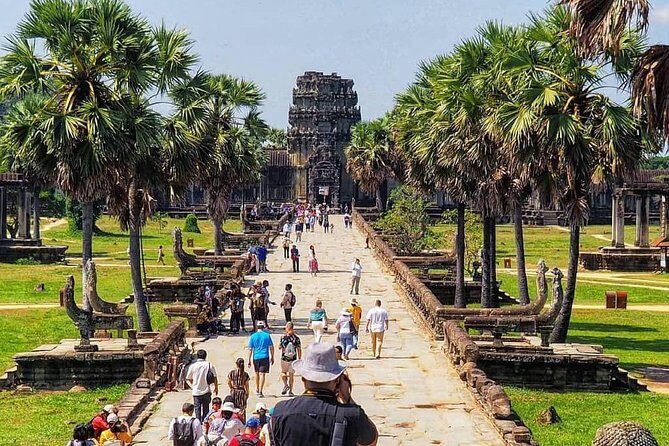
Most Angkor days feel like a long walk in hot sun. This tour helps because it includes transport by air-conditioned vehicle, plus cool water and cool wet towel. Those small items reduce the tired, cranky feeling that can creep in halfway through Day 1.
Pacing is another hidden value. The tour is described as private and customer-centered, and the guide experience is meant to let you customize the trip. That matters because Angkor isn’t one-size-fits-all: some people want photos every two minutes, others want quiet time to read carvings and understand layout.
It’s also a full private basis, meaning you’re not stuck with a slow group or a loud group in the same vehicle. The day stays calmer, and you can reset between stops without losing time to traffic rhythm.
Day 1: Bayon faces, elephant terraces, and Ta Prohm’s roots
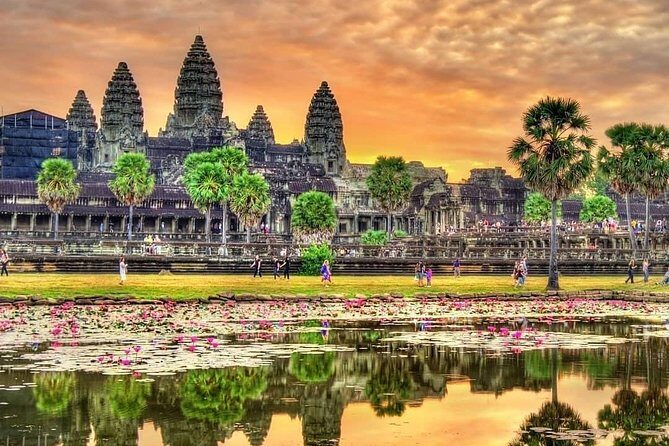
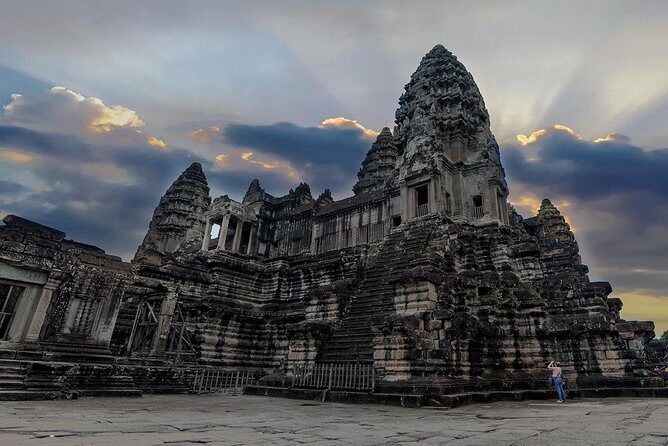
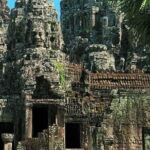
Day 1 is the “wow, I can’t believe this is real” block. You start at Bayon, part of Angkor Thom, famous for its stone face towers—four faces on towers aimed at the cardinal points. The scale is disorienting in a good way. You keep looking up, then back down, trying to register how the city was built around this religious center.
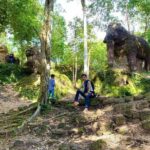
Next is the Terrace of the Elephants, set at the heart of Angkor Thom with elephant carvings along the walls. It’s a reception-zone kind of place in the layout. Even if you only spend half an hour, you can still feel how the royal procession vibe worked.
Then you hit the Terrace of the Leper King. This terrace is named after a sculpture discovered on top, and it’s notable because restored sections allow visitors to explore internal layers by entering areas of the structure. It’s a good stop if you like temples that feel like archaeology in motion.
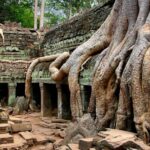
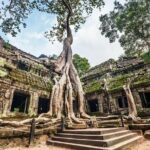
After that comes Ta Prohm, the jungle temple. If you’ve seen photos, you still won’t fully get it until you walk inside those corridors and look up at roots that have taken over parts of the stone. The fact that Ta Prohm was left in a more natural state helps create that eerie, almost staged-by-nature feeling.
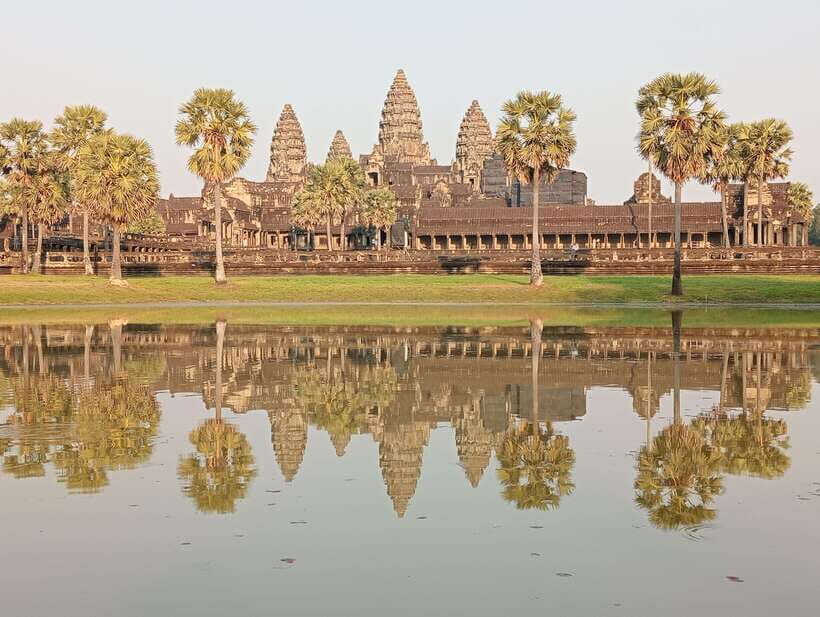
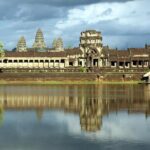
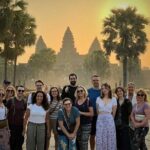
The afternoon shifts to Angkor Wat, the star of the whole complex. It’s the largest religious building in the world, dedicated to Vishnu, and it’s designed with a west-facing orientation, which is unusual compared to other Khmer temples. The west-facing layout is one reason the timing and light feel so deliberate.
You finish at Phnom Bakheng for sunset views. It’s a popular spot, and the timing here is the point: you want Angkor Wat and the surrounding temple geometry framed by evening light. If you’re sensitive to crowds, go in with realistic expectations—this is the one sunset many people plan.
Day 2: 5:00 Angkor Wat sunrise and why Banteay Srei deserves the spotlight
Day 2 begins early if you choose the sunrise option. The schedule shows a 5:00 departure for Angkor Wat sunrise, then continuation to Banteay Srei and other major sites. If you don’t want to wake up that early, there’s an option to skip the sunrise and start at a more comfortable time—nice if you value sleep more than perfect light.
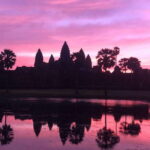
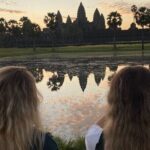
Angkor Wat at sunrise changes the mood. Instead of a busy daytime scene, you get a quieter moment where the temple feels more like a ritual space than a photo backdrop. Even if you care about photos, this is the time when the temple’s symmetry feels most readable.
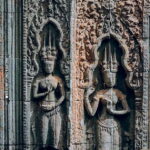
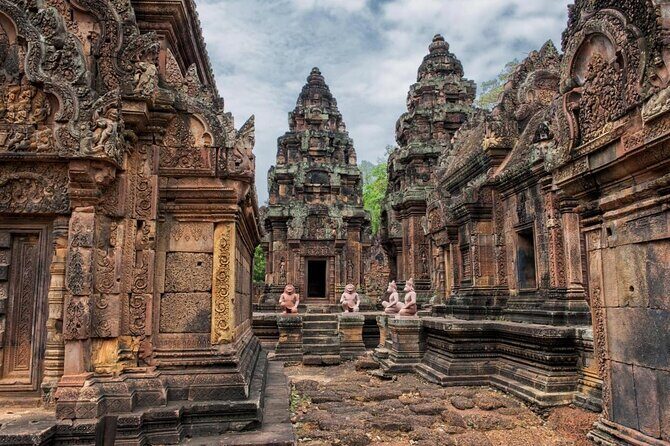
Then you go to Banteay Srei, often treated as the fine-art side of Angkor. It’s described as the Citadel of a woman or Citadel of Beauty, and it’s smaller in scale than the royal mega-sites. The decoration is the big story here. This temple is known as a jewel of Khmer art, and you can see that in the intricate carvings covering the surfaces.
One practical note: the most inner spaces are closed to the public for protection. That’s normal for major heritage sites, and it means your time is about exterior detail and the overall proportions, not wandering everywhere.
After Banteay Srei, the day continues through Eastern Mebon, Ta Som, Neak Pean, and Preah Khan—each with a different flavor.
Eastern Mebon sits on the idea of an island temple, built on an island in the Eastern Baray reservoir concept. The layout hints at how worship could be reached by boat in the past, even if the modern approach is different. It’s a good break from the heaviest, busiest sections of Angkor Thom.
Ta Som is smaller, tied to Jayavarman VII and associated with honoring his older sister. The smaller scale is exactly why it’s interesting. It reminds you that temple building wasn’t only about kings and monuments; it also reflected family ranking and devotion.
Neak Pean is a symbol-minded stop. Its name relates to nagas intertwining tails, linked to ideas of happiness and union through the paired figures. You’re not just looking at stone here; you’re looking at a story in layout.
Preah Khan rounds out the day with size and complexity. It was built in the 12th century and is described as more than a temple—also functioning as a Buddhist university and a sizeable city. You also get those giant garudas grasping naga tails in the stone work, a visual theme you’ll remember long after the day ends.
Day 3: Roluos temples, Tonle Sap life at Kompong Phluk, then Siem Reap crafts
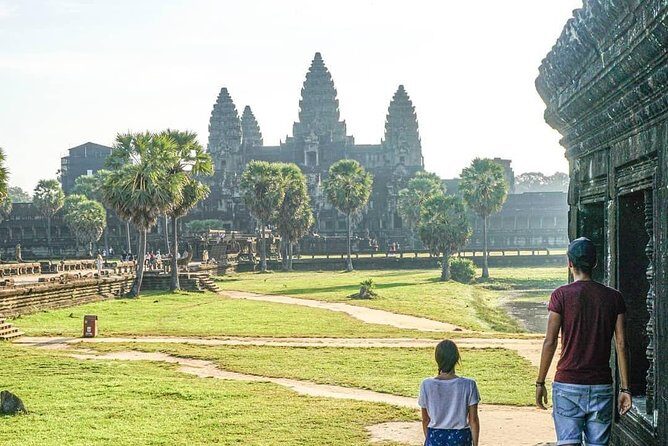
Day 3 starts more lightly than the packed Angkor days. Bakong is first, located at the Roluos Group south of Preah Ko. It’s tied to the early Khmer capital days and represents the Hindu tradition dedicated to Siva under Indravarman I.
Then you go to Preah Ko, the first temple built in Hariharalaya. It was built under Indravarman I in 879 and honors members of the royal family with a link to Shiva. If Angkor feels like only one era to you, these stops correct that idea fast. They show you the older roots beneath the later Angkor masterpieces.
Lolei follows, positioned like Mebon was, forming an island setting in the reservoir area called Indratataka. This is one of those stops where you can feel the temple-water-city planning in the original idea, even if modern views differ from how it looked centuries ago.
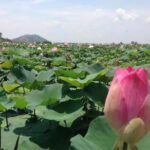
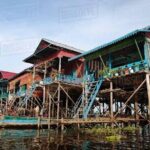
The day then moves to Kompong Phluk on Tonle Sap. This isn’t a temple block day. It’s about living on the lake system that extends throughout Cambodia. Kompong Phluk is described as important to Cambodians who fish for their livelihood, and Tonle Sap is noted as a UNESCO Biosphere site due to its ecology and endangered flora and fauna.
That shift is why I like this tour’s structure. After days of stone, you get a day where life is the main “exhibit.” You get out of the Angkor bubble and back into Cambodia.
In the afternoon, the plan returns to Siem Reap for a city round. You visit the Art and Craft School, Les Artisan, and local markets. The school is described as a joint venture between Cambodian and French governments to train young Cambodians in traditional skills like sandstone carving, woodwork, and silk weaving. There’s also a showroom with samples and made-to-order pieces available.
You’ll also spend time at markets and around Pub Street. This is the practical part of the trip: you get souvenirs that feel tied to real work, and you get a chance to breathe after temple hours.
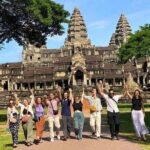
The guide and driver: why the people level up the temples
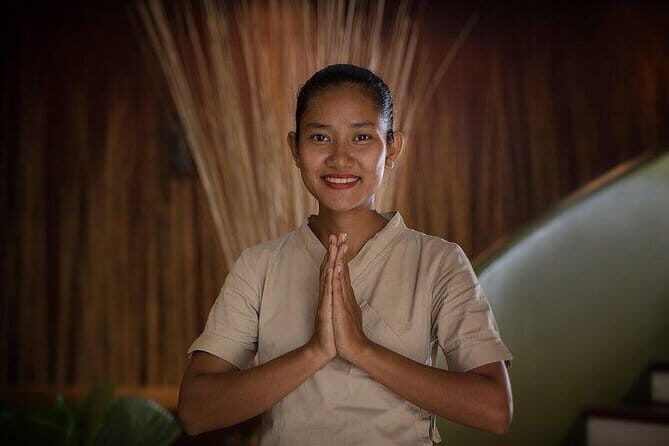
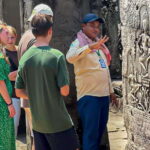
The tour lives or dies on the guide, and the evidence here is strong. In multiple instances, Veasna has been praised for exceptional knowledge and excellent English skills, including the fact that he’s a former monk. That kind of background tends to change how you read temple symbolism. You notice details faster, and the stories sound less like memorized facts.
Other guides have also been praised in similar Angkor settings, including Mr. Lion for passion and fun engagement. For a separate day Angkor Wat-style run, guide Buntheun and driver Vandy were described as friendly, enthusiastic, and attentive. The pattern matters: you’re not relying on a rushed general explanation.
What I’d watch for is your own curiosity style. If you like history and symbolism, lean into the guide’s strengths. If you’re more visual, ask for the best angles at each temple. A good guide will switch modes without making you feel clueless or slow.
Dress code, timing, and the practical stuff that saves your day
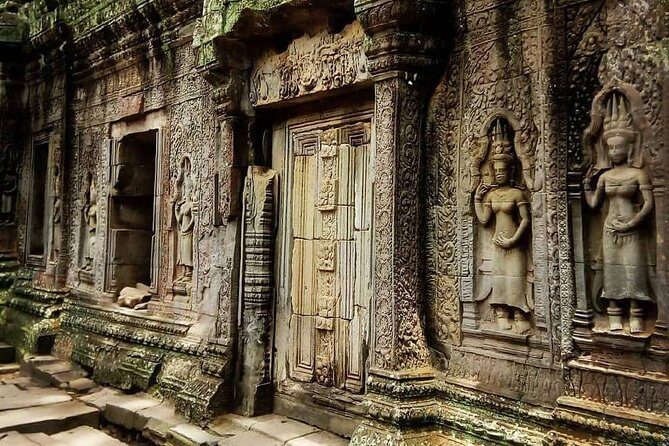
Angkor has a strict dress code at some temples and palaces, including Baphuon. You’ll want clothes that cover shoulders and fall below the knees. Bright clothing is specifically called out as a possible reason for refusal, and shirts with obscene and disrespectful prints may get you turned away.
So keep it simple: a lightweight shirt that covers your shoulders, long pants or a long skirt, and shoes you can walk in for hours. If you’re going for photos, plan outfits that meet the rules first, and then worry about color.
Timing is another reality. These days are long. Sunrise is optional, but sunset at Phnom Bakheng is planned. Bring patience, not just a camera, because the best views often come at the busiest times.
Heat protection matters too. Even with air-con breaks, you’re spending lots of time outside. Use the cool water and cool wet towel early, not only when you feel already cooked. It makes a difference.
One more practical detail: natural elements can damage electronic devices. If you’re worried about rain or humidity affecting your phone or camera, wrap and protect your gear. It’s mentioned as your responsibility, but honestly, it’s just common sense for any Angkor trip.
Who this 3-day tour fits best
This tour is a great fit if you want a tight Angkor plan that doesn’t just repeat the same headlines. You get the famous faces at Bayon, the jungle drama at Ta Prohm, the main symmetry of Angkor Wat, plus the more delicate and artistic Banteay Srei. You also get Preah Khan and the symbolism of Neak Pean, and then you end with Kompong Phluk to break the stone-temple cycle.
It’s especially good for short stays in Siem Reap. If you only have a few days, this route gives you a lot of variety without needing you to plan everything yourself.
If you hate early mornings, you’ll still be okay because sunrise at Angkor Wat is an option rather than a fixed requirement. Just know that Day 3 is scheduled to start around 8:00 or 8:30, so you still get a normal early start.
If you’re traveling with very specific mobility needs, the tour description doesn’t spell out accessibility details. You might find it helpful to ask the provider directly about walking distances and temple steps.
Should you book this Angkor and Kompong Phluk 3-day tour?
Book it if you want a private, guide-led route that covers the major Angkor highlights and also includes the best add-ons like Banteay Srei and Preah Khan. The comfort touches—air-con transport, cool water, cool wet towel—add real value on day two and day one when the heat piles up. The Kompong Phluk stop is a smart change of pace, turning the trip from temple-only to a glimpse of lake life.
Skip or adjust if you dislike buying entry passes and want everything bundled into one payment. The Angkor Archaeological Site entrance pass is not included, and it’s required for access. Also, if strict dress code rules make you uncomfortable, plan your clothing ahead so you don’t waste time at the gate.
If you’re ready to handle the practical details, this is a strong way to see Angkor in three days without feeling like you’re just racing from one pile of stones to the next.
FAQ
Do I need an Angkor Archaeological Site entrance pass for this tour?
Yes. The Angkor Archaeological Site entrance pass is not included. It covers access to sights in and around Angkor and should be shown at the sites.
Are temple admission tickets included at each stop?
No. Temple admission is listed as not included for the stops. The Angkor pass is what you use for entry during the Angkor days.
Is Angkor Wat sunrise part of the plan?
Day 2 includes a sunrise departure from Angkor Wat at 05:00, but there’s an option if you do not want to wake up that early.
Does the tour include pickup and transport from Siem Reap?
Pickup is offered. Return transfers for the excursion apply only for customers staying in and inside Siem Reap, and the exact pickup time is meant to be confirmed on reservation.
What’s included in the tour price?
You get an all-day tour with a professional English-speaking guide, transportation by air-conditioned vehicle with a professional driver, all applicable taxes and service charges, and cool water and a cool wet towel.
What’s not included?
Personal expenses like meals, drinks, tips and gratuities, travel insurance, single supplement charges if applicable, and the Angkor Archaeological Site entrance pass.
What should I wear for Angkor temples?
Some temples have a strict dress code, including covering shoulders and falling below the knees. Bright clothing and shirts with obscene or disrespectful prints may lead to refusal of entry.