REVIEW · SIEM REAP
3-Day Angkor Wat with All Interesting Major Temples, Banteay Srei & Beng Mealea
Book on Viator →Operated by Happy Angkor Tour · Bookable on Viator
Angkor without the stress of driving. This 3-day private circuit is built around iconic temples, long walking days, and timed viewpoints, with hotel pickup, air-conditioned transport, and a guide who helps you read what you’re seeing.
I love the way the plan gives you both sunrise at Angkor Wat and a sunset option from Phnom Bakheng. I also like that the day-to-day rhythm is handled for you, so you spend your energy on temples, not Siem Reap routes.
The main drawback is the early wake-ups: you’ll start at 5:00am on day two, and Phnom Bakheng has limited access—so you need patience as well as good shoes.
In This Review
- Key highlights you’ll feel right away
- Buying peace of mind: what this private 3-day Angkor tour is really for
- Day 1: Angkor Wat, Ta Prohm roots, Angkor Thom faces, and Phnom Bakheng sunset
- Angkor Wat: start with the main stage
- Ta Prohm: the temple the movies helped popularize
- Ta Nei: a quieter pocket when you want less crowd pressure
- Angkor Thom core: Victory Gate and Bayon faces
- Baphuon, Phimeanakas, and the terraces: the royal story layer
- Phnom Bakheng: sunset views, and a climb you can’t pretend is easy
- Day 2: 5:00am sunrise Angkor Wat plus Preah Khan, Neak Poan, and the Banteay temples
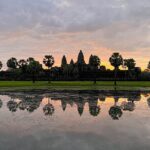
- Angkor Wat at sunrise: why this timing matters
- Preah Khan: big Buddhist presence tied to Jayavarman VII
- Neak Poan and Ta Som: temple-island quiet and tree shade
- Eastern Mebon and Pre Rup: temple-mountain feel and late-10th-century details
- Lunch break, then Banteay Srei: pink sandstone with careful detail
- Banteay Samre and Banteay Kdei: Angkor models repeated in smaller ways
- Day 3: Beng Mealea’s jungle ruin plus Rolous Group temples at Bakong
- Beng Mealea: the thrill of an unfinished-looking Angkor
- Rolous Group: Lolei, Preah Ko, and Bakong
- Lunch plus optional shopping and the Old Market
- Guide and pacing: why commentary changes everything at Angkor
- Getting around Siem Reap without the road headaches
- Price and value: what you should budget beyond the headline $261
- Who should book this 3-day Angkor circuit (and who might feel rushed)
- Should you book it: the honest call
- FAQ
- What’s the pickup time on day one?
- What’s the pickup time for Angkor Wat sunrise on day two?
- Are temple admissions included in the price?
- Does the tour include meals?
- Do you get hotel pickup and drop-off?
- Is transportation air-conditioned?
- Does the tour include water and towels?
- Do you visit both sunrise and sunset viewpoints?
- How far is Beng Mealea from Siem Reap?
- Is this a private tour for just your group?
Key highlights you’ll feel right away
- Private hotel pickup and drop-off so you don’t figure out roads or parking alone
- Sunrise Angkor Wat + Phnom Bakheng sunset gives you two different light shows
- A guide who makes carvings make sense, not just names to memorize
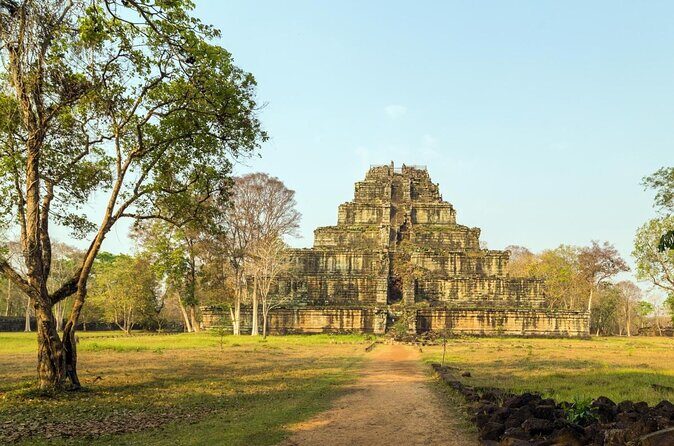
- Ta Prohm’s giant roots and quieter stops like Ta Nei when crowds can be rough
- Beng Mealea’s jungle chaos for a more raw, less-polished Angkor feel
Buying peace of mind: what this private 3-day Angkor tour is really for
This tour is priced at $261 per person, and the big value is not just the temples. It’s the logistics layer: you’re picked up right outside your hotel, transported in an air-conditioned vehicle, and returned to your hotel at the end of each day. Add in cool water and a cool wet towel, plus parking and road tolls, and you’re basically paying to reduce heat, confusion, and wasted time.
You also get a private setup. The tour is described as private for your group, which matters at Angkor because crowd flow is chaotic. Even if you still have to share space inside temples, you’re not stuck waiting for strangers to move at their pace. Your guide can keep the day moving in a way that fits your group.
One more practical note: temple admissions are not included in the price. There’s an extra Angkor Wat + all temples admission fee listed at $62.00 per person, and meals are also separate. That means you should budget a bit beyond the headline price if you want the full temple pass experience.
A few more Siem Reap tours and experiences worth a look
Day 1: Angkor Wat, Ta Prohm roots, Angkor Thom faces, and Phnom Bakheng sunset
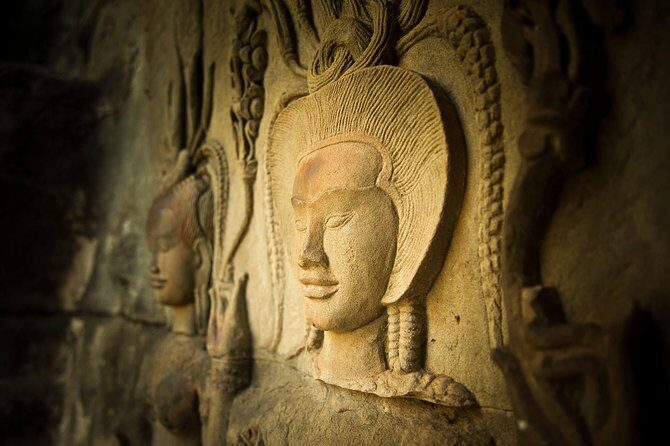
Day one starts after breakfast, with pickup around 8:00am. The guide meets you at your accommodation lobby and you’ll stop along the way to buy temple passes. That’s a small thing, but it’s a big stress saver. It means you’re not hunting for the right place when you’re already hungry, warm, and trying to beat crowds.
Angkor Wat: start with the main stage
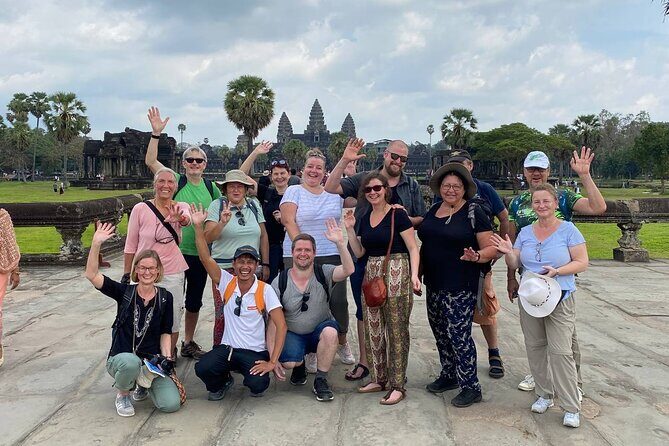
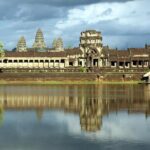
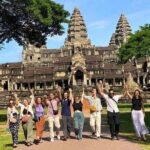
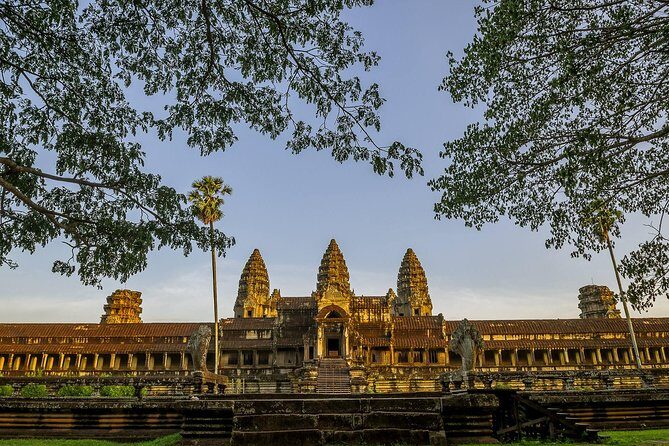
Angkor Wat is the anchor. Even without getting fancy, it’s the temple that changes how you see the whole Angkor complex. From here, your guide can connect symbolism, layout, and what different visitors miss when they rush photos. If you like history that sticks, this is where it starts.
Tip from the reality of the day: wear light layers and plan for walking. Even with transport between sites, you’ll still be out in sun and stone.
Ta Prohm: the temple the movies helped popularize
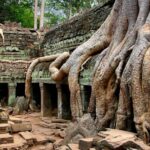
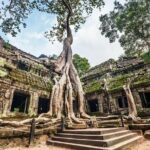
Ta Prohm is next, and yes, it really is a temple wrapped in giant tree roots. There’s a reason this site became a movie favorite. The roots don’t just look cool; they frame doorways, split corridors, and create natural spotlights that make the structure feel alive.
If you’re photographing, this is the kind of stop where timing can matter. The day’s heat will rise, so I’d focus on compositions early before the light flattens out too much.
Ta Nei: a quieter pocket when you want less crowd pressure
Ta Nei is a smaller temple and described as having less restoration, which often means fewer people and fewer distractions. You’ll still see big trees and a more intimate scale than the blockbuster sites. This is a nice break mid-day because your brain gets temple overload quickly.
Angkor Thom core: Victory Gate and Bayon faces
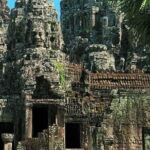
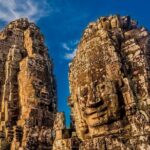
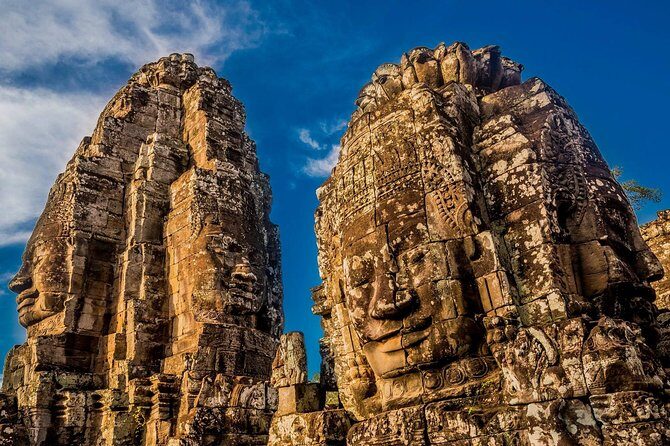
The tour then steps into the Angkor Thom circuit. You’ll stop at the Victory Gate, then continue to Bayon Temple in the center of Angkor Thom. Bayon is built with 49 towers, each tower with faces on all four sides, which adds up to 196 faces of Avalokiteshvara. It’s busy, even when it’s quiet, because the carvings are a repeating pattern you can’t stop studying.
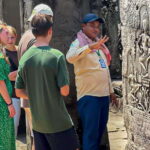
A guide helps here. Without commentary, you tend to look for the “best” faces. With commentary, you start noticing how the faces sit within the architecture and what that might have meant to the people who built it.
Baphuon, Phimeanakas, and the terraces: the royal story layer
After Bayon, you’ll hit Baphuon Temple, then Phimeanakas, and the Terrace of the Elephants plus the Terrace of the Leper King.
These stops are where Angkor becomes more than one iconic view. For example, Baphuon is described as a Hindu temple built before Angkor Wat, in the 11th century, with a reclining Buddha added later in the 16th century. That kind of layering is exactly what makes the complex feel like a living religious site over time.
The terraces also bring storytelling to the surfaces. The Terrace of the Elephants was used by kings to view victorious returning armies, and the carvings include elephant imagery. Names like Leper King can sound like a tourist label, but the platform setting makes more sense when you slow down and look at the placement and scale.
Phnom Bakheng: sunset views, and a climb you can’t pretend is easy
Finally, you climb Phnom Bakheng for sunset views. The tour notes there are limited numbers of tourists allowed, so you should expect constraints and queues near the top. The good news is that sunset is optional. If you don’t want to wait, you can skip that waiting period.
Either way, you’ll appreciate the vantage point. It’s one of the most famous sunset viewpoints around Angkor, and the effort feels justified when the light hits the stone and treetops below.
Day 2: 5:00am sunrise Angkor Wat plus Preah Khan, Neak Poan, and the Banteay temples
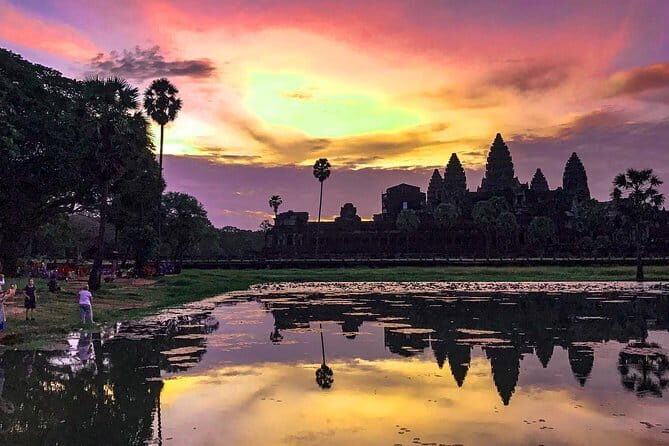
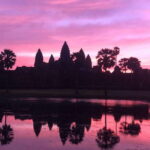
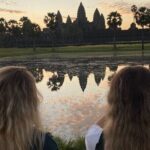
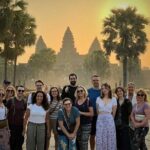
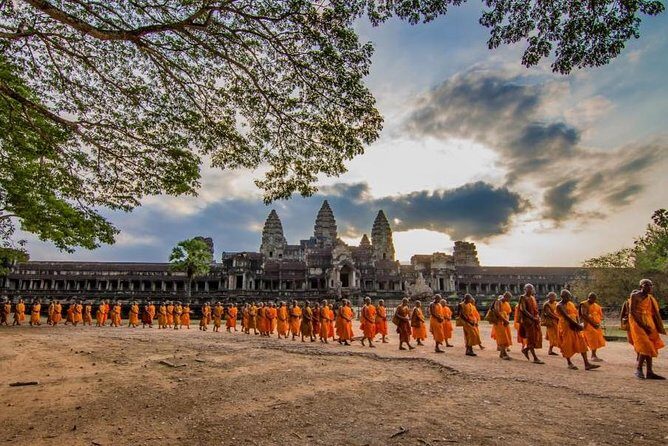
Day two starts early for the classic sunrise at Angkor Wat. Pickup is listed at 5:00am, so you’ll want a plan for sleep the night before. The payoff is timing: sunrise changes contrast, reduces crowd crush at the exact moment you want to see the main silhouette, and makes the carved stone feel less washed out.
Angkor Wat at sunrise: why this timing matters
If you’ve only ever seen Angkor in daylight photos, sunrise can feel like a different place. The temple’s lines sharpen, shadows deepen, and you get a calmer start to the day. Even if you don’t obsess over sunrise photography, your guide can point out details you might skip later when the site gets louder.
Preah Khan: big Buddhist presence tied to Jayavarman VII
After breakfast, you head to Preah Khan, a Buddhist temple built by King Jayavarman VII dedicated to his father. This stop helps you see Angkor as more than one religious identity. It also gives you a change in atmosphere compared with the Angkor Wat style.
Neak Poan and Ta Som: temple-island quiet and tree shade
You then visit Neak Pean, described as a small island temple in the middle of a water feature. Nearby is Ta Som, a smaller Buddhist temple on the east side of Neak Pean.
These are smaller stops, and that’s a plus. They can feel like a breather before you jump back into bigger ruins. If your legs are already protesting, shade and slower walking here help you reset.
Eastern Mebon and Pre Rup: temple-mountain feel and late-10th-century details
Next comes Eastern Mebon, described as a large temple-mountain-like ruin rising three levels and topped by five towers. It’s also noted for elephant statues at corners, which is a detail you’ll want to spot while you still have the energy to look around.
Then you’ll visit Pre Rup. It’s described as constructed in the late 10th century and dedicated to Hindu gods. The name is also explained as meaning turn the body, which hints at how visitors viewed or moved within the site. Even without a ritual explanation, the temple’s structure is the story.
Lunch break, then Banteay Srei: pink sandstone with careful detail
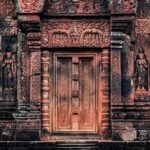
After lunch, the tour focuses on Banteay Srei (Ladies Temple). This is described as built from pink sandstone in the half of the 10th century by Hindu King Rajendravarman II for the Trinity Gods.
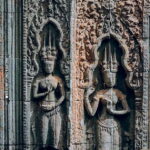
Banteay Srei can feel more delicate than the massive main sites. The color and fine carving scale give you a different type of satisfaction: less “wow size,” more “wow precision.”
Banteay Samre and Banteay Kdei: Angkor models repeated in smaller ways
You finish day two with Banteay Samre and Banteay Kdei.
Banteay Samre is described as a 12th-century Hindu temple, and the architecture is believed to follow a model similar to Angkor Wat. Then Banteay Kdei, a 12th-century Buddhist temple, is described as having structures similar in style to Ta Prohm and Bayon.
These last two are great if you like pattern recognition. A guide’s commentary matters here. Without it, you might see them as “also a temple.” With it, you start noticing how Khmer designers repeated themes across different periods and religions.
Day 3: Beng Mealea’s jungle ruin plus Rolous Group temples at Bakong
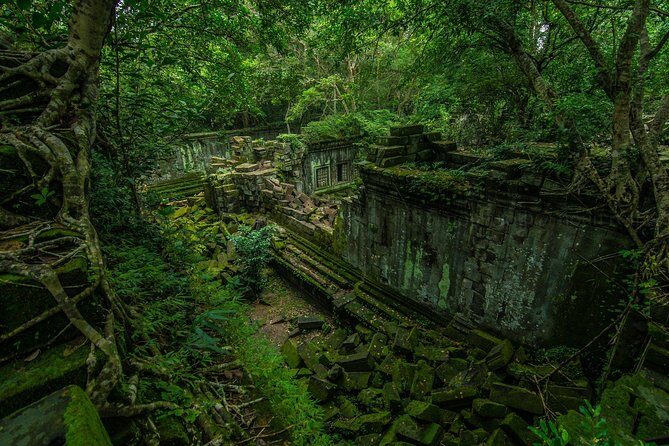
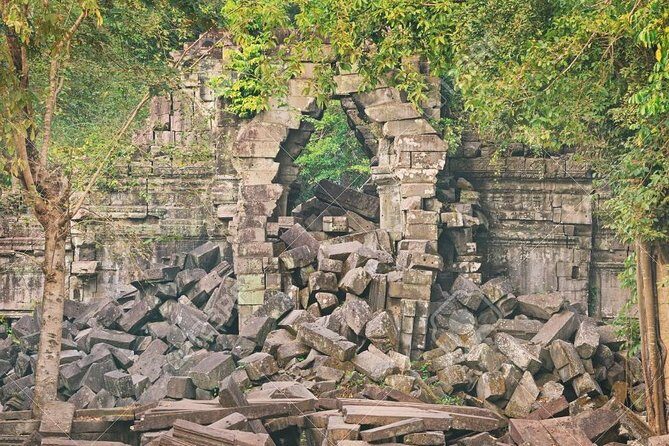
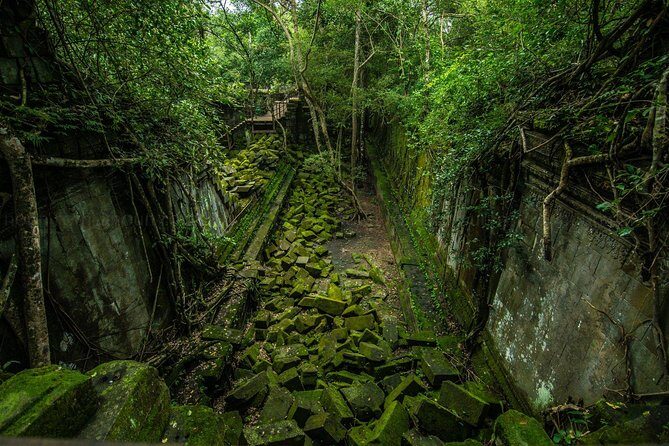
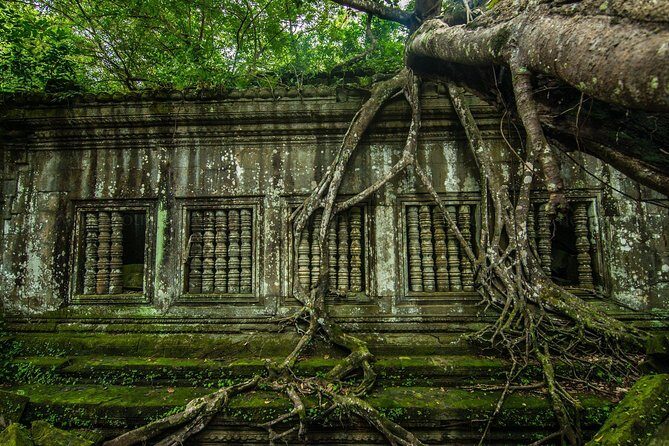
Day three shifts away from the most polished parts of Angkor. The highlight is Beng Mealea, located about 68km northeast of Siem Reap. This temple is described as one of the most mysterious at Angkor, with nature overruning the site.
Beng Mealea: the thrill of an unfinished-looking Angkor
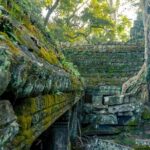
Beng Mealea is about stepping into a less-restored, more wild environment. Expect a lot of stone, broken paths, and the sense that the jungle is still deciding where the temple ends. This is the day for people who like exploring without a museum feel.
It’s also longer than most single temple stops, listed at about 3 hours 30 minutes. That’s enough time to wander, pause, and look at how the structure interacts with roots and fallen blocks.
Rolous Group: Lolei, Preah Ko, and Bakong
After Beng Mealea, you visit the Rolous Group cluster:
- Lolei: a small 9th-century Hindu temple
- Preah Ko: described as the first temple built in the ancient (now defunct) city of Hariharalaya
- Bakong: the first temple-mountain sandstone built by rulers of the Khmer empire and the biggest in the Rolous group
These stops are more “temple design” than “jungle drama.” That balance is smart. Beng Mealea gives you emotional contrast, and Rolous gives your brain a chance to process Khmer architectural ideas in a calmer rhythm.
Lunch plus optional shopping and the Old Market
The tour includes a lunch break at a restaurant along the way. After that, there are two optional stops you can skip:
- Artisans Angkor, noted for traditional craft skills like stone carving, wood carving, lacquering, gilding, and silk processing
- Psar Chaa (Old Market) in the center of Siem Reap
If you prefer temple time over shopping, you can simply skip both and keep your day focused.
Guide and pacing: why commentary changes everything at Angkor
Angkor ruins can be numbing if you treat them like photo stations. What makes this tour feel different is that it’s guided by an English-speaking licensed guide, with commentary aimed at history, religious meaning, and the stories behind carvings.
In past groups, guides have been praised for deep expertise, including one described as an archeologist and teacher (Mr. Khmer). Others, like Mony and Vanna, have also been noted for solid temple explanations and for helping guests understand what to look at. Another guide, Mr. Thou, is described as sharing history plus practical Cambodia context and even Siem Reap suggestions.
I like that mix: you get temple meaning, but you also get a sense of how to navigate the day like a human, not a camera on legs.
Pacing also matters. For example, you get a small quieter stop like Ta Nei, then you return to big crowd magnets like Bayon. A private guide can help you avoid spending too long stuck in the thick of it.
Getting around Siem Reap without the road headaches
Siem Reap traffic and road layout can be a learning curve. This tour handles transport in an air-conditioned vehicle with pickup and drop-off at your hotel each day. Parking fees and road tolls are included, which prevents those small “surprise” moments that add up fast.
You also get cool water and a cool wet towel in the vehicle. That sounds basic until you’ve been walking in humidity. It’s the kind of included comfort that makes early starts easier to survive.
Finally, the tour uses a mobile ticket feature, which is helpful if you’re trying to keep your day low-paper and simple.
Price and value: what you should budget beyond the headline $261
Let’s put the dollars in order.
- Tour price: $261 per person
- Admission fee: $62.00 per person for Angkor Wat + all temples
- Meals: meals are not included; lunch depends on the menu and is listed at USD 5.00 per person
So you’re likely looking at something closer to $323 per person for the major temple admissions, plus whatever you choose for meals beyond what’s covered.
Is that good value? For me, yes, if you care about two things: (1) a private, timed temple route that reduces stress and wasted travel, and (2) a guide who can turn the sites into stories you remember. If you’re the type who enjoys planning everything and doesn’t mind managing tickets, driving, and crowd timing, you might spend less on your own. But most people come to Angkor for the temples, not for logistics homework.
Who should book this 3-day Angkor circuit (and who might feel rushed)
This tour fits best if you want:
- A structured circuit with both main-temple icons and a more adventurous day at Beng Mealea
- Private guidance that helps you understand what you’re seeing
- Sunrise and sunset viewpoints without DIY planning
You might feel a little rushed if you prefer slow temple strolling with long breaks in cafes, or if you’re very sensitive to early mornings. Day two starts at 5:00am, and day one involves climbing Phnom Bakheng.
If you love detail, this is a good match. If you’re there mostly for quick photos, the private guide time might still be valuable, but you’ll want to keep your expectations realistic about walking time and heat.
Should you book it: the honest call
I’d book this tour if you want a smooth, private way to hit the big Angkor sites plus the jungle energy of Beng Mealea. The combination of hotel pickup, air-conditioned transport, cool water/wet towel, and guide commentary is the kind of comfort that makes the temple days actually enjoyable.
Skip it if you strongly prefer to drive yourself, you can’t handle early starts, or you’d rather pay for admissions separately and design your own circuit. Otherwise, this itinerary is built for people who want maximum temple value with minimal decision fatigue.
FAQ
What’s the pickup time on day one?
Pickup is listed at 8:00am from your hotel lobby after breakfast.
What’s the pickup time for Angkor Wat sunrise on day two?
Pickup is listed at 5:00am so you can watch sunrise at Angkor Wat.
Are temple admissions included in the price?
No. The admission fee for Angkor Wat + all temples is listed as $62.00 per person and is not included.
Does the tour include meals?
Meals are not included. Lunch is listed as USD 5.00 per person and depends on the menu.
Do you get hotel pickup and drop-off?
Yes. Pickup and return to your hotel in Siem Reap are included.
Is transportation air-conditioned?
Yes. An air-conditioned vehicle is included.
Does the tour include water and towels?
Yes. Cool water and a cool wet towel are included.
Do you visit both sunrise and sunset viewpoints?
Yes. Day two includes sunrise at Angkor Wat, and day one includes a sunset climb at Phnom Bakheng (with limited access). Sunset waiting can be skipped if you don’t want to wait.
How far is Beng Mealea from Siem Reap?
Beng Mealea is described as located about 68km northeast of Siem Reap.
Is this a private tour for just your group?
Yes. It’s described as a private tour/activity, with only your group participating.