REVIEW · SIEM REAP
Private Siem Reap 3 Day Tour Discover All Highlight Angkor Temple
Book on Viator →Operated by About Cambodia Travel & Tours · Bookable on Viator
Three days, one calm temple route. This private Siem Reap tour strings together Angkor Wat sunrise, Roluos temple ruins, Kampong Phluk on Tonle Sap, and a Phnom Bakheng sunset plan, with AC comfort and flexible timing.
I love the cold bottled water and cool towels that are available throughout the day. I also like the simple practicality of a licensed English guide and private driver handling the driving and timing, so you spend more energy looking at stone carvings and less on figuring out roads.
One consideration: the Angkor Pass isn’t included, and several days start early and involve real walking. If you’re planning on slow, shade-only sightseeing, you’ll want to pace yourself with the guide from day one.
In This Review
- Key Things I’d Book This Tour For
- Why This Private Siem Reap 3 Days Works Better Than Random Temple Stops
- Day 1: Roluos Temples, Kampong Phluk, and Wat Bo Temple Culture
- Preah Ko (Roluos) for the temple “before Angkor” feeling
- Bakong Temples: prototype pyramid energy from 881
- Lolei: smaller, younger, and sometimes less chaotic
- Kampong Phluk Floating Village by private cruise on Tonle Sap
- Wat Bo Temple for wall paintings in old Siem Reap
- Satcha Handicraft Center to watch how souvenirs are made
- Tonle Sap lake wrap-up
- Day 2: Angkor Wat Sunrise, Angkor Thom Gates, and the Long Bayon-to-Ta Prohm Loop
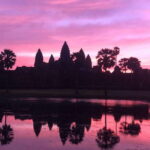
- Angkor Wat sunrise, then back for breakfast
- Angkor Thom South Gate: the emblem city gate
- Bayon Temple with its stone faces
- Baphuon and Phimeanakas: royal-temple geometry
- Terrace of the Elephants and the Terrace of the Leper King
- Ta Prohm: the jungle-temple moment
- Banteay Kdei: the long stop that needs stamina
- Ta Nei Temple for a quieter closing
- Day 3: Banteay Srei Beauty, Palm Sugar Lessons, and Island Temples
- Banteay Srei: the temple many people rate first for beauty
- Banteay Samre: near the East Baray
- Palm Sugar Producer Group: watch burning-stove sugar making
- Preah Khan: brief but historically anchored
- Neak Pean: the “different layout” temple on an artificial island
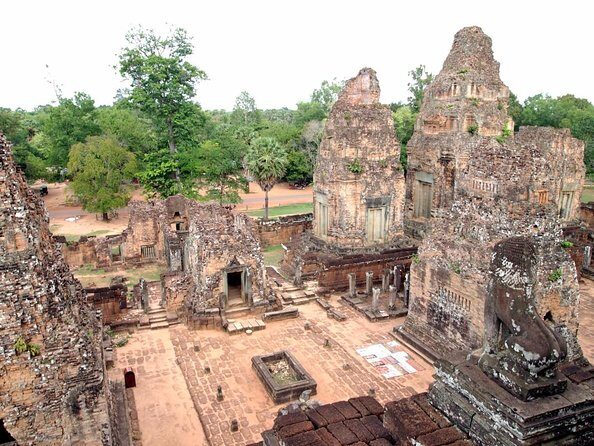
- Pre Rup and East Mebon: the 10th–mid-10th century temple rhythm
- Phnom Bakheng sunset plan
- Comfort, Your Driver, and What Makes the Days Feel Manageable
- Price and Value: What $253.65 Per Person Really Buys (and What Costs Extra)
- Practical Tips So You Stay Comfortable Through Temples and Boat Time
- Should You Book This Private Siem Reap 3-Day Angkor Highlights Tour?
- FAQ
- What is included in the tour price?
- Do I need to buy the Angkor Pass?
- Are meals included?
- Is this tour private?
- What about hotel pickup and drop-off?
- Can I cancel for a refund?
Key Things I’d Book This Tour For
- Angkor Wat sunrise with a return for breakfast so you’re not stuck wandering too long before your day even begins
- Air-conditioned private transfers that keep temple-hopping tolerable in the heat
- Private cruise to Kampong Phluk on Tonle Sap, including a longer look at daily life on the water
- A licensed English guide plus help buying the Angkor Pass at the Angkor park entrance
- Cold water and towels during the day—small thing, big difference for comfort
Why This Private Siem Reap 3 Days Works Better Than Random Temple Stops
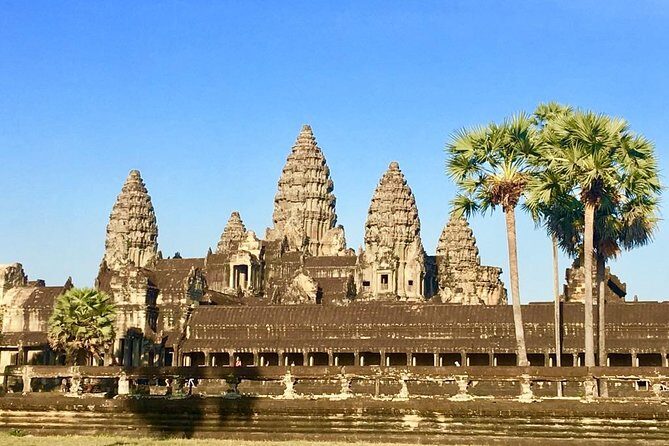
This is one of those tours that’s built for the way Angkor actually feels: spread out, sometimes far from each other, and easier when someone plans the order. You get a private setup, which means you’re not trapped in a fixed group tempo. If you want extra photos at one place, you can ask. If you’d rather cut something short to beat the midday heat, you can do that too.
The comfort matters as much as the temples. You’ll ride between stops in an air-conditioned vehicle, and you’re not expected to travel the whole day on your feet and buses. That’s especially useful on days where you’re bouncing between major “must-sees” and smaller ruins around Siem Reap.
And the tour mixes things many people miss when they only focus on the big temples: you’ll also see temple history beyond Angkor Wat, plus local life around Tonle Sap and in town.
You can also read our reviews of more private tours in Siem Reap
Day 1: Roluos Temples, Kampong Phluk, and Wat Bo Temple Culture
Day 1 is designed like a warm-up loop. You start with older temple sites in the Roluos area, then shift toward the Tonle Sap ecosystem and town culture.
Preah Ko (Roluos) for the temple “before Angkor” feeling
Preah Ko, the Shiva-temple in Angkor’s predecessor capital Hariharalaya (now called Roluos), helps you understand the progression of Khmer temple design. It sits halfway between Lolei and Bakong, which makes it a natural opener when you’re still fresh and your legs feel cooperative.
Admission here isn’t included, so you’ll want to rely on the Angkor Pass where it applies, or be ready for any separate ticketing if your day includes non-pass sites.
Bakong Temples: prototype pyramid energy from 881
Bakong was consecrated in 881 (built on Indravarman I’s order). It’s historically important because it’s often treated as a prototype of the typical Khmer pyramid temple plan. If you like recognizing design patterns—layers, terraces, and the way temples rise toward the center—this is a strong start.
Expect about an hour here, and don’t rush. Bakong is the kind of place where slowing down makes the architecture click.
Lolei: smaller, younger, and sometimes less chaotic
Lolei is in Roluos too, just a few hundred metres north of the A6 main road. It’s the youngest and smallest of the three key Roluos temples, and it’s described as less photogenic than the similar sites nearby. That said, smaller can be a blessing: you get breathing room and an easier view of details without as much crowds-pressure.
A few more Siem Reap tours and experiences worth a look
Kampong Phluk Floating Village by private cruise on Tonle Sap
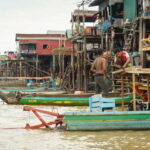
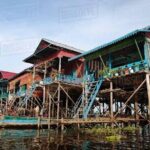
This is a big change of pace. Kampong Phluk is a floating community on the Tonle Sap lake, where families have lived there for 3–4 generations. The tour includes a private cruise and lists about three hours for this part, with the admission ticket included.
What I like about this stop is that it’s not just a quick photo stop. You get time to watch how daily life works on the water. You’ll also get context for why this area is so tightly linked to fishing and the lake’s productivity.
Wat Bo Temple for wall paintings in old Siem Reap
Wat Bo is one of the town’s oldest temples and includes well-preserved wall paintings from the late 19th century. This is the kind of stop that’s easy to overlook if you only chase the headline temples, but it adds human texture to the trip—art, religion, and local storytelling in one place.
The admission ticket is included for this stop in the tour’s schedule.
Satcha Handicraft Center to watch how souvenirs are made
Satcha is a Cambodian handicraft center focused on local artisans and traditional knowledge, mixing it with contemporary design ideas. It’s about an hour, with admission ticket included.
If you like souvenirs that don’t feel like random plastic, this is useful. You’ll also have a chance to see artisans at work rather than just buying at a shop.
Tonle Sap lake wrap-up
The day ends with a short Tonle Sap lake stop (about 30 minutes, admission included). The lake is described as one of the world’s most productive fishing lakes, supporting over three million people and providing over 75% of Cambodia’s annual inland fish catch.
Even if you don’t do another boat ride, this helps you connect the dots between what you saw at Kampong Phluk and why it matters.
Day 2: Angkor Wat Sunrise, Angkor Thom Gates, and the Long Bayon-to-Ta Prohm Loop
Day 2 is the classic Angkor day, but with a smart rhythm: early start for the big moment, then a temple circuit that takes in major sights.
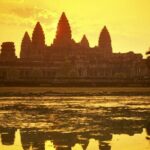
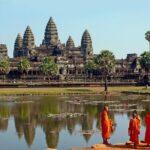
Angkor Wat sunrise, then back for breakfast
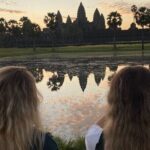
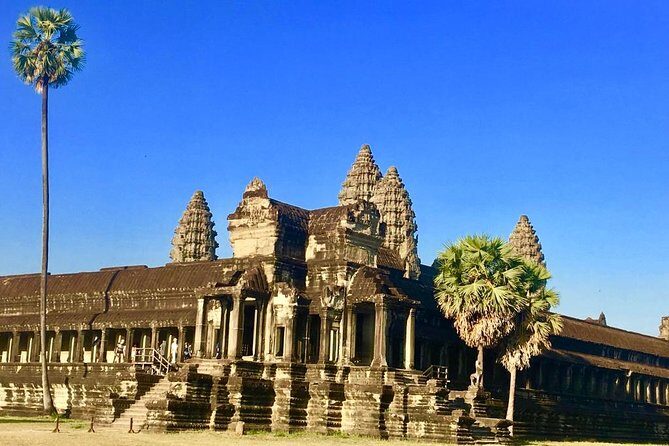
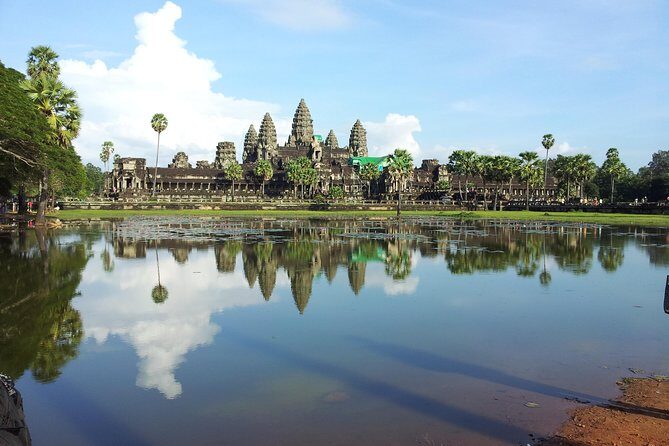
You’ll get up early for Angkor Wat sunrise and then explore after sunrise. The tour plan specifically notes that you return to your hotel for breakfast. That’s a practical detail: sunrise viewing is intense, and being able to eat before you continue your day helps you stay sharp (and not turn into a cranky foot-stumbler).
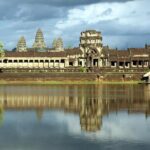
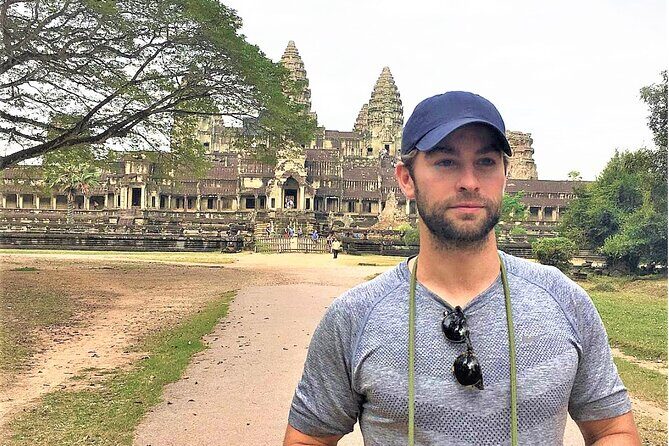
Angkor Wat admission isn’t included line-by-line here, but the tour notes that the Angkor Pass covers all temple entrances in the itinerary, and your guide helps you buy it at the Angkor park entrance before you start.
Angkor Thom South Gate: the emblem city gate
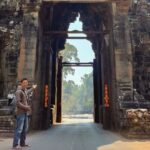
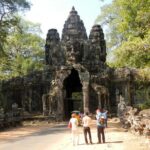
Next comes the South Gate of Angkor Thom, the most famous city gate. It’s the emblem you’ll see because it connects the Angkor Wat to the second-most popular destination in the area, Bayon.
This gate is a useful mental reset point. It transitions you from the Angkor Wat approach into the bigger Angkor Thom “city” feel.
Bayon Temple with its stone faces
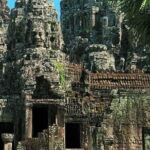
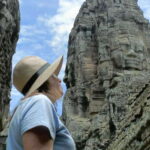
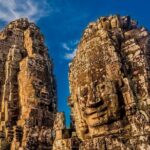
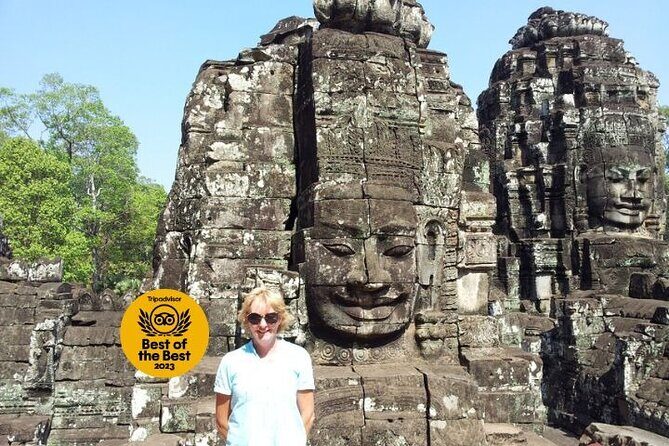
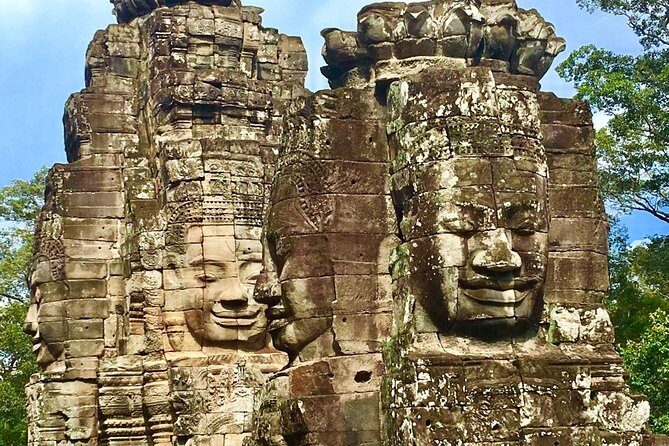
Bayon sits in the center of Angkor Thom and is known for the many enigmatic stone faces. The tour gives about an hour, which is about right. If you like comparing expressions as you move around, Bayon rewards slow steps.
Baphuon and Phimeanakas: royal-temple geometry
Baphuon is near the Royal Palace area and was completed around 1060 by King Udayadityavarman II, dedicated to Shiva. Phimeanakas began under King Rajendravarman II and later kings modified it; it’s predominantly a laterite structure.
These are stops where the guide’s commentary matters, because the architecture reads differently when you understand what each structure was meant to do.
Terrace of the Elephants and the Terrace of the Leper King
The Elephant Terrace forms the western edge of the Royal Square. Immediately north sits the Terrace of the Leper King. Both are worth studying because they work like carved storyboards along the terrace line.
If you’re pressed for time, focus on one terrace carefully. Trying to sprint through both usually means you remember the scenery, not the carvings.
Ta Prohm: the jungle-temple moment
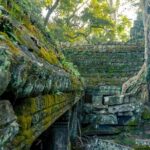
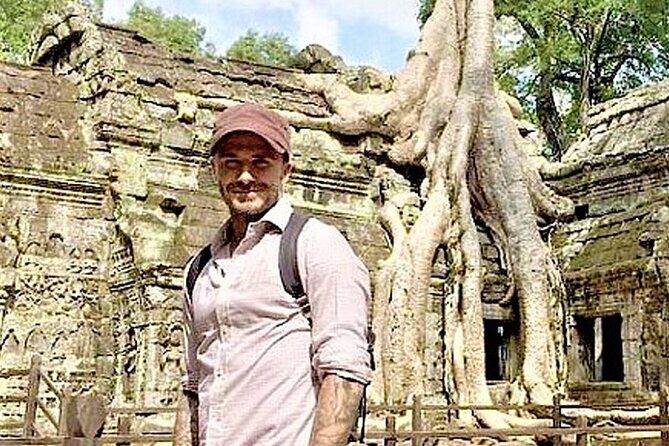
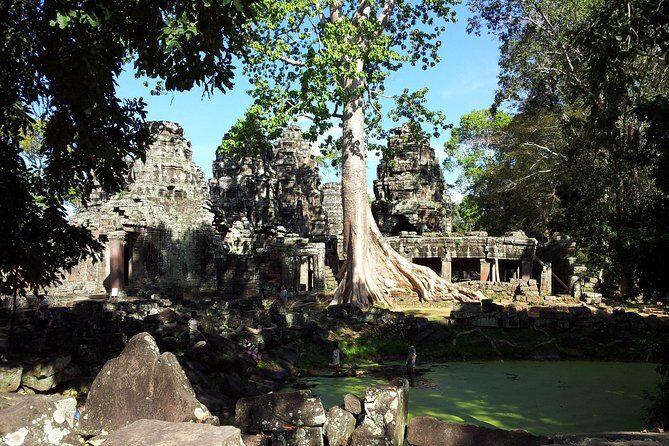
Ta Prohm is famous as Angkor’s jungle temple. You’ll spend about an hour. It’s a strong contrast with the more “clean” stone structures—more tangled, more atmospheric, and often photographed for the way trees frame the ruins.
Banteay Kdei: the long stop that needs stamina
Banteay Kdei is listed with a much longer time block (about 7 hours 30 minutes). This is the day’s endurance test. Jayavarman VII built it, and it’s described as a huge temple built by the Buddhist ruler.
If the thought of a long sit-and-walk day makes you sweat, use that time strategically: pick a few priority areas within the temple zone and let the rest be bonus.
Ta Nei Temple for a quieter closing
Ta Nei is a late 12th-century stone temple dedicated to the Buddha. It’s shorter (about 40 minutes) and can function as a calmer end to a big day. It’s the kind of stop where you can look at smaller details after all the monumental sights.
Day 3: Banteay Srei Beauty, Palm Sugar Lessons, and Island Temples
Day 3 shifts from the massive Angkor “power route” to smaller, more specific temple experiences—and a real cultural activity that isn’t just sightseeing.
Banteay Srei: the temple many people rate first for beauty
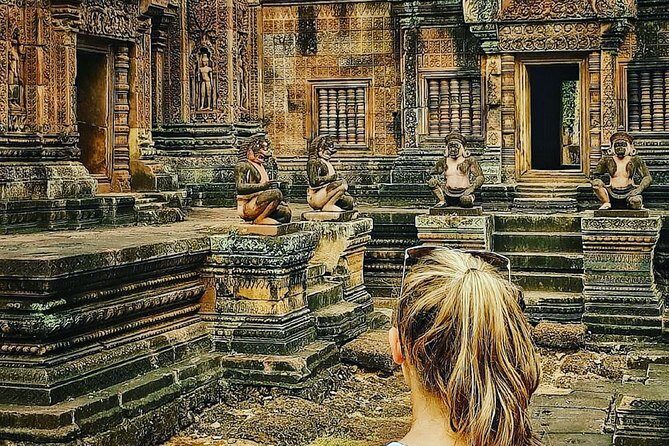
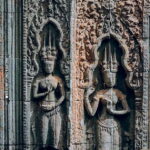
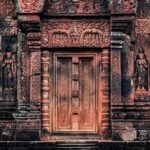
Banteay Srei is often mentioned as a favorite because it looks more delicate than many of the bigger structures. The tour gives about two hours. That’s enough time to appreciate the fine carvings without turning the visit into a blur.
This is also one of those places where your guide can help you spot what you might otherwise miss.
Banteay Samre: near the East Baray
Banteay Samré is about 400 metres east of the East Baray. Built in the early 12th century during the reign of Suryavarman II and Yasovarman II, it’s described as a Hindu temple in the Angkor area.
You’ll spend about an hour, which makes it a solid follow-up without exhausting your energy before the longer cultural stop later.
Palm Sugar Producer Group: watch burning-stove sugar making
This is the day’s culture highlight beyond temples. You’ll visit a Palm Sugar Producer Group and souvenir sellers for a long block (about six hours), with admission included.
The tour specifically mentions learning with a burning stove about the prices of making sugar in action. That’s the practical kind of cultural learning I enjoy: how the process works and why it costs what it costs.
Preah Khan: brief but historically anchored
Preah Khan is dedicated in 1191 to Jayavarman VII’s father, with the central statue referred to as Jayavarmeshvara. The scheduled stop is extremely short (about 2 minutes).
With a quick stop like this, treat it as a waypoint. Get your quick orientation, take a few key photos, and move on.
Neak Pean: the “different layout” temple on an artificial island
Neak Pean stands out because its layout differs from other Khmer architecture. It’s a temple on an artificial island of about 350 metres diameter inside a huge Baray. You’ll spend around an hour here.
This is where you start noticing that Khmer temple design isn’t just about one style. It changes depending on the setting and symbolic purpose.
Pre Rup and East Mebon: the 10th–mid-10th century temple rhythm
Pre Rup was founded in 961 and is tied to Rajendravarman II. East Mebon is a 10th-century temple built during Rajendravarman’s reign, originally standing on an artificial island at the center of the now-dry East Baray reservoir.
Both stops are about an hour or less. They make a nice final temple sequence because they’re easier to fit into the day without needing to sprint between huge clusters.
Phnom Bakheng sunset plan
Your overall tour description also includes a sunset visit to Phnom Bakheng. That’s a fitting final mood after temple days: you’re more likely to remember the light, silhouettes, and skyline than the details—though your guide can point out what to look for.
Comfort, Your Driver, and What Makes the Days Feel Manageable
The tour’s comfort details aren’t flashy, but they’re smart for real travel. Cold bottled water and cool fresh towels are provided throughout. You travel by private air-conditioned vehicle between stops, which matters a lot when Siem Reap days run hot and humid.
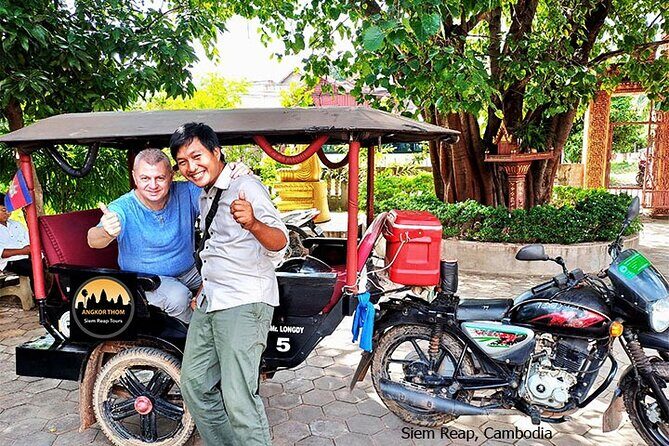
One helpful detail from a previous experience with this tour style: the driver Ree was associated with a clean, safe Toyota Highlander with AC, iced towels, and cold water. That’s exactly what you want to hear, because it tells you the comfort setup is taken seriously.
Your guide is described as a professional licensed English speaker. More importantly, your guide assists with purchasing the Angkor Pass at the entrance of Angkor Park before the tour starts—so you’re not stuck trying to decode official lines and ticket rules mid-adventure.
Price and Value: What $253.65 Per Person Really Buys (and What Costs Extra)
At $253.65 per person, this isn’t a bargain-basement deal, but it’s also not priced like a luxury-only fantasy. You’re paying for a private three-day package that includes:
- hotel pickup and drop-off in Siem Reap (you provide your hotel name)
- a licensed English-speaking guide
- private air-conditioned transfers across all the locations listed
- a private cruise for Kampong Phluk
- drinking water and cool fresh towels during the trip
That makes the value clearer: you’re not just buying temple tickets. You’re buying time, comfort, and a smoother route that reaches far-flung points in a short window.
Two notable extras:
- Tips for your guide and driver are not included.
- Meals aren’t included. Lunches are available at local restaurants with vegetarian and non-vegetarian options, with menu prices roughly $3–$10 per dish.
The big one you must plan for is the entrance cost:
- The Angkor Pass is not included, but it covers all temple entrances in the itinerary, and your guide helps you purchase it at the park entrance.
The tour also lists group discounts and a mobile ticket option. If you’re traveling with friends, it may be worth asking whether the operator can apply group pricing. (Don’t assume; just confirm.)
Finally, the tour is noted as being booked about 100 days in advance on average. That’s often a sign that the route and comfort setup are in demand, so if your dates are fixed, booking earlier usually gives you more options.
Practical Tips So You Stay Comfortable Through Temples and Boat Time
Here’s how I’d set yourself up for an easier experience based on what this tour includes and the kind of sites you’ll see:
- Wear shoes you can walk in for hours. Temple surfaces can be uneven, and you’ll do a lot of it across three days.
- Keep a hat and sunscreen handy. Water and towels help, but shade is still limited in open areas.
- Treat Angkor mornings as serious business. Sunrise plans mean early starts, and the tour’s structure expects you to be ready.
- Plan for extra spending on meals. Lunch isn’t included, and prices run around $3–$10 per dish.
- Use the guide’s flexibility. Private tours work best when you set priorities: carvings, fewer crowds, longer photo time, or shorter stops.
Should You Book This Private Siem Reap 3-Day Angkor Highlights Tour?
If your goal is to hit the biggest Angkor moments—Angkor Wat at sunrise, Angkor Thom highlights, plus Banteay Srei—and still get out into real surroundings like Tonle Sap and Kampong Phluk, this tour fits well. The private AC transport plus cold water and towels make the long days feel more manageable, and the route includes both iconic sites and smaller structures.
Book it if:
- you want a flexible private plan instead of a rigid group schedule
- you value comfort between stops
- you like mixing temples with culture beyond the main Angkor temples
Consider a different option if:
- you’re extremely sensitive to early mornings
- you don’t want a long day (the schedule includes a very long Banteay Kdei time block and a long palm sugar activity day)
- you’d rather not handle extra costs like the Angkor Pass and meals separately
FAQ
What is included in the tour price?
Pickup and drop-off from your hotel in Siem Reap, a professional English-speaking licensed guide, private transfers by air-conditioned vehicle, a private cruise to visit Kampong Phluk on Tonle Sap, and cold bottled water plus cool fresh towels throughout the trip.
Do I need to buy the Angkor Pass?
Yes. Entrance fee for temples, including the Angkor Pass, is not included. Your tour guide will assist you in purchasing it at the entrance of Angkor Park before starting the tour.
Are meals included?
No. Meals are not included, but lunches are available at local restaurants with both vegetarian and non-vegetarian options. Meal costs are your expense, with menu prices typically ranging from $3–$10 per dish.
Is this tour private?
Yes. This is a private tour/activity, and only your group participates.
What about hotel pickup and drop-off?
Hotel pickup and drop-off are included. You need to provide your hotel name in Siem Reap for the tour pickup.
Can I cancel for a refund?
Yes. Cancellation is free. You can cancel up to 24 hours in advance for a full refund, and cancellations closer than 24 hours before the start time are not refunded.