REVIEW · SIEM REAP
Siem Reap: Angkor Wat Small-group Sunrise or Sunset Tour
Book on GetYourGuide →Operated by Angkor Wat Combine Tours · Bookable on GetYourGuide
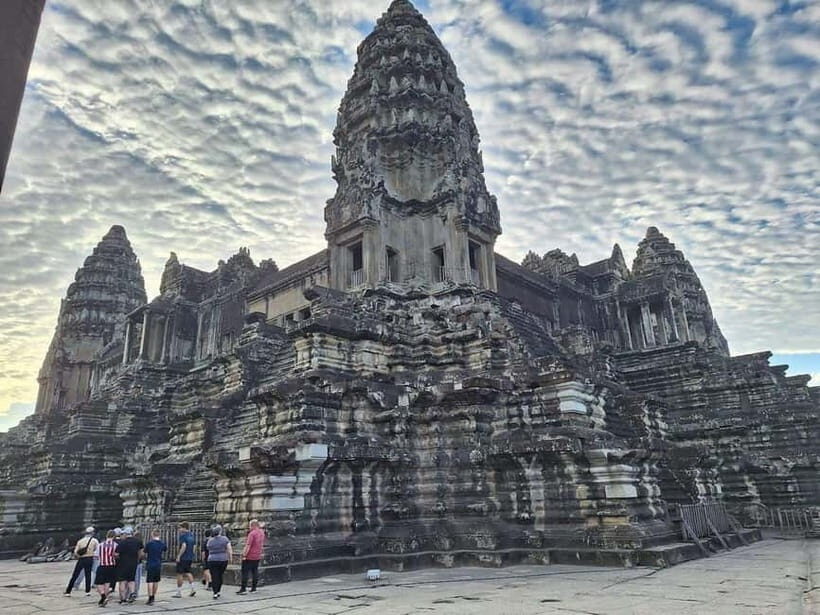
Angkor Wat at dawn changes everything. This small-group tour is built around getting you into the right temples at the right light, starting with sunrise (or sunset) timing and a route that aims to feel calmer than the usual stampede. The stops balance the big icons with a quieter temple, so your photos and your understanding both get a workout.
What I like most is the mix of moments: the reflections at Angkor Wat right when the towers glow, then the contrast of Bayon’s 200+ stone faces and Ta Prohm’s tree-root chaos. I also like that the experience is tied together by an English-speaking guide and round-trip hotel pickup in an air-conditioned minibus, plus basic comfort like drinking water.
One thing to consider: the temple-ticket cost isn’t included, and your enjoyment can hinge on guide quality—some guides explain the temples and history clearly, while others stick to light facts and leave you to piece things together.
In This Review
- Key Highlights You’ll Actually Care About
- Getting There: Pickup Timing and the Pace of a Small-Group Day
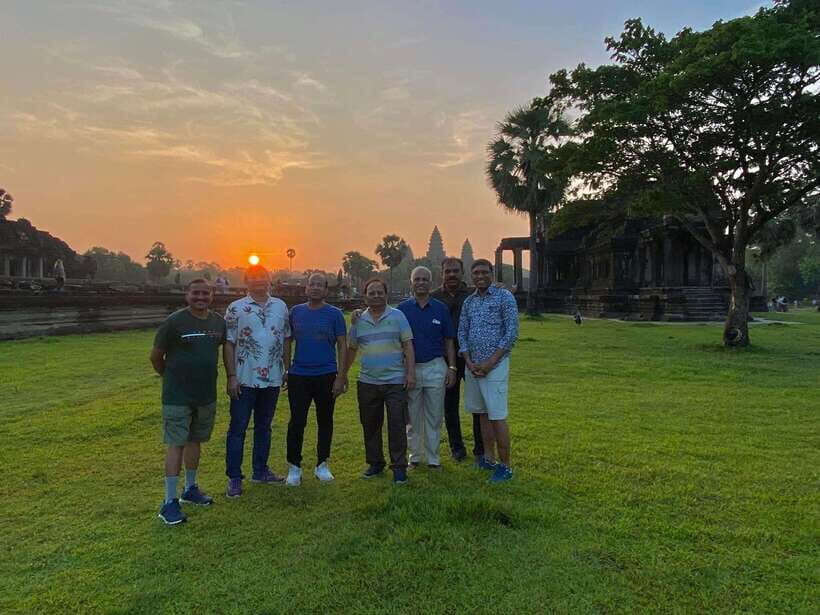
- Angkor Wat at Sunrise (or Sunset): Why Timing and Entrances Change Everything
- Inside Angkor Wat: Vishnu Roots, Buddhist Chapter, and the Bas-Reliefs You’ll Notice
- Bayon Temple in Angkor Thom: The Faces That Follow You
- Ta Prohm: The Jungle Temple Moment and How to See It Without Rushing
- Banteay Kdei: The Quieter Temple That Makes the Whole Day Feel Balanced
- Price and Value: Why $12 Can Be a Great Deal (And What You Still Pay For)
- What Makes This Tour Go Right: The Guide Factor
- Small Logistics That Actually Matter (No Guesswork Needed)
- Who This Tour Suits Best
- Should You Book This Tour?
- FAQ
- Is the temple ticket included in the tour price?
- How long is the Siem Reap Angkor sunrise or sunset tour?
- Which temples are visited on this tour?
- Do I get hotel pickup and drop-off?
- What time is pickup?
- Is the tour guide available in English?
- Is transportation included?
- Does the tour include drinking water?
- Can I bring alcohol on the tour?
Key Highlights You’ll Actually Care About
- Western entrance at Angkor Wat for early viewing to help you avoid the biggest crush while the light is still kind
- Sunrise time built for photos, including a dedicated window before most groups arrive
- Bayon’s 54 towers with four faces each, plus carvings that cover both everyday life and battles
- Ta Prohm’s “jungle temple” look, made famous by the movie Tomb Raider with Angelina Jolie
- Banteay Kdei’s quieter vibe, with serene corridors and partial ruins that feel more reflective
- English guide + pickup/drop-off, so you’re not figuring out logistics before your first temple
Getting There: Pickup Timing and the Pace of a Small-Group Day
Your tour starts with hotel pickup in Krong Siem Reap, with the meet time listed between 8:15am and 9:00am. That timing matters because Angkor temple visits are all about light and crowds, not just the buildings themselves. And the trip to the Angkor Archaeological Park uses an air-conditioned minibus, which is a relief once the heat kicks in.
Because it’s designed as a small-group outing, you generally get a smoother flow than the super-churn bus tours. You’re not stuck waiting around for ages between stops, but you also aren’t sprinting like you’re late for a flight. The tradeoff is that the day still moves at a guided-tour rhythm, so if you want to linger for hours on one carving, you’ll have to do it during the built-in walk and photo pauses.
A practical note: you’ll be responsible for temple ticket/entrance fees, and the guide can help you get moving fast. The tour also includes drinking water, which sounds basic until you’re standing in direct sun with no shade for long minutes.
You can also read our reviews of more evening experiences in Siem Reap

Angkor Wat at Sunrise (or Sunset): Why Timing and Entrances Change Everything
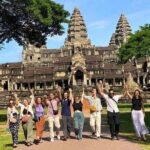
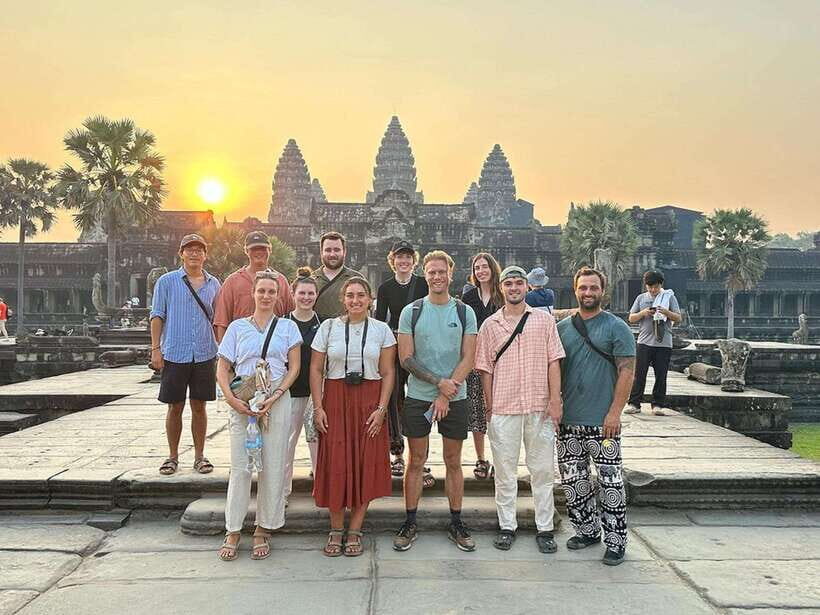
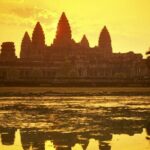
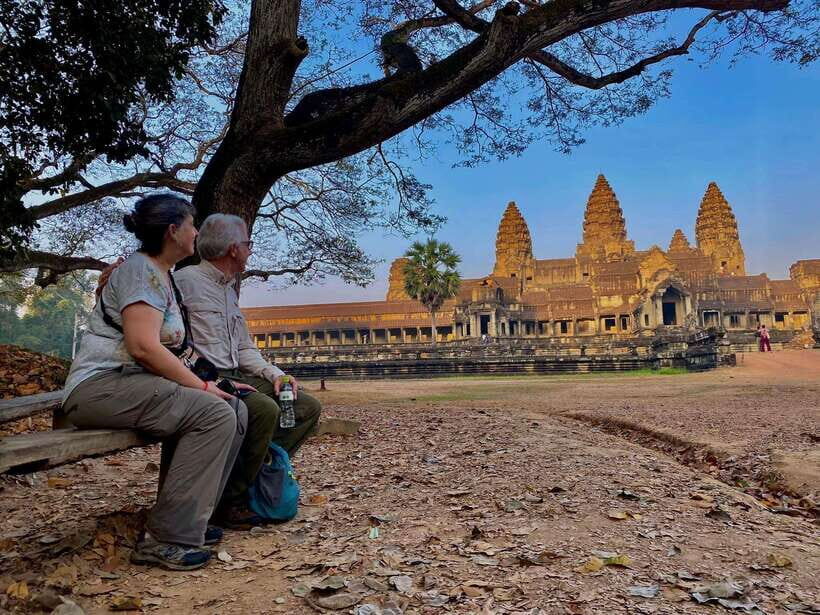
Angkor Wat is the main event, and the tour plans its big moment around a sunrise viewing. You start by going to the Angkor Archaeological Park, then purchasing your entrance tickets (own expense). After that, the tour route aims you through a smaller-used route: the western entrance, which can help you experience Angkor Wat with less chaos than you’d get from the busiest approaches.
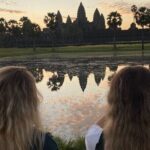
Here’s why that matters. When Angkor Wat hits sunrise light, the moats and surrounding water can throw back that soft, layered glow across the towers. If you arrive after the crowds fully set up, you’ll spend your best minutes fighting for angles. If you arrive early enough, you can slow down, look closely at the carvings, and actually enjoy the place instead of just snapping and moving.
Once you’re inside, the tour includes time for photo stops and a guided visit plus walking time around the complex. And because the schedule is focused on sunrise (or sunset, depending on the start you book), you’re more likely to catch the temple at its most dramatic hour—when shadows define the stone and details stop blending together.
Inside Angkor Wat: Vishnu Roots, Buddhist Chapter, and the Bas-Reliefs You’ll Notice
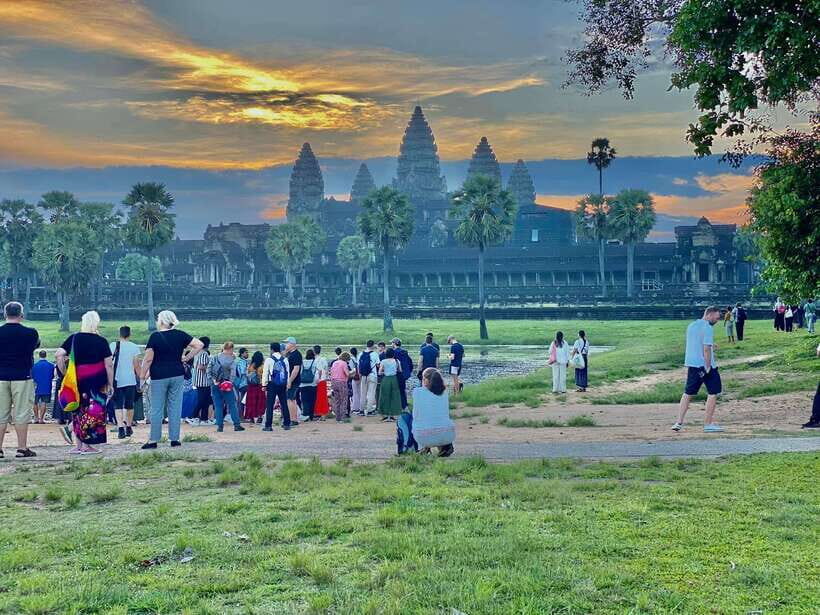
Angkor Wat began as a Hindu temple for Vishnu, then later became a Buddhist site. That shift is part of why the complex feels both majestic and layered—you’ll see elements that point to different eras of belief, all carved into the same stone canvas.
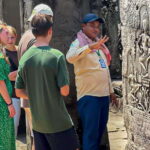
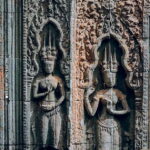
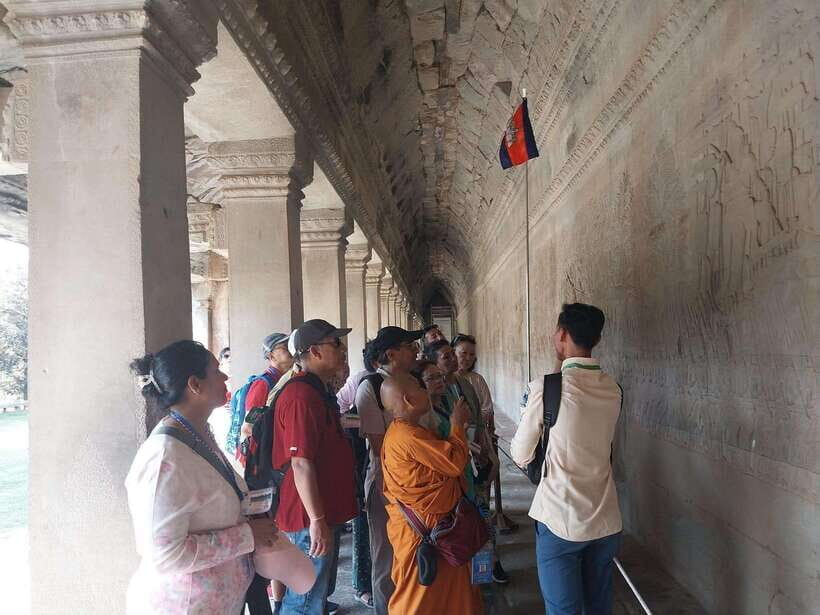
During the guided portion, you’ll explore the central sanctuary, move through the grand galleries, and spend time on intricate bas-reliefs. The bas-reliefs aren’t just decoration. They’re a visual storytelling system: myth, meaning, and daily life translated into stone panels you can walk past and study with your guide’s explanations.
This is one of those moments where an English-speaking guide can truly upgrade the experience. Without context, you can still enjoy Angkor Wat as architecture and sculpture. With context, you start noticing how the carvings are organized and what themes show up again and again.
Also, be ready for a lot of walking—Angkor Wat isn’t one quick stop. The walking time is part of the payoff, but it’s smart to wear shoes that handle uneven stone and dust.
Bayon Temple in Angkor Thom: The Faces That Follow You
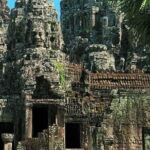
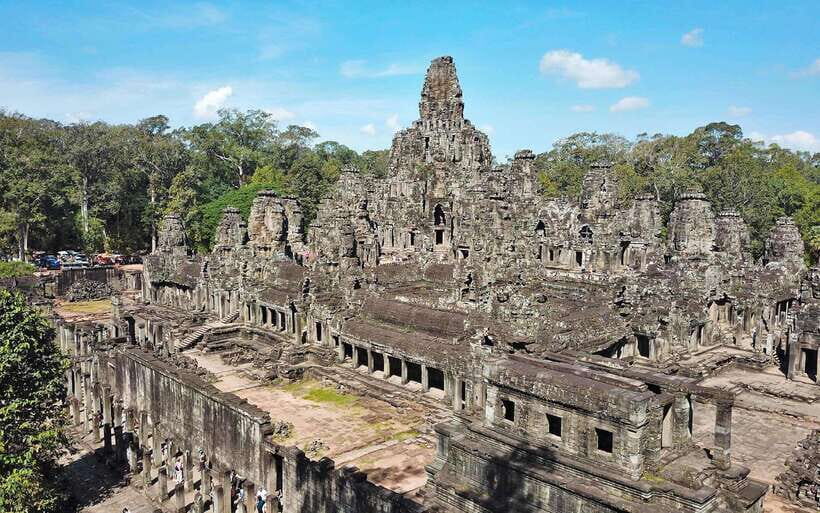
After Angkor Wat, the tour heads to Bayon Temple, set within the larger area of Angkor Thom. Bayon is famous for its 54 towers, each decorated with four massive stone faces. If you’ve only seen pictures, it’s still surprising in person because the faces feel both serene and slightly intense, like they’re watching you as you move.
The tour includes a guided visit and photo stops, plus time for walking through the temple areas. You’ll also get explanations tied to the carvings, including scenes connected to both daily life and historical battles. That mix is a big part of why Bayon feels different from Angkor Wat. It’s less about grand ceremony and more about story—who people were, what they did, and what conflict looked like in carved stone.
One practical tip: this is a great temple to slow down and frame shots with the towers and the faces in the background. If your guide is good at photo timing, you’ll likely get better angles because they know where to stand and when to wait for a clear line through the crowd.
Ta Prohm: The Jungle Temple Moment and How to See It Without Rushing
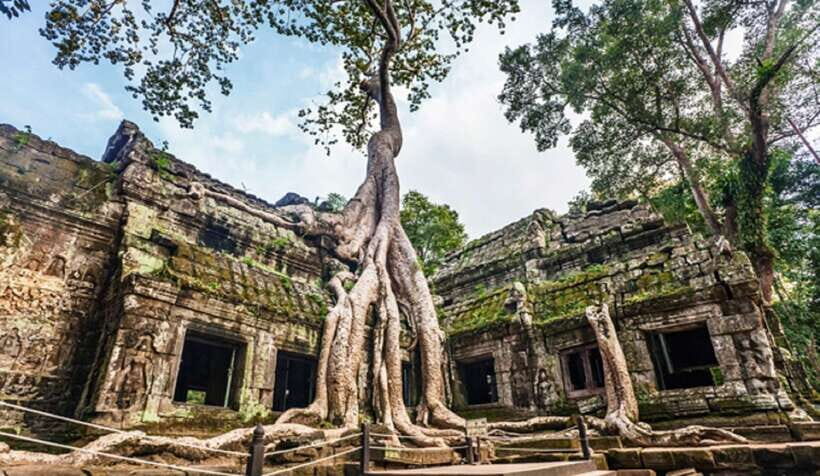
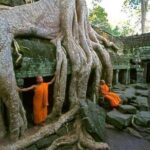
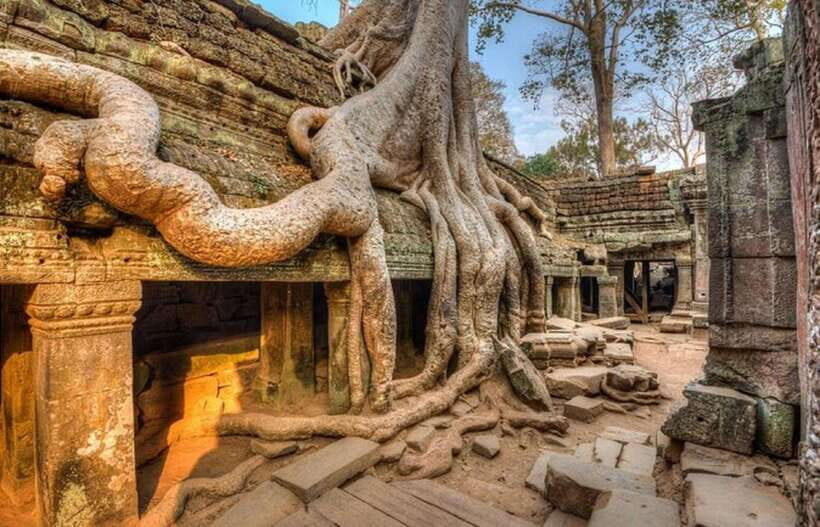
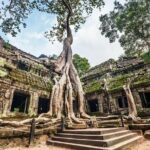
Then comes Ta Prohm, the temple most people recognize instantly because of the dramatic tree roots that grow over the ruins. The tour gives you time in and around Ta Prohm for both break time and temple exploration, followed by a second segment that includes another photo stop and guided walking.
This temple is special because it’s known for being left in a way that keeps its famous jungle temple effect. Even if you already know it from photos, seeing how the roots wrap the stone in real scale hits different. And yes, it gained global attention through the movie Tomb Raider, with Angelina Jolie, which is why you’ll sometimes see visitors arriving with that pop-culture memory already in their heads.
If you want to photograph Ta Prohm well, you’ll benefit from taking your time with the “layers”: roots in the foreground, stone blocks in the mid-ground, and tower gaps or sky in the background. The tour’s structure helps here because it doesn’t treat Ta Prohm as one quick photo stop. You get a chance to pause, reset, and then return for more guided time.
A note on comfort: Ta Prohm can feel busy and slippery in places due to shade and ground texture. Walk carefully, keep your focus on footing, and you’ll enjoy the scene more instead of worrying about balance.
A few more Siem Reap tours and experiences worth a look
Banteay Kdei: The Quieter Temple That Makes the Whole Day Feel Balanced
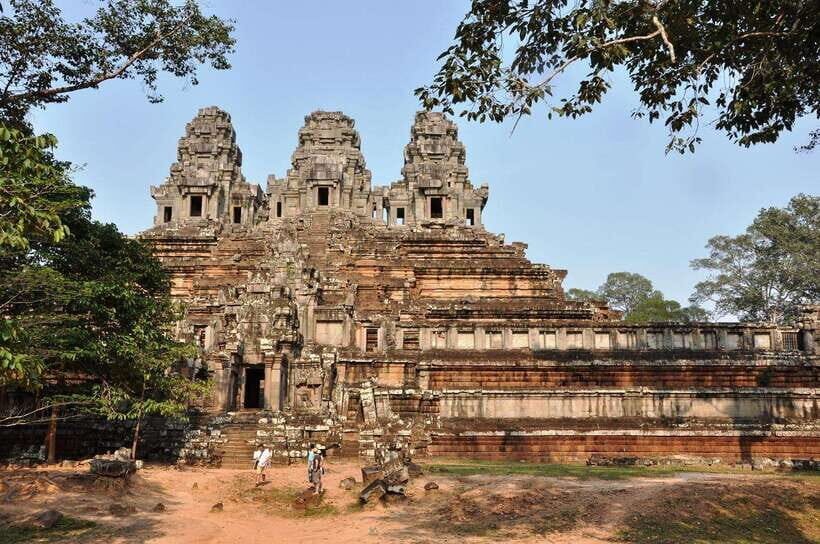
After Ta Prohm, the tour adds a final temple: Banteay Kdei. This is the one many visitors skip when they only chase the most famous names, but it’s often the stop that makes the day feel rounded.
Banteay Kdei translates to Citadel of Chambers, and it’s a late 12th-century Buddhist monastery. The architecture and carvings are distinctive, but the real emotional shift comes from the fact that it’s typically calmer and more contemplative. Part of the temple exists in ruins, which can add a peaceful, mysterious atmosphere compared with temples that feel tightly staged for crowds.
The guided visit is shorter here, but the payoff is high. You’ll spend time walking through the corridors and taking in carvings that feel less like a checklist and more like a place you can exhale in. If Angkor Wat and Bayon feel like visual powerhouses, Banteay Kdei gives your brain a softer landing.
Price and Value: Why $12 Can Be a Great Deal (And What You Still Pay For)
The listed price is $12 per person for an 8-hour tour, and that includes an English-speaking guide, transportation (air-conditioned minibus), hotel pickup and drop-off, and drinking water. The major extra cost is the temple ticket/entrance fee, which is own expense.
So is it worth it? For many people, yes—because you’re paying for the hard parts: logistics, guided pacing, and interpretation while you’re walking through complex sites. Temple entrance fees are a separate line item everywhere in Angkor, so the real value question is what you get beyond the ticket.
Here’s where the tour can shine: if your guide explains the temple meanings clearly and helps you with practical photo spots, your $12 can feel like a bargain. If your guide is light on history and language, you’ll still see amazing buildings, but you’ll lose some of the “why” that makes the carvings click.
What Makes This Tour Go Right: The Guide Factor
The tour experience can rise or fall with the English-speaking guide—and the difference is noticeable. One guide named David was praised for energy and for teaching people a lot, which is exactly what you want at Angkor when your brain needs help sorting Hindu and Buddhist layers. Another guide, Mr Kosal, was highlighted for personality, clear English, and making sure everyone got good photos by knowing the right spots and taking time.
But not every day is perfect. If your guide is more hands-off—like a guide named Noon was described as explaining very little and needing better English—you may end up exploring and basically guessing at history. That doesn’t mean the temples will be disappointing; it means you’ll have to do more reading and observing on your own.
If you book, consider this your small checklist: you want someone who can connect the carvings to the temple purpose and explain what you’re standing in front of. If they do that well, the whole day feels smoother and richer.
Small Logistics That Actually Matter (No Guesswork Needed)
Because this tour includes pickup and drop-off, you don’t waste your morning trying to arrange transport. The minibus ride also helps you start temples before you melt in the heat.
There’s also a practical rule: alcohol and drugs aren’t allowed. Not a life-shaping detail, but it does reinforce that the tour is focused and not a party situation.
And the tour includes “skip the ticket line,” which can save time when the entry process is busy. You’ll still need to buy the ticket (not included), but you’re less likely to lose your sunrise/sunset window to paperwork.
Who This Tour Suits Best
This is a good match if you want:
- A guided route through Angkor Wat, Bayon, Ta Prohm, and Banteay Kdei without planning every turn
- A timing-focused visit for sunrise or sunset light
- An English guide who can help interpret carvings and temple themes while you walk
It’s also a great option if you’re traveling with people who want a mix of iconic sights and less crowded temples. Banteay Kdei is the kind of stop that gives you a different feel than the biggest Instagram anchors.
If you’re the type who loves to linger in complete silence with your own thoughts, you might find the guided pace a little tight. Still, you can use the walking and photo stops to slow down where you care most.
Should You Book This Tour?
Book this tour if you want a well-paced day with a guide, especially for the big moments: Angkor Wat at sunrise and Bayon’s face towers. The price plus included transport and water makes it hard to beat for first-time temple visitors who want help understanding what they’re seeing.
Skip it or switch tactics if you’re extremely guide-dependent and worried about storytelling. Since your temple experience can be very different depending on the guide, it helps to book with confidence in the guide you’ll get—and if you care about deep explanations, you’ll want a guide who actually talks through the temples instead of moving you along.
If you’re flexible, keep your expectations realistic, and bring comfortable shoes, you’ll leave with a full Angkor sampler that feels more balanced than just chasing the headlines.
FAQ
Is the temple ticket included in the tour price?
No. Temple tickets or entrance fees are not included, and you purchase them when you arrive at the Angkor Archaeological Park.
How long is the Siem Reap Angkor sunrise or sunset tour?
The tour runs for 8 hours.
Which temples are visited on this tour?
You’ll visit Angkor Wat, Bayon Temple, Ta Prohm Temple, and Banteay Kdei.
Do I get hotel pickup and drop-off?
Yes. Pickup and drop-off are included, and you meet your guide at your hotel lobby.
What time is pickup?
Pickup time is listed as 8:15am to 9:00am, depending on the schedule.
Is the tour guide available in English?
Yes. The tour includes an English-speaking live guide.
Is transportation included?
Yes. The tour provides transportation by air-conditioned minibus/coach.
Does the tour include drinking water?
Yes. Drinking water is included.
Can I bring alcohol on the tour?
No. Alcohol and drugs are not allowed.