REVIEW · SIEM REAP
3 Days Siem Reap Explorer – Small Group
Book on Viator →Operated by Journey Cambodia · Bookable on Viator
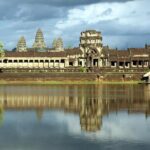
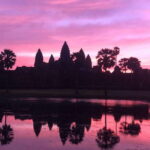
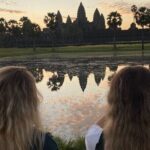
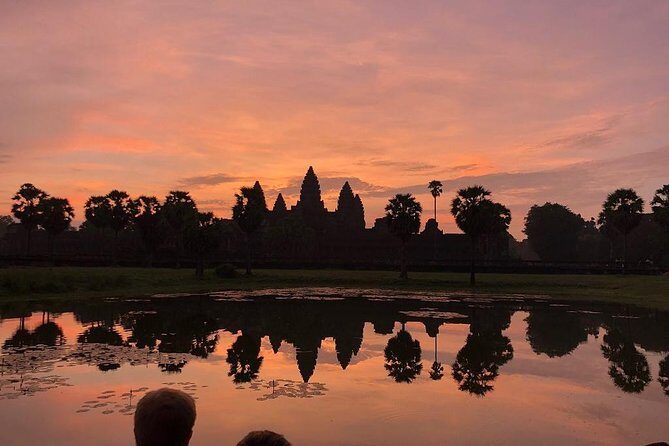
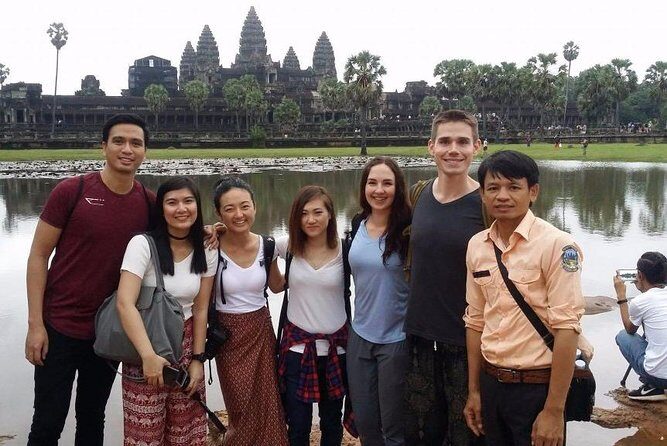
Sunrise at Angkor Wat is a time warp. This small-group 3-day plan (max 15) is built around the big moment—pre-dawn temple views and a route that includes key stops like Ta Prohm and Angkor Thom, plus a guide with real on-the-ground skill (many guests call out a guide named Sok). I especially like the chance to see Angkor Wat at sunrise, with an early depart timed around the season so you’re in position before the crowds thicken, then you move through highlights while everything is still calm.
The one catch to plan for is cost: the $62 temple pass for 3 days is not included and is paid on the day of your activity, and meals are also on you.
In This Review
- Key things to know before you go
- Why this 3-day Siem Reap plan works
- Price and temple-pass math (what $129 really buys)
- Day 1: Kampong Phluk floating village and Bakong’s older roots
- A practical watch-out for Day 1
- Phare Circus season switch: when you’ll see Cambodian performance instead of the lake
- Timing tip
- Day 2: Angkor Wat sunrise and the Angkor Thom highlights
- What can feel tough here
- Day 3: Preah Khan, Neak Pean, Banteay Srei, and Pre Rup temple-mountain views
- Day 3 walking reality check
- Comfort, culture, and what’s included
- Who this tour suits best (and who might want a different style)
- Should you book this 3 Days Siem Reap Explorer?
- FAQ
- How long is the tour?
- What time does the tour start?
- Is hotel pickup and drop-off included?
- What’s included in the price?
- What isn’t included?
- How much is the temple pass?
- Do I get to visit Tonlé Sap Lake?
- Is Phare Circus included?
- What’s the dress code for temple visits?
- What group size is this tour?
Key things to know before you go
- Small group, max 15: fewer people means less waiting and more flexible photo stops when you actually want them.
- Angkor Wat sunrise timing: you’ll leave at about 4:00 to 4:30 am depending on the season to catch the light early.
- Tonlé Sap by boat (or Phare instead): you’ll do Kampong Phluk and a cruise, but in the dry season (01 Mar–31 Aug) the itinerary switches to Phare Circus (seat C).
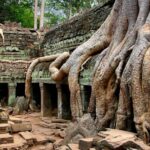
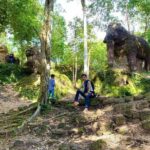
- Ta Prohm without the rush: you’ll hit the famous roots-and-stone temple atmosphere as part of a day that’s already timed for early entry.
- A mix of big and well-preserved temples: Banteay Srei’s detailed carvings and Pre Rup’s temple-mountain form round out the classic list.
- Comfort included where it counts: air-con transport, hotel pickup/drop-off, and mineral water help on long, hot days.
Why this 3-day Siem Reap plan works
This tour is built for the reality of Siem Reap: Angkor is huge, and the best temples aren’t just places you see. They’re places you arrive at the right moment. By starting with Angkor Wat before most of the day exists, you get cooler air, soft light, and the satisfying feeling of moving through history while it’s still quiet.
I also like the pacing because it’s not one big blur. Day 1 focuses on Tonlé Sap region life plus older Khmer temples, Day 2 is all about the Angkor core, and Day 3 shifts into more textured, less “postcard perfect” ruins. That structure helps you remember what you saw, not just that you saw a lot.
And yes, the guide matters. When a guide named Sok gets called out for being the best, that’s usually code for clear explanations and good timing—both of which matter a lot when you’re hopping between temple sites.
A few more Siem Reap tours and experiences worth a look
Price and temple-pass math (what $129 really buys)
The listed price is $129 per person, and it includes a lot of the “day logistics”: hotel pickup/drop-off, an air-con vehicle, an English-speaking licensed guide, and mineral water. You also get entrance for Tonlé Sap with the boat cruise (or Phare Circus seat C depending on the season).
But the big budget item is the 3-day temple pass. It’s an additional $62 per person, paid directly on the day you go. That means your all-in temple ticket total for the tour becomes $129 + $62 = $191 per person before meals.
Meals aren’t included. So if you like a long lunch with air-con and a cold drink, you’ll need to plan for it. On the other hand, you have flexibility to choose what’s nearby and what fits your hunger level that day.
Day 1: Kampong Phluk floating village and Bakong’s older roots
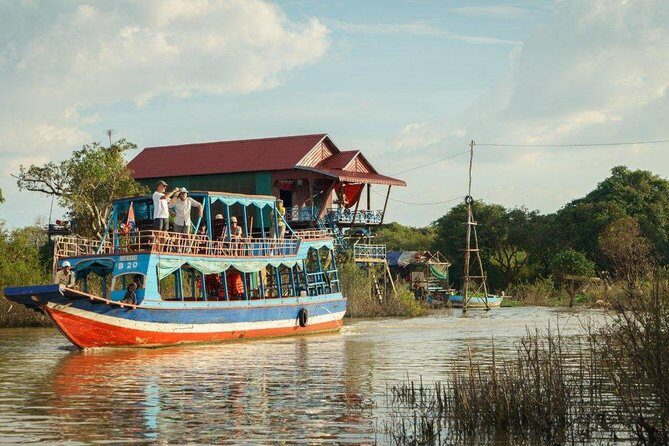
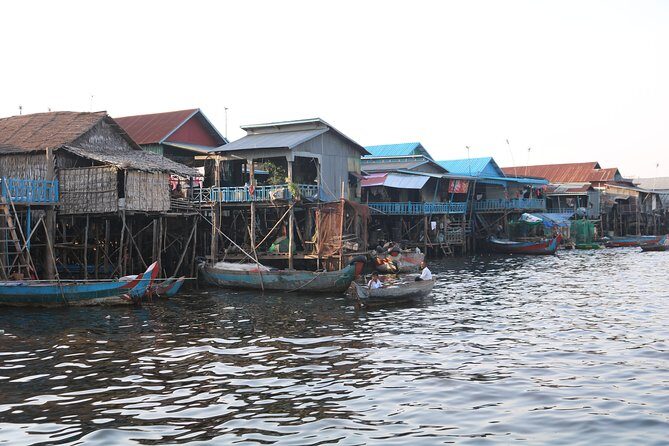
Day 1 starts early—your hotel pickup leads you out into the countryside toward Tonlé Sap, the world-famous lake system that changes size dramatically. The tour highlights Kampong Phluk, a floating village area on the Tonlé Sap Lake, and it builds in a boat cruise experience. That matters because you don’t just stand and look. You get a different viewpoint of how communities live with the seasonal swell.
Tonlé Sap is described as swelling to 12,000 km². Even if you don’t carry that number around in your head all day, it helps you understand why the village life works the way it does: water level isn’t a backdrop. It’s part of the story.
After the lake, you head to Bakong, an area tied to some of the earliest Khmer monuments in the region. The description points to the 9th-century reign of King Indravarman I, which is a helpful anchor point if you’re trying to place Angkor’s evolution beyond just temple names. You’ll spend a few hours here, and it’s a nice break from rushing straight into the most famous Angkor sites.
A practical watch-out for Day 1
If you’re sensitive to heat or sun, bring a hat and water—even with mineral water included, you’ll still be outside. Also, wear shoes you don’t mind getting dusty; you’ll be walking on uneven ground more than once over the three days.
Phare Circus season switch: when you’ll see Cambodian performance instead of the lake
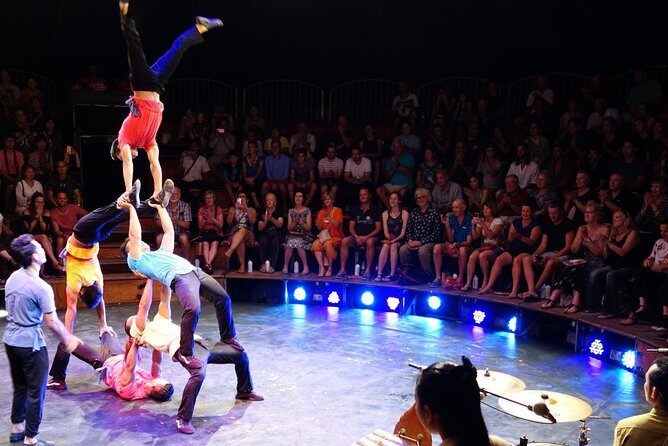
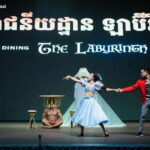
One smart detail in this tour is the seasonal swap. In the dry season, from 01 Mar to 31 Aug, the itinerary notes an alternative that includes Phare The Cambodia Circus (seat C) instead of the Tonlé Sap visit plan.
Phare is positioned as a uniquely Cambodian cultural performance, and the description specifically points to its post-Khmer Rouge origins. That gives you something more grounded than a generic show night: you’re seeing art that grew out of Cambodia’s modern history, not just an imported-style entertainment.
Even if you think you’re there for temples only, I’d still treat this stop as part of your cultural itinerary. Cambodia isn’t only Angkor. The country uses storytelling—through movement, music, and performance—to keep memory and identity alive.
Timing tip
Plan your energy for an evening show after a long day. If you’re the type who needs an early night, consider grabbing dinner soon after the show starts so you don’t spend your whole evening searching.
Day 2: Angkor Wat sunrise and the Angkor Thom highlights

Day 2 is the big one, with a pre-dawn start from your hotel at about 4:00 to 4:30 am, depending on the season. The tour describes entering Angkor Wat in darkness from the eastern side, and that detail is more than technical trivia. It changes your experience because you see how the scene forms as light rises, rather than arriving after the temple has already turned into a daytime headline.
Angkor Wat itself gets about three hours here, which is a workable chunk. You have time for the main viewpoints and still breathe. The guide’s job is key: when you’re walking quickly, you need explanations fast so you’re not just moving your feet.
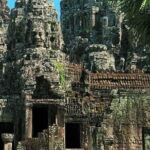
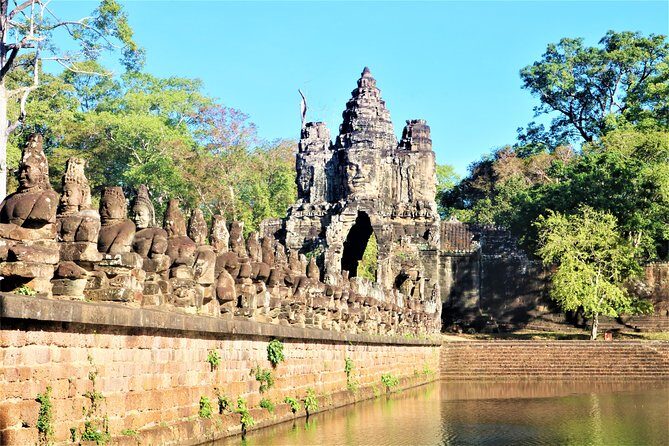
After sunrise, you move into Angkor Thom—the Khmer Empire’s capital city area. You start at the South Gate, and the tour then continues into the city with time around Bayon. You’ll also pass by the Terrace of the Leper King and the Terrace of the Elephant, which are famous enough that seeing them from the route helps you connect the layout.
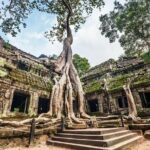
Then the itinerary hits Ta Prohm, the atmospheric temple often associated with the Tomb Raider look. The description adds a strong detail: Ta Prohm once housed about 2,740 monks. That helps you see the site as more than a movie-famous ruin. It was a functioning religious community before it became a crumbling spectacle you can walk through today.
What can feel tough here
This is a long day with early wake-up. If you’re prone to morning grogginess, you’ll want to pack your patience. Also, temple surfaces can be slick after rain, so watch your footing—especially at roots and stone areas like Ta Prohm.
Day 3: Preah Khan, Neak Pean, Banteay Srei, and Pre Rup temple-mountain views
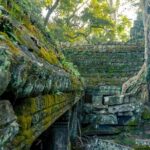
Day 3 is where the tour balances famous names with places that feel more intimate and textured. You start at Preah Khan, described as a ruined mix of tree roots and crumbling stone structures. That’s the Angkor vibe many people actually come for: the way nature and stone share space instead of staying politely separate.
Next is Neak Pean, an artificial island with a Buddhist temple on a circular island in Jayatataka Baray. Even without a deep architectural background, the layout idea matters. You’re not just walking through a “random ruin.” You’re moving through a designed landscape feature tied to how Khmer builders used water and symbolic space.
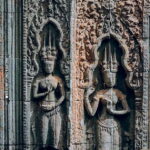
Then you go to Banteay Srei, described as well-preserved with detailed sandstone reliefs that are regarded as among the finest in Cambodia. This is a good stop for anyone who likes the craft side of archaeology—carving details, proportions, and the sense that someone took time.
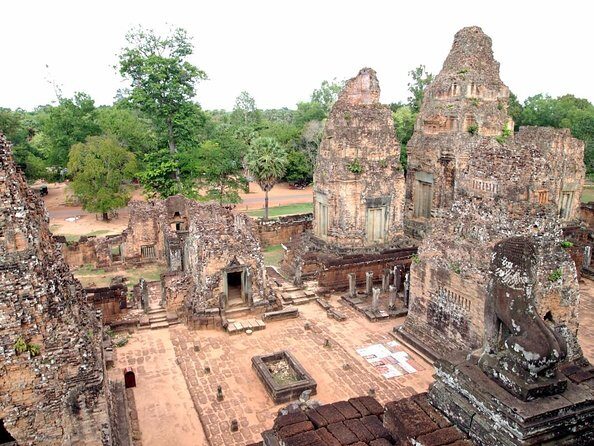
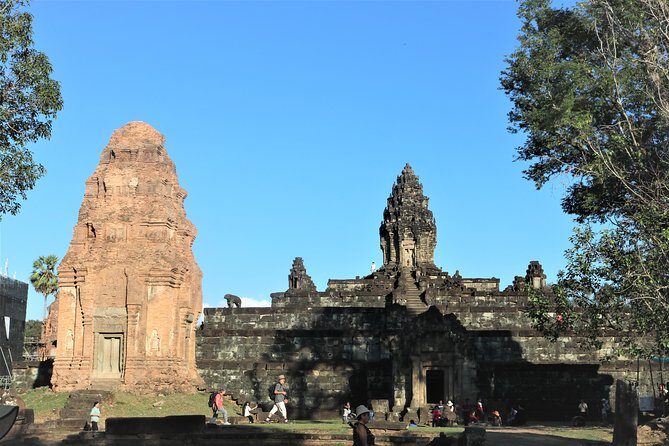
Finally, you end at Pre Rup, a Hindu temple built as the state temple of Khmer King Rajendravarman, dedicated in 961 or early 962 (as described). It’s also highlighted as a temple mountain made of brick, laterite, and sandstone. I like this finish because it gives you a clear “form” to remember: a mountain-like structure that helps you understand why so many Khmer temples feel built to be seen from multiple angles.
Day 3 walking reality check
This day still involves real walking time at multiple sites. The tour recommends comfortable walking shoes, and I agree—that’s not a suggestion you should skip. Bring something that supports your feet for repeated uneven surfaces.
Comfort, culture, and what’s included
This tour includes several practical things that make a temple circuit less exhausting: licensed English-speaking guide, air-conditioned vehicle, hotel pickup and drop-off, and mineral water.
You also get mobile ticketing. That’s useful in a place where lines and paperwork can slow things down. Having that sorted in advance saves mental energy for the sites themselves.
There’s also a basic dress rule: shoulders and knees must be covered inside temples. Casual dress is fine; just plan a light layer or long pants so you don’t have to scramble in the moment.
And because the group size is limited to a maximum of 15, the whole experience tends to feel less like a herd and more like a guided walk that still respects the pace you want.
Who this tour suits best (and who might want a different style)
This one is a strong match if you:
- Want Angkor Wat sunrise and the must-see temple list without building your own route.
- Like guided context so the sites make sense fast.
- Prefer a smaller group over big bus tours.
It might be less ideal if you:
- Travel with a tight budget and would rather pay only for what you absolutely select. The temple pass is an added cost you can’t avoid.
- Want total freedom to wander slowly and late into the day. This tour is structured, and it moves with a plan.
Also note: children must be accompanied by an adult, and younger than 5 years old aren’t allowed. If you’re traveling with kids, that’s worth factoring early.
Should you book this 3 Days Siem Reap Explorer?
If your goal is to see Angkor efficiently—with sunrise, Ta Prohm, Angkor Thom, and a full day that ends at Pre Rup—this tour is a good-value way to do it. The small-group size (max 15) and the early start make the experience feel intentional rather than rushed.
The main reason to hesitate is money timing: the $62 temple pass is paid on the day, and meals aren’t included. If you’re okay with that, you’ll get a balanced three days that mixes water-life at Tonlé Sap (or Phare in the dry season) with the core Angkor temples plus a couple of stops that add texture beyond the obvious.
If you want temples with guidance, timing, and fewer people in your photos, I’d book it.
FAQ
How long is the tour?
It’s listed as 3 days (approximately).
What time does the tour start?
The meeting information lists a start time of 8:00 am. The Angkor Wat sunrise day includes a pre-dawn departure around 4:00 to 4:30 am depending on the season.
Is hotel pickup and drop-off included?
Yes. The tour includes hotel pickup and drop-off.
What’s included in the price?
Included items are an English-speaking licensed guide, air-conditioned vehicle, hotel pickup/drop-off, mineral water, and Tonlé Sap entrance fee & boat cruise or Phare Circus (seat C). It also notes a mobile ticket.
What isn’t included?
Meals aren’t included. Temple passes are also not included, and you must pay them directly at the sites.
How much is the temple pass?
An additional surcharge of USD 62 for 3 days temple pass is payable on the day of your activity.
Do I get to visit Tonlé Sap Lake?
Yes, the itinerary includes Kampong Phluk floating village and a boat cruise. The tour also notes a seasonal alternative: during 01 Mar to 31 Aug, it may switch to Phare Circus instead.
Is Phare Circus included?
It’s included as an alternative during the dry season (01 Mar to 31 Aug), with seat C noted in the itinerary.
What’s the dress code for temple visits?
Casual dress is fine, but shoulders and knees must be covered inside temples.
What group size is this tour?
It has a maximum of 15 travelers.