Three temples, one wild waterfall day. This tour strings together Banteay Srei, Phnom Kulen’s reclining Buddha and river carvings, and the half-wild maze of Beng Mealea, so you get history plus nature without sitting through a museum-style day. I especially like how the timing is built around an early start and a small-group feel, and I like that you’re not trapped in the Angkor Wat crowd loop.
There’s one consideration: your ticket cost is not just the $53 tour fee. You’ll also need to budget for an Angkor Pass ($37) plus the Phnom Kulen entrance fee ($20 cash only), and lunch can run late depending on timing.
In This Review
- Key highlights worth planning around
- Why this day works: history, sacred sites, and nature
- The early pickup and what your timing will feel like
- Banteay Srei: small temple, big detail (and how to enjoy it)
- Phnom Kulen: the reclining Buddha and the 1000 Lingas
- Preah Ang Thom reclining Buddha
- 1000 Lingas
- Ticket note for Kulen
- Phnom Kulen Waterfall: when to plan around the season
- Swim option (and what to bring)
- Beng Mealea: explore an unrestored temple maze
- Price and what you truly pay (so no surprises)
- Guide and group size: where your experience can rise or dip
- What to bring for a comfortable, low-stress day
- Should you book this Kulen–Banteay Srei–Beng Mealea tour?
- FAQ
- What time does hotel pickup start?
- How long is the tour?
- Do I need an Angkor Pass for this tour?
- How much is the Phnom Kulen entrance fee, and can I pay by card?
- Is lunch included in the tour price?
- What’s included in the tour fee besides the guide?
- Is swimming possible at Kulen Waterfall?
Key highlights worth planning around
- Banteay Srei’s fine carvings: a smaller site that still hits hard on detail and atmosphere.
- Phnom Kulen’s sacred stops: Preah Ang Thom (reclining Buddha) and the 1000 Lingas riverbed carvings.
- Kulen Waterfall with a swim option: changing rooms are available if you want to cool off.
- Beng Mealea’s unrestored maze: you’re exploring, not just photographing.
- Small-group pacing with English guidance: a guide who helps the day click into place.
- Comfort touches during a long day: air-conditioned transport, bottled water, and small fresh towels.
Why this day works: history, sacred sites, and nature
This is the kind of Siem Reap day that changes gears a few times. You start with a temple that’s famous for precision, then pivot to carved stone devotion at Phnom Kulen, then end with a temple that feels unfinished—like the jungle got there first.
What makes it attractive is that it’s not just one highlight. You’re hitting multiple “types” of sightseeing in one go: Hindu-era carvings, Buddhist symbolism at Preah Ang Thom, riverbed ritual carvings, then waterfall scenery, and finally Beng Mealea’s tangled corridors and collapsed walls.
Also, the itinerary is built around practical stops, not long stretches of nothing. Even the shorter stops like the 1000 Lingas section matter because they’re quick but visually specific. You end up with a day that feels full without feeling chaotic—assuming you stay with the group at each transfer.
You can also read our reviews of more tours and experiences in Siem Reap.
The early pickup and what your timing will feel like
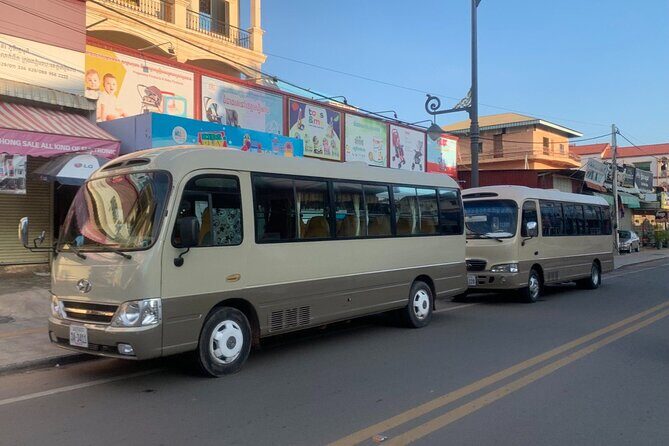
You’ll be picked up from your hotel in Siem Reap between 7:30 AM and 8:00 AM in an air-conditioned vehicle. From there, the day stretches to roughly 9 to 10 hours, with a guide guiding you through each stop and keeping you moving.
This early start matters more than it sounds. These sites can get busy, especially during Cambodian public holidays. An early pickup helps you beat some of the crush at the places that attract tour buses and day-trippers.
One tip based on the rhythm of the day: move with the group during transfers, especially after photo stops. The tempo can slow when someone is photographing, and the only real risk to your enjoyment is getting separated and then losing momentum. If you want a smoother day, set your own rule: when the group moves, you move—then ask questions when you’re back together.
Banteay Srei: small temple, big detail (and how to enjoy it)
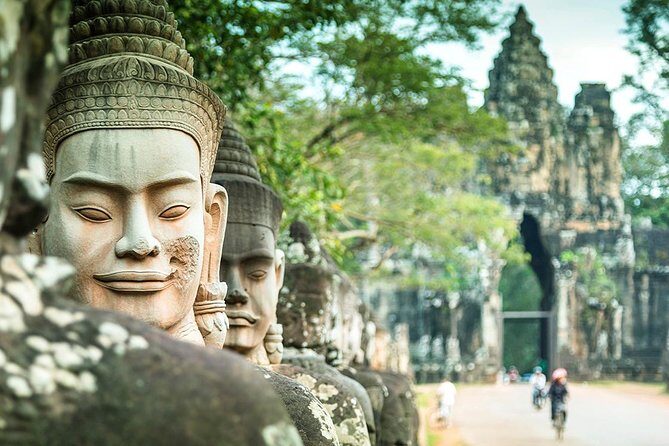
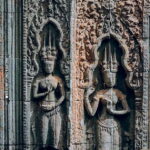
Banteay Srei is a 10th-century Cambodian temple dedicated to Shiva, about 25 kilometers north of Angkor Wat. It’s known for intricate carvings, and it’s the kind of site where you get more out of slowing down than rushing through.
Plan for about an hour on-site. That’s enough time to look at the main carvings without feeling like you’re sprinting. It’s also a good match for a guided day because a strong guide can explain what you’re seeing—so it stops being “pretty stone” and starts being meaningful symbolism.
Two practical notes:
- Ticket cost: the Banteay Srei stop requires an Angkor Pass ($37), which is not included in the tour fee.
- Carvings demand attention: if you’re the type who likes wide-angle photos only, you might skim. If you’re willing to get close and read the shapes, this stop rewards you.
If you want a calmer vibe than the bigger Angkor areas, Banteay Srei is often the relief stop. It feels more human-scale than the massive complexes.
Phnom Kulen: the reclining Buddha and the 1000 Lingas
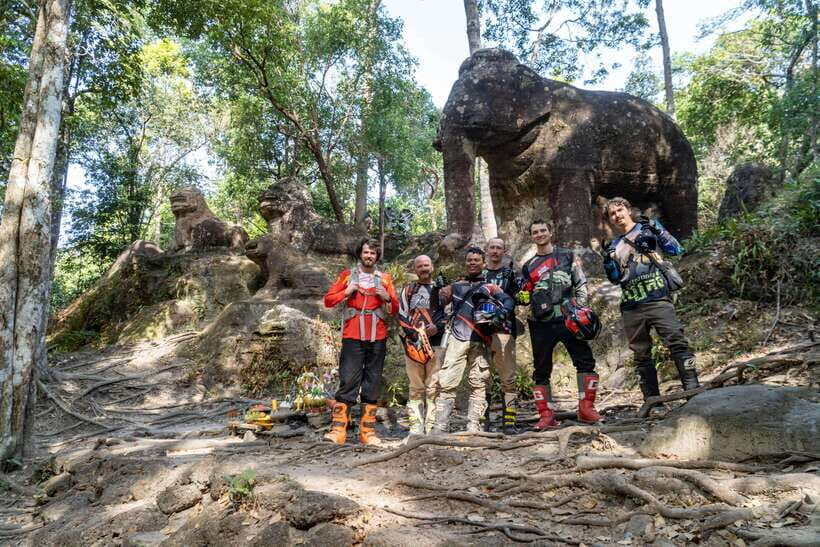
Phnom Kulen is where the tour shifts from temple precision to sacred nature. You visit multiple key stops inside Phnom Kulen National Park, including Preah Ang Thom and the 1000 Lingas riverbed carvings.
Preah Ang Thom reclining Buddha
Preah Ang Thom is an 8-meter-tall reclining Buddha carved into a huge natural sandstone boulder. A modern staircase was added for access. Expect uneven footing and stairs, so if you have mobility concerns, take your time and hold onto the safe parts.
This is also where the day gives you variety. You’re not only looking at ornate carvings; you’re looking at how devotion is built into the landscape itself—stone plus meaning.
1000 Lingas
Not long after, you’ll see carvings along a riverbed stretch about 500 meters long, including linga forms and yoni shapes, plus a larger carving of Vishnu. Even if the math sounds confusing, the takeaway is simple: it’s a long run of symbolic stonework, and the best move is to pause and let your guide show you what to look for.
This stop is shorter—around 25 minutes—but it’s visually dense. It’s also a reminder that Phnom Kulen isn’t just about waterfalls. The carvings are the spiritual backbone of the area.
Ticket note for Kulen
This part is tied to the Phnom Kulen entrance fee. The Kulen Mountain entrance is $20 (cash only; credit cards not accepted). Make sure you have cash ready before you get there, because you don’t want to lose time at the gate.
Phnom Kulen Waterfall: when to plan around the season
The highlight for many people is Phnom Kulen Waterfall. The park has two main falls: one around 4–5 meters tall and another around 15–20 meters tall (width and height vary with seasonal conditions). In other words, the waterfall you get depends on when you go.
That’s why I’d think of this as a “water day” rather than a guaranteed photo-perfect day. Rainy season can mean bigger flow; dry periods can mean less roar but still beautiful scenery. Either way, you’re going to a national park area, not a man-made attraction.
You’ll have about 1 hour 30 minutes here. That time is helpful because you can pace yourself: take photos, enjoy the falls, and—if you want—cool off.
Swim option (and what to bring)
If you plan to swim, bring a swimsuit and a towel. Changing rooms are available on-site for convenience. This matters because once you’re wet, you don’t want to be scrambling for something to dry off with.
Also, wear footwear that can handle slippery or uneven ground. Waterfalls aren’t smooth flooring; they’re stone plus moisture. Your day comfort depends on that more than you’d think.
Beng Mealea: explore an unrestored temple maze
After the waterfall, you’ll stop for lunch at a local restaurant near either Beng Mealea Temple or Banteay Srei Temple depending on timing. Lunch is not included, so plan for that and consider bringing a small snack if you’re sensitive to long gaps between meals.
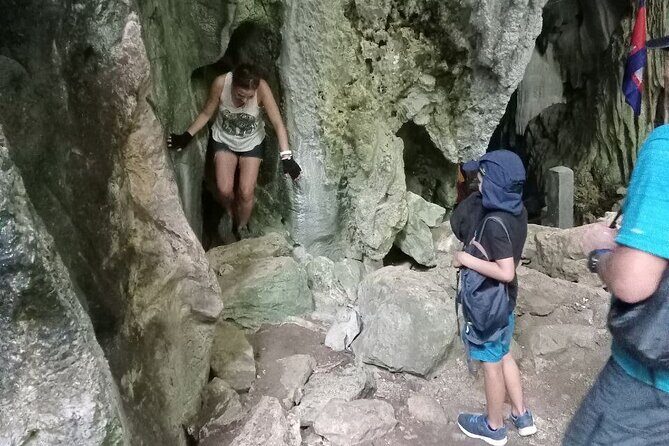
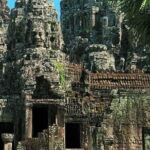
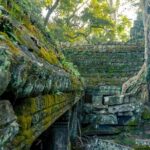
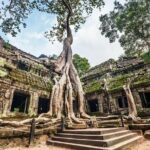
Then you head to Beng Mealea, about 40 kilometers east of Angkor Wat. Beng Mealea is from the early 12th century and is famous because it’s largely unrestored. That’s the whole point. You don’t get a polished, perfectly restored floorplan. You get a temple that feels like ruins you can actually move through.
You’ll have around an hour for Beng Mealea, and that hour can feel adventurous because:
- paths can be irregular,
- stones can shift,
- and the whole place rewards careful, slow exploring.
It also tends to feel less touristy than the main Angkor clusters because it doesn’t have that same fully-managed “park” vibe. If you like being the one wandering with a guide pointing out details, this stop will feel satisfying.
Price and what you truly pay (so no surprises)
The tour price is $53 per person, and it includes a lot of day-trip value: hotel pickup and drop-off in Siem Reap, an air-conditioned vehicle, a professional English-speaking guide, bottled water and small fresh towels, and seasonal fruit tasting.
But you should budget separately for the big-ticket temple fees:
- Angkor Pass for Banteay Srei and Beng Mealea: $37
- Kulen Mountain entrance: $20 cash only
So the all-in expectation is roughly $110 per person before lunch and extra spending. That’s a meaningful add-on, but it’s also standard for this area’s combination of sites. What you’re paying for with the tour fee is the orchestration: transport, guide attention across multiple sites, and comfort items that make a long day more pleasant.
If you’re comparing options, think of it like this:
- If you booked sites on your own, you’d still pay entrance fees and you’d still need logistics and someone to explain what you’re seeing.
- If you want a guided, connected day with minimal fuss, this price stacks up well.
Guide and group size: where your experience can rise or dip
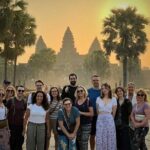
This tour is designed for a small group—stated as a maximum of 12 participants in the small-group description, with a general cap of 15 travelers. That size is a big deal because it keeps the day human. You can actually ask questions and get your guide’s attention.
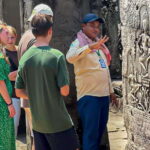
The included guide component is one of the most praised parts of the experience in the information you provided. You can also see how individual guide styles matter: some guides focus heavily on photography, and pacing can change if people are stopping frequently for shots. Drivers also help a lot; examples given include Pan and Trob, both described as friendly and supportive, with water and cool towels during the day.
So here’s how I’d use that insight:
- If you care about getting lots of photos, communicate your pace at the start.
- If you want a smoother flow, don’t let your photo breaks last longer than the group’s transition rhythm.
- Keep track of meeting points after each stop so you don’t lose time.
The day is structured, but you still steer your own comfort.
What to bring for a comfortable, low-stress day
This is a full-day loop with temples, stairs, and a waterfall stop. Your packing list is simple, but it changes how much you enjoy the day.
Bring:
- Cash for the Phnom Kulen entrance ($20 cash only)
- A swimsuit and towel if you plan to swim
- Sunscreen and a hat (stone + sun adds up)
- Comfortable shoes for stairs and wet ground
- A small snack if you’re worried about late lunch timing
For clothing, dress for heat and consider something you can move in. The best day-trip outfit is the one that doesn’t slow you down when paths get uneven.
Should you book this Kulen–Banteay Srei–Beng Mealea tour?
Yes—if you want a single day that hits sacred carvings, a major natural feature, and a temple you can actually wander through without feeling like you’re trapped in one big complex.
Book it especially if:
- You’re ready for an early start and a long but well-connected day.
- You want more than Angkor Wat vibes.
- You like exploration at unrestored ruins like Beng Mealea.
- You value having a guide explain what you’re seeing at Banteay Srei and Phnom Kulen.
Skip or switch to a private option if:
- You have lower physical fitness and stairs/uneven ground would be tough. The tour notes that group tours may not be ideal for lower fitness levels, and a private tour can be arranged to better match your needs.
- You hate cash-based fees. The Kulen entrance is cash only, and it’s not optional.
If you’re okay with that trade-off, this itinerary is a strong way to spend one full day in Siem Reap.
FAQ
What time does hotel pickup start?
Pickup is scheduled between 7:30 AM and 8:00 AM from your Siem Reap hotel.
How long is the tour?
The tour runs about 9 to 10 hours.
Do I need an Angkor Pass for this tour?
Yes. An Angkor Pass ($37) is required for Banteay Srei and Beng Mealea.
How much is the Phnom Kulen entrance fee, and can I pay by card?
The Phnom Kulen entrance fee is $20 per person and it’s cash only. Credit cards are not accepted.
Is lunch included in the tour price?
No. Lunch is not included, and you’ll eat at a local restaurant near the temples depending on timing.
What’s included in the tour fee besides the guide?
The tour includes hotel pickup/drop-off, air-conditioned transportation, a professional English-speaking guide, bottled water and small fresh towels, and seasonal fruit testing.
Is swimming possible at Kulen Waterfall?
The tour recommends bringing a swimsuit and a towel if you plan to swim, and it notes that changing rooms are available on-site.