REVIEW · PHNOM PENH
13 Days Private Tour to Cambodia, Angkor Wat and Vietnam
Book on Viator →Operated by Global Travel & Tours Asia · Bookable on Viator
Ancient temples and modern borders, all planned for you. This 13-day private route strings together Cambodia’s top hits (Phnom Penh, Angkor Wat, Tonle Sap village time) and Vietnam’s big culture stops (Hanoi, Ha Long Bay, Hoi An, Hue, Saigon, and the Mekong). Two things I like: you get licensed English-speaking guides for the key days, and the logistics are handled with domestic flights so you spend less time in transit and more time where it matters.
The main drawback to think about is emotional weight and physical pace. Days like Tuol Sleng and the Killing Fields are heavy, and the itinerary includes multiple flight days plus early starts for cruising and temple exploring.
In This Review
- Key moments that make this tour work
- Value and price: what you’re really paying for
- Phnom Penh: royal gardens to the Khmer Rouge reality check
- Flying into Siem Reap: a fast hop that buys you temple time
- Angkor Thom, Bayon, Ta Prohm, and Angkor Wat: the big three plus the brainy extras
- Banteay Srei and Kampong Phluk: pink stone and water-village rhythm
- Hanoi’s cultural day: Confucius learning, French-era streets, and old-quarter life
- Ha Long Bay overnight: why one night changes the trip
- Hoi An: cyclo streets, covered bridge photos, and a riverboat view
- Hue: imperial tombs, the Perfume River, and a calmer kind of grandeur
- Ho Chi Minh City: French architecture meets war history
- Mekong Delta from My Tho to Cai Be: sampan time and a colonial-style lunch
- Hotels, drivers, and how the private setup changes your day
- Who should book this Cambodia and Vietnam private tour
- Should you book it
- FAQ
- How many days is the tour, and where does it start?
- Is this tour private?
- Are flights included between Cambodia and Vietnam?
- Are entrance tickets covered?
- What meals are included?
- Do you get an overnight cruise?
- Which UNESCO sites are included?
- Is airport pickup or transfer included?
- What’s the cancellation window for a full refund?
Key moments that make this tour work
- Door-to-door support with airport meet-and-greet and careful transfers across borders and cities
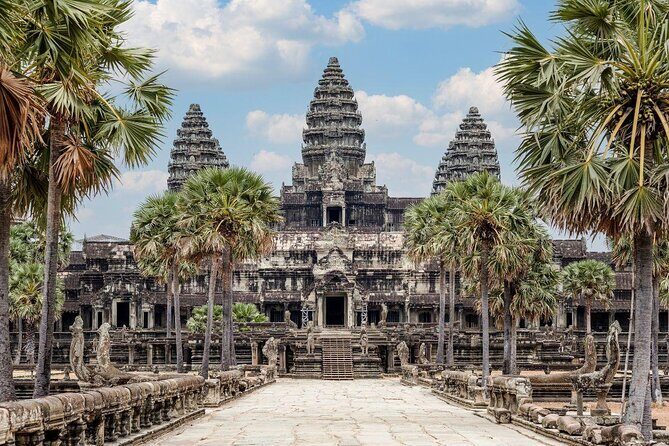
- Angkor with a guide, not a scramble, hitting Angkor Thom, Ta Prohm, Bayon, Angkor Wat, plus Banteay Srei
- An overnight Ha Long Bay cruise, giving you morning and evening time on the water
- Hoi An by foot and by water, with a cyclo, a riverside boat view, and the Hoi An Memories show
- Hue on the Perfume River, with imperial tombs and pagoda time that won’t feel rushed
- Saigon plus Cu Chi as a single story, pairing history museums with battlefield tunnels and French-era architecture
Value and price: what you’re really paying for
At $4,360 per person for about 13 days, this is clearly not a budget backpacker-style trip. But it can make sense if you care about three things: smooth handoffs, real guide time, and avoiding the “figure it out” tax.
You’re paying for private transportation in air-conditioned comfort, a professional licensed English-speaking guide, included entrance fees at the major stops, and a full set of flights between Cambodia and Vietnam and within Vietnam. That matters because this route is geographically jumpy: Phnom Penh → Siem Reap → Hanoi → Da Nang → Hue → Ho Chi Minh City. Doing that on your own is doable, but it’s the part that usually turns into delays, wrong ticket lines, and wasted half-days. Here, that work is done for you.
On the ground, you also get lodging that’s spread across the trip’s “theme zones”: Siem Reap for Angkor access, an overnight cruise cabin for Ha Long Bay, then hotel bases for Hoi An, Hue, and Saigon. Daily breakfast is included, and lunch is included on multiple days, which reduces how much you need to plan meal-by-meal.
One more “value” detail: the itinerary includes three bottles of mineral water per person per day. It sounds small until you’re walking temple grounds or waiting out heat and humidity.
You can also read our reviews of more private tours in Phnom Penh

Phnom Penh: royal gardens to the Khmer Rouge reality check

The tour starts in Phnom Penh (Pochentong/Pen Phnom airport). The first day is about settling in: you land, handle Cambodia visa processing at the airport, clear immigration and customs, and then move on. That airport-first approach matters because it reduces stress before you even hit the city.
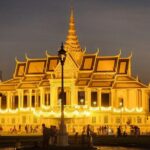
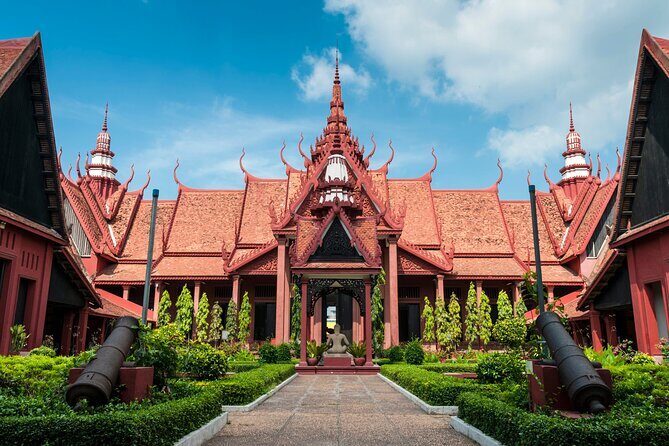
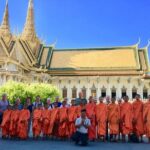
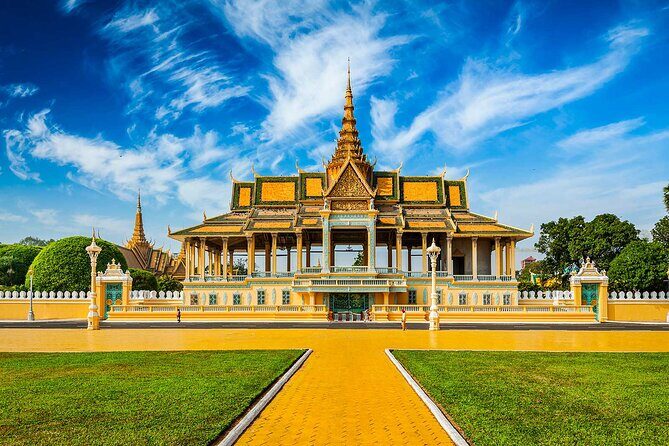
Day 2 builds Phnom Penh in a smart order. You begin at the Royal Palace area, a pagoda-style compound built in 1866 by King Norodom, with gardens that give your eyes a break from city noise. Then you head to the National Museum, built in 1917, focused on Khmer art and sculptures—useful because it gives you context before you go into harder history later.
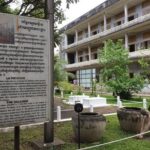
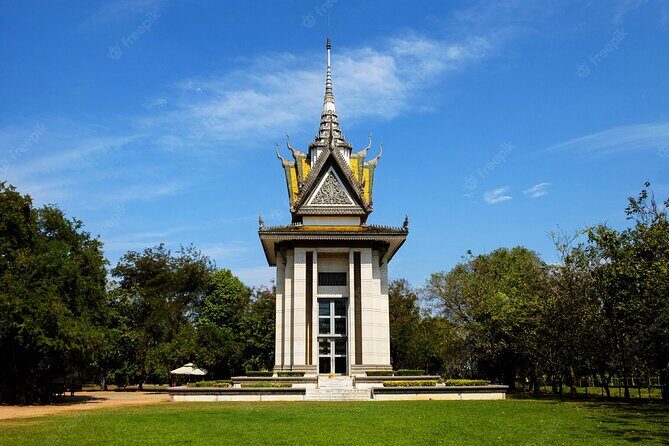
After that, you visit Wat Phnom, the city’s namesake founded in 1373, and then shift gears sharply to the 20th-century tragedy. Tuol Sleng (S-21) is the former high school used by Pol Pot’s regime, and the nearby Choeung Ek Killing Fields memorial is where the story lands. This is an important pairing: one site explains the machinery; the other shows the scale.
A practical note: these sites take emotional energy. I’d plan your afternoon pacing so you don’t try to “power through.” If you need a slow moment—sit, take water, breathe—that’s allowed.
Flying into Siem Reap: a fast hop that buys you temple time
A direct flight covers Phnom Penh to Siem Reap in about an hour. This is a good example of where the private tour earns its keep. Angkor days are long, and you want to be fresh enough to enjoy the temples, not exhausted from overland transfers.
When you arrive in Siem Reap, the tour uses the days efficiently: you’re not just checking off names; you’re building a mental map of Angkor’s layout. That helps because Angkor can feel like a blur of stone if you’re rushing or if you only see one zone.
Angkor Thom, Bayon, Ta Prohm, and Angkor Wat: the big three plus the brainy extras
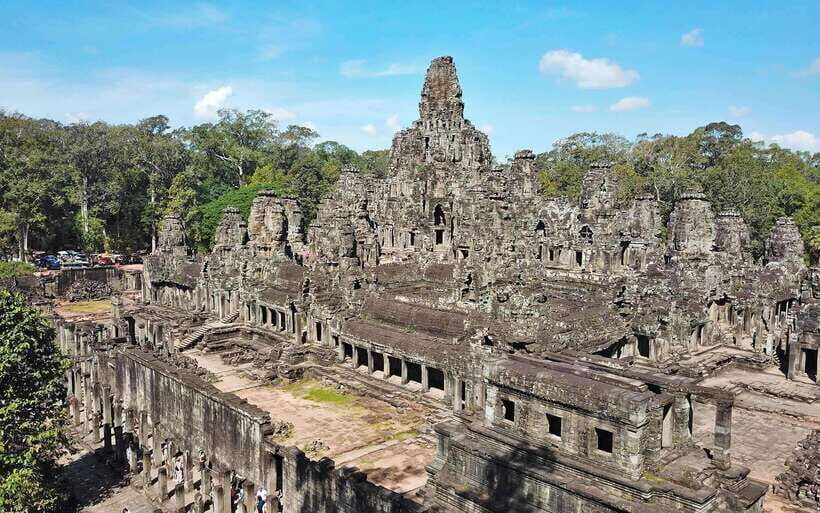
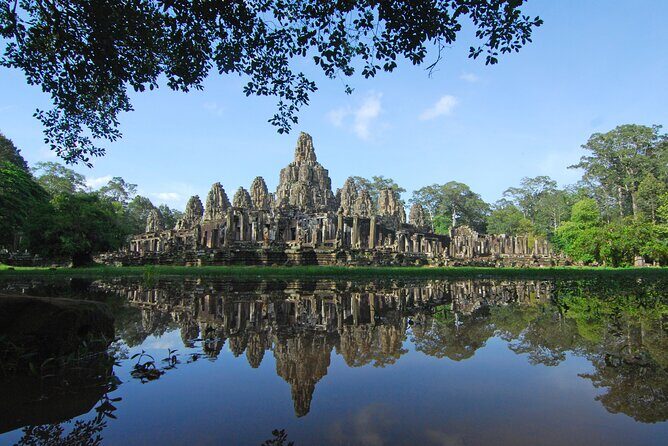
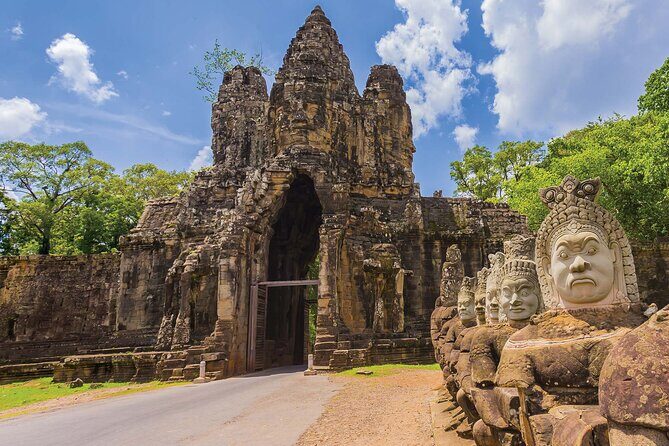
Day 3 is built around Angkor Thom, the walled capital. The route starts near the South Gate, then moves into the core with Bayon Temple, famous for faces on all sides. From there you visit Baphuon, plus the Terrace of the Elephants and Terrace of the Leper King—stops that may look like “just more carvings” until you realize they were tied to royal spectacle and ceremonies.
Then you continue to Phimeanakas, a Hindu temple structure, and finish with Ta Prohm. Ta Prohm is the atmospheric one—the kind of place where tree roots and stone start to look like they’ve always belonged together. It’s also a great moment to slow down and take in textures because you’ll be back to heavy details later.
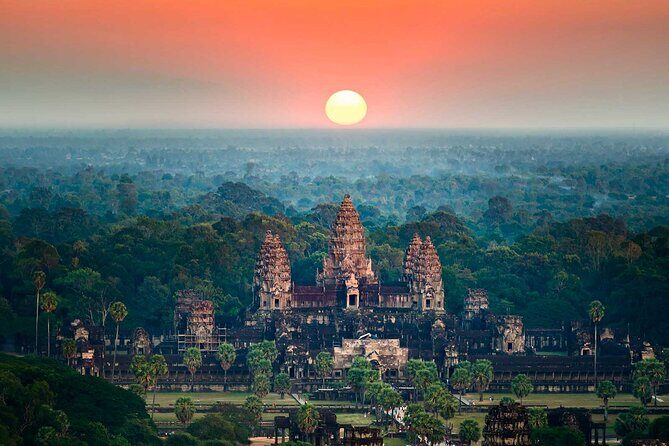
The day ends with Angkor Wat for a longer stretch. This is the time when Angkor stops feeling like a list and starts feeling like a place. You get bas-reliefs and lots of guardian spirit figures (devatas) that reward patient looking. The tour includes lunch, which matters because the heat can turn “three hours” into a survival test.
A consideration: Angkor mornings and afternoons can be intense. Comfortable shoes, sun protection, and an early start mindset help a lot.
Banteay Srei and Kampong Phluk: pink stone and water-village rhythm
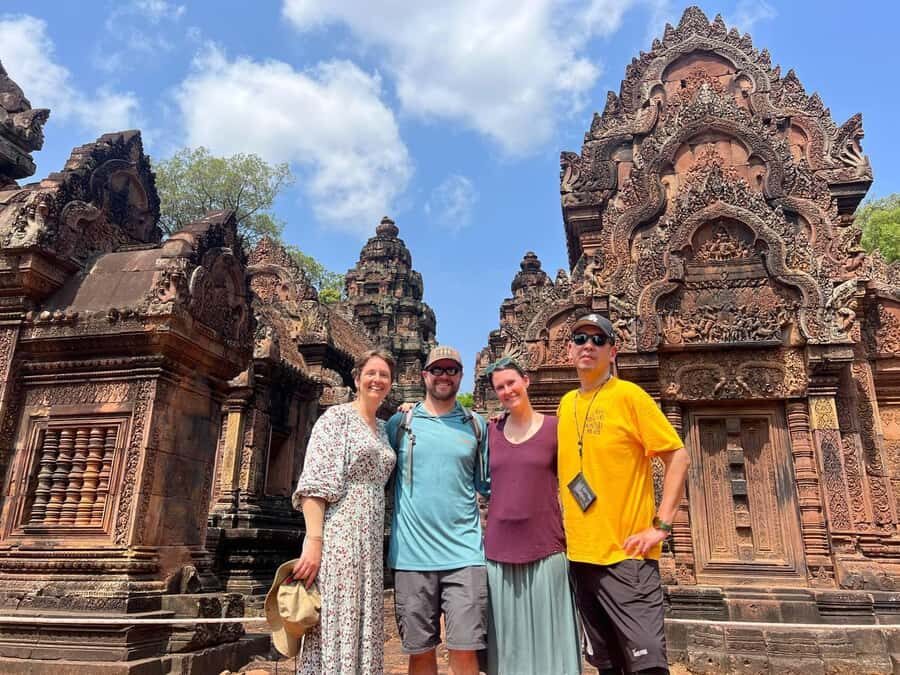
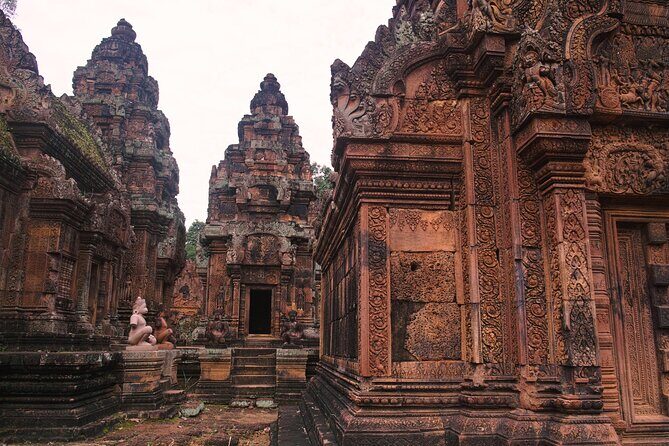
Day 4 gives you a break from the heaviest Angkor core zones and still stays authentic. Banteay Srei is famous for its pink sandstone and fine sculpture work—smaller scale than the biggest temples, but often more rewarding if you like close-up detail.
After that, you head to Preah Khan, built in the same style as Ta Prohm but in a better preserved state. This is a good contrast day: you get variety without losing the Angkor “language” your guide has been building.
Then you move toward the living landscape with Kampong Phluk Floating Village. After lunch, you ride an ox-cart through rice fields and villages and then take the water-based village experience in the afternoon rhythm. You also get a coconut drink with the family—simple and very real, and it fits the tour’s theme shift from monuments to everyday life.
If you’re the type who loves photos, this day delivers. If you’re not, it still provides perspective because it shows how communities adapt around water and seasons near the Tonle Sap system.



Hanoi’s cultural day: Confucius learning, French-era streets, and old-quarter life
A flight takes you from Siem Reap to Hanoi. The tour lands you in a city that feels layered: Vietnamese traditions next to French-colonial architecture, plus a deep intellectual backbone.
Day 5 starts with the Ho Chi Minh Complex and Ba Dinh Square—a pilgrimage zone for many. Then you go to the Temple of Literature & National University, built in 1070 and dedicated to Confucius, and you’ll feel how learning and scholarship are treated as part of national identity.
Next comes the Vietnam Museum of Ethnology. It’s not just a museum stop; it’s a way to understand the country’s many cultural groups through artifacts and images.
After lunch, you drive through colonial Hanoi and stop at the Hanoi Opera House area. Then you visit Hoa Lo Prison, known as the Hanoi Hilton—a hard but important stop. You close with Tran Quoc Pagoda near West Lake, then take a cyclo ride through the Old Quarter’s 36 Streets.
The day ends with Thang Long Water Puppet. It’s a fun evening that works because it’s tied to rural life and folklore, not just performance. Expect a different kind of pace: feet up, eyes on the stage, and a chance to laugh at the small absurdities of village storytelling.
Ha Long Bay overnight: why one night changes the trip
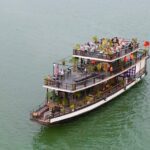
Ha Long Bay is UNESCO-listed, and here you get a proper one-night cruise rather than just a day trip. Day 6 is the launch out of Hanoi into the bay area. You cruise aboard the Dragon Legend Cruise.
The morning and evening schedule is the point. Day 7 starts with a sunrise-style viewing window and breakfast in fresh air, then you visit Vung Vieng fishing village by rustic rowboat, meet local people, and pass through the water-world scenery before heading onward to Vietnam’s central coast.
If you only have a day in Ha Long, you tend to rush. With an overnight, you catch the softer light and the calmer water, and the bay feels like a place to live—not a photo backdrop.
Practical note: bring layers. It’s often cooler on the water than you expect.
Hoi An: cyclo streets, covered bridge photos, and a riverboat view
After flying Hanoi → Da Nang, you transfer to Hoi An. Day 8 is a classic Hoi An mix of architecture, daily life, and performances.
You start with the Japanese Covered Bridge, then move through old-town heritage stops like the Old House of Phun Hung, Fukian Assembly Hall (Phuc Kien), and the Tan Ky House (a small five-generation family home). There’s also a cyclo ride element built in, which is useful because you don’t have to cram every street into your own map.
You then board a riverboat along the Thu Bon River to see the city from a different angle and visit a boat-building village. This is a great “understand the economy” moment: you see how water trade and craft shape the town.
After lunch, you get some free time to explore on your own, then in the evening you attend Hoi An Memories Show. It’s cultural entertainment designed to package history and identity in a way visitors can grasp quickly.
A consideration: the show and guided town time can make the day feel structured. If you want lots of independent wandering, you’ll want to use your free time well.
Hue: imperial tombs, the Perfume River, and a calmer kind of grandeur
Hue is one of the best parts of this route because the pace turns quieter. You visit UNESCO-listed sites and you also get the river backdrop that makes imperial stories make more sense.
Day 9 includes the Tomb of Tu Duc, then Khai Dinh—a tomb that blends Western and Eastern architectural elements, which is a standout detail if you like seeing how styles collide. After lunch you ride a pedal-powered cyclo into Hue Imperial City (the Citadel), including the areas tied to official functions and the Forbidden Purple City for the emperor’s personal time.
Day 10 shifts to softer scenes. You visit Thien Mu Pagoda (Heavenly Lady), then take a cruise along the Perfume River and watch boats continuing the local rhythm. You also visit the Mausoleum of Emperor Minh Mang, set among pine hills by the river. Each imperial tomb has its own personality, and together they show how rulers shaped memory into place.
If you’re sensitive to heat, Hue can feel warm, but the river settings often help. Wear sun protection and plan breaks like the tour does with cruises and tomb pauses.
Ho Chi Minh City: French architecture meets war history
You fly Hue → Ho Chi Minh City (Saigon), and the tour builds a strong day around major sites plus the Cu Chi Tunnels.
Day 11 starts at Cu Chi Tunnels, a battlefield memorial area northwest of the city. This is a physically intense concept even if you don’t crawl through tunnels. The tour includes an underground-world experience with chambers three stories deep, which gives you a sense of scale.
After that, you shift to the surface with Saigon Notre Dame Cathedral, the Central Post Office, and Independence Palace (Reunification Palace). These stops show the French colonial imprint and then the political turning point of 1975.
Then you visit the War Remnants Museum, described as a call for peace. It’s one of those museums where you leave with quieter thoughts.
You round out with Ben Thanh Market for shopping and Ho Chi Minh Square, bordered by landmarks like City Hall and the Rex Hotel, with plenty of French and Vietnamese restaurants nearby for atmosphere.
If you’re short on energy, this day can still feel like a lot. The upside is that it reads like one coherent story: conflict, architecture, governance, and then modern city life.
Mekong Delta from My Tho to Cai Be: sampan time and a colonial-style lunch
Day 12 moves into “slow travel mode,” even though it’s a full day. You visit My Tho and then transfer to Cai Be by jetty.
On the water, you cruise on a Cai Be Princess Sampan. The ship experience here is practical: you’re on the river long enough to see how life ties to waterways. Crew welcome includes cold towels and a refreshing drink—small touches that matter when humidity is high.
The cruise ends at Le Longanier Restaurant for lunch in a colonial-style villa surrounded by fruit trees. That setting is more than pretty: it helps you connect the lunch and orchards to the river economy, not just treat it as a pit stop.
Hotels, drivers, and how the private setup changes your day
This tour’s “private” nature isn’t just a marketing label. You get private transportation by modern air-conditioned vehicle with a safe driver, plus a licensed English-speaking guide. That combination affects your day in three ways:
First, timing. You’re not waiting on other groups or losing half-days to coordination chaos. Second, context. Guides can explain what you’re seeing—especially at Angkor and in museums tied to national memory. Third, stress. When you’re flying multiple times and changing hotels, the biggest cost is mental load. Airport pickups and guided transfers reduce that.
From the hotel lineup included in the package, you’ll likely stay at places like:
- iRoHa Garden Hotel (Deluxe Balcony Room) or similar for a night early in the trip
- Golden Temple Hotel (Premier Pool View Room) or similar for two nights
- La Siesta Hotel (Deluxe Room) or similar for two nights
- Dragon Legend Cruise cabin for the Ha Long overnight
- La Siesta Hoi An Resort & Spa (Deluxe Balcony) for two nights
- Azerai La Residence Hue (Superior River View) or similar for one night
- Mai House Saigon Hotel (Deluxe Room) for three nights
I also like that the trip includes taxes and service charges and uses a mobile ticket system. Those details reduce the “where do I pay for what?” moments.
Who should book this Cambodia and Vietnam private tour
Book this if you want:
- A guided Angkor experience that goes beyond the headline temples
- An overnight Ha Long Bay cruise (not a rushed day trip)
- A history-aware route that still includes lighter cultural stops like water puppets and Hoi An performances
- Private logistics and airport meet-and-greet support—especially useful when you’re switching countries and cities
Skip it (or at least adjust expectations) if:
- You dislike emotionally heavy sites and you prefer only light sightseeing
- You don’t like structured days with temples, museums, and scheduled boat time
- You’re hoping to travel super slow with lots of unscheduled wandering every afternoon
One more tip: because the itinerary includes multiple flights and long attraction days, this tour is best for people who can handle a steady pace for two weeks.
Should you book it
I’d say yes if your priority is efficient route design with trusted support—Angkor plus UNESCO stops in Vietnam, rounded out with the Mekong. The price is high, but the inclusions (guides, entrances, flights, major boats, and a set hotel plan) are exactly what you’d pay extra for if you planned it yourself and then had to fix delays.
If you want the trip that runs like a well-timed train schedule while still showing you real places—temples, pagodas, museum stories, and river life—this one fits.
If you want, tell me your travel month and your comfort level with walking/heat. I can suggest how to fine-tune a packing list and which days to pace more gently.
FAQ
How many days is the tour, and where does it start?
It’s approximately 13 days, starting with arrival at Phnom Penh (Pochentong Airport) in Cambodia.
Is this tour private?
Yes. It’s described as a private tour/activity, meaning only your group participates.
Are flights included between Cambodia and Vietnam?
Yes. Domestic flights included are Phnom Penh → Siem Reap, Hanoi → Da Nang, and Hue → Ho Chi Minh City. It also includes an international flight Siem Reap → Hanoi (all listed as economy class).
Are entrance tickets covered?
Yes. The tour includes all entrance fees at the places listed.
What meals are included?
Daily breakfast is included (12 breakfasts). Lunch is included on 6 days, and dinner is included as part of the package. Water is also included: three bottles of mineral water per person per day.
Do you get an overnight cruise?
Yes. The itinerary includes one night onboard the Dragon Legend Cruise in Ha Long Bay.
Which UNESCO sites are included?
You’ll visit UNESCO World Heritage areas including Angkor (Cambodia), Ha Long Bay (Vietnam), Hue (Imperial City area), and Hoi An (Ancient Town).
Is airport pickup or transfer included?
Pickup is offered, and transfers are included as part of the tour flow. The start meeting point is the Phnom Penh airport, and the end includes a transfer from the hotel to the airport in Ho Chi Minh City.
What’s the cancellation window for a full refund?
You can cancel for a full refund if you cancel at least 6 full days before the experience’s start time, and the rules specify this as up to 6 days in advance.