REVIEW · PHNOM PENH
Half-Day Tour of the Killing Field and S21
Book on Viator →Operated by The Killing Field and S21 Genocide Tour · Bookable on Viator
This day hits hard, fast. The Choeung Ek Killing Fields and Tuol Sleng S21 tour gives you the Cambodian genocide story in two tightly linked places, just outside Phnom Penh. What makes it especially interesting is how the sites show both the system and the aftermath.
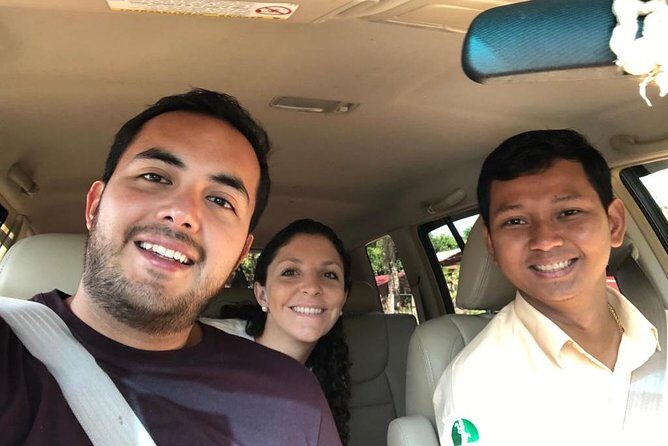
I really like the practical setup: an English-speaking guide, clean transport, plus water and a snack so you’re not scrambling mid-day. If you get a guide like Visal or Sum, you’ll get clear, organized explanations that help you make sense of names, dates, and what you’re seeing.
The main drawback to plan for is emotional weight. This is not a light outing. Even with a good guide, you’ll be confronted with mass graves, a former interrogation prison, and the real human cost of Khmer Rouge terror.
In This Review
- Key things I’d focus on before you go
- Price and logistics that actually matter
- Meeting point and the rhythm of the half-day
- Choeung Ek Killing Fields: what you’re really walking through
- Tuol Sleng Genocide Museum (S21): the prison that explains the process
- How the guide changes the experience (and why English matters here)
- Timing, comfort, and avoiding a travel-day headache
- Budget reality: what you pay for and what you still need
- Who this tour is best for
- Should you book this Half-Day Killing Fields and S21 tour?
- FAQ
- How long is the tour?
- What does the tour price include?
- Are entrance fees included for Tuol Sleng and Choeung Ek?
- Is pickup offered, and where does the tour meet?
- Does the tour use a mobile ticket?
- How big is the group?
- What’s the cancellation policy?
Key things I’d focus on before you go
- English-speaking guide, so the facts land without you guessing at what you’re looking at
- A true half-day shape (about 4 hours) that fits Phnom Penh without swallowing your whole day
- Choeung Ek’s mass graves context helps you understand this site beyond headlines
- S21’s school-to-prison layout shows how ordinary buildings were turned into machinery
- Small group size (max 15) keeps the experience from feeling like a race
- Comfort extras like water, snacks, and safe transport for the drive between sites
Price and logistics that actually matter
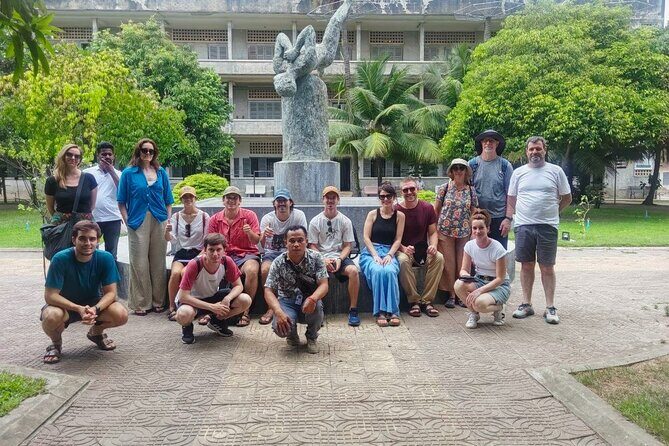
At $19.20 per person for a roughly four-hour outing, this tour has a big advantage: it buys you structure. In a place like Phnom Penh, structure is what keeps a hard visit from turning into confusion. You’ll have a professional English-speaking guide to connect what you see at Choeung Ek and Tuol Sleng into one coherent story, instead of treating them as two unrelated stops.
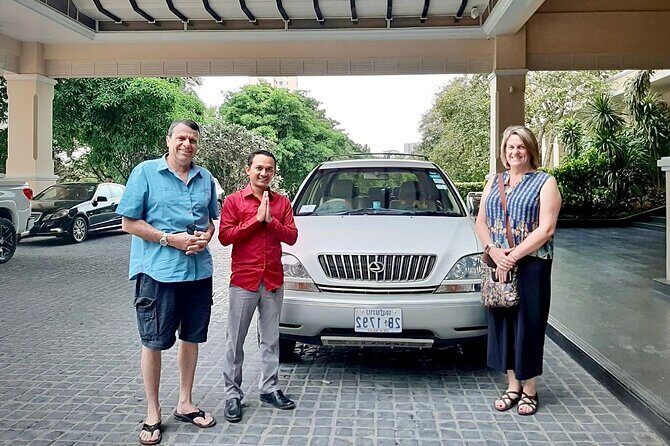
Transportation is also part of the value. You get a licensed driver and a clean, safe vehicle, plus pickup is offered. That matters because both sites are outside the city center, and doing it under your own steam means time lost to arranging rides and figuring out what to do next.
Two details to keep in mind early: entrance fees are not included, and you’ll want some flexibility in your head. The topic is intense, and the sites are meant to be taken seriously. If you’re the type who prefers to browse quietly on your own, you might find a guided format a bit more intense than expected. But if you want the historical thread spelled out clearly, this is a smart way to do it.
A few more Phnom Penh tours and experiences worth a look
Meeting point and the rhythm of the half-day
The tour starts at Grand River Sports Bar, a clear riverside point that’s easy to find with maps. It ends back at the same meeting point. That round-trip loop is helpful in Phnom Penh because it reduces decision fatigue. You’re not trying to line up your next ride while your brain is still processing what you just saw.
With about four hours total, expect a steady but not rushed pace. The visit to Choeung Ek is around two hours, then you move to Tuol Sleng, also around two hours. You’ll be guided through both, and you’ll have breaks only when the plan allows. The drive between locations is short enough that you won’t feel like you’re trapped on a bus forever, but long enough that the guide can shift gears and explain the transition between sites.
Group size stays capped at 15, which usually means you don’t end up behind a wall of shoulders. It’s big enough for cost-effective comfort, but small enough for your guide to keep attention on the main story.
Choeung Ek Killing Fields: what you’re really walking through
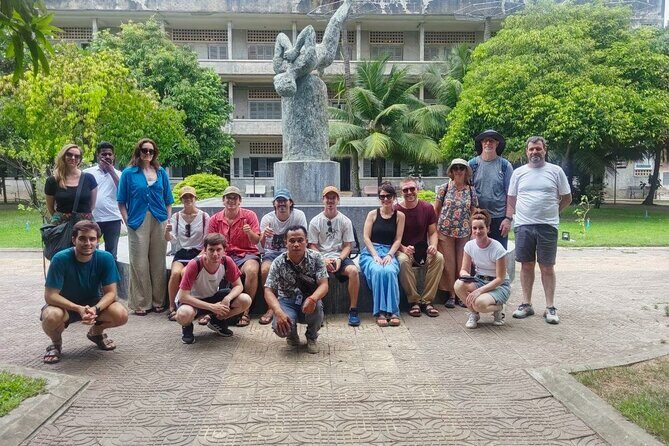
Choeung Ek is the best-known of the Killing Fields sites near Phnom Penh. The setting itself can feel deceptively ordinary at first. Before the Khmer Rouge turned it into a place of mass murder, the area was used as an orchard and even included a Chinese cemetery. Then, between 1975 and 1979, it became a slaughter site where executions were carried out on a massive scale.
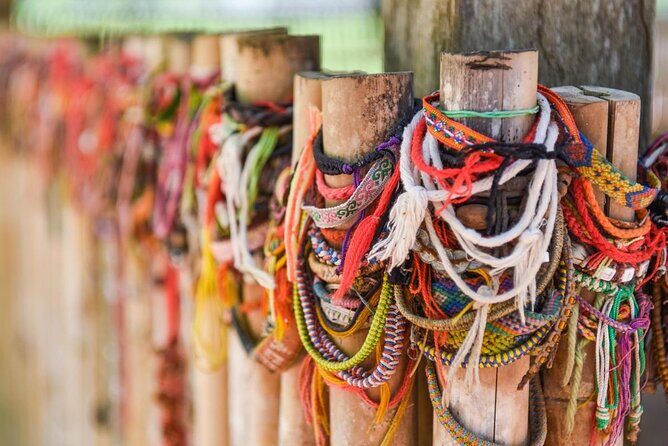
A key detail the site emphasizes is that this isn’t just a memorial concept. It’s tied to discovered mass graves after the Khmer Rouge regime fell. Investigators found mass graves containing 8,895 bodies at Choeung Ek. Those numbers matter because they bring the story back to physical reality, not just politics on a page.
The Khmer Rouge period is usually described as broad terror across Cambodia, and Choeung Ek fits into that larger machine. The tour context here is that the Khmer Rouge regime executed over one million people during 1975–1979. Standing at the mass grave memorial gives you the sense of scale, while the guide’s explanation helps you connect the site to the wider detention network.
One smart reason I’d recommend going with a guide rather than only reading signs is cause-and-effect. The guide can link Choeung Ek to what happened earlier in prisons—especially at Tuol Sleng (S21). Without that connection, you might see Choeung Ek as a single tragic location. With it, you see it as the final destination in a system.
Tuol Sleng Genocide Museum (S21): the prison that explains the process
If Choeung Ek gives you the aftermath, Tuol Sleng gives you the method.
Tuol Sleng, also called S21, was a former secondary school. From 1975 until the Khmer Rouge regime fell in 1979, it operated as Security Prison 21. The building complex was transformed from school spaces into detention and interrogation areas between March or April 1976. The tour’s explanation matters here because you’re not only learning about what happened—you’re seeing how the Khmer Rouge used existing infrastructure.
The museum focuses on purges and political terror. It explains how prisoners were kept in a network of detention centers and then processed at S21. The prison buildings were converted into multiple interrogation and confinement spaces, and those rooms are part of why a guided visit can feel more unsettling. You can’t fully understand what you’re seeing from photos. The layout and how the guide narrates it turns the museum into a walk through procedure.
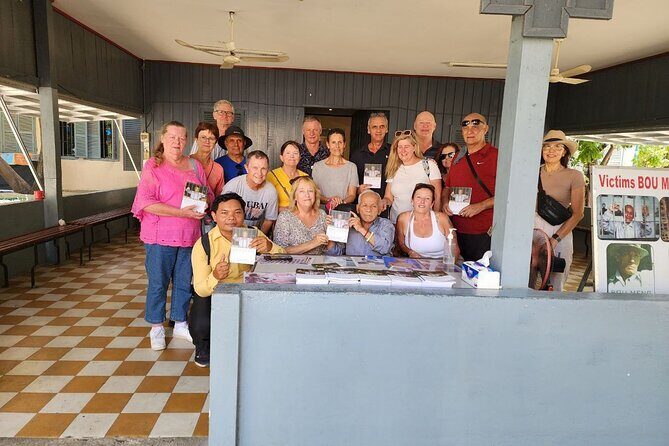
There’s also a human element you may notice during the visit: the site’s continuing connection to survivors and their stories. The tour experience can lead you to meet people who have firsthand links to S21 and learn how the memory of the prison keeps living beyond the walls of the museum. That emotional continuity is one reason this stop often feels harder than expected, even for people who are prepared for the topic.
How the guide changes the experience (and why English matters here)
In genocide sites, the difference between a good and a mediocre explanation is huge. A strong guide doesn’t just recite dates. They help you understand terms, connect events, and interpret what the building and memorial elements are trying to communicate.
This is where the English-speaking format pays off. You’ll be able to ask questions or follow the logic without your attention slipping. It also helps because there’s a lot of detail: names of places, dates in 1975–1979, the prison’s function, and what came before and after.
Guides like Visal or Sum are highlighted in the experience information you’re working from, and that aligns with what matters most in this kind of tour: the ability to explain clearly while still honoring the subject. I’d treat your guide’s pacing as part of the experience. If they slow down in certain rooms or points in the story, that’s often the moment you should slow down too.



Timing, comfort, and avoiding a travel-day headache
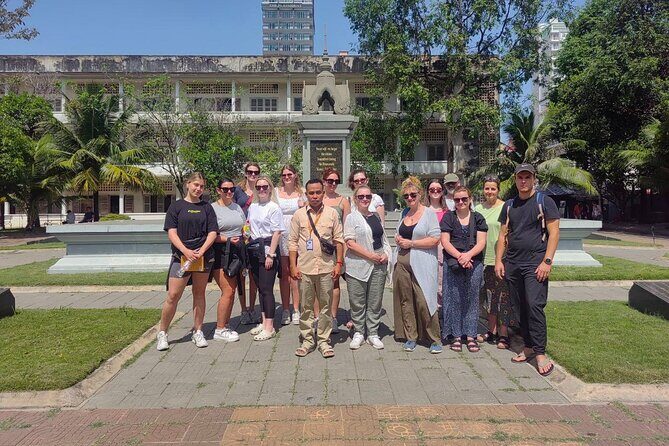
The “half-day” format is a practical sweet spot. You get two major sites without turning your day into a nonstop commute, and the total time is short enough that you can still do lighter activities afterward in Phnom Penh.
The tour includes water and a snack, which sounds small until you’re standing in heat and need a moment to reset. It also helps you stay functional, which matters because S21 and Choeung Ek are intense and you may not realize how physically draining it is until you’re done.
Transport comfort is part of the value. The vehicle is described as clean and safe, with a licensed driver. You won’t be juggling cash for multiple rides or figuring out where to go when one place is finished. You just follow the plan, learn, and then get dropped back near where you started.
Small group size helps too. When you’re looking at memorials and prison spaces, you don’t want to be constantly weaving around a huge crowd. Keeping it under 15 makes the experience more manageable.
Budget reality: what you pay for and what you still need
The headline price is $19.20, but entrance fees for Tuol Sleng and Choeung Ek are not included. So your real budget is the tour cost plus the site entry fees. Plan for that. It’s the most important “surprise check” to avoid ending up short at the gate.
Tipping is also not included. If you’ve taken a guide-and-driver style tour anywhere in Southeast Asia, you already know this part of the culture. Have a little cash ready so you don’t have to scramble while you’re still emotionally affected.
One more practical suggestion: bring a bit of patience with yourself. Even if the tour runs smoothly, the subject matter can slow your pace mentally. If you tend to get overwhelmed, plan something quiet afterward, not something loud and rushed.
Who this tour is best for
This is best for you if you want:
- a structured way to understand Cambodia’s Khmer Rouge era in Phnom Penh
- an English-speaking guide who can connect the dots
- a half-day format that doesn’t steal your whole vacation day
It’s also a good pick if you’re not sure how to sequence S21 and Choeung Ek on your own. Going in the right order helps. Choeung Ek sets the tone with mass grave context, then S21 explains the detention and interrogation process that fed into sites like this.
If you’re easily distressed by heavy subject matter, you might still go, but treat it as a deliberate choice. This is not a “quick photo and move on” stop. It’s meant to be faced directly.
Should you book this Half-Day Killing Fields and S21 tour?
Yes, if you’re looking for a clear, guided path through two connected genocide sites. For the price, you’re getting more than transportation. You’re buying a way to understand what you’re seeing, with time organized into the right proportions and the comfort basics handled.
Book it if you want the story told in plain English, with enough structure that you leave with real understanding instead of scattered facts. If you’re the type who needs emotional space, go with the expectation that the day will be heavy. Then plan your evening accordingly.
If you decide not to book, the alternative would be self-guided visits with lots of reading beforehand. But if you want a guide to handle the context for you, this half-day format is a practical, respectful choice.
FAQ
How long is the tour?
The duration is about 4 hours.
What does the tour price include?
It includes a professional English-speaking tour guide, a professional driver with a driving license, clean and safe transportation, plus water and snack.
Are entrance fees included for Tuol Sleng and Choeung Ek?
No. Entrance fees for both Tuol Sleng Genocide Museum and Choeung Ek Genocidal Center are not included.
Is pickup offered, and where does the tour meet?
Pickup is offered. The listed start meeting point is Grand River Sports Bar at 178 Corner Sisovat quay, Riverside Path, Phnom Penh 120201, Cambodia, and the tour ends back at the meeting point.
Does the tour use a mobile ticket?
Yes, the tour offers a mobile ticket.
How big is the group?
The tour has a maximum of 15 travelers.
What’s the cancellation policy?
You can cancel for a full refund up to 24 hours in advance. Confirmation is received at the time of booking.