REVIEW · PHNOM PENH
Remnants of a Khmer Rouge Era
Book on Viator →Operated by Asian Trails LTD · Bookable on Viator
Cambodia’s darkest rooms demand your attention. This half-day tour links Tuol Sleng Genocide Museum with Cheung Ek Killing Fields, turning a painful chapter of Khmer Rouge history into a clear, guided story. I especially like the smooth hotel pickup and round-trip transport, and I like having a real person explain what you’re seeing—one guide named Sony stood out as excellent, patient, and sensitive.
The big drawback is obvious once you arrive: this is heavy. You’re walking prison cells, learning about torture and executions, and spending time at mass-grave memorials—so it’s not the right outing if you want light and easy sightseeing. Also, the dress code is strict at Tuol Sleng, so plan outfits accordingly.
In This Review
- Key highlights and practical takeaways
- Tuol Sleng Genocide Museum (S-21): Prison cells, interrogation rooms, and Pol Pot’s system
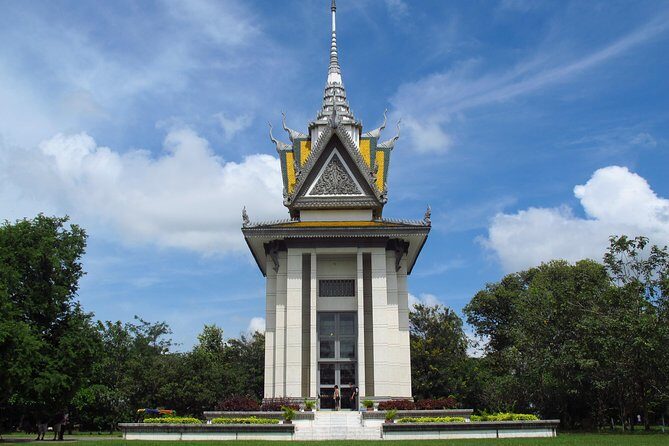
- Cheung Ek Killing Fields: Mass graves, excavation scale, and the stupa of remains
- A guide can change the whole experience: what a dedicated explainer adds
- Price and logistics in Phnom Penh: what you’re paying for
- Dress code, respect, and how to plan your day without rushing
- Who should book this 4-hour Khmer Rouge tour, and who should skip it
- Should you book this Tuol Sleng and Cheung Ek combo?
- FAQ
- How long is the Tuol Sleng and Cheung Ek tour?
- What’s included in the tour price?
- Is hotel pickup included?
- What’s the dress code for Tuol Sleng?
- Is this tour private or shared?
- Is the tour suitable for children?
- Can I cancel and get a refund?
Key highlights and practical takeaways
- Two major sites in one tight 4-hour window with about two hours at each stop
- A live English-speaking guide who helps you make sense of what the exhibits show
- Tuol Sleng’s S-21 cells and torture context explained in plain terms
- Cheung Ek’s memorial stupa with thousands of remains including skulls, bones, and clothing
- Value-focused inclusions like entrance/donation fees and round-trip transport from Phnom Penh
- Respect rules you must follow to enter Tuol Sleng
Tuol Sleng Genocide Museum (S-21): Prison cells, interrogation rooms, and Pol Pot’s system
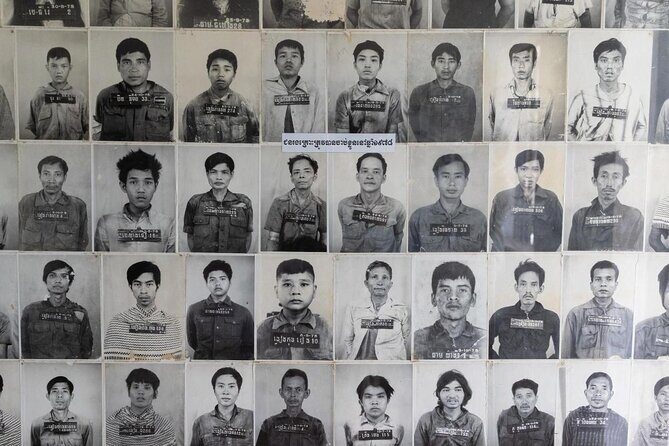
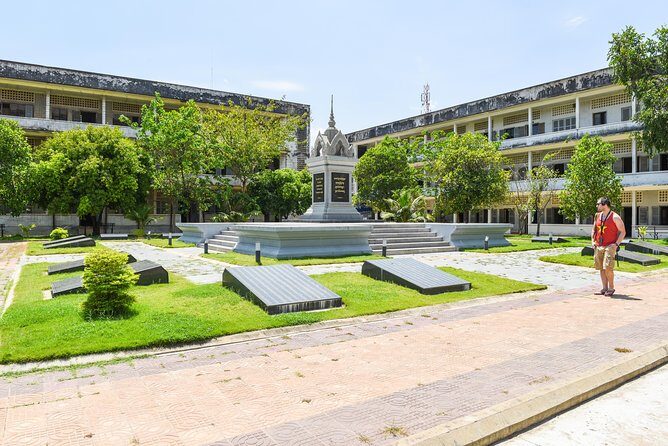
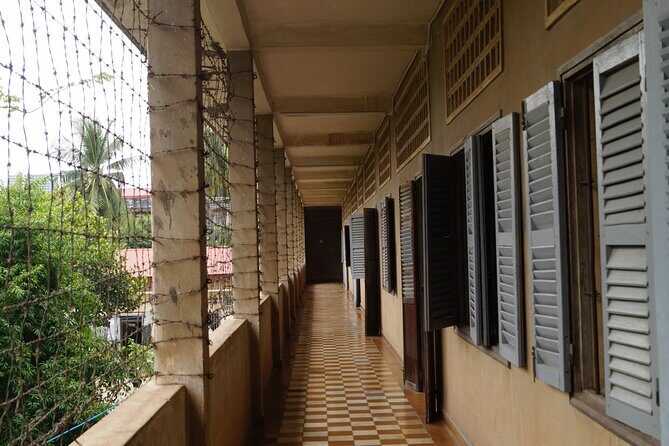
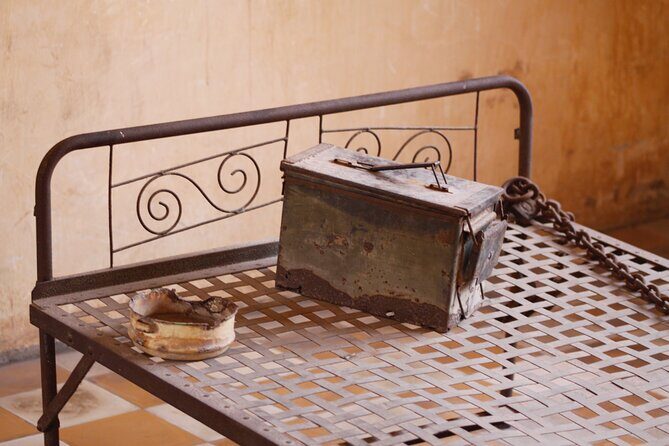
Tuol Sleng is the kind of place where your brain wants to look away—then refuses. The museum occupies the former Tuol Svay Pre School, which the Khmer Rouge turned into S-21, a detention center. After interrogation (often with torture), prisoners were transferred to the Killing Fields, where suffering continued before death.
What makes this stop so hard to forget is the physical layout. You’ll see crude cells built in former classroom spaces, plus exhibits that connect the objects in front of you with the regime’s methods. You’ll also encounter displays of paintings and photographs of victims—material that makes it harder to reduce the past to a headline.
The guide matters here. Without context, it’s easy to skim walls and labels and still feel like you’ve only half-understood. With a guide, you’re more likely to connect the dots: why the prison system existed, how interrogation worked as a tool of control, and how the route from S-21 to the Killing Fields fit together. If you’re the type who likes a little structure—who wants to know what to look for—you’ll probably appreciate the guided pace.
Plan to bring stamina more than entertainment. This stop is listed as about two hours, and it often feels longer emotionally. You can expect a sober walkthrough that doesn’t rush past the details, and you should give yourself permission to pause. If you’re the kind of visitor who gets overwhelmed, consider taking a short break and focusing on one section at a time.
One more practical point: Tuol Sleng has a strict dress code. You’ll need clothes that cover shoulders and fall below the knees. Shirts with obscene or disrespectful prints can get you refused entry, and brightly colored outfits may also be a problem—so pack something simple and respectful.
You can also read our reviews of more tours and experiences in Phnom Penh.

Cheung Ek Killing Fields: Mass graves, excavation scale, and the stupa of remains
Cheung Ek sits just outside the city center, and it shifts the experience from documented imprisonment to the aftermath of mass killing. It was originally a Chinese cemetery before the Khmer Rouge repurposed it as one of their best-known Killing Fields. The scale here is part of what hits you.
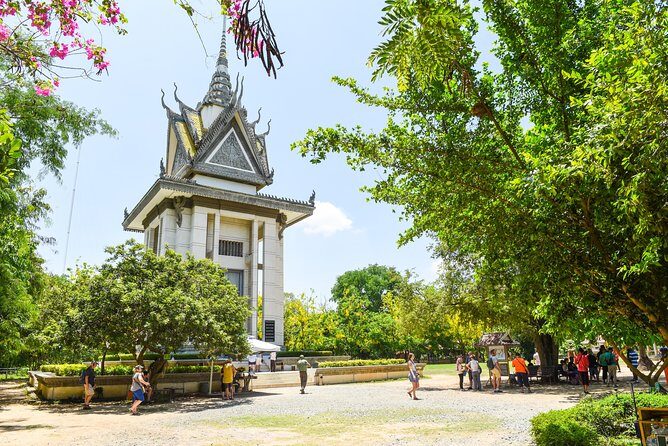
At Cheung Ek, you’ll walk around a memorial site built over mass graves. The tour information notes that the remains of almost 9,000 bodies have been excavated in this area. In other words: you’re not dealing with an abstract number—you’re in a place where the excavation and remembrance are central to the grounds.
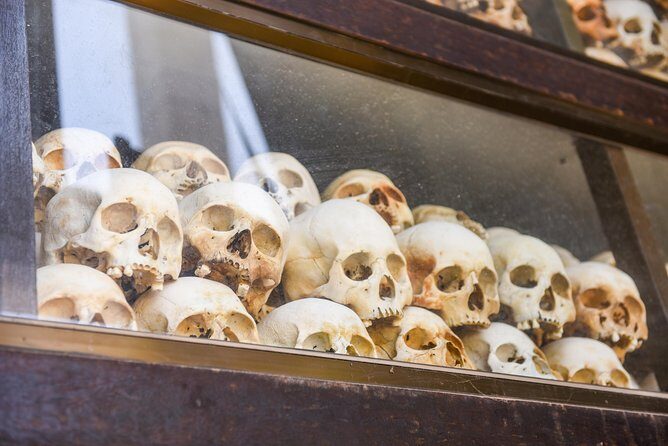
The memorial stupa is the focal point. It displays over 5,000 human skulls, bones, and clothes of victims. That combination matters: bones and skulls provide the body-level evidence, while clothing reminds you these were real people with ordinary possessions. It’s also the kind of display that makes silence feel like the correct response.
You’ll likely spend about two hours at Cheung Ek. Time matters because the grounds can feel slow in a way that’s necessary. Rushing can turn this into a checklist. Going steady helps you understand the intent of the memorial: to preserve details that would otherwise disappear into official statistics or, worse, denial.
This stop also gives you a wider view of how the Khmer Rouge terror worked beyond a single prison. Many Cambodians were tortured and imprisoned in detention centers around the country, not just S-21. The Cheung Ek visit helps connect those dots, showing what happened after people were processed through the system.
A guide can change the whole experience: what a dedicated explainer adds
This is not a museum you’ll fully understand by reading labels alone. A professional English-speaking guide gives you the timeline and the cause-and-effect logic that’s hard to piece together on your own, especially when the content is emotionally draining.
I also like the human tone a good guide brings. One of the strongest signals in the feedback is how much a guide can affect the day’s meaning. A name you’ll see in the standout experiences is Sony, praised for being knowledgeable and friendly while staying considerate—exactly what you want when a site is this heavy.
There’s a practical choice you may face. If you’re the type who likes DIY planning and you’re thinking about audio options at each site, you might wonder whether a live guide is worth the extra. Here’s the reality: audio can work for basic orientation, but a live guide can answer the moment you realize you’re confused. They can also help you slow down in the right places so you don’t miss what the museum is trying to communicate.
If you book a private tour (this one is private for just your group), you also get control over your pace. You can ask questions, request the guide to repeat key context, or take a breather without feeling like you’re holding up strangers.
Price and logistics in Phnom Penh: what you’re paying for
At $80.77 per person for a tour lasting about 4 hours, you’re paying for four things that often cost extra when you plan the day yourself: a guide, transport, and paid access to both sites. This includes hotel pickup, entrance and donation fees, and round-trip transport.
That “bundle” matters in Phnom Penh. Both locations are part of the core genocide-tour circuit, and you’re saving the effort of figuring out timing, fares, and how to get between sites efficiently. Hotel pickup also reduces the friction that can otherwise make you show up stressed—stress is the last thing you need before entering places like Tuol Sleng.
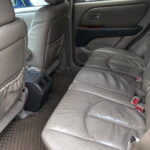
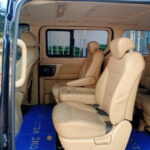
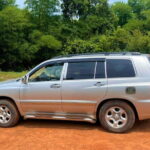
The tour is offered by Asian Trails LTD, and it’s set up as a professional half-day excursion with a driver and vehicle (car/mini-van/coach). You’ll be picked up from your Phnom Penh hotel, but the coverage is limited to accommodations staying in and inside Phnom Penh. If you’re outside that zone—places like Koh Dach, Tonle Bati, or Oudong are listed as excluded—there may be supplements. Also, pickups from river and cruise ferry terminals and Phnom Penh International Airport are excluded.
Two more logistics notes to keep you from surprises:
- Pickup and drop-off time is typically arranged after you book, and confirmation efforts are made; if it can’t be confirmed earlier for operational reasons, you may be told the day before.
- If your “hotel” is more like a private residence or non-registered accommodation, you may be asked to meet at a nearby hotel instead.
Finally, this tour uses a mobile ticket. That’s convenient—just make sure your phone is charged and protected from the elements.
Dress code, respect, and how to plan your day without rushing
This outing asks for respect before it asks for curiosity. Tuol Sleng requires modest, appropriate clothing: shoulders covered and knees covered. Bright colors and disrespectful prints can lead to refusal, so I treat this as a real gear-check, not a vague suggestion.
Bring something that works in Cambodia’s heat too. Even if the tour is only around four hours total, you’ll feel it walking and standing in memorial spaces. Lightweight but compliant clothing is the sweet spot.
On top of that, protect your camera and phone. The tour information notes that natural elements can damage electronics, and you’re expected to wrap and protect your devices. That’s one of those “fine print” reminders that saves you regret—if you’re carrying gear you can’t easily replace, plan ahead.
Then there’s the emotional prep. The tour is described as harrowing and sobering for a reason. If you’re sensitive to trauma-related content, give yourself extra breathing room between stops. A useful strategy is mentally switching tasks at the midpoint: at Tuol Sleng, focus on the prison system. At Cheung Ek, focus on the memorial’s structure and scale.




Who should book this 4-hour Khmer Rouge tour, and who should skip it
This is a strong fit if you want a guided, structured visit to both Tuol Sleng and Cheung Ek in one half day from Phnom Penh. It’s also a great match if you prefer not to translate history yourself while navigating heavy subject matter.
It’s not recommended for families with children under 12 years old. That’s a clear boundary, and I’d treat it as such.
If you’re a history buff, this tour gives you a direct path through the Khmer Rouge system—detention at S-21, then transfer to the Killing Fields. If you’re not a history buff, you’ll still get enough guided context to understand what you’re seeing without needing to read a textbook first.
Should you book this Tuol Sleng and Cheung Ek combo?
If you can handle serious subject matter, I think this is worth booking. The value is real: you get a private, English-speaking guide, transport, and entry/donation fees for both major sites in about four hours. More importantly, the guide helps you connect exhibits and memorials into a coherent story instead of a scattered set of images.
Skip it only if you’re looking for a light sightseeing day, or if the emotional weight feels like too much right now. Also, if you know you won’t meet the Tuol Sleng dress code, fix that before you book—because refused entry turns a meaningful day into a frustrating one.
If you want one Phnom Penh experience that makes the Khmer Rouge era harder to forget, this is one of the most direct ways to do it.
FAQ
How long is the Tuol Sleng and Cheung Ek tour?
It’s about 4 hours total, with roughly 2 hours at Tuol Sleng Genocide Museum (S-21) and roughly 2 hours at Cheung Ek Genocidal Center (Killing Fields).
What’s included in the tour price?
The tour includes a professional English-speaking guide, transportation by car/mini-van/coach with a driver, all entrance and donation fees for the listed visits, and applicable taxes and service charges.
Is hotel pickup included?
Yes, return transfers are included for customers staying in and inside Phnom Penh. Pickup outside those areas (including Koh Dach, Tonle Bati, Oudong, river and cruise ferry terminals, and the airport) is excluded and supplements may apply.
What’s the dress code for Tuol Sleng?
You must dress modestly: clothes that cover shoulders and fall below the knees. Shirts with obscene and disrespectful prints/pictures and brightly colored clothing may result in refusal to enter.
Is this tour private or shared?
This is a private tour/activity, meaning only your group participates.
Is the tour suitable for children?
It is not recommended for families with children under 12 years old.
Can I cancel and get a refund?
Free cancellation is available. You can cancel up to 24 hours in advance for a full refund. If you cancel less than 24 hours before the experience start time, the amount paid is not refunded.