REVIEW · SIEM REAP
Angkor Wat & Bayon: the Smiling Temple
Book on Viator →Operated by Angkor Cycling Tour · Bookable on Viator
Two wheels beat tour buses at Angkor. This small-group ride from Siem Reap helps you reach Angkor Wat and Bayon at a calmer tempo, with time to notice nature along the way. I especially like the guide-led storytelling at each temple stop, and I like that the bike and helmet are part of the package, along with lunch and coconut juice. The main thing to plan for is the heat and a bit of off-road riding, which can make the full route harder on hot days.
This is a leisurely option that still feels real, because you’re pedaling through quiet stretches instead of sitting behind a windshield. You’ll start at 7:30am at Taphul Rd, Krong Siem Reap, and the tour ends back at the meeting point, so think about how you’ll get there (hotel pickup is not included). Also factor in the temple pass, because Angkor entry is not part of the $50 price.
For context, this is priced at $50 per person and is often booked about 10 days in advance. With an overall rating of 4.9 from 47 reviews and 100% recommending it, the consistent theme is simple: it’s a fun, family-friendly way to see big Angkor highlights without turning the day into a sprint.
In This Review
- Key Things to Know Before You Go
- Why Angkor Works Better by Bike Than by Bus
- Price and Value: What the $50 Covers (and What It Doesn’t)
- Meeting Point at 7:30am on Taphul Rd
- The Easy-Paced Ride: Quiet Trails, Butterflies, and Nature Sounds
- Angkor Wat Stop: One Wonder, Many Angles
- Angkor Thom’s South Gate and the Wall Walk at Prasat Chrung
- West Gate of Angkor Thom and Bayon’s 216 Smiling Faces
- Lunch, Coconut Juice, and Heat Management on the Route
- Who This Tour Fits Best (and Who Might Prefer a Different Plan)
- Should You Book This Angkor Cycling Tour?
- FAQ
- What is the duration of the Angkor Wat & Bayon mountain bike tour?
- How much does the tour cost?
- Is the Angkor temple entry included in the price?
- What does the $50 price include?
- How big is the group?
- What time does the tour start and where do I meet?
- Do I get hotel pick-up and drop-off?
- Do I need a temple pass in advance?
- What should I wear or bring?
- What is the cancellation policy?
Key Things to Know Before You Go
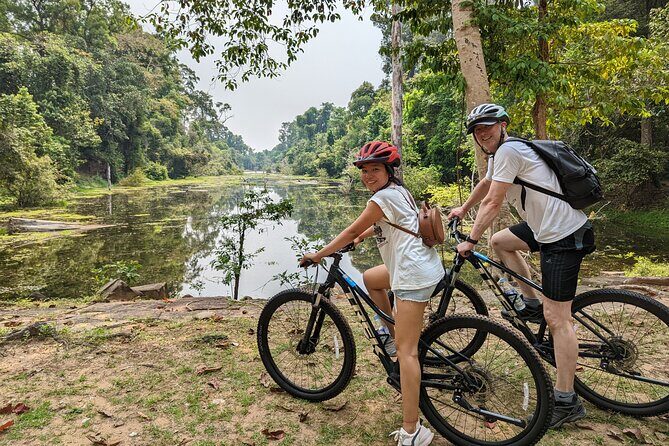
- Guaranteed small group (max 10 travelers), so you get more help and less waiting around.
- Bike, helmet, guide, lunch, and coconut juice are included in the $50 tour price.
- Temple pass is extra (Angkor entry not included; listed as $37 for 1 day).
- Leisurely pace with some off-road biking, so it’s not a flat-city ride.
- You’ll hit Angkor Wat and Bayon plus key gates of Angkor Thom, including a wall viewpoint at Prasat Chrung.
- Respectful dress matters in active sacred areas: shoulders and above-the-knee rules in sacred palaces.
Why Angkor Works Better by Bike Than by Bus
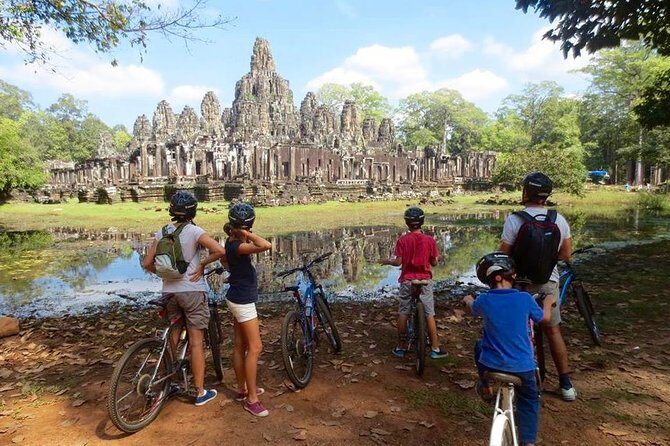
Angkor is famous for crowds, but it doesn’t have to feel like one long queue. What I like about this mountain bike format is that it changes your tempo. You’re moving at human speed, with moments to pause and take in the sounds around you, instead of just being dropped at temple doors.
The route is designed to feel relaxed. It’s described as non-professional and non-adventurous, and it’s paced as an easy ride for riders of all fitness levels. That balance is rare: you get access to the landscape and the temple sequence, but you’re not signing up for a training session.
You also get the practical benefit of guide support. When you’re cycling, you tend to notice details you might miss from a vehicle window—what a gate is doing in the defensive layout, how one temple connects visually to another, and why certain spots feel like they’re meant for viewing from a specific angle.
You can also read our reviews of more tours and experiences in Siem Reap.
Price and Value: What the $50 Covers (and What It Doesn’t)
The tour price is $50 per person for about 5 hours. In that price, you get a lot of “on-the-day” logistics handled: mountain bike rental, helmet, an English-speaking guide, lunch, coconut juice/water, and pure drinking water.
Here’s the part you should budget for: Angkor entry isn’t included. The listing states the temple pass is $37 for 1 day entry. So if you’re planning a straightforward one-day Angkor visit, your total day cost becomes roughly $87 per person before you add any local transport to reach the meeting point.
No hotel pickup is included, so you may also want to factor in how you’ll get to Taphul Rd by 7:30am. For some people, that’s a deal; for others, it’s the one missing piece that affects overall value.
Also note the “mobile ticket” format. If you’re traveling with data or a phone that’s reliable offline, it’s usually an easy setup—but as always, keep your phone charged early.
Meeting Point at 7:30am on Taphul Rd
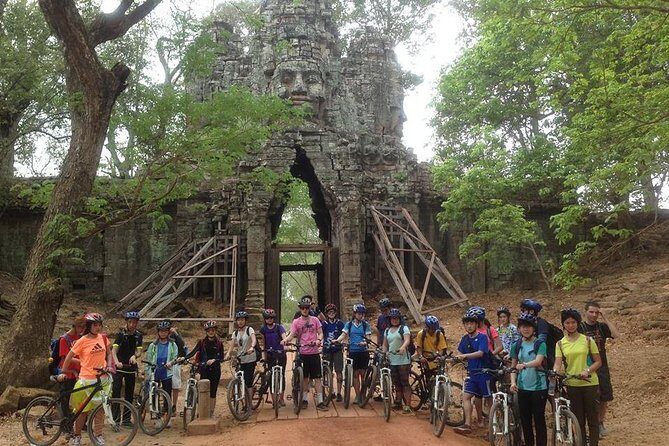
The tour starts at 7:30am and meets at Taphul Rd, Krong Siem Reap 17252, Cambodia. It ends back at the same meeting point, which is convenient because you don’t have to solve a second transport puzzle after you finish.
Early start is practical here. Angkor can get hot fast, and the tour ride itself includes some off-road biking and walking/climbing moments around the temples. Starting in the morning gives you a better shot at comfort and full participation.
What I recommend:
- Wear comfortable closed shoes you can walk in on temple stone and uneven ground.
- Bring sunglasses and sunscreen, because you’ll be cycling in daylight.
- Bring a camera, since you’ll have multiple stops where the angle matters.
The tour also stresses respectful clothing in active spiritual areas. In sacred palaces, clothes like shorts and skirts above the knees and bare shoulders are prohibited. Plan to cover up even if it feels hot.
The Easy-Paced Ride: Quiet Trails, Butterflies, and Nature Sounds
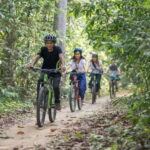
This is a mountain bike tour, but it’s not framed as an adrenaline ride. The emphasis is on a leisurely cycle through quieter stretches while your guide shares history and helps you understand what you’re seeing.
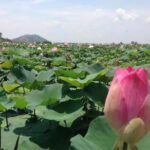
One of the more charming details is the focus on small nature moments: the route description mentions hidden trails and the chance to see butterflies and flowers, plus the simple sound of the outdoors while you move.
You’ll also get some variety in the terrain. There can be off-road biking, and at least one past group described the day as hot enough that they didn’t complete the full plan. The operator handled it well for that group, including sending a car when the heat became too much. That’s not a guarantee, but it’s a good sign that they know conditions can change.
If you’re traveling with kids or anyone who gets tired quickly, the structure helps. The pacing is designed for non-rushers, and in one family situation, the leader arranged an alternative way home when children couldn’t ride back. It’s still best to bring a realistic plan, but it’s comforting to know the day isn’t designed as a strict all-or-nothing mission.
Angkor Wat Stop: One Wonder, Many Angles
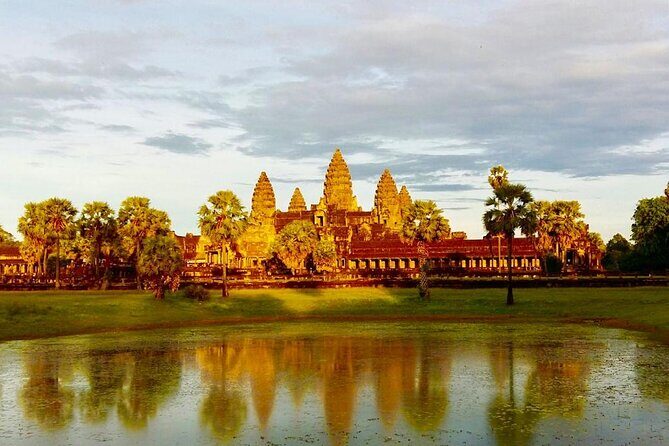
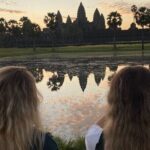
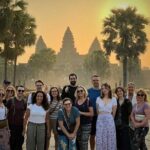
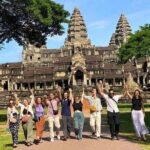
Angkor Wat is the headline, and you’ll see it as part of this ride. It’s described as one of the seven wonders of the ancient world, and the point of coming this way is that you approach it with less time pressure than a vehicle-only transfer.
The big value here isn’t just seeing the temple. It’s learning what to look for. Your guide explains the meaning behind key features as you move through the sequence, so your photos end up telling a clearer story.
Because the tour is only about 5 hours, you’re not expected to do everything in Angkor at a deep, hour-by-hour level. Instead, you get a high-impact visit: enough time at the main sights to appreciate the scale and details, plus the context that keeps the visit from feeling like a checklist.
A practical note: Angkor Wat is an active spiritual site. Even when you’re there as a visitor, you’re still sharing space with worship and daily practice. Keep your voice low, follow any instructions from staff, and dress appropriately.
Angkor Thom’s South Gate and the Wall Walk at Prasat Chrung
After Angkor Wat, the tour shifts into the defensive layout of Angkor Thom. You’ll pass the South Gate of Angkor Thom, described as the most appealing defensive wall of the area. This matters because Angkor isn’t just one temple. It’s a whole planned city concept, and gates are a big part of how the city controlled movement.
Then comes a more physical moment: you’ll climb up and venture on the protection wall to see the viewpoint at Prasat Chrung. This is one of the clearest “effort versus payoff” moments in the day. From the wall, the views can feel like you finally understand how the complex sits in relation to the broader area.
Here’s the consideration: if you’re traveling with someone who struggles with stairs, uneven stone, or climbing short sections, take that into account. The tour overall is easy-paced, but this is still a climb and a walk segment.
Still, this stop is one of the reasons cycling works. Instead of jumping straight from gate to gate by car, you get a physical, in-between rhythm. It helps the city plan make sense.
West Gate of Angkor Thom and Bayon’s 216 Smiling Faces
The next major sight is the West Gate of Angkor Thom, described as the never-restored gate. That detail is useful. It signals that not all structures have been maintained the same way, and it can change what you notice when you’re standing there—texture, wear, and the way restoration priorities may differ.
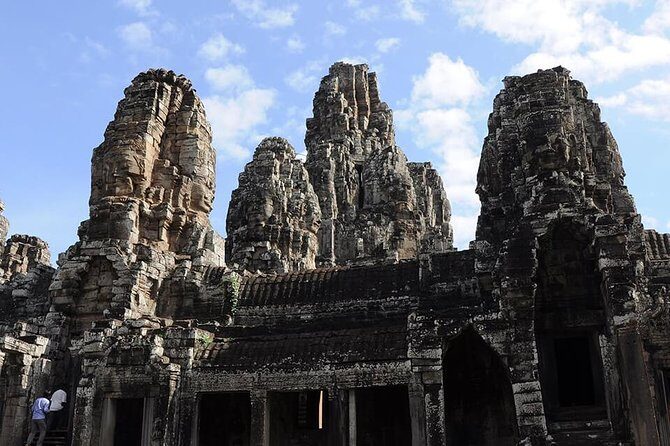
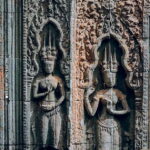
Then you reach Bayon, the temple famous for its faces. Bayon is presented as the second most important temple after Angkor Wat, with 54 towers and 216 smiling faces. That number is impressive on paper, but the real takeaway is how much expression you’ll see once you’re close enough to notice the towers from different angles.
The cycling format helps here too. Bayon isn’t just a photo spot. The guide-led context gives you a way to read the temple design while you’re there—why the faces face outward, how the tower count creates a visual rhythm, and how Bayon fits into the broader Angkor Thom story.
If you love your temples with a mix of visuals and explanations, this segment is where the tour earns its high rating. You end the day with something that feels unmistakably Angkor, and you’re not just leaving with a single big image. You’ll come away with an understanding of why these spaces were built for viewing, worship, and movement through a planned city.
Lunch, Coconut Juice, and Heat Management on the Route
Food is built into the schedule: lunch is included, along with coconut water/juice and pure drinking water. That’s a practical upgrade, especially in Cambodia where midday heat can drain you faster than you expect.
What matters most is timing. Since the tour starts early, you’ll likely have the meal before conditions get too tough for cycling. Still, if it’s particularly hot on your travel dates, plan for the possibility of adjusting your expectations.
One past experience noted that the company handled a shorter day well by sending a car when they didn’t finish due to heat. That’s the kind of flexibility you want from an operator: you don’t just get abandoned if the weather turns.
For you, the simple rule is: hydrate early, wear sun protection, and listen to your body. The tour is leisurely, but it’s still a day outdoors with sun exposure.
Who This Tour Fits Best (and Who Might Prefer a Different Plan)
This is a great fit if you want:
- A small-group day with a friendly guide and minimal waiting.
- A way to see Angkor highlights without spending the day locked into a vehicle.
- A relaxed pace that works for most fitness levels.
- Included gear (bike, helmet) so you don’t have to organize rentals yourself.
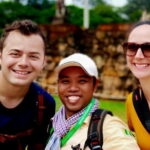
It’s also a strong choice for families. One family trip highlighted that the experience worked well even with younger kids, and the leader arranged a tuk-tuk ride home when the kids couldn’t ride back. That suggests the guide is prepared for real life, not just the ideal plan.
Who should consider another approach:
- If you want zero climbing, skip this one. There is a wall walk at Prasat Chrung.
- If you’re easily overwhelmed by off-road surfaces, note that some off-road biking is part of the route.
- If you want hotel pickup and door-to-door convenience, this tour starts and ends back at the meeting point with no hotel transfer.
Should You Book This Angkor Cycling Tour?
I’d book it if your goal is a fun, structured Angkor day that blends major sights with an easier pace—and you’re comfortable adding the $37 temple pass to your budget. The combination of bike + helmet + guide + lunch + coconut juice makes the $50 feel like more than just transport. It’s really a package for lowering your day’s friction.
Book it particularly if you like your travel days with a bit of movement and explanation, and you don’t want the heavy, frantic feel that can come with ticking off a temple list.
Don’t book it if your priority is pure comfort with no walking and no climbing, or if you know you’ll struggle in heat. In that case, you may prefer a more vehicle-centered option with shorter physical segments.
If you’re on the fence, here’s the simplest decision rule: if a morning start, a bike ride with some uneven paths, and a wall climb are acceptable to you, this is a smart way to see Angkor Wat and Bayon with context and breathing room.
FAQ
What is the duration of the Angkor Wat & Bayon mountain bike tour?
It runs for about 5 hours.
How much does the tour cost?
The price is $50.00 per person.
Is the Angkor temple entry included in the price?
No. Angkor entry requires a separate temple pass, listed as $37 for 1 day entry.
What does the $50 price include?
It includes an English-speaking guide, a premium mountain bike (TREK) and helmet, lunch, coconut water/juice, and pure drinking water.
How big is the group?
It’s a guaranteed small group with a maximum of 10 travelers.
What time does the tour start and where do I meet?
Start time is 7:30am. The meeting point is Taphul Rd, Krong Siem Reap 17252, Cambodia.
Do I get hotel pick-up and drop-off?
No. Hotel pick-up and drop-off are not included.
Do I need a temple pass in advance?
Yes. Since entry is not included, you’ll need to plan for the temple pass separately.
What should I wear or bring?
Dress respectfully for sacred areas (no bare shoulders; shorts and skirts above the knees are prohibited in sacred palaces). Bring sunscreen, sunglasses, and a camera.
What is the cancellation policy?
Free cancellation is offered up to 24 hours before the experience start time for a full refund.