REVIEW · SIEM REAP
Half Day War Museum Siem Reap Killing Fields and Artisans Angkor
Book on Viator →Operated by Asian Trails LTD · Bookable on Viator
Dark history, then hands-on Khmer craft.
This half-day private tour works well if you want meaning, not just monuments. I like the included entrance fees (so you’re not doing cash math all morning/afternoon) and the private English-speaking guide who can connect the dots without rushing you through. You can also pick a morning or afternoon start, which helps you match the rest of your Siem Reap plans.
One consideration: this route includes graphic content tied to the Khmer Rouge period, and it isn’t a fit for young kids. Also, if you’re staying outside central Siem Reap, pickup may not be included without a supplement.
In This Review
- Key highlights worth planning for
- What this half-day tour is really good at
- Morning or afternoon: choosing the right mood
- Price and what you’re actually paying for
- Stop 1: Wat Thmey (Killing Fields) and the tone-setter effect
- Stop 2: War Museum Cambodia and what “daily life in war” means
- Stop 3: Artisans Angkor and why craft belongs at the end
- Logistics that help: pickup, drop-off, and a smooth schedule
- What to wear and pack for a respectful, comfortable visit
- Who should book this tour
- A quick reality check: emotional weight and how to handle it
- Should you book this tour?
- FAQ
- FAQ
- How long is the half-day tour?
- Is hotel pickup and drop-off included?
- Are entrance fees included?
- Is this tour private?
- What language is the guide?
- Are there any dress or etiquette requirements?
- Is the content suitable for children?
Key highlights worth planning for
- Wat Thmey first: you begin with a quiet, small pagoda site before moving into the heavier material
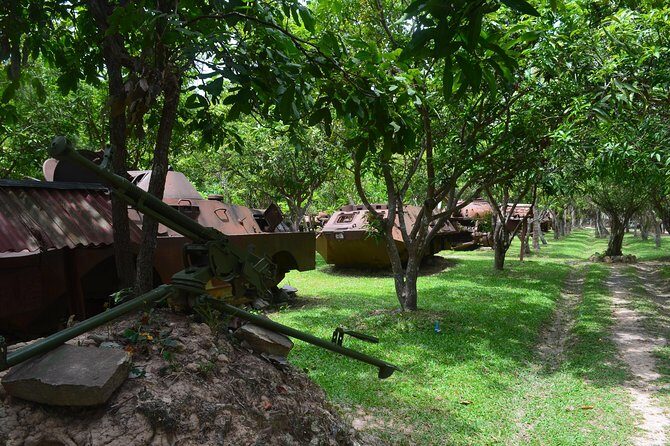
- War Museum Cambodia: a focused look at how a long war shaped daily life
- Artisans Angkor ending: you finish with practical craft—stone-carving and wood-sculpting traditions
- Private vehicle, hotel pickup: smoother logistics than bouncing between group shuttles
- Included fees: entrance and donation fees are covered as described
- Shoe-off and sun prep: bring sun protection and expect some sites to require footwear removal
What this half-day tour is really good at
This isn’t a sightseeing sprint. It’s a half-day that moves in two emotional directions on purpose: first you face the Cambodian genocide and its impact, then you end with the skills and cultural rebuilding that came after.
I like that the pacing is built for understanding. You spend about 45 minutes per main stop, and because it’s private, your guide can slow down when you have questions or nudge you when you might miss something. The stops also have a clean “story arc” feel: sacred place → wartime memory → craft revival.
At about 3 hours, it fits nicely into a typical Siem Reap rhythm. If you’re also doing Angkor Wat or one of the Tonlé Sap experiences, this tour won’t steal your whole day.
You can also read our reviews of more museum experiences in Siem Reap

Morning or afternoon: choosing the right mood
The tour offers morning and afternoon departures, and that choice matters more here than on a temple route.
- If you go in the morning, you usually get a calmer start and a cooler temperature for the outdoor parts around Wat Thmey.
- If you go afternoon, you might be more prepared emotionally if you’ve already seen something lighter earlier that day.
Either way, expect the same sequence of stops and roughly the same time at each place. If you’re sensitive to heat, I’d still plan to go with the sun protection the tour asks for—sunglasses, hat/cap, and high-SPF sunscreen.
Price and what you’re actually paying for
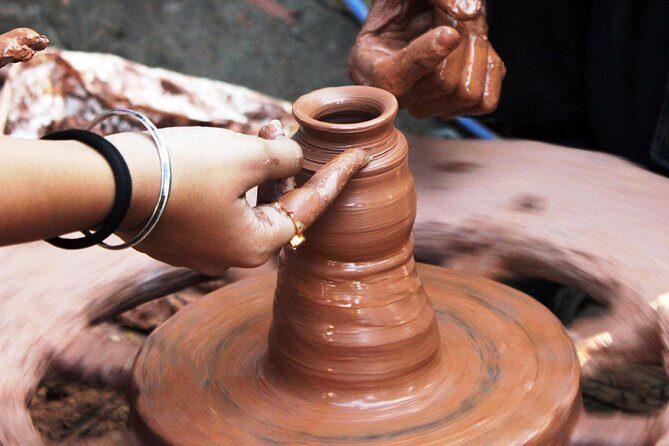
The price is $48.72 per person, and the value isn’t only the sites. It’s the bundle:
- a professional English-speaking guide
- private transportation (car/mini-van/coach with driver)
- all entrance and donation fees for the listed stops
- taxes and service charges
For a half-day, the “included fees” part is where you feel the savings. In Siem Reap, it’s common to see tours that quote one number and then add entrance charges. Here, you’re less likely to end up surprised at the gates.
Is it the cheapest option in town? Maybe not. But you are paying for a private setup and a guide who can shape your understanding rather than just pointing and moving you along.
Stop 1: Wat Thmey (Killing Fields) and the tone-setter effect
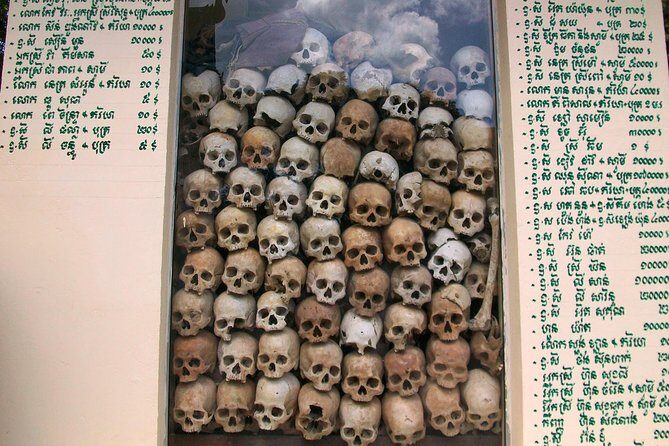
You start at Wat Thmey, a smaller pagoda site in Siem Reap associated with the Killing Fields. It’s not just another temple stop. You’re going there to get oriented in the subject—how this place is remembered and how the area functions today.
The tour timing is about 45 minutes, which is important. It gives you time to absorb what you’re seeing without feeling herded. It also helps your guide set context before you move into the War Museum, which is more direct.
One practical note: the tour description stresses shoe removal as customary at religious sites. Your guide will let you know where it applies, but plan for it. Wearing slip-on shoes (or shoes you can remove quickly) helps.
This first stop is also a good place to decide how you want the rest of the day to feel. If you find the topic heavy, you can ask your guide to explain in a slower, clearer way before you continue.
Stop 2: War Museum Cambodia and what “daily life in war” means
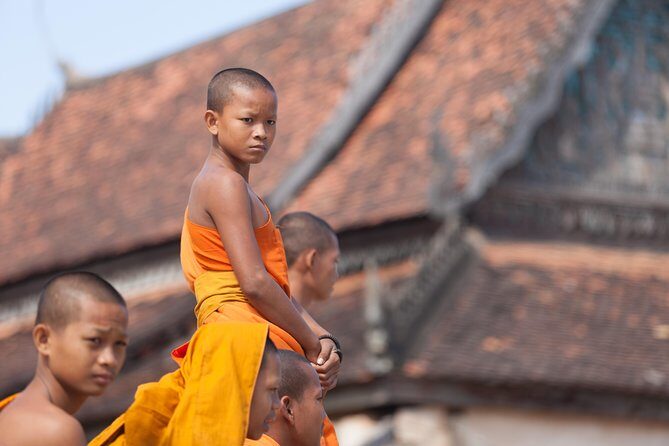
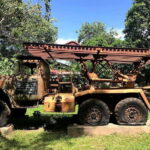
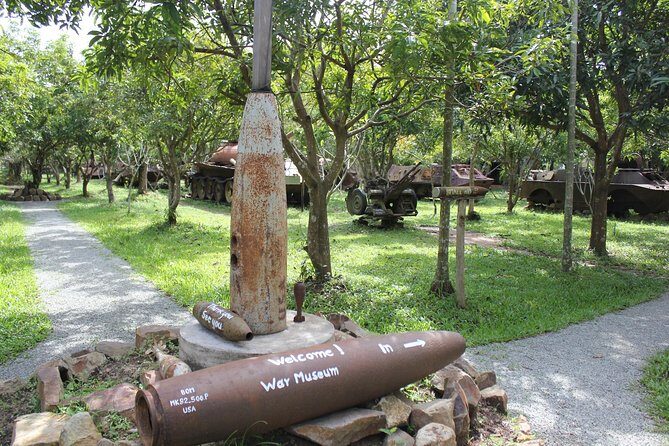
Next comes War Museum Cambodia, and the focus is on a long period when the country was engulfed in war for decades. Instead of treating history like a list of dates, this stop is built around lived experience—how people’s lives were shaped by the conflict.
You spend about 45 minutes here. That’s enough time to stay engaged, but not so long that your brain turns the experience into a blur. The aim is understanding, not marathon misery.
This is also where having an English-speaking guide really matters. In the feedback you’ll see a pattern: people appreciate when the guide’s explanations are clear and emotionally honest without being sensational.
In other words, this isn’t just “read the signs.” It’s more like: your guide gives you the story behind what you’re looking at, so you leave with a framework for how the war period worked and what it did to the nation.
Stop 3: Artisans Angkor and why craft belongs at the end
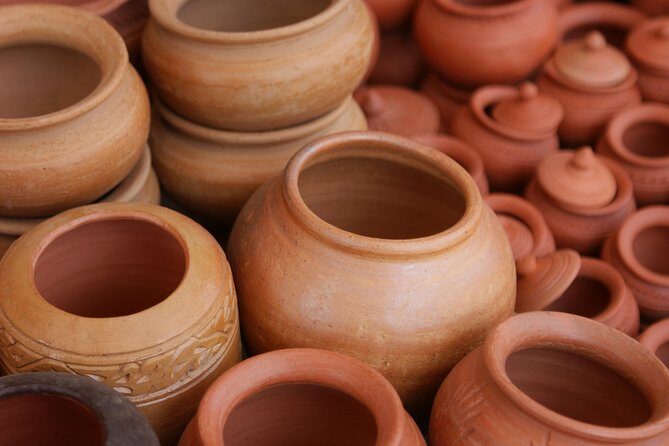
After the heavy stops, the tour wraps at Artisans Angkor (Les Artisans d’Angkor). This part is about rebuilding cultural practice through work in stone-carving and wood-sculpting. The idea is simple but powerful: after tragedy, people still make things—and those skills carry memory and identity forward.
You get about 45 minutes at the workshop area. This is not a shopping detour designed to eat your time. It’s more of a “watch how the craft works” stop, and it’s a practical way to end the day on something you can understand with your eyes and your hands (even if you’re not doing the carving yourself).
If you like seeing the continuity between past and present, ending here makes sense. You’ve just learned about how the Khmer Rouge era devastated life. Now you see how traditions are kept alive through training and craftsmanship.
Logistics that help: pickup, drop-off, and a smooth schedule
The tour includes pickup and drop-off at Siem Reap hotels, and the day is run on a full private basis, meaning it’s only your group.
That matters because the main sites are spread out enough that a shared group can cause delays or time pressure. Here, you can keep your momentum without losing time to other schedules.
A key boundary: return transfers are included only for customers staying within Siem Reap. If you’re staying outside that general area—like places such as Tonlé Sap, Koh Ker, Banteay Srei, or Siem Reap International Airport—transfers are excluded and you may need a supplement.
So if your hotel is outside central Siem Reap, double-check before booking. It’s the difference between a relaxed half-day and a half-day with extra driving agreements.
What to wear and pack for a respectful, comfortable visit
This tour asks for a few basics, and they’re worth taking seriously:
- Sun protection: sunglasses, hat/cap, and high SPF sunscreen, even if it’s cloudy
- Footwear: expect you may need to remove shoes at religious sites
- Respect for local customs: follow your guide’s instructions on where shoe removal applies
- Device protection: the tour notes that natural elements can harm electronics—wrap or protect your camera/phone if needed
Also, be honest with yourself about the subject matter. The sites include graphic content that may not be suitable for young children. If you’re traveling with kids, it’s a good idea to read the room with your guide and decide if this route is right for their age and sensitivities.
Who should book this tour
This works especially well for you if:
- you want a private, guided understanding of Cambodia’s conflict period
- you like a clear structure and don’t want to piece together sites on your own
- you want the emotional arc of history first, then craft and rebuilding
It might not be the best fit if:
- you’re looking for a “light” half-day
- you’re traveling with young kids who may not handle graphic content
- you want to spend more time shopping or wandering without a set itinerary (this has a set sequence and time at each stop)
A quick reality check: emotional weight and how to handle it
This tour deals with Cambodia’s war and the Khmer Rouge era. That means some parts may feel brutal or upsetting, even if you’re prepared.
My advice: treat it like a museum visit with a mission. Give yourself time to feel what you’re feeling instead of racing to “get through it.” If you want, ask your guide to pace the explanation and focus on what you’re seeing rather than facts-only lectures.
And after Artisans Angkor, don’t rush into another intense activity. A quieter evening helps the day land in your memory in a healthy way.
Should you book this tour?
If you’re in Siem Reap and you care about understanding Cambodia beyond temple walls, I’d book it—especially the private guide format with included fees. The combination of Wat Thmey, the War Museum, and Artisans Angkor gives you the full “why it mattered” and “what came after” feeling in one organized half-day.
Skip it only if you already know you can’t handle graphic or emotionally heavy content. Otherwise, this is one of those tours that may not be the most fun on your calendar, but it can be one of the most meaningful in your trip.
FAQ
FAQ
How long is the half-day tour?
The tour lasts about 3 hours total, with around 45 minutes at each main stop.
Is hotel pickup and drop-off included?
Yes, pickup and drop-off are offered for hotels within Siem Reap. If you stay outside central Siem Reap, transfers may not be included and supplements can apply.
Are entrance fees included?
Yes. All entrance and donation fees for the listed visits are included, so you should not need to pay additional site fees during the stops.
Is this tour private?
Yes. It’s a full private basis, meaning it’s only your group with an English-speaking guide.
What language is the guide?
The tour includes an English-speaking guide. Other languages may be available on request, subject to availability, and may require additional charges.
Are there any dress or etiquette requirements?
For religious sites, it’s customary to remove shoes before entry. Your guide will explain where that applies. Also, bring sun protection since the tour recommends sunglasses, hat/cap, and high-SPF sunscreen.
Is the content suitable for children?
The tour notes that the sites include graphic content, and it may not be suitable for young children. If you’re bringing kids, consider their age and sensitivities carefully.