REVIEW · SIEM REAP
2 Days | Angkor Wat Phnom Kulen & Beng Mealea Tour
Book on Viator →Operated by Hok Cambodia Journeys · Bookable on Viator
Two days in Siem Reap can feel like a lot. This tour works because you get a proper guide and comfortable rides between the headline ruins, plus a day that goes beyond Angkor into Phnom Kulen and the lake.
I especially love how the history comes down to something you can actually picture—not just dates. The English-speaking guide (Hok is the name I saw praised most) is the kind of person who points out the small details that turn stone into a story. I also like that you’re not stuck doing logistics on your own: hotel pickup, air-conditioned transport, and even cool water and towels keep the long hours from feeling brutal.
One thing to plan for: the tour price does not include key entrances—like the Angkor Temple Pass and the Kulen entrance fee. Also, it’s a full 2-day schedule, so if you want slow sightseeing with long free blocks, this won’t feel very “chill.”
In This Review
- Key moments that make this tour worth your time
- How the 2-day Siem Reap loop is paced and organized
- Angkor Wat and Bayon: the big stones, explained in human terms
- Ta Prohm and Ta Nei: when ruins meet roots and you slow down
- Floating village time on Tonle Sap: a cultural break from temples
- Phnom Kulen: sacred sites and the story behind the Khmer Empire
- Beng Mealea’s jungle ruins: the most “untamed” feeling on the trip
- Banteay Srei: pink stone, tiny scale, and razor-thin detail
- Price and logistics: is $170 good value for what you get?
- Who this tour suits best (and who should skip it)
- Should you book this 2 Days | Angkor Wat, Phnom Kulen, and Beng Mealea Tour?
- FAQ
- What is included in the tour price?
- What is not included?
- What time does the tour start?
- How long is the tour?
- Which places are part of the tour?
- Is there an English-speaking guide?
- Is transportation air-conditioned?
- Where does the tour start and end?
- Can I get a full refund if I cancel?
Key moments that make this tour worth your time
- Hok’s guide style: clear explanations and specific, useful details at each major stop
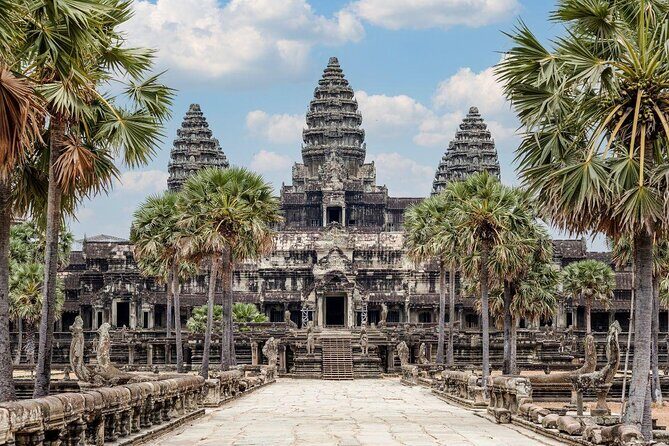
- Angkor highlights in a tight loop: Angkor Wat, Bayon, Ta Prohm, and more in two days
- Tonle Sap adds contrast: floating village life and lake ecology, not only temples
- Phnom Kulen day: sacred sites like the reclining Buddha and the river lined with thousands of lingas
- Beng Mealea’s remote feel: jungle ruins left in an original, mostly unrestored state
- Small-group service setup: pickup, English guide, cool water/towels, and local snacks
How the 2-day Siem Reap loop is paced and organized
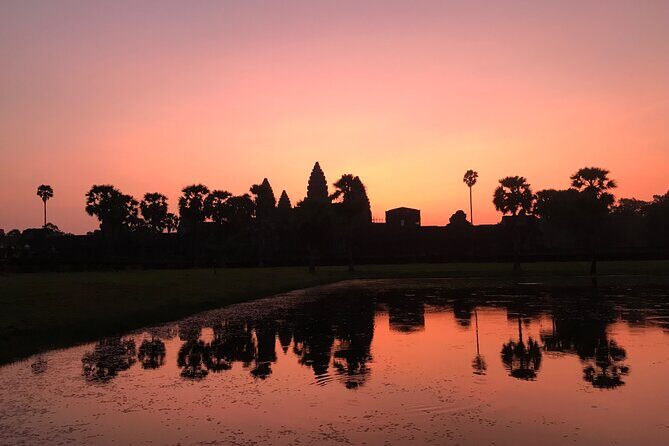
This tour is built around an early start—pickup is set for 8:00 AM—and then a steady day of temple hopping and countryside visiting. You’ll move between stops by air-conditioned vehicle, which matters a lot here. In Cambodia heat, comfort isn’t a luxury; it keeps your energy up for stairs, shade gaps, and long walks.
There’s also a practical “you won’t forget your basics” vibe. You get cool water and towels, plus local snacks, so you’re not constantly hunting for small purchases mid-route. The guide travels with your group and keeps the day flowing, including time for sites that go beyond temples.
The day structure also helps you avoid decision fatigue. Instead of trying to pick which ruins are “most important,” you’re given a concentrated mix: big-name Angkor temples on day one, then Phnom Kulen and the more remote, less-restored spaces on day two. It’s a good match if you want coverage and context without doing a spreadsheet.
One logistics note: the tour ends back at the meeting point, which is listed as Raffles Grand Hotel d’AngkorKhum. That makes it straightforward for you to plan dinner back in town afterward.
A few more Siem Reap tours and experiences worth a look

Angkor Wat and Bayon: the big stones, explained in human terms
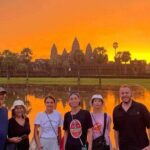
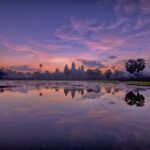
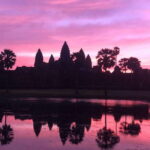
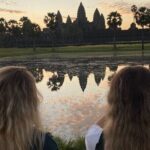
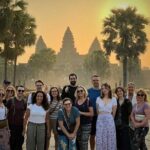
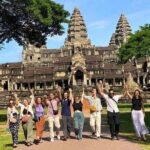
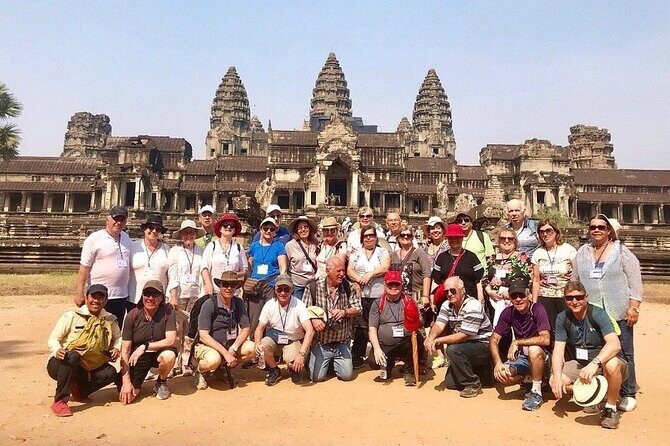
You start with Angkor Wat, and the guide’s first job is to help you understand what you’re looking at. Angkor Wat is described as the largest religious monument in the world, and it’s also noted for being among the best preserved. More than scale, though, the key is how the temple was designed to represent Khmer temple concepts—specifically the temple-mountain idea and the later galleried temple style.
Before you enter, your group heads to purchase the three-day Angkor Temple Pass. That’s an important detail for your budget and timing. If you’re planning to do other Angkor days on your own, the pass is also your best way to avoid repeated ticket-buying friction.
After Angkor Wat, you move to Bayon in the center of Angkor Thom. Bayon’s identity is its 49 towers with the famous four smiling faces on each. The tour explains the direction-linked meanings tied to different deities and how these faces relate to Buddhism and royal symbolism under King Jayavarman VII. You’ll get much more out of the sculpture once it’s translated into what each face is meant to represent.
In terms of practical experience, Bayon can feel visually busy—faces, angles, crowds. Having the guide’s framing helps you stop treating it like a photo backdrop and start seeing the design logic.
Ta Prohm and Ta Nei: when ruins meet roots and you slow down
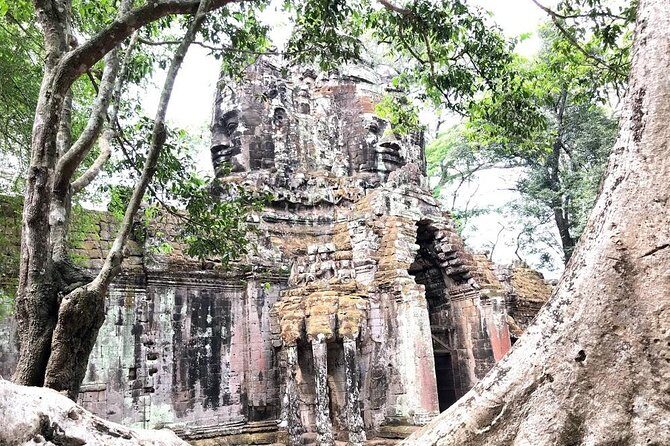
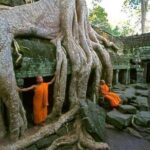
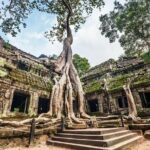
Next up is Ta Prohm, the jungle-temple that pop culture made famous. The tour description points to Tomb Raider, and honestly, that connection helps people get oriented fast. But what you’ll actually enjoy is the way the site is presented as an interplay of nature and architecture—trees and roots wrapped into the structure, not “cleaned up” into something sterile.
Ta Prohm is associated with King Jayavarman VII and is dedicated to his mother in the form of a Mahayana Buddhist goddess of mercy and wisdom. The name discussion matters too: you get both the well-known “Ta Prohm” translation and the older name tied to its original identity.
You’ll spend about 1 hour here, so don’t expect endless wandering. Instead, use the time the way a guide would: walk to the best viewpoints first, then look for the patterns—where the stone breaks, how the roots grip, and how the light hits the carvings.
The tour also includes Ta Nei, though the details provided are lighter than the other stops. Still, it’s a logical “gear change” between the mega-rooms of Angkor Wat/Bayon and the more emotionally intense jungle feel of Ta Prohm.
If you’re the type who likes taking a little longer to look, this is where that habit pays off—spend your one hour with intention, not speed.
Floating village time on Tonle Sap: a cultural break from temples
Day one takes a turn toward life on the lake with Chong Kneas Floating Village and Tonle Sap Lake.
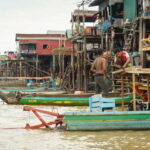
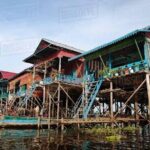
Chong Kneas is your guided introduction to the Tonle Sap Great Lake system through the lens of fishing families. You’ll spend around 90 minutes, and the tour describes it as the top destination for seeing floating houses and traditional fishing practices. This is where the experience stops being only about architecture and starts feeling like daily living—boats, water movement, and the rhythms of a community shaped by the lake.
Tonle Sap itself is described as the largest freshwater lake in Southeast Asia and a key ecological engine for Cambodia. The tour notes seasonal fluctuations: during monsoon season the lake expands dramatically, then shrinks in the dry months. That seasonal change creates a unique ecosystem and supports a lot of wildlife and migratory birds.
Tonle Sap is also noted as a UNESCO Biosphere Reserve, tied to both biodiversity and livelihoods. That combination is the real value of adding the lake here. You see the difference between “ruins that survived” and “a living place that keeps changing.”
Timewise, Tonle Sap Lake is a shorter stop (about 30 minutes and the admission ticket is listed as not included in the data). Chong Kneas is where you get the deeper cultural contact.
Phnom Kulen: sacred sites and the story behind the Khmer Empire
On day two, you head to Phnom Kulen National Park, the sacred mountain area that ties Cambodia’s Khmer empire origins to your feet on the ground. The tour description names several highlights: holy waterfalls, a reclining Buddha, a river lined with thousands of lingas, Srash Damrei, and Bat Cave.
Even if you’re not a “Buddhist iconography” person, the reclining Buddha and the lingas-lined river are visual anchors. They make the spiritual framing concrete instead of abstract. And the river of lingas connects to why this place matters historically, not only spiritually.
Phnom Kulen also translates to Lychee Mountain, and the tour notes it as both a national park and an archaeological/historical site. The big story link is the Devaraja Cult: King Jayavarman VII is described as proclaiming himself God King here, starting a religious-political tradition. That’s the kind of background your guide can connect back to the broader Khmer temple world you already saw.
You’ll spend about 2 hours here. It’s not a “get lost hiking for half a day” format, but it’s enough time to see the main features without feeling rushed through each one.
One more budget note: the Kulen entrance fee is listed as not included, so you’ll want to expect that cost on top of the tour price.
Beng Mealea’s jungle ruins: the most “untamed” feeling on the trip
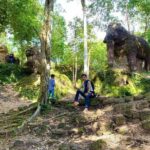
After Phnom Kulen, the tour goes to Prasat Beng Mealea, described as the most popular remote jungle temple in Cambodia. You’re told it’s about 66 kilometers northeast of Siem Reap, which helps explain why it feels different from the Angkor core.
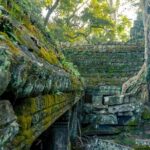
Beng Mealea’s defining feature, as described, is that the ruins exist in harmony with nature and remain in their original, unaltered condition. The tour also highlights that it was opened to visitors in the early 2000s after landmines were cleared. That detail changes how you think about the site—you’re not just visiting an attraction; you’re visiting the result of a complicated safety and restoration history.
Beng Mealea was built by King Suriyavarman II and completed by King Dharanindravarman II. In practical terms, you’ll notice the “loose” feel—collapsed blocks, overgrowth, and long sight lines where the jungle takes the lead. The description even calls out a sarcophagus-like urn, which gives you a target for your eyes.
You’ll spend about 1 hour here. That’s a good length for a place like Beng Mealea: long enough to walk, short enough that you don’t get cooked in the heat if you’re not used to uneven ground.
Banteay Srei: pink stone, tiny scale, and razor-thin detail
The last temple stop is Banteay Srei, described as the most beautiful pink stone temple in Cambodia and located about 37 km north of Angkor Wat.
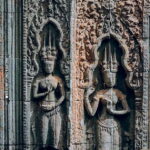
This is where the tour shifts from “massive and iconic” to “small and intricate.” The description stresses it’s small in size, very well preserved, and known for excellent decoration. The carvings are the star. Locals are said to joke that it must have been built by women because of the fine detail—hence the “Lady Temple” nickname.
The tour also gives the temple’s original name, Isvarapura, built by King Rajendravarman II in 967 and dedicated to Lord Shiva. It’s not a vague claim either; the name ties this stop back to the Khmer tradition you’ve been seeing all trip, but with a different mood.
One extra useful detail: Banteay Srei was discovered by a Frenchman in 1914, and the site wasn’t fully open to the public for long after that. That context helps you understand why it feels both famous and still a bit “under the radar” compared to Angkor Wat.
Expect about 1 hour here. If you want photos, this is a strong stop—but spend time looking. The value of Banteay Srei is in the carvings, not the wide-angle drama.
Price and logistics: is $170 good value for what you get?
At $170 per person for a roughly 2-day tour, the value is in the package: air-conditioned vehicle, an English-speaking guide, cool water and towels, and local snacks—plus pickup from your hotel and a built-in set of major stops.
The big reason this price can make sense is time savings. Siem Reap is easy to over-plan. Paying for transport and guidance is often cheaper than your own “I’ll just figure it out” route once you account for Angkor-area driving, entrance decisions, and how long it takes to understand what each site is doing.
But be honest about one cost reality: several key entries are not included. The Angkor Temple Pass is explicitly not included, and Kulen entrance fee is not included either. Also, the stop descriptions list admission tickets as not included for most sites (with Chong Kneas marked as ticket included). So your final spending total will depend on those passes and site fees.
If you’re on a tight budget and already planned to self-guide Angkor, you might find independent travel cheaper. If you want context and a smooth route with minimal stress, this package tends to feel fair—especially with a guide praised for being both professional and flexible.
Who this tour suits best (and who should skip it)
This is a strong fit for you if:
- you want a lot of top sights without juggling tickets and routes
- you’d rather have an English guide like Hok explain symbolism and details
- you like variety: Angkor temples plus Phnom Kulen plus Tonle Sap life
It may not be ideal if:
- you hate early starts (it’s 8:00 AM)
- you want long free periods for wandering
- you want only Angkor and would rather not spend time on river/lake and jungle temples
One nice plus: the experience notes service animals allowed, which is useful if you travel with support needs.
Should you book this 2 Days | Angkor Wat, Phnom Kulen, and Beng Mealea Tour?
Yes, I’d book it if your goal is a structured, information-rich Siem Reap experience. The combination of big Angkor anchors (Angkor Wat and Bayon), the iconic jungle stop (Ta Prohm), the lake-side reality check (Chong Kneas and Tonle Sap), and then the more remote, less “museum-clean” places (Phnom Kulen and Beng Mealea) is exactly what makes two days feel worthwhile.
My advice before you commit: price it realistically. Add the Angkor Temple Pass and the Kulen entrance fee to the $170 so you’re not surprised later. After that, you’re buying convenience, transport comfort, and a guide who can turn each ruin into something you understand on the spot.
If you do book, aim to be present at the stops where detail matters most—Bayon’s faces, Ta Prohm’s tree-root geometry, and Banteay Srei’s carvings. That’s where your time pays off.
FAQ
What is included in the tour price?
The tour includes an air-conditioned vehicle, an English-speaking guide, cool water and towels, and local snacks, with pickup offered.
What is not included?
The tour data lists Angkor Temple Pass, accommodation, and Kulen entrance fee as not included. Admission tickets are also listed as not included for several stops, with Chong Kneas Floating Village marked as included.
What time does the tour start?
Start time is listed as 8:00 AM.
How long is the tour?
The duration is listed as 2 days (approx.).
Which places are part of the tour?
You’ll visit Angkor Wat, Bayon, Ta Prohm, Ta Nei, Banteay Srei, Beng Mealea, Phnom Kulen National Park, Chong Kneas Floating Village, and Tonle Sap Lake.
Is there an English-speaking guide?
Yes, the tour includes an English-speaking guide.
Is transportation air-conditioned?
Yes, the tour includes an air-conditioned vehicle.
Where does the tour start and end?
The meeting point is Raffles Grand Hotel d’AngkorKhum and the activity ends back at the meeting point.
Can I get a full refund if I cancel?
You can cancel up to 3 days in advance of the experience for a full refund, with cut-off times based on local time.