REVIEW · SIEM REAP
Ox Cart Ride of Rural Cambodia
Book on Viator →Operated by Siem Reap Ride by Siem Reap Homesteading · Bookable on Viator
Slow travel is still alive in Cambodia. This ox cart outing turns the countryside around Siem Reap into the main event, with a calm, human pace that feels refreshingly real. I love how non-motorized cart time gives you breathing room to notice palm trees, rice fields, and everyday village routines. I also like that the tour can include a local family stop for a personal look at work that changes with the season. One consideration: parts of the route may run along roads, so if you hate long stretches of street riding, ask to prioritize fields and keep any on-road time short.
You can do it as a morning tour for lunch, or an afternoon tour that lines up with dinner. Pickup by remork (tuktuk) starts at 7:30 or 1:30, then you’re back in town by late morning or early evening. It’s a private setup, so your group stays together instead of getting mixed into a bigger crowd.
What makes this feel like value isn’t just the transport. You get a local guide, bottled water, and included meals (lunch on the morning run, afternoon tea on the afternoon run), plus local taxes. That combination matters in Siem Reap, where one “easy afternoon” can otherwise turn into a bunch of extra small purchases.
In This Review
- Key highlights worth planning around
- Why an ox cart ride feels different around Siem Reap
- Morning at 7:30 or afternoon at 1:30: timing that actually helps
- The countryside transfer: rice paddies, palm trees, and small surprises
- The farming village walk and the local family touch
- Seasonal craft and farming stops you can actually understand
- Brooms made year-round
- Sugar palm making (usually October to April)
- Beetle nut making (usually June to September)
- Rice planting (June to December) and rice harvest (December)
- Food and comfort: lunch, afternoon tea, and bottled water
- Price and value: $135 for 4 hours, with more than just transport
- Practical tips so the ride stays enjoyable
- Who this ox cart ride suits best (and who should reconsider)
- Should you book the Ox Cart Ride of Rural Cambodia?
- FAQ
- What is the duration of the Ox Cart Ride of Rural Cambodia?
- How much does this tour cost?
- What are the pickup times for the morning and afternoon tours?
- Is this tour private?
- What’s included in the price?
- What’s not included?
- What are the age requirements?
- Is free cancellation available?
Key highlights worth planning around
- Non-motorized ox cart pace that lets the countryside show through without rushing you
- Local guide + village context, so you’re not just passing by scenes you don’t understand
- Seasonal farming work, including rice planting and harvest windows
- Hands-on rural crafts, like brooms made year-round and sugar palm processing in select months
- Private tour format, just your group, with pickup and drop-off in selected hotels
Why an ox cart ride feels different around Siem Reap
Siem Reap has a way of pulling you toward temples and big views fast. This tour does the opposite. Instead of racing from one landmark to another, you get time in the in-between places: rice paddies, palm trees, and the kind of everyday movement you usually miss when you stay “on the route.”
The ox cart part is the heart of it. Even when the countryside looks close to the city, the slow pace changes what you notice. You’ll catch small details like how people organize daily tasks and how fields connect to food and materials.
The overall vibe is simple. No big production, no overbuilt “tour show.” If your goal is to see rural Cambodia in a way that feels grounded, this is the right direction.
You can also read our reviews of more tours and experiences in Siem Reap.



Morning at 7:30 or afternoon at 1:30: timing that actually helps
You get two daily options, and both are designed to mesh with normal meal schedules in town.
- Morning tour: pickup around 7:30, then return to Siem Reap for lunch
- Afternoon tour: pickup around 1:30, then return in time for dinner
The ride and village time add up to about 4 hours total. That short window is a real advantage. You get a meaningful rural break without losing an entire day, which makes it easier to pair with Angkor Wat plans or other Siem Reap must-dos.
Also, this is private. Only your group participates. That matters if you’re traveling with friends or family and you want a more relaxed pace, fewer interruptions, and the chance to ask questions without waiting your turn.
The countryside transfer: rice paddies, palm trees, and small surprises
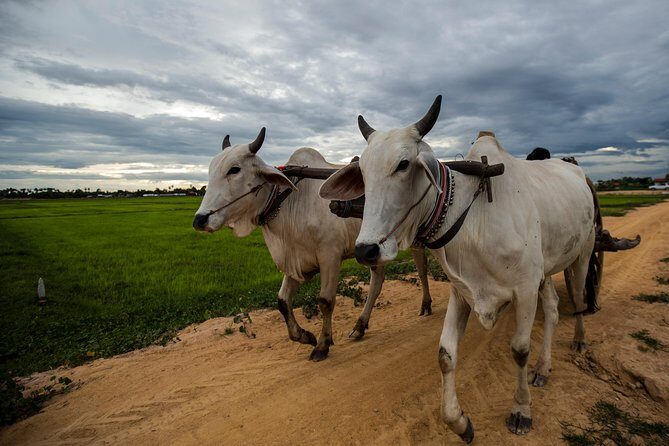
After pickup, you’ll head to the tour starting point by remork (tuktuk). Along the way, you pass rice paddies, palm trees, and likely ox-drawn carts in the distance. Sometimes you may even spot the odd ruin, which adds a little “wait, what is that?” curiosity to the drive.
This transfer isn’t just a formality. It sets expectations. You’re already moving through the farming world before you get on the cart, so the scenery doesn’t feel like a switch you have to adjust to.
A practical note: you’ll spend more time seeing rural life once the tour begins, but the approach route can still shape your mood. If you’re prone to motion sickness, take it easy on heavy meals beforehand and bring water, since the day is outdoors.
The farming village walk and the local family touch
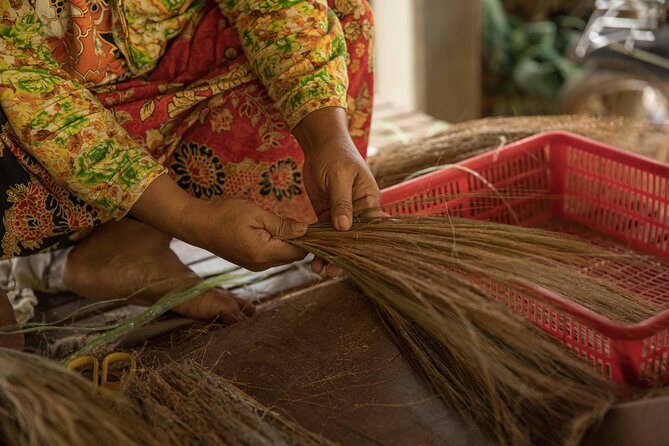
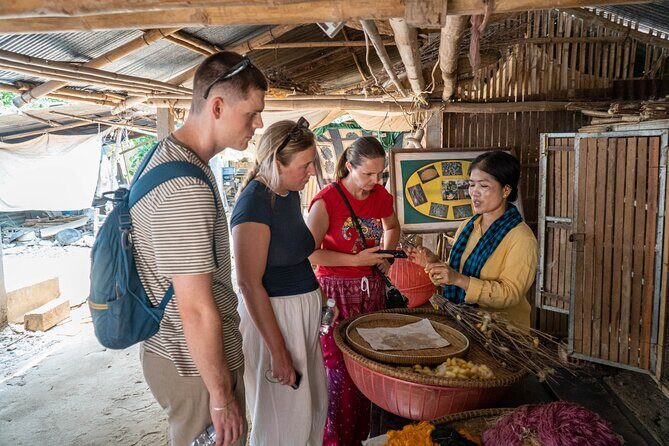
A visit to a local family can be included, and that’s one of the most personal-feeling parts of the day. Instead of treating village life as scenery, you get a window into how households make things and work through daily routines.
You’ll also have a local guide, which is what turns the walk into more than just photos. With a guide, you’re better able to connect what you see to why it matters—especially when the tour focuses on craft and food production.
Here’s where you should pay attention to the format of the day. The experience can include different rural activities, and the exact emphasis depends on season and what’s being done then. If you care most about farming work (rice) versus craft work (brooms, palm products, beetle nut), say that early to your guide during pickup. A good guide will steer you toward the most relevant stops.
One more thing: one suggestion that comes up is to keep the cart time off the main road when possible. If the route gets too street-heavy, it can feel less like a farm outing and more like transport. You can ask your guide to prioritize fields and shorten any on-road sections.
Seasonal craft and farming stops you can actually understand
This tour is built around everyday production, and it gets more interesting when you know the timing. The tour highlights include broom-making (year-round), sugar palm processing (usually October to April), beetle nut making (usually June to September), plus rice planting (June to December) and rice harvest (typically December).




Brooms made year-round
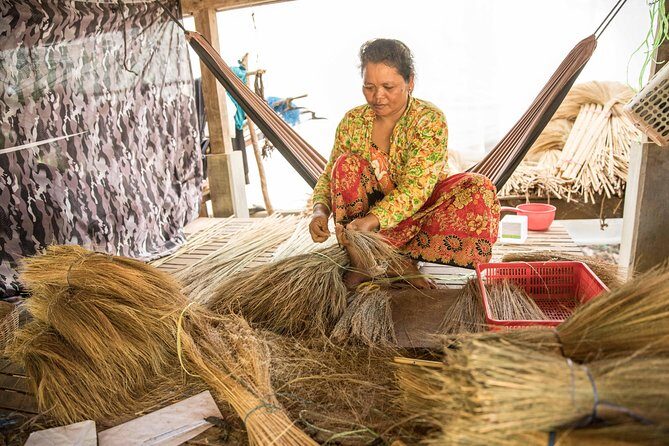
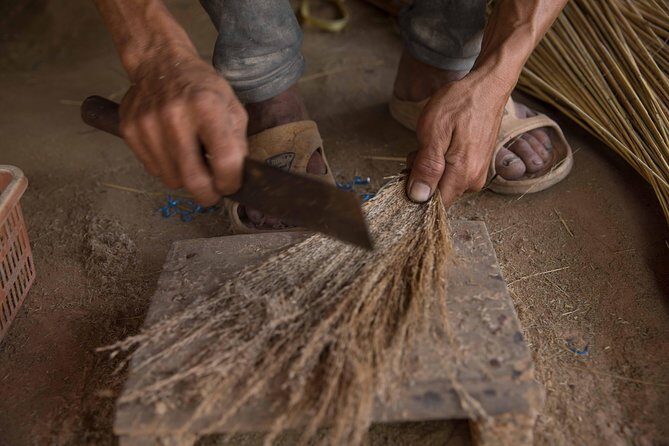
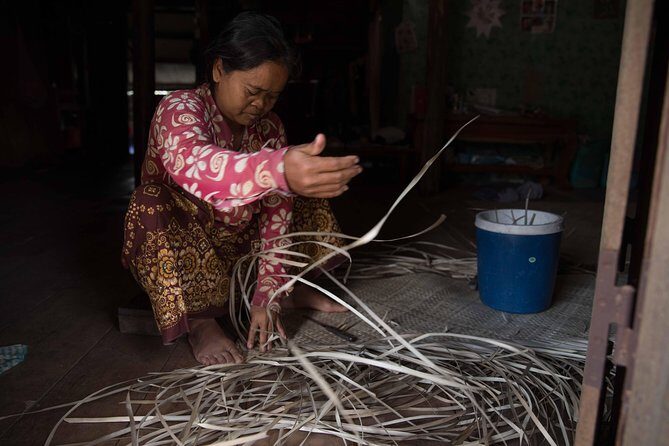
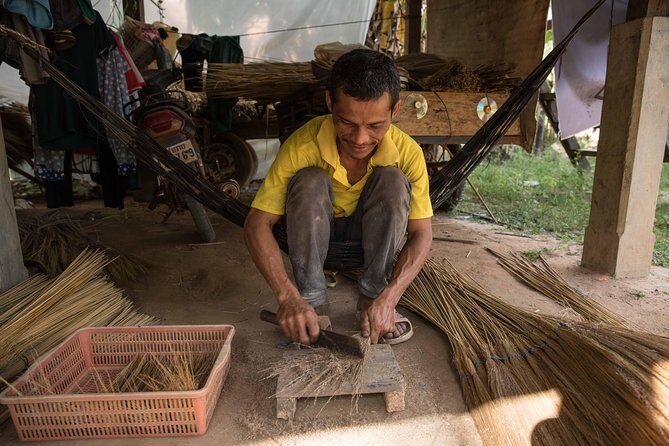
You’ll see locals making brooms, and this is one of the “no matter the month” highlights. That means you’re likely to see the craft even if your travel dates don’t match rice season perfectly.
What I like about this kind of stop is that it’s tactile. It’s not a lecture in a building. You’re watching how raw materials become household tools, and it gives context to what people rely on day to day.
Sugar palm making (usually October to April)
If your trip falls in the right window, sugar palm processing is a standout. You’re seeing how palm products can be turned into something usable for food and other needs.
The big value here is understanding that rural Cambodia isn’t a single “style of life.” It’s a changing workflow that follows the calendar.
Beetle nut making (usually June to September)
In the warmer months, the tour may include beetle nut making. This is another example of how village production shifts through the year.
If you’re the type who likes learning the “when and why” behind local practices, this is a satisfying stop, because it links directly to seasonal timing rather than random demonstrations.
Rice planting (June to December) and rice harvest (December)
Rice is the constant, but what you see changes. During June to December, the emphasis is on rice planting. In December, you may see the harvest.
This is where the scenery clicks into meaning. Rice paddies aren’t just pretty. They’re part of a system with work schedules, busy periods, and downtime.
If you visit during planting or harvest windows, ask your guide what stage you’re seeing. Even basic answers—like whether plants have recently been set or whether cutting has started—turn a photo into understanding.
Food and comfort: lunch, afternoon tea, and bottled water
This isn’t a “bring your own everything” style tour.
Included for all participants:
- Bottled water
- Local taxes
- Lunch (on the morning tour)
- Afternoon tea (on the afternoon tour)
- A local guide
- Hotel pickup and hotel drop-off for selected hotels
Not included:
- Food and drinks beyond what’s specified
That matters for budgeting in Siem Reap. If you do this as a half-day activity, you avoid the common problem where “a simple tour” turns into buying drinks and snacks all afternoon. You still might want extra water or personal snacks, but you won’t be stranded.
Comfort-wise, plan for an outdoor morning or afternoon, plus some walking around farming areas. Wear shoes you don’t mind getting a little dusty, and bring a light layer if you’re sensitive to air-conditioning back in town.
Price and value: $135 for 4 hours, with more than just transport
At $135 per person for about 4 hours, the price is clearly not the cheapest thing in Siem Reap. So here’s how I judge value for this one.
You’re paying for:
- A local guide (the big unlock for understanding rural life)
- Meals (lunch or afternoon tea) plus bottled water
- Hotel pickup and selected hotel drop-off
- Local taxes
- A private format for your group
If you only cared about being driven through scenery, you could do something cheaper with a tuk-tuk and no guide. But this tour is trying to give you the “how it works” side—crafting, farming, and the seasonal rhythm behind it.
That’s why the included guide and meals matter. They keep the day from feeling like you’re paying extra just for convenience. You’re also getting a quieter, calmer break from the temple circuit, which is often where the real value lies for people who want balance.
Practical tips so the ride stays enjoyable
A few small choices can make a big difference on a rural cart day.
- Choose footwear you can walk in easily. You’ll be in village areas and moving around more than you might expect.
- Bring sun protection. Morning and afternoon both mean daylight, plus open fields.
- Plan your route choices in your head. If you prefer fields over roads, mention it early.
- Ask what seasonal stop you’ll see. If you know your travel month, ask your guide what’s most likely to be happening.
- Keep expectations simple. This is rural life, not a theme park. That’s part of the point.
Also, note the tour has a minimum age of 21. If you’re traveling with a mixed-age group, double-check who can participate before you commit.
Who this ox cart ride suits best (and who should reconsider)
This tour is a great fit if you:
- Want a real rural Cambodia break after the crowds
- Like learning how daily life works, not just collecting landmarks
- Prefer a calmer pace and a more personal guide-led experience
- Are happy with a simple, practical day plan that still feels meaningful
It might feel less perfect if you:
- Expect a long, purely “on the cart” experience and don’t want any transfer time
- Hate the idea of any on-road segments and can’t tolerate short stretches
- Want a highly structured, entertainment-style tour
Think of it as a complement to Siem Reap’s big attractions. It doesn’t compete with temples. It adds a different layer: how food and tools get made, and how seasons control the work.
Should you book the Ox Cart Ride of Rural Cambodia?
Yes, if you want a non-gimmicky countryside experience with a guide and seasonal context. The included water and meals take the sting out of planning, and the private format helps the day feel relaxed instead of rushed.
Book it especially if you’re craving balance in your Siem Reap trip. One part temples, one part farming life, and suddenly your whole stay feels more complete.
If you’re picky about road time, do not keep that as a silent worry. Mention your preference early and ask how the route will be handled. When you get that right, this tour lands exactly where it should: calm, authentic rural Cambodia, with a pace you can enjoy.
FAQ
What is the duration of the Ox Cart Ride of Rural Cambodia?
The tour is about 4 hours.
How much does this tour cost?
The price is $135.00 per person.
What are the pickup times for the morning and afternoon tours?
The morning tour pickup is around 7:30. The afternoon tour pickup is around 1:30.
Is this tour private?
Yes. It’s a private tour/activity, and only your group participates.
What’s included in the price?
Included are local taxes, afternoon tea (for the afternoon tour), bottled water, a local guide, hotel pickup, hotel drop-off for selected hotels, and lunch (for the morning tour).
What’s not included?
Food and drinks are not included unless specified. (Besides the lunch/tea and bottled water that are included.)
What are the age requirements?
The minimum age is 21.
Is free cancellation available?
Yes. You can cancel for a full refund up to 24 hours before the experience’s start time.
If you tell me your travel month (or your exact dates), I can help you match what you’re most likely to see—rice planting, harvest, sugar palm, or beetle nut.