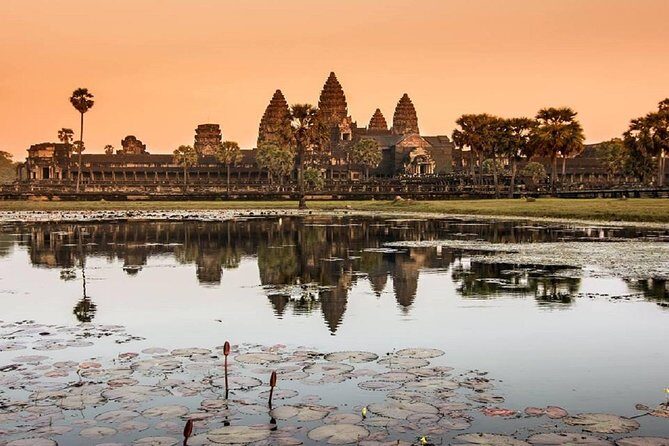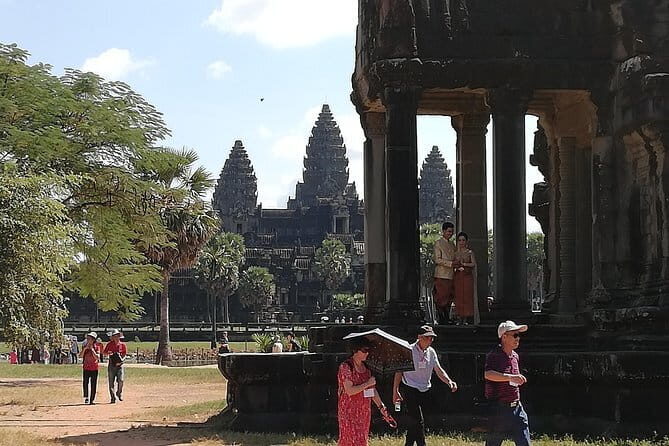
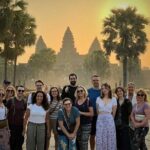
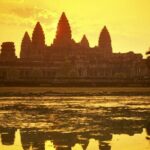
Before dawn, Angkor turns quiet and magical. You start in Siem Reap at 4:30 am, ride in while the sky is still dark, and walk into Angkor Wat from the eastern side to catch the sunrise before the biggest crowds.
I love the practical comforts built into this early start: cold water and damp towels, plus an air-conditioned vehicle that keeps you from cooking on the ride. And I love how the guiding is story-led, with local experts (names like Bun, Yuth, Sok Chea, and Rom show up often) helping you read what you’re seeing instead of just letting you look.
The one drawback to plan for is logistics: you enter in the dark, so you need a flashlight, and the temple pass is not included in the price. Breakfast also isn’t included, even though you’ll stop for it outside the temple area.
In This Review
- Key highlights that make this tour work
- Why the 4:30 am start is the whole point
- Angkor Wat in the dark: the rarely used eastern entrance
- Sunrise on the library pool edge, then 2 hours inside Angkor Wat
- Srah Srang and the breakfast stop you shouldn’t miss planning for
- Ta Prohm jungle temple: the ruin that looks like a set from another era
- Angkor Thom and Bayon: leper king terraces, then the 200 faces
- Comfort and photo help: how the guides keep the day moving
- Price and value: $69 plus the temple pass
- Who this tour suits best
- Should you book this Angkor Wat sunrise-and-highlights tour?
- FAQ
- What time does the tour start?
- How long is the experience?
- Is hotel pickup and drop-off included?
- What’s included in the price, and what isn’t?
- Do I need to bring a flashlight?
- Which temples and sights are covered?
- Is breakfast included?
- Can I cancel for free?
Key highlights that make this tour work
- 4:30 am pickup for sunrise timing and fewer early lines
- Eastern-side entry into Angkor Wat in the dark, with a flashlight needed
- Sunrise at the library pool edge followed by a long, relief-focused temple walk
- Ta Prohm’s jungle feel, plus the note that it once held 2,740 monks
- Angkor Thom and Bayon’s faces (more than 200), with leper-king and elephant terraces on the route
- Cooling support on the move: complimentary water, damp towels, and AC transport
Why the 4:30 am start is the whole point
This tour is designed around the moment when Angkor Wat still feels half-sleeping. The 4:30 am start time means you’re already on the way before the heat ramps up and before the daylight crush begins.
It’s also a smart match for how Angkor sites feel in practice: they’re huge, so timing changes everything. In the early hours, you can move with less jostling and spend longer looking at details like the carvings around doorways, columns, and gallery walls.
One more thing: you’re on a tight morning schedule, and the tour typically wraps between 12:30 and 1:30. That’s a plus if you want the afternoon for your own plans in Siem Reap, not just temple fatigue.
You can also read our reviews of more guided tours in Siem Reap
Angkor Wat in the dark: the rarely used eastern entrance
Angkor Wat is the headline, but the real twist here is how you enter. The visit starts before dawn, and the plan is to get inside the temple in darkness from the eastern side (not the most obvious approach).
Because you’ll be walking through dim corridors and passages, the tour clearly asks you to bring a flashlight. In other words, it’s not just for ambience. You’ll actually need it to navigate comfortably and spot key viewpoints as you go.
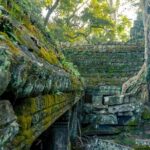
Once inside, you’ll descend through ancient cloistered corridors before reaching the areas where sunrise atmosphere really hits. The timing is set up so you’re not just standing around waiting for dawn; you’re moving into the temple experience while the light is changing.
Sunrise on the library pool edge, then 2 hours inside Angkor Wat
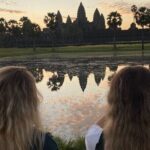
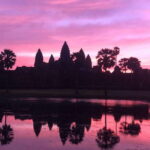
After the pre-dawn entry, the schedule builds toward one of Angkor’s most photogenic beats: sunrise from the edge of one of the library pools. That’s where you’ll get the glow that turns stone surfaces softer and makes the temple feel less like an object and more like a place.
Then comes the longer portion of Angkor Wat itself. You spend about two full hours exploring corridors, central chambers, and upper terraces. It’s the kind of time window that lets you slow down a bit, not just sprint from one highlight to another.
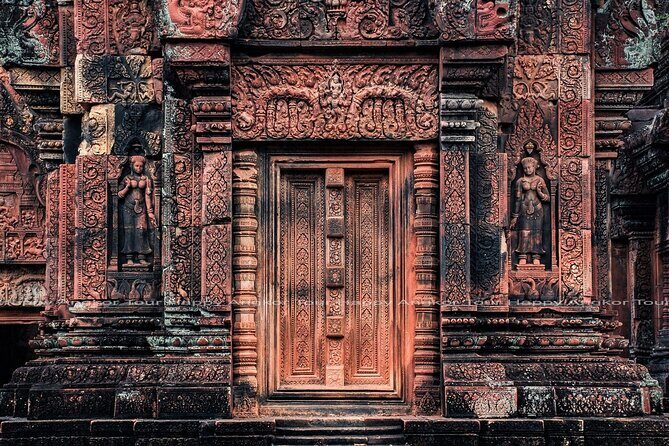
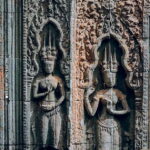
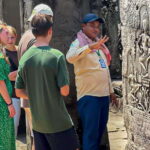
A big emphasis is the carvings—this route points you toward the longest stretch of bas-reliefs in the world. Your guide’s job is to help you connect scenes and motifs to Khmer Empire life, instead of treating everything as mystery art. If you care about meaning, not just photos, this is where the tour earns its ticket.
Practical note: you’ll likely want to wear something comfortable for stairs and uneven stone, and it helps to pack light. You’ll have water and cool towels during the day, but you’ll still feel the morning exertion.
Srah Srang and the breakfast stop you shouldn’t miss planning for
After Angkor Wat, the tour shifts to a recovery rhythm. You’ll finish with a break at Srah Srang, including time for breakfast outside the temple area.
Here’s the catch: breakfast itself is not included. So if breakfast matters to you—especially after a 4:30 am start—plan to buy it on-site or have a game plan with snacks beforehand. The good news is that the tour does build in that rest moment rather than treating the day like one long run.
Srah Srang is also a good palate cleanser. Angkor Wat’s scale can feel overwhelming in one go. This stop gives you a calmer setting and time to reset before moving to Ta Prohm and Angkor Thom.
Ta Prohm jungle temple: the ruin that looks like a set from another era
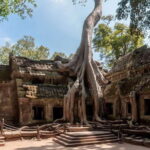
Ta Prohm is one of the most recognizable Angkor sites, and this tour treats it like more than a quick stop. You’ll visit it after Srah Srang, with about one hour on site.
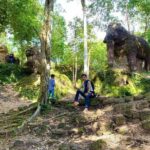
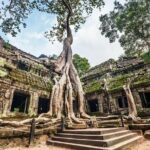
What makes Ta Prohm special is the look: it’s famously covered by jungle, and it gives Angkor a slightly different mood than the more open, symmetrical temples. The tour also highlights the temple’s past role—Ta Prohm once housed 2,740 monks—which helps you frame those roots-and-stone visuals as lived space, not just a movie prop.
There’s also a historical anchor from the early rediscovery era. The route mentions that French explorer Henri Mouhot highlighted the ruined site in the early 1850s. That detail matters because it connects the temple’s modern fame to how outsiders began paying attention again after the area had shifted over time.
One practical tip: Ta Prohm is the kind of place where you’ll want to keep your phone camera ready, but don’t stand in one spot too long. The best angles often come from small movements around doorframes, corridors, and tree roots.
A few more Siem Reap tours and experiences worth a look
Angkor Thom and Bayon: leper king terraces, then the 200 faces
From Ta Prohm, the route continues into the city area of Angkor Thom. You pass the famous Terrace of the Leper King and the Terrace of the Elephants before reaching Bayon.
These two terraces work well as a warm-up because they’re dramatic and different from temple-after-temple repetition. They also help you understand that Angkor wasn’t only about temples; it was planned urban space with big statement architecture.
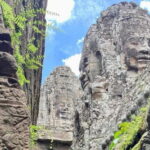
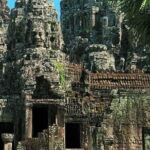
Then comes Bayon, the main event in Angkor Thom. The plan focuses on Bayon’s central towers covered with more than 200 enormous faces. This is the sort of sight that still doesn’t translate perfectly through photos. The tour gives you real time to look, not just a quick photo line.
You’ll also learn how Bayon connects to the fortified city layout—specifically through the South Gate of Angkor Thom. The route notes the gate is flanked by 54 stone figures on each side, with gods on the left and demons on the right. If you like symbolic details, this section is satisfying because it’s specific, not vague.
Comfort and photo help: how the guides keep the day moving
Angkor sunrise tours live or die on logistics. This one leans hard on comfort, and that’s why the early start doesn’t wreck your whole mood.
You get an air-conditioned vehicle, plus complimentary bottled water and a damp towel. That combination matters more than it sounds when you’re doing early walking followed by more temple time under bright light.
The guiding style shows up again and again in how people describe the experience. Guides like Bun and Yuth are praised for explaining stories in a way that helps you see meaning in the stone. Other names—Sok Chea, Rom, and Sakriya—are tied to smart photo spots and quick adjustments so you catch the best angles.
Drivers also get credit for staying on top of the practical stuff. People mention drivers like Seyha and Mao being ready at meeting points with cold water and damp towels, which is exactly what you want when you’re hopping between temple zones.
If you’re the type who gets stressed by tight schedules, this tour’s approach helps: it’s a structured route, but with real reminders to hydrate and cool down.
Price and value: $69 plus the temple pass
At $69 per person, this is positioned as a value-minded way to cover a large chunk of the Angkor highlights in one morning. The time saving is real: you’re hitting Angkor Wat sunrise plus key Angkor Thom stops plus Ta Prohm without needing to coordinate multiple separate hires.
But you should also be aware of what you pay separately. The temple pass is not included, and it’s paid directly to the site. Foods aren’t included either, and breakfast is listed as something you’ll have outside the temple area but not as part of the tour cost.
So the honest value equation is this: you’re paying for the early access timing, the guided structure, the AC transport, and the comfort extras. If you’d otherwise pay separately for a guide and a sunrise approach, this bundled route often makes sense.
What to bring so the math feels worth it:
- A flashlight (required for the dark entry portion)
- Cash/card for the temple pass
- Something for breakfast since it’s not included
- Sun protection and comfy shoes for temple walking
Who this tour suits best
This tour is a great fit if you want the big Angkor hits in one efficient morning: Angkor Wat sunrise, then the jungle drama of Ta Prohm, and finally the face-filled intensity of Bayon inside Angkor Thom.
It also suits people who like guides with a strong storytelling style. If you enjoy learning what you’re seeing—especially how Khmer Empire life connects to reliefs—this route gives you the time and structure for it.
If you hate early mornings or need a very slow pace, you might find the schedule demanding. The day is built around a very early start, and the tour ends by early afternoon, so it’s not the kind of relaxed sightseeing crawl that stretches across the whole day.
Should you book this Angkor Wat sunrise-and-highlights tour?
I’d book it if you want sunrise timing that actually earns its keep, plus a guided morning that hits Angkor Wat, Ta Prohm, Angkor Thom, and Bayon without wasting hours on logistics.
Choose it with your eyes open about two things: you need a flashlight, and you’ll still have extra costs for the temple pass and breakfast. If that fits your plan, this tour is a strong way to experience Angkor’s most iconic moments while the light and the crowds are still on your side.
If you want, tell me your travel month and whether you prefer fewer stops or more depth. I’ll suggest the best way to pace the rest of your day in Siem Reap.
FAQ
What time does the tour start?
The start time is 4:30 am.
How long is the experience?
It runs for about 7 hours (approx.), and the visit typically ends between 12:30 and 1:30 pm.
Is hotel pickup and drop-off included?
Yes. The tour includes convenient hotel pickup and drop-off, using an air-conditioned vehicle.
What’s included in the price, and what isn’t?
The price includes the sunrise visit, guided temple highlights, a guide, complimentary water and a damp towel, and AC transport. The temple pass is not included, and foods are not included.
Do I need to bring a flashlight?
Yes. You’ll enter Angkor Wat in the dark from the eastern side, so the tour requests you bring a flashlight.
Which temples and sights are covered?
You’ll visit Angkor Wat (sunrise and interior), Srah Srang, Ta Prohm, Terrace of the Leper King, Terrace of the Elephants, and Bayon Temple in Angkor Thom.
Is breakfast included?
Breakfast is mentioned at Srah Srang, but it is not included.
Can I cancel for free?
Yes. You can cancel for a full refund if you cancel up to 24 hours in advance of the experience start time.