REVIEW · ANGKOR WAT
Angkor Temples Highlights Tour: 2 Days with Sunrise
Book on GetYourGuide →Operated by BAYON GUIDES · Bookable on GetYourGuide
Dawn at Angkor changes everything. This 2-day tour is built around an early start for Angkor Wat sunrise, then follows the Khmer Empire story from royal cities to tree-choked ruins. It’s the kind of plan that lets you see the big icons without feeling stuck in one single viewpoint.
What I love most is the balance: you get the signature trio of Angkor Wat, Ta Prohm, and Angkor Thom, then you move to quieter, more detailed stops like Banteay Srei. I also like how the tour design keeps your day moving, but not randomly—there’s enough structure to hit the main sites, plus time to breathe at each one.
One thing to consider: it’s an early morning, and if you’re doing sunrise in peak season you’ll deal with big crowds and heat once the sun climbs. If you’re sensitive to time pressure, ask your guide how they pace the first day (some schedules can feel a bit fast in the busiest temple areas).
In This Review
- Key things to know before you go
- Two days that actually connect the dots at Angkor
- The “sunrise at Angkor Wat” part: worth it, but know why
- Day 1 walkthrough: from Angkor Wat to Ta Prohm’s tree grasp
- Angkor Wat (guided visit around 2 hours)
- Ta Keo (quick guided stop, about 1 hour)
- Angkor Thom (Bayon Temple faces, guided about 1 hour)
- Ta Prohm (guided, about 1 hour)
- Day 2: Grand Circuit temples, plus Banteay Srei’s carving obsession
- Grand Circuit rhythm (Preah Khan, Neak Pean, Ta Som, East Mebon)
- Beng Mealea (guided about 1 hour, if included on your route)
- Banteay Srei (about 1 hour, the star for detail)
- Transportation and guide style: the biggest quality lever
- The real cost of this tour: $39 plus the temple pass
- What the schedule feels like in real life (and how to make it better)
- Who this tour fits best
- Should you book this Angkor Temples Highlights Tour?
- FAQ
- Is the Angkor Temple Pass included in the price?
- What’s included besides the guide?
- Are meals included?
- Where do you get picked up?
- Can the tour be extended past the planned temple hours?
- Can you arrange an early sunrise start?
Key things to know before you go
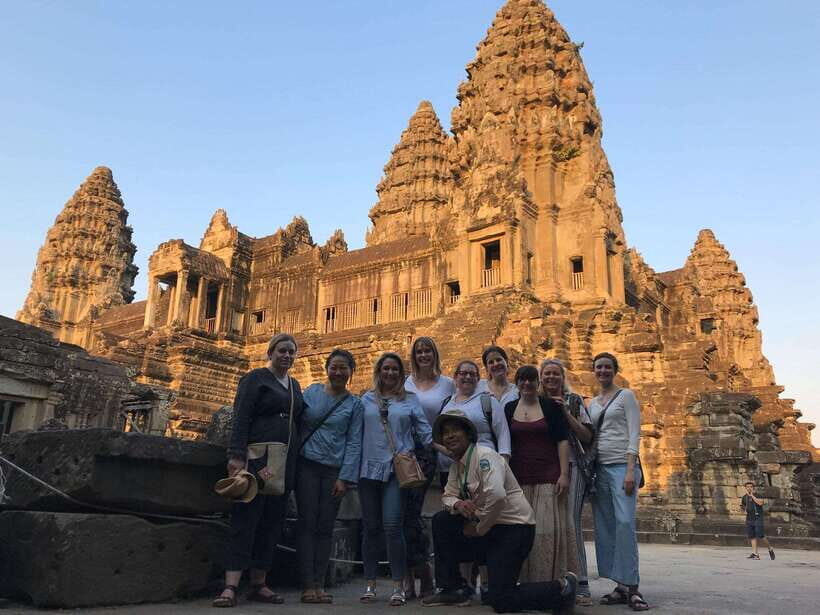
- Sunrise focus at Angkor Wat: you’ll be there early enough to catch the golden light and calmer views.
- Ta Prohm’s roots + stone = instant atmosphere: it’s the jungle temple moment you came for.
- Angkor Thom + Bayon Temple faces: the smiling stone faces give the whole empire a human scale.
- Grand Circuit temples in one sweep: you see multiple styles of Khmer architecture without backtracking.
- Banteay Srei’s pink sandstone detail: smaller temple, but more intricate carving per square meter.
- Flexible guide-led pacing: guides like Leang and Sam are praised for English, history, and adjusting the route to make the day work.
Two days that actually connect the dots at Angkor
Angkor is one of those places where seeing everything in one day sounds efficient… until your feet and your brain revolt. This tour takes the opposite approach. It spreads the highlights over two days so you can follow the Khmer Empire’s geography and meaning, not just tick off monuments.
You start with pickup in Krong Siem Reap, then head out early. The plan is simple: catch the light at Angkor Wat, walk through key royal-city landmarks like Angkor Thom, then move into the temple-park mood of Ta Prohm with its trees grabbing the stones. Day two shifts gears toward the Grand Circuit, which is where the temples feel less like a theme park and more like you’re walking through the empire’s working footprint.
If you like a mix of scale (Angkor Wat) and detail (Banteay Srei), this schedule fits. If you prefer totally laid-back roaming with zero structure, you’ll still probably enjoy it, but you may want to stay close to your guide’s timing so you don’t lose the chance to see the temples at their best moments.
A few more Angkor Wat tours and experiences worth a look
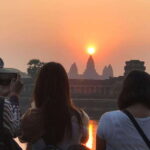
The “sunrise at Angkor Wat” part: worth it, but know why
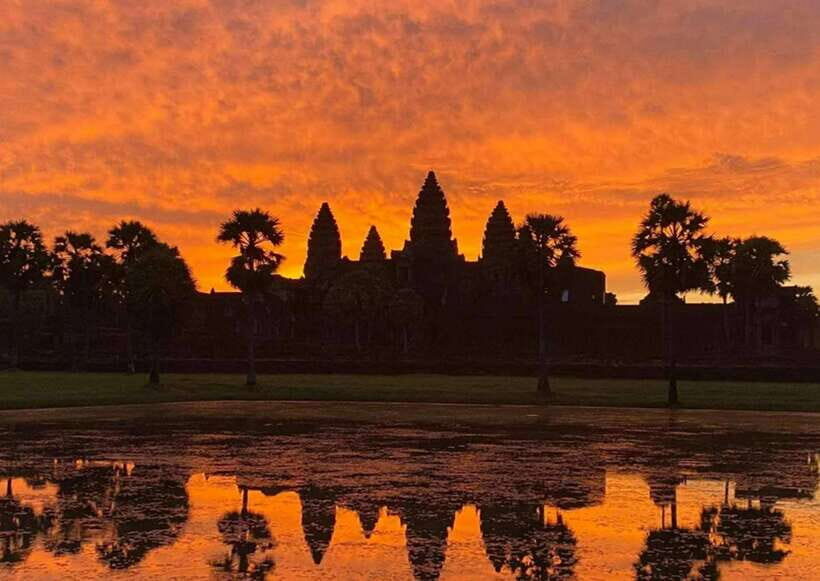
The heart of this trip is the sunrise start. The tour is designed for pickup at around 4:00 AM so you can reach Angkor Wat before the main crowd crush. The reward is the way the light hits the causeways and the temple surfaces, plus the calm that comes before the day fully arrives.
Here’s what sunrise changes for your photos and your eyes:
- Light quality: early sun turns stone into warm color rather than flat gray.
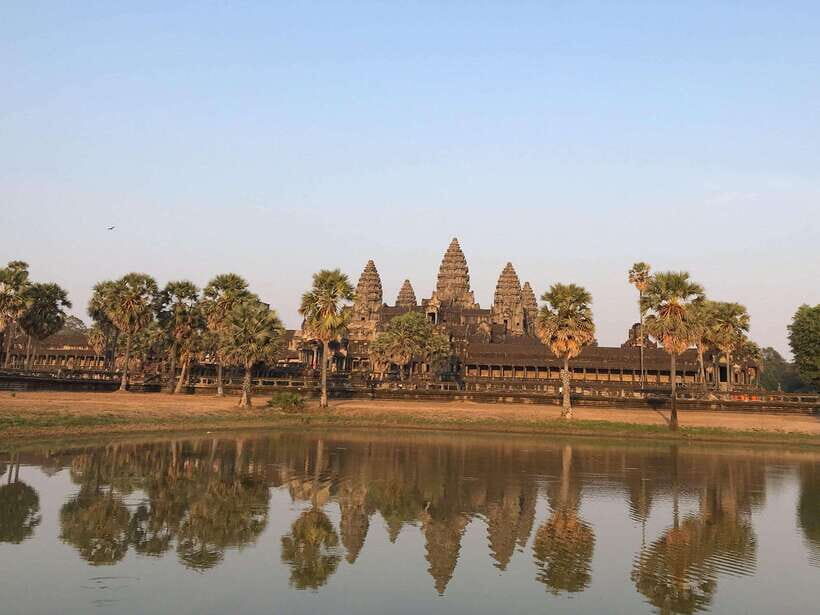
- Reflections and spacing: sunrise views can give more dramatic water/sky moments.
- A quieter first impression: you see the temple’s structure before the busiest flow takes over.
In the reviews, some people said sunrise is nice but not essential, especially if the crowds at dawn feel like too much. That’s fair. But even then, sunrise is still the best “first act” for Angkor, because the whole place behaves differently at that hour.
A smart move: if you’re booking sunrise, plan to be patient. Your guide may also propose an alternate viewpoint or route to improve what you see first. In past experiences, guides like Sam are praised for finding strong picture spots without making it feel like you’re being herded.
Day 1 walkthrough: from Angkor Wat to Ta Prohm’s tree grasp
Angkor Wat (guided visit around 2 hours)
You’ll spend time at Angkor Wat with a guided focus. This is where the tour earns its keep. A good guide doesn’t just point and name. They explain what you’re looking at and why it mattered to Khmer religious life.
The practical payoff of a guided visit here:
- you can identify major layouts faster (so you don’t feel lost)
- you understand the temple’s role before you move on
- you’re more likely to notice the carvings and symmetry instead of only photographing from the closest spot
The sunrise timing makes this feel like two different visits: one at dawn (atmosphere) and then later as the crowd flow builds. If you’re only casually interested in the temple, sunrise may feel like effort for limited payoff. If you’re the type who enjoys architecture and symbolism, it’s a great way to start.
Ta Keo (quick guided stop, about 1 hour)
Ta Keo is a contrast after Angkor Wat’s scale. It’s a chance to look at Khmer temple design without the same “everyone here” gravity. You get a guided hour, which is enough to grasp the key features without rushing every corner.
This stop matters because it breaks up the day. Instead of bouncing from the biggest icon to another biggest icon, you get variety in structure and tone.
A few more Angkor Wat tours and experiences worth a look
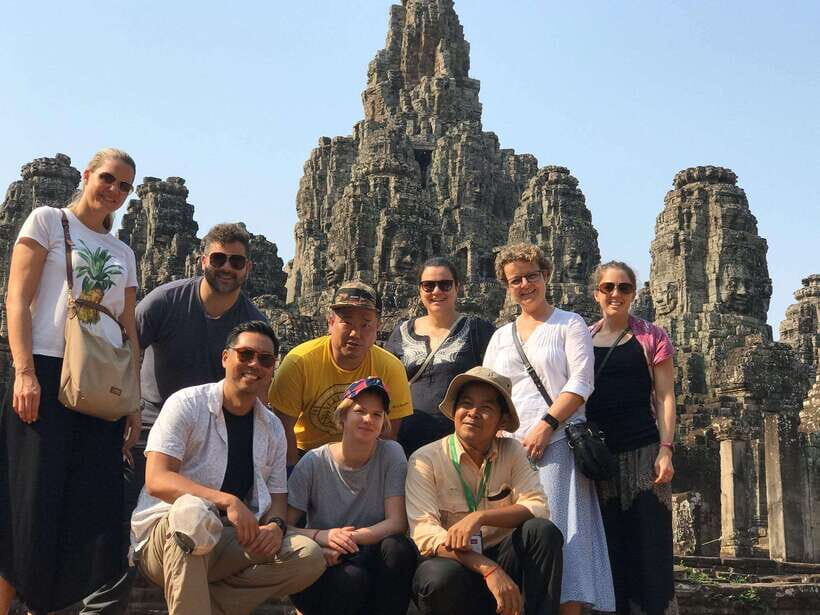
Angkor Thom (Bayon Temple faces, guided about 1 hour)
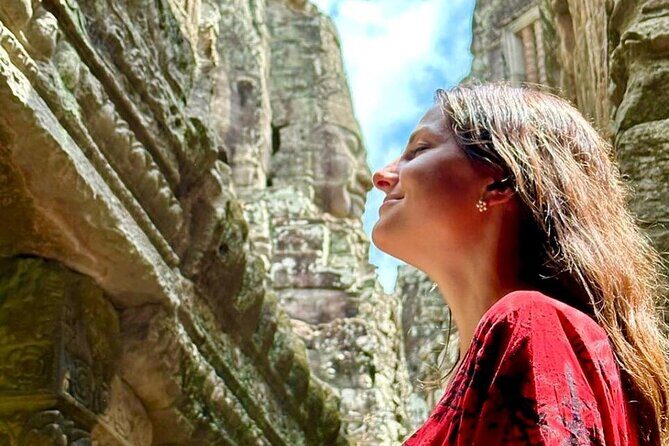
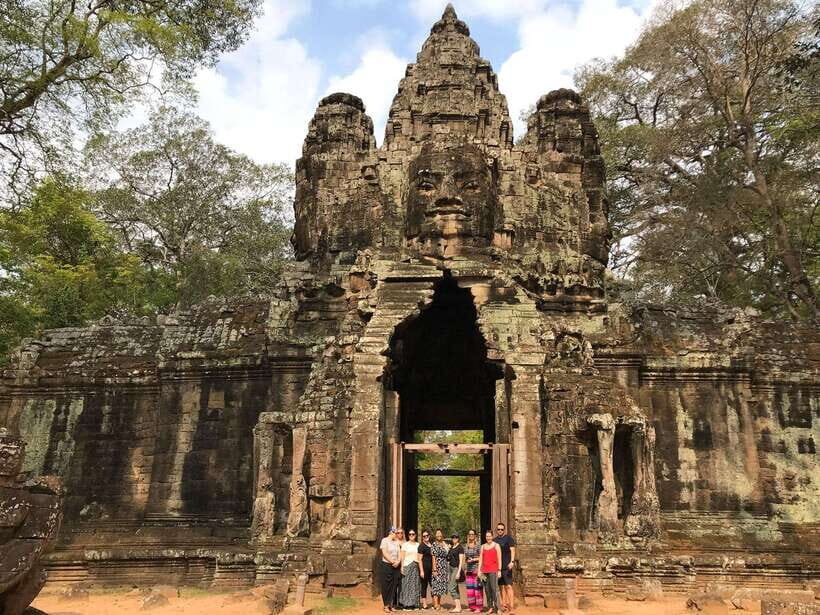
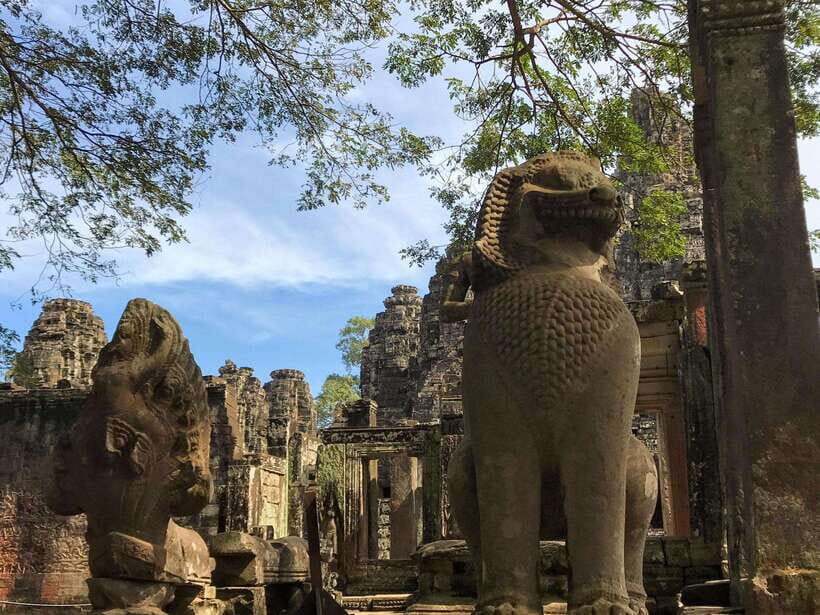
Then you head into Angkor Thom, the last capital of the Khmer Empire. The tour focuses on key landmarks, including the legendary Bayon Temple with its serene, smiling stone faces.
The faces do something subtle to your experience: they make the empire feel less like a distant artifact and more like a place where humans were always part of the story. With a guide, the Bayon experience becomes more than just “cool carvings”—you learn how the temple worked in the royal landscape.
One practical note: the areas around the faces can be busy. Your guide’s pacing helps. In several reports, guides were praised for avoiding crowds as best as possible, so ask them if you can shift your viewpoint slightly to get breathing room.
Ta Prohm (guided, about 1 hour)
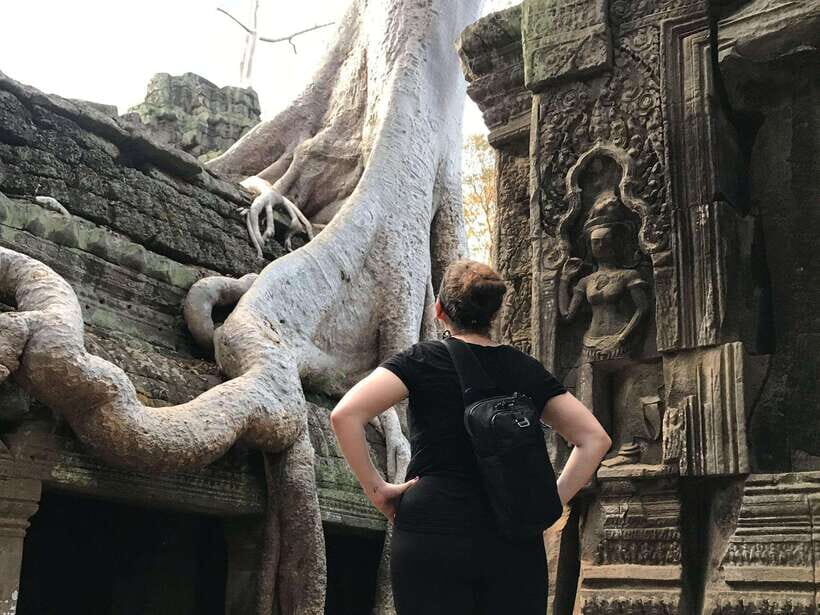
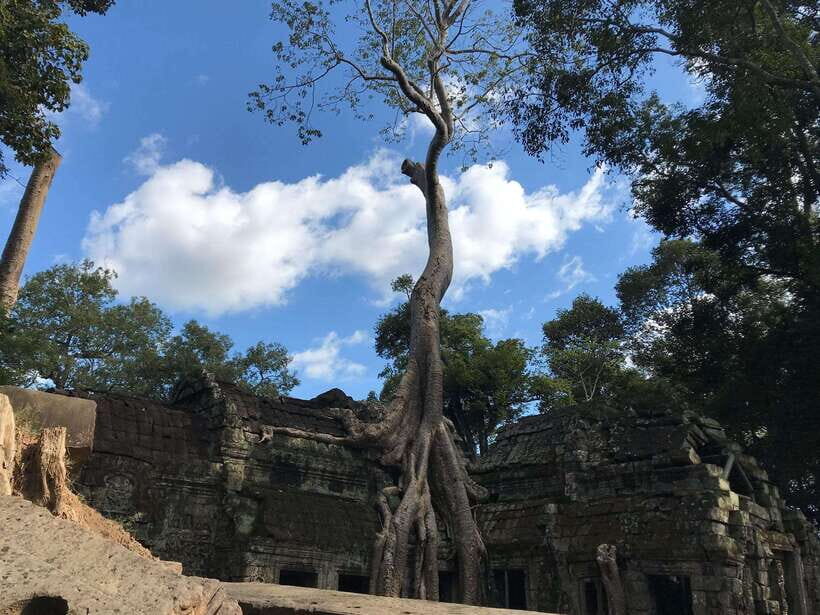
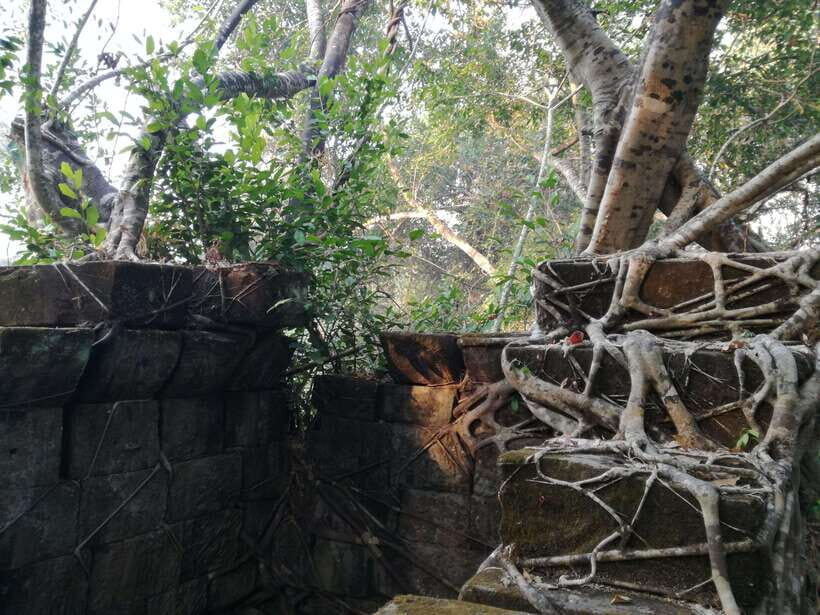
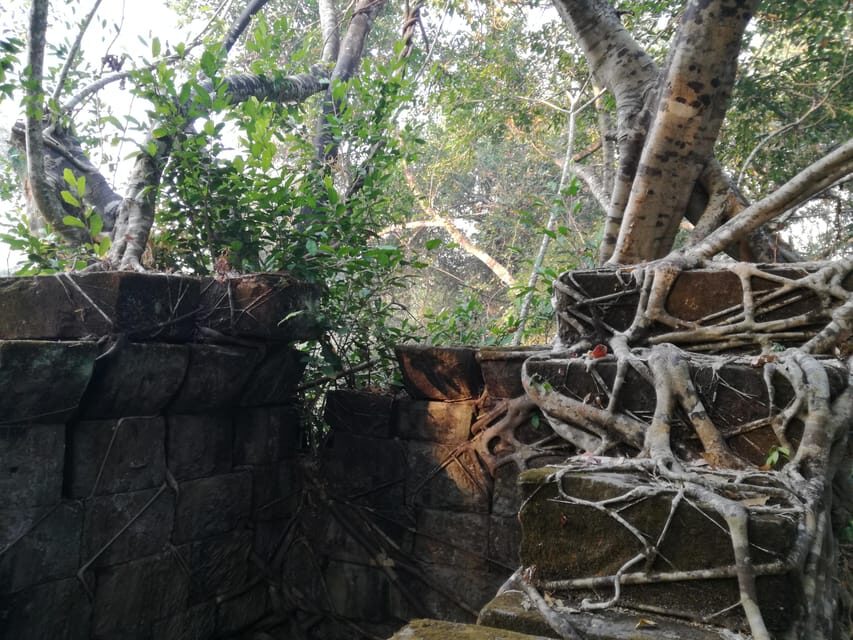
Finally, the tour lands in Ta Prohm, the jungle temple famous for massive tree roots wrapping around the stone. This is the stop that feels like film set magic—but in real life, the effect is more physical and strange than you expect.
Why it works in a two-day schedule:
- you’re not mentally burned out by the time you get here
- the jungle atmosphere is best when you can actually look slowly
- you can enjoy the contrast between carved detail and living roots
In one experience, the first temple visit felt a bit rushed because of the crowds around the iconic “tree from Tomb Raider” area. It got better after that. That’s a useful lesson: arrive early if possible, and don’t let the first busy corner dictate how you feel about the rest of Ta Prohm.
At the end of Day 1, you return to Siem Reap to rest. The break matters. Angkor is walking + heat + stone surfaces. You’ll enjoy Day 2 more with a real reset instead of doing a nonstop day.
Day 2: Grand Circuit temples, plus Banteay Srei’s carving obsession
Day two focuses on the Grand Circuit, a scenic route known for showcasing multiple temple sites connected to Khmer history. You’ll also hit Banteay Srei, which is widely treated as a “detail master” temple.
Grand Circuit rhythm (Preah Khan, Neak Pean, Ta Som, East Mebon)
Depending on the day’s flow, the Grand Circuit portion may include Preah Khan, Neak Pean, Ta Som, and East Mebon.
Why this grouping is smart:
- each site has a different feel—some sprawl, some feel more intimate
- you get variety in the carved surfaces and layout styles
- you spend the day traveling less than you’d if you tried to plan each temple solo
Preah Khan is often described as a sprawling complex, so it can feel like you’re walking through layers of time in one place. Neak Pean adds a spiritual island setting, which is a nice change from the heavy stone corridors. Ta Som and East Mebon offer temple character without always being the loudest “headline” stops.
If you’re the kind of person who likes to understand what you’re seeing, this is where your guide’s communication matters a lot. Guides named Tida and Chennai were praised for English and for keeping the temples in context, which makes these less-famous sites feel meaningful instead of random.
Beng Mealea (guided about 1 hour, if included on your route)
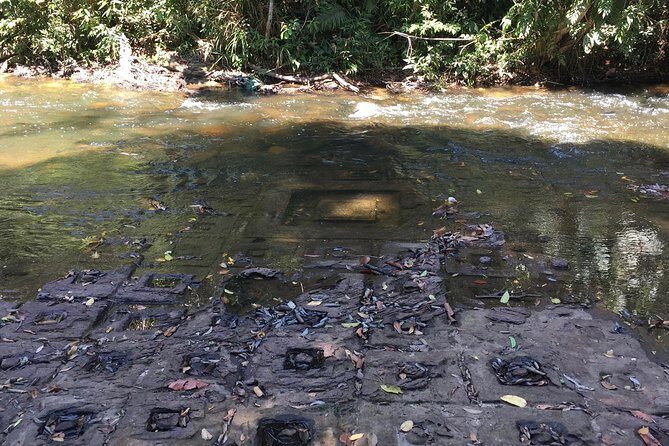
This tour also includes Beng Mealea in the temple schedule. Even though it’s not described in the Day 2 text the same way as the classic Grand Circuit names, it’s clearly part of the broader two-day plan.
Beng Mealea tends to feel different from the polished main temples—more “found in the jungle” energy. In a route like this, it’s a good palate cleanser. After Banteay Srei’s delicate work, Beng Mealea can feel more wild and broken, which makes the overall trip more balanced.
Banteay Srei (about 1 hour, the star for detail)
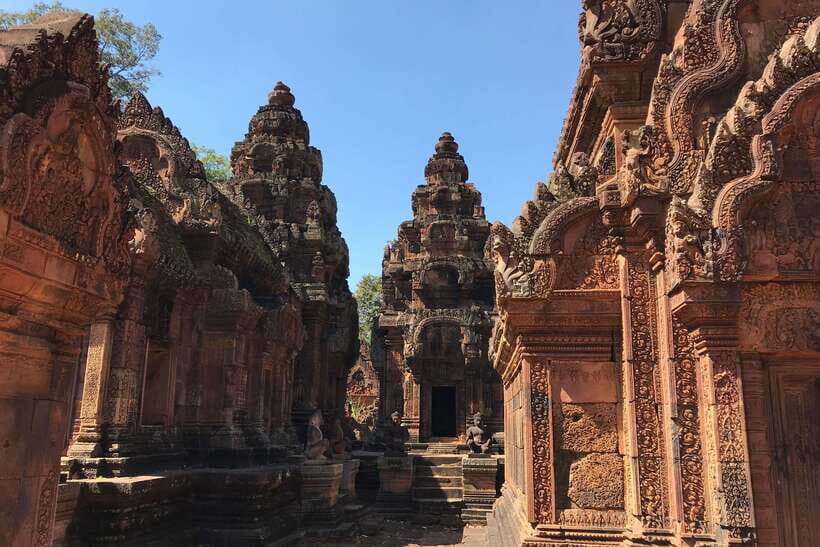
Then comes Banteay Srei, often called the Citadel of Women and famous for its delicate pink sandstone carvings.
This is the stop where you’ll probably slow down. The temple is smaller than Angkor Wat, but the detail is what makes it unforgettable. If you like close-up craftsmanship—faces, carvings, ornamental patterns—Banteay Srei gives you that satisfaction.
In a practical sense, the guided hour is the right amount. Too little time and you miss the carving story. Too much time and you end up photographing the same surfaces without processing what you’re seeing.
Transportation and guide style: the biggest quality lever
This tour includes a professional English-speaking guide and transportation of your choice: private air-conditioned car or a small-group bus tour. You also get drinking water and a cold towel, which is not a small perk in Siem Reap heat.
In the reviews, guide quality is the standout theme. People praised guides like:
- Leang for English, context, and showing hidden spots
- Khleang Thyda for English and accommodation
- Tida for route planning, including picture viewpoints
- Sam for flexibility and smooth organization
- Steven/Steve for balancing history, religion, and fun
- Chennai for knowledge and excellent English
- Say for flexibility with a private feel
What that tells you is simple: at Angkor, your guide isn’t decoration. They’re what turns walking time into understanding. Even if you already know the basics, a good guide helps you notice what matters and saves time by steering you to the best angles.
A smart takeaway: if you care about photography, ask your guide where they recommend you stand for the view you want. Several guides were praised for doing this proactively—setting the route so you hit good vantage points without you having to fight for position.
The real cost of this tour: $39 plus the temple pass
The listed price is $39 per person for a two-day experience. That’s a solid anchor price for the guide, the early pickup, and the transportation.
But your budget also needs the Angkor Temple Pass, which is USD 62 per person (for a 2–3 day pass). Meals are not included, either.
So your planning math looks like:
- Tour: $39
- Temple pass: $62
- Meals: extra
That still reads as decent value, especially if you’d otherwise be paying for a guide anyway. Two days at Angkor isn’t just “a tour.” It’s logistics and timing. The early start alone is hard to replicate smoothly without local help.
If you’re comparing against DIY plans, remember you’re also paying for interpretation. And at Angkor, interpretation is often what makes the day feel worth it.
What the schedule feels like in real life (and how to make it better)
You’re moving early, walking a lot, and switching scenes from dawn to jungle roots to carved pink sandstone. That’s normal. What you can control is how tired you feel doing it.
Here are a few ways to make the two days more enjoyable:
- Wear breathable clothing and shoes you trust for long walks. Many people do Angkor in hot months, and pace becomes harder as the day warms.
- Use the guide’s pacing instead of trying to speed-run. If you push ahead, you’ll miss context.
- Ask about sunset extension: the tour says you can request an extension until sunset at the temple without extra charge. If you’re not wiped out on Day 1, this can add a second “feel” to Angkor Wat.
- If sunrise feels like too much, you can still ask for an early start arrangement. The tour notes that an early sunrise start can be arranged upon request for an extra charge.
One more reality check: sunrise crowds can be intense. If you prefer calmer, ask your guide whether there are ways to start from a calmer viewpoint first, or to adjust your route after the main flow hits.
Who this tour fits best
This works especially well if:
- you want the big name temples (Angkor Wat, Ta Prohm, Angkor Thom) without losing the details
- you like architecture and symbolism, not just quick sightseeing
- you prefer a guide who can explain context in English
- you want a route that balances scale and detail, ending with Banteay Srei
It might be less ideal if:
- you hate very early wake-ups
- you want zero structured timing and full free-roaming
- you’re extremely heat-sensitive and haven’t planned for it
If you’re traveling with kids, or with family members who need breaks, private or small-group options can help. Some families found that splitting the day and using breaks in the afternoon made the experience much easier.
Should you book this Angkor Temples Highlights Tour?
I’d book it if you want a two-day Angkor plan that hits the essential places and explains them in a way that makes you feel oriented, not overwhelmed. The value looks strong when you consider you’re getting a guide, transport, and the sunrise timing, plus water and cold towels.
I’d pause and ask questions if you’re worried about sunrise crowds or you’re expecting a perfectly relaxed pace at every stop. In the busiest zones, speed can happen. The good news is that guides (including people like Leang, Sam, and Tida) have a reputation for adapting the route and improving the viewing angles.
If you’re aiming for the classic Angkor experience with enough structure to feel meaningful, this one is a smart bet.
FAQ
Is the Angkor Temple Pass included in the price?
No. The tour price does not include the Angkor Temple Pass. The pass is listed separately at about USD 62 per person for a 2–3 day pass.
What’s included besides the guide?
The tour includes an English-speaking guide, transportation (private air-conditioned car or small-group bus), plus drinking water and a cold towel.
Are meals included?
No. Meals are not included.
Where do you get picked up?
Pickup is included from your hotel lobby in Krong Siem Reap. You should be ready about 5 minutes before the start time.
Can the tour be extended past the planned temple hours?
Yes. The tour notes that an extension until sunset at the temple can be provided without extra charge upon request.
Can you arrange an early sunrise start?
Yes. The tour states that an early start to catch sunrise at the temple can be arranged upon request, but it may have an extra charge.