REVIEW · SIHANOUKVILLE
Discover Bokor National Park
Book on Viator →Operated by Scooter Trails · Bookable on Viator
Riding up Bokor feels like time travel. This short scooter tour turns the drive out of Kampot into a guided crawl through abandoned colonial-era buildings and the scars of later decades. I love how the ride gives you commanding views over Kampot, then the stops explain what you’re actually looking at, not just where to take photos.
Two things really make this one work. First, you get the mountain climb by scooter with a guide, so you’re not wrestling with directions on your own. Second, the guides share detailed context, including a political angle, which helps Bokor’s transition from French resort to Khmer Rouge refuge make sense—especially when the story centers on sites like the old Catholic church.
One drawback to keep in mind: this is weather-dependent, and you’re relying on the included hotel pickup to start on time. If the day is rainy or visibility is poor, the whole experience can feel shorter and less dramatic than you hoped, so it’s worth booking with flexible plans.
In This Review
- Key moments worth planning for
- Bokor Hill Station: from French resort glamour to Khmer Rouge shadows
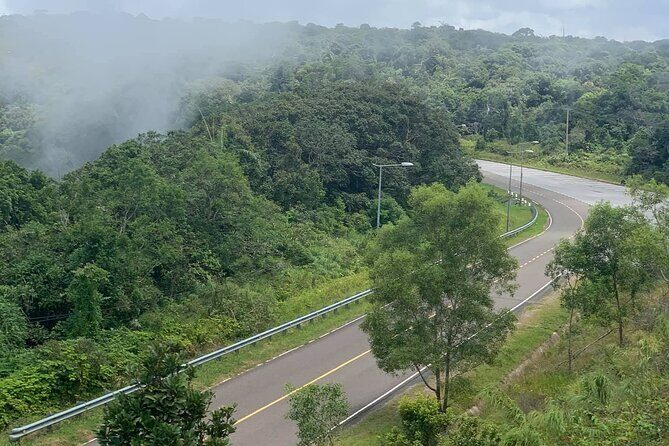
- Up Bokor Mountain by scooter: the 12 km view over Kampot
- Black Palace and the Yeay Mao statue: ruins with a clear face
- Wat Sampov Pram (1920): Buddhist architecture against the ruins
- The old Catholic church: a Khmer Rouge stronghold site
- What you’ll learn from a great guide (like Rithy)
- Scooter Trails and your practical setup: helmets, cold towels, and small groups
- Price and value: is $35 a smart move?
- Who this tour fits best in your Kampot schedule
- Should you book Discover Bokor National Park?
- FAQ
- How much does the Bokor scooter tour cost?
- Where does the tour start and end?
- How long is the tour?
- What’s included in the price?
- Are admission tickets included?
- Is the tour suitable for most people?
- How big is the group?
- What if the weather is bad?
Key moments worth planning for
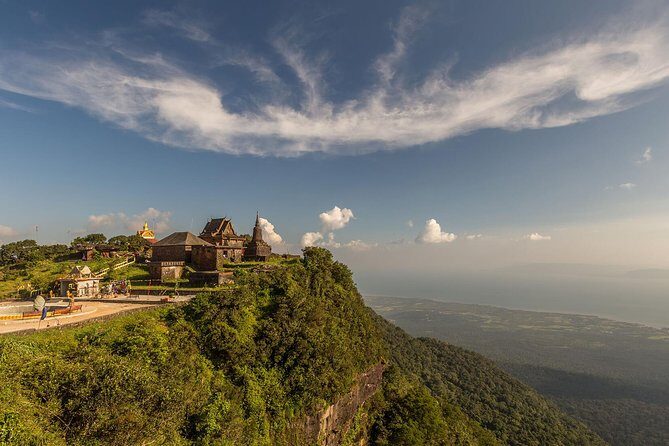
- A 12 km scooter climb to a lookout where you can see Kampot town and how the river lines up toward the sea
- Black Palace (built in 1936) facing the Yeay Mao statue, plus nearby abandoned buildings and an old restaurant
- Wat Sampov Pram (built in 1920), a Buddhist temple stop that balances the ruins with something still in use
- The old Catholic church connection to one of the last Khmer Rouge strongholds
- Small group feel with a maximum of 2 travelers, plus hotel pickup and drop-off
- Bokor’s big timeline from French colonial resort glory days to ruin, then a modern casino-era revival in 2012
Bokor Hill Station: from French resort glamour to Khmer Rouge shadows
Bokor Hill Station started as a French colonial mountain resort in the 1920s. It hit its prime in the swinging 1960s, then the place shifted into something far darker when it became one of the last hideouts for the Khmer Rouge. After that, Bokor largely fell into ruin—until a newer casino project was built in 2012.
That mix is why this tour feels more meaningful than a random ruin walk. You’re not just seeing broken buildings; you’re seeing the result of changing power, changing stories, and changing uses of the same hilltop space.
The best part is how the guide ties it together while you’re moving. When you’re on a scooter and the views open up, the geography stops being abstract. Then when you reach the palaces, church, and temples, the history hits harder because you can still picture the route that brought people here.
You can also read our reviews of more tours and experiences in Sihanoukville.

Up Bokor Mountain by scooter: the 12 km view over Kampot
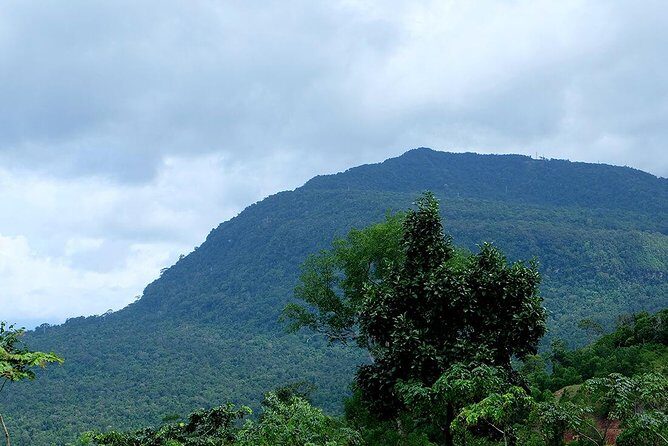
The day starts with an easy setup: hotel pickup and drop-off are included, and you get a scooter and helmet. You also receive drinking water and a cold towel, which matters more than you’d think once you’re climbing.
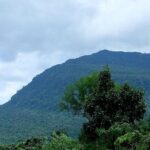
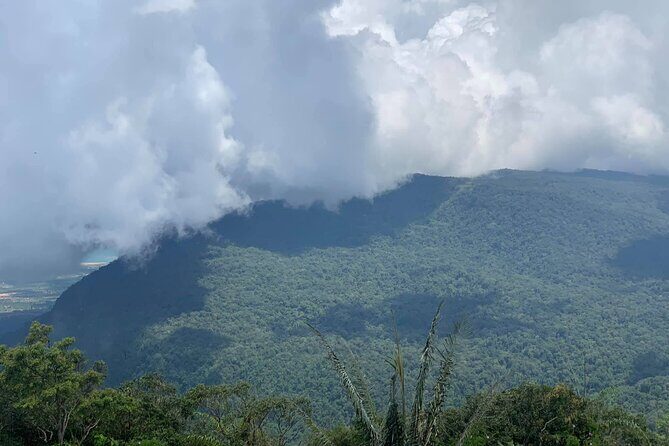
The core “wow” moment happens early. You drive about 12 km up to the hill, and the guide stops at a parking area where you can take in a view over Kampot town. From there, you’ll get a quick lesson on local geography, including the river connection between town and the sea.
Here’s why this stop is more than scenery. When you can see the river line and the layout of Kampot below, the rest of Bokor stops feel like parts of a single system—old strategic thinking, transport routes, and who would have been able to reach this place.
Practical tip: keep your phone ready for photos, but also take a moment to just look. The view gives you a mental map, and the guide’s explanations land better when you already understand the shape of the area.
Black Palace and the Yeay Mao statue: ruins with a clear face
The tour shifts gears at the Black Palace, built in 1936 and positioned facing the Yeay Mao statue. This isn’t a generic “walk around” stop. The placement matters, and the guide points out the building’s role in the palace complex and the way it relates to surrounding ruins.
You’ll also see an old restaurant behind the main structure, along with other abandoned buildings nearby. That’s useful because it helps you imagine daily life around the palaces, not just the official rooms.
What I like about this stop is how it’s visually legible even in ruin. The Black Palace gives you a focal point, and the statue reference helps you orient quickly. It becomes easier to understand how the French resort era and later royal use were meant to project order and status—until the buildings were left to decay.
Possible consideration: palaces and abandoned sites can be uneven or dusty. Wear shoes you’re comfortable walking in, and don’t rush. You’ll get more from the guide’s talk if you slow down and let your brain connect details to the bigger historical narrative.
Wat Sampov Pram (1920): Buddhist architecture against the ruins
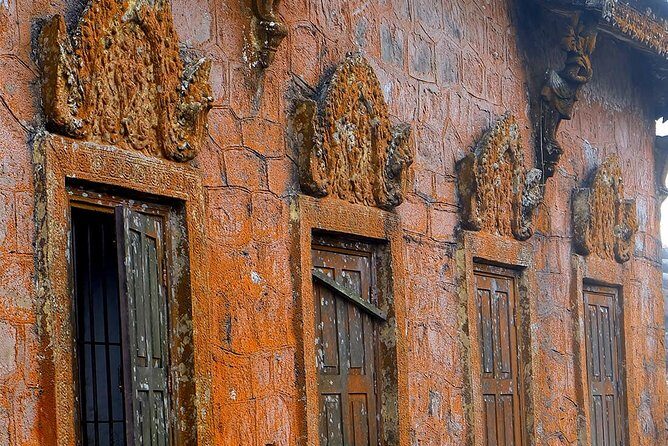
Next comes Wat Sampov Pram, an older Buddhist temple built in 1920. This stop is a real tonal switch from palaces and abandoned rooms. Instead of emptiness, you get religious space—something still tied to practice and meaning.
If you care about learning how Buddhism shows up in the built environment, this is where you’ll notice it. The guide shares information about Buddhism, so you’re not just looking at a pretty structure. You’re also getting a framework for what you’re seeing and why it’s important.
One practical detail: an admission ticket is listed as not included at this point. That doesn’t mean it will always be expensive or required, but you should expect that fees can exist at certain sites. If you want fewer surprises, carry a little extra cash in addition to what you’ve budgeted for the tour.
Why this stop is worth your time: it reminds you that Bokor isn’t only a story of political darkness and colonial decline. The hill also contains living culture and spiritual continuity.
The old Catholic church: a Khmer Rouge stronghold site
Bokor’s story isn’t complete without mention of the old Catholic church. The tour highlights it as one of the last strongholds connected to the Khmer Rouge, and that historical link is exactly what gives the stop weight.
Even if you’re not a history reader, you’ll feel the difference when a place is tied to events that forced people into hiding. The church works as a physical marker in the broader narrative: a former structure of worship later caught inside conflict.
This is also where the guide’s political context becomes especially useful. When someone can explain why certain buildings became strategic strongholds, the past stops feeling like names on a timeline and starts feeling like choices made in real places.
One note: the itinerary doesn’t spell out the church as its own numbered stop in every version of the route, so expect it to be visited as part of the broader exploration of abandoned compounds and ruins.


What you’ll learn from a great guide (like Rithy)
I think the success of this kind of tour comes down to the guide. In the best moments, the ride and the ruins become one lesson instead of three separate photo stops.
In particular, I’ve heard from people who had excellent experiences with Rithy as a guide. The standout themes were safe, controlled scooter riding, and English explanations that actually go into history instead of skimming headlines. People also praised the guide’s friendliness and the way he shared each attraction’s background in detail, including a political angle.
Even if you don’t get Rithy specifically, the lesson holds: when a guide tells a political and historical story clearly while you’re looking at the evidence, Bokor makes more sense.
If you’re hoping for the most value, listen for the connections. Ask yourself: What role did this building play? Who would have controlled this hill? How does the geography help explain the decisions?
Scooter Trails and your practical setup: helmets, cold towels, and small groups
This experience is built around a guided scooter outing with included essentials. You get a scooter and helmet, plus drinking water and a cold towel. First aid is also included, which is comforting on a day where you’re riding.
Hotel pickup and drop-off are part of the deal too. That’s a big value point if you’d rather not figure out how to time transport into a remote hill area. It also reduces friction for a short tour—because you spend less of your day organizing and more of it actually out on the ground.
Group size is capped at 2 travelers, so you should expect a more personal pace. That can help if you want time for questions, or if you’re taking photos and don’t want to feel rushed.
Now for the timing expectations: the experience is listed as roughly 5 to 30 minutes. Since the tour includes multiple stops, interpret that as “short and focused segments,” not a full-day excursion. This is best for a half-day plan when you want impactful sights without committing hours.
Price and value: is $35 a smart move?
At $35 per person, you’re paying for more than access to a couple buildings. You’re getting guided interpretation, transportation by scooter (plus helmet), and hotel pickup and drop-off. You’re also getting water and a cold towel.
That’s the real value equation: the tour removes the hard parts—finding the right sites and figuring out the route—so you can focus on the story and the views. For many visitors based in Kampot, that’s exactly the kind of convenience that’s worth paying for.
The main value consideration is pacing. Because the tour is short, you won’t get endless roaming time in every location. If you like slow, lingering ruin exploring, you might want to pair this with your own self-guided time afterward. But if you want a guided hit of the most important Bokor spots, the price feels reasonable.
If you’re sensitive to extra costs, remember some things are not included, including souvenirs/personal expenses and a listed waterfall ticket (not necessarily part of what you’ll do on every route). Also, admission is explicitly noted as not included for at least one stop.
Who this tour fits best in your Kampot schedule
This is a great fit if you:
- Want an easy way to see Bokor without arranging your own transport
- Like history that connects places to events, including a political lens
- Enjoy scooter riding and want a guide to lead you instead of trial-and-error
- Prefer smaller group attention
It may be less ideal if you’re hoping for a long, laid-back, deep exploration day. This is a focused outing with short segments and clear target stops.
It’s also worth thinking about comfort and weather. The experience is said to require good weather, so plan for at least one day in Kampot when conditions look stable. Rain can make viewpoints less impressive and roads less pleasant.
Should you book Discover Bokor National Park?
I’d book it if you want a short, guided scooter route that mixes big Kampot views with key historical stops: the Black Palace complex (including the Yeay Mao statue), Wat Sampov Pram, and the old Catholic church linked to the Khmer Rouge. The included scooter, helmet, hotel pickup/drop-off, and water make it practical, and the small group size helps the guide’s explanations land.
I’d hesitate if you’re mainly chasing a long scenic hike or lots of quiet time at each site. Also, double-check your pickup timing in your confirmation message and keep your expectations aligned with a short, weather-dependent outing.
If you’re in Kampot with limited time and you want Bokor to make sense—rather than just look eerie—this tour is a solid choice.
FAQ
How much does the Bokor scooter tour cost?
It costs $35.00 per person.
Where does the tour start and end?
It operates from the Kampot/Sihanoukville area and includes hotel pickup and drop-off.
How long is the tour?
The duration is listed as approximately 5 to 30 minutes.
What’s included in the price?
The tour includes drinking water and a cold towel, first aid, local guides, a scooter and helmet, and hotel pickup and drop-off.
Are admission tickets included?
An admission ticket is listed as not included for at least one stop, so you should expect potential extra fees at sites.
Is the tour suitable for most people?
Most travelers can participate.
How big is the group?
The maximum group size is 2 travelers.
What if the weather is bad?
The experience requires good weather, and if it’s canceled due to poor weather you’ll be offered a different date or a full refund.