REVIEW · SIEM REAP
From Siem Reap: Guided Kulen Waterfall Tour
Book on GetYourGuide →Operated by Siem Reap Experiences · Bookable on GetYourGuide
Kulen Mountain mixes temples and a real swim. I loved the 1000 Lingas riverside site and the chance to cool off with a Kulen Waterfall swim. The only real catch: the day includes walking and the waterfall time is limited, so wear shoes you’re happy to get muddy.
This 10-hour loop is built for comfort. You get hotel pickup in Siem Reap, an English-speaking guide (names I’ve seen on this route include Chout, Makara, and Sayon), park entry, and water throughout the day. My advice: go in expecting a full itinerary with stops packed between viewpoints, not a slow half-day.
In This Review
- Key things to know before you go
- Siem Reap to Phnom Kulen: a long day with smart pacing
- First stop at the quarry: why stones matter on Kulen
- The riverside 1000 Lingas archaeological park
- Sacred hilltop temples and the reclining Buddha
- Kulen Waterfall: swimming time, what to pack, and expectations
- Palm sugar village: a sweet look at everyday Khmer life
- Lunch realities: expect food to be extra
- Optional Cambodia Landmine Museum: context that lingers
- Transport and energy: how to make the most of a 10-hour day
- Price and value: why $45 can work if you want all the stops
- Who should book this Kulen Waterfall tour?
- Should you book this Kulen Waterfall tour?
- FAQ
- How long is the guided Kulen Waterfall tour from Siem Reap?
- What is the price per person?
- What’s included in the tour price?
- Is lunch included?
- Is the Cambodia Landmine Museum included?
- What language is the guide?
- What time should I be ready for pickup?
- Can I cancel for a full refund?
- What should I bring for the waterfall swim?
- Is this tour suitable for wheelchair users or older travelers?
Key things to know before you go
- You’re mixing archaeology and nature in Phnom Kulen National Park, so you’ll see sacred Hindu-Buddhist sites and then switch to the waterfall scene.
- The 1000 Lingas stop is a standout photo mission because it’s an outdoor riverside archaeological park.
- Hilltop temples include the famous reclining Buddha plus multiple ruined temple remnants on the sacred mountain.
- Bring swimwear and a change of clothes—the tour is set up for an actual swim at Kulen Waterfall.
- Palm sugar production is a quick cultural detour on the way back, giving you a real look at how locals make a staple product.
- The Landmine Museum is optional but important for understanding Cambodia’s modern past; entry isn’t included.
Siem Reap to Phnom Kulen: a long day with smart pacing
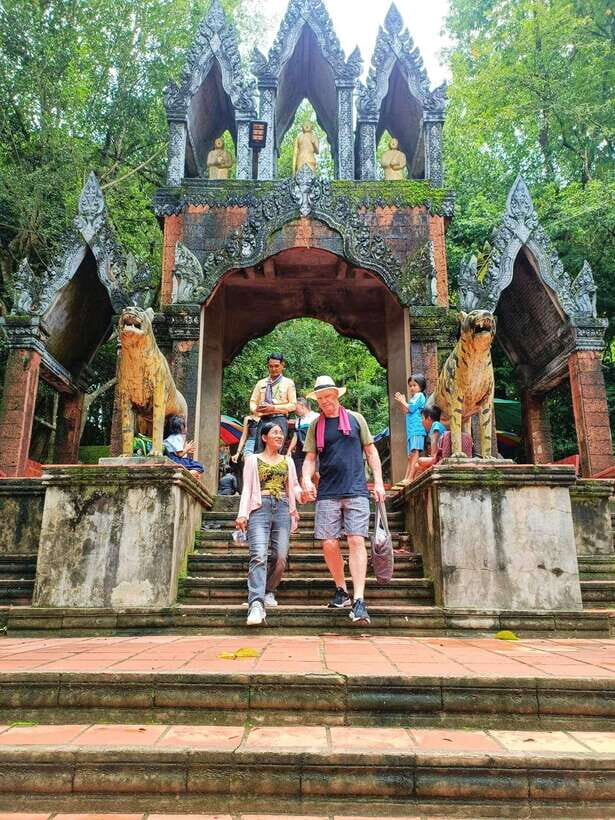
This is a classic Siem Reap day trip: you leave the city, head into the Phnom Kulen area, and come back the same day. At 10 hours, it’s not a leisurely stroll. Still, it’s long enough to hit the big spiritual sights, the waterfall, and a local village stop without rushing like crazy.
Transport and timing matter here. The road up to Kulen can be an adventure in itself, so the tour’s vehicle comfort (often with A/C) helps you arrive ready to look, not fried. And because you’re on a guided route, you’ll spend less time figuring out logistics and more time actually seeing things.
You can also read our reviews of more guided tours in Siem Reap
First stop at the quarry: why stones matter on Kulen
Before you reach the sacred parts of Phnom Kulen, you’ll make a stop at a quarry where stones were cut. This isn’t just a roadside detour—it’s the practical backstory to what you’ll later see on the mountain temples.
When you connect the dots like this, the ruins feel less random. You can better imagine the work it took to move materials and build the temple structures that now sit amid trees and steep paths. It also sets the tone: this park is famous for religion and nature, but it’s also about how people shaped the site.
The riverside 1000 Lingas archaeological park
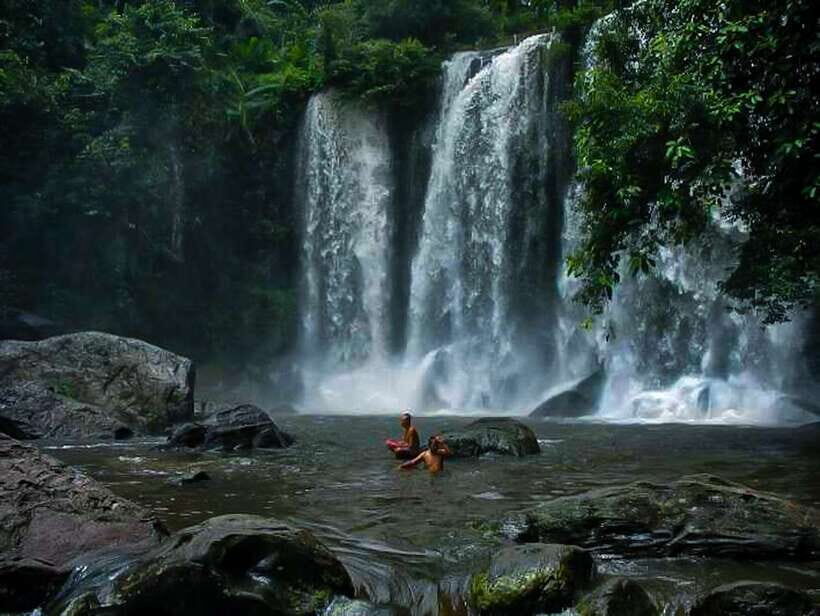
Next comes the riverside archaeological highlight: the 1000 Lingas site. This is a collection of carved stone forms tied to Hindu tradition, and it sits in a scenic setting where the atmosphere feels devotional rather than museum-like.
Here’s what to focus on. Don’t just snap photos—take a moment to notice how the site is arranged and why it’s placed by the water. You’ll get more out of this stop if you ask your guide what the carvings represent and how the mountain’s religious importance connects across time.
Also, expect this to be an outdoor stop. That means sun, bugs, and uneven ground are part of the deal. If you’re the type who likes shade and easy walking, keep that in mind.
Sacred hilltop temples and the reclining Buddha
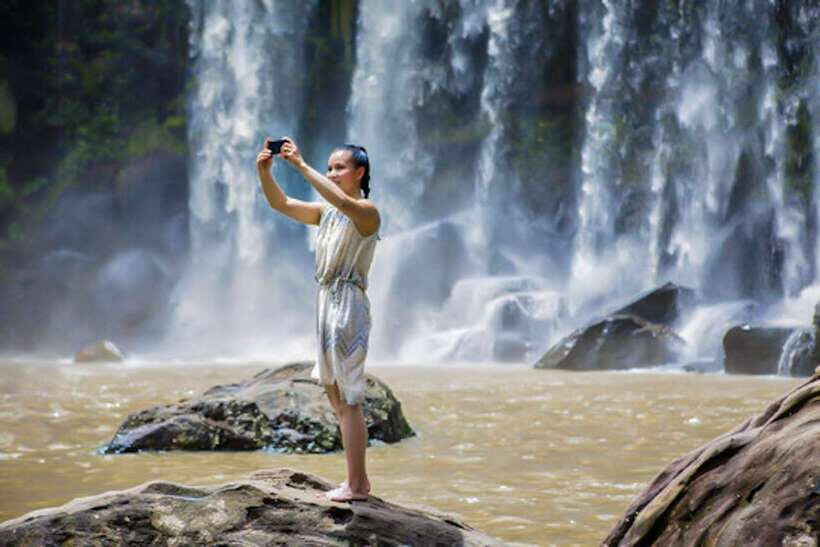
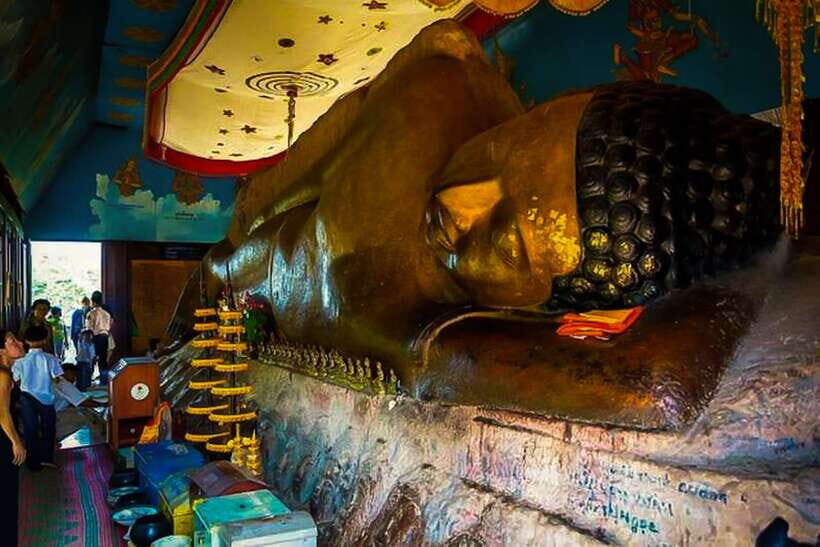
After the riverside stop, the tour heads into the sacred hilltop area. You’ll see more than 30 temple ruins plus a large reclining Buddha, one of the best-known sights on Phnom Kulen.
This section works because it gives you variety in a small area: you’ll move between ruined structures, viewpoints, and the main Buddha image. Even if you’re not a hardcore temple person, this stop helps you understand why Phnom Kulen is significant to both Hindus and Buddhists.
The path is uphill and you’ll be stopping for photos. Wear sports shoes (not flip-flops), and go slow enough to let your guide explain what you’re seeing. One thing I like about this tour style is the guide often manages the flow so you’re not always stuck behind a crowd.
Kulen Waterfall: swimming time, what to pack, and expectations
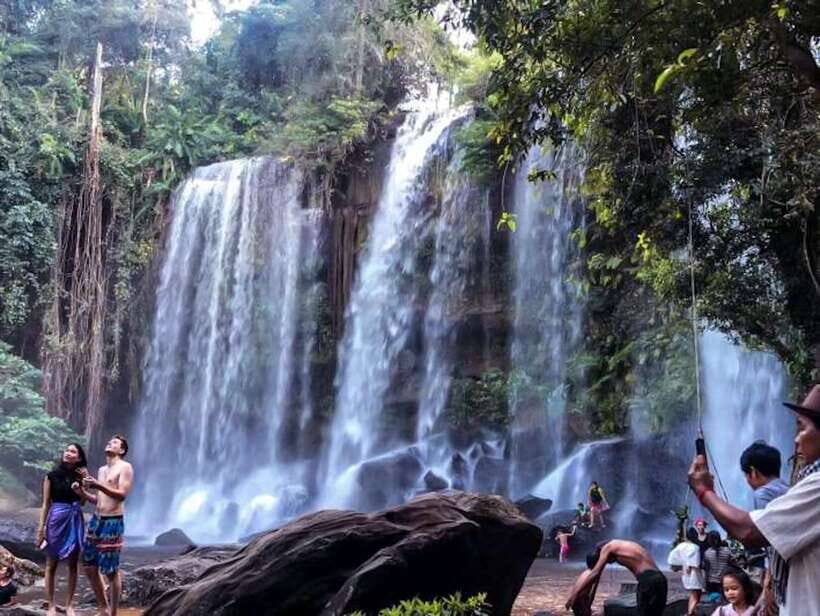
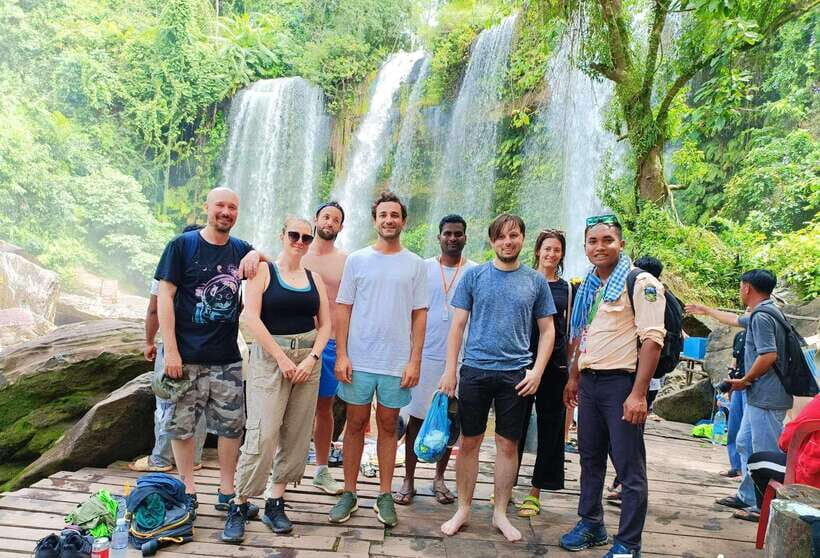
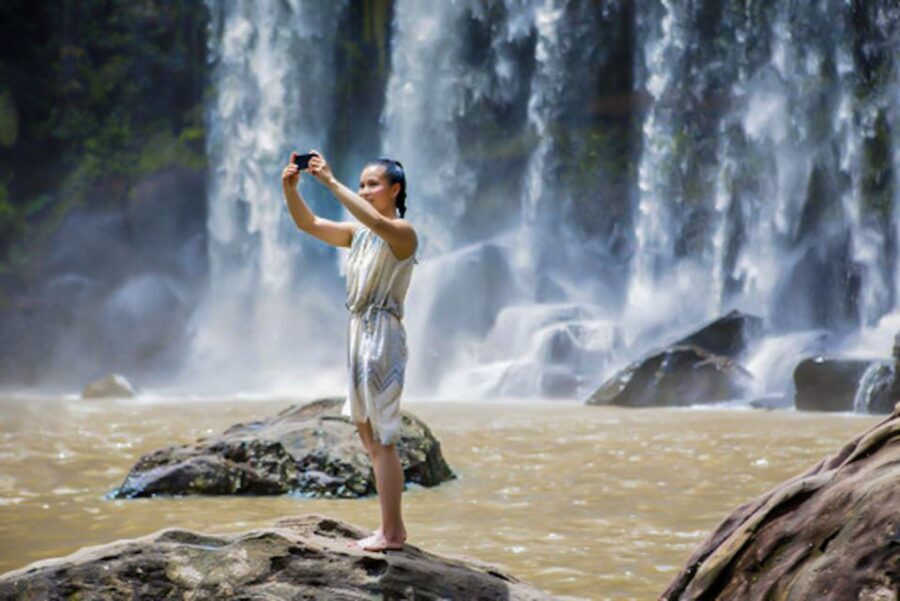
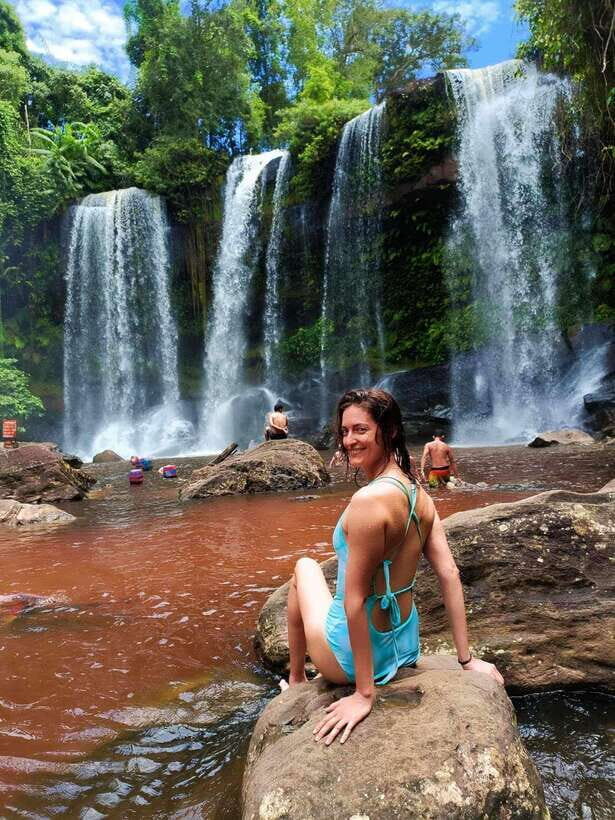
Then comes the reason many people do this trip: Kulen Waterfall. You’ll trek to the falls and the tour gives you time to refresh with a swim.
I recommend treating the waterfall as a swim-and-sit stop, not a “hangout all afternoon” situation. Based on how this tour runs for many groups, your time at the water is typically around 30–40 minutes, which is enough to enjoy the swim and get a few solid photos—but not enough to fully relax for long stretches.
What to bring makes a big difference here:
- Swimwear (obvious, but people forget)
- A change of clothes so you’re comfortable on the ride back
- Sports shoes you can walk in to reach the water safely
Also, don’t underestimate the heat and humidity. The tour includes water during the day, but you’ll still want to pace yourself and take breaks when your guide suggests.
Palm sugar village: a sweet look at everyday Khmer life
On the way back to Siem Reap, you’ll stop at a local village connected to palm sugar production. This isn’t a long tour of a factory—it’s more like a quick cultural window into how everyday products get made.
What I like about this stop is that it’s not a “look but don’t touch” experience. Even when the time is short, you get a sense of craftsmanship and local routine. It’s also a good contrast after the spiritual sites and the waterfall—your brain gets a break from the sacred and switches to practical life.
If you’re the kind of traveler who collects small stories from places (not just big landmarks), you’ll appreciate this part.
Lunch realities: expect food to be extra
Food isn’t included beyond water. The tour includes time for lunch, but you’ll pay on your own at a restaurant stop during the day.
A practical tip: when you arrive hungry, it can feel like the lunch stop is just another boxed-in moment. My suggestion is to keep your expectations flexible and focus on ordering something simple and local from what the restaurant offers. Some menus commonly include Khmer dishes like amok, and you can often find options that work if you want something vegetarian.
Optional Cambodia Landmine Museum: context that lingers
On many versions of this route, you have an optional stop at the Cambodia Landmine Museum. Entry is not included in the tour price.
If you choose to go, this is one of those “it matters” experiences. It connects the country’s difficult history to what you’re seeing on the landscape today—especially in areas that haven’t been de-mined. Your guide will likely frame why it’s unsafe to visit certain places without local guidance, which is a key point for this tour overall.
One guest noted the museum entry cost as $6, but treat that as something you confirm on the day. The bigger point is this: the museum can add emotional weight to a day that also includes temple ruins and a fun swim.
Transport and energy: how to make the most of a 10-hour day
A 10-hour tour from Siem Reap is manageable because it’s organized. Pickup is included, and you’re asked to be ready about 30 minutes before departure at your hotel lobby.
That said, you’ll still need to protect your energy:
- Start hydrated (you’ll get water during the day)
- Use shoes that handle slippery, uneven ground
- Plan to sweat—this area is hot and humid
- Keep your camera strap tight and your phone protected around water and jungle paths
The route is a mix of short walks, viewpoints, and vehicle time. That makes it a good fit for people who want to see a lot without turning it into an all-day hike.
Price and value: why $45 can work if you want all the stops
At $45 per person for a roughly 10-hour day, the value depends on what you want out of Kulen. You’re not just paying for sightseeing. You’re paying for a package that includes:
- a live English guide
- park entry fees
- hotel pickup and drop-off
- water during the day
Then there are optional extras like the Landmine Museum, and your lunch is also separate. But if your goal is a one-and-done day that hits the 1000 Lingas, the reclining Buddha, a genuine waterfall swim, and the palm sugar stop, this price often feels fair compared to piecing everything together.
Who should book this Kulen Waterfall tour?
This tour is a strong match if you want:
- a day trip that mixes archaeology + nature
- an easy way to reach Phnom Kulen without navigating on your own
- a real chance to swim at Kulen Waterfall
- a guide who can connect the religious sites to the wider Cambodian story
It’s not a fit if you need wheelchair access. It’s also not recommended for people over 70, and the tour warns that the areas visited have not been de-mined—so going without a guide is not advised.
Should you book this Kulen Waterfall tour?
If you want one day in Phnom Kulen that covers the big hits and adds a cultural stop, I’d book it. The combo of the 1000 Lingas, the hilltop reclining Buddha, and the waterfall swim is exactly the kind of “wow + meaning” mix that makes a Siem Reap trip feel complete.
Skip it only if you hate structured days, you can’t handle uphill walking, or you strongly prefer long free time at one location. For most people, the schedule is the point: you get a full experience without needing to plan every turn.
FAQ
How long is the guided Kulen Waterfall tour from Siem Reap?
The tour lasts 10 hours.
What is the price per person?
The price is $45 per person.
What’s included in the tour price?
It includes a guided tour of Phnom Kulen National Park, park entry fees, hotel pickup and drop-off from Siem Reap, and water.
Is lunch included?
Foods and drinks besides water are not included.
Is the Cambodia Landmine Museum included?
No. Landmine Museum entry is not included, and the stop is described as optional.
What language is the guide?
The live tour guide provides English.
What time should I be ready for pickup?
You should be ready 30 minutes before your scheduled departure time.
Can I cancel for a full refund?
Yes. You can cancel up to 24 hours in advance for a full refund.
What should I bring for the waterfall swim?
Bring swimwear, a change of clothes, and sports shoes.
Is this tour suitable for wheelchair users or older travelers?
No. It is not suitable for wheelchair users, and it is not recommended for people over 70 years.