REVIEW · PHNOM PENH
Half Day Tour to Royal Palace, Wat Phnom & Independent Monument
Book on Viator →Operated by Tour Guide-Siem Reap · Bookable on Viator
A golden Buddha, a hilltop temple, and a victory monument in one tidy afternoon. This half-day route is a smart way to see Phnom Penh’s most important landmarks fast, from the Royal Palace to the calm of Wat Phnom and the Independence Monument.
I really like how the tour is organized for you: hotel pick-up and drop-off keeps you from wrestling with traffic, and the English-speaking guide helps connect what you’re seeing to Cambodian culture. One thing to consider: the schedule is short, and the Palace time can feel tight if you’re hoping for lots of Khmer history or a slower, deeper pace.
In This Review
- Key points at a glance
- Getting Oriented in Phnom Penh in Just 3–4 Hours
- Entering the Royal Palace: Throne Hall, Napoleon III Pavilion, and the Silver Pagoda
- Throne Hall: the place behind the pageantry
- Napoleon III Pavilion: a small object with a big backstory
- Silver Pagoda: why the floor matters (and what you’ll see inside)
- The one caution about Palace time
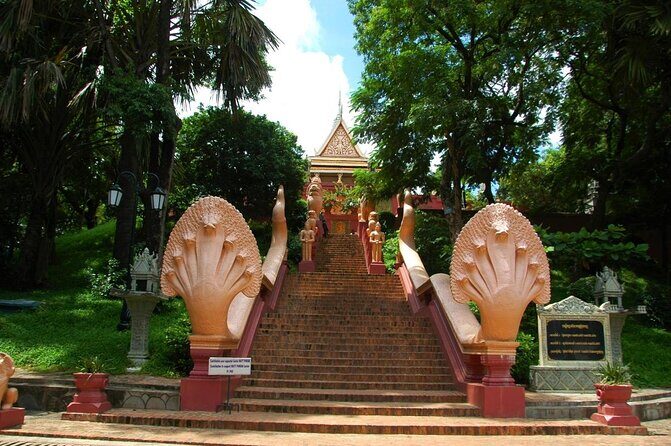
- Wat Phnom Daun Penh: Grandma Penh’s 1372 Legend on the Hill
- The legend: Daun Penh and the Buddha statues
- Time on site: enough for atmosphere, not for slow wandering
- Independence Monument: A Calm National Marker Built for 1958 and 1962
- Price and Value: Is $130 for Up to 6 Worth It?
- Logistics That Actually Matter on the Ground
- Who This Tour Suits Best (and Who Might Want a Different Plan)
- Should You Book This Half-Day Royal Palace, Wat Phnom & Independence Monument Tour?
- FAQ
- How long is the Royal Palace, Wat Phnom, and Independence Monument half-day tour?
- Is hotel pick-up and drop-off included?
- Are entrance fees included for all stops?
- Is this tour private or shared?
- What language is the tour guide?
- What’s included in the price besides the guide and transport?
- What is the cancellation policy?
Key points at a glance
- Royal Palace highlights: Throne Hall, Napoleon III Pavilion, and the Silver Pagoda floor tied to its silver tiles
- A specific treasure: a life-size gold Buddha with 9584 diamonds
- Wat Phnom’s origin story: Daun Penh’s 1372 legend about five Buddha statues and the temple on the hill
- Independence Monument mood: a cool, serene stop built for sacrifice and national independence
- Private, English guide: you get commentary matched to your group, not a big bus crowd
- 3–4 hours total: efficient sightseeing, but not enough for slow museum-style time
Getting Oriented in Phnom Penh in Just 3–4 Hours
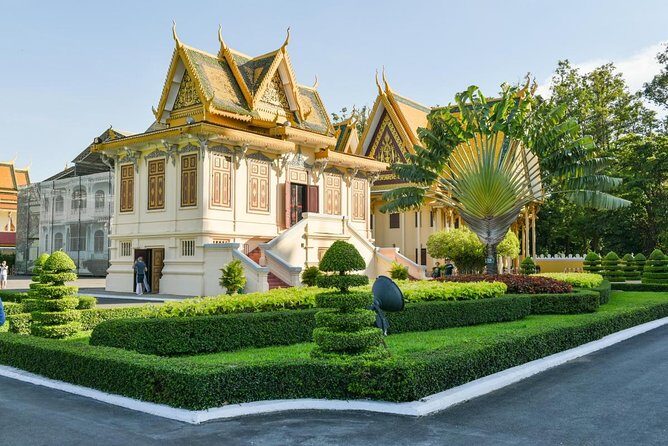
Phnom Penh can feel big and traffic-y, even when you only want a few major sights. This half-day tour is built for focus. You trade wandering time for a route that hits three big “anchors” so you leave with clear mental maps: where the monarchy symbolism lives, where the city’s oldest temple story sits, and where the national independence reminder stands.
You’ll also get practical comfort. The tour includes private transportation with A/C, pure drinking water, and hotel pick-up and drop-off. That matters here because Phnom Penh heat can turn “quick sightseeing” into “quick exhaustion” fast. If you’re traveling on limited time, this format is a win.
Just remember the trade-off: it’s short. If your ideal day is slow, reading every plaque and taking your time in each room, you might wish you had a full-day plan. Here, you’re seeing key highlights rather than doing a deep, multi-hour museum crawl.
You can also read our reviews of more tours and experiences in Phnom Penh.

Entering the Royal Palace: Throne Hall, Napoleon III Pavilion, and the Silver Pagoda
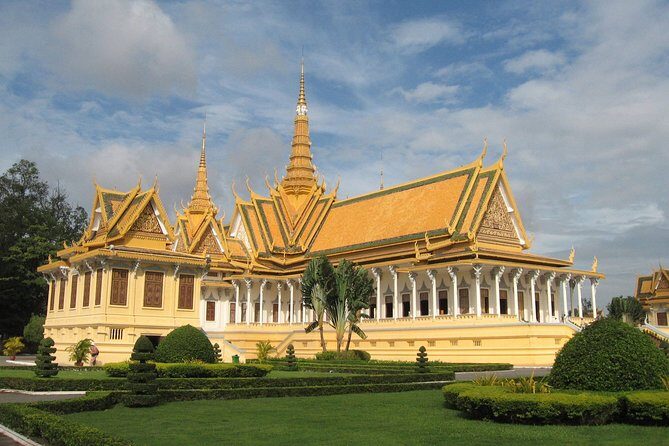
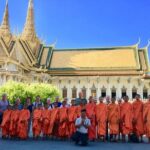
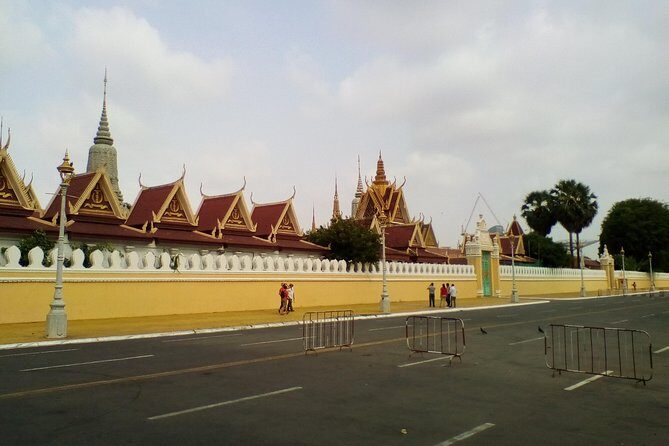
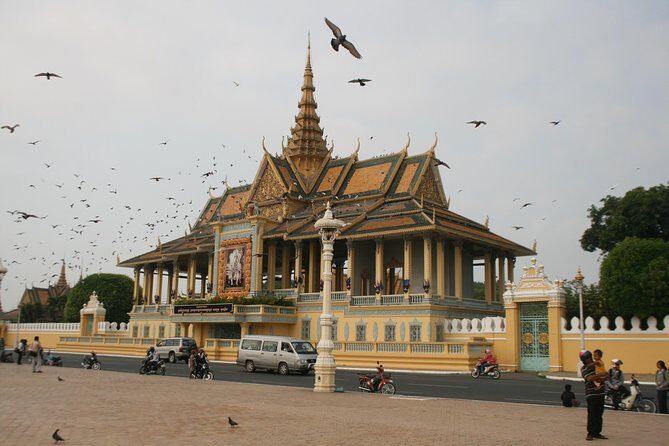
The Royal Palace complex is one of Cambodia’s most visually satisfying places. Even before you reach the main buildings, you get that sense of order and ceremony. The royal gardens are landscaped with tropical plants and topped with gleaming spires, so the area feels more like a planned compound than a typical tourist attraction.
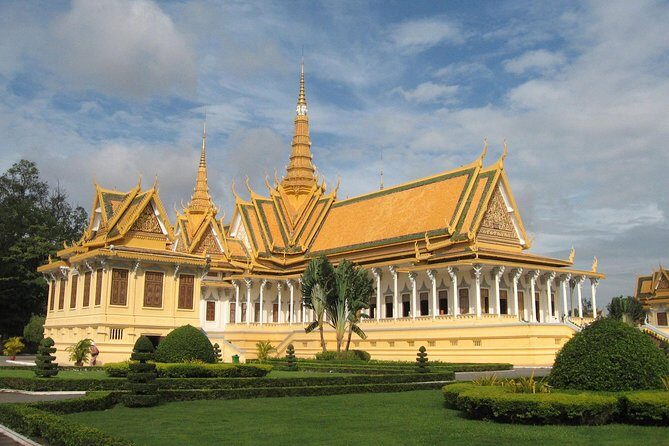
Throne Hall: the place behind the pageantry
You start with the Throne Hall, where coronations took place and royal receptions happened. It’s not just “a big room to look at.” You’re standing in the kind of space designed to project power, continuity, and legitimacy. The hall is the Palace’s political center in a single stop—great if you want context without needing to study royal history for days.
Napoleon III Pavilion: a small object with a big backstory
Next comes the Napoleon III Pavilion, built from iron and described as a 19th-century French gift. This kind of detail is useful. Cambodia’s story isn’t only local; it’s also shaped by outside influence. The pavilion gives you a tangible reminder that international relationships were part of the Palace world, long before modern tourism existed.
Silver Pagoda: why the floor matters (and what you’ll see inside)
Then you reach the Silver Pagoda, named for 5000 silver tiles, each weighing 1 kg. Even if you don’t count them (please don’t), the name tells you what kind of place this is: money, symbolism, and craftsmanship all made physical.
Inside, the highlights are the kind you don’t forget easily:
- A life-size gold Buddha
- The Buddha is studded with 9584 diamonds
- The largest diamond is listed as 25 carats
This is the moment where the Royal Palace stops being “pretty architecture” and becomes a story you can almost feel. If you like religious art, royal symbolism, and objects meant to represent sacred authority, this is a standout.



The one caution about Palace time
The main drawback is timing. The Palace portion is scheduled for about two hours, but if the pace feels rushed once you’re there, it can turn into a highlights-only tour. One traveler concern was that the Palace visit felt shorter than expected and focused on limited areas rather than broader history. If you want deeper context—extra time for sculptures, a fuller explanation of different periods, or wandering beyond the showpiece rooms—this is the part to watch.
My practical advice: arrive ready to move with the group. Bring patience for crowds, and don’t assume you’ll get long museum-style time inside every building.
Wat Phnom Daun Penh: Grandma Penh’s 1372 Legend on the Hill
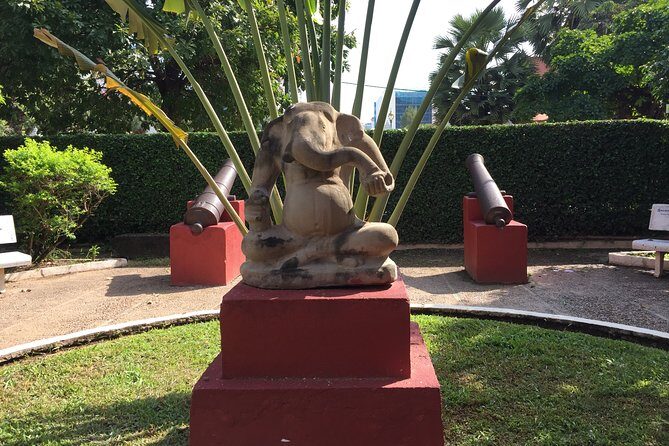
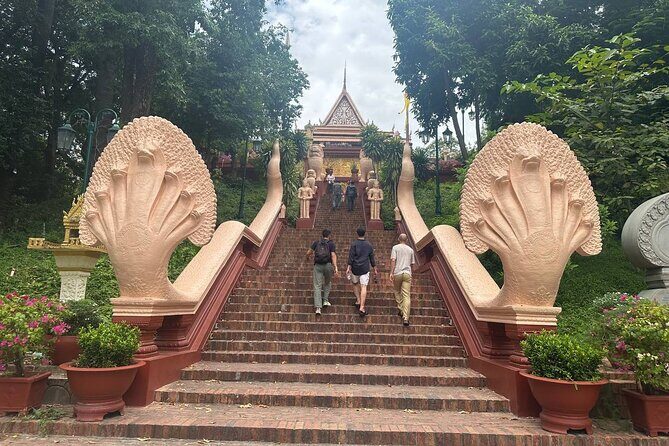
After the Palace, you head to Wat Phnom Daun Penh. This is a different vibe immediately. The Royal Palace is formal and ceremonial; Wat Phnom is more intimate and story-driven. It’s the temple on the hilltop that helps define Phnom Penh’s spiritual identity.
The legend: Daun Penh and the Buddha statues
Wat Phnom is tied to the figure of Daun Penh (Grandma Penh), described as a wealthy widow in 1372. The story says she retrieved a log from a river that held five Buddha statues. She then ordered a temple built on property she had, to house those statues.
Later, the story adds that Grandma Penh and local villagers converted, and the community built the temple on the top of the mountain. They then brought four Buddha statues to the temple.
What I like about this stop is that it isn’t just “look at the pagoda.” You’re seeing a place anchored to a origin story that locals remember and retell. Even if you don’t love religious history, the legend gives you a lens. You’ll likely understand why the hilltop location matters and why the temple’s identity is so closely linked to Phnom Penh’s older roots.
Time on site: enough for atmosphere, not for slow wandering
This stop runs about one hour and entrance fees are not included. That one-hour window is usually enough to:
- walk in comfortably
- see the key spaces
- absorb the setting
But it’s not long enough if you want to linger for big photo sessions, additional side areas, or long “sit and read every detail” time. If you’re the type who likes to be stationary at temples—people-watching, incense time, slow reflection—you may want a longer standalone visit.
Independence Monument: A Calm National Marker Built for 1958 and 1962
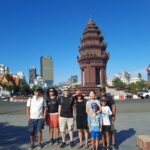
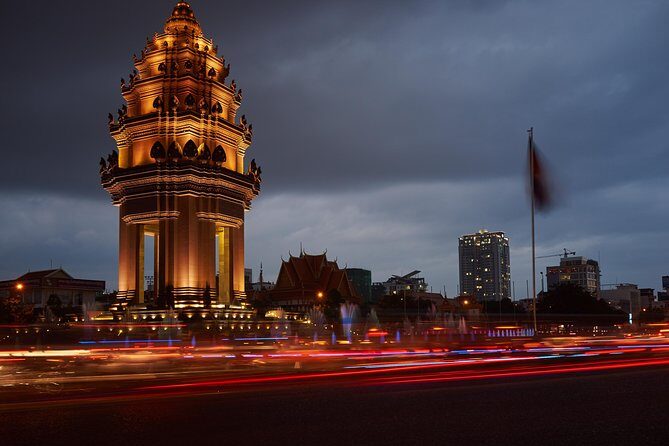
The last stop is the Independence Monument, built in 1958 and inaugurated in 1962 during the Sangkum Reastr period. The monument’s purpose is to commemorate those who sacrificed their lives for the country’s welfare.
This is one of those sights that can be more powerful simply because you’re not staring at it while rushing. It’s described as having a cool, serene atmosphere, and that’s exactly how you want your final stop to feel: a chance to slow down after the Palace’s ceremony and the hilltop temple’s storytelling.
The monument works well as a “closing note” for the day. You move from monarchy symbolism to religious origins, then to national independence. It’s a neat thematic sweep.
This stop is also listed as admission included, which helps the math for your overall costs.
Price and Value: Is $130 for Up to 6 Worth It?
The price is $130 per group (up to 6) for the half-day experience, which is a private setup rather than a seat on a shared bus. That can be good value if you travel as a family or a small group—especially because the price includes:
- a private English-speaking tour guide
- private A/C transportation
- hotel pick-up and drop-off
- pure drinking water
- travel insurance
However, entrance fees for the Royal Palace and Wat Phnom are not included. The Independence Monument admission is included.
Here’s how I suggest you judge value:
- If you’re traveling with 2–6 people, splitting the group cost can make this feel fair fast—particularly because pickup, guide, and A/C are usually where half-day tours quietly save you money and time.
- If you’re traveling solo or as a duo, the private price may feel like a stretch compared to pay-per-ticket sights you can do on your own. In that case, you’re paying mostly for convenience and guided explanations.
Also factor in the pace. A good half-day guide helps you see more meaning than you’d find alone. But if the Palace time feels compressed, you might not get the depth you hoped for—so your value depends on the guide’s ability to slow down at the right moments.
Logistics That Actually Matter on the Ground
A few operational details can change your experience a lot.
First: you’ll likely want to plan around heat and timing. The tour runs around 3–4 hours, and it starts with hotel pickup. That usually means you can protect your energy and avoid the mid-day stress window.
Second: it’s private, meaning it’s “your group only.” That matters for photos and questions. You can ask for extra context without feeling like you’re holding up strangers.
Third: mobile tickets are part of the setup, and you get confirmation at booking. In practice, that means less hassle at each stop.
Finally: entrance fees for two major attractions are separate. Before you go, confirm what you’ll pay on-site so you don’t get surprised mid-day.
Who This Tour Suits Best (and Who Might Want a Different Plan)
This tour is a strong fit if you want:
- top Phnom Penh landmarks in one afternoon
- an English-speaking guide to explain the big symbolism
- convenience of pickup and drop-off
- a route that connects monarchy, temple origins, and independence
You’ll also like it if you’re someone who enjoys “key highlights done well.” Royal Palace treasures like the gold Buddha with diamond details are exactly the kind of thing that benefit from context. Wat Phnom’s story of Daun Penh is another reason the guided piece helps more than you might expect.
You might want a different approach if you’re the type who likes slow wandering and deep reading. The Palace and Wat Phnom are both major spaces, and the short time can feel limiting. If you’re a history-first traveler, you may prefer separate longer visits where you can sit with explanations and not feel time pressure.
Should You Book This Half-Day Royal Palace, Wat Phnom & Independence Monument Tour?
I’d book it if you’re short on time and want a clean, guided highlights route across Phnom Penh. For many visitors, the combination of Royal Palace ceremonial spaces, Wat Phnom’s origin legend, and the Independence Monument’s calm atmosphere gives you a well-rounded snapshot without needing a full day.
I’d think twice if you’re hoping for lots of deep Khmer historical coverage inside the Palace. The biggest potential disappointment is simply pace—so choose this tour for efficiency and guided interpretation of major sights, not for exhaustive museum-level study.
If your goal is to see the best parts and get your bearings fast, this is a practical choice.
FAQ
How long is the Royal Palace, Wat Phnom, and Independence Monument half-day tour?
It runs about 3 to 4 hours.
Is hotel pick-up and drop-off included?
Yes. Pickup and drop-off are included.
Are entrance fees included for all stops?
No. Entrance fees for the Royal Palace and Wat Phnom are not included. Independence Monument admission is included.
Is this tour private or shared?
It’s private. Only your group participates.
What language is the tour guide?
The tour includes a private English-speaking guide.
What’s included in the price besides the guide and transport?
The tour includes private A/C transportation, pure drinking water, travel insurance, and hotel pick-up and drop-off.
What is the cancellation policy?
You can cancel for free up to 24 hours in advance for a full refund. Changes made less than 24 hours before the start time aren’t accepted.