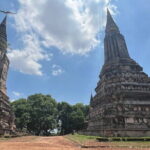
S21 and the killing fields hit hard. This half-day Phnom Penh tour connects Tuol Sleng (S21) with Choeung Ek, with an English guide who explains what these places represent under the Khmer Rouge era. It’s not a sightseeing loop. It’s a structured, guided way to understand a painful chapter of Cambodia’s recent past.
I like that the day is set up for real-world comfort: hotel pickup and drop-off, plus private A/C transport to keep the trip stress-free. I also like the small group size, capped at 18 travelers, so your guide can actually answer questions instead of rushing everyone through.
One drawback to plan for: entrance fees to both sites are extra (listed at $8 per person), and the subject matter is emotionally heavy. If you prefer lighter, more casual tours, this one may feel like a lot in a short time.
In This Review
- Key things that make this tour worth your time
- Why Tuol Sleng and Choeung Ek belong in one half day
- The $35 price tag: what you get and what you’ll pay extra
- Pickup, A/C transport, and the small-group difference (max 18)
- Stop 1: Tuol Sleng Genocide Museum and S21 explained with a real guide
- Stop 2: Choeung Ek killing fields memorial and why the second site matters
- Timing that actually works: 3 to 4 hours, including travel
- Getting the most from your English-speaking guide (and how questions help)
- Comfort and practical touches that keep your focus
- Who should book this tour (and who might want a different format)
- A quick decision guide: should you book this half-day tour?
- FAQ
- What locations are included in the half-day tour?
- How long is the tour?
- Are hotel pickup and drop-off included?
- Is the cost of museum and memorial entrance included?
- What does the tour include besides the guide?
- How big is the group?
- Is there an afternoon option?
- Does the tour have a weather requirement?
Key things that make this tour worth your time
- A tight half-day plan that pairs S21 at Tuol Sleng with Choeung Ek the same morning or afternoon
- English-speaking guide time at both sites, not just one stop
- Small group cap (up to 18) for questions and slower explanations
- Hotel pickup and drop-off with private A/C car or minivan
- Practical comfort: mineral water and a cold towel
- Plan for weather and extra admissions since entrance tickets aren’t included
Why Tuol Sleng and Choeung Ek belong in one half day
This tour works because it gives you a clear before-and-after structure. Tuol Sleng is the prison site tied to Security Prison 21, and Choeung Ek is the killing fields memorial tied to mass executions. Seeing them as two linked parts helps you connect the dots the guide is laying out, instead of bouncing between locations on your own with a lot of blank space.
The pace is also realistic. It’s designed as a half-day experience, not an all-day marathon. Stop 1 at Tuol Sleng is set for about one hour, and Stop 2 at Choeung Ek is about 1.5 hours. You get enough time for the key information without feeling like you’re trapped for hours in an already intense environment.
There’s also a practical angle. You’re being driven out of central Phnom Penh to Choeung Ek, so you’re not spending your mental energy figuring out routes or timing. You can focus on what the guide is explaining.
You can also read our reviews of more tours and experiences in Phnom Penh.

The $35 price tag: what you get and what you’ll pay extra
At $35 per person, the tour is priced like a value-oriented guided half day—especially because it includes transportation and an English guide. You’re not just buying a ticket to buildings. You’re buying a structured route, interpretation at both stops, and convenience.
Here’s the money math that matters:
- The listed tour price is $35 per person.
- Entrance fees to Tuol Sleng and Choeung Ek are not included and are listed at $8 per person.
- So you should plan for $43 total per person for the two main admissions, plus any personal expenses.
That extra admission cost doesn’t make the tour bad value. It’s pretty normal for major memorial sites. What makes it worth considering is that the guide time is included at both locations, and that can be the difference between seeing exhibits and actually understanding what you’re looking at.
One more small value point: the tour includes mineral drinking water and a cold towel. In Phnom Penh’s heat, that’s not flashy, but it helps you stay present instead of distracted.
Pickup, A/C transport, and the small-group difference (max 18)
I like tours that remove friction. This one starts with pickup from your accommodation and ends with drop-off back at your hotel. If you’re trying to pack a busy Phnom Penh schedule, that matters. You avoid the stress of meeting points and transport hassles.
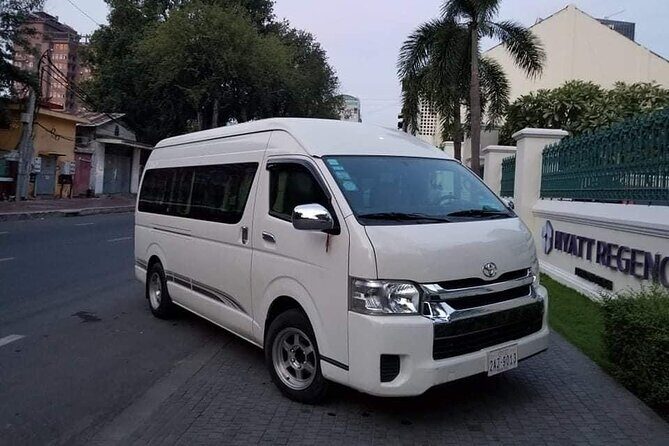
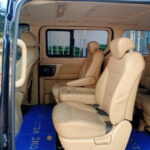
You’ll travel by private A/C car or minivan. That’s a big deal for comfort, especially before and after intense museum time. It also helps keep the trip from dragging, since the driver and guide are handling the route.
The group size limit—up to 18—really changes how the tour feels. When the group is small, your guide can slow down when something needs explaining. You can also ask questions without feeling like you’re interrupting a conveyor belt.
If you prefer tours where you can actually talk to the person guiding you, this setup supports that.
Stop 1: Tuol Sleng Genocide Museum and S21 explained with a real guide
Tuol Sleng is where the tour begins: you’ll be picked up, then taken to the former high school that became known as Security Prison 21. The point here isn’t just to walk through a museum. It’s to understand what this site meant during the Khmer Rouge regime and why it is preserved as a memorial.
The visit is scheduled for about one hour. That’s long enough to absorb the main information, especially if you’re listening and asking questions when prompted. It’s also short enough that you don’t feel forced to “power through” while emotionally overloaded.
A strong part of this experience is the guide’s role in interpreting what you see. From feedback, guides such as Nay and Ran are praised for explaining with detail and emotion, and for sharing personal connections when appropriate. That matters because this kind of history can be hard to grasp from signage alone. A good guide helps you slow down and understand the significance of what’s in front of you.
Practical tip: wear comfortable shoes and keep your energy steady. If you get heat-stressed or fatigued, you’ll miss the subtler explanations. The included cold towel and water help here, but your mindset matters too—this stop is meant to be taken seriously.
Entrance fee note: admission to Tuol Sleng is not included in the base price, and you should budget $8 per person.
Stop 2: Choeung Ek killing fields memorial and why the second site matters
After Tuol Sleng, you travel a little out of the city to Choeung Ek, commonly referred to as the killing fields. This memorial marks the site of many mass executions by the Khmer Rouge. If Tuol Sleng is about the prison system, Choeung Ek is about the aftermath—so the tour’s structure is doing something important.
This stop runs about 1.5 hours. That extra time makes sense. Choeung Ek can be difficult to process, and you’re given enough time to read, reflect, and let the guide’s explanation land. You’re also more likely to have questions in this second phase, since the setting feels different than a museum interior.
From feedback, guides are specifically noted for answering questions and explaining the facts directly, even when it’s hard to hear. Ran in particular is highlighted for being both informative and helpful throughout, with a tone that doesn’t dodge the emotional reality of what happened.
This is the part of the day that many people remember most, not because it’s pleasant, but because it’s powerful and educational. If you’re the kind of person who likes context—who wants to understand what you’re looking at—this guided second stop tends to hit hardest.
Entrance fee note: admission to Choeung Ek is also not included and is listed at $8 per person.



Timing that actually works: 3 to 4 hours, including travel
The overall duration is listed as 3 to 4 hours, and that includes travel time. This is important because Cambodia’s traffic and short-distance driving can make “half day” feel longer than expected. In this case, the schedule already accounts for the movement between Phnom Penh and Choeung Ek.
Plan your day like this:
- Start with a time buffer before you go, especially if you have other appointments later.
- After the tour, give yourself some quiet time. The subject matter is described as sad, moving, and emotional in the guide feedback you can find—so don’t stack back-to-back high-energy plans.
You can also do this in the afternoon upon request, so you’re not stuck with a morning schedule. If you prefer cooler hours or you want to combine it with another Phnom Penh activity, check availability and ask for an afternoon option when booking.
Weather requirement matters too. The experience is said to require good weather. If weather cancels the tour, you should expect a different date or a full refund. That’s not something to ignore in Cambodia when rain can change your comfort level fast.
Getting the most from your English-speaking guide (and how questions help)
This tour includes an English-speaking tour guide. That sounds basic, but in practice it’s the main reason to choose a guided format for sites like this. You’re not just watching; you’re being guided through meaning.
Feedback on guides highlights a consistent strength: they explain with detail, passion, and an emphasis on helping you understand, even when the content is difficult. People also describe asking questions as part of the value—especially because the guide can connect the significance of both sites into a clearer picture.
You’ll likely find that the tour’s emotional tone is handled by the guide, not by rushing or sensationalizing. That’s important. You don’t want a history lesson that treats trauma like entertainment. The guide approach described in feedback points toward direct, human explanations rather than vague facts.
If you want to make the most of it, come with a light list of questions. For example:
- What does this site represent within the broader Khmer Rouge system?
- What details should I notice when I’m reading the exhibits?
- How do these two places connect?
Even if you don’t ask much, the guide’s explanations help you notice what your eyes might skip.
Comfort and practical touches that keep your focus
This tour includes mineral drinking water and a cold towel. That may sound like a small thing, but it’s a smart inclusion for a hot city day. When you’re standing or walking through emotionally intense spaces, you want your body to cooperate.
Transport is also handled by the tour: private A/C car or minivan, plus pickup and drop-off at your hotel. The “near public transportation” detail is useful in case you’re thinking about how to meet, but the core benefit is that you likely won’t need to plan transit at all.
The tour also has a maximum of 18 people. Smaller groups usually mean less waiting, fewer bottlenecks, and a smoother flow between explanations and walking time.
Who should book this tour (and who might want a different format)
This is a half-day tour designed for most people who can participate. If you’re visiting Phnom Penh and you want a guided way to understand Khmer Rouge history through Tuol Sleng and Choeung Ek, it’s a strong fit.
Choose this tour if:
- you want a structured route with interpretation at both stops
- you like having an English-speaking guide who can answer questions
- you value convenience (hotel pickup/drop-off, A/C transport)
You might think twice if:
- you’re sensitive to emotionally heavy content and worry about processing it in a short window
- you prefer a lighter, purely sightseeing style day
- you’d rather spend more time at one site than the tour time allows
Also, budget carefully for admissions. The tour price plus $8 per person entrance fee to each site is still reasonable, but you don’t want surprises.
A quick decision guide: should you book this half-day tour?
If you’re okay with a serious, moving experience, I think this is the kind of Phnom Penh tour that gives you real understanding fast. You get hotel pickup, A/C transport, water, and a guide who explains the significance of both Tuol Sleng and Choeung Ek. The small-group size (up to 18) supports questions and clearer explanations.
Don’t book it if you want a casual history stop or if you know you’ll struggle with intense sites in a concentrated time block. In that case, you might prefer a different day structure or an option that lets you move more slowly.
If the weather looks iffy, keep an eye on it and expect the tour may require good conditions. When you’re ready for the visit, this half-day format is an efficient way to cover both memorials with context rather than confusion.
FAQ
What locations are included in the half-day tour?
The tour includes Tuol Sleng Genocide Museum (S21) and the Choeung Ek Genocidal Center, commonly referred to as the killing fields.
How long is the tour?
The duration is listed as approximately 3 to 4 hours, and that total includes travel time.
Are hotel pickup and drop-off included?
Yes. The tour includes pickup and drop-off at your accommodation, with transport by private A/C car or minivan.
Is the cost of museum and memorial entrance included?
No. Entrance fees to Tuol Sleng and Killing Fields are listed as $8.00 per person and are not included in the tour price.
What does the tour include besides the guide?
The tour includes an English speaking tour guide, mineral drinking water, and a cold towel.
How big is the group?
The tour has a maximum of 18 travelers.
Is there an afternoon option?
Yes, this tour is also available in the afternoon upon request.
Does the tour have a weather requirement?
Yes. The experience requires good weather. If it’s canceled due to poor weather, you’ll be offered a different date or a full refund.