REVIEW · PHNOM PENH
Khmer Cooking Class Half Day (AM or PM)
Book on Viator →Operated by Banana Cooking Class · Bookable on Viator
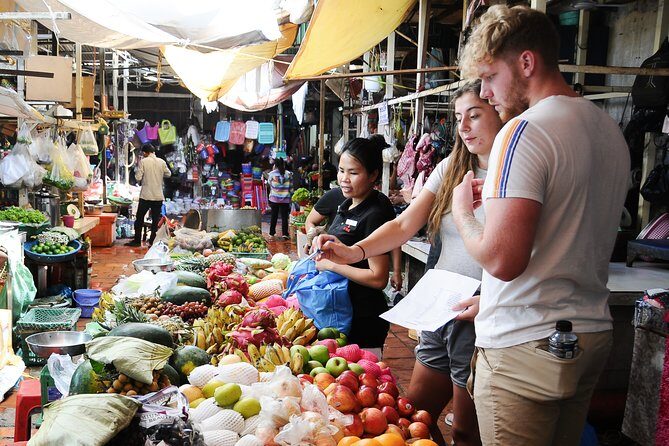
Phnom Penh cooking starts at the wet market. I love the way this class pairs market shopping with hands-on cooking, so you’re not just watching flavors happen. I also love that you cook with clear one-on-one help at your own station, then you eat what you made. One drawback to consider: if you’re booking solo, there’s a chance you could be served your meal separately rather than sharing the table with others.
At Banana Cooking Class, chefs like Lom Ang (and other instructors such as Sophen) guide you through what to look for in fresh herbs, spices, and produce. You’ll leave with a recipe pack plus a certificate and a photo moment, which is great if you want to recreate Khmer food back home instead of only remembering the taste.
In This Review
- Key highlights worth your morning (or afternoon)
- A Half-Day Khmer Cooking Class in Phnom Penh: What You Really Get
- Banana Cooking Class Meeting Point and the Tuk-Tuk Market Run
- Practical note
- Wet Market Shopping: Choosing Herbs, Spices, and Fruit Like a Local
- Theory Demo, Then Your Own Wok: How the Cooking Lesson Works
- One tip that saves your dish
- The Three-Dish Khmer Meal: What You’ll Likely Cook and Eat
- Possible downside to plan for
- What You Take Home: Recipes, Ingredient Lists, and Confidence
- A small confidence boost
- Timing, Group Size, and Logistics That Matter
- Price and Value: Why $31 Feels Reasonable for a Chef-Led Skill Session
- Who This Class Is Best For (and Who Might Skip)
- Should You Book Banana Cooking Class’s Khmer Cooking Class?
- FAQ
- Where does the class meet?
- How long is the Khmer cooking class?
- Is it a private class or shared with strangers?
- Do you visit a market during the class?
- How many dishes do you cook and eat?
- Do you get recipes to take home?
- Is lunch or dinner included?
- Will I get a certificate or photo?
- Can I cancel for a full refund?
Key highlights worth your morning (or afternoon)
- Market-to-kitchen workflow: you visit the local market, then return to cook with the exact ingredients you selected.
- Private-group setup: it’s a private activity, so you and your group get the chef’s attention.
- Your own cooking station and wok: you don’t just stand around while someone else cooks.
- Three-dish Khmer meal: plan on starters, mains, and a sweet finish made by you.
- Recipes to take home: you get ingredient lists and instructions designed for repeat cooking.
A Half-Day Khmer Cooking Class in Phnom Penh: What You Really Get
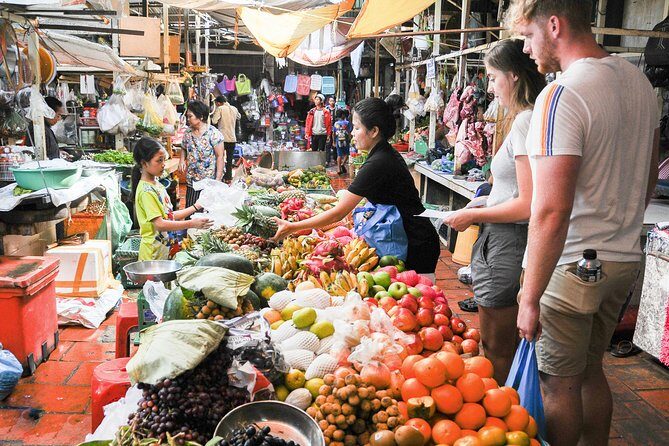
This is a focused, half-day Khmer cooking class in Phnom Penh that moves fast but doesn’t feel rushed. The goal is simple: you learn how to buy key ingredients, you cook several traditional Khmer dishes, and you eat them as lunch or dinner.
You’re not expected to be a trained cook. The structure is built for real beginners: there’s a short theory/demonstration stage, then you get hands-on practice at your station with the chef guiding you step by step.
For me, the biggest win is that the class treats cooking as a skill chain, not a single recipe. You learn why ingredients matter (like how herbs and spices smell and look), then you learn how to prep, then you learn how heat and timing shape the dish.
You can also read our reviews of more cooking classes in Phnom Penh
Banana Cooking Class Meeting Point and the Tuk-Tuk Market Run
Your session starts at Banana Cooking Class on 1, 4b Abdul Carime St. (21), Phnom Penh. You’ll meet there, then hop on a tuk-tuk to the local market, which is one of those small moments that makes the day feel like Phnom Penh and not just a cooking studio.
The schedule is set up around two time slots. If you book AM, you meet at 09:00 and cook through the late morning. If you book PM, you meet at 15:00 and finish in the evening window. Either way, the total time is about 4 hours.
After you meet the team and move out to the market, you’re back at Banana Cooking Class to rinse up, get set, and start cooking. You’ll also get a refreshing drink and a cold towel when you return, which is a nice reset after walking around in Phnom Penh heat.
Practical note
You’ll want to wear comfortable shoes. Market time involves standing and moving between stalls, and then you’ll be in a kitchen area doing prep work.
Wet Market Shopping: Choosing Herbs, Spices, and Fruit Like a Local
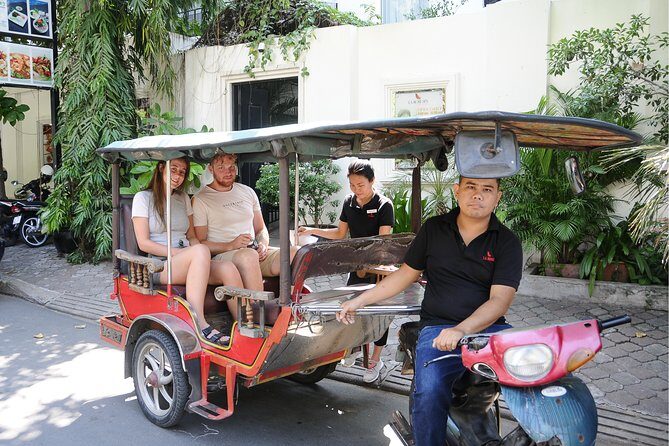
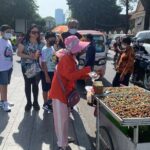
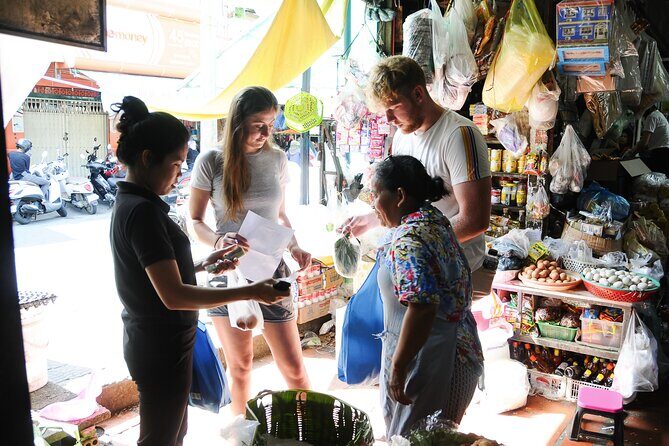
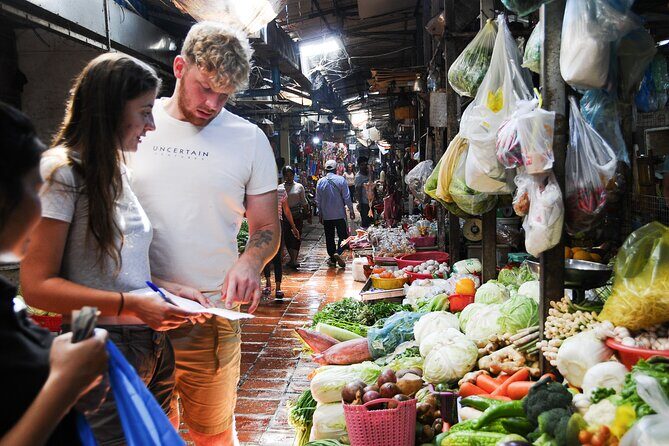
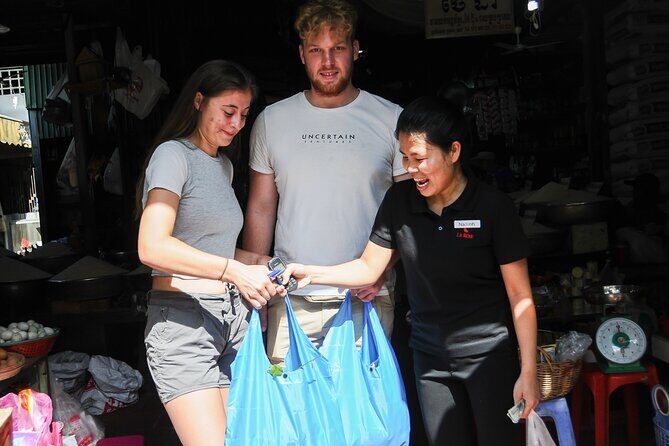
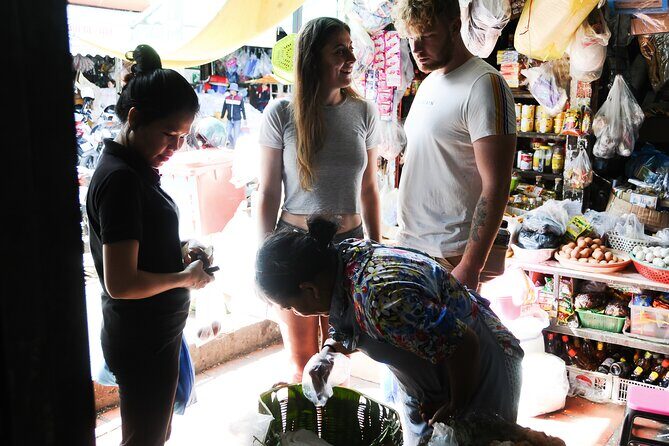
The market stop is where the class starts teaching you how Khmer cooking really works. You’re shown Cambodian fruits, vegetables, and spices, and you get help identifying the right ingredients instead of guessing.
Chef Lom Ang is specifically mentioned as guiding shopping in a way that connects flavors to ingredient quality. That matters, because the best Khmer dishes aren’t only about the recipe card. They rely on fresh aromatics and the right balance of herbs, spices, and textures.
Here’s what makes the market time useful for you:
- You learn what to look for in produce and herbs (freshness, color, smell, and readiness).
- You can ask the chef what’s flexible and what’s not.
- You build confidence for future cooking, even if you don’t cook the exact dishes again.
Also, you get to see how ingredients sit in the real world—stalls, smells, and all. Even if you’re not buying everything perfectly, the guidance helps you understand substitutions if something looks off or is hard to find back home.
Theory Demo, Then Your Own Wok: How the Cooking Lesson Works
Once you return to Banana Cooking Class, the session shifts from shopping mode to cooking mode. You’ll get the recipe and a quick refresh, then there’s a theory class where the chef demonstrates what you’ll make.
That demonstration matters because Cambodian cooking can feel unfamiliar if you’re used to only Western or even Thai flavors. Seeing technique before you pick up the knife helps. You’ll understand how ingredients are prepped, how they’re combined, and how the heat should behave as you cook.
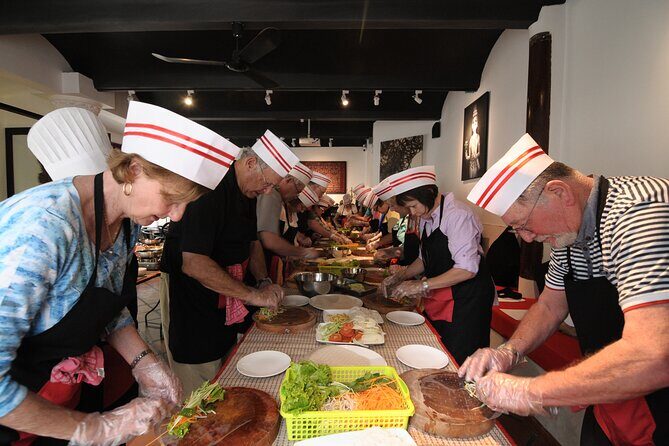
Then comes the hands-on part. Each student has a cooking station and a wok, and the chef assists as you work. This is one of the most praised parts of the experience: you’re not waiting for long stretches while someone else cooks. You’re doing real steps—cutting, mixing, frying, simmering—and getting corrected in real time.


One tip that saves your dish
Pay attention to how the chef times additions. Several Khmer dishes depend on layers: aromatics first, then proteins, then the sauce or coconut base, and finally the finishing touches. When you follow that timing, the flavors click instead of tasting flat or uneven.
The Three-Dish Khmer Meal: What You’ll Likely Cook and Eat
At the end of class, you eat your meal: typically a combination of three traditional Cambodian dishes (starter, main, and dessert). The exact menu can vary, but the kinds of dishes mentioned in the experience include:
- Yellow chicken curry, praised as incredible and deeply flavorful
- Fish amok, a classic Cambodian steamed curry dish
- Spring rolls, often part of the starter course
- Green mango salad, where tang and crunch carry the dish
- Banana desserts made with banana palm sugar or caramel-style sweetness
When you cook all three components yourself, lunch or dinner stops being an afterthought. You end up tasting what you built—fresh spring rolls with your own seasoning choices, curry where you understand the sauce base, and dessert where sweetness and texture are decisions you actually made.
And yes, you’ll get certificate and a photo moment at the end. It’s not a “souvenir selfie” in the usual way. It’s more like a small proof you finished, learned, and can recreate.
Possible downside to plan for
One review notes that if you’re the only person in the session, you might not dine with a driver or companion and could end up eating alone. It’s not a food problem—it’s a sharing setup problem—so it’s worth thinking about if you’d rather have a built-in group table.
What You Take Home: Recipes, Ingredient Lists, and Confidence
This class is built for repeat cooking. You’re given recipes as take-home souvenirs, plus ingredient lists so you can recreate the dishes later.
That’s a huge value lever. If you spend $31 and only get an hour of cooking memories, it’s easy to feel like you paid for the meal. But when you leave with instructions, you’re paying for a learnable skill.
The ingredient list is also practical. If you travel and cook at home later, you’ll often run into substitutions. The chef guidance includes what you can and can’t swap when you’re hunting for ingredients in a different country.
A small confidence boost
Even if you cook frequently, Khmer cooking has its own rhythm. By the time you’ve handled the prep and watched the chef’s technique, you can translate the lesson to your own kitchen without feeling stuck.
Timing, Group Size, and Logistics That Matter
This is a half-day format, about four hours total, with an AM or PM start. It’s long enough to do the full cycle—market, demo, cooking, and eating—without eating up your whole day.
Because it’s a private tour/activity, only your group participates. That’s a big deal for learning. You’re more likely to get answers to questions and more likely to get help when you hit something confusing (like getting the right texture in a sauce or timing a fry).
The meeting point is at Banana Cooking Class, and the activity returns there at the end. It’s also described as near public transportation, which helps if you’re planning other parts of your Phnom Penh day.
Finally, the class uses a mobile ticket, and you’ll get confirmation at booking time. That reduces uncertainty so you can focus on the food part.
Price and Value: Why $31 Feels Reasonable for a Chef-Led Skill Session
$31 for about four hours sounds like a bargain, and the value is in what’s included in the workflow—not just the fact that you get to eat.
You’re paying for:
- A guided market visit to source ingredients
- A cooking demonstration with personal help
- Hands-on practice at your station with the chef assisting
- A meal made from what you cooked
- Recipes to take home
- Certificate and photo moment
In many cooking classes, you either pay for “watching” or you pay for “eating.” This class leans harder toward the learning side, and that’s why it lands well for food lovers and families.
As with any market-based class, remember that the market is part of the experience and you’ll be selecting ingredients. The data you have doesn’t spell out whether everything is fully covered in the price or whether you handle purchases at the market—so it’s smart to ask when you confirm your booking. The difference is simple: either way, the market guidance is what you’re really buying.
Who This Class Is Best For (and Who Might Skip)
You should strongly consider this cooking class if you want a Khmer food experience you can recreate later. It’s ideal for:
- You if you like learning by doing, not just sampling
- You if you’re curious about Cambodian staples like curry and fish amok
- You if you’re traveling with a friend, partner, or even kids who can handle a hands-on lesson
- You if you want recipes in your hands before the flavors fade
It may be less perfect if:
- You want a purely tasting-focused evening with zero kitchen time
- You’re very sensitive about sitting at a separate meal table when the group is tiny
- You expect a slow, relaxed class with minimal prep (this moves in a clear sequence)
Should You Book Banana Cooking Class’s Khmer Cooking Class?
If you want a Phnom Penh activity that teaches you something useful, book it. The combination of market shopping, cooking at your own station, and taking home recipes makes this more than a one-time lunch.
My decision rule is simple: if you’re the type who buys a dish once and then wishes you could copy it later, this class is a great fit. If you want a hands-on chef-led day with a real Cambodian menu—curry, fish amok, and sweet banana desserts in the mix—this is one of the best ways to spend half a day in Phnom Penh.
FAQ
Where does the class meet?
The meeting point is Banana Cooking Class, 1, 4b Abdul Carime St. (21), Phnom Penh, Cambodia.
How long is the Khmer cooking class?
It runs for about 4 hours.
Is it a private class or shared with strangers?
It’s a private tour/activity, so only your group participates.
Do you visit a market during the class?
Yes. You meet and then go by tuk-tuk to a local market where you’re shown Cambodian fruits, vegetables, and spices.
How many dishes do you cook and eat?
The class includes cooking and dining on a meal of three traditional Cambodian dishes.
Do you get recipes to take home?
Yes. You receive a recipe set as souvenirs so you can recreate the dishes later.
Is lunch or dinner included?
Yes. The class ends with lunch (AM) or dinner (PM) made up of the dishes you prepared.
Will I get a certificate or photo?
A certificate is given, and there is a photo session at the end of the class.
Can I cancel for a full refund?
You can cancel for a full refund if you cancel at least 24 hours before the experience’s start time. Changes within 24 hours aren’t accepted, and refunds won’t be issued if you cancel less than 24 hours in advance.