REVIEW · PHNOM PENH
Phnom Penh Countryside Cycle Tour
Book on Viator →Operated by Vana Adventure Travel · Bookable on Viator
Bike far away from Phnom Penh. This is a half-day ride that swaps city noise for Mekong ferry time and quiet village fields, plus weaving workshops where you can watch local craft skills in action. I like that the route is built around real farm life, and I also like the practical pacing with snacks, lunch, and a helmet included; the main consideration is that you should have moderate fitness for cycling through uneven rural paths and plantation roads.
A big part of why this tour works is the small feel. With a max group size of 12 and an English-speaking guide, the day stays flexible, and guides like Anea Pisey can help you connect what you see—rice paddies, fruit plantations, lotus ponds—with how people actually make a living on the islands.
At $45, you’re not just buying bike time. You’re also getting pickup, a mountain bike and helmet, Khmer snacks, lunch at a villager house, and ferry transport—so it’s often better value than piecing it together solo, especially if you want the craft stops rather than just sightseeing from the road.
In This Review
- Key things to know before you go
- From hotel pickup to the Mekong dock: the morning flow
- Cycling through plantation country: what the route feels like
- Sedge mats and silk weaving workshops: where the tour gets personal
- Khmer snacks, local food lunch, and the villager-house moment
- The islands feel: Koh Dach, Mekong Island, and Silk Island context
- Bikes, safety, and how physically demanding it really is
- Price and value: what $45 buys you in the real world
- Who this tour is best for
- Should you book the Phnom Penh Countryside Cycle Tour?
- FAQ
- FAQ
- How long is the Phnom Penh Countryside Cycle Tour?
- What time does the tour start?
- Where does the tour meet after pickup?
- What’s included in the tour price?
- Is lunch provided, and can I get a vegan or vegetarian meal?
- How many people are in the group?
- What fitness level do I need?
- What about weather—does it run in rain?
- What is not included?
Key things to know before you go
- Mekong ferry crossing: you spend part of the day on the river, not only on land.
- Craft stops you can watch: sedge mat weaving and silk weaving are the heart of the cultural portion.
- A relaxed countryside loop: mango, banana, lemongrass, corn, vegetables, and rice fields make for an easy rhythm.
- Small group size (12 max): easier questions, fewer delays, more time with the people you meet.
- Lunch with local farmers: Khmer food on the islands, with vegan and vegetarian options available.
- Guide-led route context: someone like Anea Pisey helps translate the agriculture you’re riding through.
From hotel pickup to the Mekong dock: the morning flow
The day starts early, with pickup from your accommodation around 7:30am. The tour then transfers you to the Areyksat ferry dock, which is near Diamond Island, and this is a good setup if you’re staying in central Phnom Penh—you’re not stuck figuring out how to get to the river yourself.
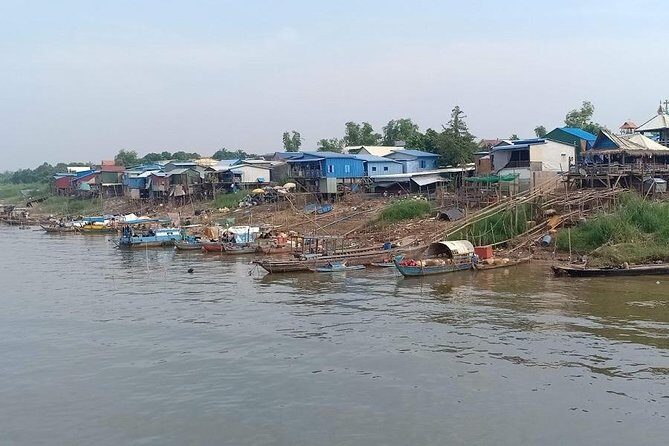
At the dock, you’ll get your bike and do a quick readiness check: brake check, helmet on, and a short briefing from your cycling guide about bike handling and local traffic. Then you’ll cross the Mekong on a local ferry, which is one of those experiences that instantly changes your frame of mind. Instead of thinking about Phnom Penh streets, you’re watching the river come alive and settling into a slower pace.
After the ferry ride, there’s a short drive (about 5–10 minutes) to reach the countryside area you’ll cycle through. That little transfer matters because it keeps the cycling time focused on what you actually came for: fields, ponds, and village workshops.
You can also read our reviews of more cycling tours in Phnom Penh

Cycling through plantation country: what the route feels like
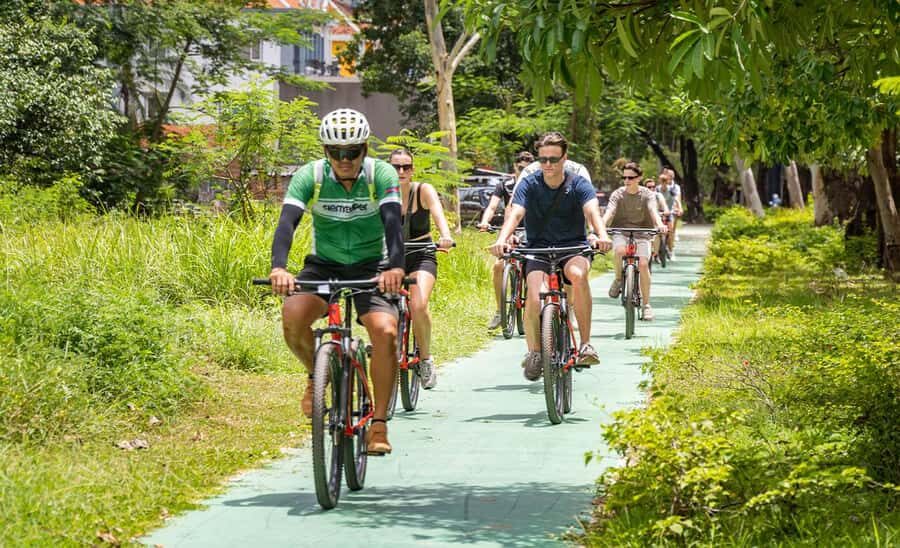
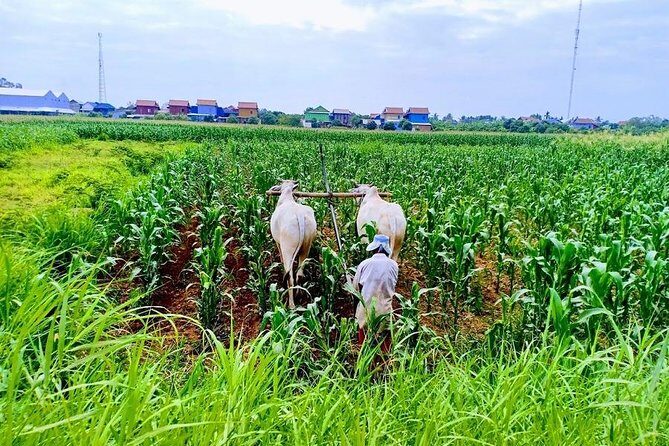
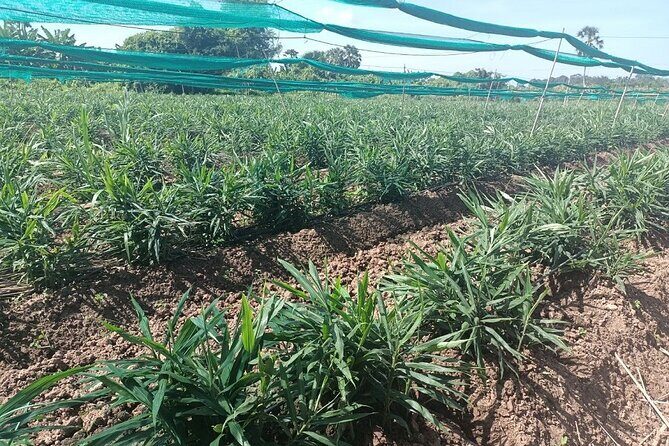
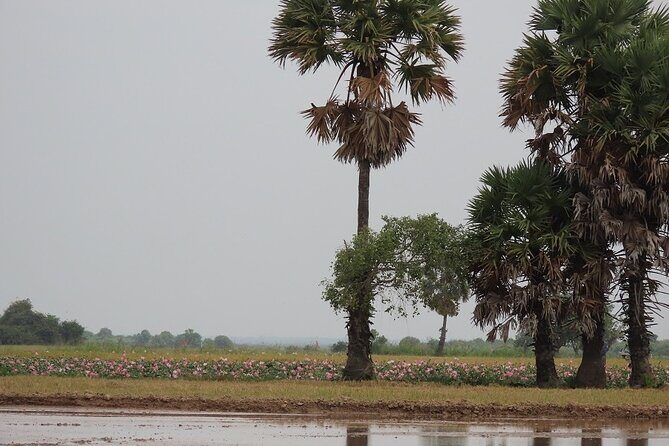
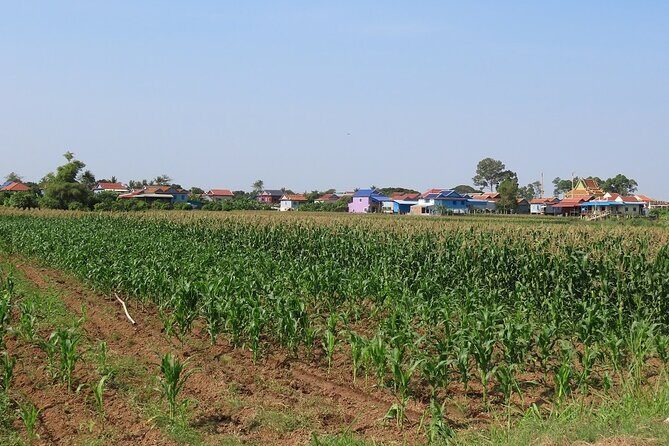
Once you start pedaling, the scenery stays agricultural, and that’s the point. You’ll cycle through areas with mango plantations, banana trees, lemongrass, corn, and vegetable farms. Even if you’ve seen photos of Cambodia’s countryside, riding past these crops gives you a clearer sense of scale—and how everyday food systems sit right next to the river.
You’ll also spend time in rice paddy country. Rice fields tend to look simple from a distance, but from a bicycle you notice the patterns: the way water management shapes the land, and how villages adapt their daily work around the seasons. This is one of those sections where the guide’s commentary really helps, because you’re not just passing by scenery—you’re learning how people read the landscape they live with every day.
There’s also a lotus pond stop. It’s not just a photo moment; it gives you a chance to slow down and take in wetland life. You might spot wetland birds, depending on what’s around at the time. Even when you don’t see much, the pond and surrounding vegetation help explain why these waterways are central to local farming.
One practical tip: bring sun protection. This is a morning tour, but you’re still in open farmland, and the shade can come and go. A light layer for breeze helps too, especially after you’ve been on the river.
Sedge mats and silk weaving workshops: where the tour gets personal
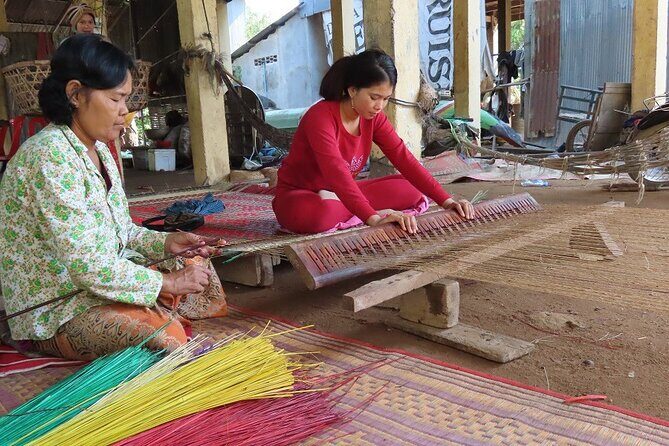
The crafts are the cultural backbone of the day. You’ll visit both a sedge weaving workshop and a silk weaving workshop, and the experience is set up so you’re not just looking at products—you’re watching skills being practiced.
Sedge mat weaving matters because sedge is a local material tied directly to wetland areas. When you see how artisans work the fibers, it turns a simple object—like a mat—into something with a real production story. You start to understand why certain materials are common in rural homes and why crafts survive by staying useful.
Silk weaving adds a different layer. Silk can feel like a luxury, so it’s interesting to see how it becomes part of island life. As you learn from the artisan, you get a sense of the steps involved and the patience required. This is also where the small group size helps. You’re more likely to ask questions and get clearer explanations than if you’re surrounded by a bigger crowd.
If crafts are the reason you booked this tour, you’ll likely enjoy the workshop portion most. The best experiences here come from slowing down, watching carefully, and accepting that you might be learning in a quieter, more observational way rather than a fast, high-energy show.
Khmer snacks, local food lunch, and the villager-house moment
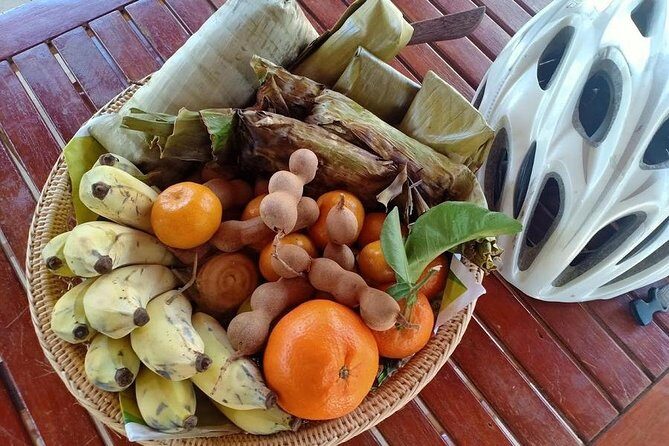
Between cycling and crafts, you’ll get local street food tasting and water included. This is a nice touch because it lets you sample flavors without turning the day into a scavenger hunt. It also keeps energy steady when you’re switching between active riding and workshop time.
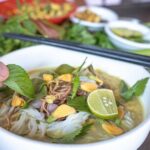
Lunch is Khmer local food at a villager house with local farmers. That setting is part of what makes the meal special. You’re not eating in a generic restaurant with a view—your lunch happens in the same rural ecosystem you just cycled through, so the day feels like one connected story instead of separate stops.
Vegan and vegetarian options are available, which is important for value and comfort. If you eat in a careful way, this is one of the simplest ways to make sure the food won’t be a problem halfway through your trip.
Small practical note: because you’ll be cycling in the morning and eating midday, you’ll probably feel best with a light breakfast before pickup and then trust the tour for the rest. Don’t overpack snacks unless you know you’re the type to snack constantly.
The islands feel: Koh Dach, Mekong Island, and Silk Island context
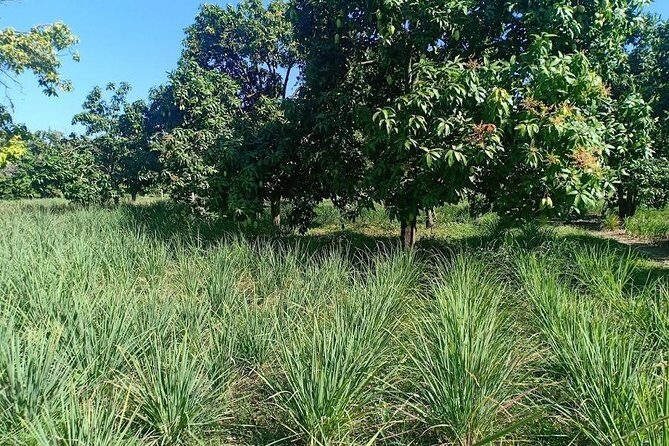
The route area is often talked about in terms of the river islands—places like Koh Dach, Mekong Island, and Silk Island. Even if you don’t map it all out in your head, the effect is clear: the day feels like island agriculture rather than city suburb tours.
That’s a meaningful difference for your expectations. A countryside ride can sometimes feel like a drive-by. Here, the rhythm is slower and closer to daily life, with crops, ponds, and workshops arranged so you’re moving through the working parts of the islands—not just the scenic edges.
The ferry crossing also reinforces the island mood. When you’re on the water, you feel the geography working on the people who live there. Later, when you cycle past fields and wetlands, you’re seeing the same system from land.


Bikes, safety, and how physically demanding it really is
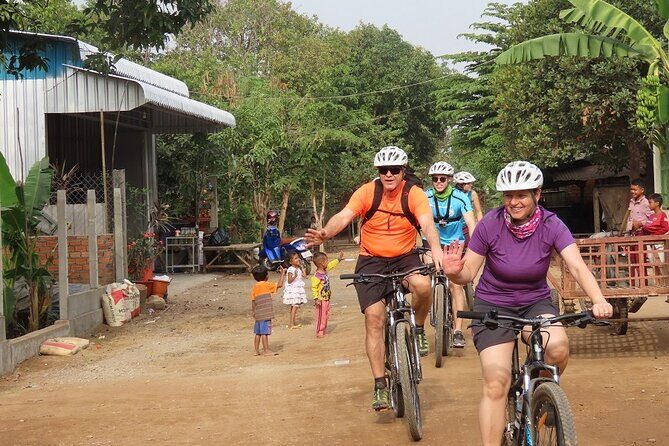
You’ll ride a mountain bike with a helmet included. That gear choice fits the day: rural roads and farm paths can be bumpy or irregular, and a mountain bike helps you stay comfortable.
The tour recommends moderate physical fitness. Translation: this isn’t extreme cycling, but it’s not a gentle stroll either. If you’re comfortable on a normal bike and can handle stop-and-start riding for hours, you should be fine. If you hate uneven surfaces, you may feel it during the rougher patches.
Also, the guide gives a bike briefing early on. That helps your confidence right away, especially if you’re not used to riding in areas with changing traffic patterns near the ferry and roads.
I like that the tour design doesn’t pretend you’ll be racing. The goal is to keep you fresh enough to enjoy the crafts and the lunch, not to punish you for signing up.
Price and value: what $45 buys you in the real world
Let’s talk money without the marketing fog. At $45 per person, you’re getting far more than bike rental. Included items are hotel pickup, bicycle hire, helmet, an English-speaking cycle guide, Khmer snacks, local street food tasting, water, and a Khmer lunch with vegan and vegetarian options.
You’re also paying for transport choices that would be annoying to coordinate yourself: the ferry crossing and the on-the-ground driving to the starting cycling area. And you’re paying for the workshop access and artisan interaction, which is usually the hardest part to DIY because it depends on local scheduling and permissions.
If you’re traveling with limited time in Phnom Penh and you want one organized half-day that feels truly rural, this price makes sense. The only real reason to hesitate is if you’re purely chasing city attractions and don’t care about crafts or agriculture.
Who this tour is best for
This is a strong fit for you if you want:
- a half-day countryside escape without committing to a full day tour
- a bicycle experience that’s cultural, not just scenic
- craft-focused travel, especially sedge mat weaving and silk weaving
- a chance to eat Khmer food in a rural setting with vegan or vegetarian options
It’s also a good choice if you like small groups and clear guidance. With a max of 12 travelers, you’re less likely to get lost in a crowd, and guides can adapt the pace when roads or stops take longer.
You might skip this if you:
- can’t handle moderate cycling on uneven rural ground
- need fully controlled, indoor sightseeing only
- don’t want a morning start
Should you book the Phnom Penh Countryside Cycle Tour?
If you want an off-the-beaten-track Phnom Penh experience that actually touches daily life—farm fields, wetland ponds, and weaving workshops—this is a book-worthy half day. The combination of Mekong ferry time, craft visits, and lunch at a villager house makes it feel cohesive, not like a chain of random stops.
It’s especially worth it when you value structure. You get the bike, helmet, pickup, guide, and food, so you spend your attention on what matters: watching how the locals work, then riding through the same landscape afterward.
If you’re the sort of traveler who wants a countryside view but prefers everything to be easy and paved, then consider your comfort level first. For the right kind of traveler, this tour feels like a practical way to see the real Cambodia beyond Phnom Penh’s streets.
FAQ
FAQ
How long is the Phnom Penh Countryside Cycle Tour?
It runs for about 6 hours.
What time does the tour start?
Pickup happens around 7:30am, and the tour start time is listed as 8:00am.
Where does the tour meet after pickup?
After pickup, you’ll be taken to the Areyksat ferry dock near Diamond Island.
What’s included in the tour price?
The tour includes an English-speaking cycle guide, mountain bike and helmet, local street food tasting and water, and Khmer local lunch (vegan and vegetarian options are available).
Is lunch provided, and can I get a vegan or vegetarian meal?
Yes. Lunch is included, and vegan and vegetarian options are available.
How many people are in the group?
The tour has a maximum of 12 travelers.
What fitness level do I need?
You should have a moderate physical fitness level.
What about weather—does it run in rain?
The experience requires good weather. If it’s canceled due to poor weather, you’ll be offered a different date or a full refund.
What is not included?
Personal expenses and tips are not included, and all alcoholics and travel insurance are not included.