REVIEW · PHNOM PENH
Killing Field and Genocide Museum private haft day Tour
Book on Viator →Operated by cambodia tour minivan · Bookable on Viator
You don’t go here for fun. You go for clarity—Tuol Sleng and Choeung Ek turn the Khmer Rouge years into places you can actually picture. I love that this is private, so the pace stays humane, and I love having a strong English-speaking guide to keep the story straight. The only real drawback is that the subject matter is heavy, and you’ll still be outside for parts of the walk and transfer.
This is a focused half-day outing (about 3 to 4 hours including travel time) that’s built to fit real schedules in Phnom Penh. You’ll get hotel pickup, an air-conditioned vehicle, and bottled water or soda—small comforts that matter when heat hits. You’ll also need to budget a little extra for entry fees at each museum.
In This Review
- Key highlights to know before you go
- Phnom Penh’s Killing Fields Tour: What You’re Actually Buying
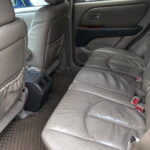
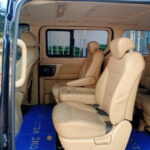
- Getting There in Real Phnom Penh Heat (and Why AC Matters)
- Tuol Sleng (S-21): When a School Became a Prison
- What to watch for at Tuol Sleng
- Choeung Ek: The Killing Field and the Memorial Stupa
- Why this stop is valuable (even when it’s hard)
- Price and Value: Is $80 a Smart Spend?
- Timing, Pace, and How to Stay Respectful
- Who This Private Tour Is Best For
- Should You Book This Killing Fields and Genocide Museum Private Tour?
- FAQ
- FAQ
- How long is the Killing Field and Genocide Museum private half-day tour?
- Does the tour include hotel pickup?
- Is this tour private or shared?
- What’s the maximum group size?
- What’s included in the tour price?
- Are entrance fees included for the museums?
- What ticket format do I receive?
- Is the tour suitable for most travelers?
- What if I need to cancel?
- Does weather affect the tour?
Key highlights to know before you go
- Private group, up to 6 people keeps questions possible and the pace calmer
- AC transport + water or soda helps you get through the heat without stressing your day
- Tuol Sleng (S-21) explains how a high school became a detention and torture center
- Choeung Ek connects the prison route to the extermination camp and memorial stupa
- Simple, mobile ticket means less hassle on the day
Phnom Penh’s Killing Fields Tour: What You’re Actually Buying
This private tour is basically two connected stops: Tuol Sleng Genocide Museum (S-21) and Choeung Ek Genocidal Center. The power here is the link between them—people didn’t just vanish. They were detained, interrogated, tortured, and then taken on the same route to killing sites.
The big value isn’t just that you’ll see two important places. It’s that the guide helps you understand what you’re looking at: why the prison system was so centralized, why families could be caught through guilt-by-association, and why so few people survived. When you hear those details while standing where events happened, the history stops being a headline and starts being understandable.
You’re also getting a practical setup: pickup from your hotel, an air-conditioned vehicle, and a professional English-speaking guide. The tour runs about 3 to 4 hours total, and that timeframe includes travel time, which makes it easier to plan the rest of your day.
You can also read our reviews of more private tours in Phnom Penh

Getting There in Real Phnom Penh Heat (and Why AC Matters)
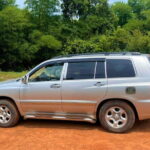
Even the most serious itinerary needs basic comfort. This tour includes an AC vehicle, plus water or soda, which helps you stay steady for walking and waiting times. Phnom Penh weather can be draining, and on days when the heat is high, it can affect how well you can absorb what you’re seeing.
It’s also a smart choice that the tour is short. You’re not committing to a full day of transit and mental strain. Instead, you get a tight loop: pick-up, two core sites, then you’re back without feeling like your whole schedule disappeared.
In the real world, good timing matters too. Based on guide-driver partnerships seen on these tours, English-speaking leadership can make a big difference in how smoothly you move through the sites and how quickly you understand what each section is telling you.
If you’re lucky enough to have a guide like Thorn (who has led these visits and is praised for being strong and informed), you’ll likely appreciate how the story stays clear rather than scattered. And if Sowan is your driver/owner figure involved with the operation, the extra local know-how can be useful—especially if you need restaurant or market guidance after.
Tuol Sleng (S-21): When a School Became a Prison
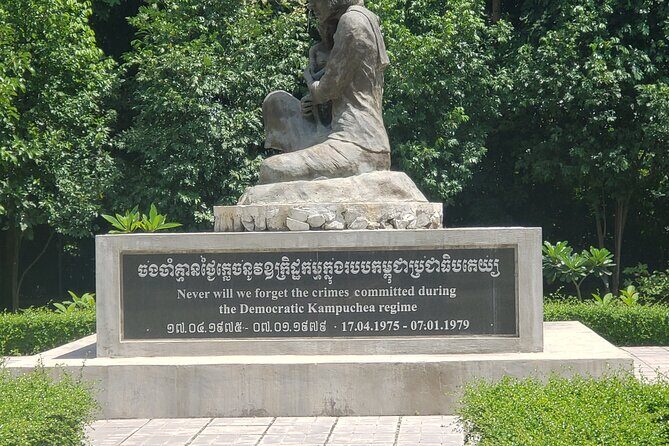
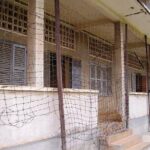
Tuol Sleng Genocide Museum is the first stop, and it’s the heart of what happened. In Khmer Rouge control, what had been a high school was turned into a center for detention, interrogation, torture, and death. Today, it functions as a museum of torture, designed to keep the atrocities in view—not as a spectacle, but as evidence.
Here’s what the scale of this place tells you. The prison system processed about 17,000 people, and only seven lived to tell the tale when the Phnom Penh area was liberated. That number hits harder when your guide frames it in context: how the Khmer Rouge treated people as political enemies, how guilt could spread to whole families, and how releases were rare between 1975 and 1979.
You’ll also want to understand the emotional math of the place. You’re not looking at “events” from a distance—you’re in a former facility where the purpose was to break people and control information. That’s why a guide matters. Without context, a museum can feel like a list of rooms and artifacts. With context, you see the system.
Practical note: admission is not included in the tour price. You’ll pay $5 per person for the Tuol Sleng entry. If you want a smooth day, bring cash just in case and keep your phone charged, since you’ll likely use the mobile ticket format.
What to watch for at Tuol Sleng
- The purpose of the site: it’s a former school repurposed for interrogation and torture
- The numbers: 17,000 processed, seven survivors
- The method: guilt-by-association could sweep in families
- The atmosphere: this is solemn, quiet, and designed for remembrance
Choeung Ek: The Killing Field and the Memorial Stupa
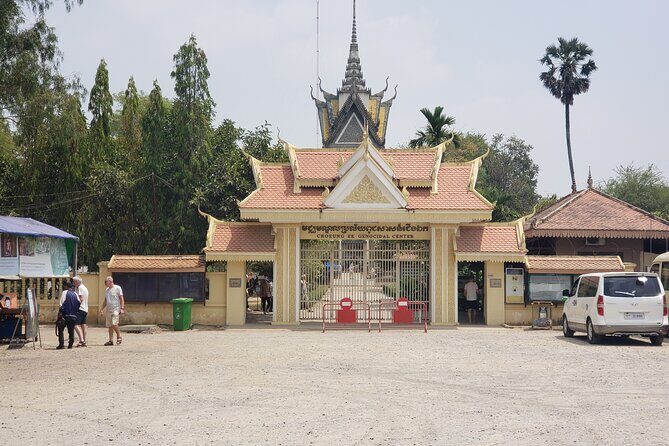
If Tuol Sleng is about the prison machinery, Choeung Ek is about the final phase. Prisoners taken from Tuol Sleng were routed to their fate, and Choeung Ek became an extermination center for political prisoners.
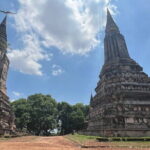
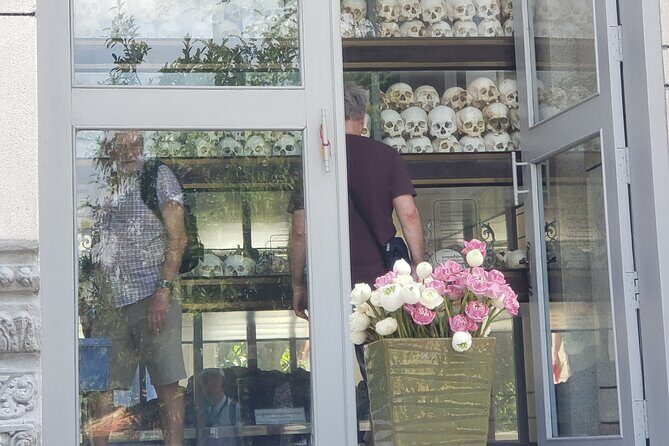
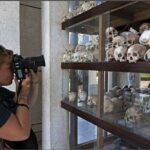
The location is also historically layered. It was an old Chinese cemetery before it was turned into a killing site. After the Khmer Rouge fell, bodies were exhumed from mass graves, and the remains of 8,895 victims were recovered and are now kept in a memorial stupa on-site.
That stupa is part of the reason this visit feels oddly peaceful compared to what you expect. You’re not seeing chaos. You’re seeing memory space—organized, quiet, and intended for reflection. It’s a reminder that even after the worst violence, people built a place to honor victims and help prevent denial.
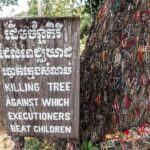
There’s also a grim detail in the historical record that the guide may share: executions were often carried out with pickaxes to conserve bullets. You don’t need graphic visuals to understand what that implies. It tells you how deliberate and industrial the killing could be.
Admission at this stop is also not included. You’ll pay $3 per person for Choeung Ek entry.
You can also read our reviews of more museum experiences in Phnom Penh
Why this stop is valuable (even when it’s hard)
Choeung Ek connects two things that your brain might otherwise keep separate: imprisonment and extermination. When you link the route from Tuol Sleng to Choeung Ek, you understand the Khmer Rouge plan as a system, not a series of random tragedies.
Also, the memorial setting makes it easier to pace your own emotional response. If you need a moment to breathe, this site gives you those moments.
Price and Value: Is $80 a Smart Spend?
The tour price is $80 per group (up to 6 people). That means you’re not paying per person for the guide and transport. For families or small friend groups, it can be very good value, especially in cities where private guiding can otherwise get pricey fast.
What you get in the base price is also practical:
- Air-conditioned vehicle
- Professional English-speaking tour guide
- Water or soda
- Hotel pickup
Then there’s the part you need to plan for: entrance fees are separate. You pay $5 at Tuol Sleng and $3 at Choeung Ek, on top of the tour cost. For a single person, the entrance fees add $8 total. For a full group, the entrance adds up, but it’s predictable.
So the value equation looks like this: you’re paying for a guided connection between two major sites, in a short time window, with comfort built in. If you did it on your own without a guide, you could still visit both locations, but you’d likely miss the connective tissue—why the system worked, how guilt-by-association operated, and how survival was so rare.
For most people, that context is the difference between seeing sites and truly understanding them.
Timing, Pace, and How to Stay Respectful
Because the tour includes travel time, you’re usually moving at a steady rhythm rather than rushing. That matters with heavy sites. When there’s no structure, people can speed through or get lost in logistics. With structure, you can focus on the place and the meaning.
The itinerary is straightforward:
- Stop 1: Tuol Sleng for about 2 hours
- Stop 2: Choeung Ek for about 1 hour
- Plus time to travel between them
The only thing that can change your timing is the day’s conditions. The experience notes that it requires good weather. If weather is poor, the tour may be rescheduled or refunded, so don’t plan anything super tight right afterward.
Respect is also a practical thing here. Don’t treat this like a photo stop. Think of it like a remembrance visit where your goal is understanding. If your guide pauses to explain or guide you toward a quiet moment, treat that as part of the experience, not dead time.
And because heat can be a factor, use the provided water/soda and wear something comfortable. You don’t need to dress up. You do need to be able to stand and walk without feeling miserable.
Who This Private Tour Is Best For
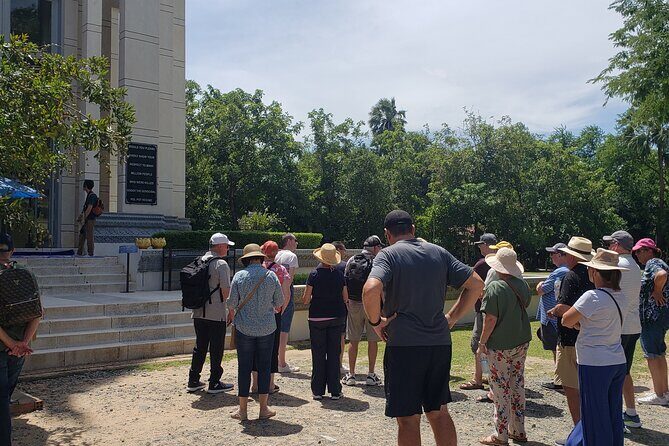
This tour fits best if you want two major genocide sites covered in one clean block, without the stress of coordinating transport and entry details.
You’ll especially appreciate it if:
- you’re traveling with just a small group (up to 6)
- you want English narration tied directly to what you’re seeing
- you prefer a short, focused outing rather than a full-day schedule
- you’re okay with the fact that the content is deeply serious
It also works for many types of travelers, since the tour states that most people can participate. If you use a service animal, that’s allowed.
If you’re the type who likes to add local food stops afterward, you may even get useful leads from the operation team. One guide mentioned Sowan goes beyond the tour by knowing good restaurants and markets in Phnom Penh. That can help you shift from remembrance to daily life without it feeling like your day ended abruptly.
Should You Book This Killing Fields and Genocide Museum Private Tour?
Book it if you want a clear, guided, half-day visit that connects Tuol Sleng and Choeung Ek into one coherent story. The combination of private pacing, an English-speaking guide, and AC + water is a smart balance for a day that’s emotionally intense.
Skip it or reconsider timing if you’re not ready for heavy material or if your schedule can’t handle the possibility of weather-related changes. And plan your budget for entrance fees: $5 + $3 per person.
If you’re looking for value, the math favors small groups: $80 per group up to 6 plus predictable entry fees. For most people, the real payoff is the context—the kind that helps you understand what the Khmer Rouge did and why it was organized like a system.
FAQ
FAQ
How long is the Killing Field and Genocide Museum private half-day tour?
The tour lasts about 3 to 4 hours in total, and that duration includes travel time.
Does the tour include hotel pickup?
Yes. Hotel pickup is included.
Is this tour private or shared?
It’s private. Only your group participates.
What’s the maximum group size?
The group can be up to 6 people.
What’s included in the tour price?
You get an air-conditioned vehicle, a professional English-speaking tour guide, water or soda, and hotel pickup.
Are entrance fees included for the museums?
No. Tuol Sleng Genocide Museum is $5 per person, and Choeung Ek Genocidal Center is $3 per person.
What ticket format do I receive?
You receive a mobile ticket.
Is the tour suitable for most travelers?
The experience states that most travelers can participate.
What if I need to cancel?
Free cancellation is available. You can cancel up to 24 hours in advance for a full refund.
Does weather affect the tour?
Yes. The experience requires good weather. If it’s canceled due to poor weather, you’ll be offered a different date or a full refund.