REVIEW · PHNOM PENH
Phnom Penh City Tour, Silver Pagoda, Genocide Museum, Killing Fields
Book on Viator →Operated by Green Era Travel · Bookable on Viator
Phnom Penh packs a lot into five hours. This tour is designed to connect the city’s biggest sights without the stress of figuring out transport, with stops that range from the Royal Palace grounds to Tuol Sleng and the Killing Fields. It’s paced for first-timers who want an orientation fast, yet still get real explanations along the way.
I like the setup for convenience: hotel pickup and drop-off mean you start and finish without wasting daylight. I also like the small-group feel (max 10), where your English-speaking guide can actually answer questions and slow down when something hits hard.
The main drawback to plan for is that the most important parts are also the heaviest. Visits at S-21 and Choeung Ek are intense, and entry requires a strict dress code (no shorts or sleeveless tops; knees and shoulders covered), plus key museum entrance fees are not included.
In This Review
- Key things I’d watch for
- Hotel Pickup to Royal Palace: the day’s smart start
- Royal Palace and Silver Pagoda: more than a pretty backdrop
- Tuol Sleng (S-21) at the Genocide Museum: prepare your emotions
- Choeung Ek Killing Fields: why the silence feels loud
- Price and value: what $65.67 really covers
- Small-group comfort, dress code, and guides who add context
- Should you book this Phnom Penh City Tour?
- FAQ
- What does the tour price include?
- How long is the tour and what time does it start?
- Are entrance fees included?
- What transport will I use during the tour?
- Is there a dress code?
- Is this tour suitable for children?
Key things I’d watch for
- Small group size (max 10) keeps the day from turning into a cattle-line experience
- Pickup is spread between 7:30–8:30am, so you need to be ready to leave early
- Transport depends on group size: shared tuk tuk for 1–2 people, air-conditioned vehicle for 3+
- Entrance fees are extra (Royal Palace & Silver Pagoda, Tuol Sleng/S-21, and Killing Fields each have their own cost)
- S-21 and Choeung Ek are emotionally graphic, and the tour is not recommended for children
Hotel Pickup to Royal Palace: the day’s smart start
Your morning begins with the kind of logistics that makes Phnom Penh feel less chaotic. The tour starts at 8:30am, but pickup can happen any time between about 7:30am and 8:30am, so you’ll want to hang out in the hotel lobby and be ready to go. That small detail matters in Phnom Penh, where road conditions and traffic can turn “on time” into a guessing game.
Once you’re in the vehicle, you’re not expected to do navigation. This is a big deal on a tight schedule. Instead of bouncing between tuk tuk negotiations and searching for the right street, you follow your guide’s plan from the royal compound toward the genocide sites. You also get cold bottled water during the tour, which sounds basic until you realize how much heat builds up once you’re outside.
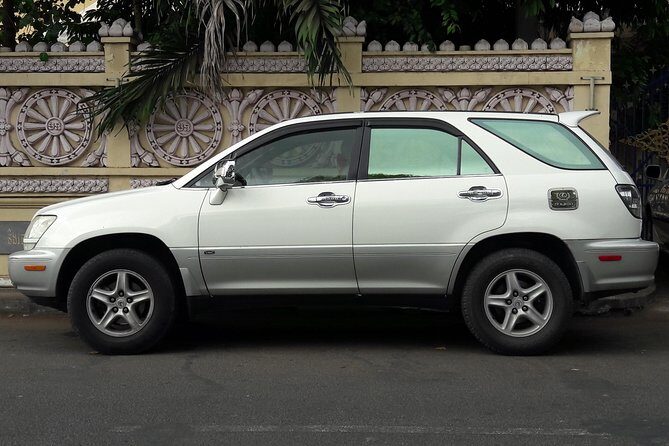
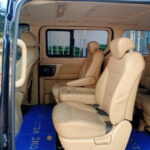
Transport is shared, and it changes with group size. If you’re traveling as a pair or alone (1–2 people), you’ll likely ride in a shared tuk tuk. For groups of 3 or more, you’ll use an air-conditioned vehicle. Either way, the goal is the same: keep the day moving between far-apart locations like the central sights and the Killing Fields area about 17km from town.
One more practical note: the tour requires a strong physical fitness level. That doesn’t mean you need to be athletic, but it does mean you should be comfortable walking through museum spaces and memorial grounds, and handling long, emotionally demanding stops without needing long breaks.
You can also read our reviews of more city tours in Phnom Penh
Royal Palace and Silver Pagoda: more than a pretty backdrop
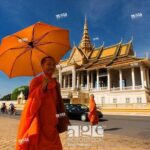
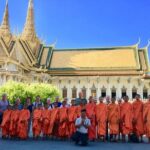
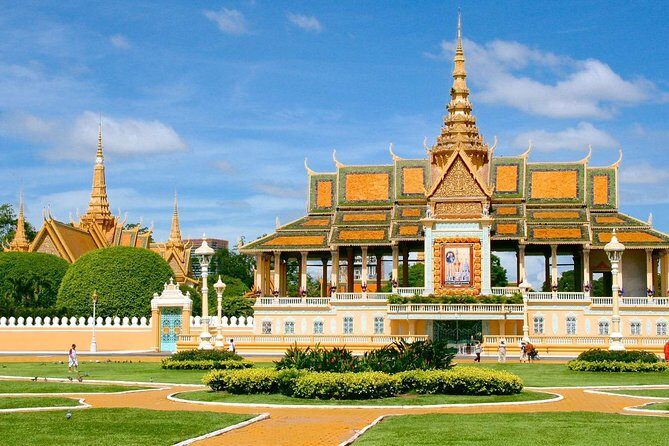
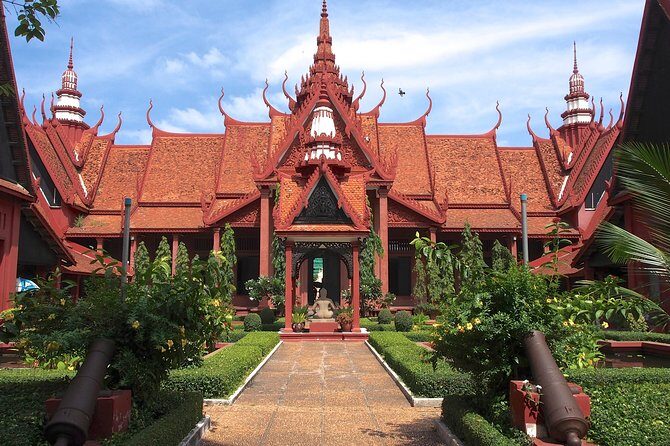
The day kicks off at the Royal Palace, with about an hour assigned for exploring. Even if you’re not a palace person, this stop helps you understand Phnom Penh as a capital with layers—royalty, religion, and national identity all in one place. The palace grounds also serve as the stage for the next stop, so the pacing is practical.
Admission for the Royal Palace is not included, so you’ll need to budget extra. The good news is that this is a simple add-on rather than surprise spending spread across multiple stops. In the same general area, you’ll also visit the Silver Pagoda, where the floor is made of 5,329 silver tiles. That specific detail is the kind of thing that makes a quick visit feel more substantial, because you’re not just ticking off a building—you’re learning why the site is named what it is.
For many people, the Silver Pagoda feels calmer than you expect, which can be a relief before the day turns much darker. It’s also a strong example of how Cambodia’s royal religious world still works today, with resident figures on-site (except during the peri-ords period mentioned by the tour info). Even if your time there is shorter than you’d want in a perfect world, you’ll leave with a clearer sense of the palace complex as a living cultural space, not a museum set.
Drawback to plan for: the palace area has a strict dress code. No shorts or sleeveless tops, and both men and women must cover knees and shoulders. This is where I’d recommend bringing a light layer even if it’s hot—cotton long sleeves or a scarf can save you if you arrive with summer clothing.
Tuol Sleng (S-21) at the Genocide Museum: prepare your emotions
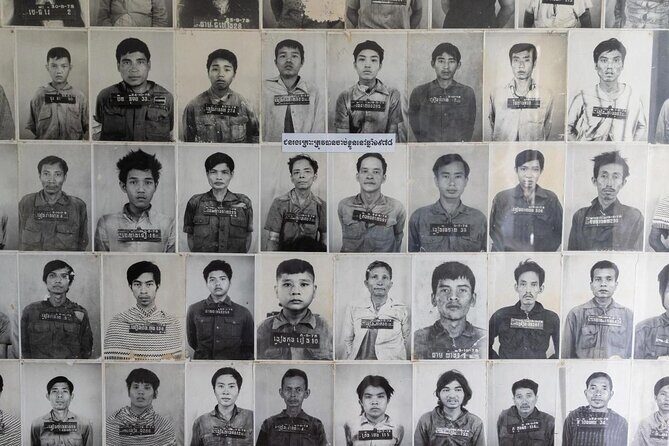
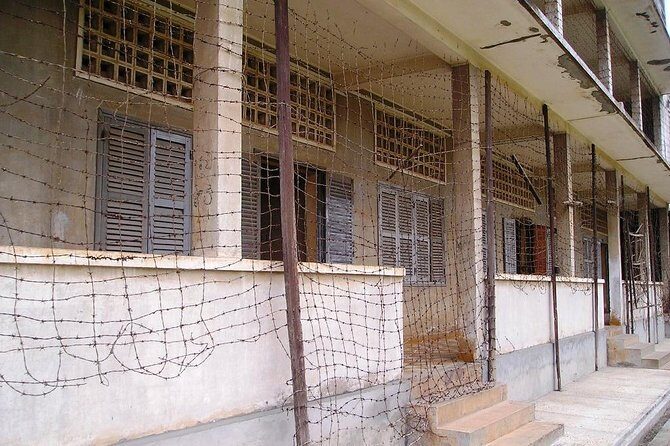
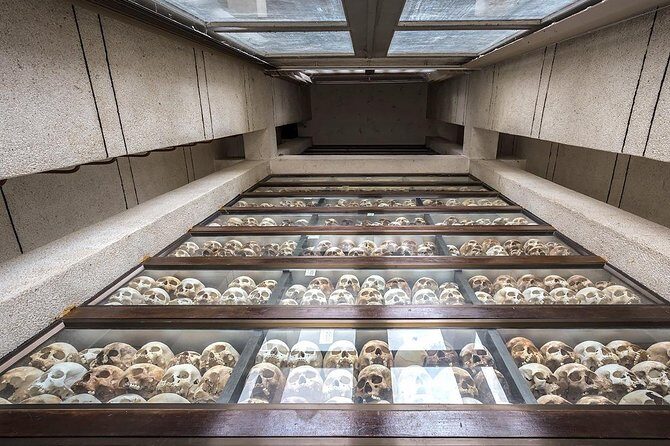
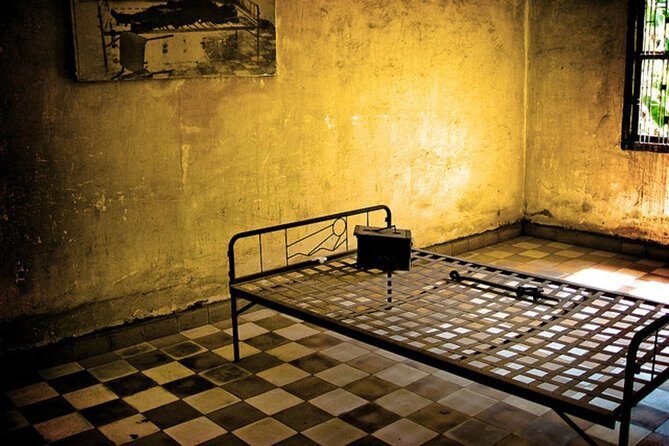
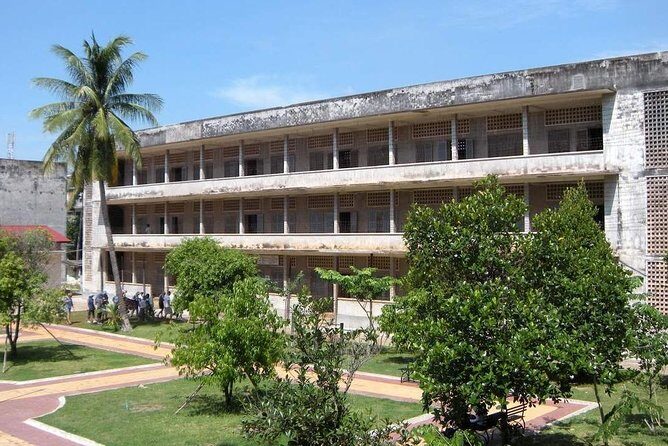
Tuol Sleng is the hardest stop on the route, and the tour info doesn’t sugarcoat its purpose. You’ll visit the Tuol Sleng Genocide Museum, located in a former high school that was used as Security Prison 21. The museum traces the turbulent years of the Khmer Rouge and the mechanisms of detention and abuse—presented in a way that’s meant to inform and witness, not entertain.
The stop is about an hour. That doesn’t sound long on paper, but with a subject this heavy, it’s enough time for the facts to land. In particular, you’ll likely notice how the museum uses the space itself. It’s not a clean, generic exhibit; it’s a site with weight. One reason this tour earns such high marks is that the guides tend to set context carefully and sensitively, so you understand what you’re seeing before you walk into the darkest rooms.
In the feedback, names like Mr. Siphat, Siphat, Si, and Mr. Hong Kasy come up repeatedly for guides who were able to explain the history with clarity, and—importantly—speak with personal seriousness. Several guides reportedly shared family stories affected by the Khmer Rouge. That personal angle isn’t there to turn tragedy into a show; it’s often used to give the information meaning in human terms.
Still, there can be a small trade-off: one written note mentioned difficulty understanding the guide’s English at times. So if English comprehension is critical for you, keep expectations flexible. You can also bring a simple strategy: write down two or three questions you want answered about the Khmer Rouge years before you start, and ask them as you go.
Also, it’s not recommended for children to visit S-21. Even for adults, plan for emotional processing. In some cases, guides reportedly allow time to absorb what you’re seeing rather than rushing.
Choeung Ek Killing Fields: why the silence feels loud
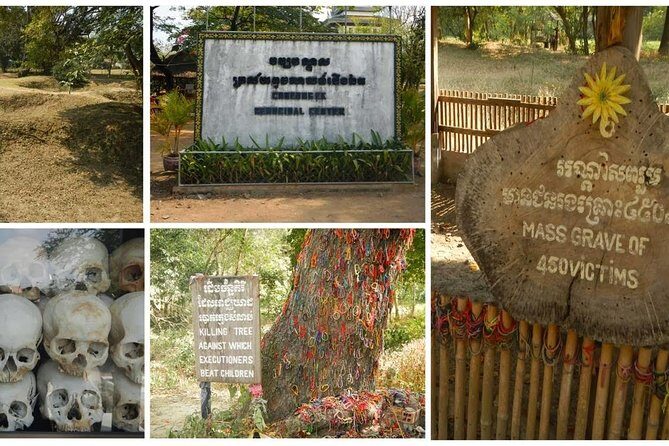
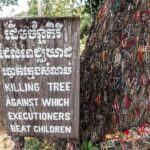
After Tuol Sleng, the route heads to the Killing Fields at Choeung Ek (Cheung Ek). This is about 17km from Phnom Penh, and the drive helps you shift from prison walls to the open air. The contrast is part of what makes the experience so unsettling: the grounds can look peaceful, but the site is tied to mass killings and the brutal logic of the Khmer Rouge regime.
The tour info points out that Choeung Ek became famous through the movie The Killing Fields. But what matters more than pop culture references is what you learn on-site—how that “peaceful stretch of green fields” can be the setting for horrors that still affect the national memory. Even if the schedule lists a very short duration for this stop, you should treat the Killing Fields as the point where your brain may slow down. The experience isn’t about ticking boxes; it’s about understanding and remembrance.
This is also where the guides’ personal connection tends to show up most strongly. Multiple accounts mention that guides shared their own family losses or experiences connected to Khmer Rouge years. That doesn’t change the facts. It does change how you receive them. And it’s one reason this tour gets flagged as a must-do option for people who want more context than a quick self-guided visit can offer.
You should also know that your itinerary ordering can vary. One note mentioned they visited Killing Fields before S-21, and it still worked fine for them. So if your exact order feels different from what you imagined, it doesn’t mean the tour is wrong. The guide’s explanations are what tie it together.
Practical consideration: because you’ll be outside and walking memorial paths, dress matters again. Shoulders and knees need to be covered. Add comfort—closed-toe shoes help, and a light cover-up can protect you from sun and also keep you within the rules.
Price and value: what $65.67 really covers
The listed price is $65.67 per person for roughly a 5-hour tour. For Phnom Penh, that’s not an impulse-buy price, but it can be good value if you hate logistics. What you’re paying for is a bundle: a small group (max 10), an English-speaking guide, and convenience that includes hotel pickup and drop-off. You also get cold bottled water.
What’s not included is where some travelers get surprised: entrance fees. The Genocide Museum/S-21 is listed at $5.00 per person. The Royal Palace and Silver Pagoda are listed at $10.00 per person. The Killing Fields are listed at $3.00 per person. Add those up and you’re looking at $18 in entrance fees on top of the tour price.
So your realistic total is closer to $83 per person, before you factor in anything else like food. One written note even suggested budgeting extra for meals and tickets. I’d agree with that general planning mindset: the tour covers the hard-to-organize parts, but you still need to eat and you should carry a little cash for site-related expenses.
Transport value is also real. Getting between central Phnom Penh and Choeung Ek on your own can be a time drain. Here, it’s built in. Plus, the guide’s context can turn “I saw a building” into “I understand what that building meant,” especially for S-21 and the Killing Fields.
One last value check: with the schedule being about 5 hours, it suits travelers who want a strong introduction without committing an entire day.
You can also read our reviews of more museum experiences in Phnom Penh
Small-group comfort, dress code, and guides who add context
A big part of why this tour tends to get nearly universal approval is the small group size—max 10. That usually means less waiting, more direct conversation, and a smoother flow between stops. In Phnom Penh, where traffic can be unpredictable, small-group organization can make your day feel less like you’re stuck in transit.
You’ll also see repeated praise for guides by name. Based on reported experiences, names like Daream, Putra, Gao, Lay, Long Voolay, and Long Vouchlay show up often, along with Sophy. What these accounts have in common is not just friendliness, but the ability to connect history to lived experience. Several notes describe guides who shared personal family impact from Khmer Rouge years, which adds layers to the official story.
As with any tour, you should also plan for emotional intensity. One note called the day deeply sobering. Another just said it was very sad. That’s accurate. You’re moving from royal grounds into sites of genocide and mass killing. If you tend to shut down emotionally while traveling, this day might be harder than a typical sightseeing loop.
Here’s what I’d pack and plan around:
- A light top that covers shoulders and something to cover knees (even if you think you’ll be fine with shorts, don’t gamble)
- Comfortable walking shoes
- Patience for slow moments when the guide gives context or when you need time to process
If you’re traveling solo or as a couple, this tour also reads as especially sensible. The structure reduces decision fatigue, and the small group nature helps you feel less like you’re being rushed through trauma.
Should you book this Phnom Penh City Tour?
I’d book this if you want a tight, high-impact introduction to Phnom Penh that links the Royal Palace area with the major Khmer Rouge sites—without navigating on your own. The tour’s biggest strength is the combination of small-group convenience and guides who add context, sometimes with personal stories like those shared by guides named in feedback (for example, Mr. Siphat, Si, and Mr. Hong Kasy).
I’d think twice if you’re traveling with children, since the tour isn’t recommended for visits to S-21 and the Killing Fields. Also consider skipping it if you’re not ready for graphic, emotionally heavy content presented in a former prison and memorial setting.
If you can handle that and you’re prepared for dress rules and extra entrance fees, this tour is one of the more efficient ways to understand Phnom Penh in a single half-day.
FAQ
What does the tour price include?
The price includes hotel pickup and drop-off, a small group tour (max 10), an English-speaking guide, cold bottled water, and transport during the tour (either shared tuk tuk for 1–2 people or an air-conditioned vehicle for 3+).
How long is the tour and what time does it start?
The tour runs for about 5 hours. The start time is 8:30am, but pickup can be variable between 7:30am and 8:30am.
Are entrance fees included?
No. Entrance fees are not included. The listed fees are $5 for the Genocide Museum (Tuol Sleng/S-21), $10 for the Royal Palace & Silver Pagoda, and $3 for the Killing Fields.
What transport will I use during the tour?
For 1–2 people, you’ll ride in a shared tuk tuk. For groups of 3 or more, you’ll use an air-conditioned vehicle.
Is there a dress code?
Yes. You need to cover shoulders and knees. No shorts or sleeveless tops are allowed, and entry may be refused if you don’t meet the dress requirements.
Is this tour suitable for children?
No. The tour is not recommended for children to visit S-21 and the Killing Fields.