Phnom Penh hits hard before noon. This private City Highlights and the Killing Fields day tour strings together the famous Royal Palace and Wat Phnom with the sobering sites of Tuol Sleng (S21) and Choeung Ek, all guided by Khmer local Sam Ang. It’s a full day that doesn’t sugarcoat Cambodia, but it also shows you the everyday city life around it.
I love two things about this tour. First, the early 8:00 a.m. start helps you beat both heat and crowds while you move between stops. Second, I like the way Sam Ang brings detail to every location, including story moments that keep the day from feeling like a list of grim rooms.
One consideration: Tuol Sleng and the Killing Fields are unsuitable for most children. If you’re traveling with kids, plan carefully and talk with the guide about what will feel right for your family.
In This Review
- Key highlights at a glance
- Phnom Penh palace sights plus Khmer Rouge sites: why this route works
- The 8:00 a.m. start at Independence Monument and how to plan your day
- Royal Palace: the 1-hour walkthrough and the dress code you should not ignore
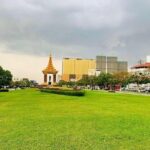
- Independence Monument: the quick 15-minute history stop
- Tuol Sleng (S21): what you’ll see and how Sam Ang frames the story
- Choeung Ek Killing Fields: moving from records to place
- Central Market (Phsar Thmei) and Wat Phnom: restoring the day after S21
- Central Market: the 45-minute photo-and-snack zone
- Wat Phnom: about an hour of calm in the middle of town
- A private, English-speaking guide makes more difference than you think
- Price and what you’re really paying for (and what you’ll need to budget)
- Who should book this Killing Fields day tour, and who should think twice
- Should you book City Highlights and the Killing Fields Day Tour?
- FAQ
- What time does the tour start in Phnom Penh?
- Where is the meeting point?
- How long is the City Highlights and the Killing Fields Day Tour?
- Is this a private tour?
- What does the tour price include?
- Which stops have admission tickets not included?
- Are any stops free?
- Do I need special clothing for the Royal Palace and temples?
- Can I cancel this tour?
Key highlights at a glance
- Private guide Sam Ang: licensed English-speaking, with local stories and good pacing
- 8:00 a.m. start: better comfort as you tour the palace and city sites
- Tuol Sleng (S21) and Choeung Ek: historical context plus a compassionate walkthrough of heavy ground
- Contrast built into the route: Central Market and Wat Phnom balance the day after S21
- Dress for temples and the Royal Palace: shoulders, backs, and legs above the knee need coverage
- Value extras: hotel pickup/drop-off, bottled water, private transport, and a small souvenir
Phnom Penh palace sights plus Khmer Rouge sites: why this route works
This tour works because it matches what Phnom Penh is like in real life. The city has glittering royal spaces and Buddhist landmarks, but it also holds very physical reminders of the Khmer Rouge era. Instead of treating the genocide sites like a separate add-on, this itinerary places them inside the same day so you can feel the shift in tone while you’re still close to the city center.
You also get a practical rhythm. You start with well-known sights you can easily appreciate visually, then you move into deeper history, and finish with places where life feels more ordinary again. That contrast matters. It gives your brain time to switch gears, rather than trying to absorb everything at once in one long stretch of only museum walls or only memorials.
You can also read our reviews of more city tours in Phnom Penh
The 8:00 a.m. start at Independence Monument and how to plan your day
You meet at the Independence Monument area on Norodom Blvd, and the tour starts at 8:00 a.m. You’ll be back at the same meeting point when the day ends. Hotel pickup and drop-off are included, so for most people the hardest part is simply being ready on time.
I like early starts in Phnom Penh because the sun can get intense. One of the best values in this tour is that you’re not waiting until late morning to begin—so you get more comfortable sightseeing before the heat builds. The day is about 7 hours total, so every hour counts. When you’re moving efficiently, you can actually pay attention instead of just trying to survive the clock.
Tip: bring a light layer. You’re outside for parts of the day, but you’ll also be indoors at sites where you may want something simple for comfort.
Royal Palace: the 1-hour walkthrough and the dress code you should not ignore
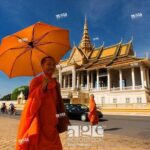
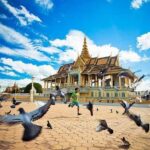
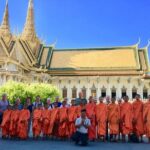
Your first major stop is the Royal Palace, the official residence of the King and his family. Expect bright colors, golden details, and those tall, decorative spires you see in Phnom Penh postcards. The visit is about 1 hour, and admission isn’t included.
This is also where you should get serious about clothing. At the Royal Palace (and at religious sites later), you need shoulders and backs covered, and legs above the knee must be covered. Cambodia is used to visitors, but rules like this are still enforced. If you show up in shorts that ride high or a tank top, you may end up scrambling for a solution right when you want to be looking around.
I also like how this stop sets context. Before you see the genocide sites, you learn how Cambodia’s identity has been shaped by leadership, symbols, and place. Even if you only skim palace details on your own, having a guide helps you notice what matters: design choices, the meaning of certain structures, and how the site fits into Phnom Penh’s geography by the river.
Independence Monument: the quick 15-minute history stop
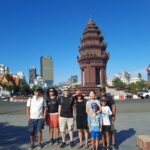
After the palace, you’ll hit the Independence Monument for about 15 minutes. It’s described as Angkorian-styled and built in 1958 to commemorate Cambodia’s independence in 1953 from colonial rule under France. Admission here is free.
This stop is short on purpose. It gives you a clean, easy break between the palace (ornate and visually dense) and the heavier day ahead. If you’re the kind of person who likes to understand symbols, you’ll appreciate it. If you don’t, you can still use the time for a few photos and a breather before the museum portion.
Tuol Sleng (S21): what you’ll see and how Sam Ang frames the story
Then comes Tuol Sleng Genocide Museum, also known as S21. You’ll spend about 1 hour 30 minutes here. Admission isn’t included.
This site is the former secondary school used as Security Prison 2 by the Khmer Rouge regime from 1975 to 1979, where the museum documents the Cambodian genocide. The emotional weight is real. I’m going to say it plainly: this is not light sightseeing. Even if you think you know the facts, you’ll likely feel the atmosphere shift the moment you arrive.
What I found especially useful is how Sam Ang guides the experience. He’s a local Khmer guide, and he doesn’t just recite dates. He connects details across rooms so you understand what the space was used for and why it matters historically. One detail I appreciate from his approach is that he can keep you oriented when the material gets overwhelming—so you don’t just rush from display to display.
A practical note: wear respectful shoes. You may be standing for longer than you expect.


Choeung Ek Killing Fields: moving from records to place
After S21, the tour moves to Choeung Ek Genocidal Center, the better-known Killing Fields site. Plan about 1 hour 30 minutes and remember admission isn’t included.
This stop takes the story from documentation into landscape. The itinerary frames it as sites around Cambodia where about 1.3 million people were killed and buried under the Khmer Rouge government leadership, including Prime Minister Pol Pot. That scale can feel hard to hold in your head, and the place itself makes it more concrete.
This is also where pacing matters. Sam Ang’s job isn’t to make this easier, but to help you process it. In past discussions with people who’ve taken his tour, what stands out is that he uses context and story to keep the day humane. Some people also find that his ability to add a touch of humor at the right moments helps you breathe—without turning the subject into a joke.
If you’re sensitive to heavy content, give yourself permission to take breaks inside the flow of the tour. Don’t force yourself to speed-run it just to keep up.
Central Market (Phsar Thmei) and Wat Phnom: restoring the day after S21
After the genocide sites, you’ll get two stops that feel like Phnom Penh again: Central Market and Wat Phnom.
Central Market: the 45-minute photo-and-snack zone
You’ll spend about 45 minutes at Central Market (Phsar Thmei). Admission is free. It’s described as an art deco building shaped like a cross with a central dome, with stalls selling gold and silver jewelry, antique coins, and more.
This stop is a good reset. You move from memorial space back into the everyday economy of the city—small talk energy, bargaining energy, the real rhythm of commerce. Even if you don’t shop, you can use the time to understand how Phnom Penh people live and buy and sell.
One practical tip: if you’re buying anything, set a budget before you start browsing. Markets can be addictive.
Wat Phnom: about an hour of calm in the middle of town
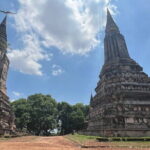
Next is Wat Phnom, a Buddhist temple built on a tree-covered, man-made hill on the north side of the city. You’ll have about 1 hour here, and admission isn’t included.
Wat Phnom is described as historic and cultural, but what I like about adding it is the emotional contrast. You’re not just switching locations—you’re switching modes of attention. You can look at the stupa and temple structures, sit where it feels appropriate, and let your mind settle after the museum stops.
Again, keep the dress rules in mind: shoulders and backs covered, and legs above the knee covered.
A private, English-speaking guide makes more difference than you think
This tour is private, meaning it’s only your group. That matters on a day like this, because the guide can adjust pacing and explanations to your needs. You’re not competing with other tour groups for attention, and you’re not pushed through in a rigid line.
Sam Ang is the named guide, and he brings a mix of local storytelling and specific details at each site. From what I’ve learned through his style, he’s good at giving you small bits that you might miss on your own—like the reason certain spaces are arranged the way they are, or the context behind symbols you can see but might not interpret.
One other thing I appreciate: local connections. Sam tends to know people in Phnom Penh, which can make the experience feel less like you’re only consuming history and more like you’re interacting with the living city around it. Even when you don’t meet anyone directly, his context helps you understand what you’re looking at.
Finally, he’s careful with tone. He can keep the day from becoming either too academic or too emotional by adding story structure, humor when appropriate, and clear transitions between the heavier and lighter stops.
Price and what you’re really paying for (and what you’ll need to budget)
At $100 per person, this tour can look like a lot until you break down what’s included and what isn’t.
Included perks that add real value:
- Hotel pickup and drop-off
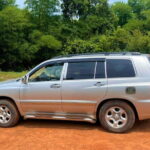
- Private transportation
- A private English-speaking guide (Sam Ang)
- Bottled water
- A small souvenir
- Mobile ticket
What’s not included:
- Admission tickets for key sites (Royal Palace, Tuol Sleng/S21, Choeung Ek, and Wat Phnom are listed as not included)
- Gratuities
- Lunch and snacks/drinks, which you can buy at stops
So your total cost depends on entrance fees and how you handle meals. The good part is the structure: you’re not spending time figuring out transit between scattered attractions, and you’re not guessing which sites require tickets versus which are free. Independence Monument and Central Market are listed as free stops in the itinerary, so you’ll feel that offset during the day.
If you like guided pacing, want hotel pickup, and prefer not to plan logistics in a city with heavy places, this price starts to make sense fast.
Who should book this Killing Fields day tour, and who should think twice
This experience suits families, groups, and solo travelers—but with one major exception: the Genocide Museum and Killing Fields are unsuitable for most children. If you’re traveling with kids, the best move is to consider your child’s maturity for historical trauma, and also how much patience they’ll have for a slow, respectful walkthrough.
It’s also a strong fit if you:
- Want to see major Phnom Penh sights in one day
- Prefer a private guide rather than a group shuffle
- Are comfortable with emotionally heavy content and want context, not guesswork
You might think twice if you:
- Are looking for a relaxed sightseeing day with no serious material
- Know your group is likely to struggle with long periods in memorial spaces
- Don’t want to follow dress rules for temples and the Royal Palace
If you’re on the fence, tell Sam Ang what you’re comfortable with. A private day makes adjustments easier than a fixed-group schedule.
Should you book City Highlights and the Killing Fields Day Tour?
I’d book it if you want one structured day that covers both sides of Phnom Penh: the visible symbols of identity and the places that force you to confront tragedy. The combination of Royal Palace and Wat Phnom with Tuol Sleng and Choeung Ek gives you a complete picture of how history lives in the city.
I’d hesitate if your main goal is casual sightseeing only, or if you’re bringing children who aren’t ready for the genocide sites. In that case, you may be happier choosing a lighter cultural-only Phnom Penh day.
If you do book, come prepared for heavy history, wear the right clothing, and give yourself breaks when needed. With Sam Ang guiding you, you’ll come away with a clearer sense of Cambodia that goes beyond the postcard version.
FAQ
What time does the tour start in Phnom Penh?
The tour starts at 8:00 am.
Where is the meeting point?
The meeting point is at Independence Monument on Norodom Blvd, 41, Phnom Penh, Cambodia.
How long is the City Highlights and the Killing Fields Day Tour?
It lasts about 7 hours.
Is this a private tour?
Yes. It’s a private tour/activity, and only your group participates.
What does the tour price include?
The tour includes bottled water, private transportation, a private English-speaking tour guide, hotel pickup and drop-off, and a small souvenir. A mobile ticket is also provided.
Which stops have admission tickets not included?
Admission tickets are not included for the Royal Palace, Tuol Sleng Genocide Museum (S21), Choeung Ek Genocidal Center (Killing Fields), and Wat Phnom.
Are any stops free?
Independence Monument and Central Market are listed as free stops.
Do I need special clothing for the Royal Palace and temples?
Yes. At temples, religious sites, and the Royal Palace, shoulders, backs, and legs above the knee should be covered.
Can I cancel this tour?
Yes. There is free cancellation up to 24 hours in advance for a full refund.