REVIEW · PHNOM PENH
Oudong Mountain & Phnom Baset Private Tours from Phnom Penh
Book on GetYourGuide →Operated by About Cambodia Travel and Tours · Bookable on GetYourGuide
Oudong rewards a long climb for good reason. You get the big stupa views up on Oudong’s royal hills, plus the easy rhythm of a private air-con vehicle with an English-speaking guide (Mr. Sam-style expertise really helps you connect the dots). The only caution: at $25 per person, it can feel pricey if you want lots of time at just one place and not a packed day.
From Phnom Penh in Kampong Speu Province, this route mixes Cambodia’s religious landmarks with craft work near the Tonle Sap River and a couple of food and market stops. You’ll spend your day walking moderate temple steps, taking photos, and learning why Oudong mattered from the 1600s into the 1800s, long after its royal capital role ended.
In This Review
- Key highlights at a glance
- Oudong Mountain and the royal hills: why this day matters
- Oudong Temple: royal capital views and the stair climb you’ll feel in your legs
- Phnom Baset: pre-Angkorian calm and a reclining Buddha
- Tonle Sap River stop: the river that powers the day’s crafts
- Koh Chen and silver/bronze making: how the day stays grounded
- Khmer Food Market: a quick taste-and-scan moment
- Buddhist meditation centers: quiet beauty and practical calm
- Gate to Udong Stupa and the temple sequence: more angles, less guesswork
- Time, walking, and comfort on an 8-hour private schedule
- Price and value: what $25 buys you (and when it might not)
- Who this Oudong & Phnom Baset private day is best for
- Should you book this private tour from Phnom Penh?
- FAQ
- FAQ
- How long is the Oudong Mountain & Phnom Baset private tour?
- What’s the starting point of the tour?
- Is this tour private?
- Do I get an English-speaking tour guide?
- Is transportation included, and is it air-conditioned?
- Are entrance fees included?
- How much does it cost per person?
- What should I bring for the tour?
- Are tips included in the tour price?
- Can I cancel for free?
Key highlights at a glance
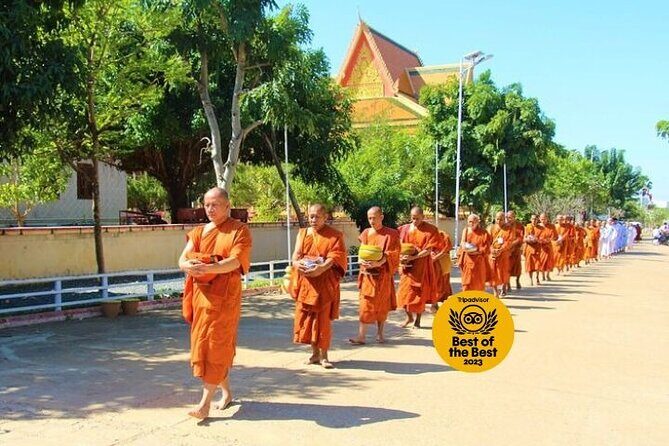
- Oudong’s royal capital story tied to major Khmer kings and the 1979 memorial context
- A focused Phnom Baset stop featuring an 8th-century, pre-Angkorian temple and a reclining Buddha
- Temple-to-crafts contrast with silver/bronze making linked to life around the Tonle Sap
- English-speaking licensed guide who can explain what you’re looking at (Mr. Sam is a standout example)
- Included entrance fees and private transfers so you’re not juggling extra tickets during the day
Oudong Mountain and the royal hills: why this day matters
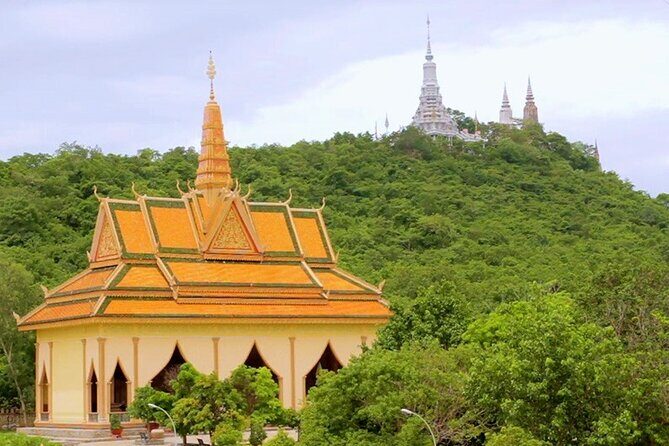
This tour is built around Oudong Mountain, and that choice pays off. Oudong wasn’t just another temple stop—it served as a royal capital between 1618 and 1866, before the capital moved to Phnom Penh. That long timeline changes how you look at the big structures on the hill. You’re not only seeing old buildings; you’re seeing a political and spiritual center that was visible from miles away.
I like that the route also includes the darker layers of Cambodia’s recent past. In 1979, these hills were part of some of the Khmer Rouge’s longest resistance against the Vietnamese army. A memorial to those murdered by the Khmer Rouge is built at this place, so the visit has weight. You can keep the mood respectful, pause when you need to, and let the guide’s explanations land at a natural pace.
The other smart thing: the day is structured for photos and short walks. There are guided segments and photo stops, but it’s not so frantic that you miss everything. You’ll still need stamina for the stair climbing—especially if you’re tackling Oudong’s 500+ steps—but the day flows in a way that keeps you moving with purpose rather than just passing through.
You can also read our reviews of more private tours in Phnom Penh

Oudong Temple: royal capital views and the stair climb you’ll feel in your legs
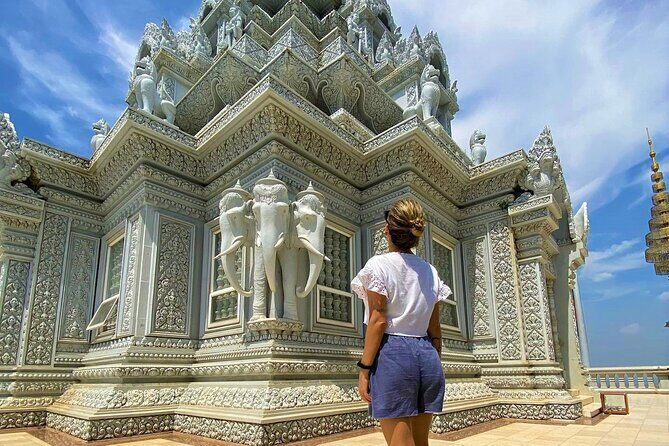
Your morning begins with pickup in Phnom Penh, then a photo stop and guided visit at Oudong Temple. The practical point here is timing. Going early helps you deal with heat and crowds, and it gives you a calmer shot at getting that classic Oudong angle.
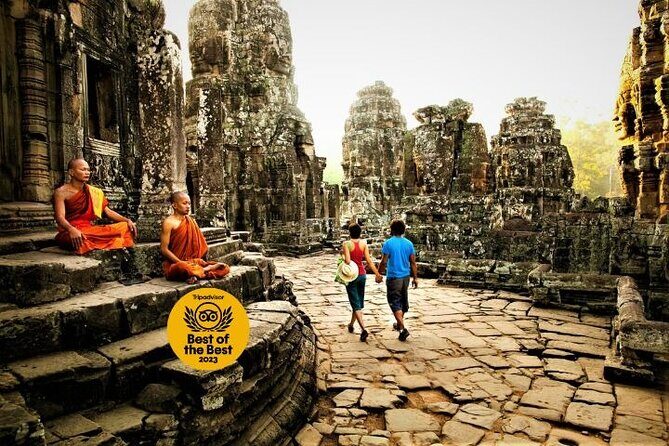
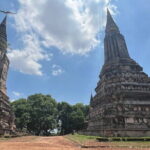
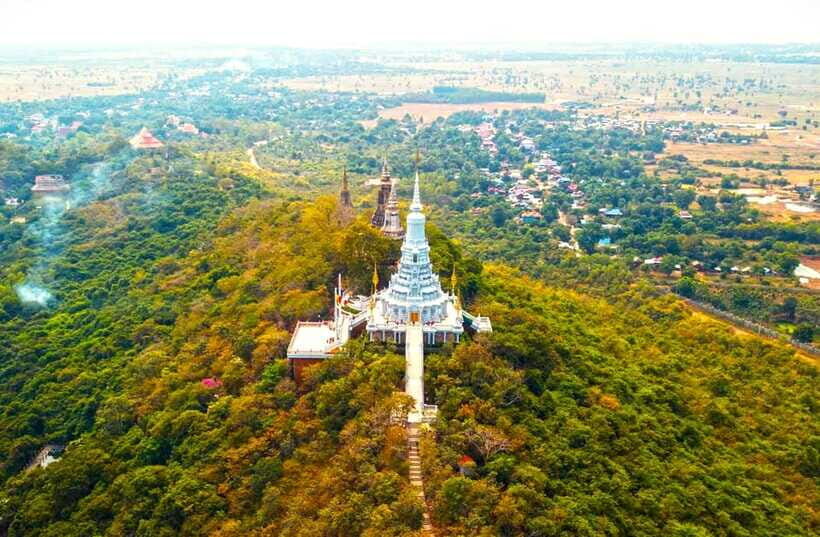
Then comes the climb. Oudong is made of three hills covered with temples and stupas, and the huge stupas are the stars of the show—visible from far away. The walk up the hill includes over 500 steps, which is excellent exercise and not something you get in most Phnom Penh day trips.
Here’s what makes the climb worthwhile beyond the workout: you’re moving through the same kinds of sightlines that people traveled for centuries. From the top, you get countryside views over plains and rice fields, and those views help you understand why this spot mattered. You’re looking at the region that supported the capital.
There’s also a clear historical anchor in what the stupas hold. They contain remains of Khmer kings, including King Monivong (1927–1941) and King Ang Duong (1845–1859). Whether you’re a history fan or not, it helps to know you’re looking at memorials with names you can place in the story.
And because the hills connect to 1979, you’ll likely feel the emotional shift during the visit. This is a good place to slow down, breathe, and let your photos come after you’ve taken in the meaning.
Phnom Baset: pre-Angkorian calm and a reclining Buddha
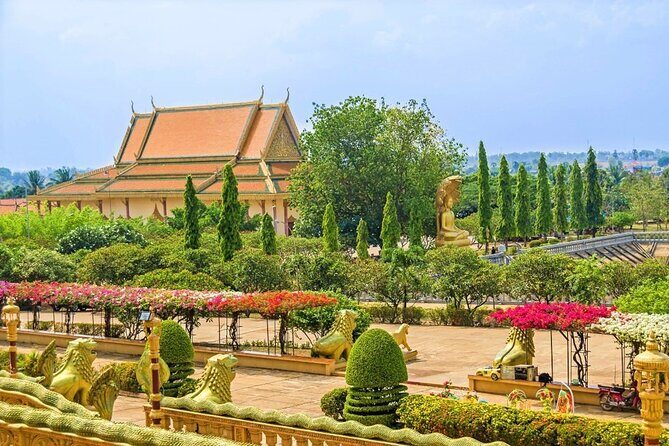
After Oudong, the day pivots to Phnom Baset. You get another photo stop and guided tour here, with time for sightseeing and a short walk.
Phnom Baset is described as a pre-Angkorian temple from the 8th century, which is a key detail. It means you’re not just ticking off a modern temple. You’re looking at older Khmer religious design—plus the site includes a reclining Buddha, a very recognizable focal point that makes it easier to appreciate the place even if you only know a few Khmer temple terms.
What I like about including Phnom Baset in this plan is the contrast. Oudong is a royal-hill climb with large stupas and big panoramic views. Phnom Baset feels more like a temple visit where the main work is visual attention—details, shapes, and how the reclining Buddha becomes the center of your attention.
You also get views from the surrounding plains and rice fields from the temple area. That matters because it keeps the day from turning into only staircases and stone carvings. You get a little air and a little horizon.
Tonle Sap River stop: the river that powers the day’s crafts
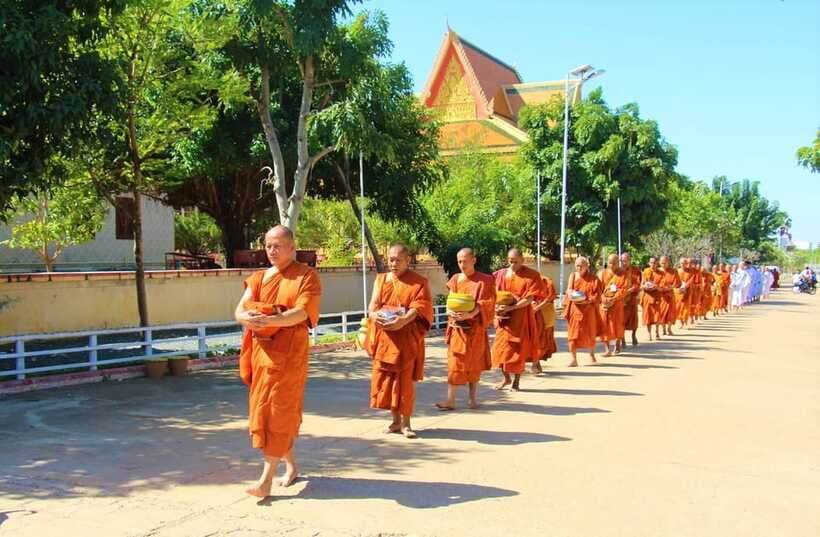
The Tonle Sap River segment is short—think photo stop plus a guided moment and sightseeing for about 25 minutes—but it functions like a bridge between the religious stops and the everyday Cambodian side of life you’ll see later.
Tonle Sap is central to Cambodia’s water-and-food systems, so stopping here helps connect why villages and crafts exist where they do. Instead of treating the day like a set of isolated attractions, you start seeing one big picture: religious centers on hills, then practical livelihoods near the river.
It’s also a useful pause. You’re already walking and climbing. Even a quick river break gives your body a reset before you move into the crafting stops.
Koh Chen and silver/bronze making: how the day stays grounded
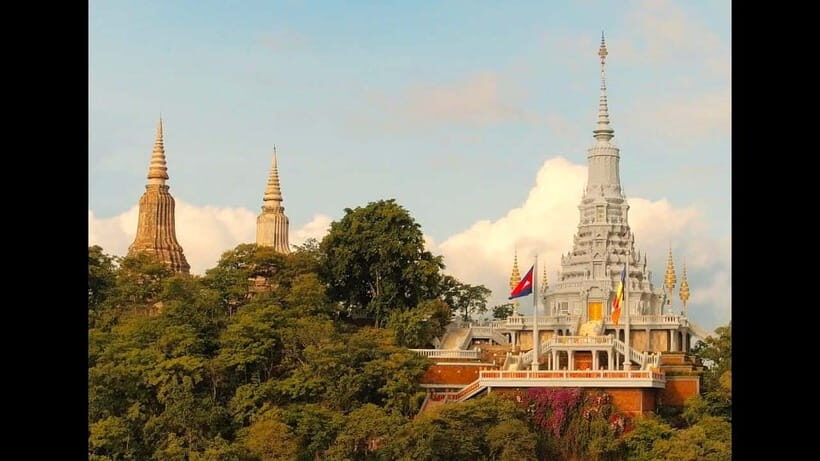
One of the best parts of this tour is that it doesn’t stay locked in temples. You’ll head toward Koh Chen, described as a famous island along the Tonle Sap River. Here, you see villagers make silver and bronze products that supply Cambodia and are exported abroad.
That detail is why this stop feels more than just a photo opportunity. It’s showing you a real economic thread—how a place becomes known for a craft and then connects to buyers far beyond its shore.
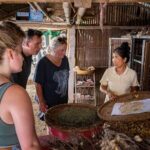
The tour’s structure supports this: you’ll have guided time at places focused on metalwork and silver handicrafts. The “Silver Smith Making Village” and “Bopha Kampong Luong silver handicraft” stops give you a chance to watch the products being made and to understand the work in plain language from your guide.
If you care about design, this is where you’ll notice small differences in finishing styles. If you’re more of a culture-and-people person, focus on how the craft is taught and practiced. Either way, it’s a nice reminder that Cambodian heritage isn’t only carved in stone—it’s also made in workshops.


Khmer Food Market: a quick taste-and-scan moment
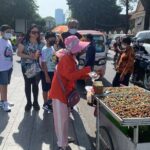
You’ll also stop at a Khmer Food Market. The time is brief (photo stop, guided tour, sightseeing, and a short walk), so think of it as a scan rather than a long food crawl.
This stop works as a mood reset. Temples can make the day feel heavy; crafts can feel precise and technical. A market stop adds everyday texture—colors, activity, and the sense that Cambodia’s daily life is happening right next to the heritage sites you’ve been visiting.
If you like buying a small snack or drink, this is the kind of moment where you can do it casually. Just keep an eye on timing; the day is designed to keep moving.
Buddhist meditation centers: quiet beauty and practical calm
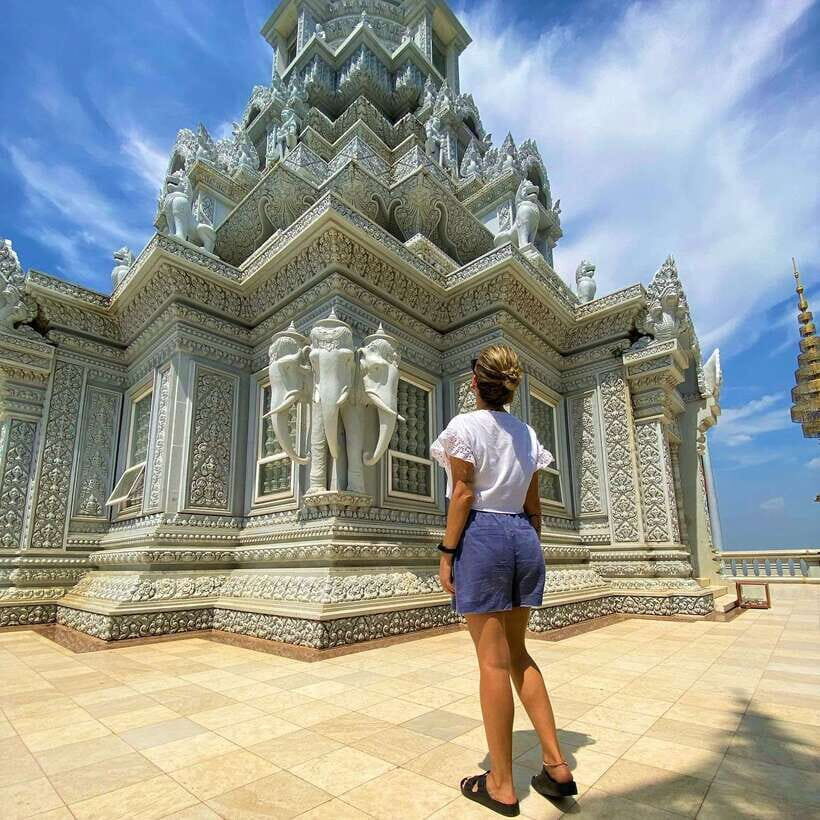
Midday is where the tour leans into spirituality again, but with a different tone. You’ll visit Cambodia Buddhist Vipasana Center and later the Sontte Wan Buddhist Meditation Center.
The Sontte Wan stop is specifically described as the largest Buddhist center in Cambodia, and it’s noted for its beautiful decoration. That’s the kind of detail that matters because it sets expectations: you’re not going to one small altar and leaving. You’re seeing a place designed for visitors to notice the visuals as well as the meaning.
What I like is that these stops provide breathing room. You’ve been walking and riding and looking at stone and metal. Buddhist centers can slow the day down naturally. Even when you’re moving with a schedule, these places encourage you to slow your pace and pay attention.
Your guide helps here too, since it’s easier to understand what you’re seeing when you know the basic purpose of the center you’re visiting. Look for how decoration, layout, and calm space support the idea of meditation and teaching.
Gate to Udong Stupa and the temple sequence: more angles, less guesswork
Later in the day, you return to the Oudong area with additional stops—starting with the Gate to Udong Stupa. Then you move to Wat Preah Thama Srah and Wat Sowann Thamareach.
This is where the guided part matters most. Without explanation, it’s easy to treat these as “another set of temples.” With context, each stop starts to feel like a different camera angle of the same story: kings, worship, hilltop design, and the way different temple spaces guide movement and attention.
Wat Preah Thama Srah is given a longer sightseeing window (about 50 minutes), which suggests it’s worth lingering. You’ll also get scenic views on the way, so you’re not only looking at buildings—you’re getting the region’s openness again.
Wat Sowann Thamareach is shorter (about 30 minutes), which makes it a good fit for keeping energy. The sequence works like this: you take in one bigger highlight, then you close with another solid temple stop without dragging the day past the point where you’re just trying to survive.
By the time you reach the final temple, you’ll likely have a better sense of how the Oudong hill system is laid out—what you saw earlier, how it connects, and which view lines matter most.
Time, walking, and comfort on an 8-hour private schedule
The whole experience is about 8 hours from Phnom Penh, and it’s a private tour with hotel pickup and drop-off. You travel by a private comfortable air-con vehicle, which is huge in Cambodia’s heat.
For walking, the day is not built for “zero effort.” You’ll climb over 500 steps on Oudong, and several other stops include short walks (often around 30 minutes). That’s a lot of stepping if you’re not used to humidity and stairs.
The good news is the schedule uses photos, guided explanations, and rest-friendly site layouts. You’re not continuously walking for eight hours straight. Still, I’d plan your body like you plan your camera: bring stamina, go slow on the uphill sections, and use the guide’s timing so you’re not sprinting to beat the clock.
If you want a very relaxing day with minimal movement, this may not be the best fit. If you’re okay with a workout plus culture, it’s a solid choice.
Price and value: what $25 buys you (and when it might not)
$25 per person for an 8-hour private tour is the big selling point. You’re not just paying for transport; you’re paying for a licensed English-speaking guide, hotel pickup and drop-off, and entrance fees for the tour sites. You’re also covered for services charge and current government VAT tax.
That matters because hidden fees are what often make “cheap” tours turn expensive. Here, the structure looks built to keep the day predictable.
The only caution is the one you should take seriously: some people can feel the cost is high for what feels like limited time at each stop. In a tour like this, you’re trading depth at one location for breadth across several. If your ideal day is long conversations at one site, you might find the pacing too brisk.
But if your goal is to see Oudong Mountain, Phnom Baset, and a handful of culturally meaningful craft and Buddhist stops without arranging anything yourself, $25 can be a practical deal.
One more value note: the English guide quality can change the experience. A guide with strong context makes the royal capital details and the 1979 memorial meaning easier to absorb, and that’s exactly where an experienced guide like Mr. Sam tends to shine.
Who this Oudong & Phnom Baset private day is best for
This tour is a good fit if you want a guided day that hits the highlights of Oudong Mountain and Phnom Baset, while still including Cambodia’s everyday side: market life and the silver/bronze craft connection to Koh Chen and export markets.
You’ll probably enjoy it most if you:
- Like temples but also want the craft and livelihood pieces
- Are comfortable with stairs and short walks
- Prefer a private setup with a professional English guide
It’s less ideal if you:
- Want a slow, minimal-walking day
- Are sensitive to pacing and would rather spend extra time at one stop than cover several
Should you book this private tour from Phnom Penh?
I’d book it if you’re the type who wants one strong day that gives you real context: Oudong’s royal past, the memorial significance, Phnom Baset’s older temple presence, then a switch into Tonle Sap-area crafts and Buddhist centers. The included entrance fees and hotel pickup make it easier to enjoy the day without administrative stress.
I’d skip or reconsider if you’re mainly shopping for maximum time in one place. The price can feel steep for the time-per-stop style, especially after the big stair climb. If that sounds like you, look for a tour focused only on Oudong, or ask for a slower version.
FAQ
FAQ
How long is the Oudong Mountain & Phnom Baset private tour?
The duration is 8 hours.
What’s the starting point of the tour?
Pickup is from your hotel in Phnom Penh, and the tour returns you to Phnom Penh.
Is this tour private?
A private group option is available.
Do I get an English-speaking tour guide?
Yes. The tour includes a professional English speaking licensed tour guide.
Is transportation included, and is it air-conditioned?
Yes. You travel by private comfortable air-con vehicle.
Are entrance fees included?
Yes. All entrance fees for the tour sites are included.
How much does it cost per person?
The price listed is $25 per person.
What should I bring for the tour?
Bring sunscreen and a hat.
Are tips included in the tour price?
No. Tips for the tour guide and driver are not included.
Can I cancel for free?
Yes. You can cancel up to 24 hours in advance for a full refund.